If travelling from where the channel tunnel burrows its way out from beneath the water into France across to Carnac in Britanny, there are several towns where it is convenient to make an overnight stop and, if you’re that way inclined (and I am), take in a football match. Having previously enjoyed stops in Rouen, Caen and Rennes, this year it is the turn of Le Mans, whose team are hosting Rodez AF in Ligue 2, the French version of England’s Championship but with smaller budgets and better architecture. According to the ‘Football’ Le guide ultime magazine, Le Mans have the joint smallest budget in Ligue 2 this season (5.0m euros), whilst Rodez have the next smallest (7.0m euros).
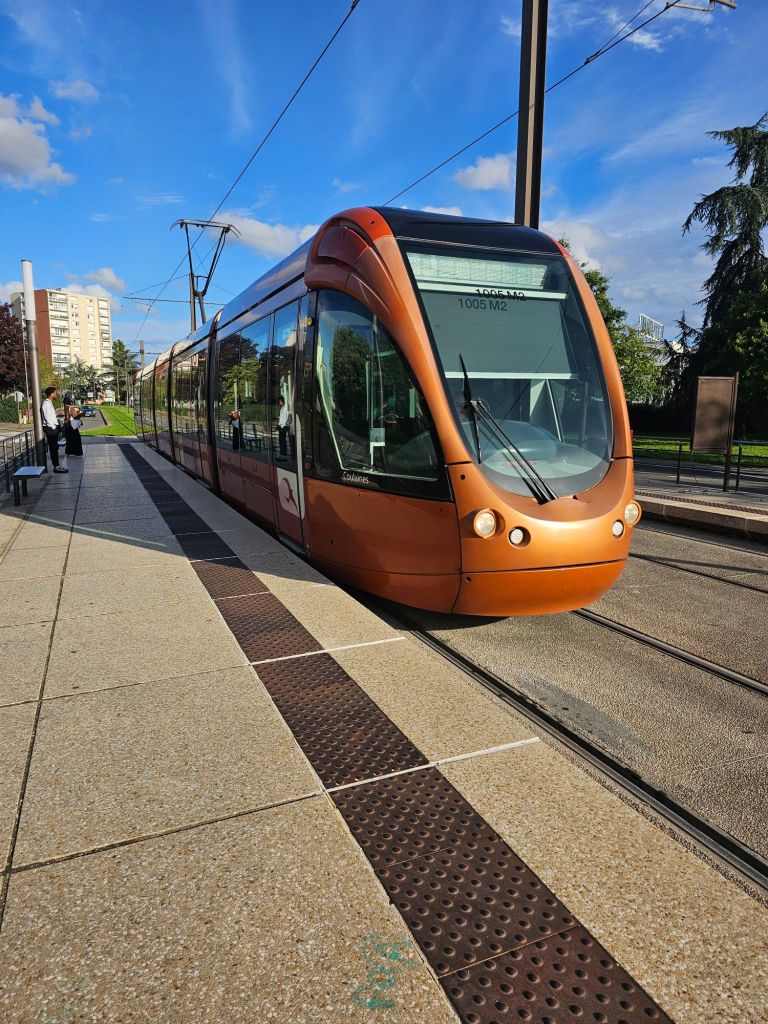
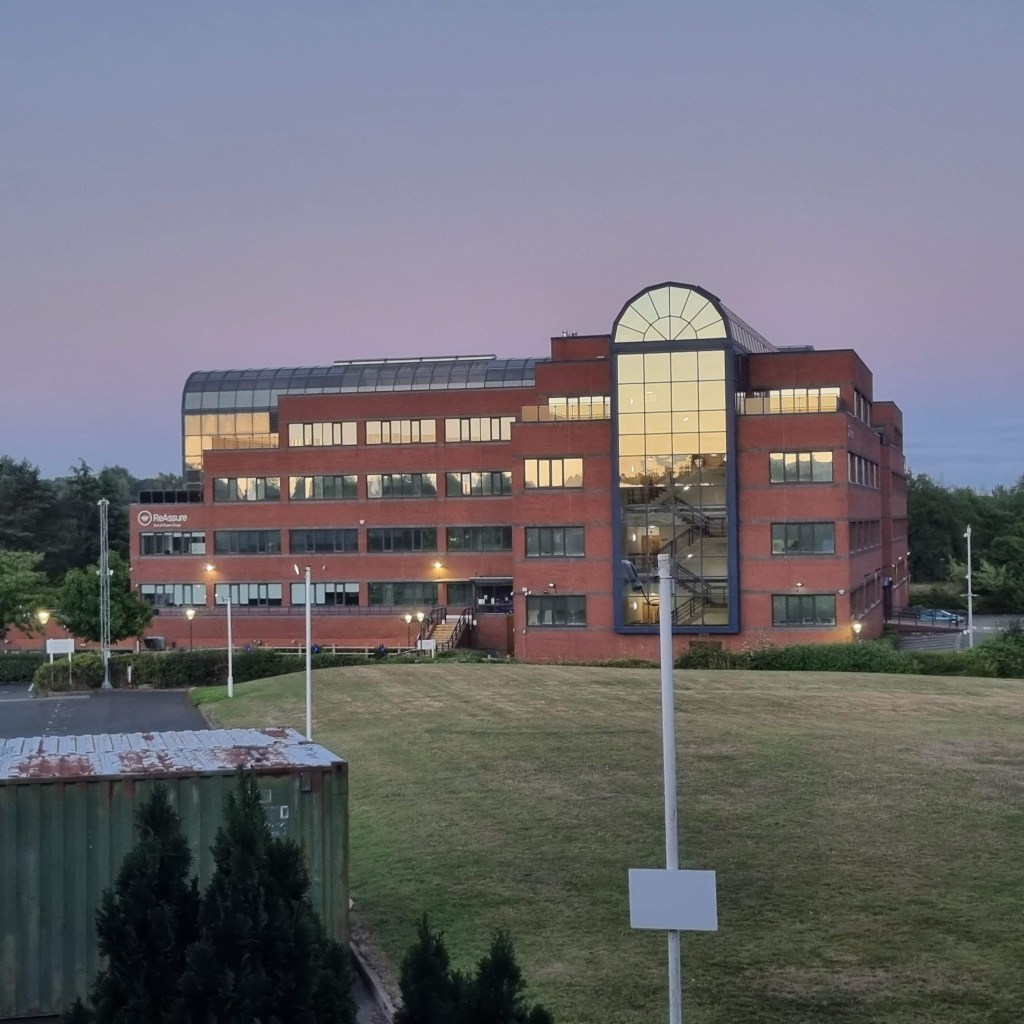
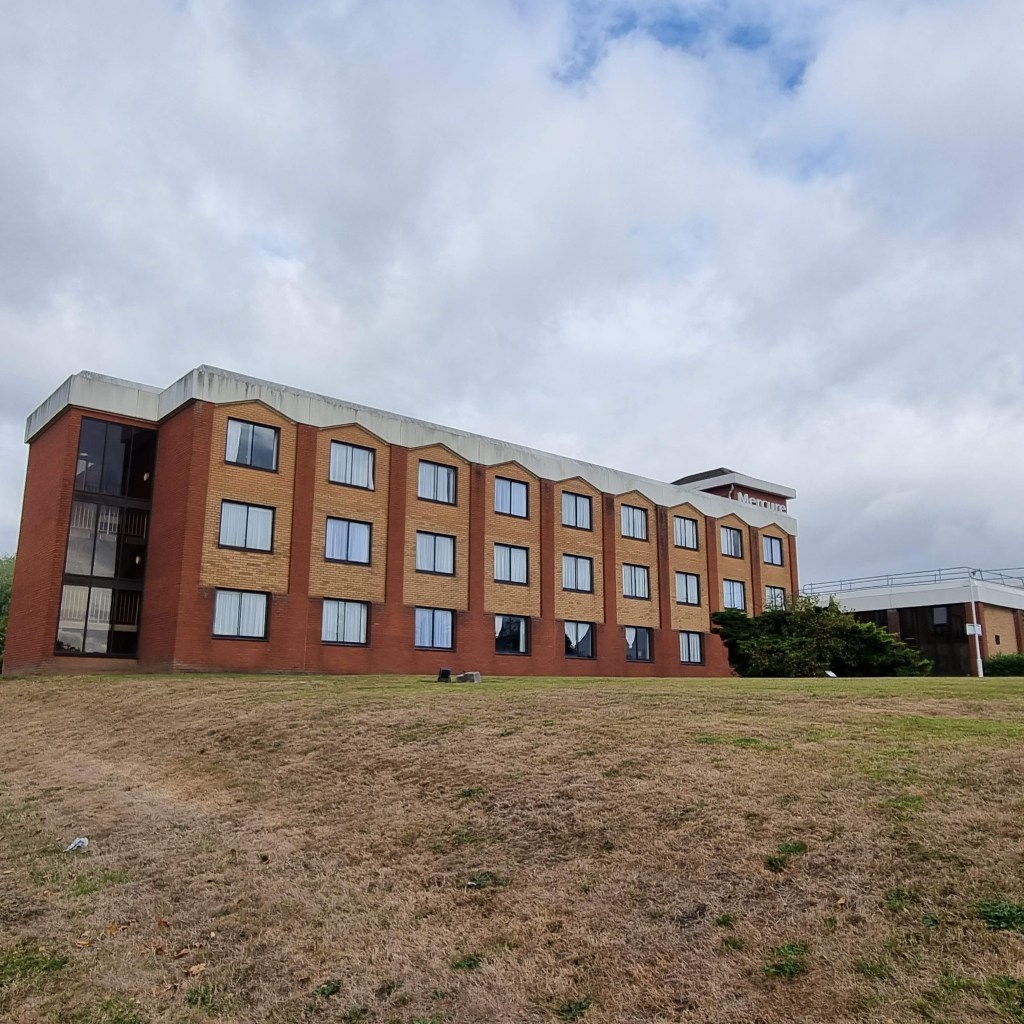
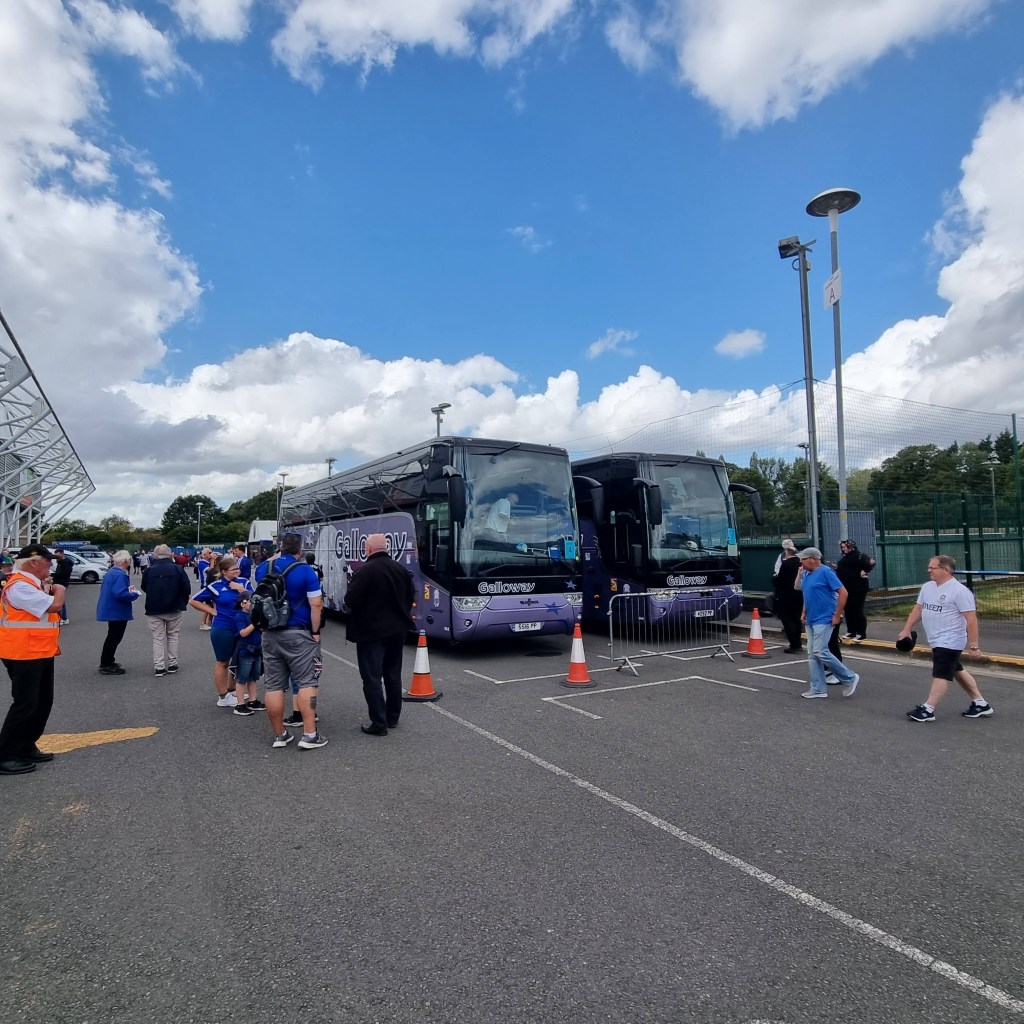
Our hotel is in a leafy suburb of tower blocks just 200 metres from the Ile de Sport tram stop from where it is a 35-minute journey (e1.50 or e2.90 for a return) changing from tram Line 2 to tram Line 1 at St Martin, to the Stade Marie-Marvingt. This afternoon there is a large, six-wheeled luxury coach in the car park of the hotel and from a short and stilted conversation with the driver I learn that he is driving the Rodez team from the hotel to the stadium. I photograph the coach with the Rodez club badge displayed in the front window as the driver stands back proudly but out of shot. I am tempted to ask for a lift to the stadium but don’t want to miss out on the tram ride to the match, something which makes me pretend I’m Albert Camus. In the hotel lobby, bored looking blokes in grey matching tracksuits hang about mournfully. I wish a couple of them ‘bon match’ and tell them my team is Ipswich Town, it doesn’t appear to relieve their boredom, but pleasingly they have heard of Ipswich Town.
The match is due to kick off at eight o’clock, but keen to immerse ourselves in the pre-match atmosphere my wife Paulene and I head for the tram stop around six, before the team bus has left the hotel. We just miss one tram as I fumble with my bank card at the ticket machine, but another soon arrives, and we are lucky enough to get a seat each. It’s a mild but cloudy evening as we pass through tram stops with names such as Durand-Vaillant, Goya and Gionnieres and on through the uninteresting outskirts arriving eventually at the terminus close to the stadium, the tram depot and the world-famous racing car circuit.

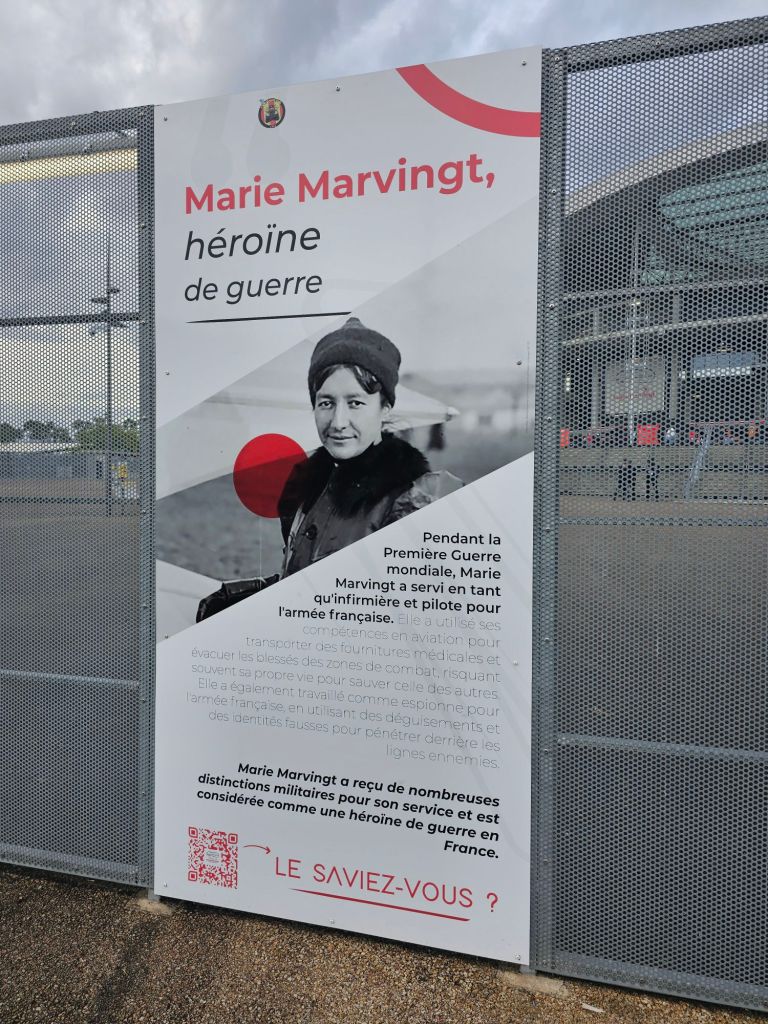
It’s only a short walk from the tram terminus to the stadium, but we accidentally make it longer by walking in the wrong direction, inexplicably failing to follow our fellow would-be spectators as we alight from the tram. Oddly, despite the size of the Stade Marie-Marvingt (it has a capacity in excess of 25,000), it is not visible above the trees. Adjacent to the stadium is a large surface car park, which, showing an impressively sensible double use of the land is roofed by banks of solar panels. A wall surrounds the stadium with blocks of automatic turnstiles at points along it. The approach to the turnstiles features a series of information boards about Marie-Marvingt after whom the stadium is named. Marie was a remarkable woman who not only spied and flew planes for the French Army during World War One but was an accomplished mountaineer. Once inside we are frisked and wished ‘bon match’ by smiling security staff before a very helpful man directs us to the gate nearest our seats, and the club boutique, a lock-up hatch, where in the absence of a petit-fanion or fridge magnet I will later buy a key ring to add obsessively to my collection of French football club souvenirs.
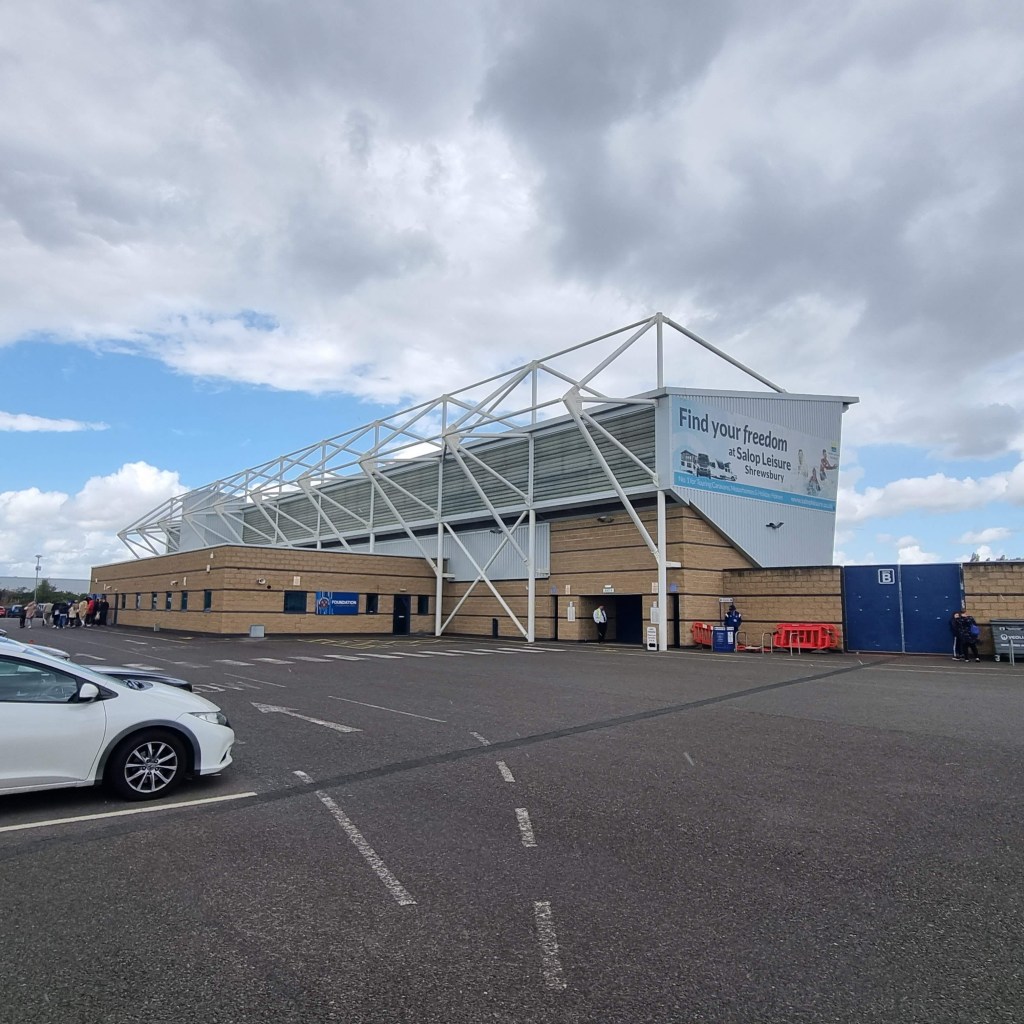
Having located our seats (25 euros each), I decide to explore and discover I can make a complete circuit of the stadium. It’s something of a lazy cliché to describe a modern stadium like the Stade Marie-Marvingt as a ‘soulless bowl’ and on the outside at least it is nothing like the metal-clad B&Q lookalikes found in England as its metal stairs and landings are exposed and sit beneath an elliptical, overhanging roof supported by what look like miniature versions of the Skylon from the Festival of Britain. Having enjoyed the architecture, I buy a beer (7 euros plus 2 euros for an optional re-usable cup featuring club colours and crest) and a bottle of water for Paulene (2 euros) from a buvette where the attractive young woman who serves me has a heavily tattooed decolletage, which I don’t like to look at too closely given its location.
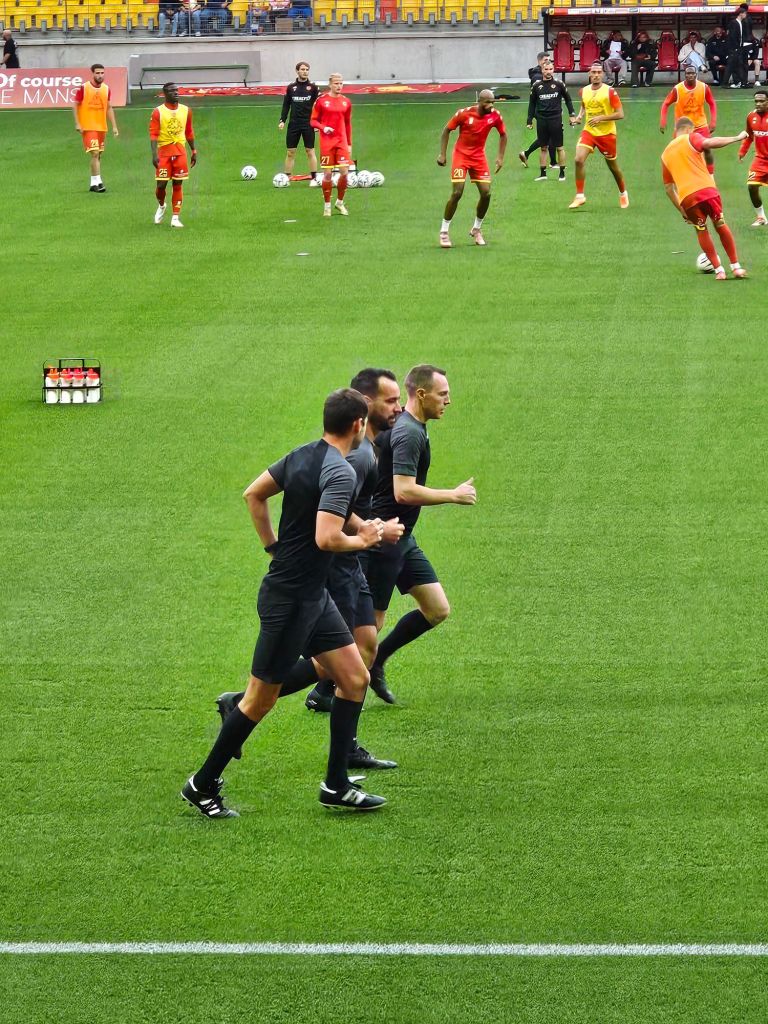
After returning to my seat, Paulene and I pass the time until kick-off laughing at the referee and his assistants as they warm up and rolling our eyes because of the drippy europop being played over the public address system. Eventually, a sort of crescendo is reached, and the floodlights begin to flash on and off like some I’ve seen at non-league grounds, although at them it wasn’t intentional. This is the signal for the teams to process onto the pitch amidst the usual display of flags and banners before the team line-ups are read out and I join in with the home supporters in shouting out the Le Mans players’ surnames, my favourites amongst which are Rossignol and Vercruysse.
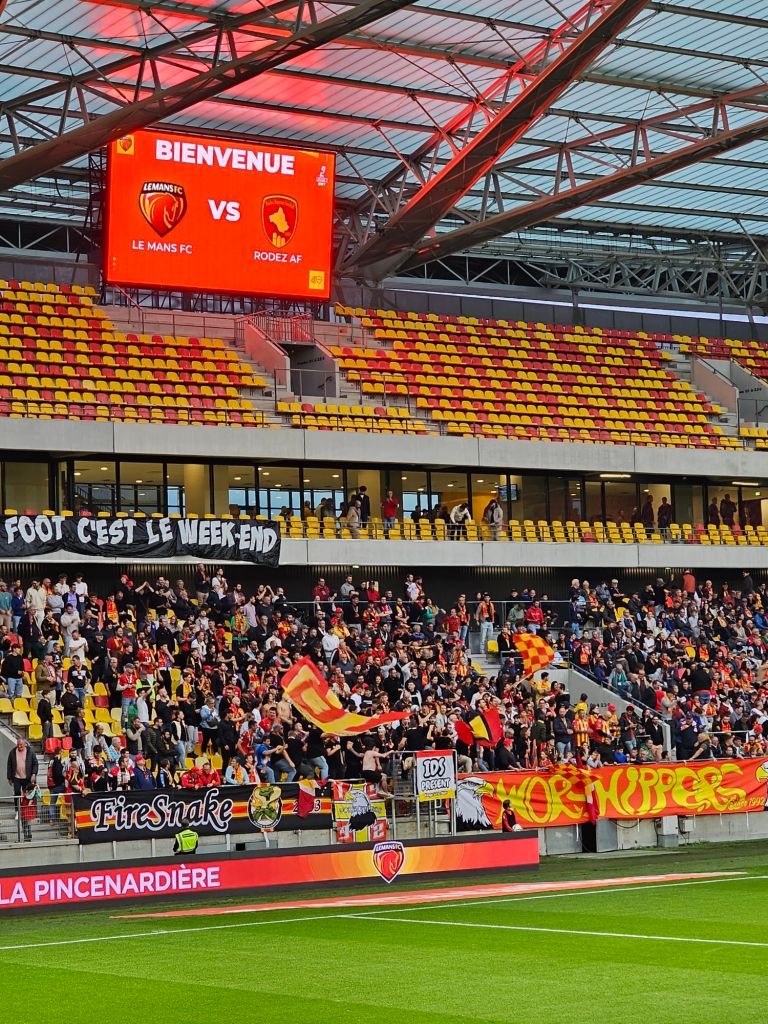
When the kick-off, or coupe d’envoi, finally happens it is Le Mans who get first go with the ball playing it back before punting it forward in the direction of the city centre and the medieval cathedral of Saint Julian with its fabulous stained glass; Rodez are playing towards the tram terminus. Le Mans wear red and yellow striped shirts with red shorts although from behind they are all in red; Rodez meanwhile sport an all-white creation with black trim, which looks the same from any angle. From the start, and indeed since before it, the Le Mans fans behind the goal which Rodez are ‘attacking’ have been in fine voice with continuous chants of “Allez Le Mans” and “Aux Armes”. I text my friend Mick back in blighty and send him a photo of the Le Mans fans. He texts back to say they look like hedonists.


On the pitch, my attention is soon taken by the Le Mans numbers five and twenty-one, Harld Voyer and Theo Eyoum, who have their hair tied back in raffish fashion, whilst I also recognise the Rodez number twenty-seven from the hotel lobby. Early exchanges are cagey with Le Mans enjoying a little more possession but looking unsure what to do with it. At the edge of the pitch behind the Rodez goal I am disappointed by the poor grammar of a Le Mans fan group, or possibly just an individual fan, whose banner reads Fanatic’s. Fanatic’s what? I wonder. Another more literate fan group, perhaps from the top stream at the local lycee, are called ‘Worshippers’, whilst another banner reads ‘IDS Present’ and I begin to wonder why former Tory party leader Ian Duncan Smith would be here. After fifteen minutes Le Mans win a corner. A minute later the first decent chance of the game appears but number twenty-five for Rodez, Nolan Galves boots it high over the cross bar.
Time proceeds to the twentieth minute and coincidentally perhaps the Le Mans number twenty William Harhouz is booked for making the Rodez number five Clement Jolibois roll around on the floor unnecessarily, but seven minutes later a rare display of skill in the form of a neat turn and cross by Le Mans’ eighteen, Lucas Buades ends with number twenty-five, Dame Gueye producing a spectacular overhead kick, which is so spectacular it clears the cross bar. More drama ensues after some odd refereeing from Monsieur Aurelien Petit who plays-on whilst Le Mans have the ball, only to then stop play and give a free-kick to Rodez, whose number twenty-eight Mathis Saka is subsequently carried off on a stretcher.
The match rolls on towards half-time, rarely threatening to produce a goal but instead producing the yellow card from the pocket of Monsieur Petit another five times whilst an aeroplane buzzes overhead invisibly through the deepening gloom of dusk. Five minutes of additional time are played during which the last two yellow cards of the half are shown, one for a player of each team, and then it is mi-temps.
The football resumes at five minutes past nine with a boot into touch but things soon improve with a spectacular save from the Rodez goalkeeper Quentin Braat after a free-kick to Le Mans and a close range shot, which would surely have beaten Braat had it not been so weak. At the back for Rodez it seems that number four Mathis Magnin is charged with spraying deep penetrating passes, some of which penetrate too far and result in goal kicks and throw-ins. He nevertheless wears a head band to signal his creativity.
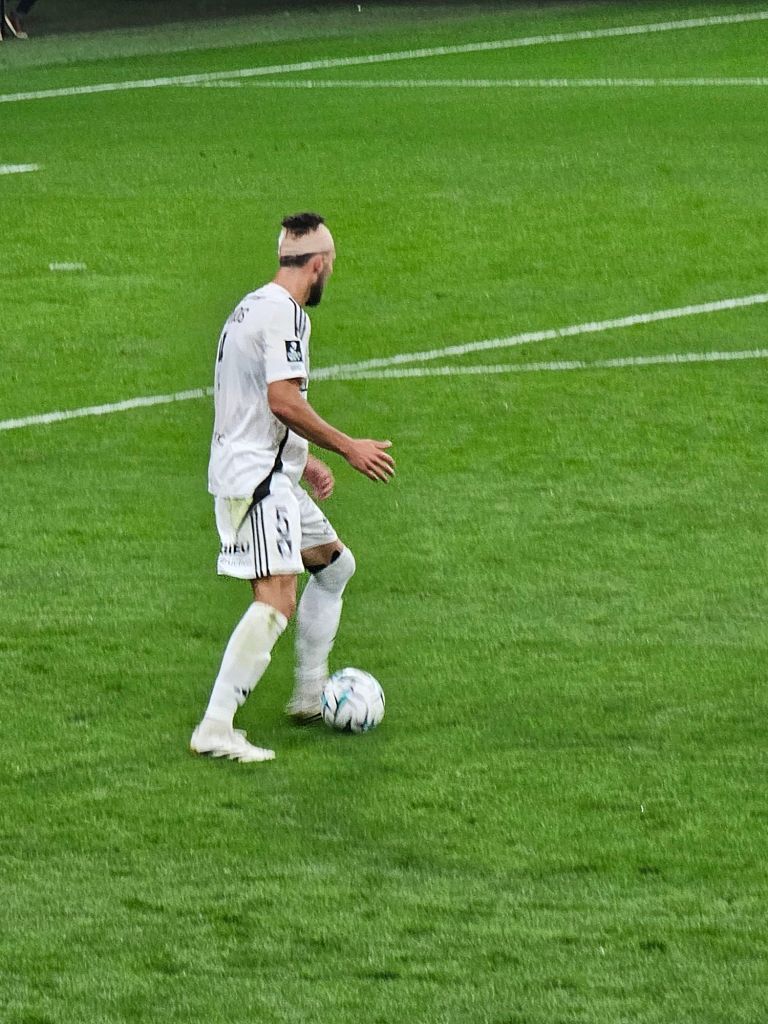
With the sun now having disappeared below the horizon it’s feeling colder, and the breeze previously only felt outside the stadium is finding its way inside; I zip up my jacket. Back on the pitch, the Rodez number five Clement Jolibois appears to be channelling the spirit of Terry Butcher as he strides about with a bandage around the top of his head, although there is no visible trace of gore. There doesn’t seem much prospect of a goal either, but then with a fraction more than thirty minutes of normal time remaining Rodez’s number fifteen, Jean Lambert Evans produces a cross from the left which allows number eleven Tairyk Arconte, who is stood all alone at the near post to head in the limpest looking goal I’ve seen in some time. Happily, for the fifteen away supporters I have counted, who have apparently made the 6 hour 20 minute, 657 kilometre journey up from Rodez, the goal is scored at their end of the ground.
The Le Mans coach Patrick Videira, who is unlikely to be confused with former Arsenal captain Patrick Vieira responds to the goal with a mass substitution, bringing on club captain Edwin Quarshie and the popular Erwan Colas as well as Baptiste Guillaume. The change almost works as Le Mans quickly win a corner, but Guillaume volleys over the cross bar from about 10 metres out. Two more substitutes appear just a few minutes later in the shape of Brice Oggad and Isaac Cossier and Rodez have some catching up to do in terms of player replacement, which begins as soon as the seventy-first minute and will be completed a mere nine minutes later.
With seventeen minutes of normal time remaining the opportunity to more or less guarantee victory presents itself to Rodez but although stood with the whole goal before him, recent substitute Ibrahima Balde cannot beat Nicolas Kocik in the Le Mans goal and merely wins a corner, not the match. Meanwhile, I am becoming tetchy due to the pungent smell of the body spray or aftershave of the man sat in front of me. I wonder to myself if his toiletries are becoming more active as the tension of the game mounts.
Le Mans twice come close to equalising in the increasingly frantic final fifteen minutes with Quarshie shooting too high and then having another shot expertly tipped over the cross bar. Brice Oggad also has a shot following a corner in what will prove to be the last decent opportunity for anyone to score, but he ‘shanks it’ high and wide. The four minutes of added on time seem pretty solid when held up on the electronic display by the fourth official, but like grains of sand they slip through Le Mans’ fingers and the game ends.
On the walk back to the tram terminus Paulene and I agree that overall Rodez were the better team even if Le Mans had most of the possession. We also agree that whilst it’s not been a particularly good match, it’s been an enjoyable one and I am therefore able to report that the best thing about the evening has not been the tram ride, although that was pretty good too.

























 trippingovertheball