When the draw for what used to be called the League Cup was made, I was quite pleased to find that Ipswich had drawn Bristol Rovers; this was because Bristol Rovers were the only one of Town’s third division opponents I didn’t see last season. I’m not sure why that mattered, it’s not as if I keep notes on each team, although in an odd way, through this blog, I suppose I do. Oh dear.
Despite my earlier happiness at the draw, it has taken me until the night before the game to get round to buying a ticket because despite the grotty weather, in my head it’s still summer, and summer is for dreaming and for World Cups, oh, and occasionally for European Conference League qualifying games. Football is mostly something for autumn, winter and spring. As usual for League Cup matches, because all the seats cost a tenner I choose not to sit in my season ticket seat, but to explore one of the twenty-nine and half thousand odd other viewpoints. Usually, I head for the best view and the padded seats of Block Y, and there are still single seats available, but craving company I texted my friend Gary to see if he is going; he is, and gives me his seat number which he tells me is close to where he usually sits in what used to be called the West Stand. I buy the seat next to Gary which turns out to be uncomfortably close to the corner of the ground; but it’s okay as I had warned Gary that I would blame him if the seat wasn’t very good, and now I can. To think, I could have been in Block Y. I also texted my friend Mick to see if he is going to the game, but he tells me that he has “no interest in the League (Carabao) Cup”, which I thought was a bit haughty of him.
Having parked up my planet-saving Citroen e-C4 in a street between Norwich Road and Anglesea Road, it’s a short walk to the Arb on High Street where I obtain a pint of Mauldon’s Suffolk Pride (£3.60 with Camra 10% discount). The bar is not very busy, and I tell the barman that I had expected it to be busier, but he tells me most people are in the beer garden. He’s correct, most people are, but there are still free tables and I can only see one bloke in an Ipswich Town shirt. I settle down to drink my unexpectedly cloudy pint, and read Issue 26 of the Turnstile Blue fanzine, a small pile of which were in the corridor between the bar and the gents. I read an article which, in the context of the ‘fuss’ surrounding the death of the old queen, attempts to debunk the apparently mythical status afforded to former Town chairmen John and Patrick Cobbold. The basis of the argument seems to be that they were incredibly wealthy and posh, and ‘Mr John’ drank and swore a lot. I don’t read much more because the penetrating voice of a man possibly in his late twenties, who is with the bloke in an Ipswich shirt, and the mild but loud Ipswich accent of a woman probably in her forties are preventing me from concentrating. After half an hour of slow supping and covering my ears, I leave for Portman Road.
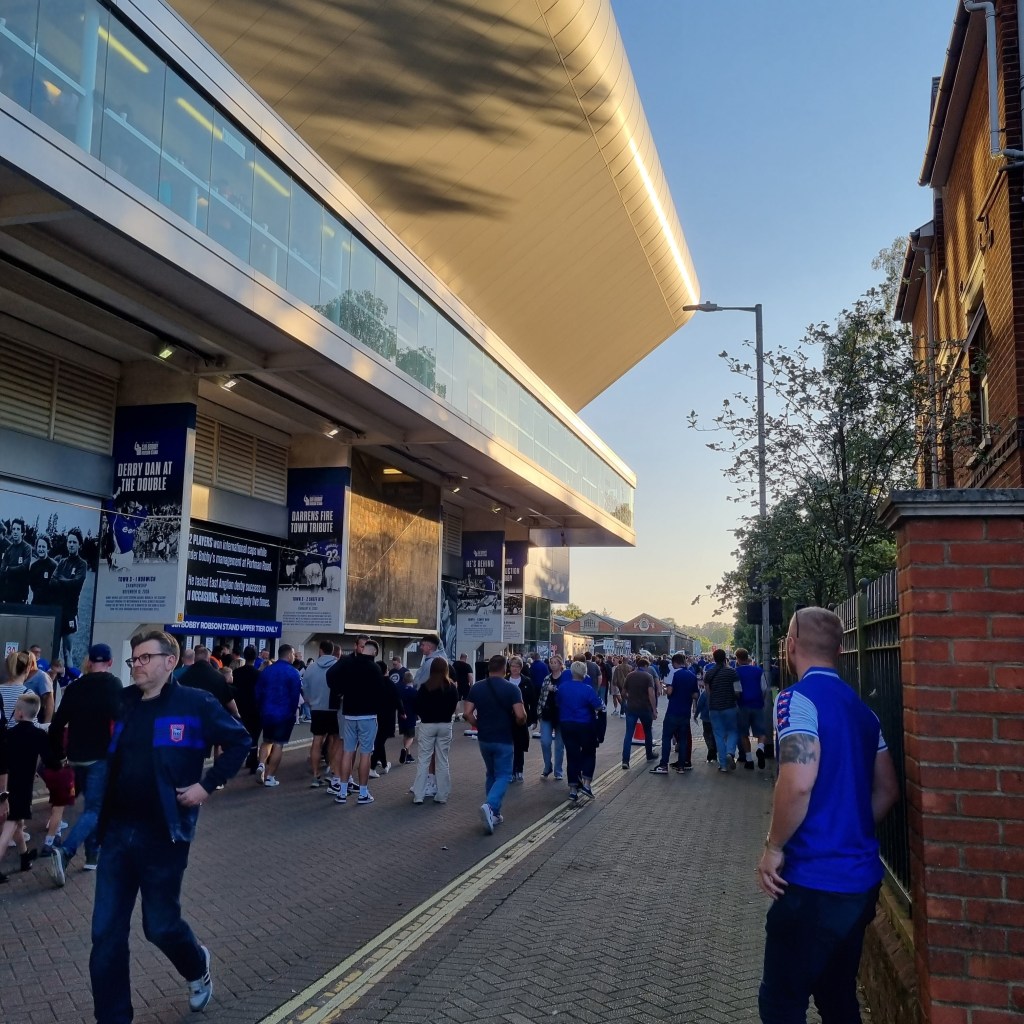
Arriving in Sir Alf Ramsey Way shortly after seven-thirty, I buy a programme (£2.00) in the modern cashless manner and am then surprised to see long queues at the turnstiles. Tonight, in the spirit of saving the planet by not using unnecessary pieces of paper, my ticket is on my mobile phone and my inner Luddite wonders if technology is the reason for the slow progress into the stadium. Moments before reaching the turnstile, my finger slips on my phone screen and I accidentally delete the e-mail that includes my ticket, but fortunately I know I can still find it if I look through all my e-mails and that’s what I do. Happily, the QR code on my e-mail also works and I pass through the turnstile just in time to drain off some Suffolk Pride and make it to my seat before the names of the Ipswich team have all been announced. I try to call out the surnames of Town players in the manner of a French football crowd, but the ‘new’ stadium announcer Mark Murphy says Dom Ball instead of Dominic Ball and ruins things completely.


The match kicks off at fourteen minutes to eight according to the digital clock on the scoreboard. Town get first go with ball, kicking it mostly towards Sir Alf Ramsey’s stand, and are wearing the traditional blue and white kit, which this season has broad white stripes down the sleeves that from some angles make the whole sleeve look white. Kits have to be imbued with meaning nowadays and we are told that the design is inspired by the kit worn by the promotion winning team of 2000. When the sleeves look all white, I am reminded of our Premier League winning side of 1962. Bristol Rovers for their part wear black shorts and white socks to cover their loins, buttocks and calves and grey shirts over their torsos. I do not know if the Rovers shirts are imbued with meaning or not, but I like to think they are inspired by a foggy day in the Bristol Channel or specks of ghostly coal dust blown across from the South Wales pits or Cardiff docks. Gary and I speculate as to whether we have already seen this season’s dullest kit worn by an away team at Portman Road and recall how Manchester United once wore a grey and black kit at Southampton and changed at half-time when already three or four goals down, supposedly because the players couldn’t see each other against the background of the crowd. It seems probable from the half-time score that they couldn’t see the Southampton players either.
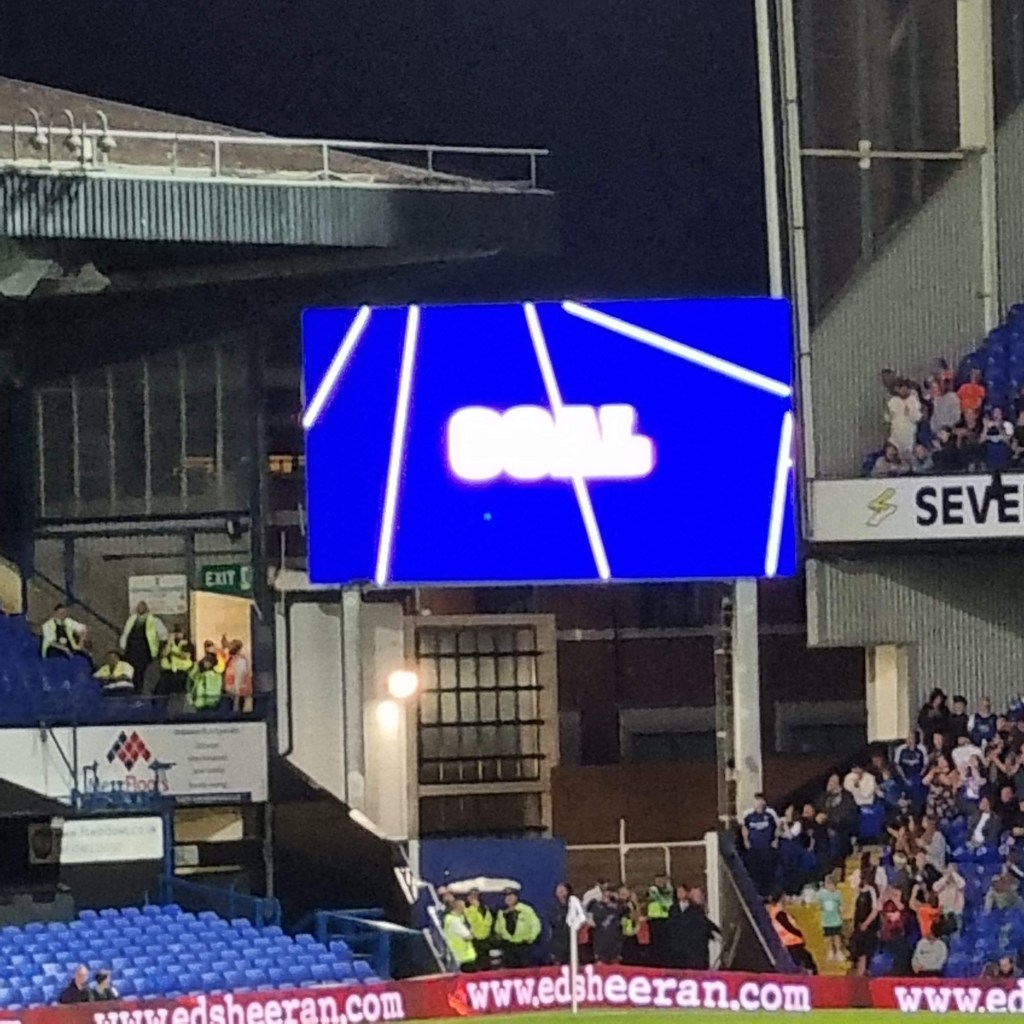
Town dominate possession and after just twelve minutes take the lead. A passing move down the right ends with Jack Taylor passing a ball from Kayden Jackson into the Bristol goal net. That was easy. I haven’t really tuned myself into the game yet however, and rather than leaping up and punching the air in a display of forgotten youthful exuberance like I would normally, I just slowly raise my bottom off my seat and applaud politely in a semi-stooped position. Gary’s reaction is similarly sluggish. For these supporters it still feels like pre-season, the overture, or to employ a war-themed comparison popular with football pundits, like 1939, the phoney war. Elsewhere in the stadium people are more attuned to the programme as they beat drums and chant “Blue and White Army.”


Town continue to dominate possession and occasionally come close to scoring a goal, but not close enough. I haven’t seen Gary since July 1st, so we talk as much as we concentrate on the game. Gary asks me what is the worst football ground I’ve ever been to. I tell him I think it was Oxford United’s Manor Ground. He asks what the best ground was. I tell him possibly The Velodrome in Marseille, although the Allianz Riviera in Nice is pretty good when full. Having been unexpectedly put on the spot I forget to mention the Stade Felix Boleart in Lens and the Stade Geoffrey Guichard in St Etienne.
Bristol Rovers only occasionally approach the Town goal and their first shot just creeps and bobs and bounces its way across the turf into the arms of the Town goalkeeper, the interestingly monikered Cieran Slicker. It takes a good twenty minutes or more for Rovers to have another shot and this time Grant Ward’s much more powerful shot is parried away by Slicker for what amounts to a pretty good save. It’s a moment which results in my hearing the faint call of “Come On Rovers” carried over the pitch on the warm evening air from the one hundred and twenty-three Bristolians in the far corner of the stadium. Otherwise, the first half of the game leaves no lasting impression on me and after a minute of time added on it’s time for Gary to nip to use the facilities whilst I stand up and try to manipulate my neck, which has grown achy and stiff from having my head turned towards the Sir Alf Ramsey stand for most of the previous forty-six minutes.

Once Gary has returned, the ‘new’ stadium announcer Mark Murphy appears on the pitch wearing what looks like the same suit that replaced announcer Stephen Foster used to wear. Murphy tells us he is going to talk to a Town legend and with the artificially excited intonation and words-all-rolled-into-one pronunciation of a former local radio DJ, he announces “Johnny Warks here” and Gary and I look at each other wondering who the hell Johnny Warksear is. Johnny Wark appears on the big screen and all that’s missing are the subtitles when he speaks.
The game resumes at ten minutes to nine and my hopes of spending the second half just looking straight ahead take a dive as Bristol start quite well. “Wo-o-o-oh, That’s the way we like it” or something like that sing the Sir Bobby Robson Stand to the tune of what seems to be an original composition or a song I don’t know. Rovers are gifted a corner as Lee Evans passes the ball back to a place where Cieran Slicker isn’t standing. But then Ipswich win a couple of corners of their own to redress the balance, before on-loan Omari Hutchinson is the first player to be booked after not so much a bad tackle as an inept one. “Ole, Ole, Ole” sing the Sir Bobby Robson stand and the drums up in the corner of the stand by the club shop beat; inside the shop stuff must be bouncing off the shelves. In the seat in front of me a bloke with not much hair has a pair of sunglasses perched on top of his head. There’s a holiday feel to the crowd tonight with adults and children wearing T-shirts and shorts, looking as if they’ve been at the beach all day. I half expect to see someome eating candy floss or wearing a ‘kiss me quick’ hat. On the pitch, the second half is reflecting the cheery mood with carefree attacking football and as result Cieran Slicker makes a spectacular save with his feet.
Substitutions arrive on sixty-six minutes with Cameron Humphryes and Sone Aluko taking a bow. Shots rain in on the Bristol goal and a corner is won. “Oooh Sone Aluko” sing the Sir Bobby Robson Stand to the tune of the White Stripes’ Seven Nation Army. Marcus Harness half-volleys the ball from close range, but too weakly to bother the Rovers’ goalkeeper. As more substitutes warm up on the touchline in front of us I say the name of George Hirst to Gary. “I know what you’re going to say” says Gary “He has a haircut that looks like his mum cut it using a pudding bowl”. Gary knows me too well and is almost exactly right, but I’d say she used a side plate or small frying pan giving his hair the appearance of a little hat or beret. I struggle so much to accept George’s haircut that if it had been up to me I wouldn’t have signed him, so it’s probably as well that it wasn’t.
In the seventy-third minute George and Conor Chaplin and Harry Clarke get to make the transition from bench to pitch, but the only immediate result is that Javani Brown shoots wide of the Town goal for Bristol. Within a minute of that however, a sweet passing move down the left sees the ball relayed across the penalty area for Sone Aluko, who seems to be existing in his own isolated moment of time and space, which allows him to then pass the ball into the far corner of the Bristol goal, and Town lead 2-0. Gary tells me how his mother recently received a new copy of the local telephone directory and that there were three people in it with his surname; they were Gary, his mother and his uncle who died several years ago, but it wouldn’t surprise me if BT was a hotbed of spiritualists.
All that remains is for Murphy to announce the crowd as being 15,047 with 123 of that number being from Bristol, and for people to applaud themselves, each other, and more acceptably the travelling Bristolians. Bristol is a long way from Ipswich on a Wednesday night, although logically no further than at any other time of day or week. Five minutes of time are added on to ensure we get our money’s worth and when that expires we rise as one to applaud and then seep out into the night. It’s been a decent little game, a bit low key like a pre-season match, but it’s good to see a match where none of the players appear to think winning matters more than life itself. Bristol Rovers played their part and should have scored at least once, but on the plus side they will now have time on their hands in the middle of the week to think about what their away kit should look like next season. As for Ipswich, we are on our way to Wembley, my stepson and his family live in the RG24 postcode area so if I get the urge I might march on to Basingstoke, or Reading.




 which glides through narrow central streets into broad squares of fountains, trees and majestic buildings. Why are French provincial cities so much more attractive and inviting than our own? St Etienne isn’t even that big, with a population of the town itself being about 150,000; vistas of the green hills outside the town are visible along some city streets. It’s an industrial town built up on coal mines and manufacturing like Sunderland or Salford but that’s where the comparison ends.


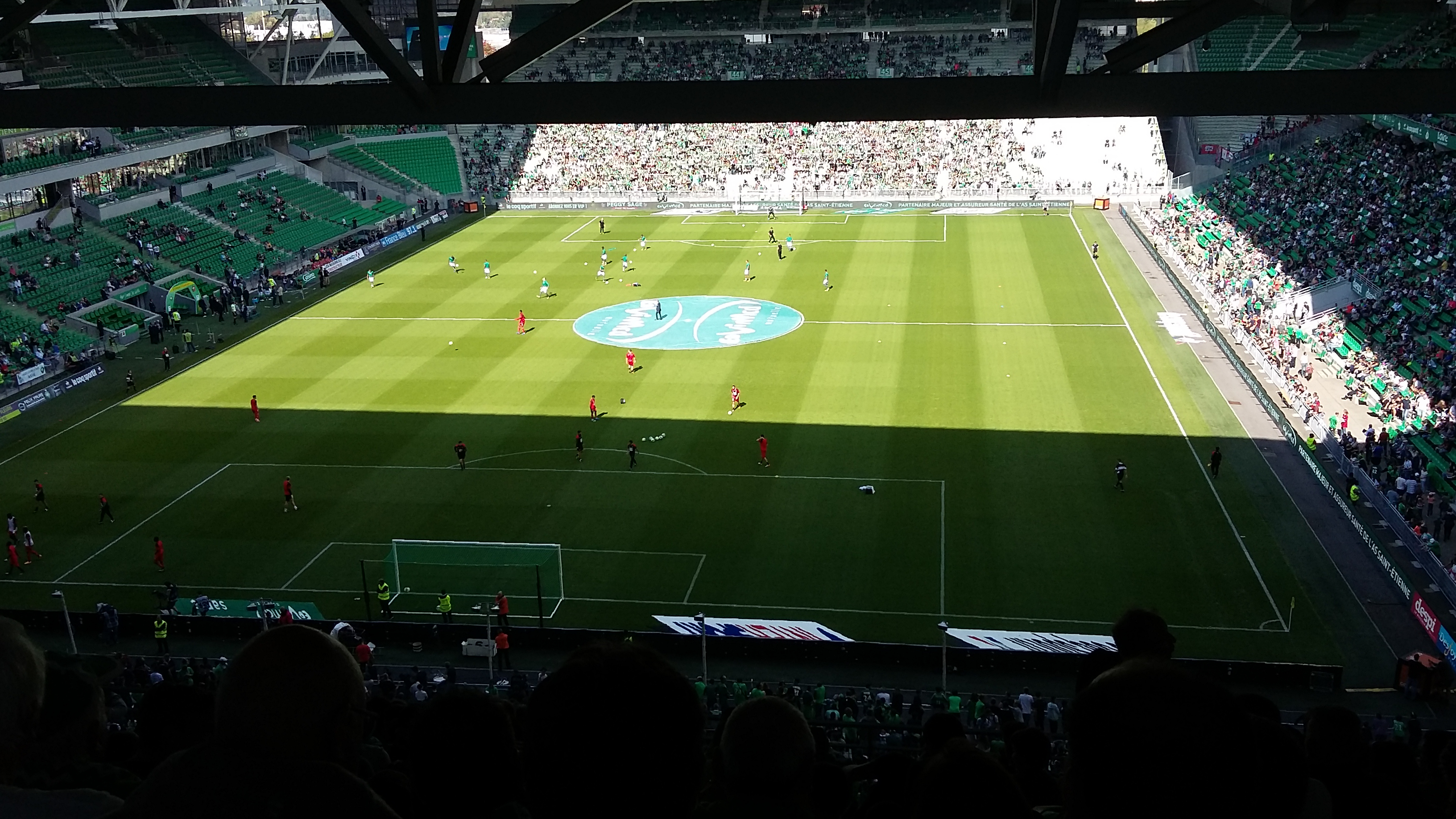 But even with an interrupted view, it is a mightily impressive stadium; fundamentally it is a traditional arrangement of four individual stands around the pitch, but they have been unified by the placing of a massive steel box over the top of them with irregularly shaped cut outs in the faces of the box. It is a simple idea and it works brilliantly, creating an imposing building, the outside of which doesn’t give a clue as to what the inside is like; it could easily be a factory viewed from the outside, which is wholly appropriate for St Etienne. The retention of the traditional four stands on each side of pitch successfully avoids the risk of this being a bland, anonymous bowl of a stadium.

 Below, the ultras are urged on and orchestrated by blokes with megaphones. At most French grounds I have been to there might be two blokes sharing one megaphone; today at one time I see as many as five each stood up high facing the supporters with his own megaphone. There seem to be parties going on down there with
 outbreaks of frenzied pogoing in the centre, but in general just expressing a great communal support for their team. The ultras at each end of the stadium call to one another in song, it’s like some sort of very noisy religious service and it’s haunting, beautiful even. But then, French is the language of song. A young bloke in the seat but one next to me clearly longs to be down amongst the ultras as he bawls and shouts fiercely and joins in with songs which turn into solos, because he is so far from the main congregation. Children turn round to look at him and his girlfriend seems quite proud. Much of the crowd noise is independent of events on the pitch, it just happens constantly, an avant garde soundtrack of incidental drums and chants. Nevertheless, the stream of sound wobbles from time to time as referee Monsieur Miguelgorry does something like booking Assane Dioussé after four minutes Kevin Theophile-Catherine after thirty-one and Saidy Janko three minutes later.
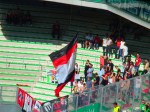 Forty odd Rennes fans are filled with a belief that it was worth travelling the best part of 750 kilometres to be here.
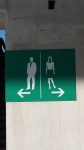 feature a very stylish, well dressed and attractive looking couple; after they’ve emptied their bladders I’d be happy to spend time with either of them.
 trippingovertheball