Blackpool 1 Ipswich Town 4

For someone who had already given up travelling home and away every week to watch my team, one of the good things about the current pandemic and so-called ‘elite’ football being played behind closed-doors is that when your team plays away from home, you simply cannot go, so there is no internal debate to be had about whether or not you should travel.  Equally, there is no longer that same feeling of regret or self-doubt come Saturday afternoon that you are possibly missing out on something when the decision has irrevocably been made not to go away.  Today however, is not such a day, there is no chance that I would have travelled to Blackpool because it’s a long way away and it’s a dump. I have been to Blackpool twice before, once in 1989 with a girlfriend, whilst somewhat bizarrely holidaying on the Wirral and staying in a hotel that looked like the Munster’s house.  That day the sun shone and we took the tram along the front, no football was involved.  Then, eighteen and half years later in January 2008 I was one of a car load of four Town fans who, along with several others witnessed a one all draw at Bloomfield Road.  That game has faded from memory, but the one thing I do recall is a massive, somewhat dilapidated public lavatory near the sea front; this is not a metaphor for Blackpool itself, although it could well be because I found it to be a seedy, ugly town, but the public toilet was actually quite impressive.  To be fair to Blackpool it does have a decent wrought-iron lattice tower (158 metres tall), but once you’ve been to Paris (the Eiffel Tower is 300metres tall), it is easily confused with numerous phone masts.

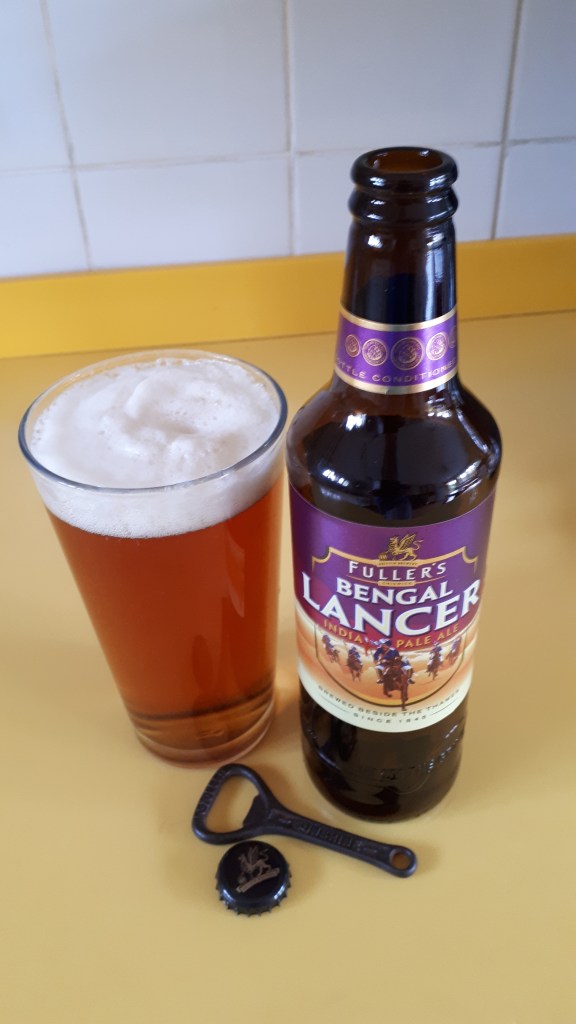
 In my experience the best thing about Blackpool is the football team’s tangerine shirt, something that first came to my notice in 1971 in the form of ten painted, moulded, plastic footballers on circular bases which I saw when I attended a Subbuteo club at school.  The thought of Blackpool’s tangerine shirts still thrills me a little today as over lunch I look forward to Ipswich Town’s encounter with the collection of living, breathing footballers who currently wear them for work. It’s a cold day of showers and occasional sunshine which I have so far spent indoors, save for a brief excursion to my garage to check its leaking roof and the positioning of five plastic buckets.   My wife Paulene and I eat our lunch of heated-up homemade curry, left over from last night’s dinner, and I enjoy a pre-match ‘pint’ (500 ml) of Fuller’s Bengal Lancer (£13.95 for a case of eight bottles direct from Fuller’s brewery with free postage on orders over £50), which coincidentally, given its name, goes down very well with curry.  
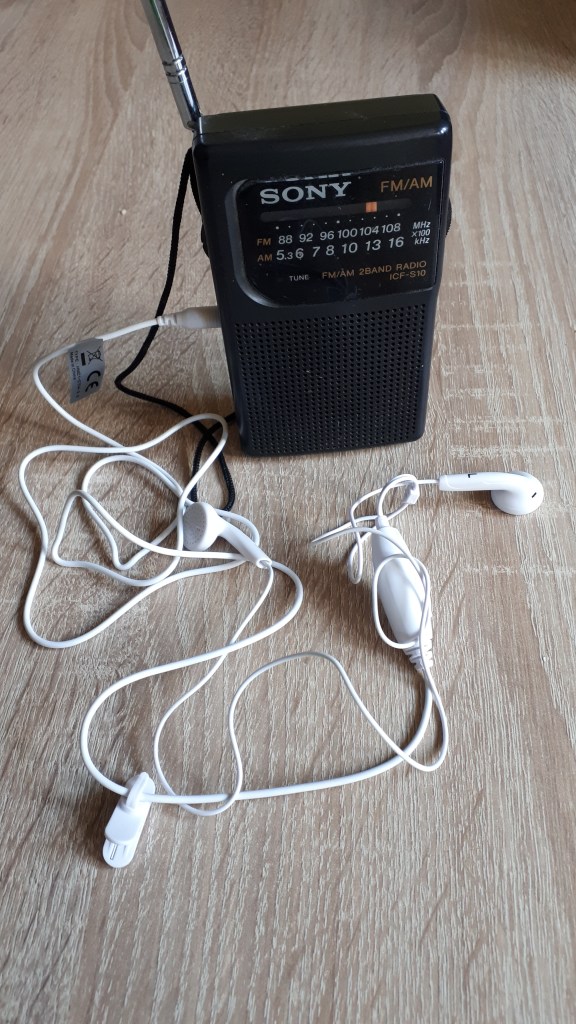
It feels grey and a little chilly in the spare bedroom today and pining for human contact I choose to listen to the match on the wireless in the living room, where I will be in the company of Paulene.  With Paulene watching the Giro d’Italia cycle race on the telly I have to find an earphone because she is strangely uninterested in hearing the fortunes of the Super Blues.  It’s easier to use an earphone with a smaller more portable radio and I therefore eschew the Bush TR82 today in favour of the Sony ICF-S10 portable radio.  After an initial unfortunate brush with Radio Essex, I delicately adjust the dial just in time to catch the hand-over from the Radio Suffolk studio in St Matthews Street, Ipswich to Brenner Woolley at Bloomfield Road, Blackpool.  Today Brenner is in the company of former Ipswich Town starlet Neil Rimmer who, whilst not exactly a Town legend or candidate for our Hall of Fame scored three times in twenty-two appearances for Town between 1985 and 1988 before he went onto play ten times as many matches for Wigan Athletic.  According to Wikipedia Neil is currently manager of Ashton Town.  Neil has a warm, almost mellifluous voice, perfect for radio, even if his mild scouse accent occasionally makes me think of Keith Chegwin, but that could just be me desperately trying to find humour in every situation.
Brenner helpfully tells me that Town are all in blue today and I strike up a colourful mental picture of our blue, Blackpool’s tangerine and the green of the pitch against banks of empty orange seats under a no doubt grey sky.  Brenner begins his commentary, relaying that it is former Town employee Grant Ward who “gets the ball rolling” before he treats us to some decent footballese, describing Blackpool as getting to the edge of the Town area “early doors”.  “Impressive stuff from the Radio Suffolk man.” he might say if he was commentating on his own commentary.  According to Brenner it’s a sunny afternoon in Blackpool, so I adjust the colour and brightness in my mental picture; and it’s very blowy, either that or one of Brenner or Neil is about to tap the microphone and launch into a kind of Norman Collier impression – “testing – testing, 1-2-3”.  Brenner will later say that he expects we can hear the wind around the microphone; he’s not wrong.

Unlike Mantovani or most of the musical content on Radio Suffolk, the early minutes of the game are not easy listening.  “Town have yet to have the ball on the ground in the Blackpool half” says Brenner. ”We’ve got to be precise with our passing” adds Neil offering a solution to the problem and simultaneously endearing himself to Town fans with his use of the first person plural.   “I think it’s all about results” says Neil explaining to Brenner what will make Town fans happy or annoyed, although Mick McCarthy might have cause to disagree, but thankfully he’s not with Neil and Brenner this afternoon.

Twelve minutes pass. “Maxwell puts his right foot right through it” says Brenner using an expression he tends to use once in every match to describe a goal kick.  Brenner carries on with a bit of filler as the action subsides, “Nsiala back in his native north-west” he says, displaying a woeful knowledge of the geography of both England and the Democratic Republic of Congo; Toto was born in Kinshasa which is in the West, not the northwest of the DRC.   Although Kinshasa was in Zaire when Toto was born, it has never physically moved and it seems unlikely that it’s ever been in Lancashire. 

Barely have I recovered from the thought of LS Lowry’s paintings of the cotton mills of Kinshasa and its Hot Pot and Barm Cake restaurants, than “Chambers shoots – fabulous goal!” are the welcome words arriving in my earpiece through the ether.  Town are a goal up courtesy of a shot that “…just about took the net away”.  Paulene missed my celebration of the goal because she has nipped to the toilet, but I tell her about it when she gets back; she feigns interest perhaps because her own team Portsmouth are also winning.

The first half is half over and Brenner tells us that it’s so far so good. Ninety seconds later “Nsiala goes Route One for Ipswich” and Brenner revives memories of BBC tv’s fabulous Quiz Ball, a programme which was last aired in 1972.  I think to myself how I’d like to see Quiz Ball revived; Richard Osman could host it in place of David Vine, they practically wear the same glasses.   It sounds as if the goal has settled Town, although occasionally they continue to give the ball away in midfield; more than once Huws is the culprit but the defence recover well.  “Gabriel back to Marvin Ekpiteta” says Brenner using the best two surnames in the Blackpool team, adding that Ekpiteta has “…come up through the pyramid”, which makes him sound like he could have been an extra in The Mummy.   A move breaks down and “Again Town starting from square one” says Brenner omitting to tell us that he’s now using the system created for the very first BBC radio commentary for a match (Arsenal v Sheffield Wednesday in Division One on 22nd January 1927) whereby the pitch was divided up into eight squares and the commentator Henry Blythe Thornhill Wakelam described the game whilst a co-commentator said which square the ball was in; a diagram showing the football pitch divided up into squares was printed in that week’s Radio Times.

At about 3.35 Gwion Edwards runs into the Blackpool penalty area “He shoots – he scores” says Brenner and Town lead 2-0.  “Again, I think it’s deserved” says Neil displaying a level of enthusiasm and positivity towards Town not often heard. “Yeah clinical from Ipswich Town” replies Brenner putting the emphasis on the word ‘Clinical’ in a way that makes him sound either sarcastic or surprised.

Three minutes later Hawkins “scoops” a chance over the cross bar but Brenner kindly adds that it was “…not quite put on a plate for him”.  Neil’s audible smiles are having an effect on  Brenner who reminds listeners that Neil Rimmer is with him today and goes on to refer to Neil as “…so far a lucky charm”, which sadly implies that the 2-0 score line is nothing to do with Town playing well, but all down to Neil, and that that luck may change.  Other forces are at work it seems and as a Blackpool attack is broken up with a headed clearance from Town’s goalkeeper, Brenner announces “Holy’s forehead takes charge”.  Equally weirdly Brenner praises the teamwork of Town saying that when Miles Kenlock has been under pressure at left-back “… a Huws, an Edwards or a Wilson has helped out.” raising questions about just how many players with these surnames we have at the club and why they are all playing at the same time.

Half-time is almost here but there is enough time for Teddy Bishop to win the ball and then “…he shoots – and oh, great goal!”.  “Get this for a scoreline” say Brenner; Town lead 3-0 and it’s time for a cup of tea, although not before Brenner asks Neil for his assessment of the half and Neil says “I was very impressed” before adding “Goals change games” because clichés and football are impossible to separate.

Unplugging myself from the radio I head for the kitchen but forego a half-time snack today because I had a slice of homemade carrot cake after lunch and still feel quite full.  Making a case for a return to the yellow and blue away kit of the late 1960’s and early 1970’s I take my tea in a yellow and blue Ipswich Town mug, which also features the old club crest and refers to the Premier League, dating it to the 1992 to 1995 period.

The second-half coverage opens with Neil again endearing himself to Town fans by telling us that “Teams like this shouldn’t cause us any problems”.  Brenner and Neil reminisce about Neil’s playing days at Ipswich and we learn that the highlight of his time with Town was his two-goals against Manchester City.  Brenner feels the need to explain to ‘younger listeners’ that  back then Town would often beat Manchester City, but omits to tell them that everyone did.

Blackpool win a corner. “They need a goal soon if they are going to get anything out of this game” say Brenner, unnecessarily seeing the game from the opposition’s point of view.  The 57th minute arrives and Kayden Jackson replaces Oliver Hawkins.  An hour has been played.  “Surely a chance, and it is” and Blackpool score through Gary Madine. That’s “really disappointing” says Neil perfectly catching the zeitgeist back in Suffolk.  “Have Town been guilty of sitting back?” probes Brenner turning the knife. “Yeah” says Neil, really disappointed.

There are twenty-five minutes left. “Anything could happen” Brenner tells us almost as if expecting Blackpool to score again.  It seems as if a substitution is about to be made and we learn that on-loan Keanan Bennetts is possibly coming on, “Paul Lambert certainly has his arm around somebody on the far side” adds Brenner injecting a hint of scandal into proceedings. Bennetts replaces Teddy Bishop, but as good as it is for Bennetts to get a ‘run out’ for the first team , I am slightly disappointed that Paul Lambert is not combining his Saturday afternoon job with some sort of romantic tryst.

“Surely not a penalty there” says Brenner suddenly. “Well played referee” he continues having evidently realised that he needs to want Town to win.  In the same vein Brenner begins to speak more quickly and with an air of excited anticipation “Bennetts cuts inside, shoots” then “Wide” in a flattened, deeper tone.  Brenner and Neil are conveying the feeling that Town are responding to Blackpool having scored, Paul Lambert is clapping his hands on the far side, presumably as an act of encouragement for his team and not because he’s cold. Brenner has not said what Paul is wearing today so we are not to know if he might be cold or not.

There are ten minutes left.  Brenner brings good news. “Edwards in behind Gabriel, is he going to make it four? He does”.  The game is won for Ipswich, but perversely Brenner’s thoughts are with the opposition and he finds it necessary to share his supposition that Blackpool manager Neil Critchley will “…be happy with the attitude”.  I’m not sure anyone back in Suffolk cares.

It’s ten to five and I realise I never drank my half-time tea.  I down the still lukewarm beverage and by the time I’ve done that referee Chris Sarginson, whose name I don’t recall Brenner having mentioned, has blown his whistle for the last time this afternoon.   The players, we are told, begin to “pat hands” and in my mind’s eye I see Bob Hope and Bing Crosby in tangerine shirts doing their “patty cake” routine in the “Road to” movies. Road to Blackpool would be a worthy addition to the series. After almost two hours of Radio Suffolk I can’t bear to listen to whatever follows the commentary and for me the broadcast ends with Brenner telling us that Neil will be “hanging around to take your calls”; my mind’s eye flits from musical comedy to a vision of Neil, hands in pockets loitering outside a dimly lit seafront phone box.

Four-one wins away from home are not common occurrences for any team, in the 1980-81 season when we were the best team on the planet we scored four goals away from home twice, at Coventry City and at St Etienne, so today’s result is one to treasure. Results like this however do make me want to travel away again and they highlight the sadness of football that we can’t be a part of.   But I refuse to let it bother me and I am now already looking forward to next Saturday and the reunion of Brenner with Mick Mills after what seems like a geological age without a home game. Inspired by the mention of St Etienne and Blackpool Tower I shall be wearing my Allez les Bleus t-shirt.

Hadleigh United 1 Gorleston 4

It’s not been possible to travel by passenger train to Hadleigh since 1932, but today the number 91 bus will get you there from Ipswich, although it only does so every 90 minutes. The 15 kilometre bus journey takes about half an hour. To catch the number 91 bus I would first have to board the train to Ipswich and in half the time it would take me to do that and then catch the bus I could have driven to Hadleigh, parked my Citroen C3, had a cup of tea, bought and read the programme and probably done a few other things too.


Today therefore, despite the carbon emissions, I shall drive to see Hadleigh United play Gorleston in the Thurlow Nunn Eastern Counties League Premier Division. Consequently I am thankful to Andre-Gustave Citroen, founder of the Citroen car company and am pleased that I metaphorically doffed my cap to what is left of his mortal remains in Montparnasse cemetery when in Paris last month.
Having left the A12, it’s a pleasant drive on a bright autumn afternoon through Holton St Mary and Raydon along the twisting and rolling B1070 into Hadleigh. Wikipedia tells us that Hadleigh has over 200 listed buildings and arriving in the town into Benton Street there are a good number of them as the jettied timbers, steep gables and leaded windows evidence. On into High Street and left into Duke Street, across the remarkable fourteenth century, three arched Toppesfield Bridge (Grade II* listed) and then left into Tinkers Lane, Hadleigh United’s ground ‘The Millfield’ is at the end.
Although it’s only just gone two-thirty, the car park is already full and I am ushered ‘off-road’ through a gate and across the turf behind one of the goals to join a row of cars lined up at the edge of the practice pitch. Leaving my trusty Citroen, I walk back behind the goal and ask the man who directed me through the gate if I need to go back out and

come back in through the turnstile. Apparently I don’t; today is Hadleigh United ‘Community Mascot Day’ and it’s ‘pay what you want’. There is no turnstile at Hadleigh, which is a shame, but I find a man guarding the collecting bucket. I fish a fiver from my wallet and a pound coin from my pocket and give it to him because six quid is about the going rate for Thurlow Nunn Eastern Counties Premier League Football I reckon. I don’t want to do them down, but equally I’m not about to make a charitable donation. I ask how much a programme is and the man with the bucket says I have already paid, but I give him a quid anyway because that’s what it would normally cost. I don’t really understand the rationale behind a ‘pay what you want’ day, do the club hope everyone will just hand over a tenner? Nevertheless, I live for the day that Ipswich Town have one, although I suspect I will have to live a bloody long time.
There’s still some time to go before kick-off so I pop into the clubhouse and bar to admire the old black and white pictures of bygone teams , I am impressed by a photo of Hadleigh Juniors, which the caption says were winners of the Chelsworth ‘Boys’ Cup, despite that fact that all the players look about forty-five.

I consider buying a drink, but it doesn’t look like there is any real ale on offer so I go outside and make do with a pounds worth of tea instead. The area outside the club house is busy with people buying and scoffing chips, burgers and hot dogs and watching hordes of 3 to 9 year olds enjoying what is called Diddy’s and Mini’s football. Mums and Dads look on.

As I walk around to the main (only) stand the pitch is cleared of small children, presumably by some sort of Pied Piper figure. With the sun already quite low in the sky, and shining on the browns and yellows of the autumn trees there is a beautiful golden glow to the afternoon , but a blustery wind is blowing from the north east and out of the sun it is cold. The Millfield is at the edge of the town backing onto the slow moving, weed covered River Brett, the existence of which is hinted at by the presence of a bright orange life buoy propped against the fence. From a distance I can see letters printed on the life belt and I speculate hopefully that they might read MV Marie Celeste or SS Titanic, but sadly they only read BDC, Babergh District Council. At the other end of the ground open, rolling fields skirted with trees rise gently up away from the river in the direction of Layham. As I arrive at the main stand Fat Boy Slim’s “Right Here Right Now” can be heard from the set of Aiwa speakers beneath the roof of the terrace opposite; it’s a sound that seems slightly incongruous in this rustic setting.

I lounge on the second of three steps of cold, grey, wooden benches that run the length of the main stand. The teams emerge from the tin clad building that houses the club house and dressing rooms but looks like a light industrial unit where a bloke in overalls will MOT your car; the players line up on the far side for the ritual handshaking before dispersing for kick off. Behind me one Gorleston supporter asks another how good his burger was; six out of ten is the verdict. “Come On Greens!”, “Come on Gorleston!” shout the Gorleston supporters as the teams prepare for kick-off. “How do you think we’ll do today?” asks one, expectantly. “Who knows” replies the other, cautiously.

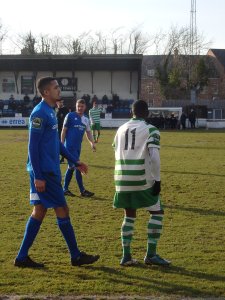
It is Hadleigh United, known as the Brettsiders because of their location next to the river, who get first go with the ball, kicking in the direction of said river. Hadleigh wear an all navy blue kit, which would be fine if it didn’t also have white shoulders, giving the players the appearance of wearing small ermine capes, like some sort of House of Lords eleven. Gorleston’s kit by contrast is all green and completely plain, although sadly it’s a rather nasty ‘plastic’ shade of green. My advice to Gorleston when choosing a green kit would be to look at what the French clubs AS Saint-Etienne and Red Star FC are currently wearing in Ligue 1 Conforama and Domino’s Ligue2.
As referee Mr Quick wastes no time in blowing his whistle to begin the match, the bells
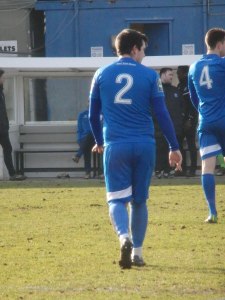
of the mostly fifteenth century parish church of St Mary the Virgin (Grade 1 listed) ring out across the town to tell everyone that it is three o’clock. Hadleigh might have had the first kick of the ball but it’s Gorleston who are having most kicks thereafter. Gorleston’s eleven Dan Camish is having a lot of fun scampering down the left wing and their number seven Connor Ingram has the first chance to score but heads over the cross bar. Gorleston seem to have a plan to get the ball behind the full-back and then into the middle. Hadleigh however, seem un-certain what to do. This perhaps explains why Gorleston have won their last three matches and are tenth in the league table, whilst Hadleigh languish, seventeenth in the twenty team division. Hadleigh’s number ten Daniel Thrower stands out as their best player however, although their number two Charlie Howlett has made most effort with his hair; his head has the look of an inverted Oreo with pale skin beneath a short back and sides and a bleached top sandwiching a band of natural brown colour. The splendidly named Romario Dunne runs Howlett a not too close second with his hair tied back into a small bun; a style which nevertheless suits his name and makes him look a bit like Stade Malherbe Caen’s Enzo Crivelli, or, less flatteringly perhaps, like one of the women in Grant Wood’s painting Daughters of Revolution.
It’s a reasonably entertaining game, even if neither team is having many shots on goal,
but the fact that it’s a sunny afternoon probably helps and peels of bells from St Mary The Virgin delight the ears too, drifting in and out on the gusty breeze; the spire of the church is visible over the roof tops beyond the car park. Suddenly,there is a loud bang on the back of the stand as a stray ball from an impromptu Diddies and Minis kickabout strikes corrugated tin. It wakes the spectators in the stand from their reverie but not the Hadleigh team who just before half past three fall behind to a goal from Dan Camish who dashes past Howlett’s haircut into the penalty area and flicks the ball past the orange-clad figure of Nick Punter the Hadleigh goalkeeper.

The main stand is in the shade and feels damp and cold so I decide to alter my perspective on the game by moving behind the Hadleigh goal to bask in the autumn sun. Five minutes later Gorleston score again; another break down the left by Camish and number nine, Ross Gilfedder slides in to prod the ball over the line a split second before Camish’s shot would have crossed the ball of its own free will. As he picks himself up off the turf Gilfedder appears to glance guiltily towards Camish, hoping perhaps that he doesn’t realise he nicked ‘his goal’. Perplexed Hadleigh players look at one another with arms outstretched and palms open, but seem to accept they are all at fault.
I move on again, this time to the side of the pitch so I haven’t got so far to go for my half-time tea. I stand next to two men just in time to over hear the end of a funny story about a funeral. From what I could make out the story teller went to the funeral of someone who he had been told had died, but it turned out that the funeral was for someone else with the same name and his acquaintance wasn’t dead at all. The punch line was something like “Well if he dies again I int going to his funeral ‘cos the cunt never turned up to his first one”. Amusing story over, the conversation switches to football and how the standard of the Thurlow Nunn Eastern Counties League First Division probably isn’t any better than the Touchline Suffolk and Ipswich League Senior Division. Meanwhile, Gorleston win a free-kick near the half way line which is taken by their number five Dave ShadePeter Lamber who is a giant of a man. Lambert boots the ball far over the goal and straight out for a goal kick. “Everything that bloke kicks goes out” says the man the other side of me from the man who went to the funeral. I tell him that I think the problem is he has been built to the wrong scale.
Half-time is almost here and my thoughts have turned to a polystyrene cup of hot tea, but I am going to have to wait. Gorleston’s Mitch Mckay runs onto a through ball and into the penalty area, as he controls the ball Nick Punter, which is an apt name for a goalkeeper, dives at his feet and McKay falls to the ground. Mr Quick, doesn’t hesitate to award a penalty from which Connor Ingram creates the half-time score of 3-0, although not before Hadleigh captain Kris Rose rather angrily and threateningly berates the linesman Mr Pope.
Half-time sees the hordes of Diddies and Minis return to the pitch to take penalties


against a large dog in a blue checked hat and coat and a lion that is wearing a T-shirt and possibly a thong. I give the lion the benefit of the doubt and don’t phone Social Services, preferring to warm my hands around a pounds worth of tea whilst I read the programme.
The first action of the second-half sees Hadleigh’s captain Kris Rose very unnecessarily and somewhat viciously scythe down Gorleston’s number ten Jordan Stanton, who is by no means the toughest looking member of the Gorleston team. Rose struts and swaggers away from the scene of the crime advertising his lack of remorse. Pleasingly Mr Quick does not delay in making him the first player to be shown the yellow card. It would seem that Rose has not yet got over his anger from the penalty at the end of the first half. In the programme Rose’s own team mate Michael Barwick outs Rose as the team ‘hardman’, but also the vainest player at the club.
The game carries on and the winners of a prize draw are announced. Ticket number 887 wins a meal for two at the Swan Inn at Lavenham. Another prize involves what sounded like a body wash or scrub, perhaps both. Hadleigh meanwhile, are playing better than they did in the first half and deservedly win a penalty at about a quarter past four from which Dan Thrower scores. Then a little later George Crowe hits a post with a shot and Thrower hits the bar. “Come on Hadleigh, you’re all over them” shouts a man from the stand, not unreasonably. Gorleston are looking worried and a certain tension is evident amongst the players despite their two goal lead. A Gorleston player goes down under a challenge from Charlie Howlett, who is immediately booked by Mr Quick. There is a hiatus as the player receives treatment or counselling and a small boy, probably a Diddy, asks me what happened. I tell him the Gorleston player looks to have been accidentally smacked in the mouth. “Oh yeah, I’ve done that” says the small boy. I don’t know if he means he’s smacked someone else in the mouth or if he’s been smacked, but I don’t get the opportunity to ask as he’s already run off.
Despite being a bright afternoon, there has always been a lot of cloud and now a few spots of rain have appeared on my coat; my fingers are growing increasingly numb and the shadows of the trees at the Layham end of the ground have reached the far end of the pitch. It’s ten to five and Gorleston substitute Ryan Fuller plays in fellow substitute Joel Watts who takes the ball around the on rushing Punter before kicking the ball firmly into the net.
The goal confirms the result beyond all doubt and pushes Hadleigh into the relegation places in the league table. With the final whistle I head back to my Citroen across the practice pitch, dodging the few remaining Diddies and Minis who are knocking footballs about behind the main stand. It’s been a decent afternoon’s entertainment even if Toppesfield Bridge and the bells of St Mary the Virgin will always possibly be the stars.

This slideshow requires JavaScript.

Meudon AS 0 St Ouen L’Aumone AS 2

Today is the last day of September, my wife Paulene and are staying in Meudon on the edge of Paris, and having enjoyed both professional Ligue 1 and Ligue 2 football in the past week and a bit, watching both Paris FC and Paris St Germain, this afternoon we are getting down with the French equivalent of ‘non-league’. Not much more than ten minutes away by car at the Stade Georges Millandy in Meudon Le Foret (twenty minutes by bus service No 289) is a Coupe de France fourth round tie between Meudon AS of the Ile de Paris regional league Division 3 and St Ouen L’Aumone AS of the Ile de Paris regional league Division 1. These leagues are the 6th and 8th levels of the French football league ladder, although probably not directly comparable to those levels in the English non-league ‘pyramid’.
The parking at the local community sports centre, where the match is to take place is full, so we park our trusty Citroen C3 around the corner in Rue Georges Millandy between large blocks of modern apartments. We are not sure exactly where we are going, but the Federation Football Francais (FFF, the French Football Association) website says this is the where the match is taking place and having walked through a corridor in a sports hall we find ourselves next to an artificial football pitch. There is no turnstile and watching this match is free. A bunch of blokes in tracksuits sit outside a portacabin eating baguettes and drinking coffee. In my exquisite school boy French I ask if this is this is where the Coupe de France game is taking place at 2.30; I am relieved to learn that it is, and flattered that the man I speak to recognises the Ipswich Town crest on my T-shirt. I explain that I am a fan and not from the club itself, but we both quickly make the connection that Ipswich’s Under 18 player Idris El Mazouni is from Meudon. I will later discover that I have been talking to Idris’s dad.
The Stade Georges Millandy is not a stadium as we might understand it in Britain, because it has no stands; it’s just a 3G synthetic pitch with dugouts and a metal fence, overlooked by five or six large, shiny white apartment blocks.

This slideshow requires JavaScript.

It wouldn’t make the grade for the Thurlow Nunn Eastern Counties League, although in truth the playing facilities are better than at most clubs in that league. It seems quite new, is in good condition and is the sort of installation that a town the size of Ipswich should probably have at least ten of. Given that these pitches are not cheap to install it is doubly impressive that the surface extends beyond the actual pitch to the area around it, with a mini pitch and goals in the space behind one goal. A game (possibly Under 15s) is

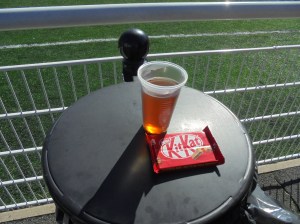
just finishing with a penalty shoot-out and I return to the portacabin, which is a sort of club house and buvette, to get two cups of green tea and a Kit-Kat (all 1 euro each); the tea is poured from a huge pot. On one wall is a large array of trophies won by all age groups within the club.

Paulene and I wander around the pitch as we drink our tea and I scoff a Kit-Kat trying to remember why Nestle products were boycotted and if they still should be; too late now, I have become complicit in their multi-national nastiness. It is a beautiful, bright sunny

45013661531_f3c54472c1_o

afternoon beneath a clear blue sky and the gaze of those shiny apartment blocks, which cast no shadows on one another or the pitch; this has to be how Le Corbusier imagined La Ville Radieuse.

A man in a loosely belted gabardine raincoat appears; if he was wearing a trilby hat he could have stepped from a 1940’s film. He sports a bright arm band which adds to the look, but in a slightly sinister manner; he is however the délègue principal, the FFF official who

43201967200_10152fe2e5_o

will oversee this afternoon’s game from the side lines. Out of the blue one of the spectators walks up to me and shakes my hand. In due course the two teams emerge from their respective changing rooms and walk through the metal gate onto the pitch before lining up side by side, then in a line before shaking hands. Introductions between the referee and players and délègue principal are made all-round, before the game kicks off about five minutes late (it was advertised as a 14:30 kick–off) with St Ouen having first go with the ball, aiming at the goal in front of the buvette. Meudon kick in the general direction of far off Stade Charlety and the 13th Arrondissement. St Ouen wear an all-green kit, whilst Meudon are all in red; neither club has its club crest on its shirts but instead bear the logo of the FFF with its cockerel.

St Ouen quickly win a free-kick as their tricky number nine goes down under a challenge; he gets up to send a neat free-kick over the red wall of Meudon, but into the arms of the very young looking Meudon goalkeeper, who strangely is one of the smallest players on the pitch, a sort of French Laurie Sivell. It is also St Ouen who have the second serious goal attempt, again a free-kick, but this time firmly hit from a wide position by their number ten. Once again the goalkeeper, whose blond hair may not be its original

30077406907_10dcb243ea_o(1)

colour, saves, batting the ball away for the first of five corners that St Ouen will win this half. Most of these corners are either poorly taken or all the St Ouen players are waiting for the ball in the wrong places.
Meudon are very competitive and the game is played at a fast pace with the emphasis on passing rather than just getting the ball forward by the fastest route. Meudon come close to scoring a bit before three o’clock as their huge number eleven breaks through on the left. The St Ouen goalkeeper, who incidentally reminds me of St Etienne ‘keeper Stephane Ruffier on account of his designer stubble and very short dark hair, and is possibly the second smallest on the pitch, dives at his feet. The ball rebounds to the Meudon number seven whose goal-bound shot is headed away at improbably close range.
Meudon seem to be growing in confidence and their number ten does a few feints and jinks over the ball like a footballing Michael Jackson (Bubbles’ friend, not the one who played for Tranmere and Shrewsbury) might have done. There are a few jeers and within the next twenty seconds his ankles are swept away from beneath him by the St Ouen number three as he goes to dribble down the right touchline. It’s one of those situations that some people would try to excuse by saying that number ten had been ‘disrespectful’, but that’s just a modern buzzword, a sort of false political correctness and it is tosh; I blame Eastenders. Football is a game of skill, and dumping someone on their bum shows little ‘respect’ itself. Referee Monsieur Charly Legendre doesn’t see fit to book anyone either way.
The coaches on the side lines are animated, “Parlez –vous” one calls urging his players to talk to one another. The St Ouen coach, a portly man in his fifties sports a fine mullet and

43201968530_160c2105a2_o

has the look of Maradona about him. The Meudon coach becomes involved in a prolonged discussion with the linesman Mefa Bakayoko about an offside or a free-kick which has been and gone and so no longer matters. On the field, the St Ouen number ten sends a free-kick solidly over the cross bar whilst Meudon’s number six comes as close as anyone else with a long range shot that goes wide. St Ouen’s number nine is proving industrious and creates a couple of shots for himself, one of which is well saved and Meudon replace their number three with substitute number thirteen. Half-time arrives and Paulene and I look back on a good but slightly frustrating forty-five minutes, which was too tight to be really entertaining. I head for the buvette to get a bottle of water (1 euro).
During the half-time break we stand about and as a man walks by he shouts “Ipswich!”. We could do with that sort of enthusiasm at Portman Road. As I stand I enjoy the

44294420204_39f8378ac4_o

contents of the many balconies that overlook the pitch from the surrounding apartments. Bikes, mattresses, plants and drying clothes decorate the bright white buildings and on one corner is a tricolour, perhaps left over from the summer’s World Cup win. As the afternoon wears on more people seem to arrive to watch the game and by the end I estimate that at least one-hundred people are here.
The délègue principal oversees the away team leaving their dressing room by a side door to the sports centre building and heads back to the pitch still wearing his gabardine raincoat, although it’s a warm afternoon; he is perhaps the anti-thesis of the banker in The Beatles’ Penny Lane and also feels as if he’s in a play, or a British TV sitcom. The bearded referee begins the game again and St Ouen soon win their sixth and seventh corners of the game, although in between their number eleven also shoots over the cross bar. At about four o’clock the St Ouen number eleven breaks forward through the middle, stretching the Meudon defence before playing a through ball to number ten who slips the ball inside the near post past the ‘blonde’ goalkeeper; St Ouen lead 1-0.
They may be losing and disappointed to be doing so, but Meudon still pose a threat and a good run and cross from number eleven meets the thigh of number seven just a few yards out, but he can’t direct the ball past the goal keeper. The first booking of the game goes to Meudon’s number two and the game enters a tetchy stage where it seems it could flare up at any moment. As at most French football matches I have seen where this happens however, there are only outbreaks of animated discussion between the players, but the referee stands back and let’s this carry on. It’s a civilised approach which may reflect the character of a country that has produced far more philosophers than England has produced ‘World Class’ footballers.
St Ouen are buoyed by their goal and their bearded number three controls a ball beautifully on his chest before advancing down the flank. The lads watching near us jeer at his skill and nickname him Fekir, and they’re right to do so because he does vaguely resemble the French international. But Meudon are not beaten yet and the large number eleven strides past a couple of St Ouen players before playing a through ball to number twelve who either wasn’t paying attention or the pass wasn’t as good as it looked. Paulene and I belatedly realise that the number twelve has replaced the number seven, who we had thought was Meudon’s best player.
St Ouen almost score a second goal as their number nine diverts a cross from ‘Fekir’ the wrong side of the post from close range, but the game is becoming more scrappy and there are more fouls. The Meudon number ten spends more time than most not being upright. St Ouen win an eighth corner and as a passage of play ends Monsieur Legendre calls over Meudon’s number nine and ‘Fekir’ and books them for a mystery offence that neither Paulene or I saw. It is now gone half past four and we are witnessing time added on as St Ouen’s number eight runs down the right and then pulls the ball back across the penalty area for substitute number fourteen to side foot beyond the small, blond goalkeeper into the far corner of the goal. St Ouen L’Aumone AS is the name that will go into the draw for the 5th round of the Coupe de France.
It’s been a reasonable game although not an exciting one in terms of goalmouth action. We turn to leave and Paulene notices a man with an Ipswich Town crest on his coat; I speak to him and it turns out he is the father of a second player from Meudon AS who is now in Ipswich Town’s Under 18 squad, Lounes Fodil.

44294397894_dca5642a04_o

Lounes’s dad, who is called Mustapha (apologies if the spelling is wrong) is a lovely bloke and is genuinely pleased to meet us and invites us for a coffee in the buvette. Our conversation probably isn’t the best as neither our French nor Mustapha’s English are fully fluent, but Mustapha gets across his philosophy of football; it’s a game of skill and intelligence not brute strength. He’s been to Portman Road and has noticed the glum atmosphere, which he attributes to the dull football. Whilst we are at the buvette some of the players come in for post-match drinks and snacks, one of them (I think it might have been the big number eleven or the captain) tells me Lounes is a good player. I tell him that’s good news because Ipswich Town really needs some good players; before he leaves he shakes my hand. The man who I first spoke to when we arrived comes to the bar counter and gets out his mobile phone before showing us a montage of clips of Idris El Mizouni playing for the Under 18’s, this is when I discover that this is Idris’s dad.
After a good half an hour or more we have to leave and walk from the ground with Mustapha who leaves us his phone number and invites us round to eat; sadly Paulene’s food intolerances and allergies will make that too complicated. We thank Mustapha and say how good it has been to meet him. Hopefully we will see him again.

This slideshow requires JavaScript.

Brentford 1 Ipswich Town 0

My train is seven minutes late, which means that changing at Stratford to catch the 12:12 Jubilee Line service to Waterloo will require speed and alacrity. This is a shame and adds to my existing disappointment from when I bought my train ticket and the cheerless young woman at the station first tried to charge me a couple of quid more than the price I’d been quoted on the National Rail website. It turns out that there are two fares for the same journey, but apparently I didn’t want a ‘day return’ (£23.50) I wanted a ‘day travelcard’(£20.65 with a Goldcard). In reality I just wanted to go to Brentford and back as cheaply as possible, not caring what the ticket is called. Two companies, two prices it seems. The joyless woman’s excuse for not quoting me the lower price is that she doesn’t know where Brentford is. What idiot decided it was a good idea to split up a national rail network into separate private companies anyway?
When the train arrives it is busy and one of the few vacant seats is next to a grandmother, her daughter and two young grandchildren, not a choice of seat I would usually make. One of the children announces the names of all the stations, the other is fractious and often close to tears. The adults make more noise than she does however as they shush her and try to divert her attention from whatever upsets her. More passengers get on at Chelmsford, I feel the warm breath of a woolly looking dog on my hand as it is led down the aisle, my look of surprise makes the woman opposite me laugh. Another woman provides interest with her golden finger and toe nails, they’re a work of art worthy of Gustav Klimt.
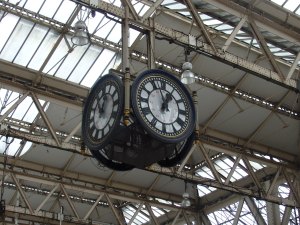
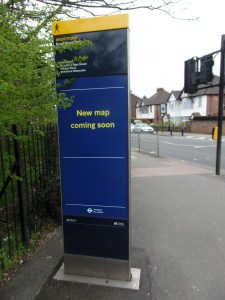
The journey is tortuous; making the connection at Stratford I have to wait half an hour OLYMPUS DIGITAL CAMERAfor the next connection from Waterloo. But Waterloo Station provides entertainment, I stand beneath its famous clock and a dishevelled, smelly man who holds a red lead at the end of which is a small, contented looking black cat, talks, but no one listens. From Waterloo to Brentford takes another half an hour, but provides glimpses of the gothic Palace of Westminster, the neo-classical Tate Gallery and Art Deco Battersea power station; later the train crosses the River Thames at Barnes Bridge, so it’s a lot of sight-seeing fun. Brentford station is dull, like the weather, but just outside a way finder sign announcesOLYMPUS DIGITAL CAMERA ‘New map coming soon’ as if it’s been decided to replace the old map of Brentford with one of somewhere more exotic like Montmartre. The buses in this part of London are run by RATP, the company that runs Paris metro; another two-fingers to bloody Brexit.
Griffin Park is a proper football ground, surrounded by neat streets of terraced houses, like the one in which Mr Benn of Watch with Mother fame lived; I half expect to see him emerge from one, waving stiffly and sporting a red and white striped scarf and disproportionately large rosette. Walking down Clifden Road from the station all four metal floodlight pylons hove into view; it’s a sight to gladden the heart of any football supporter. I buy a programme (£3.50) and jokingly complain to the seller about extortionate metropolitan OLYMPUS DIGITAL CAMERAprices. Someone sells Chilli Con Carne from beneath a gazebo in their front garden. The Griffin pub is on a corner near the away supporters’ entrance and it and the terrace of bay-windowed houses opposite are built of the warm, yellow stock brick that defines so much of London. Football supporters spill out from the pub and into the streets which crawl with fans of both clubs. There is a good feel about this place. Despite its Twickenham postcode, nominally Brentford is a London club, but its supporters don’t have the obnoxious conceit of most London fans. I stroll up Braemar Road past the main entrance to the ground, beyond which is the club shop; it looks like a 1920’s suburbanOLYMPUS DIGITAL CAMERA bungalow with its red and white painted gable. Naturally I take a look inside; if Chelsea has a ‘megastore’, this is more of a corner shop.
At the end of Braemar Road chalkboards on the wall of the Princess Royal pub welcome fans of both clubs before and after the game. Walking past the New Inn on the next corner of the ground I am welcomed and ushered in, but perhaps rudely I don’t stay because the beer is Greene King. I carry on down New Road and pass the Royal Oak pub and can still see the Griffin Park floodlights above the roof top along with a passing jet airliner, one of the hundreds that roar over about every two minutes during the day as they leave or arrive at Heathrow.
I return to The Griffin because it serves the local Fullers beers and despite the heaving throng at the bar I get served quite quickly with a 500 ml plastic cup of Fuller’s London Pride (£4.10); the name of the beer and its presentation sadly don’t really match up, but it says a lot about modern Britain. I go outside and lean on someone’s front wall to watch the pre-match activity unfold before me as I consume my beer. Before heading into the stadium I use the toilet inside the pub. There is an orderly and good-spirited queue at the three urinals. Somebody jokes as he pees that this will probably be the highlight of his afternoon, whilst someone else queues with a pint of lager in hand, as if he might just tip it straight into the urinal and cut out the middle man.
Today I am meeting Tim who I have known since 1965 and who is travelling up from Weymouth with a friend of his. The news is that due to engineering works Tim has had to travel via Westbury (Wiltshire) and due to an incident on a level crossing in Cornwall his train is delayed. He will arrive at Paddington not much before 3 o’clock and will have to get a taxi from there, missing the kick-off. I have his ticket. It’s a bit of a pickle, but I am hoping that I can leave the tickets for collection so that I don’t have to hang around outside and miss anything of the match myself. I speak with the steward at the away supporters entrance who is stood by a red flag which announces “Here to help”. Assuming it’s not the flag that’s the helpful one I ask the steward nearby if it would be possible to leave the tickets for collection; he refers me to the Stand Manager, a lady just a few metres away, who is extremely helpful and immediately says it will be no problem at all and I should leave the tickets with the steward who I just spoke to and let Tim know his ID number, number 277. I am deeply thankful and impressed by their straightforward efficiency; seems like it’s 1-0 to Brentford already.
In the small Brook Road stand, known by home fans as the ‘Wendy House’, most IpswichOLYMPUS DIGITAL CAMERA supporters are gathered in the centre of the terrace directly behind the goal, I find a mostly pleasant, uncrowded spot towards the New Road stand. The only drawback is a youth stood staring at the Brentford fans making a masturbatory gesture; if only he knew how silly he looks. The roof is low, which gives the small terrace a good atmosphere and there is some singing from the Ipswich supporters as the teams appear amidst a posse of photographers and assorted hangers-on including the club mascots. Brentford, known as the Bees, have two mascots named Buzzbee and Buzzette, not surprisingly both are bees, but Buzzette looks worryingly like a Golliwog.
After a minute’s applause for former England international Ray Wilkins who died this week, Ipswich kick off the game wearing all blue although their usual white shorts would not have clashed with Brentford’s red and white striped shirts and black shorts. It’s a colourful scene against the back drop of the plain stands and lush green turf. Brentford are kicking towards the Brook Road stand. Town defend the Ealig Road end with its impressive backdrop of grey Brutalist tower blocks off in the distance. The early exchanges are symptomatic of the usual rubbish served up in what is nowadays known as The Championship, as players whose levels of fitness and strength far exceed their levels of skill cancel each other out and the ball flies between them like a pin ball. Ipswich’s Jordan Spence is the first player to be booked by referee Mr Robert Jones and it is only a quarter past three.
Tim and his friend arrive about five minutes later, but the game doesn’t improve; why should it? Two blokes beside me seem to be discussing whether someone’s hair is permed or not. An Airbus 380 flies over. There is little vocal support for the team from the Ipswich fans but plenty of singing of “Mick McCarthy, Get out of our club” to the usual tune of Sloop John B. Haven’t they heard? He’s going at the end of the season. It doesn’t seem likely that he will suddenly bugger off in the first half of a match, does it? These people need to get over this and just get behind the team. But many Ipswich fans love to accentuate the negative.
As a Brentford ball beyond the Ipswich defence reaches the penalty area Town ‘keeper Bartosz Bialkowski and Town captain Luke Chambers collide and it looks like Chambers has ’done his shoulder’ as a result. Chambers is replaced by substitute Myles Kenlock; in terms of spectacle the collision is the highlight of the first half although it inevitably prolongs proceedings. It’s been an even first half with both teams as bad as one another, so it seems that it’s not only Mick McCarthy’s football that is, in the words of the song, ‘shit’.
The second half is much the same as the first, although Brentford improve and are having much more of the ball with Ipswich rarely venturing towards their own fans; but who can blame them. The negativity in the Brook Road stand turns up a notch with a new song. At first I think they’re singing “We’re the arseholes, we’re the arseholes, we’re the arseholes over here” but then it becomes clear that the words is numbskulls, not arseholes, a reference to Mick McCarthy labelling some supporters numbskulls in a recent interview. Numbskulls is a word that seems to resonate with these supporters for some reason, as if they have found their true identity and along with chants of “We hate Mick McCarthy” they sing “Mick McCarthy’s blue and white numbskulls”. But their negativity isn’t confined to Mick McCarthy as they also very unjustly dust off Sloop John B once again to sing “I wanna go home, I wanna go home, Brentford’s a shithole, I wanna go home” . Only a numbskull could label a football ground with a pub on each corner a “shithole”.
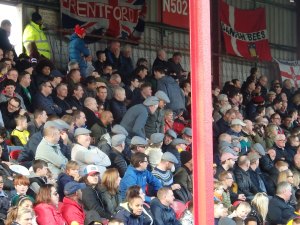
A bald-headed bloke stood next to me, who has been joining in with the numbskull chants remarks that it looks like being a goalless draw “Yeah, if we’re lucky” I reply, tuning in to the pervading negativity. We’re not lucky. To our left in the New Road stand, a simple pitched roof structure with a line of thirteen bright red metal stanchions that line the pitchside, there are about twenty middle aged blokes all in identical grey flatOLYMPUS DIGITAL CAMERA caps, all sat together in a couple of rows. At about twenty to five most of them get up and file out through the back of the stand. Shortly afterwards Town’s Jonas Knudsen naively bumps Brentford’s Sergi Canos who falls to the ground. Referee Roberts who seconds earlier ignored a similar incident in which Town’s Luke Hyam appeared to be pushed over, awards Brentford a penalty. As a huge Ginsters pasty rolls into view on the pitchside electronic advertisement hoardings, Brentford’s French former St Etienne forward Neal Maupay steps up to score, sending the ball gently into the right hand side of the goal as Bartosz Bialakowski dives obligingly to the left.
With Ipswich losing, the Town ‘supporters’ that bother to sing now give free reign to their unpleasant feelings and unleash Sloop John B yet again to proffer the standard complaint that Mick McCarthy’s football belongs in the toilet. No criticism of Knudsen is made, obviously Mick coaches him to give away penalties when he can. As the game rattles along towards its conclusion Ipswich finally get forward a little more and muscular Martyn Waghorn gets through a couple of times. Kenlock the substitute is in turn substituted as the need for more effective attacking players builds, and Town play with two wingers. The sun is now shining and on the bench, well off it really, because he always stands up, Mick has taken off his coat as if to confirm that he’s not going anywhere soon and to stick it to the numbskulls.
A final flurry from Town isn’t enough and despite four minutes of added on time the game is lost. We make a swift exit to the railway station. It hasn’t been a good game, the result doesn’t help and the Ipswich supporters and their obsession with moaning at Mick McCarthy has made it worse. But Brentford has been grand, it’s a lovely ground to visit, so I don’t begrudge them the win even though the penalty that secured it owed more to the referee than any foul. I shall keep my programme and match ticket to help me remember Griffin Park, just like Mr Benn would have.


This slideshow requires JavaScript.


Bury Town 0 Waltham Abbey 0

It’s a thirty-five minute train ride from Ipswich to Bury St Edmunds (£7.20 return with a Gold Card) stopping at Needham Market, Stowmarket, Elmswell and Thurston, which for a 25 mile journey by train seems quite a long time. But whilst it’s not one of the fastest train rides in the world, it’s pleasant enough and there’s a busyness and hum about it due to the churn of passengers at each of the four stops.
I board the 1320 and sit at a table seat where just before departure I am joined by three blokes in their thirties who seem to be part of a larger group on a stag weekend, but they also seem to be Margate supporters heading the nine miles down the track to today’s match at Needham Market; an interesting combination that beats paintballing in Dublin. At Stowmarket the train fills up again and pulls away from the station passing the Green Meadow ground, where later this afternoon Stowmarket Town will beat Ipswich Wanderers 3-0. Three well-turned out women in their forties apologetically take up the empty seats around me, asking if I mind if they sit there. “As long as you behave yourselves” I say and they reply that they can’t promise anything but they’ve only had one drink so far today. They’re heading for the bright lights of Bury St Edmunds to celebrate a birthday and they natter constantly throughout the journey about all of life’s trials. “Oooh, I can’t get on with public transport” says one “You know that striped carpet we’ve got” says another “ …had to have it re-laid twice, they got it all wrong on the stairs” . “I don’t go shopping anymore” says the third “Just do click and collect”. “Same with me” replies one “But I just buy baked potatoes”. Then one talks at length about the problems with parking outside her house and an intimidating little bloke in a Range Rover who’s got four cars and a bike, but there’s only him and his wife living there. She doesn’t know what they’re going to do when Annabel gets a car.
Arriving at five to two at Bury St Edmunds’ beautiful red brick railway station, the

OLYMPUS DIGITAL CAMERA
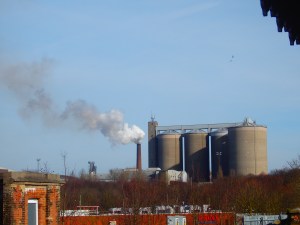
women alight and thank me for letting them sit with me, I tell them it was my pleasure, and it was. Stepping onto the platform I immediately breathe in the sweet smell of the local sugar beet factory, a smell that transports me back to the school playing fields of Ipswich in the 1970’s. It’s not exactly a pleasant smell because it’s thick and cloying, but it’s always at its strongest on clear, bright, cold days like today when the wind is in the east and the sky is a frigid blue, and for that reason I can’t help but like it. The sugar beet factory is a thing of beauty with its grey concrete silos and billowing trail of white steam belching and then dissipating into that blue sky. I feel glad to be alive, but it’ll pass.
OLYMPUS DIGITAL CAMERA

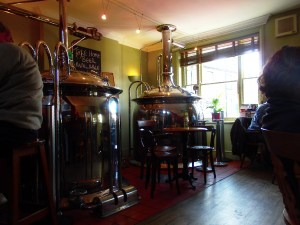
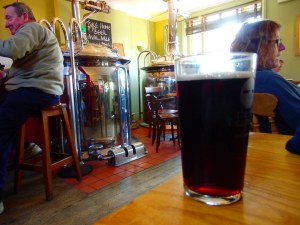
Heading for the town centre I turn to admire the railway station with its pair of ‘minarets’ and then set-off along Northgate Street before turning into Cannon Street and stopping at the Old Cannon Brewery, hotel and bistro. Most of the people in here are eating and it doesnt have the ambience of a pre-match boozer, but I just have a pint of Black Pig (£3.50) and sit at a small table facing the shiny brewing vessels to read the football pages of the Bury Free Press. The headline story concerns Walsham le Willows FC who apparently are being threatened with relegation from the Eastern Counties Premier League if they don’t resolve some health and safety issues at their ground in Summer Lane. I worry why the League considers relegation would resolve the issue, unless the view is that in Division One some injury and possible death is to be expected.
OLYMPUS DIGITAL CAMERA
25601849627_0ba0724e26_o
OLYMPUS DIGITAL CAMERA

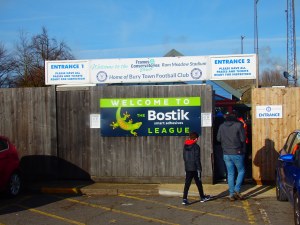
I wrestle with the idea of having another pint, but decide to head for Bury Town’s ground because it’s now twenty five past two and I’m not sure exactly how far it is or what delights await me at Ram Meadow. I am surprised at how quickly and easily I find the ground considering that I last came here in February 1989. The approach is across the adjacent municipal surface car park (£1.80 for three hours) and is not very imposing; there is no sense of arrival, just a close board wooden fence and three advert hoardings with a single gate. If there was a queue at the turnstile people could be mown down by small men in Range Rovers desperate to park.

OLYMPUS DIGITAL CAMERA

OLYMPUS DIGITAL CAMERA

I pay my entrance money (£9) and step around the turnstile to stand in what looks like a queue to buy a programme (£2), but it’s not, it’s just old blokes talking; so I step around them explaining to the programme seller that I thought they were a queue. The layout of Ram Meadow is a lot like that of King’s Meadow in Sudbury with the main stand and club house on the west side. The club house at Ram Meadow is new and tacked onto the end of it is a conservatory which is the members’ lounge.
OLYMPUS DIGITAL CAMERA
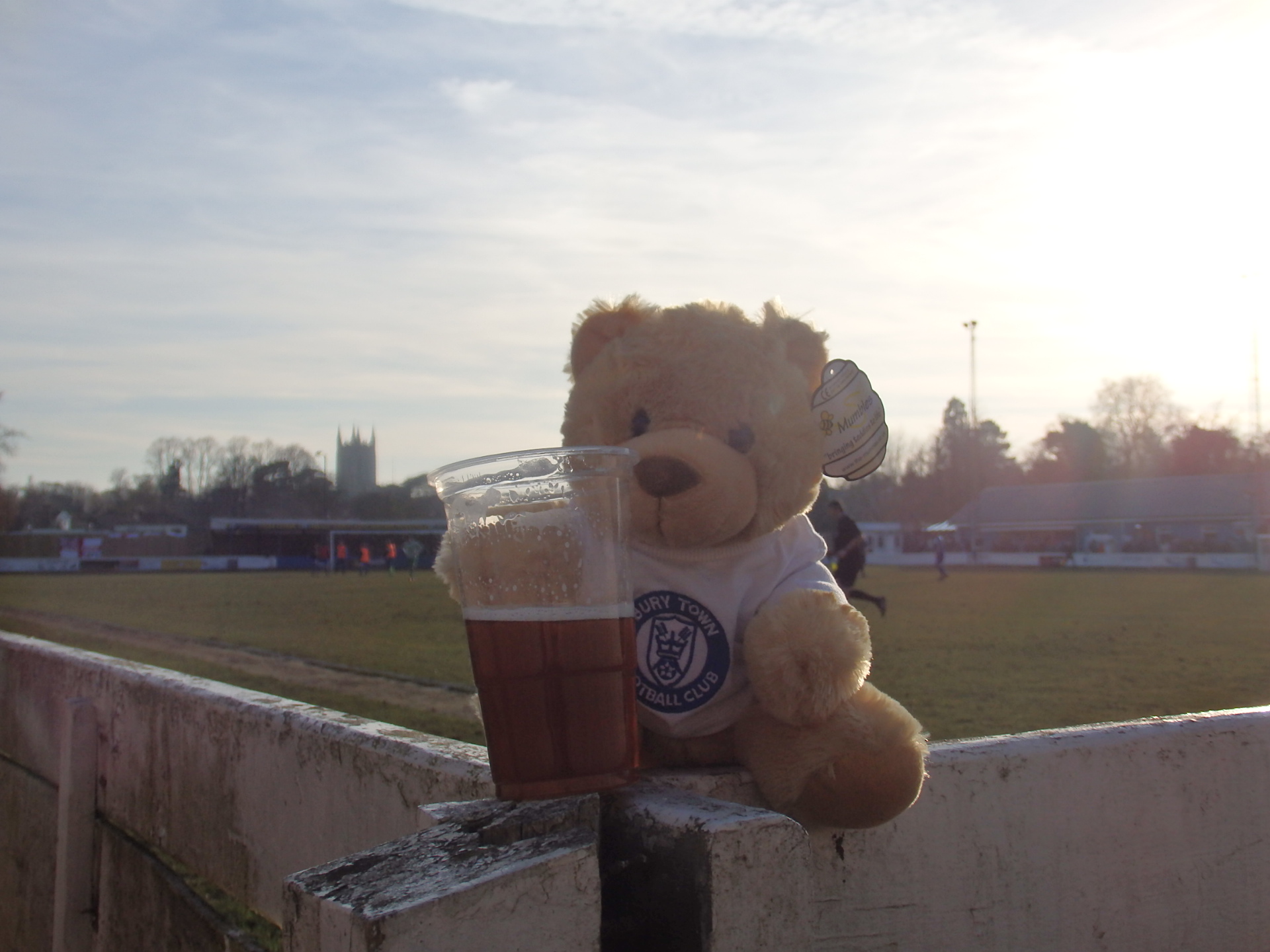
Through the glass I can see people scoffing plates of boiled potatoes and pies. By the side of the conservatory is the club shop, it’s the sort of structure that the occupiers of suburban bungalows call a ‘garden room’. I love a club shop; this one is pedalling the usual shirts, scarves and woolly hats but also bears and dinosaurs in Bury Town t-shirts.I head for the bar.

OLYMPUS DIGITAL CAMERA

The club house at Ram Meadow is quite new having opened in September 2016; it’s a very plain building but I forgive this because there’s a hand pump on the bar, although the barmaid doesn’t know what it’s serving, just that it isn’t what it says on the pump clip. I buy a pint (£3.40) and have pricked the barmaid’s curiosity; she has to find out what the beer is, but returns to say she’s none the wiser and the barrel just says SX SW Pale Ale. I take a seat at the side of the room near where the Bury Town Under 10’s are getting ready to be mascots; there is cake on a table and a mother stands with a plate of chips with a look of ‘do you want any more of these?” on her face.
Two blokes next to me are talking about the match. “So where is Waltham Abbey then?” asks one. “Down near Harlow by the M25” says the second, looking it up on his ‘phone. “They’re all fucking down there, these clubs” is the reply. They speak not in Suffolk accents but as though they really should know where Waltham Abbey is. The beer is good and is quickly gone so I step back out into the cold afternoon. It’s not long until kick-off so I think about where is going to be a good spot to watch the game. I wander back round to the corner of the ground by the turnstiles and the teams are just coming onto the pitch when a voice says “Allo Martin”. It’s Dave, the man with whom I used to write the ‘A Load of Cobbolds’ fanzine back in the 1990’s. In his day Dave was every bit as dedicated to watching Ipswich Town as ever-present Phil who never misses a game is now. I will be eternally jealous of Dave because in 1981 he was in a minibus that went to St Etienne to see Ipswich win 4-1 in Ipswich Town’s greatest performance ever. But Dave became disillusioned and did something about it, he stopped going. But Dave can’t give up football and now has a Bury Town season ticket.
Dave and I walk round to where he sits every week, in the Jimmy Rattle stand with two old codgers who like to just sit and moan. The Jimmy Rattle stand is a long low, multi-stanchioned structure with just a few rows of lovely, warm, wooden bench seats. A scaffolding tower adds interest in the centre, from where each match is filmed.
OLYMPUS DIGITAL CAMERA
The game begins with Waltham Abbey, in green and white hooped shirts and green shorts, kicking towards Bury St Edmunds cathedral, and Bury Town, in all blue, kicking towards the sugar beet factory and its plume of white steam. If I had to choose ends, I’d choose the sugar beet factory.
The pitch is soft and muddy and the colourful kits and clear blue sky make a beautiful scene. Dave updates me on family life; his eldest daughter who I met as a toddler in 1992 is now head of history at a school in Cambridge; I remember her being able to say “We are top of the league; we are top of the league”. Dave says how his younger daughter is less academic and her idea of preparing for an exam was to do her make-up and hair. She has a boyfriend who plays for Bury Town. Dave likens his children to Lisa and Bart Simpson and clearly enjoys that they are so different.
Meanwhile, on the pitch the game is entertaining whilst being of rather poor quality in terms of skill and well organised football. My attention is mostly taken by a Waltham Abbey player who looks as if his kit is a size too large for him
OLYMPUS DIGITAL CAMERA
and the Bury right-back for whom the opposite is true.

OLYMPUS DIGITAL CAMERA

Bury are expected to win as they sit 10th in the Bostik League North Division table, whilst Waltham Abbey are 13th and have lost most of their last eight or nine games. Very little happens near the goals and most time is spent ploughing through the muddy turf of the congested midfield. But near the end of the half Waltham Abbey twice break free and although their number ten looks certain to score he contrarily hits each post and then a short while later another player carelessly boots a third good chance wide.
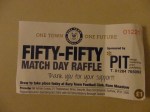
We buy a fifty-fifty draw ticket each (£1.00) from a lady called Maureen and the half soon

OLYMPUS DIGITAL CAMERA
ends. With half-time I return to the club house to catch up on the half-time scores, and to celebrate that Ipswich are winning I buy another pint of the mystery pale ale. With my beer in a plastic cup I am free to wander outside and explore, and as I do so my beer gets colder and colder as the sun sinks low in the west. At the sugar beet factory end of the ground is a an advertisement board for The Suffolk Pest Control Comp[any Ltd , which features a silhouette of a Suffolk Punch horse; I didn’t know
OLYMPUS DIGITAL CAMERA
these animals were considered pests, but can well imagine that an infestation of them would be a bit of a bugger. But it does account for why the Suffolk Punch is a rare breed.
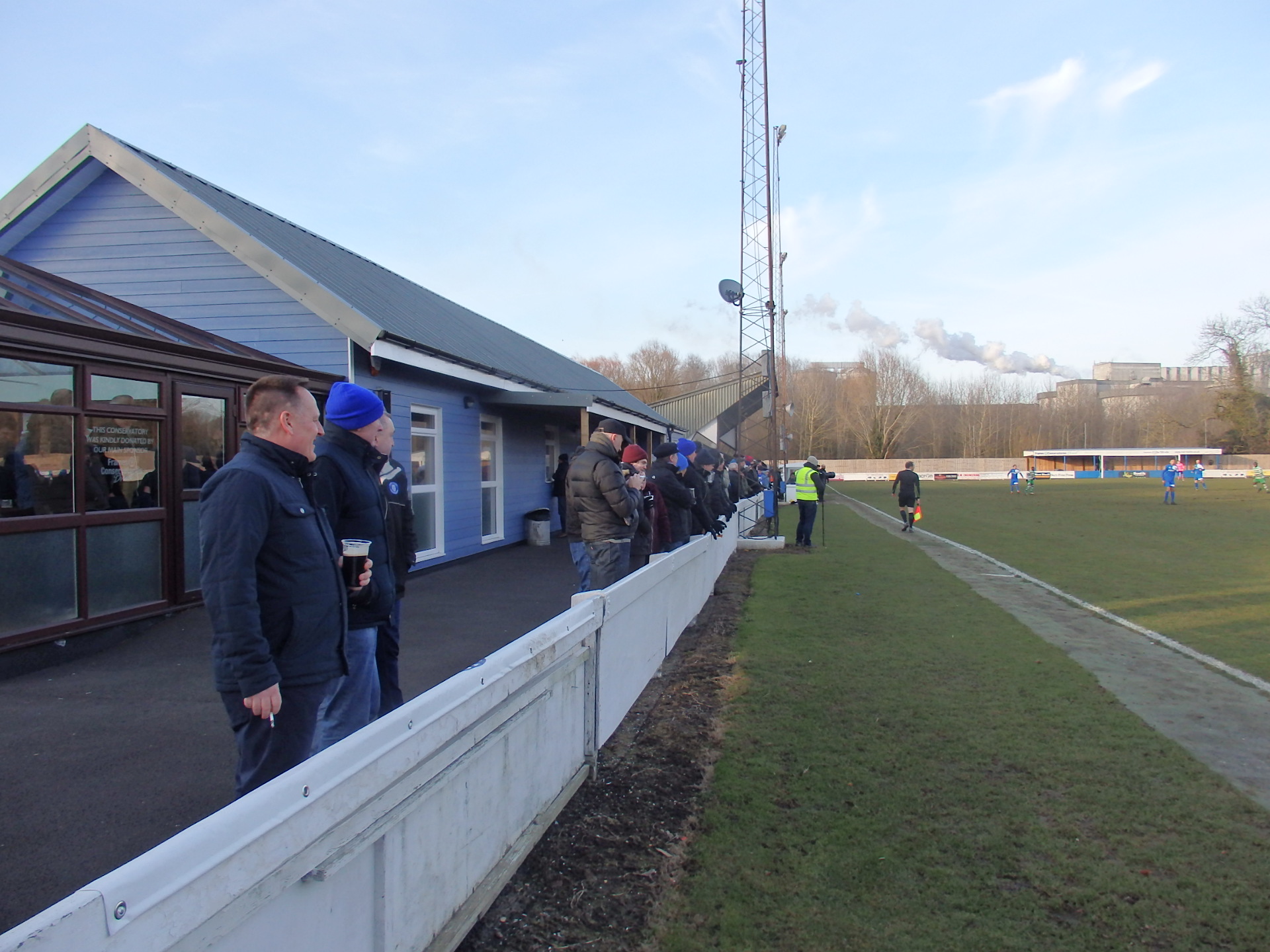
As the game resumes I visit the outside toilet, in which very weirdly I think I can detect a faint smell of Christmas pudding. I pass the ‘Home and Away Directors box’ and wonder if there are other TV Soap themed directors’ boxes around the country or whether this is the only one. I wander back past the clubhouse where the faces of men holding pint glasses peer out through the double glazing, watching the game from the warmth of an alcoholic haze. As with most non-league or local football, the crowd is mostly made up of middle-aged men and older, and the occasional dog.
OLYMPUS DIGITAL CAMERA

OLYMPUS DIGITAL CAMERA

There should be more dogs at football matches.

The most passionate Bury fans have now re-located to the Cathedral end and pinned

25601783877_237ca2b248_o.jpg

OLYMPUS DIGITAL CAMERA

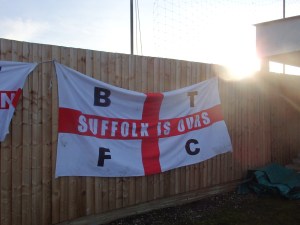
their flags to the high quality close board wooden fence that encloses the ground. “BTFC. Suffolk Is Ours” boasts one flag somewhat incomprehensibly. It smacks of the same conceit that sees the town of Bury St Edmunds label itself “a jewel in the crown of Suffolk”.
Back on the Jimmy Rattle side of the ground I meet Andrew, a fellow public sector employee who is here with his young son who points out that the Waltham Abbey substitute has an interesting hairstyle. Indeed, he looks like he is from a 1970’s

OLYMPUS DIGITAL CAMERA
discotheque and as we watch, the ball comes to him inside the Bury Town penalty area, he aims a kick and misses the ball completely.
By and by I return to sit again with Dave and the game carries on much as before, but Bury are the more dominant team now without ever really looking like scoring; it’s a lot like watching the Championship, but cheaper and more fun. We talk a little bit of politics and how even the Labour Party supporters are Tories in Bury St Edmunds. The game is drawing to a close and Bury hit a post, but even before the three minutes of added on time is announced people are drifting away, beating the imagined rush of 274 people all simultaneously trying to get through the one little gate in that wooden fence. “Have you had enough entertainment for one afternoon?” asks Dave of the old boy who was sat next to him as he toddles off home.
The three minutes elapse and I reflect that I have enjoyed a wonderful afternoon’s entertainment. I say good bye to Dave as I head once again to see if I can still smell Christmas pudding and Dave goes round the corner to pop in on his mother-in-law. Before I finally leave Ram Meadow I check on the full-time score at Preston where Ipswich have won. On the walk back to the railway station I phone my wife and as the camera pans away from my afternoon Lou Reed’s ‘Perfect Day’ can be heard.
40429303972_6335886fa3_o