When Accrington Stanley’s name came out in the FA Cup draw I immediately had a premonition that the next name out would be that of my team, Ipswich Town; it was and I had every intention of travelling to The Crown Ground or ‘Wham Stadium’ as I believe the estate of the late George Michael now pays for it to be called, to witness the match. I still believe in the magic of the FA Cup, like my step-grandson still believes in Father Christmas; stupidly of course because the Premier League has ensured that in England only the same small group of ‘big’ teams will ever win anything ever again. Sadly, I never quite reconciled myself to forking out £37 for a ticket for an 800 kilometre round bus trip that would leave Ipswich at a quarter to seven in the morning, meaning I would have to get up no later than half past five, almost an hour earlier than I do when going to work. To misquote the lyrics of the marvellous Only Ones’ song Another Girl, Another Planet, long journeys wear me out and I can live without it. As a result, today I got up at a little after eight o’clock and am travelling a mere 20 kilometres from my home to Great Cornard to see Cornard United versus Norwich CBS in the Thurlow Nunn Eastern Counties League First Division North, an eight-word title worthy of the tenth level of the football league pyramid.
Cornard, which is largely Great Cornard is just outside Sudbury on the north bank of the River Stour, which marks the boundary between Suffolk and Essex. Great Cornard grew massively in the 1960’s with unflatteringly named ‘overspill’ from London, this will account for most of the accents I hear this afternoon being more “Gor blimey guvnor” than “Cor blaaast buh”. I only hear one Suffolk accent this afternoon, my own and I’m only putting it on. My journey today is mostly along the river valley, through Bures and up and down and along the twisting B1508, a rural ride if ever there was one. If I hadn’t felt the cold hand of death at my shoulder I might have taken the time to catch a train and then a No 754 bus followed by a ten or fifteen minute walk, but time is precious at my age so I rely on Andre Citroen’s latest C3 model to deliver me to Blackhouse Lane. Forgetting how close to Sudbury Blackhouse Lane is, I turn right too soon and take a detour in to Little Cornard, but I soon get back on to the B1508, make the correct right turn, and arrive at Cornard United’s Blackhouse Lane ground having allowed a number 754 bus that I first saw in my rear view mirror, to ‘overtake’ me due to my detour.

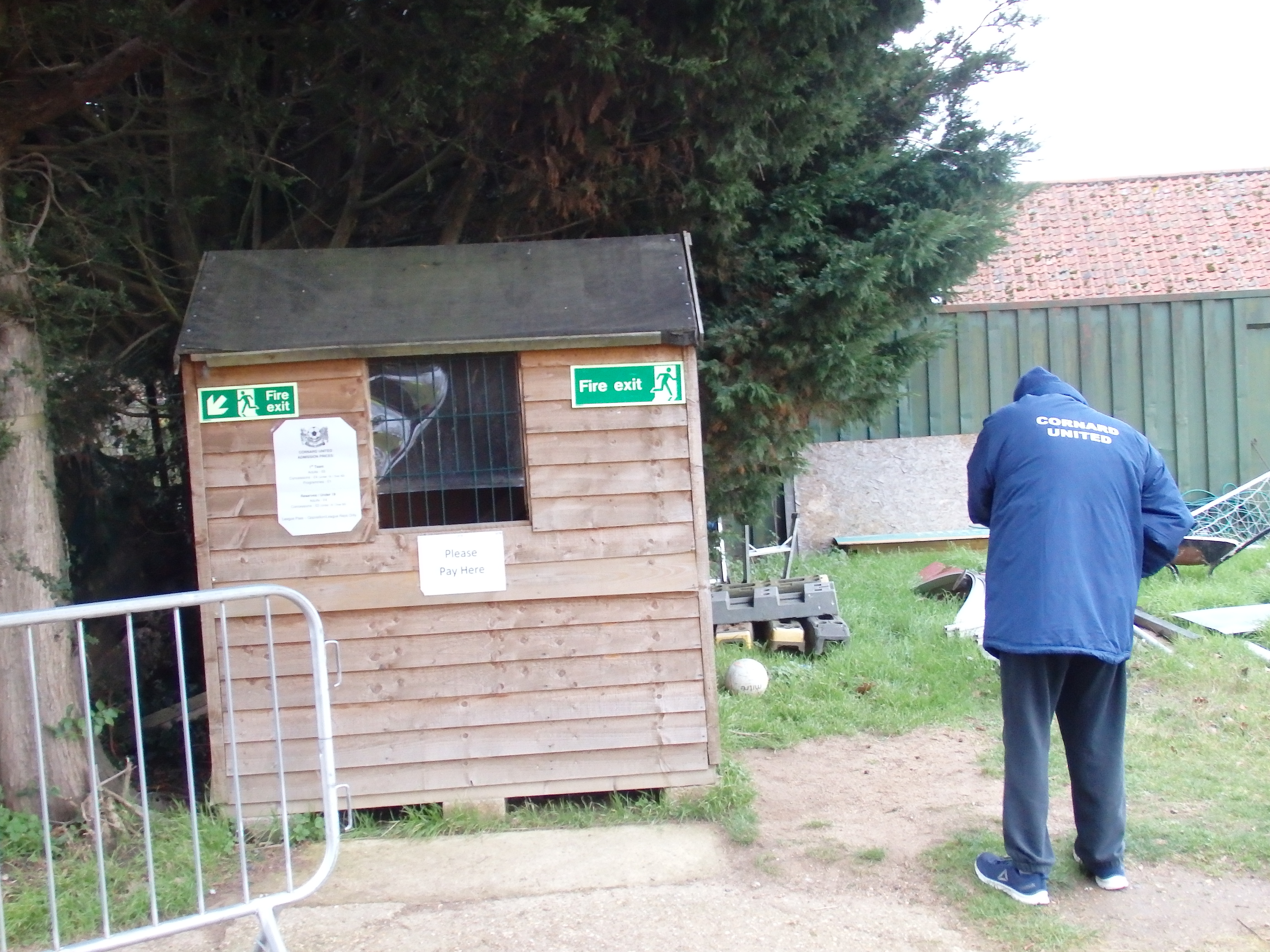
It is a cold, still, grey, January day. There are plenty of parking spaces in the car park from where it is a short walk along a gated concrete roadway to the ‘turnstile,’ except there is no turnstile just a gap in the conifer hedge marked by a large white sign with red letters that reads ‘Entrance’. The clubhouse is visible across a sports pitch that sits between the car park and the ground, the words Cornard United are painted in large letters on the side of the building to prove I am in the right place. A man in a shapeless blue sports coat stands in the gap in the hedge and retreats into a small wooden garden shed as I approach. I hand a clean, new ten pound note through a window in the shed to cover the entrance money (£6) and a programme. “We don’t do a programme” I am told and am given an explanation about costs and how the League has said they no longer need to produce a programme. I tell him I understand, and I do, but it’s disappointing; there is a programme on-line, but it’s not the same, it doesn’t even feature a league table let alone a half-time quiz. A printed programme, like a stand, a rail around the pitch or a turnstile marks the difference between a proper football club and just teams kicking around on the local rec’. Having discussed the programme, the man in the coat asks me hesitantly if I’m ‘normal’. Fortunately, I instinctively know what he means and tell him I am. Disappointingly, he seems a little surprised, possibly because the blokes who turn up to watch this level of football are mostly pensioners, but he goes on to explain how some folk will pay the concessionary price (£4) when he doesn’t really think they are as old as they are making out. Privately and controversially I put this down to Suffolk people being stingy and Londoners being dishonest, but I don’t say so.
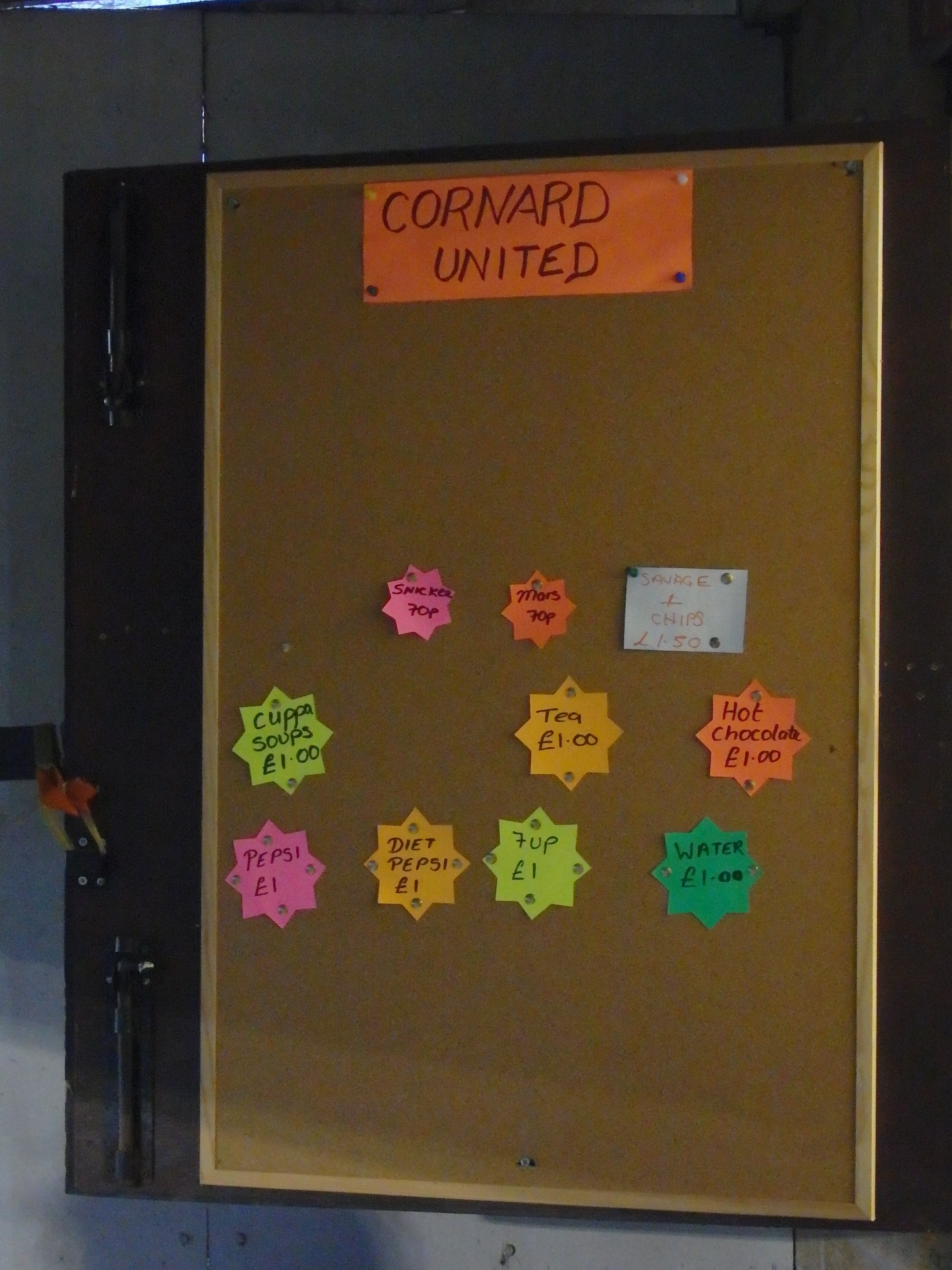
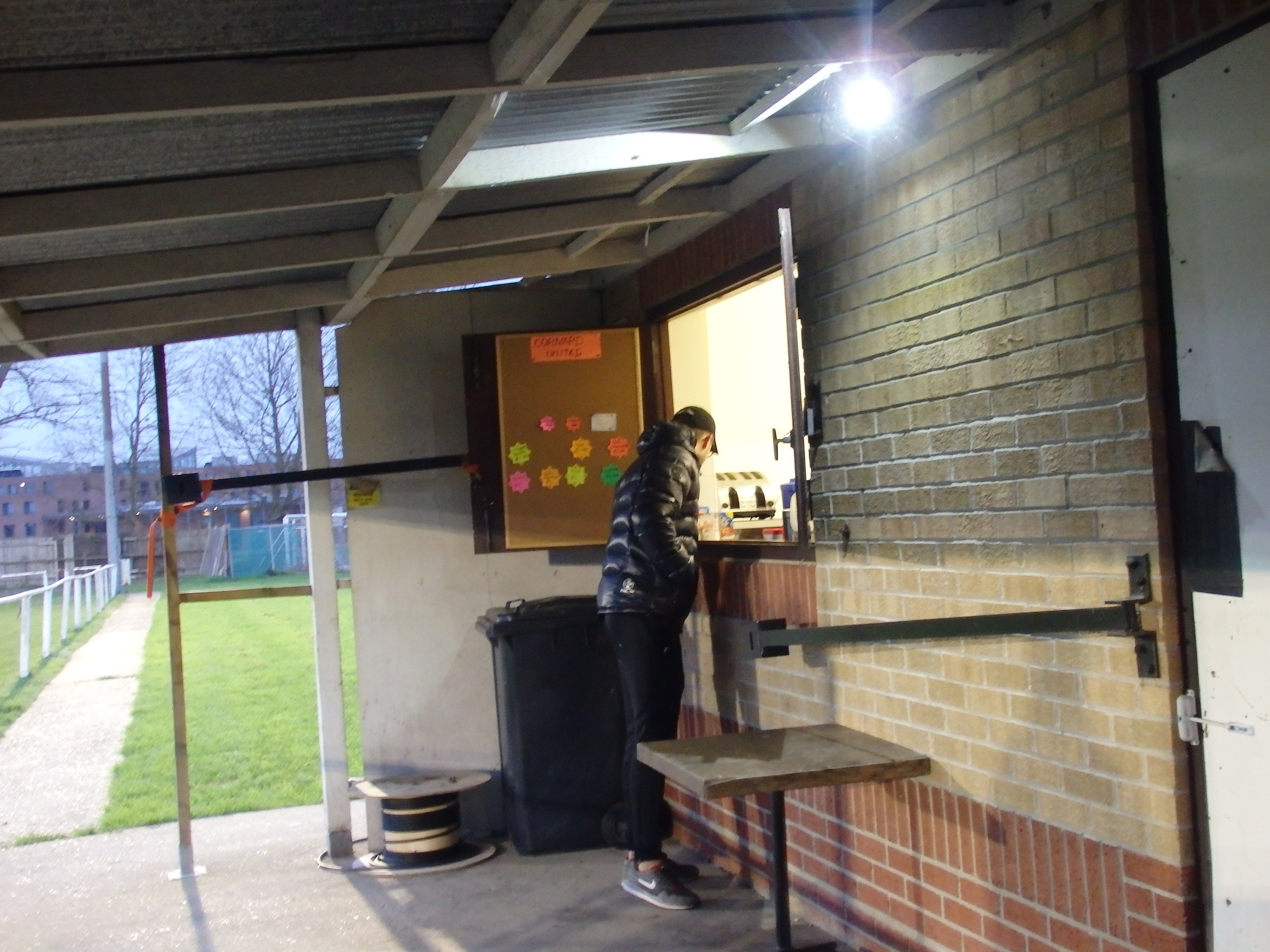
As we part, the man in the shapeless coat tells me that the tea hut and bar are open and I head off towards the club house; it is thinly populated, just three blokes and the bar man, and noting that there is no real ale, I return outside where through a hatch in the front wall I buy a pounds worth of tea in a polystyrene cup. I stand and watch the two teams warming up, there is hardly anyone else here. As the Norwich CBS players and coaches then return to the dressing room prior to kick-off I ask one of them what the CBS stands for; he has no idea.

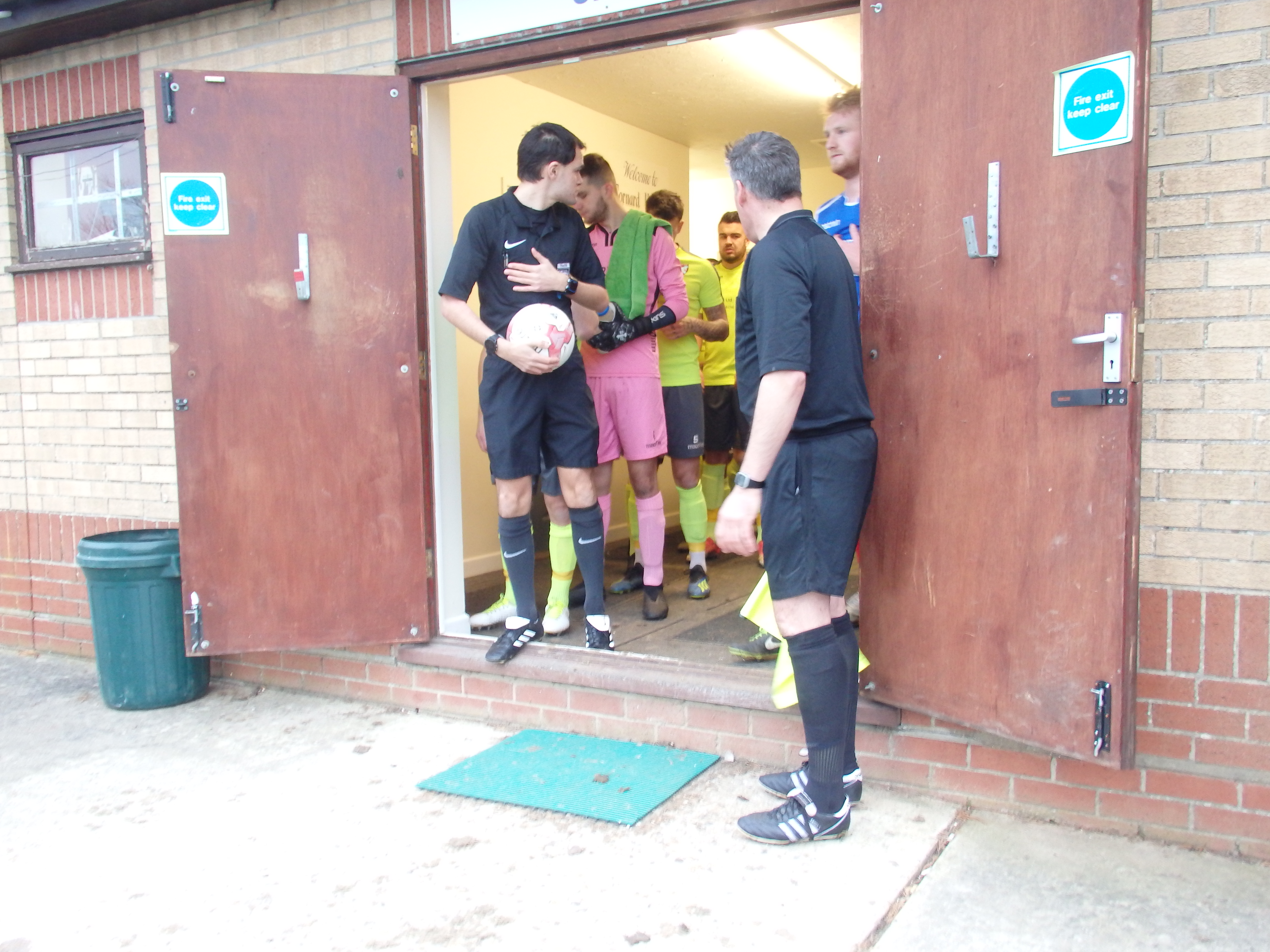
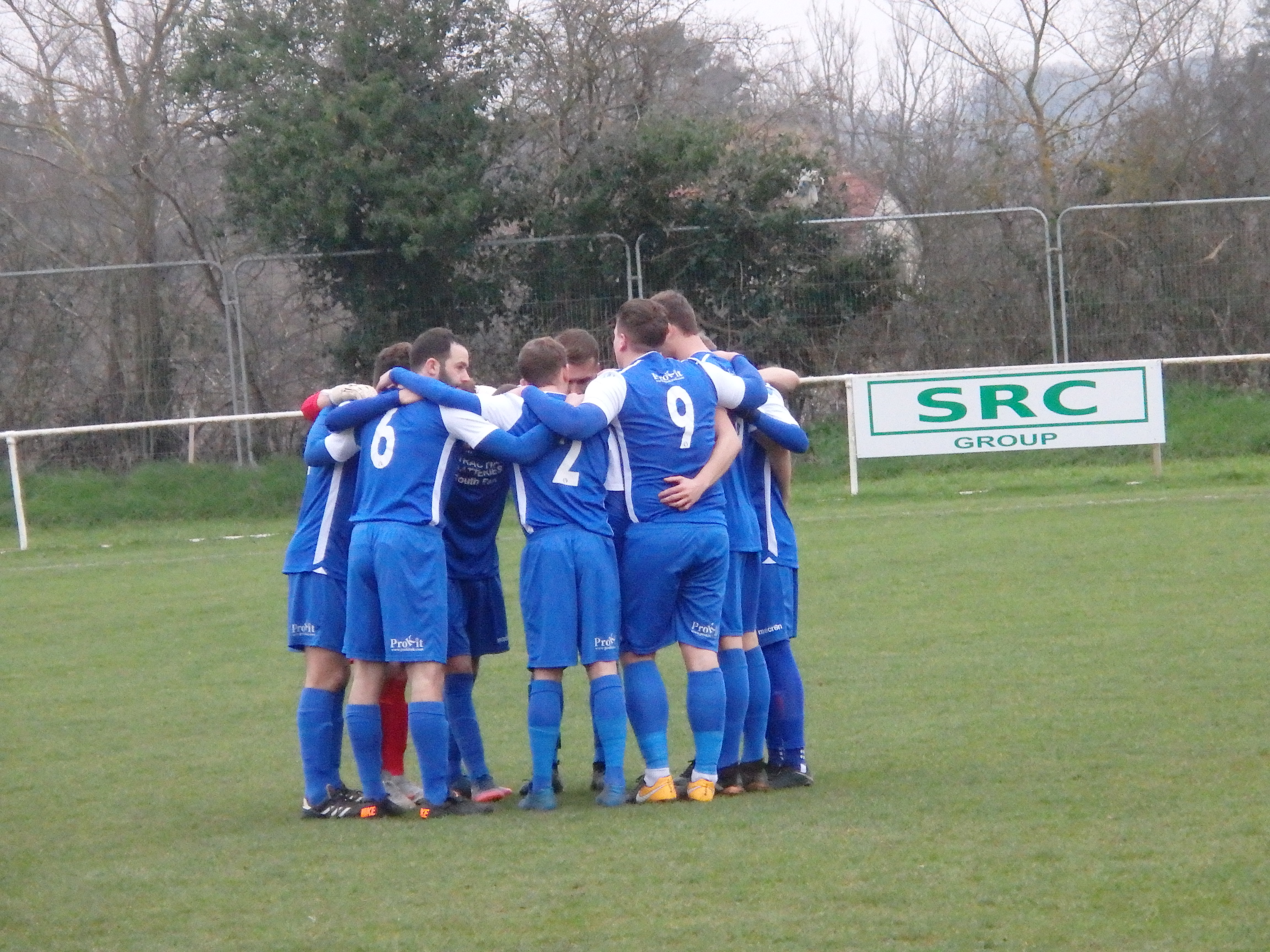
It’s soon approaching 3 o’clock and the referee is to be heard banging on the dressing room doors like a parent trying to rouse a teenage son from his bed; they evidently don’t have the luxury of bells in the dressing rooms here at Cornard. By and by the two teams line up at the double doors, which are just a few feet from the pitch, and Mr Darling leads them out. Unusually, there is no lining up on the pitch and shaking of everyone’s hands and instead the two teams sprint off to their respective halves of the pitch, with Cornard forming a team-building huddle. Eventually it is Norwich who get first go with the ball, kicking off in the direction of Little Cornard and wearing an unusual ensemble of lime green shirts and socks with grey shorts. Cornard, or The ‘nard as they are known, aim in the direction of the neighbouring Thomas Gainsborough School and Sudbury beyond, when they get the ball; they wear blue shirts with white sleeves, white shorts and blue socks, it’s a more tasteful version of the current Ipswich Town kit and doesn’t advertise on-line gambling; which is nice.
The opening couple of minutes of the match are fast, furious and very messy. Norwich immediately look more assured when in possession but not so when not; Cornard look a bit shaky whether they’ve got the ball or not. At four minutes past three a long through ball is chased by Norwich number ten Jordan Rocastle (nephew of the late Arsenal and England player David Rocastle); he catches up with it and places a low shot past joint manager and goalkeeper Matt Groves to put Cornard a goal behind. Suddenly, near to the Cornard dugout is not a good place to be for people likely to be offended by expletives, profanity and generally naughty words. “Fuckin’ shit, get you’re fuckin’ heads outta your fuckin’ arses” is the coaching advice from the technical area. These are not Suffolk dialect words.
Surprisingly, the coaching seems to work as within two minutes large ‘on-loan’ striker Ben Parkin, formerly known as ‘Omelette’ to his fans when at Wivenhoe Town wins a corner from a deflected shot. The corner kick is headed towards goal but is going well wide before Cornard number six Dave Dowding appears on the far side of the goal and heads the ball firmly across and into the other corner. The scores are level and compared to that of his counterpart, the advice of the Norwich coach is more considered, if less entertaining; “Start again”. Having paid out six quid to watch I hope they do start again, or with the game just six minutes old I shall feel somewhat short-changed.
With both teams having had the satisfaction of scoring a goal, the game settles down. Norwich still look the more accomplished side, but Cornard have improved hugely from the opening two minutes and their heads are now where they should be in relation to their bottoms. When Cornard have the ball they pass it well, when they don’t they defend well; it’s an entertaining match.
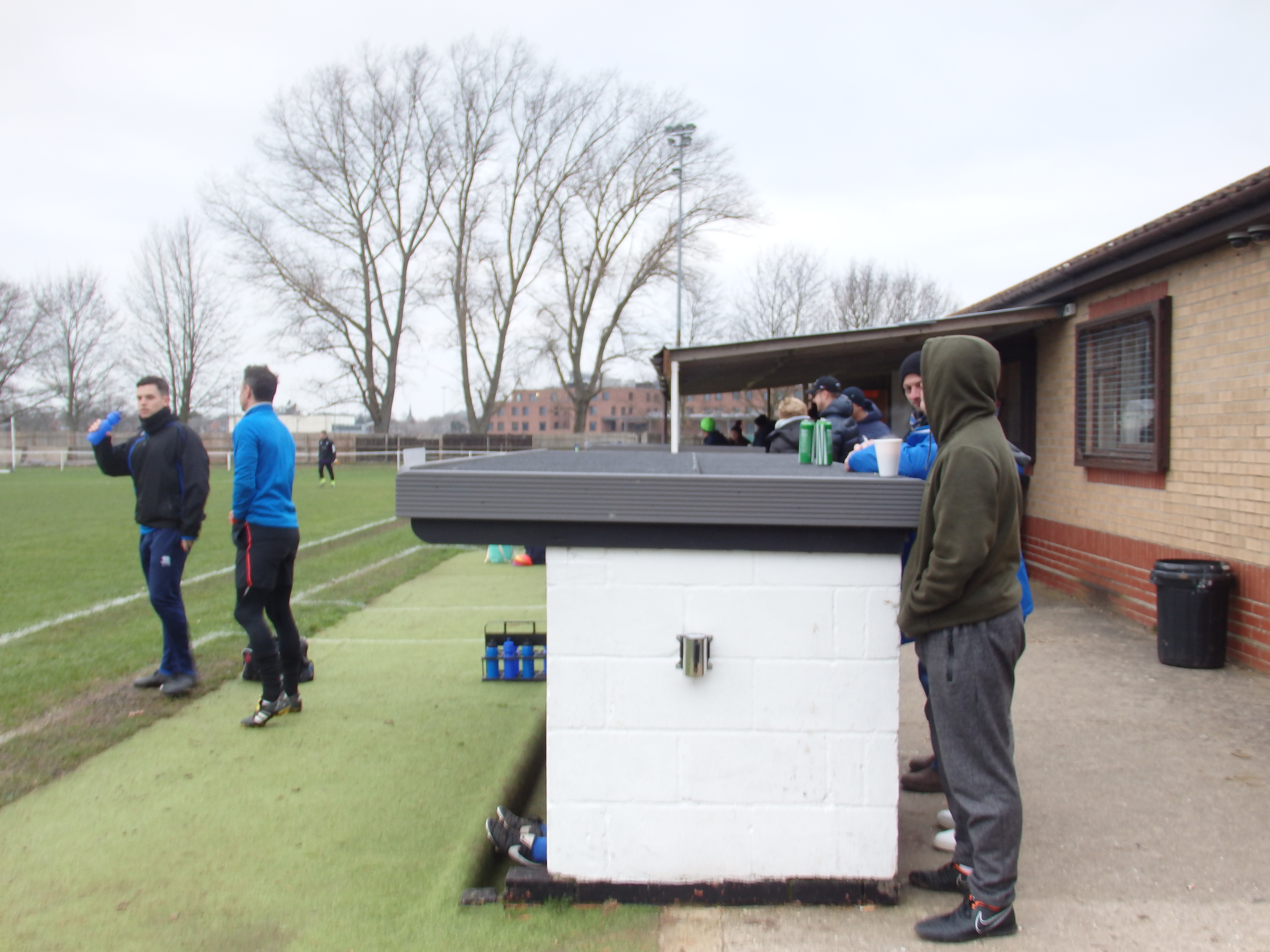
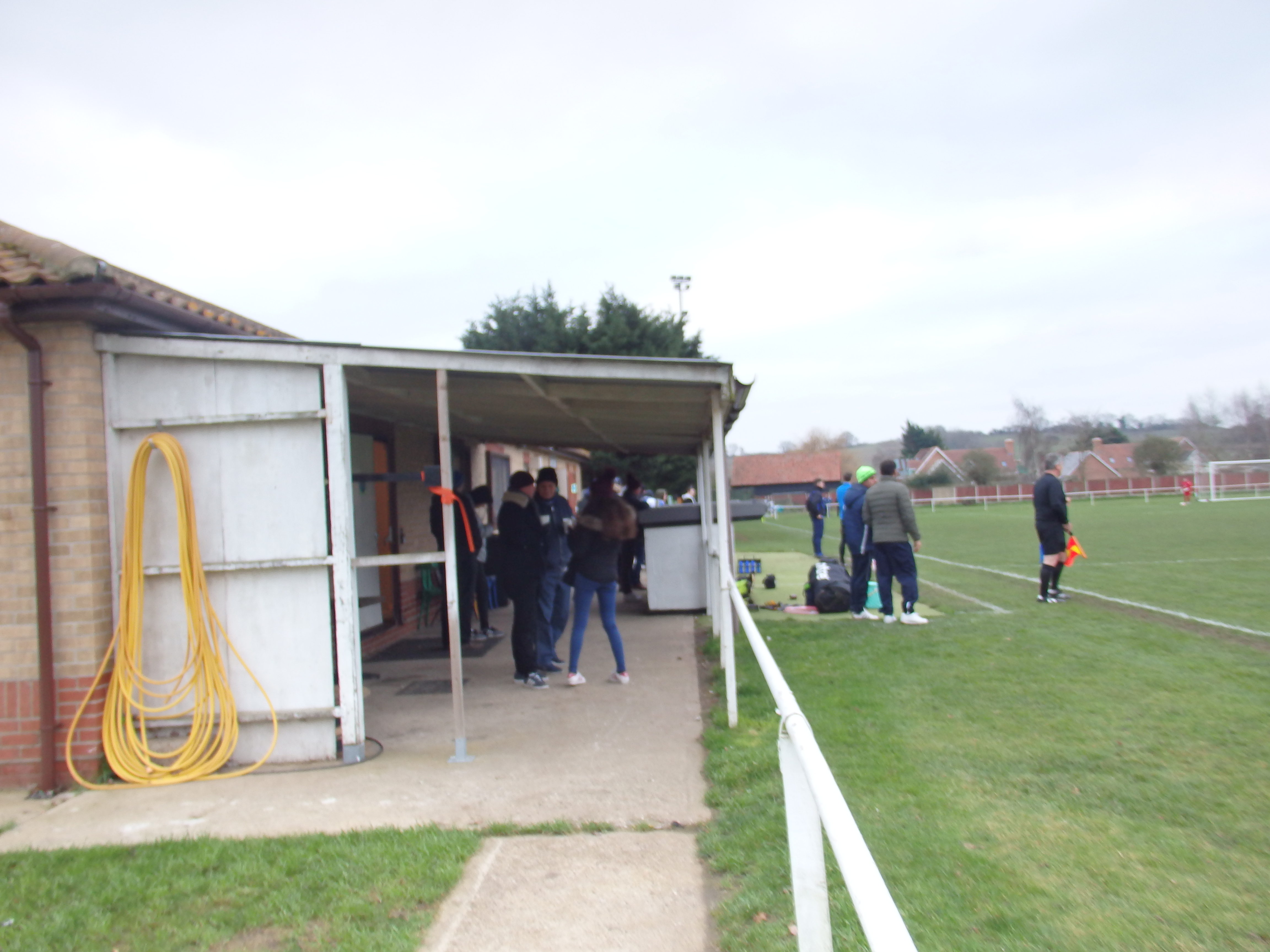
I watch from behind the dugouts where a covered pergola type structure shields the tea bar from stray footballs but also helps keep the cold out, a bit anyway. Off to the right, over the fence, beyond the Thomas Gainsborough School I can see the spire of Grade 1 listed St Andrew’s Church.
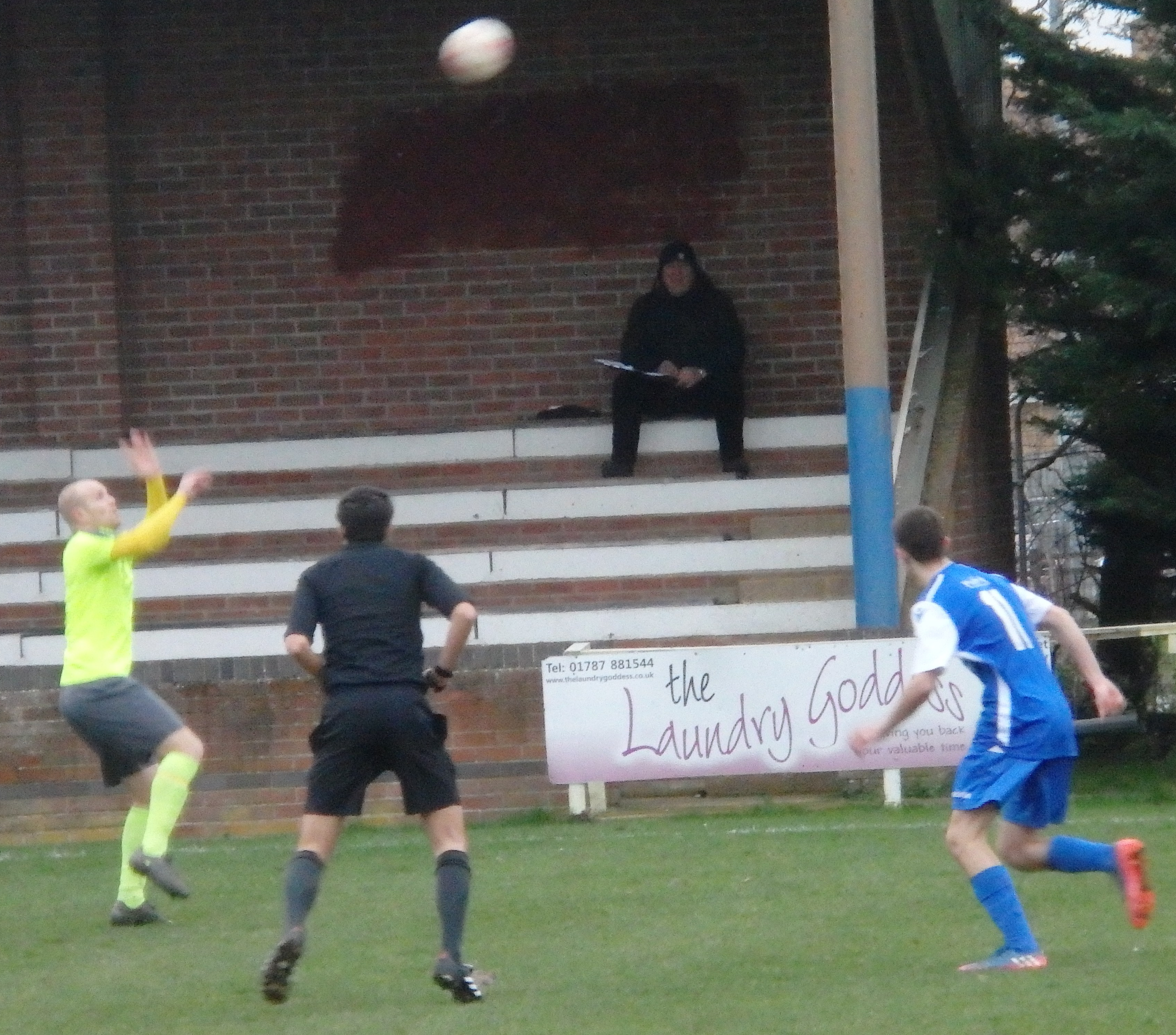
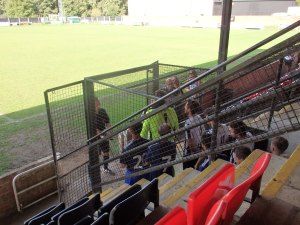
I decide to take a wander round and watch the game from different perspectives. The main stand is empty but for a lone man in an Ipswich Town beanie hat who seems to be making notes. I doubt he’s a scout, possibly just writing a match report. Further down the valley behind the stand is Sudbury rugby club; every now and then I hear what sounds like a hunting horn as if all the local Hooray-Henry types are now all watching the rugby since it’s illegal to chase foxes. There are nevertheless far more people watching the game there than there are here, I doubt the crowd watching this game exceeds thirty in number. AFC Sudbury are also at home today just a mile or two away and playing in a league two levels above Cornard are probably a bigger attraction to most, as is the Nethergate ale they serve in their clubhouse.
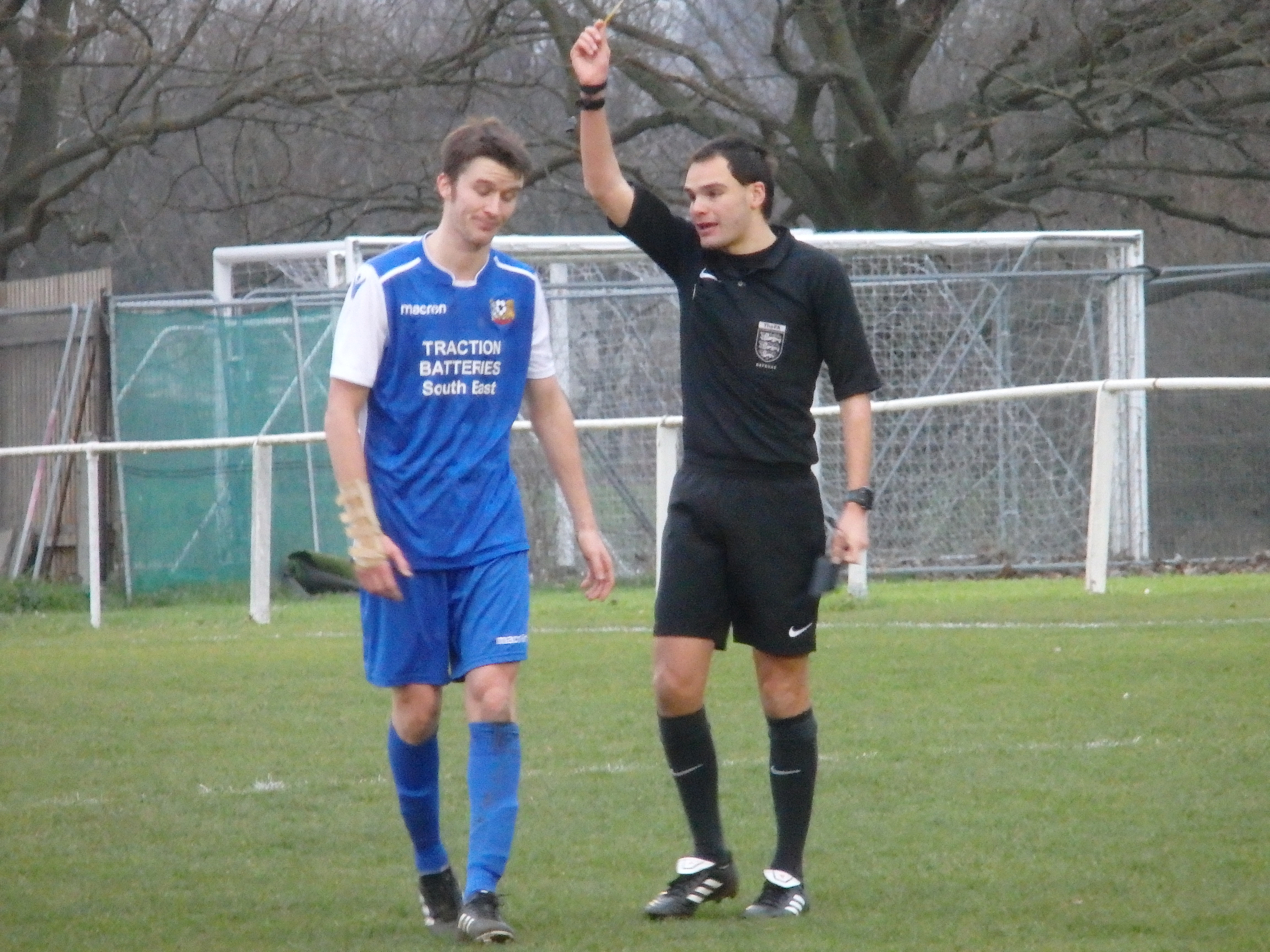
At twenty-five past three the floodlights flicker into life and then in an unrelated incident Cornard’s number four, Ryan McGibbon becomes the first player to be shown the glow of Mr Darling’s yellow card. Matt Grove makes a very impressive flying save from a volleyed shot following a corner. Norwich’s number three Kieran Rose, a bald man with a colourfully tattooed right arm shares Ryan McGibbon’s experience five minutes before half-time and then entertains everyone by slipping over as he goes to control the ball and then slicing it away, high between the dugouts; it’s an impressive feat of maximum technical difficulty and draws generous laughter from his own team mates and coaches.
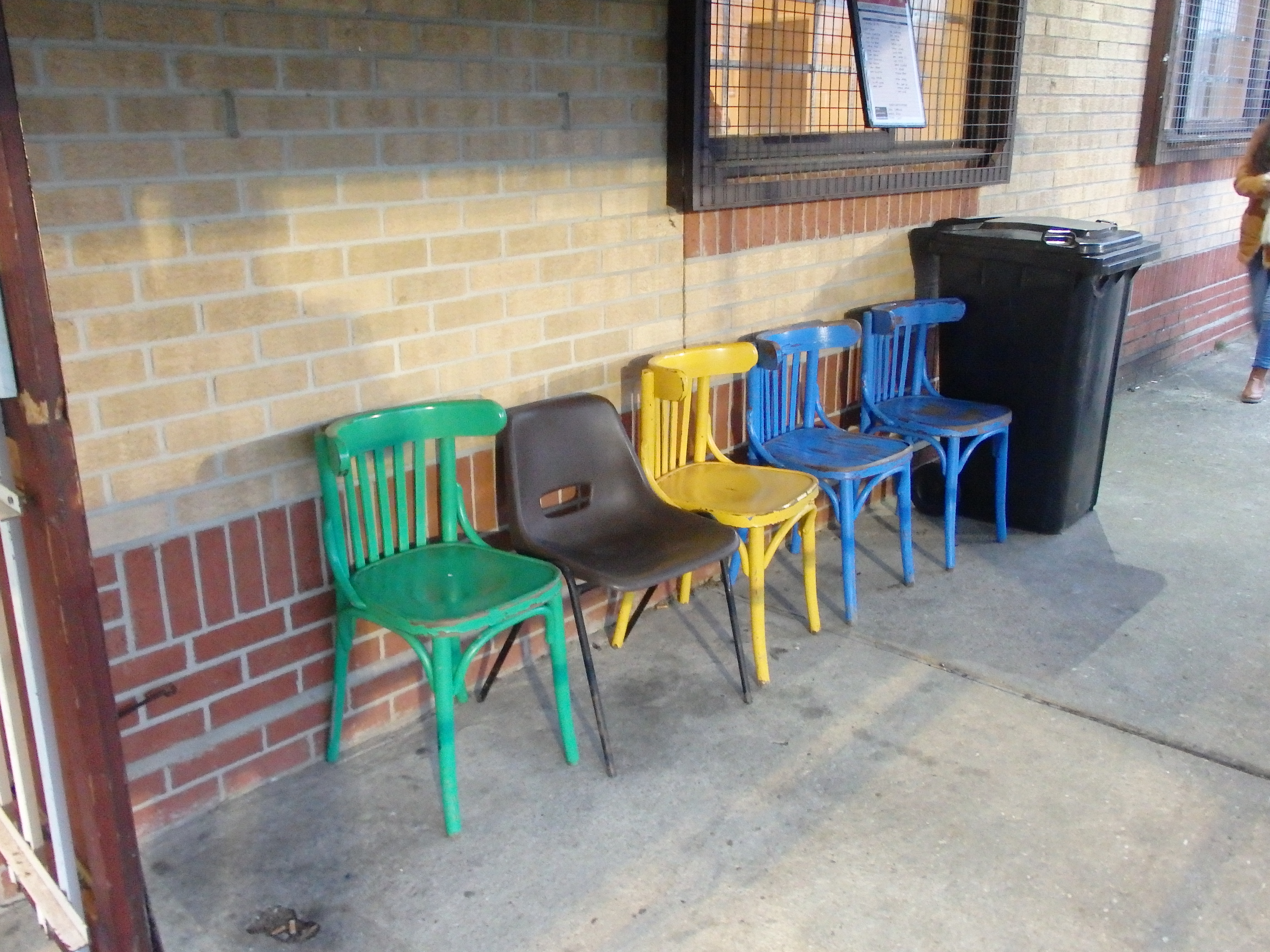
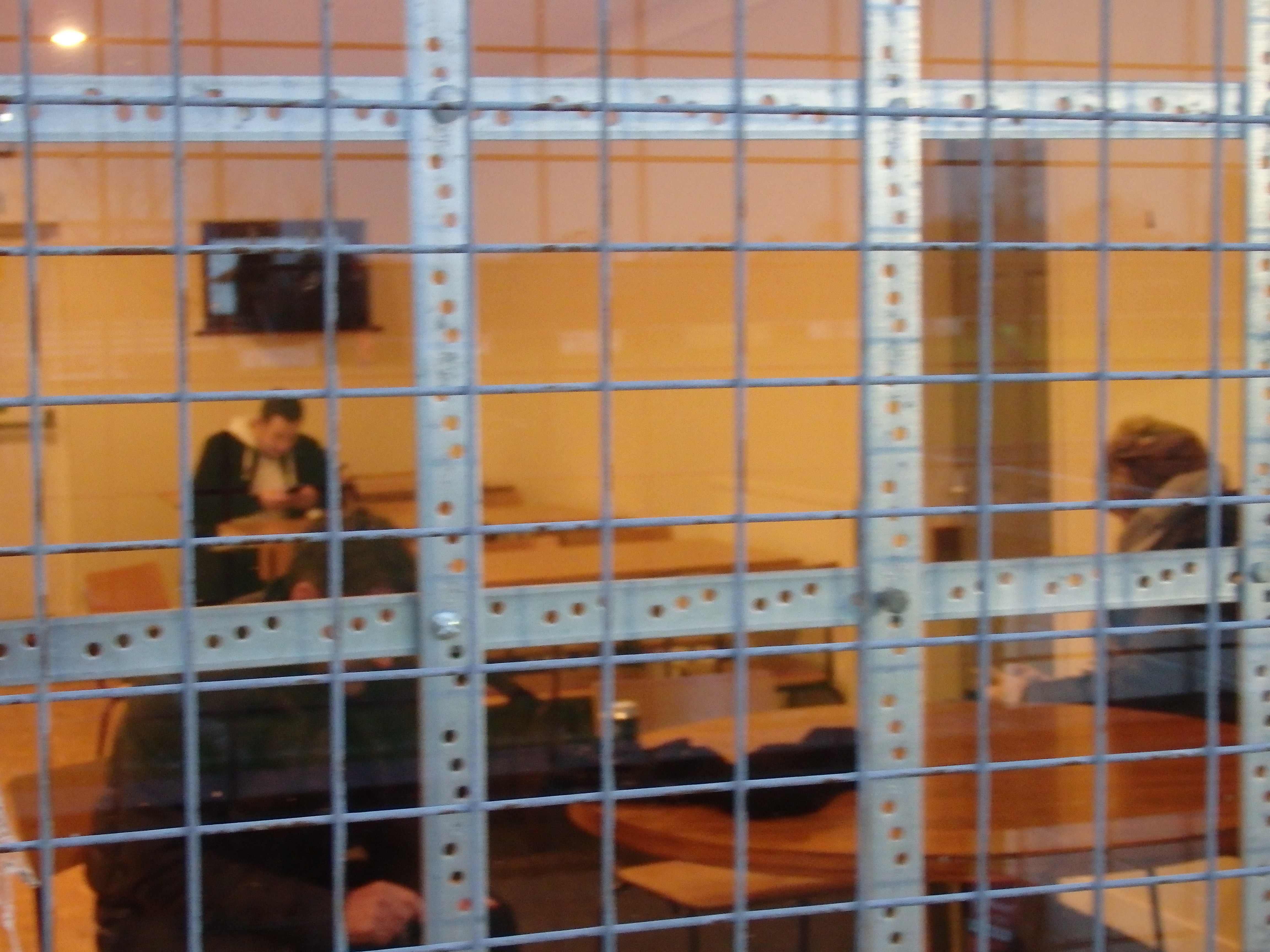
Half-time arrives and I quickly get to the tea bar to warm my hands around another polystyrene cupped, pound’s worth of tea. Another man in a ‘sports coat’ who is taking away three cups of tea on a tray (presumably for the referee and his chums) fails to fool me into believing there are no more hot drinks, although it is a plausible ruse. I go inside the clubhouse to check the half-time scores; Ipswich aren’t losing, yet, brilliant! The clubhouse bar has an impressive parquet floor but the tables and chairs look like they might have had a previous life in a school dining room and there is perhaps a faint smell of school dinner, or it could just be floor polish.
At three minutes past four the second half begins and at four minutes past four Cornard’s number ten Jack Graham lobs the ball from a good 20 metres from goal over the advancing pink-clad Norwich goalkeeper who rather fabulously is called Asa Swatman; a name to grace any novel. There is a moment when time stops and nothing seems certain and then everyone sees the ball bounce up into the goal net. People cheer long and loud to make up for the lack of numbers in the crowd.
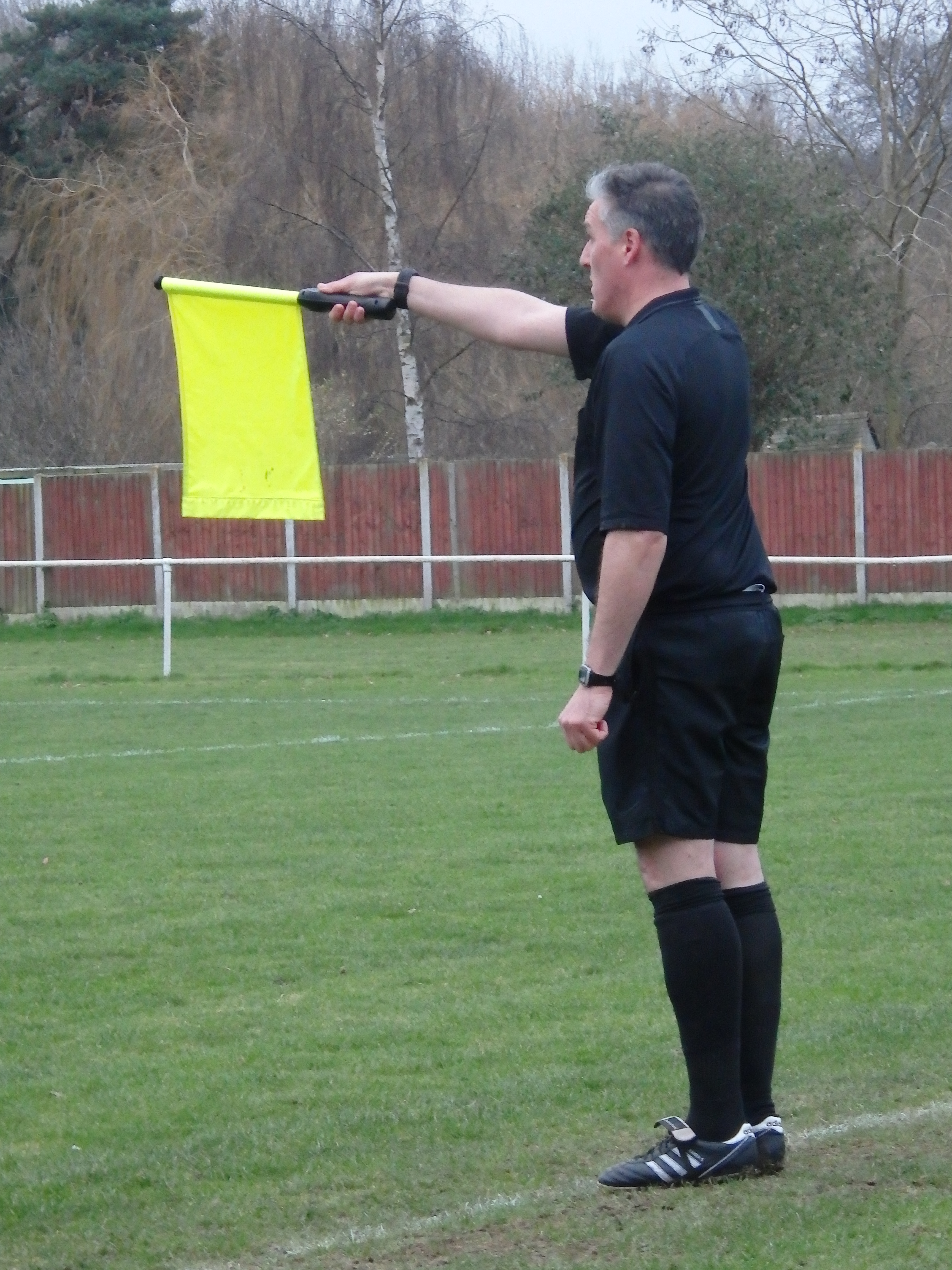
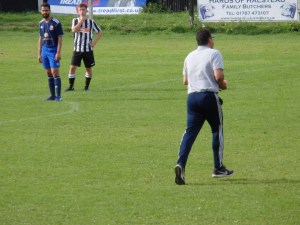
On the Norwich bench, or rather outside it because he is standing up, the Norwich coach is having a breakdown. “How does that happen?” he asks after clutching his head in his hands. “I can’t believe it”. It’s as if he’s never seen a football match in his life before. Perhaps his previous experience of football was coaching a team of robots. But as theatre he’s worth the entrance money and continues to do so as he queries the portly linesman’s decision that goalkeeper Matt Groves had caught the ball inside his penalty area as opposed to outside it. It’s as if sensing the futility of life he feels he might as well argue about anything, even though he can’t really be certain of the truth and it won’t make any difference anyway. I see one of the Norwich substitutes smiling to himself.
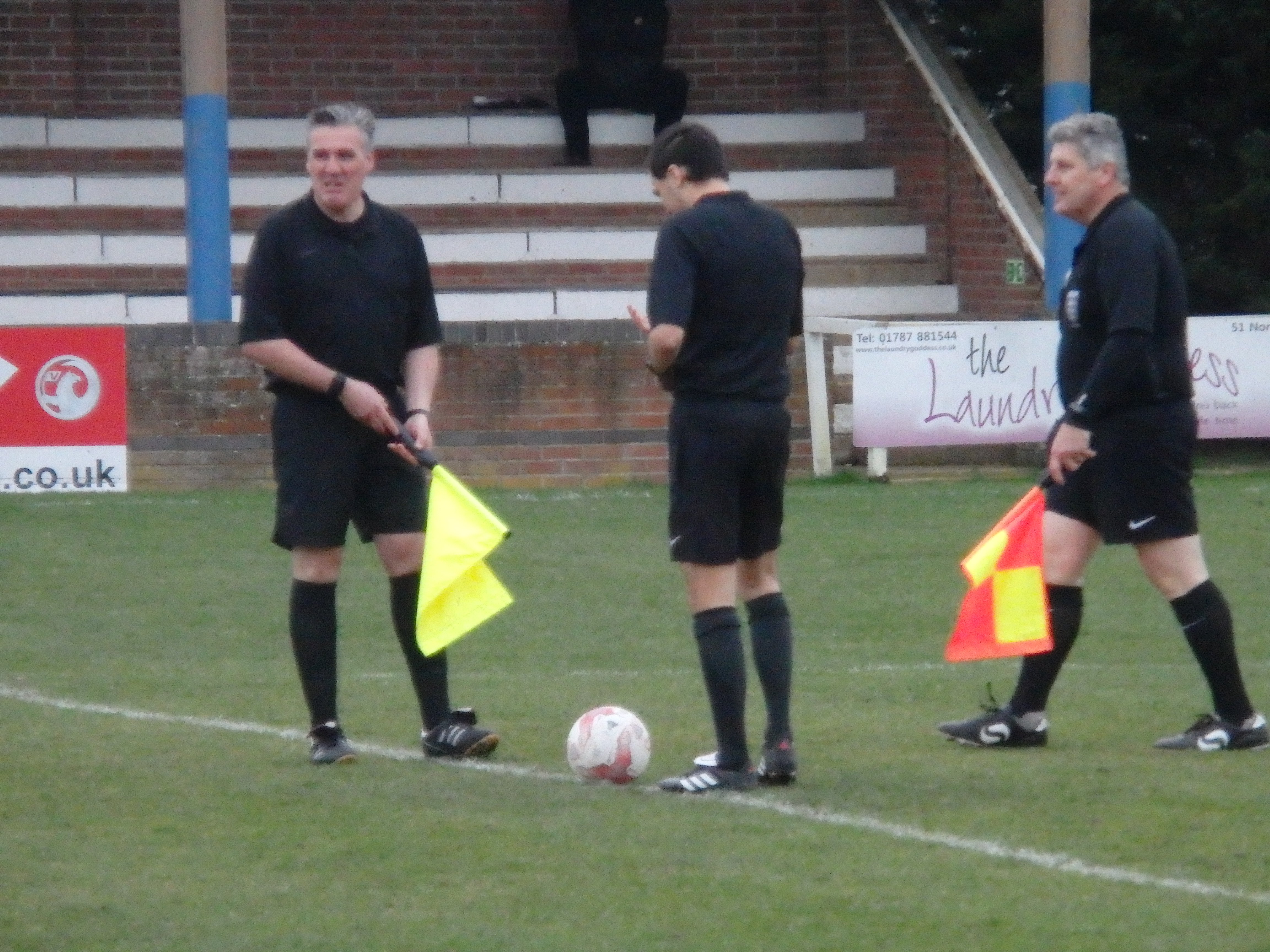
The linesmen by the way are called Mr Bigg and Mr Copsey; I’m guessing which one is which.
Norwich are dominating the game now with Cornard restricted to defending stoutly and engineering the occasional breakaway; but they’re doing a good job of it with Jack Graham running at and around the Norwich defenders like the proverbial pain in the arse. Norwich win a corner and the ball is swung in close to the goal but Cornard clear; the Norwich coach is allowing his frustration to run away with him and resorts to bizarre and previously unknown allegories. “We should start a fuckin’ perfume stand behind the goal” he moans surreally. “They should be fuckin’ throwing themselves in there” he adds, perhaps trying, but failing to make sense of his own words.
It’s not much after four fifteen and Norwich are somewhat fortuitously awarded a free-kick by Mr Darling just outside the Cornard penalty area. Their number ten Tim Hewery steps up to arc the ball over the defensive wall and in to the top left hand corner of the Cornard goal. The scores are once again level and Norwich seem to expect to go on and win; their general play indicates that they might but they don’t and striving to be more ‘direct’ they bring on a large, lumpy target man who they call Cookie, he’s a nuisance but the game is less beautiful for it. Cornard keep breaking away through Jack Graham and from one break a header hits the cross bar and they also hit a post. Matt Groves tips a Norwich shot acrobatically over his cross bar but it’s hard to say which team came closest to scoring.
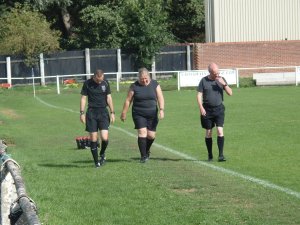
The referee proves not to be the darling of either side as he makes decisions to frustrate and annoy both, although Norwich are definitely the most upset, no doubt because they expect to win and they aren’t doing so, whilst Cornard are just happy to be here, and not losing. At ten to five Mr Darling uses his whistle for the final time this afternoon and sets the Norwich number ten, Tim Hewery off on a mad rant both at him and possibly the whole Norwich team. He storms off to the dressing room alone, leaving an embarrassed silence amongst everyone else in the ground, which is quite an achievement.
It’s an entertaining end to what has been a very entertaining game. I take a final trip in to the clubhouse to syphon off some of that two pounds worth of tea and on the way out of the ground I speak to the other Cornard co-manager Mike Schofield, who like me, his brother Andy, Matt Groves, Ben Parkin and Ryan McGibbon is one of the many people to have left Wivenhoe Town in recent years. Mike is very pleased with the result, with the game having gone just as planned. Sadly Ipswich have lost at Accrington and are once again out of the FA Cup without making any impression whatsoever, but heck I’m alright I’ll be home in time for tea and although I don’t know it yet will witness Norwich City lose at home to Portsmouth on Serbian TV.
Postscript: An internet search reveals that CBS might stand for Carpentry and Building Services, but then again it might not.









 trippingovertheball