The village of Lakenheath, in the top left hand corner of Suffolk beyond Mildenhall is some 69 kilometres from the County Town of Ipswich, about an hour’s drive along the A14, the A1101 and then the B1112. Lakenheath has a railway station but hardly any trains stop there. If you want to watch Lakenheath FC play on a Saturday afternoon and you really, really want to travel by train two journeys are possible; leaving Ipswich at 8am and 8.08am these take you via Ely and Thetford or via Norwich and Thetford arriving at twenty four minutes past ten, giving you ample time to walk or even crawl the near 4.5 kilometres to Lakenheath village; no buses pass the station. You’ll need to take a sleeping bag because there is no train back from Lakenheath until the next day. If however, you like a lie-in on a Saturday morning but are still committed to saving the planet by using public transport then from Ipswich it is easier and quicker to catch the 11:20 train to Bury St Edmunds from where Mulley’s Motorways service 955 to Mildenhall connects with Coach Services service 201, which arrives ‘outside the post box’ (as opposed to inside it) at Lakenheath at 13.33. Getting back is difficult however because the last bus out of Lakenheath arrives in Mildenhall at 18.18, eight minutes after the last bus departed for Bury. The only way to return from Lakenheath therefore is to catch the 18.58 number 200 bus to Thetford, which is perfectly timed to arrive one minute after the train to Ely for the onward connection to Ipswich left at 19:24. The next train from Thetford is the 19:54 to Norwich from where a connection arrives back in Ipswich at 21:41. The on-line timetables tell us that the bus ‘services’ are supported by Suffolk County Council, but it’s as if they are trying to make them unusable, perhaps so a lack of passengers will justify not supporting them in the future.
With the best part of seven hours being a lot of time to spend on travelling to a ‘local’ football match, my wife Paulene and I reluctantly dodge the pleas of Greta Thurnberg and climb in to our trusty Citroen C3. Sadly, it’s not such a fine day to go travelling either, with low grey clouds, a strong blustery wind and the threat of rain casting foreboding over the Suffolk landscape. The countryside is bleak on a day such as this, although the open fields of Breckland with their rows of contorted Scots Pine trees (pine lines) leaning with the prevailing wind give this corner of Suffolk a distinctive character.
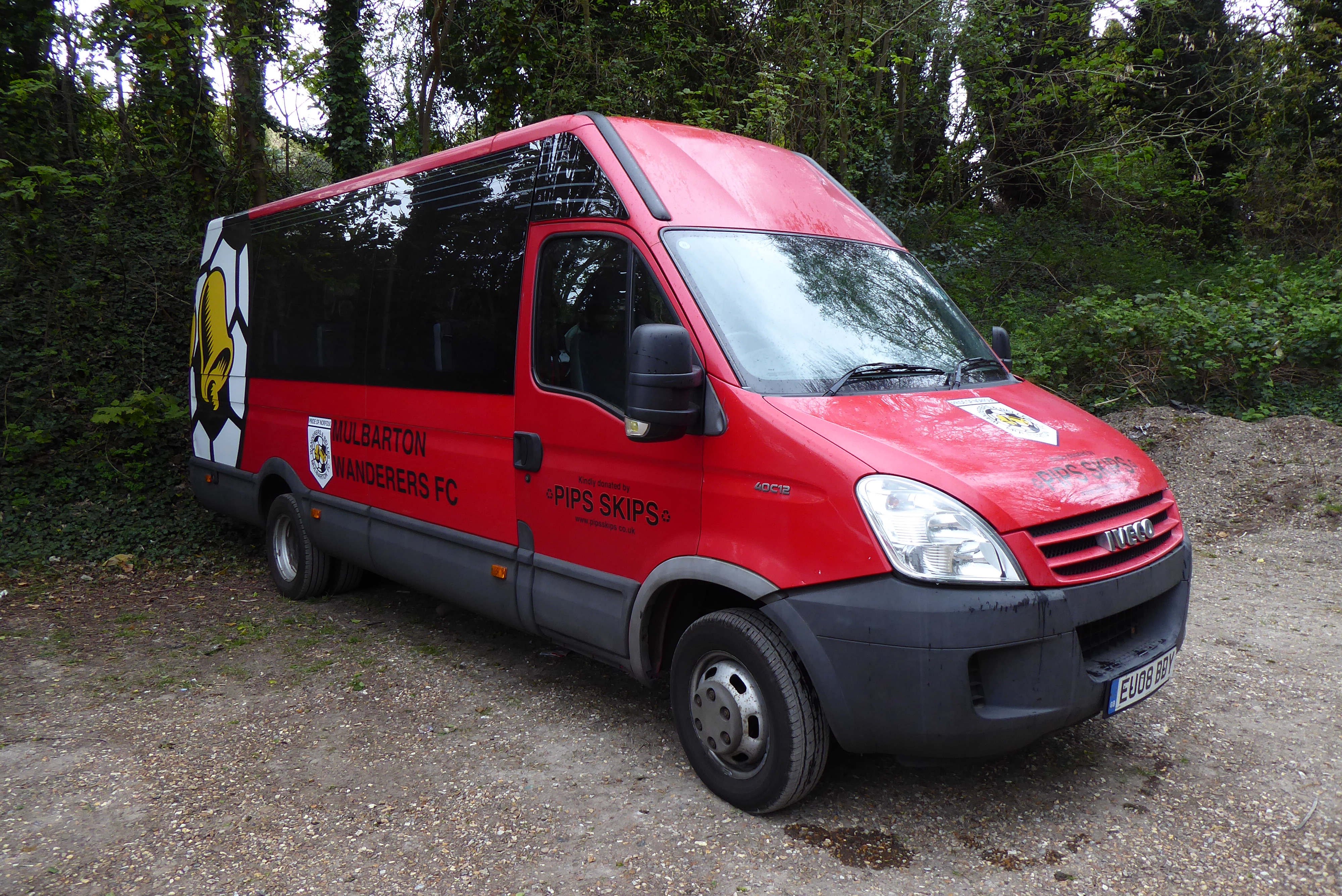
Lakenheath has a long broad main street; we pass the medieval church of St Mary the Virgin on our right and at the instruction of our French speaking satnav turn a droite into Wing Street and then a gauche into a rough car park and the gateway to ‘The Pit’ or ‘The Nest’ as Lakenheath’s football ground is known. Access is down a rough slope and round a sharp corner into another small rough car park; the site is an old chalk pit or quarry. We’ve definitely come to the right place as the Mulbarton Wanderers team bus is parked opposite and they are today’s opponents.


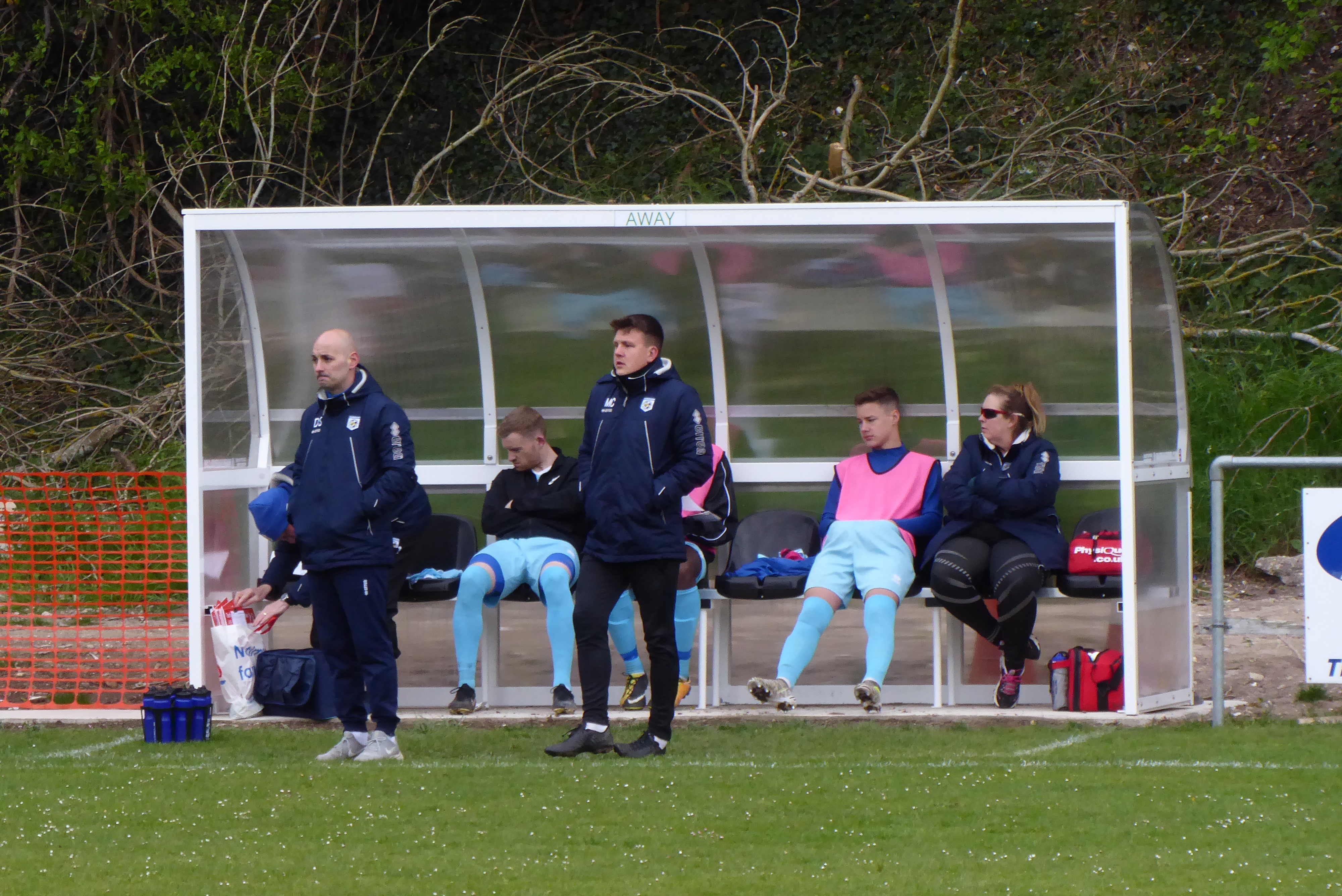
Tall trees surround us on three sides and as I lock up the Citroen Paulene takes crunchy footsteps across the car park to the small wooden turnstile hut without a turnstile. Paulene asks the man in the wooden hut how old you have to be to be considered a pensioner but he doesn’t answer and charges us full price (£5 each), we buy a programme too (£1). The players are out on the pitch warming up as we head for the clubhouse; Paulene remarks on the dugouts being on the far side of the pitch and admits to having hated having to trudge across the pitch from the changing room to the dugout in her time as physio with Wivenhoe Town. It looks like Lakenheath have recently moved theirs to the other side of the pitch, perhaps to improve the view from the stand.
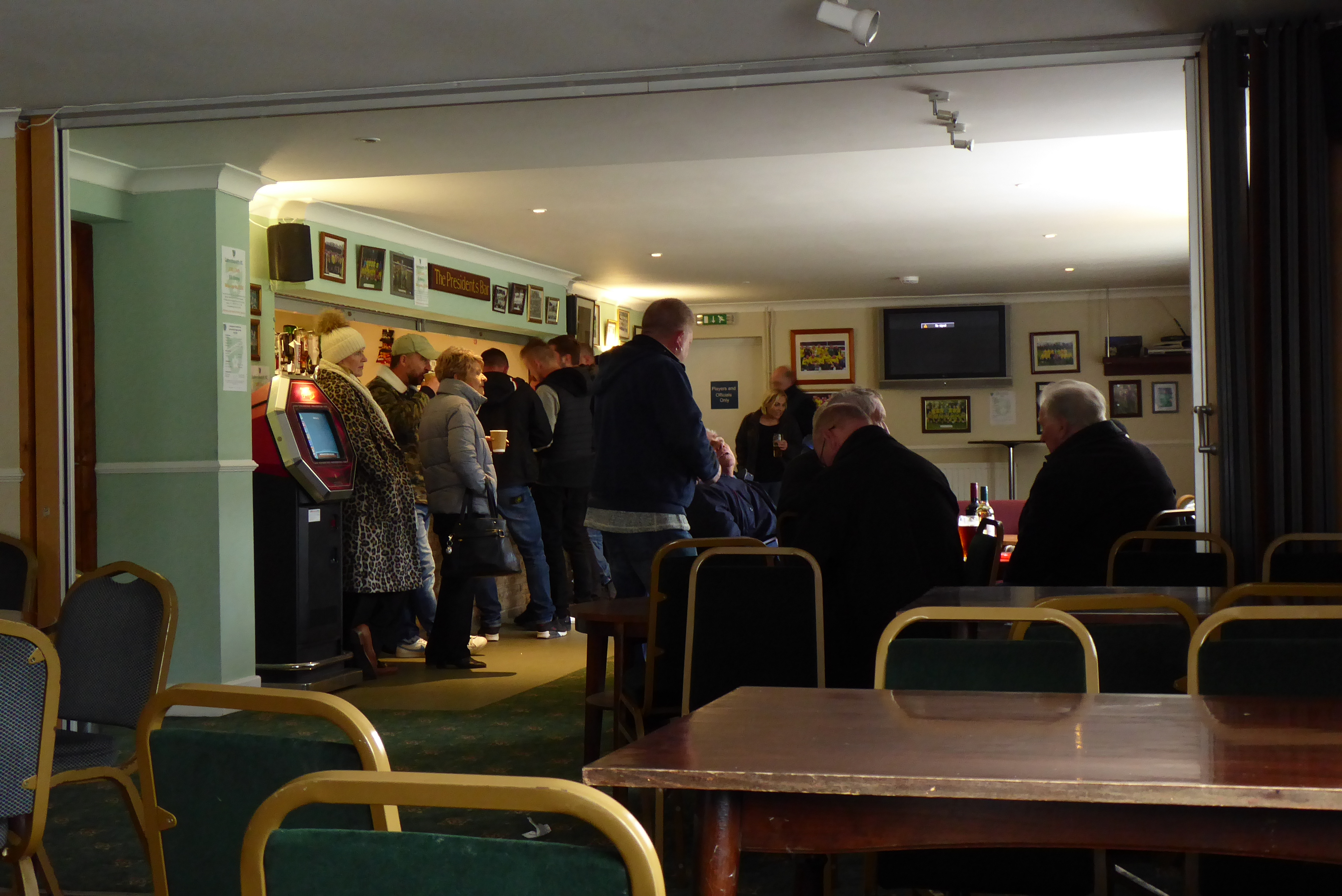
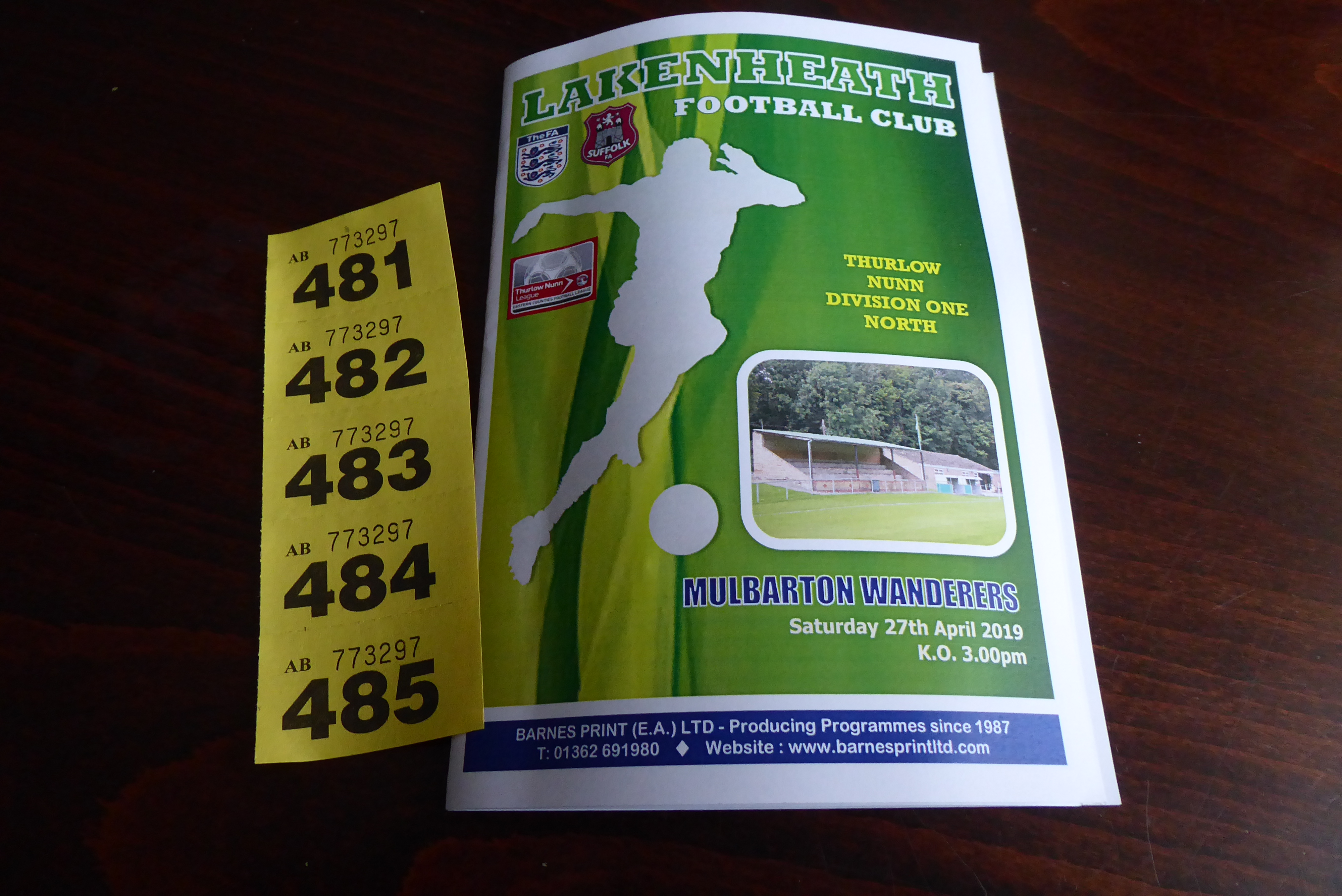
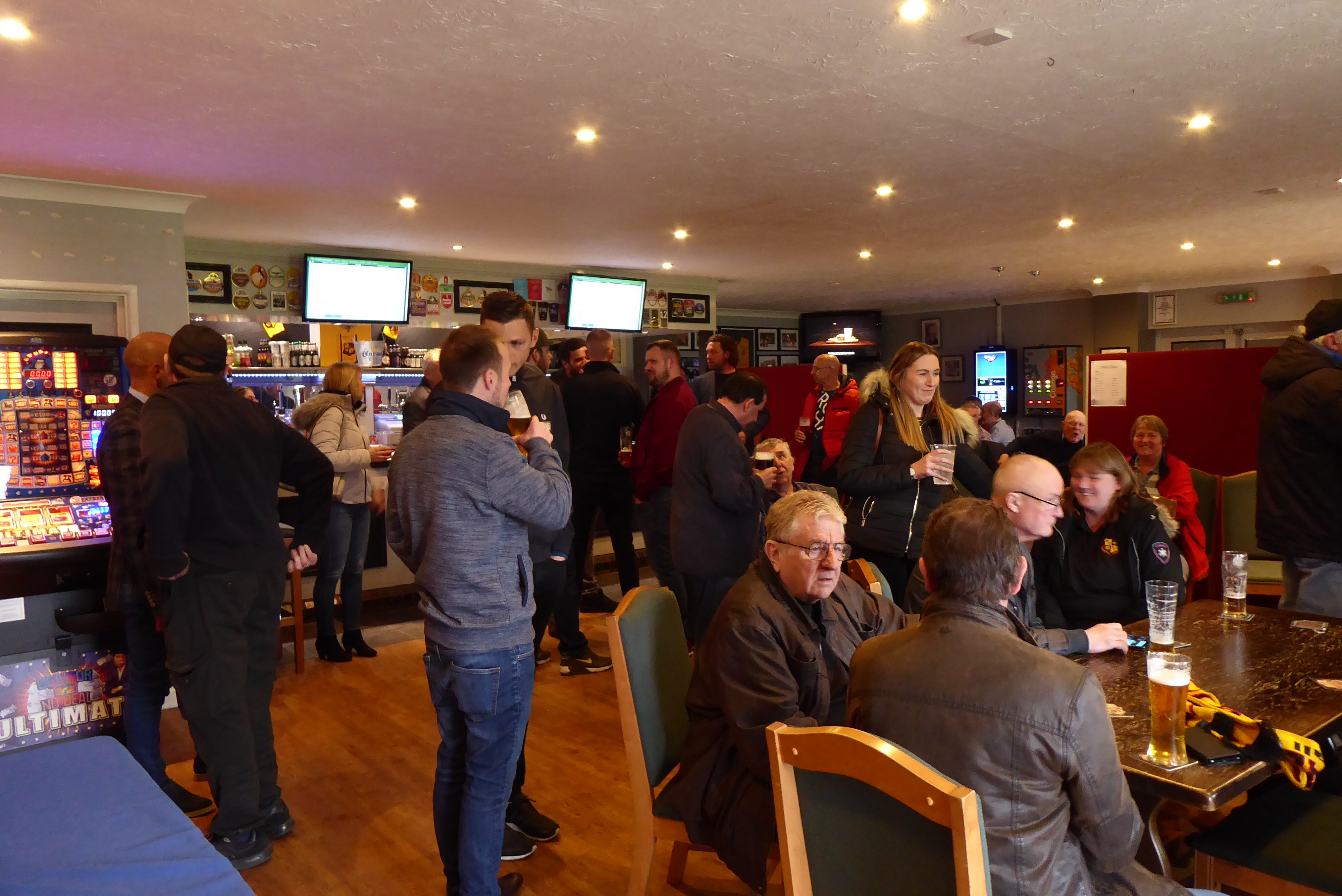
The clubhouse is spacious, if a little dark as a result, but the bar and barmaid are bright and welcoming and I order a glass of rose for Paulene; sadly there is no real ale so I take a deep breath and order a half of Greene King IPA ‘Smooth’, although I would prefer almost any other beer, even if it’s rough; the two drinks cost £5.30. We sit at a table by a window. The TV is on but a caption says there is no signal, perhaps because we are in the bottom of a quarry. Without TV to dull people’s minds the room is filled with the sound of conversation but also the thumping rhythm of loud music from the changing rooms next door; I like to imagine it’s the referees not the players making the noise and that they are stood in their pants singing into hairbrushes and playing air-guitar . At the table behind us three middle-aged men talk very loudly as if trying to be heard above the sound of jet engines at the nearby air force base. They discuss retired footballers, most of whom are now dead. Although this is a far flung corner of Suffolk, the twang of London accents is evident. A man in a yellow and black jacket sells us a strip of yellow draw tickets, Nos 481 to 485. As usual I am destined not to win; the seller has got to me four strips too early.
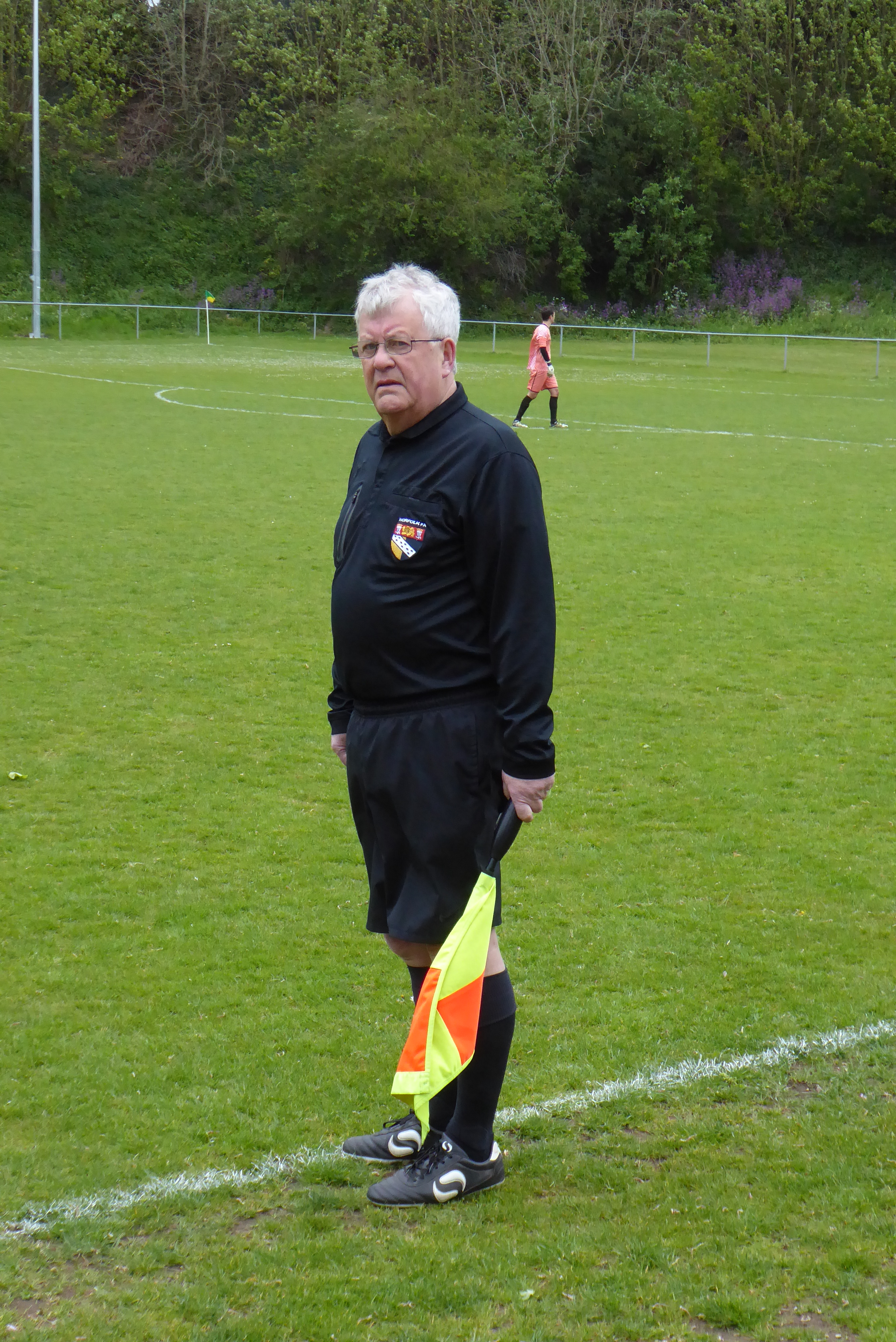
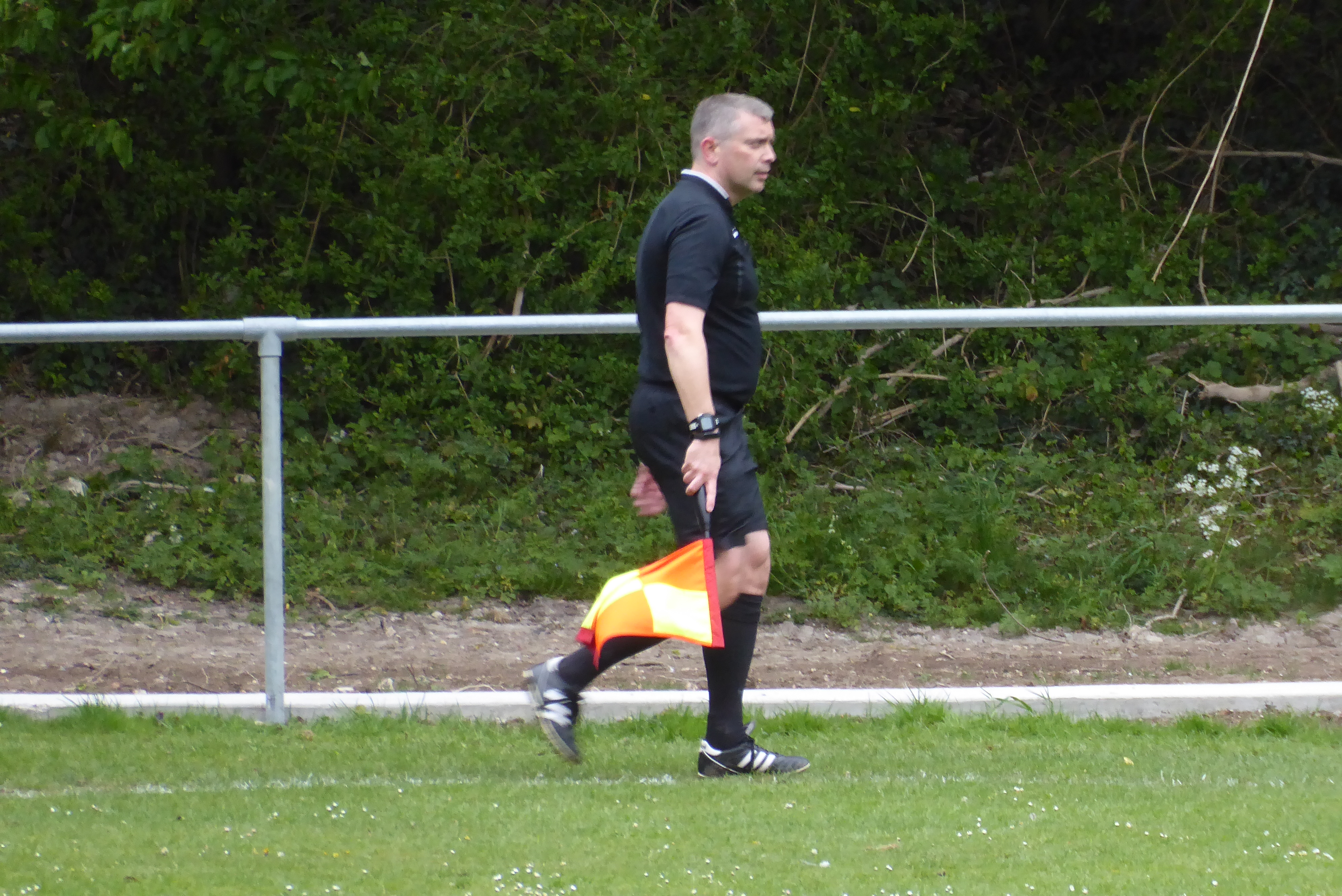
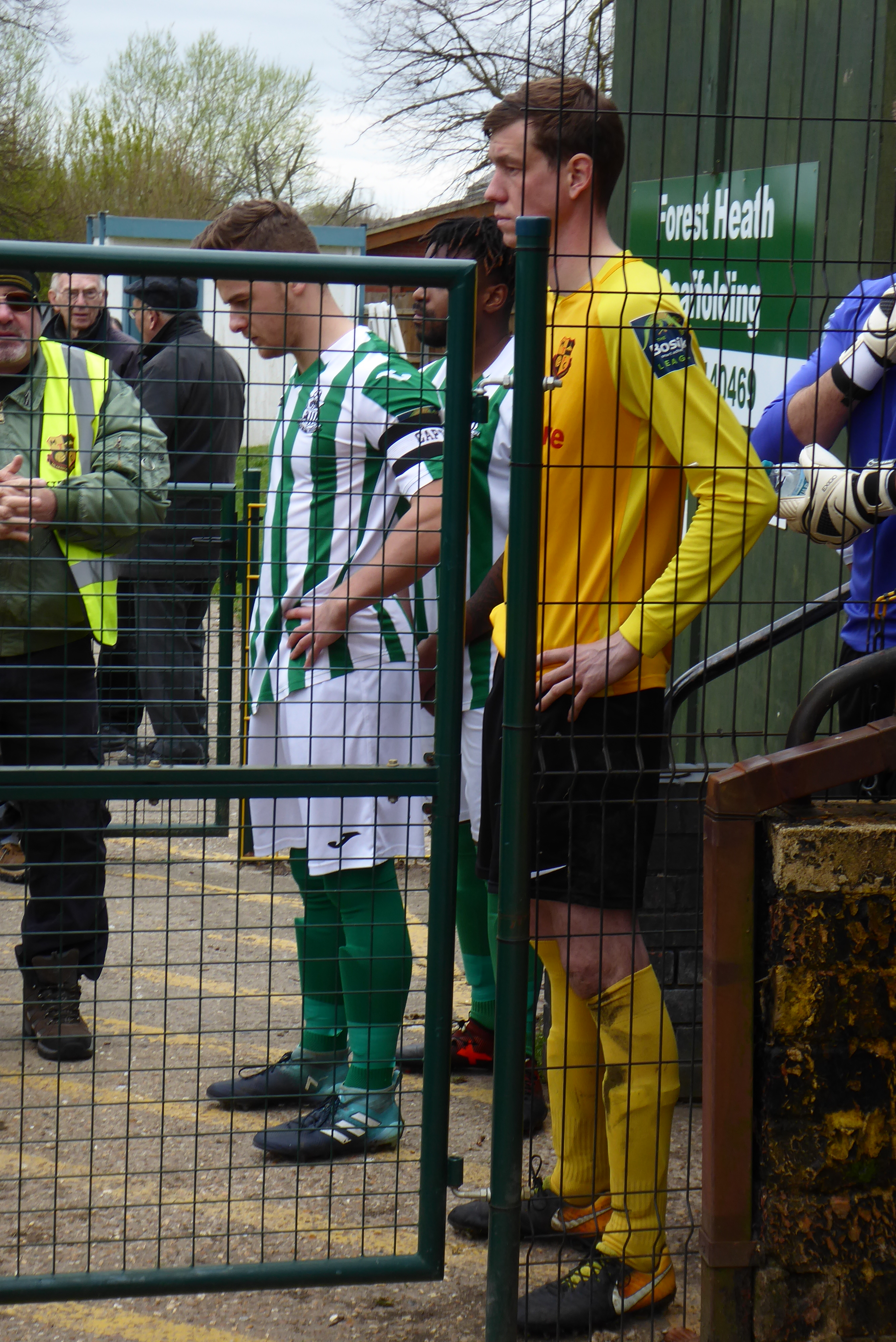
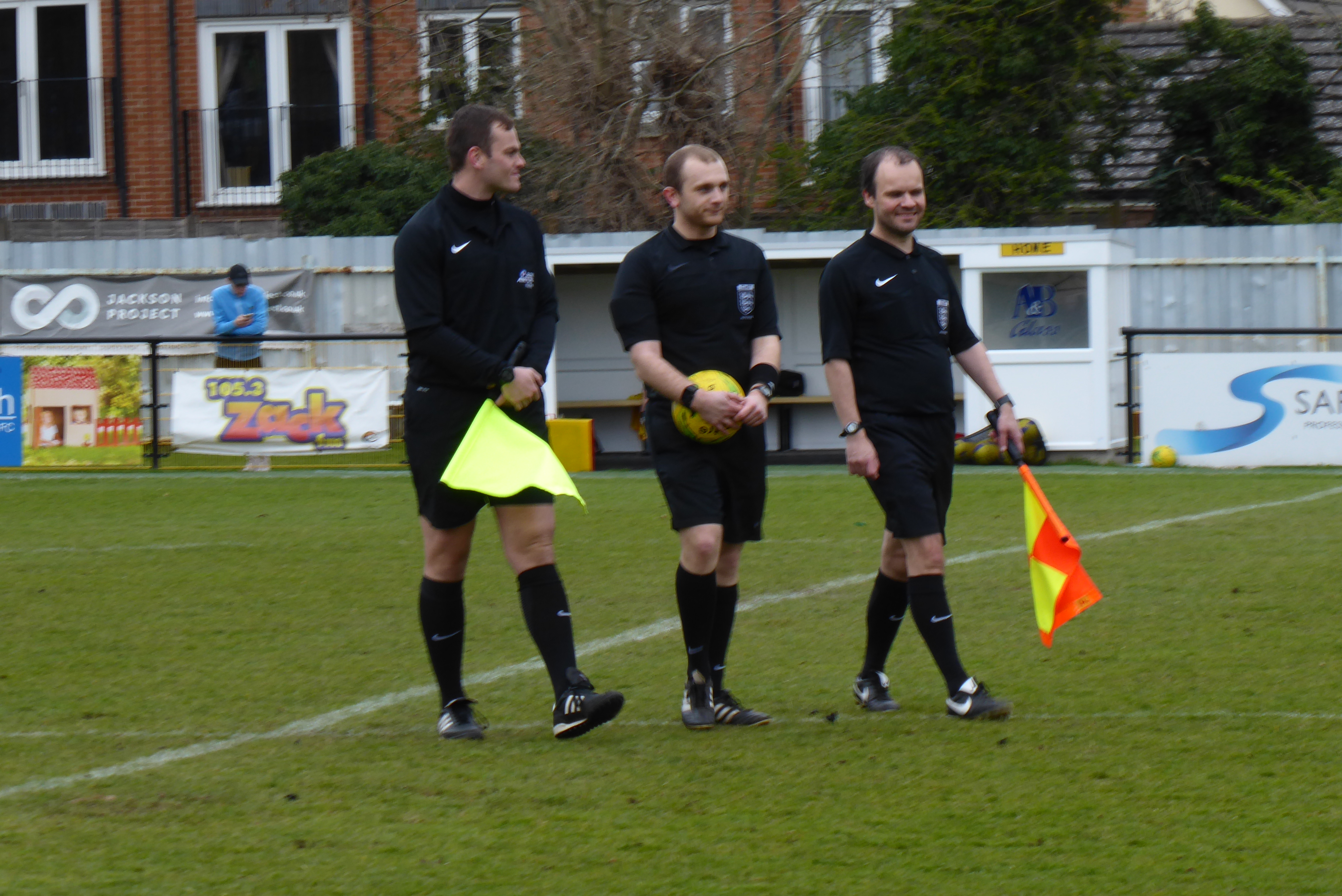
Time passes quickly and it’s almost five to three. The loud men behind us have already left and we follow suit, downing what’s left of our drinks before braving the breezy outdoors; we both have our woolly hats on today. The two teams line up behind the referee Mr Cameron Saunders and his two assistants Messrs Andrew Hardy and Lewis Lofts, who sounds like he might offer to board over your attic. The group marches on to the pitch but quickly break formation, not hanging round for any ritual handshaking as happens at higher levels of the game.
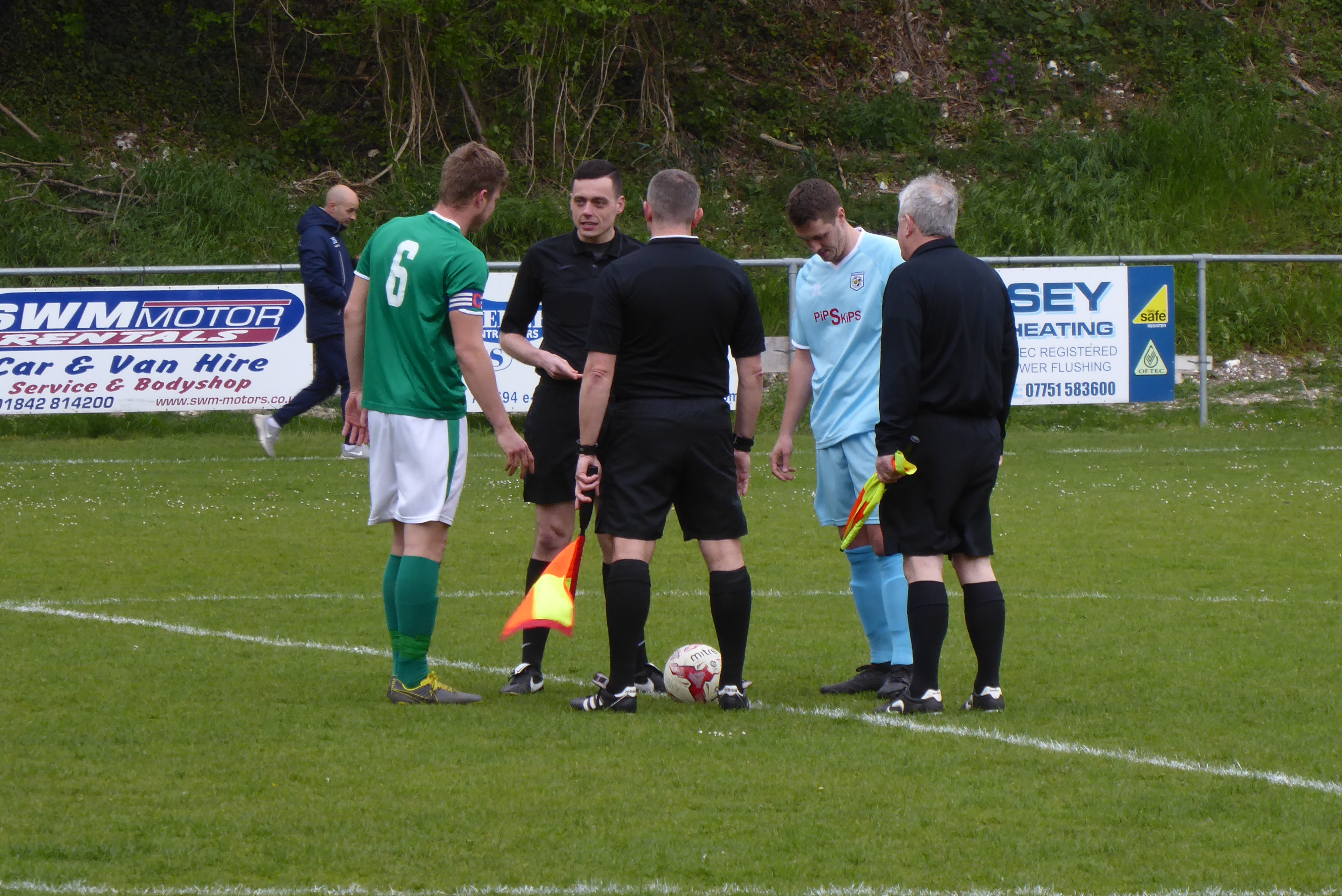
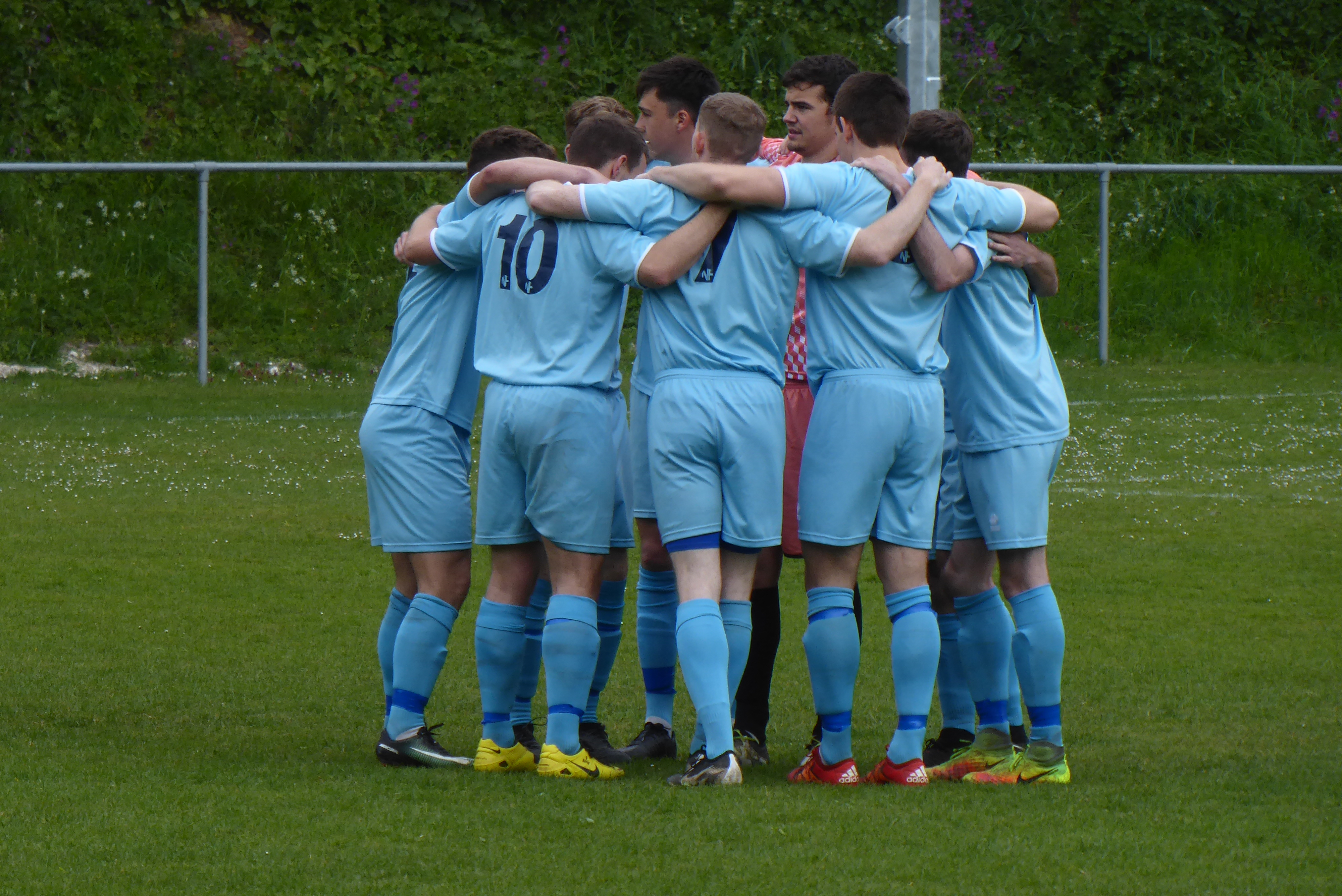
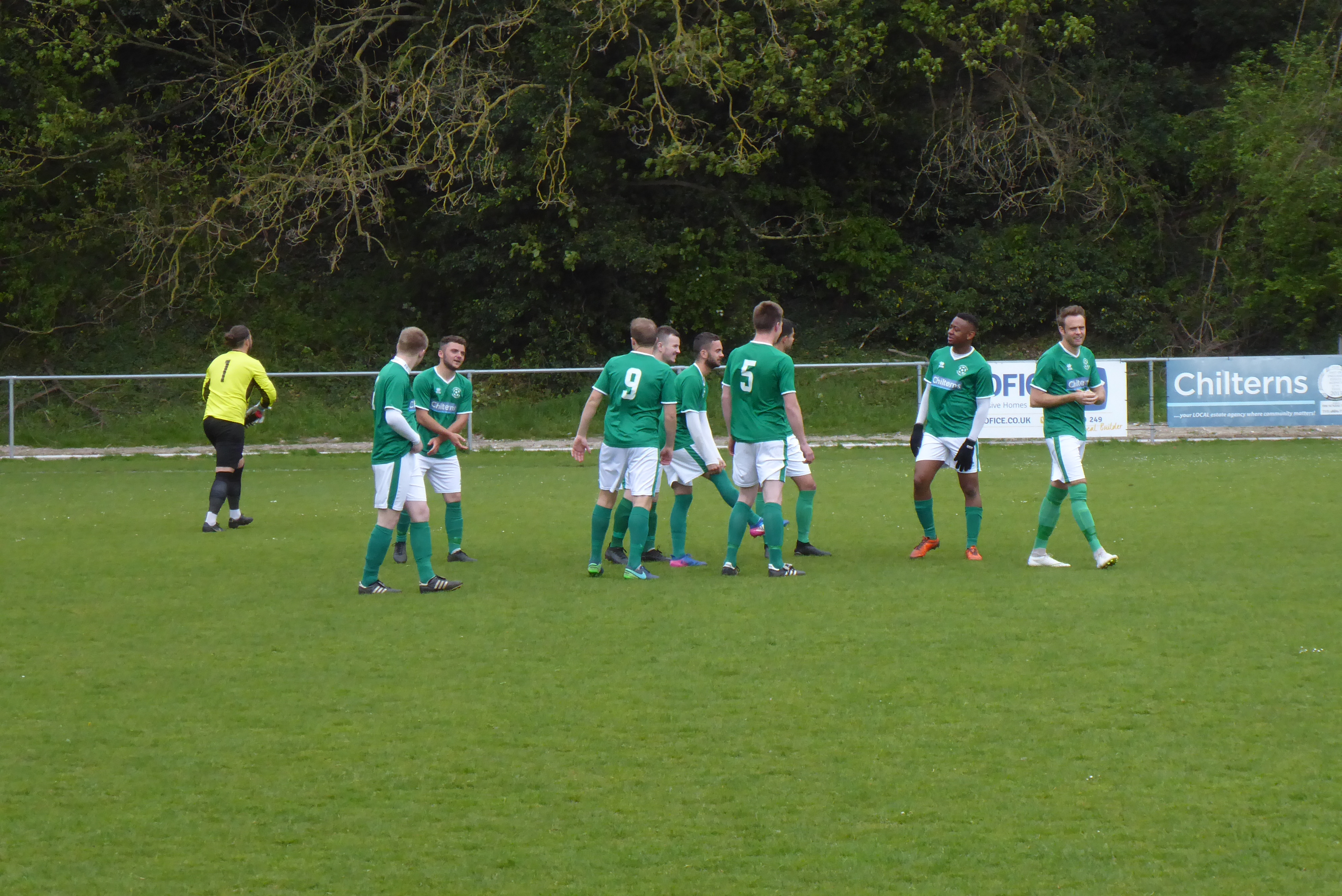
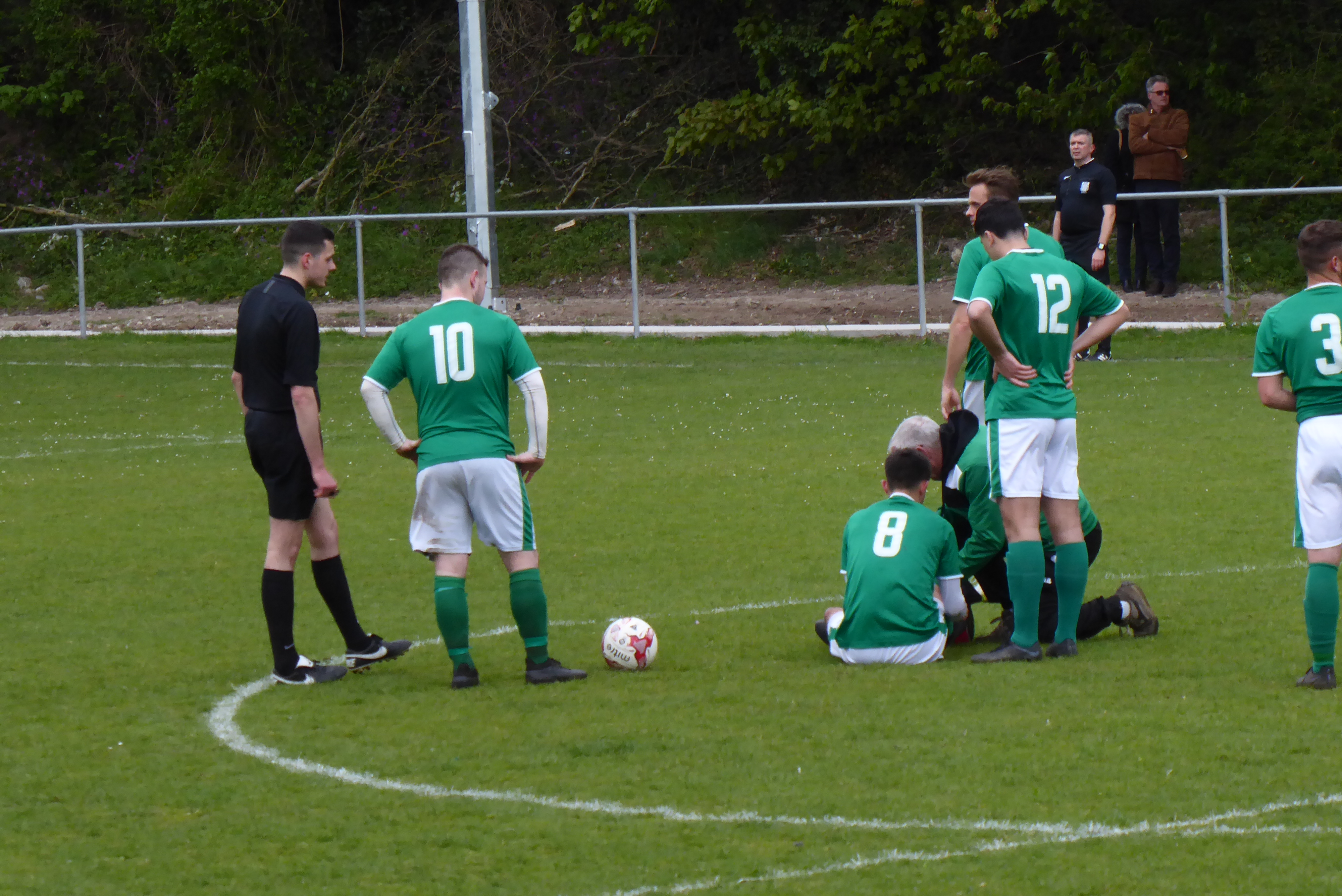
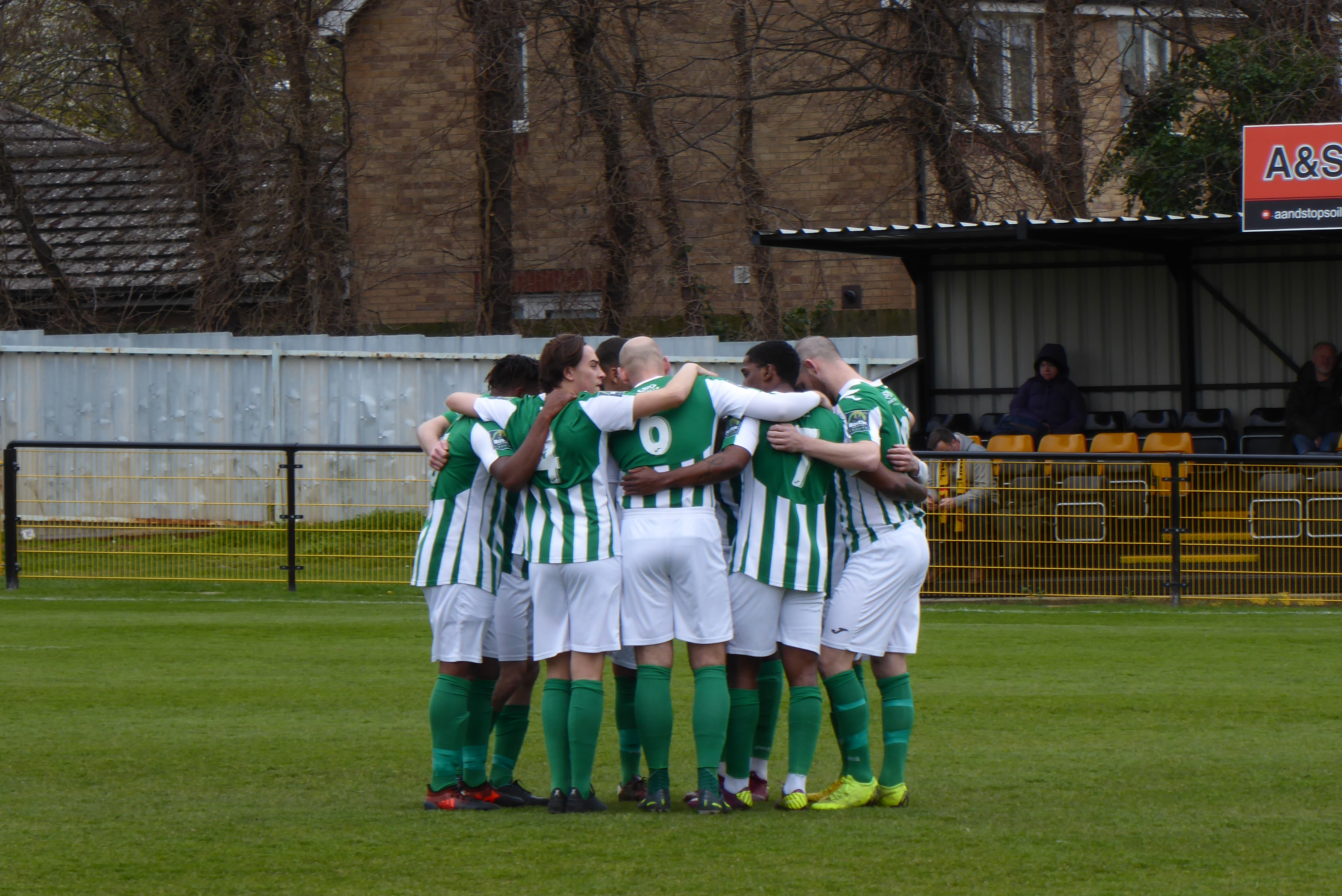
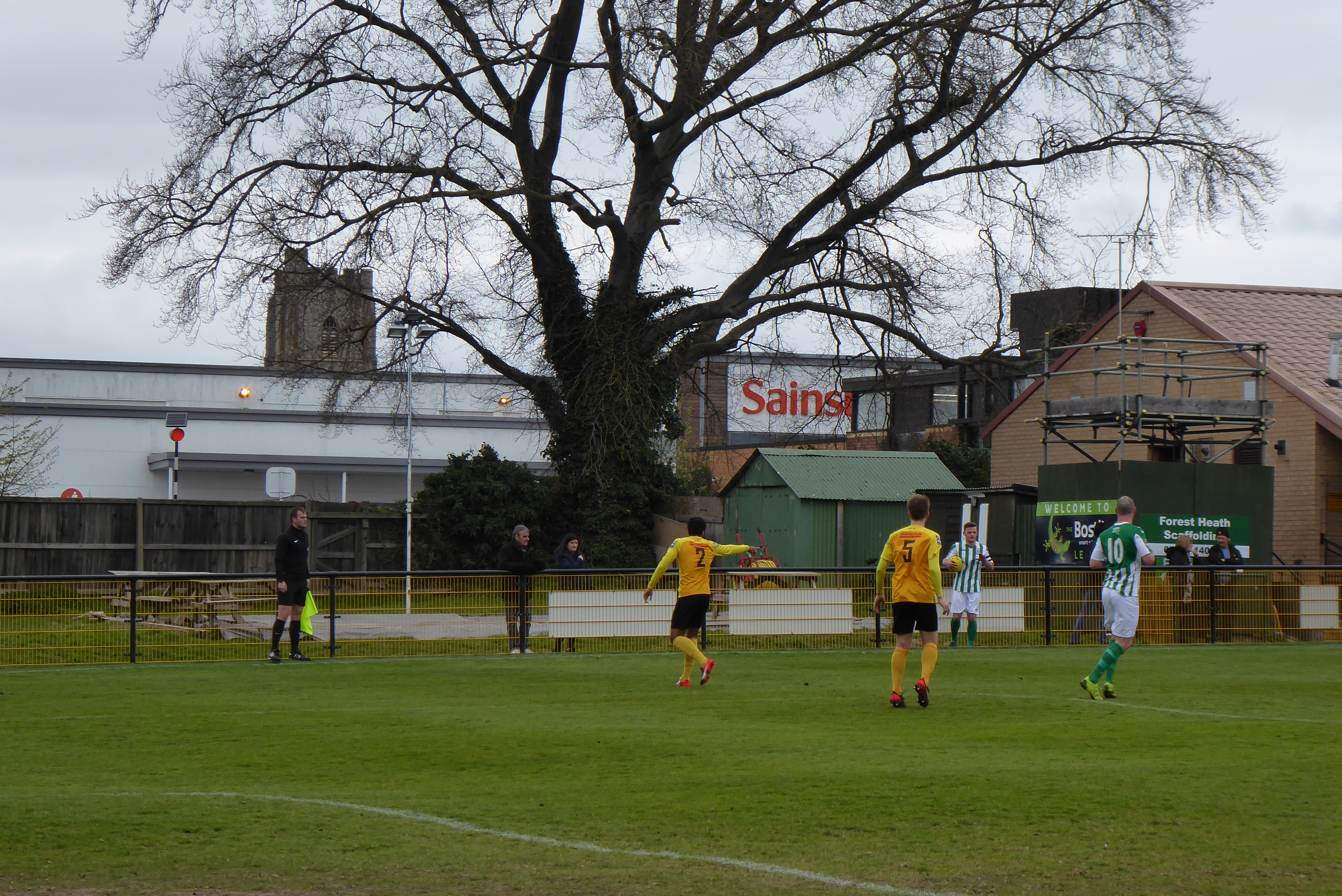
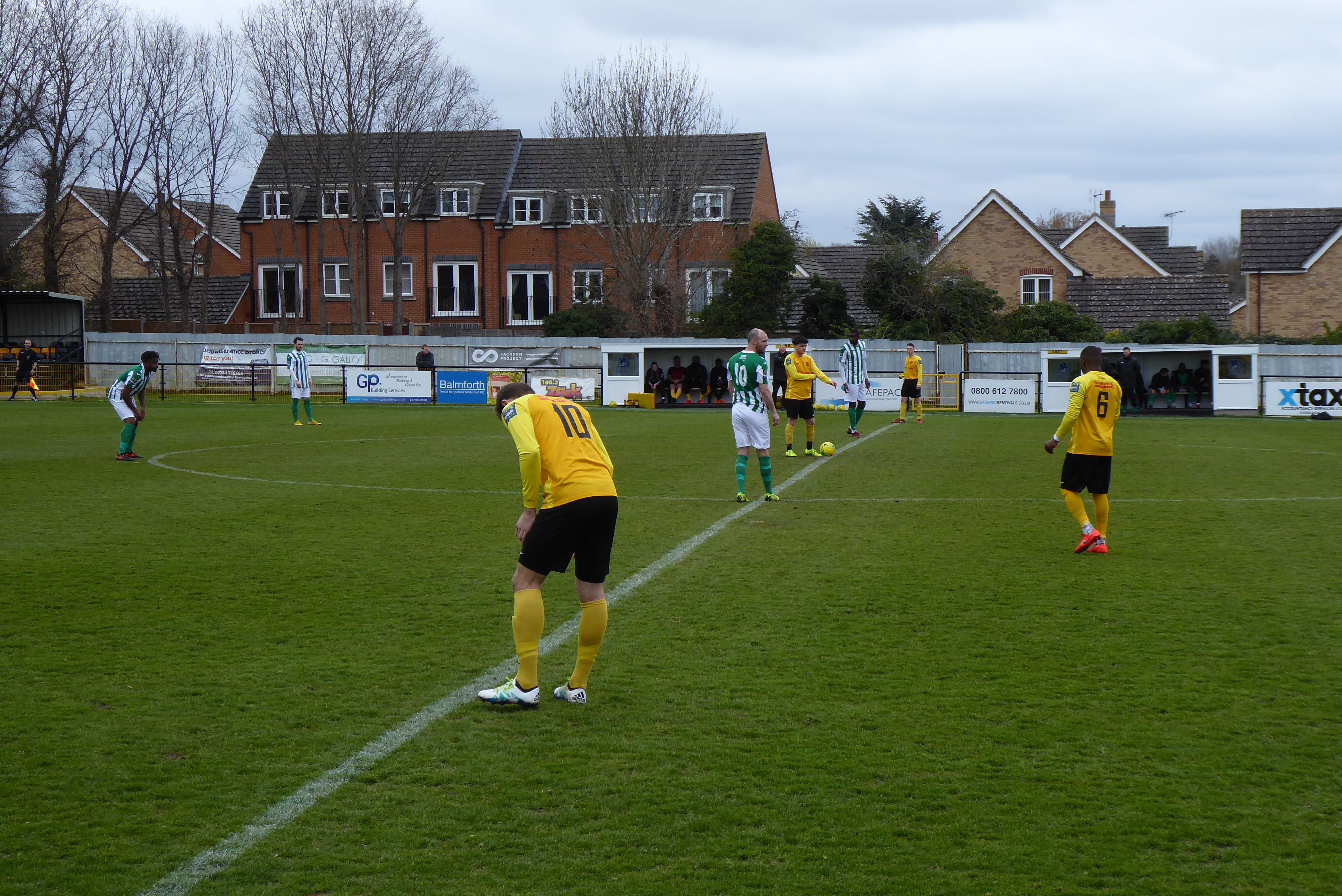
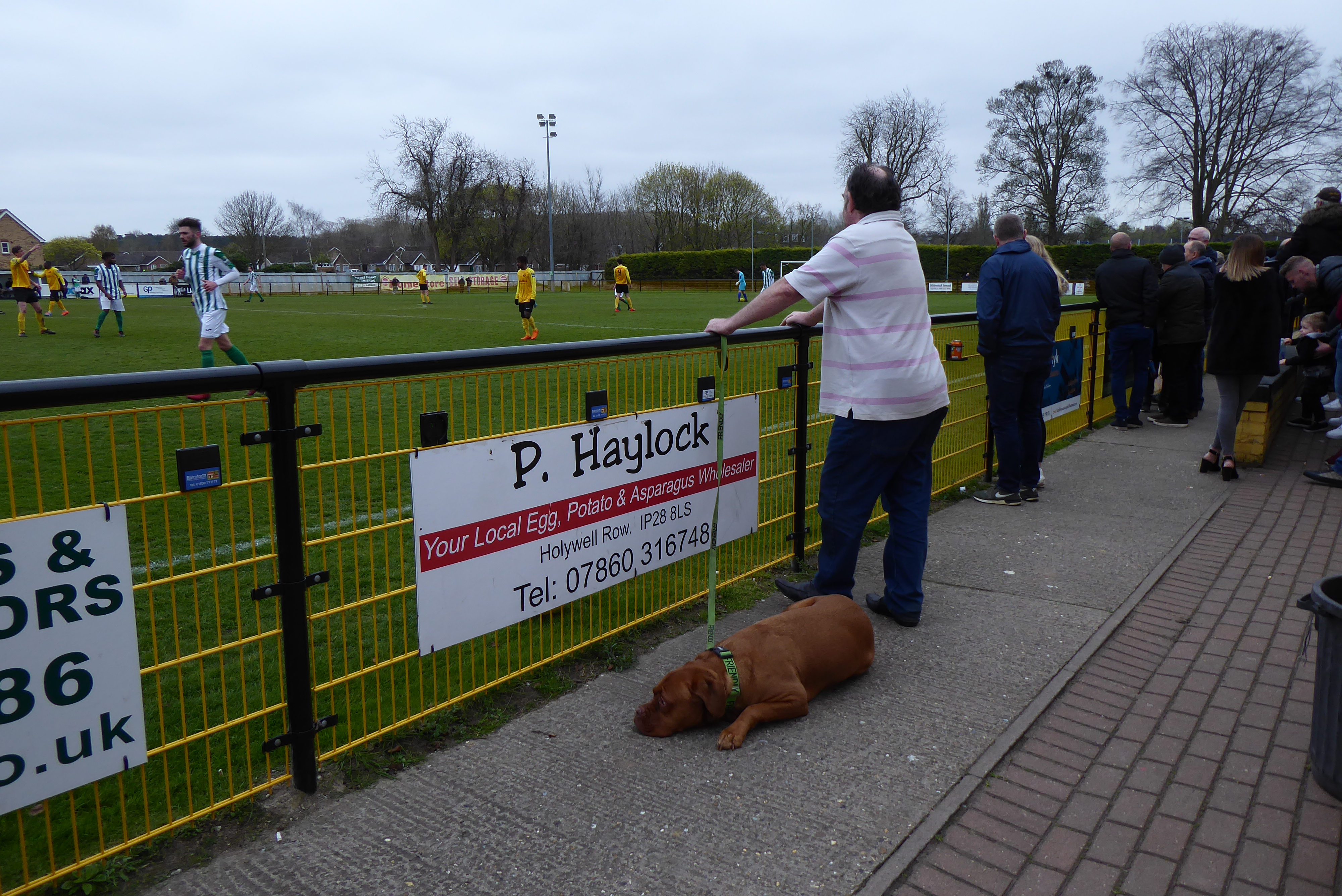
Lakenheath get first go with the ball kicking towards Wing Street and wearing green shirts with white shorts and socks, they look a bit like French Ligue 2 club Red Star. Mulbarton Wanderers are in all pale blue with shirts sponsored by ‘Pip’s Skips’ and they play in the direction of the railway line far off to the north. The early pace of the game is fast with a clear desire to get the ball forward quickly. Mulbarton soon settle but look lightweight up front. Despite the blustery wind and a hard and uneven looking pitch some of the football is neat and good to watch. For both these clubs it’s their first ever season in the Eastern Counties League First Division, step-six of non-league football, and both have done well, with Mulbarton guaranteed a third place finish and Lakenheath set to finish fifth in the nineteen team league if they win today.

Weirdly Lakenheath don’t seem to have a team captain, with no one wearing an armband and no one annotated as such on the team sheet. As much as a sort of football-collective seems a good idea, their goal keeper Frank Gammon, which incidentally I think is a great name, seems to be taking on the mantle however, with his constant encouragement and advice from the penalty area. “Win your battles”, “Left Shoulder”, “No foul” he shouts, continuously. But he’s doing a good job and Mulbarton are kept at bay without much difficulty. Lakenheath seem to have just one striker, number nine Shaun Avis who the programme tells me has scored 15 goals in just seven games this season, which is rather impressive. He looks lively but misses the two chances he has, taking the ball around the Mulbarton keeper Tom Wright by the corner of the penalty area, but then going for the spectacular and achieving it with a spectacularly high and wide shot before also glancing a free header wide of the goal.
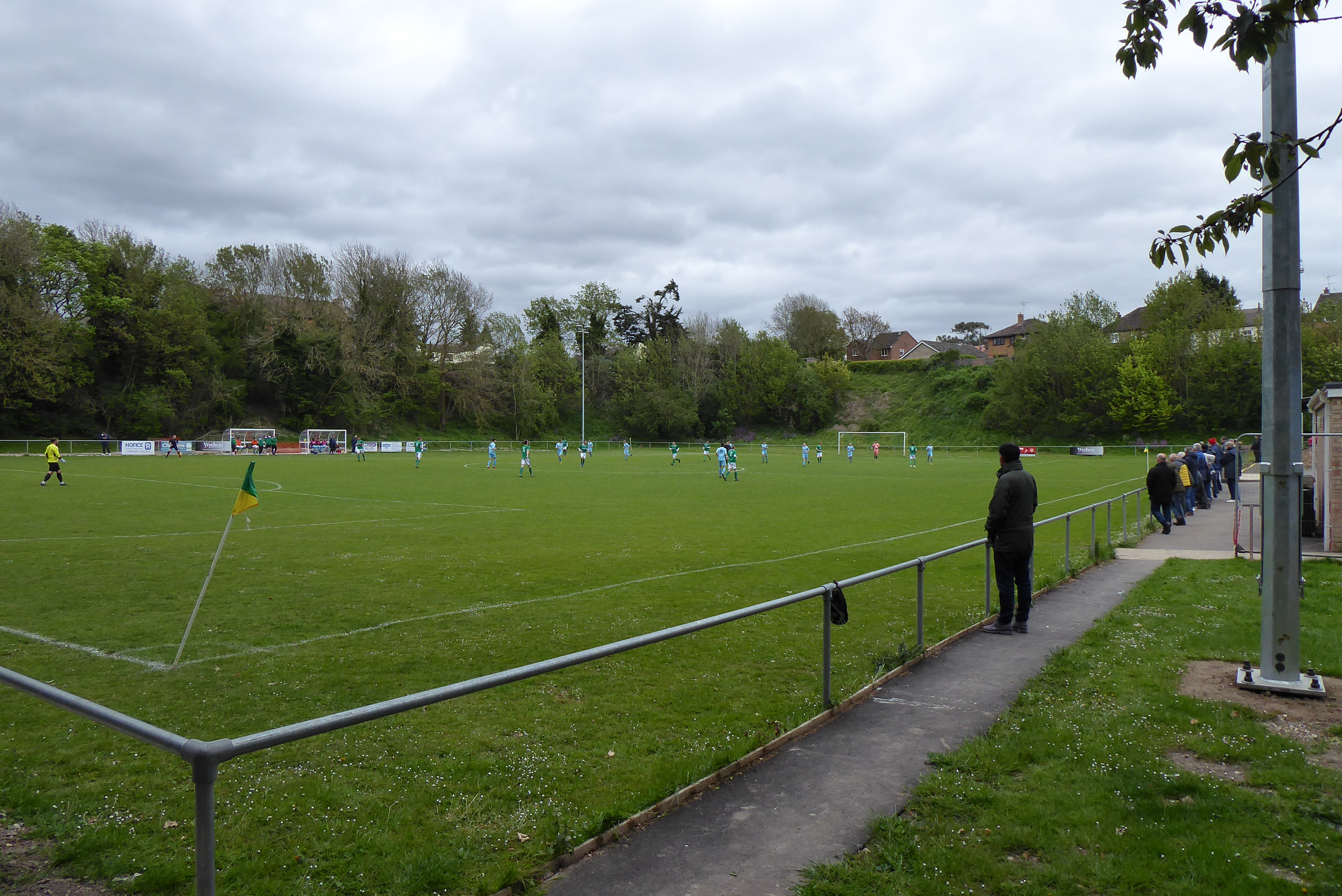
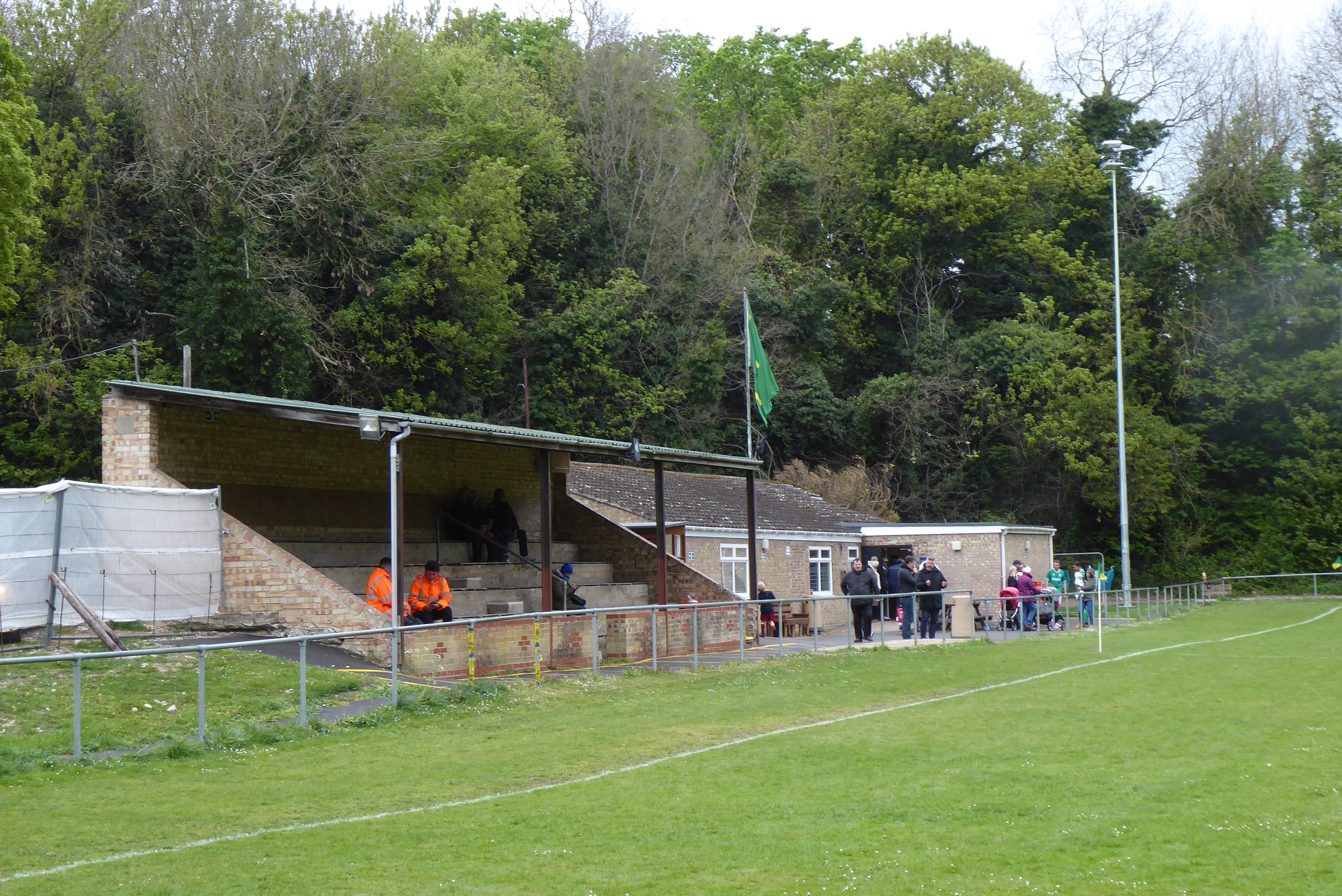
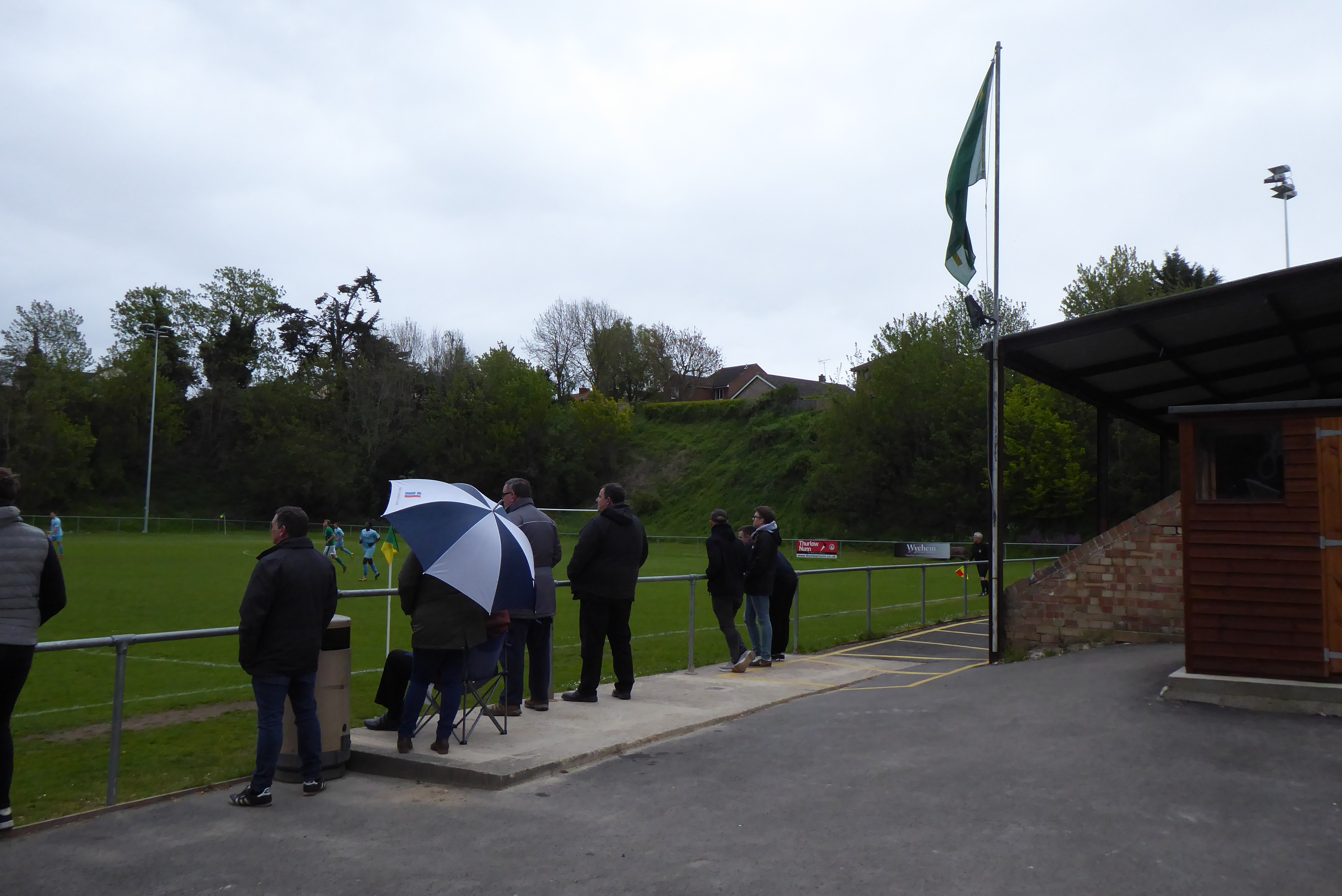
Paulene and I take a stroll around to take in the ambiance of ‘The Pit’, which we both agree is a much better name than ‘The Nest’ not just because it is devoid of unfortunate associations with Norwich City, which is very important in Suffolk. It’s a name that makes me think of Clive King’s children’s novel ‘Stig of the Dump’ and I imagine a variation of the story in which a boy makes friends with a team of Neolithic footballers and helps them erect a goal, which looks uncannily like Stonehenge. This is a lovely football ground, the steep sides of the former quarry and the tall trees acting like natural substitutes for tall stands and creating a sense of enclosure which few non-league grounds even at much higher levels can rival. Sadly it’s a grey day today but it must be beautiful in the sunshine; even today there is birdsong and the tall trees sway eerily in the wind; wild flowers grow behind the goal lines and one corner of the pitch is covered in daisies, albeit closed up ones. Sadly, it’s not yet possible to walk all around the pitch but a concrete path behind the dug-outs and right hand goal form the man stand is due to be completed in the close season.


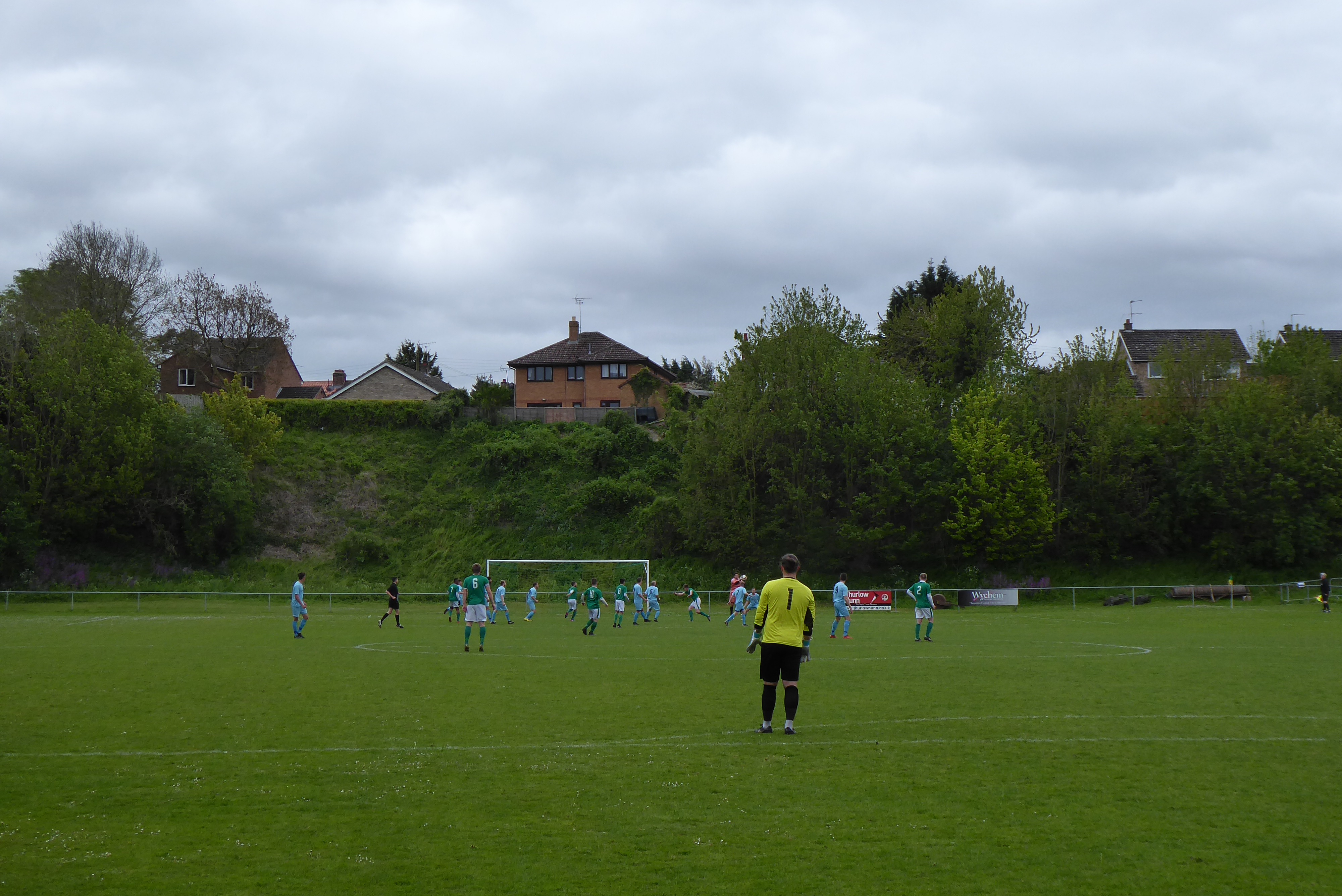
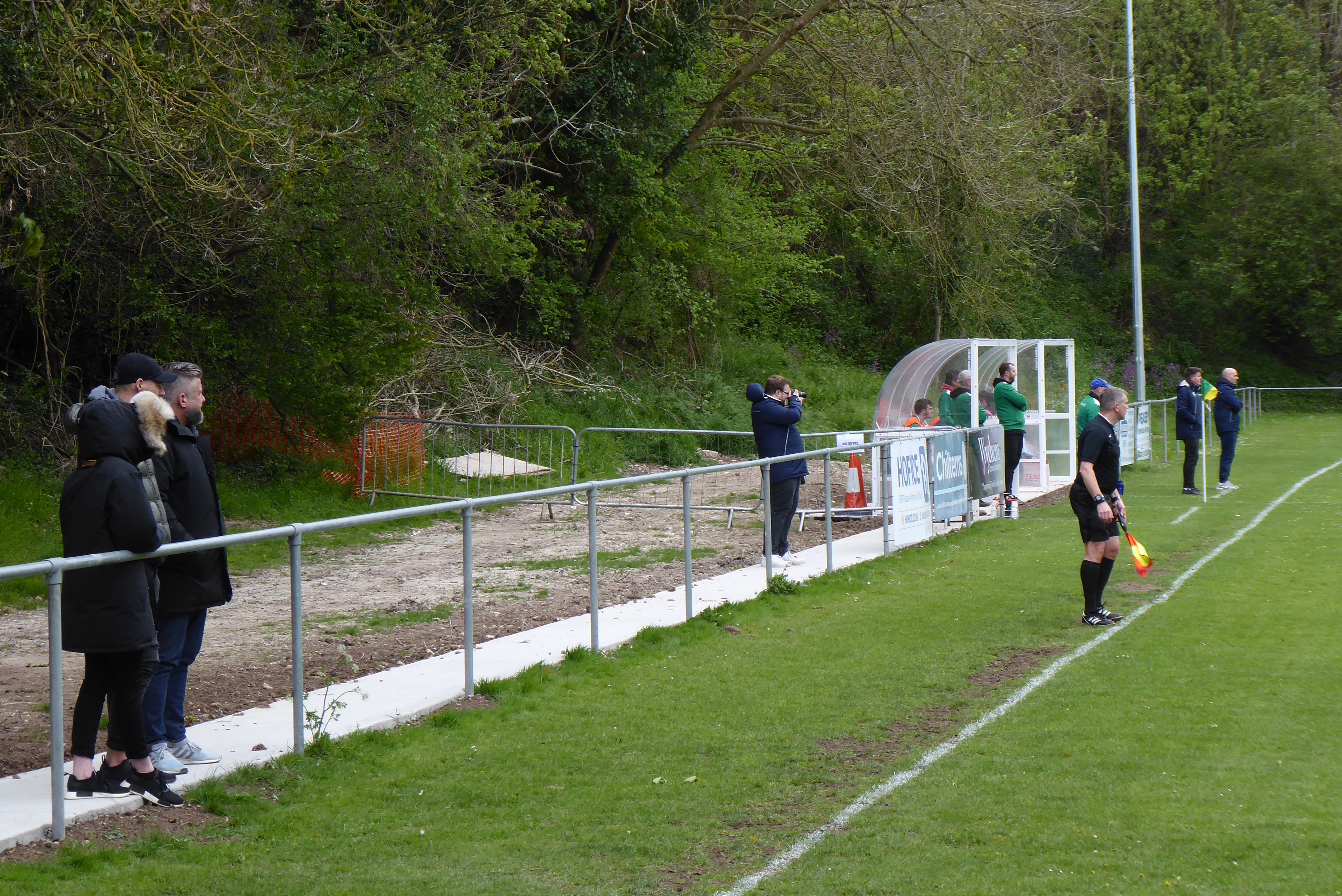

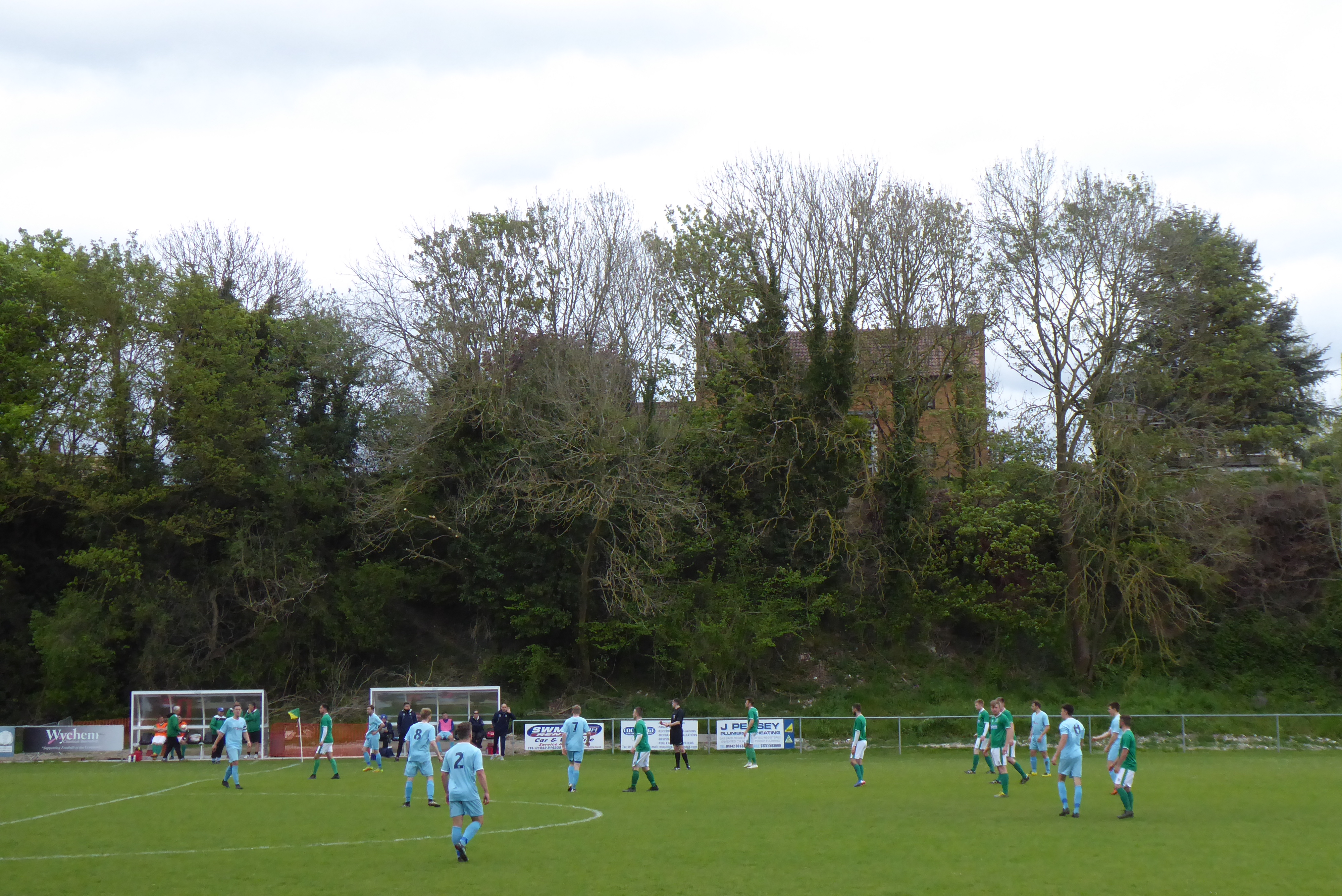
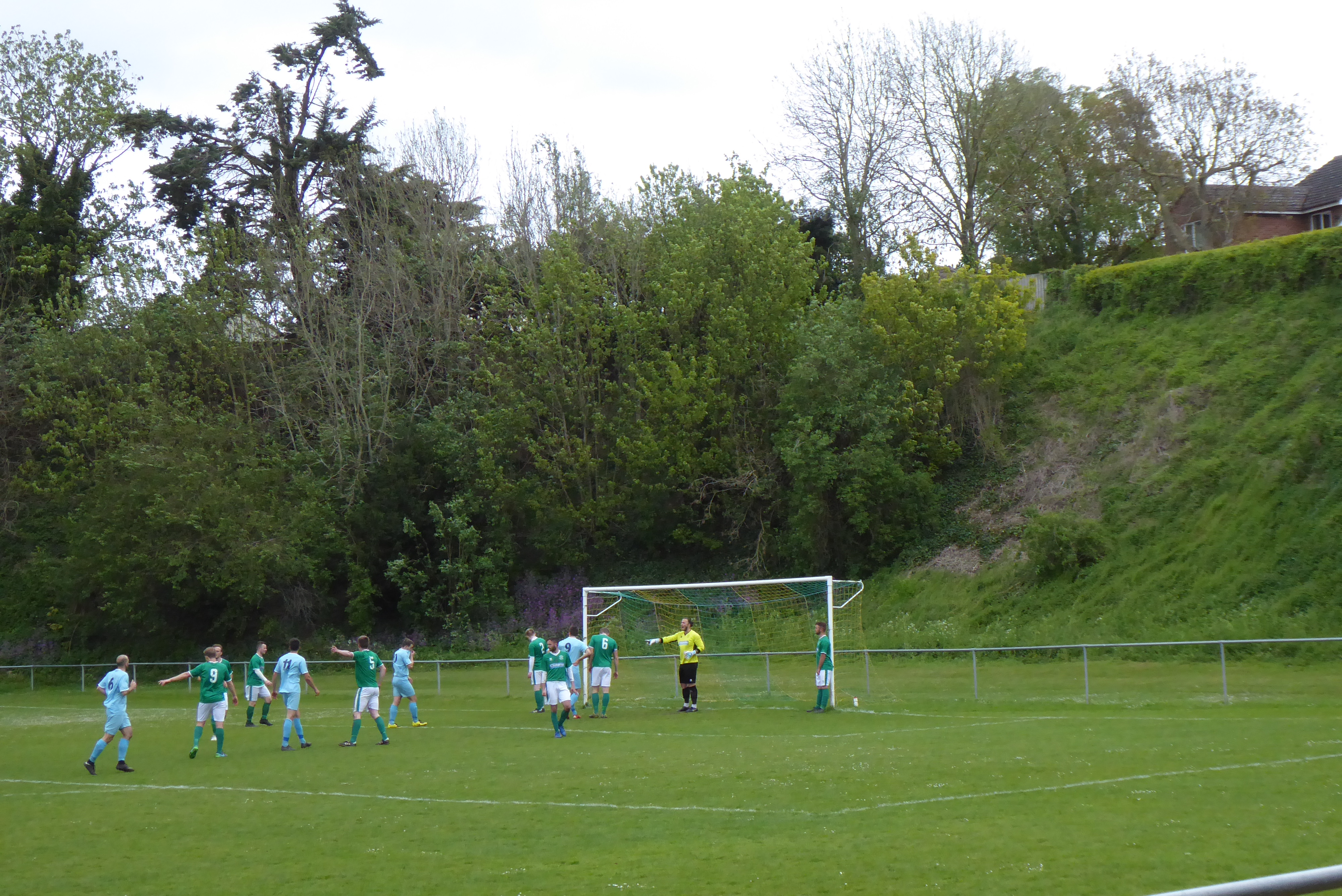
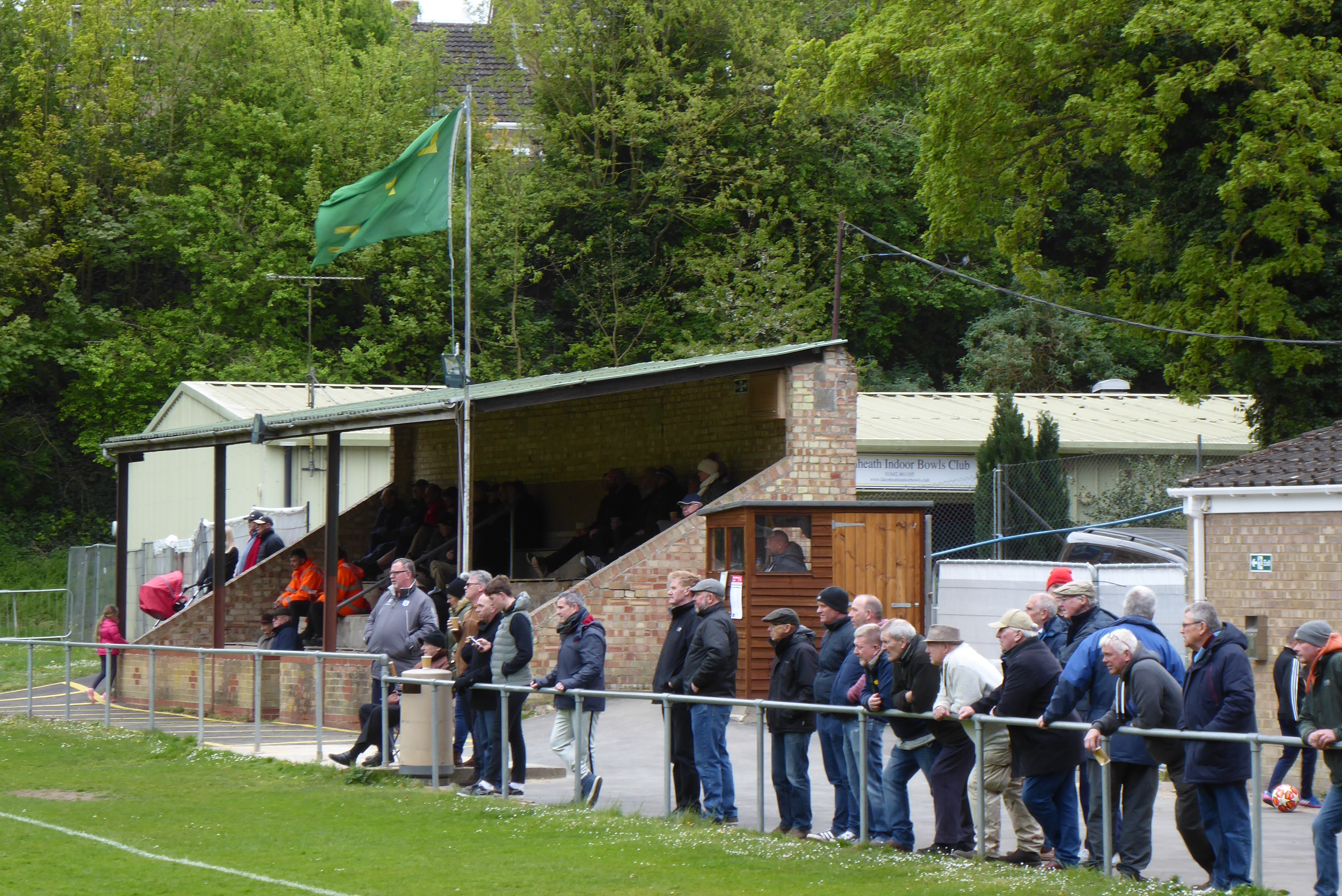
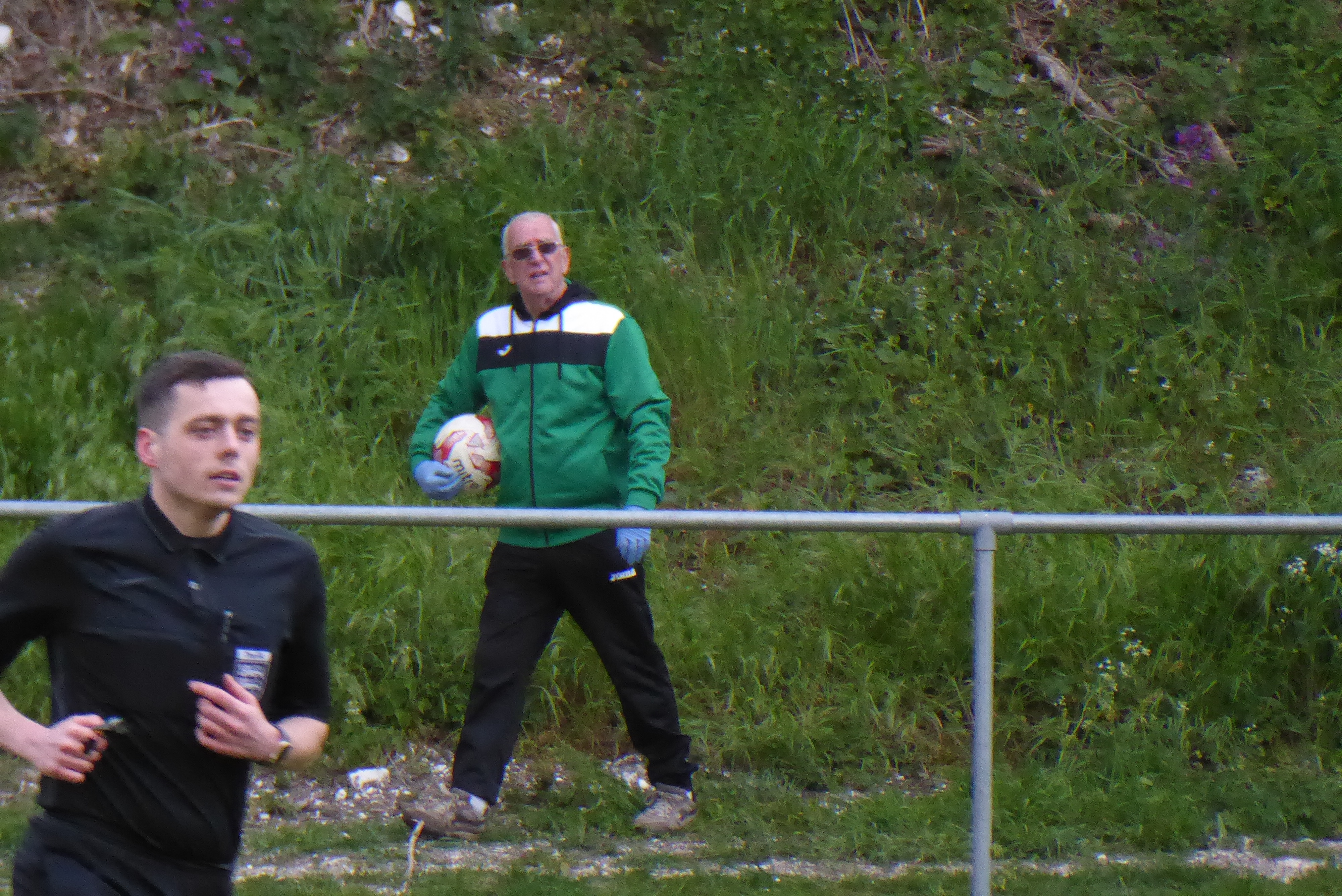
Back on the pitch, Mulbarton appeal for a penalty. “Handball!” shouts someone, “Rubbish” shouts someone else in response from the stand. Either way no one seems to much like referee Mr Saunders and someone else shouts “Referee, you’re getting worse”. I am slightly suspicious of Mr Saunders myself, his hair is just a bit too neat; he could be a Jehovah’s witness or a Mormon. Meanwhile on the near touchline to the stand the grey-haired, be-spectacled referee’s assistant reminds me of a conductor on the Eastern Counties buses I used catch to school.

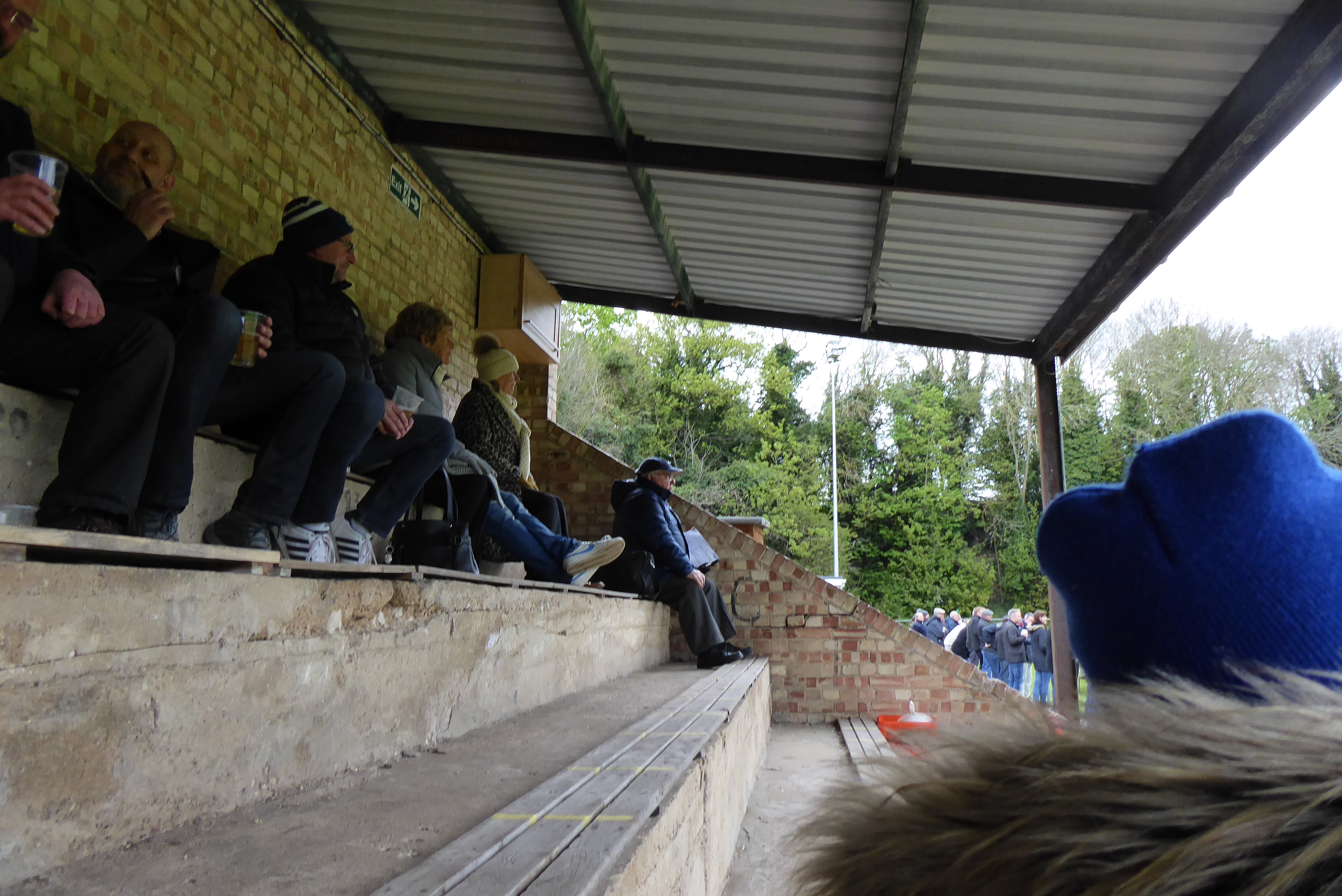
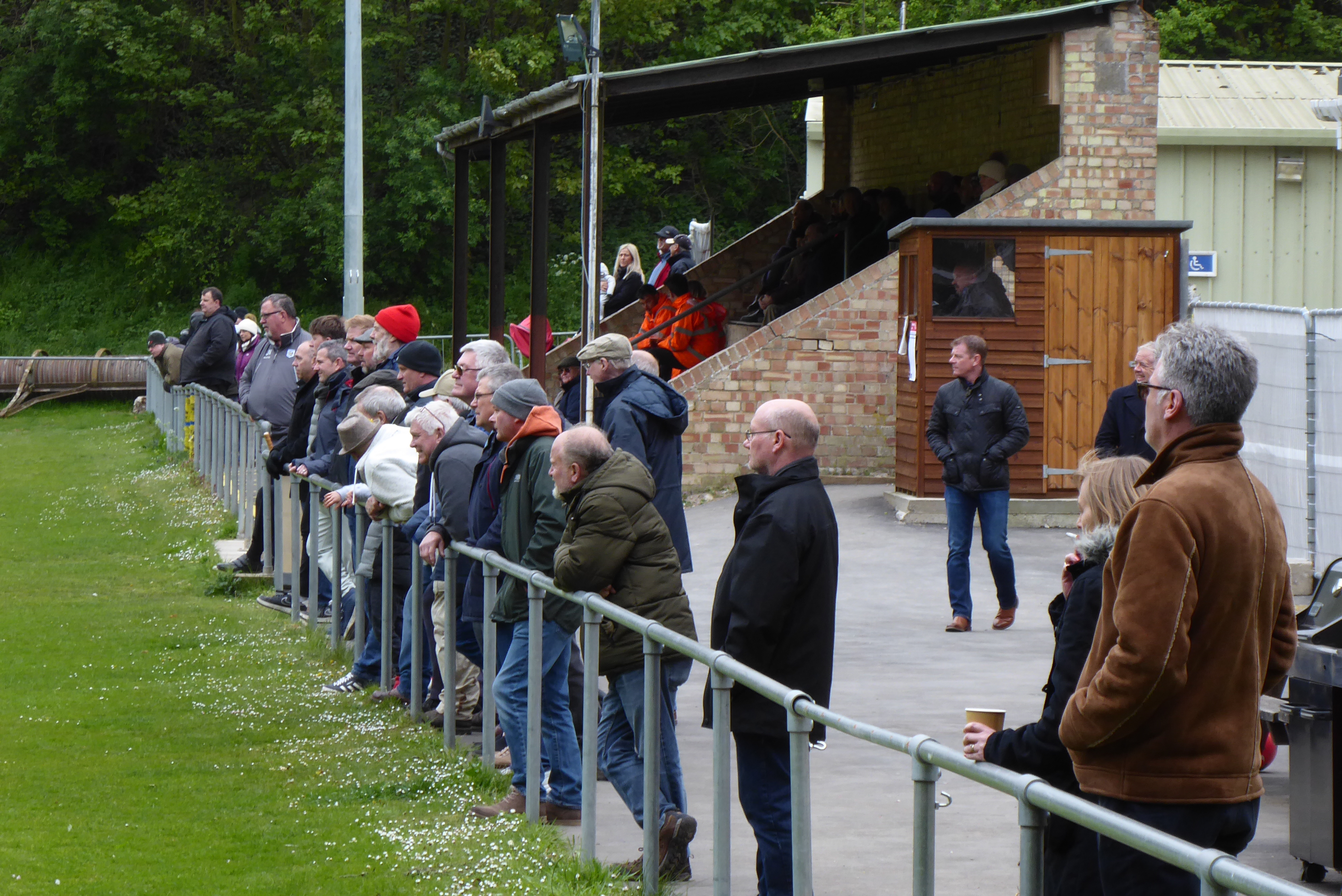
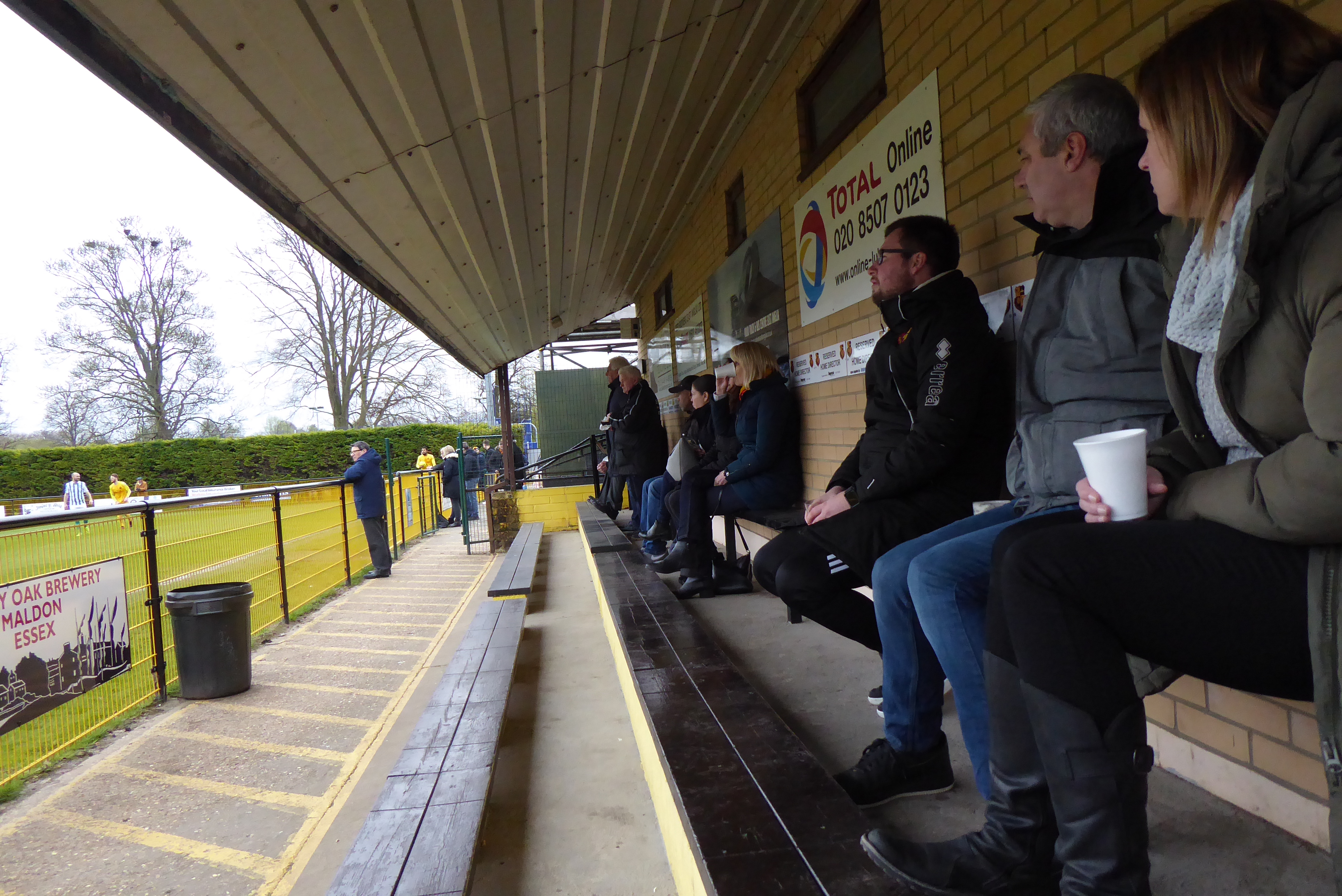
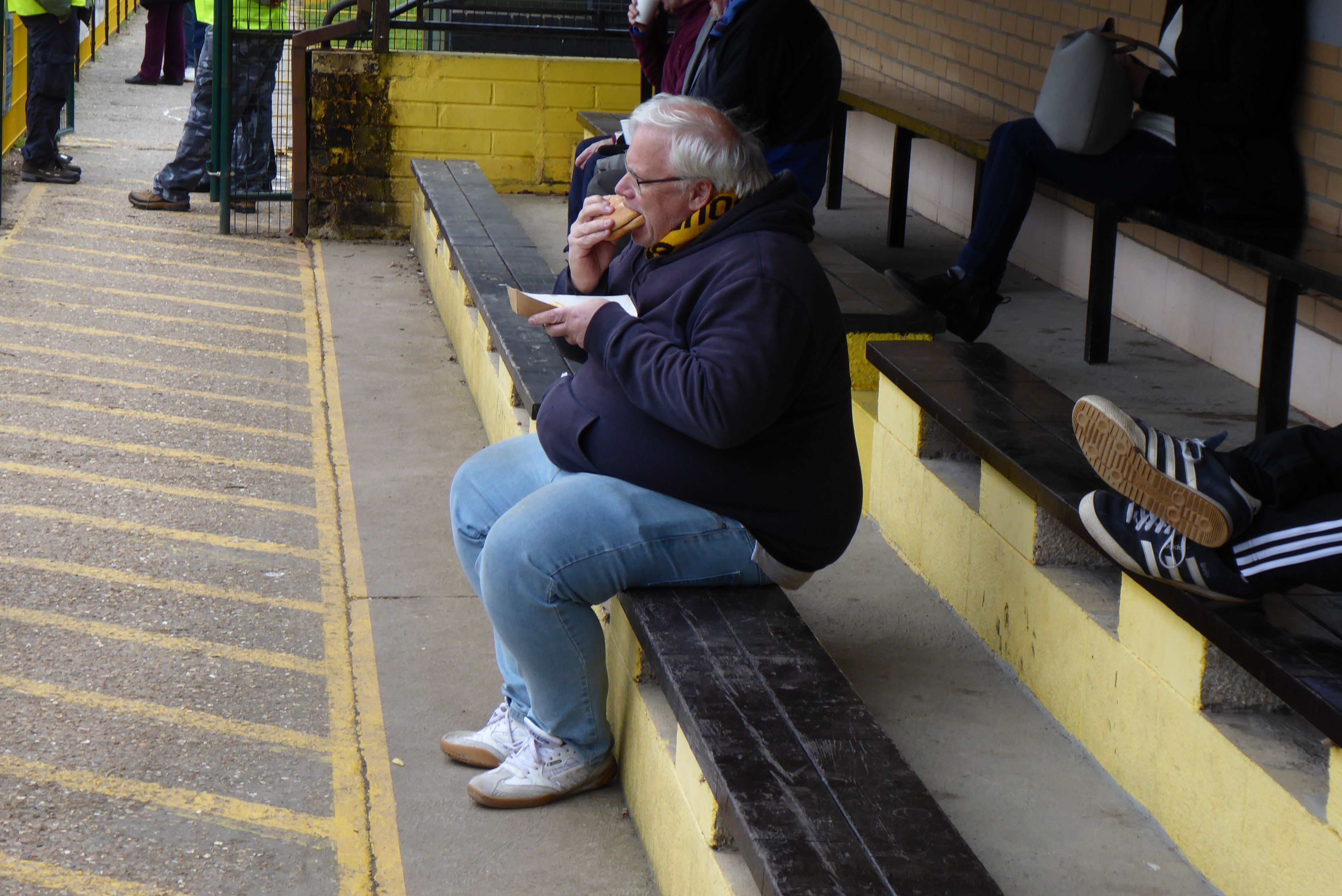
Half-time arrives and I depart for the clubhouse where there is a short queue at the bar for teas and coffees. As I queue the half-time draw is made; ticket number 501 wins first prize and the man behind me in the queue discovers he is the winner, but at least I get my tea before him. The tea (£1 per ‘cup’) is poured from a large pot into china mugs, this is sadly something that happens almost nowhere else in senior football any more but it should. If a football club is happy to get the china out it makes you feel like a human being, not as if any old plastic or polystyrene receptacle will do just to get another quid out of you; it feels like they want people to enjoy this tea, as if they care; and a very good cup of tea it is too. We drink our tea in the small brick stand, a homely and utilitarian structure with wooden benches, it’s beautifully dilapidated and I hope it’s never demolished to make way for one of the boring modern, ‘meccano’ stands.
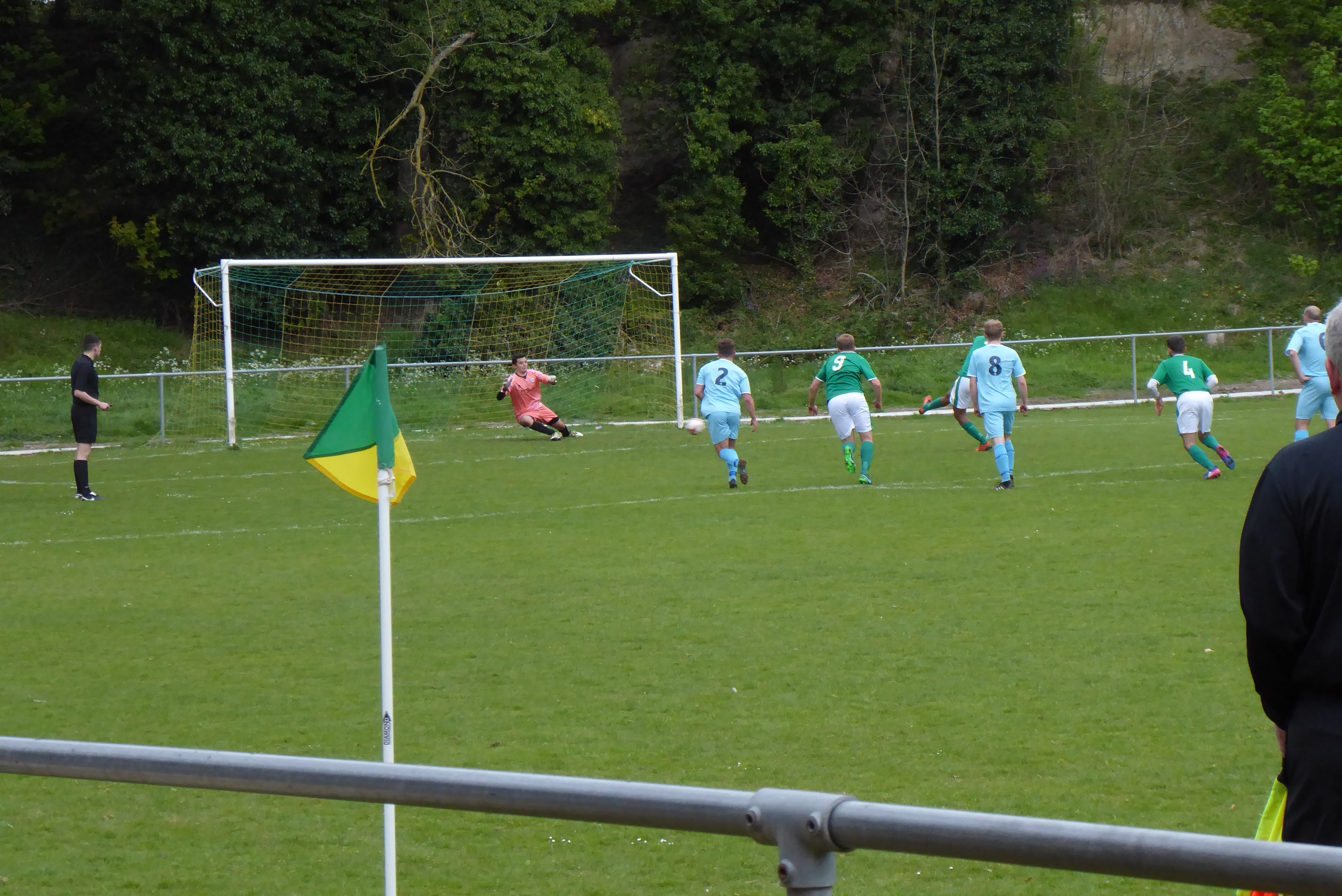
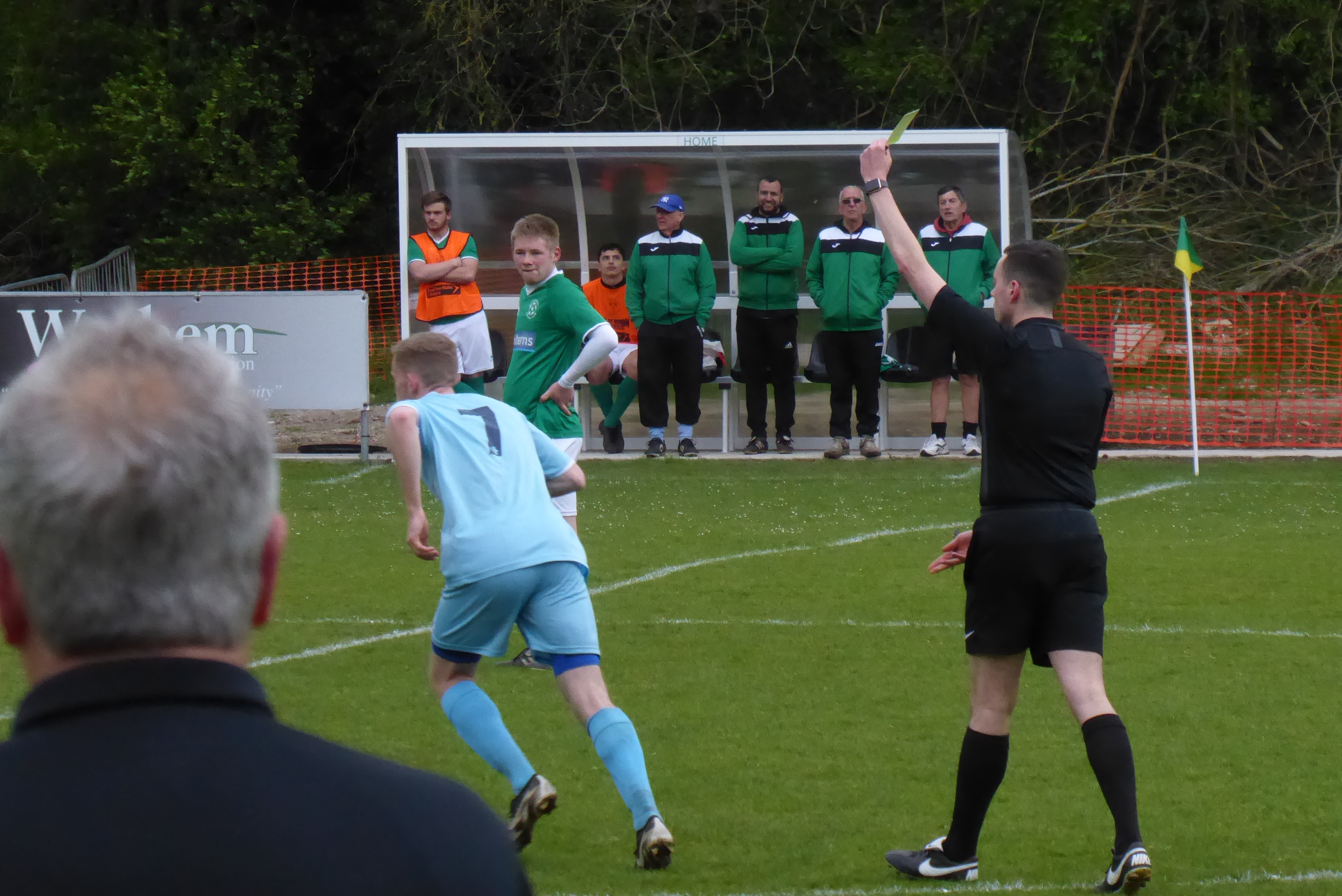
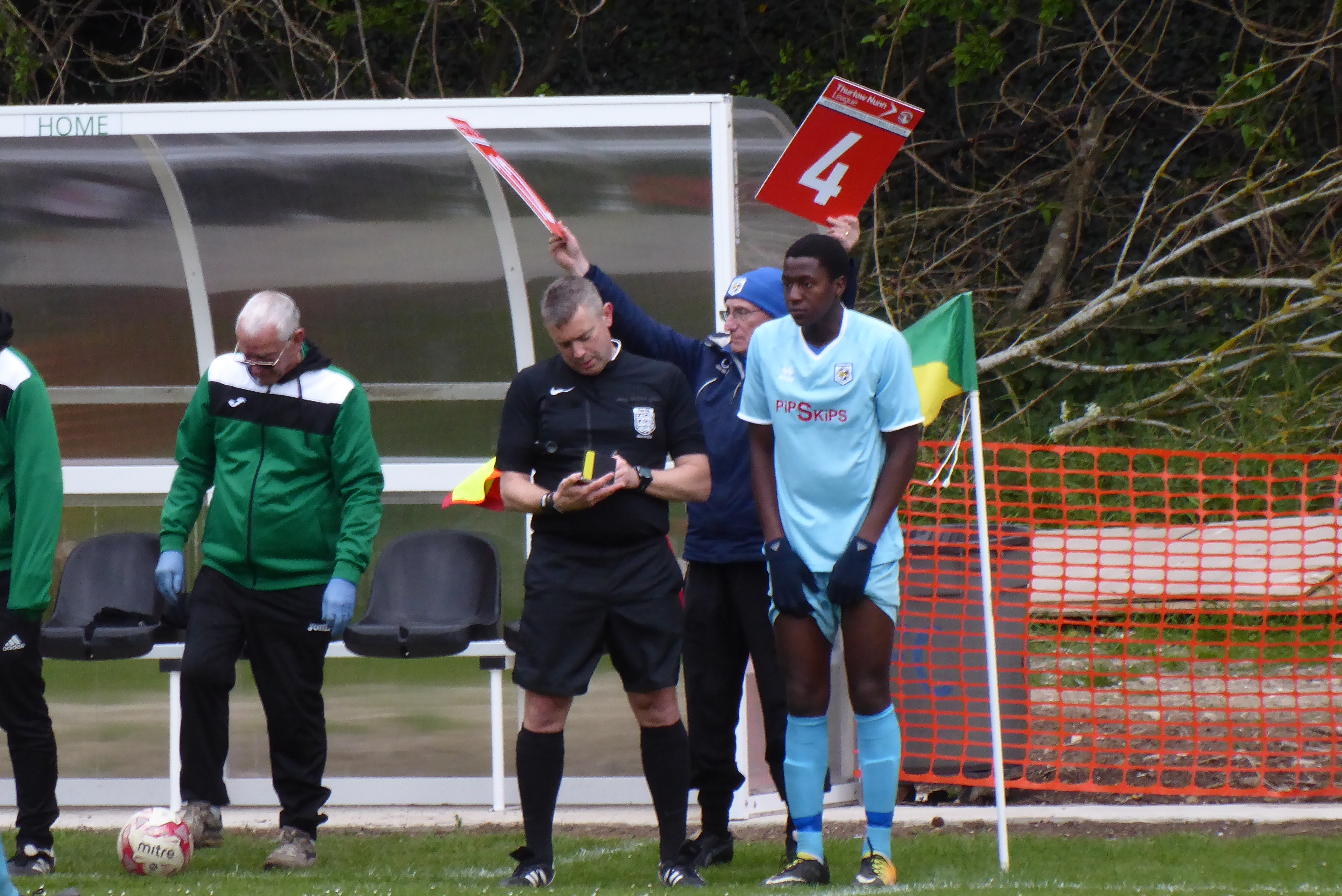
Paulene and I are refreshed and the game begins again at precisely three minutes past four. Within six minutes Lakenheath are ahead. No one seems quite sure why, although importantly Mulbarton players do not seem to be complaining, but Mr Saunders awards a penalty to Lakenheath and top scorer Kelvin Enaro scores his twenty eighth goal of the season, booting the ball to Tom Wright’s right as he collapses to his knees. With a goal lead Lakenheath are more relaxed; the pace of the game is a little slower and the passing more accurate and more controlled, there’s less anxiety. Mulbarton look even less likely to score than they did in the first half, but do claim the first booking of the match as their number seven, the splendidly named Dom Doggett, incurs Mr Saunders’ wrath for a foul. It’s not long before Doggett is substituted for number fourteen, Charlie Norman.
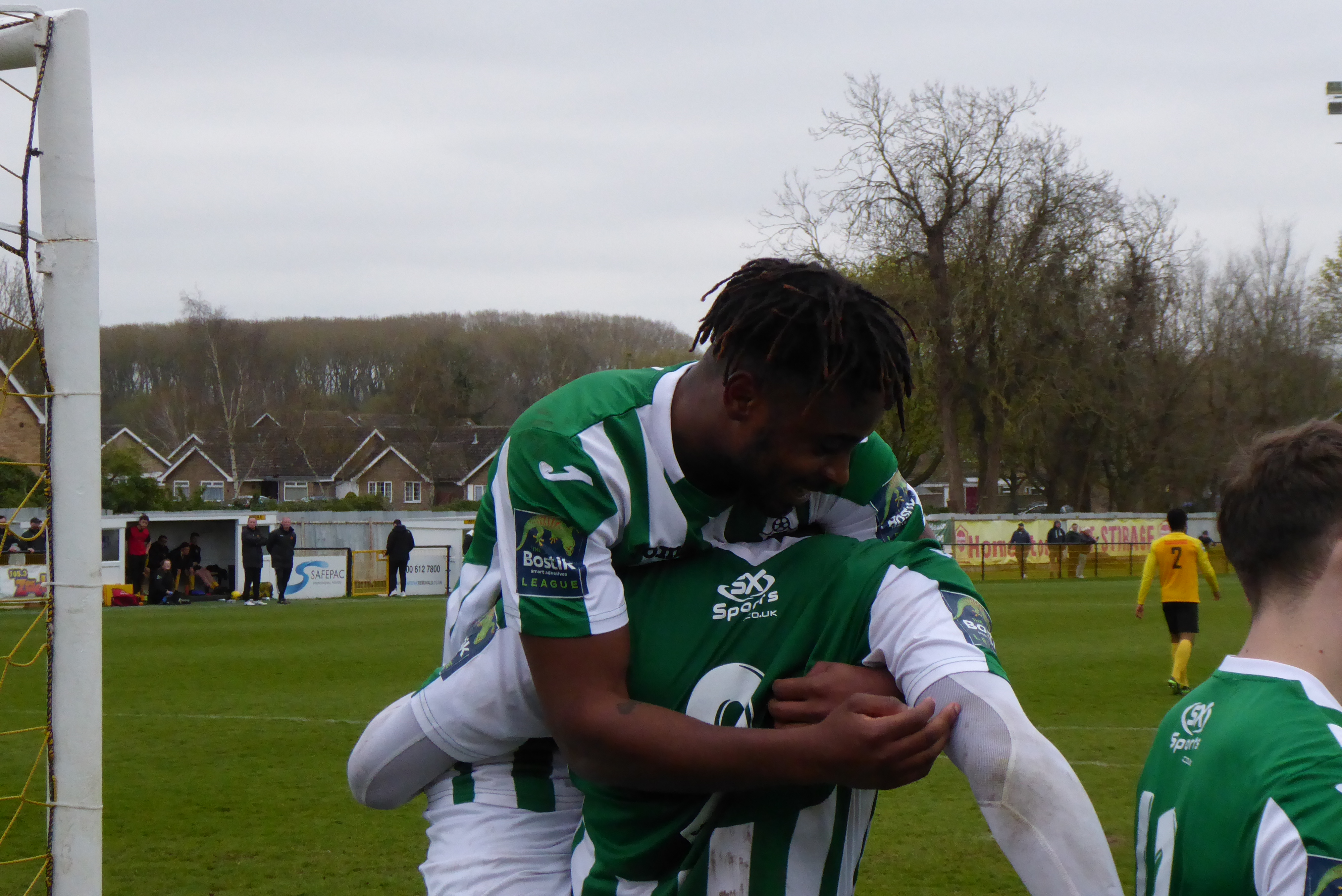
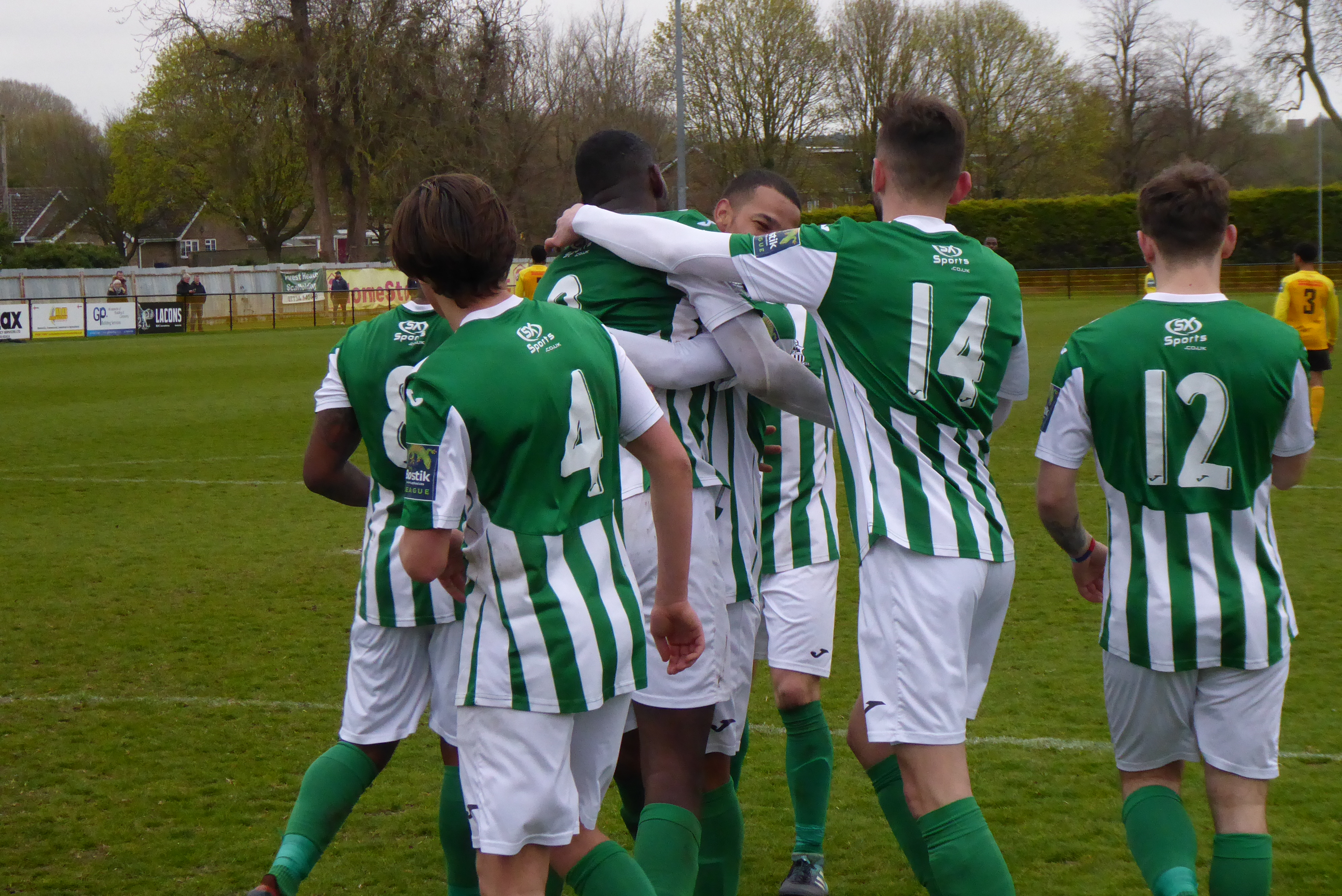
For a while the game drifts and I listen to the birdsong and enjoy the lush greenery of the quarry banks. A tall, grey-haired man walks up into the stand carrying a match ball. “Man of the match Dave? What did you do, score a hat-trick?” asks a voice at the back. Eventually Lakenheath win a corner and the action steps up a gear. “Come on Heath” shouts a man in the stand; it’s not a very imaginative nickname for the club but it follows the pattern set at nearby Mildenhall who are known as ‘The Hall’. Personally, I reckon they should be known as ‘The Quarrymen’ . After one corner, follows another as a shot flashes past the post, deflected away by the Mulbarton defence. It’s twenty-five past four and Frank Gammon sends a kick deep into the Mulbarton half, the bounce fools the Mulbarton defence and number eleven James McCabe runs on to poke the ball over Tom Wright’s head and puts ‘The Heath’ (‘The Quarrymen’) two-nil up.
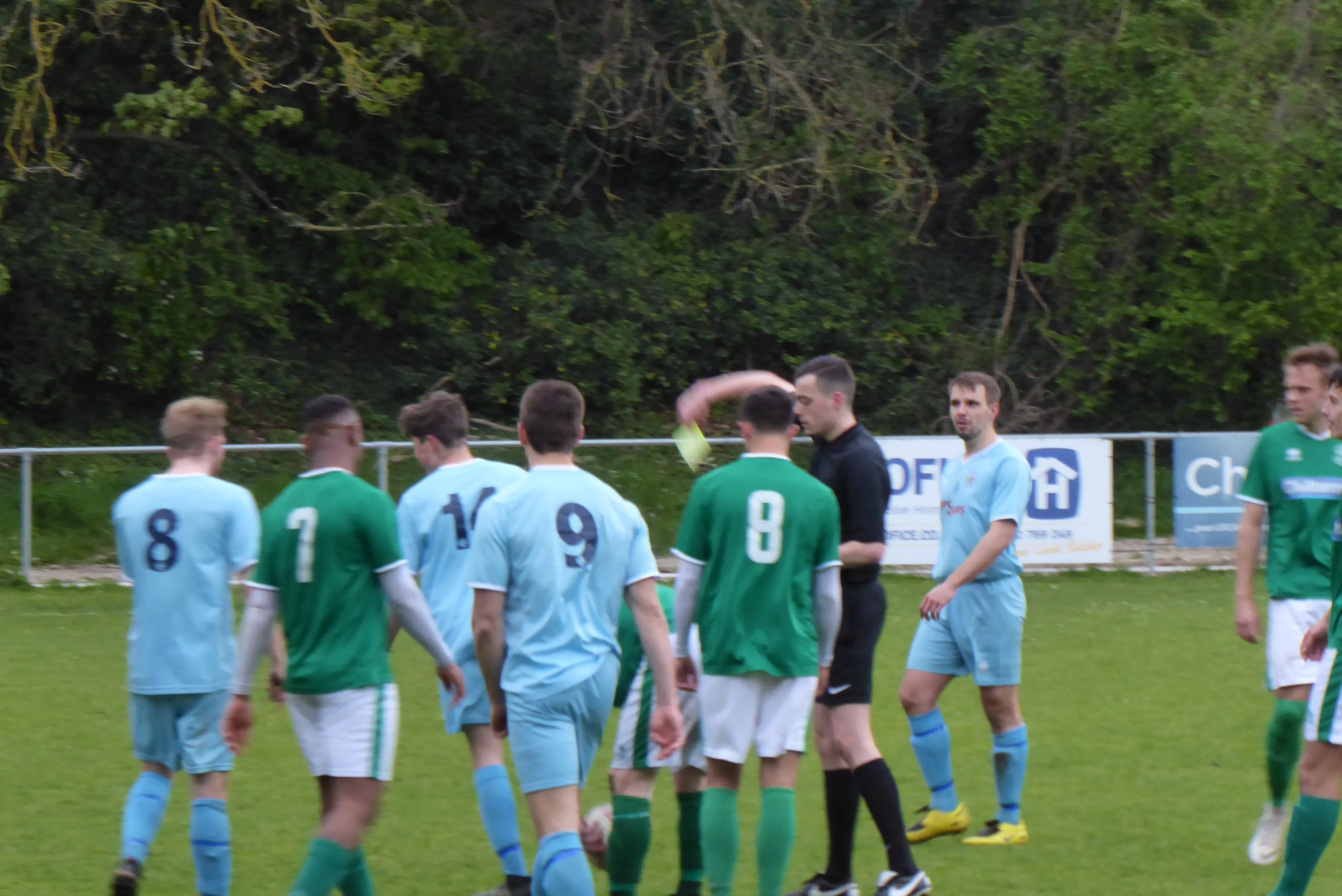
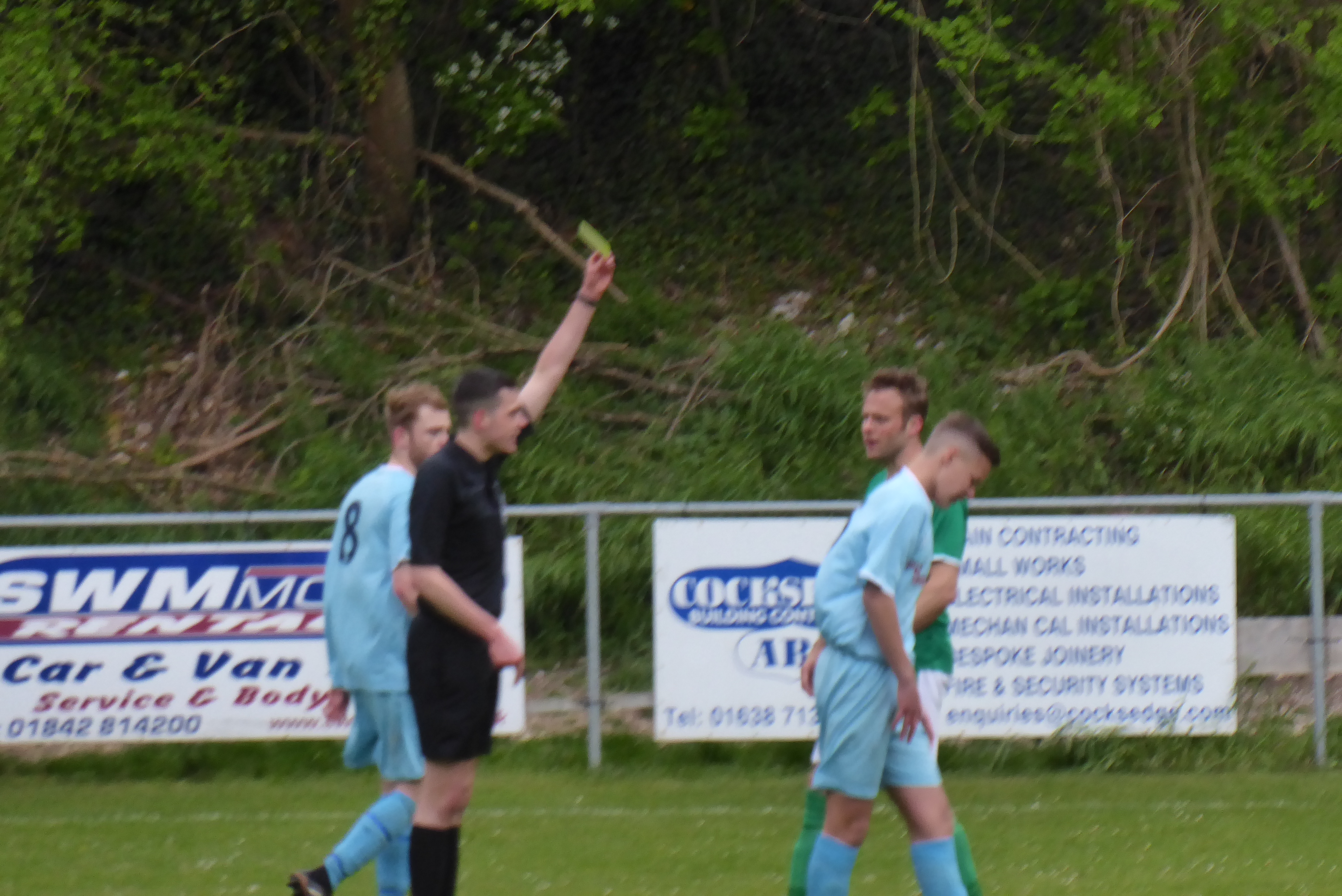
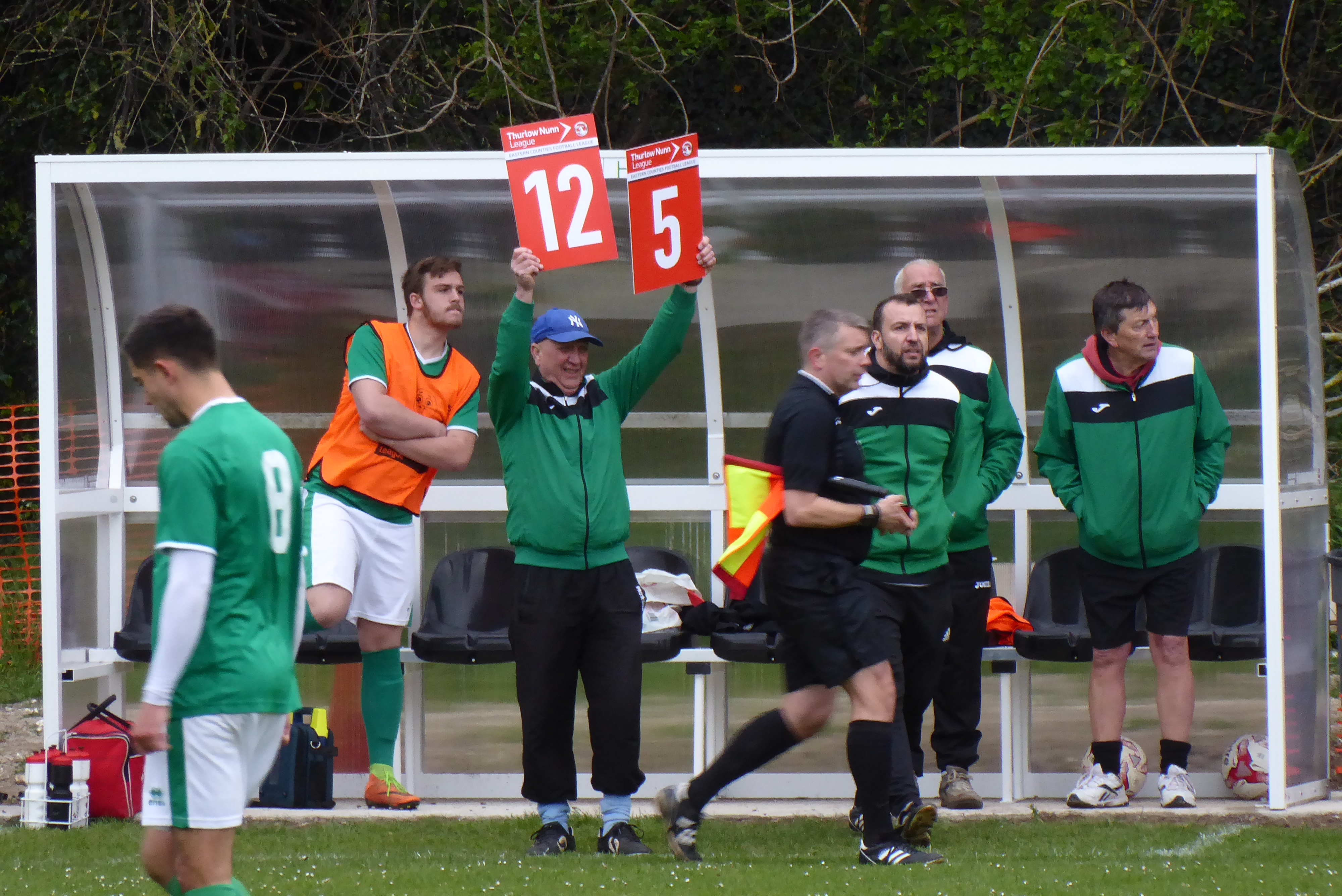
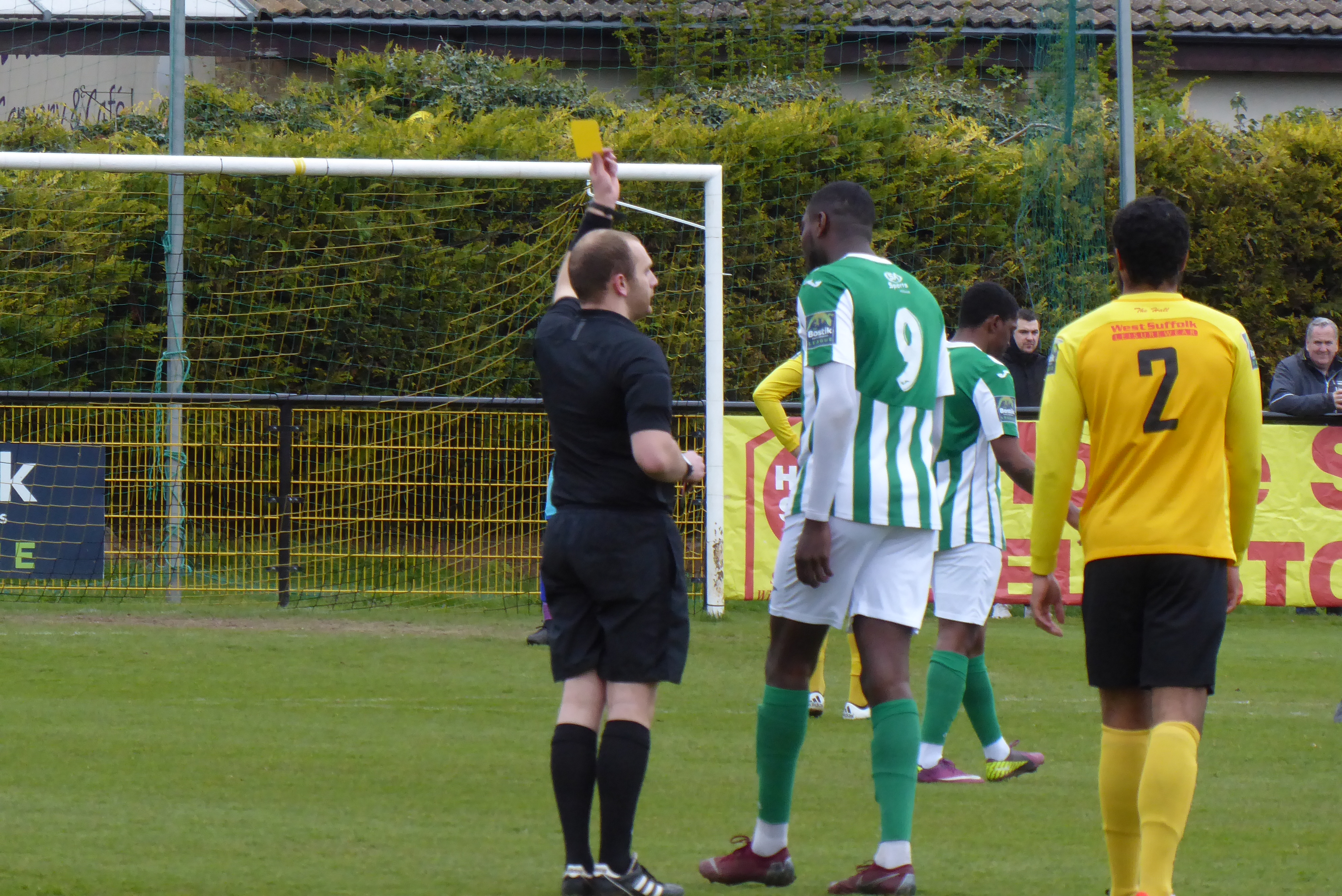
With the second goal the game changes and seems to lose the reserve it showed earlier. Lakenheath miss open-goals and hit the cross-bar whilst Mr Saunders the referee becomes rather officious and begins to wave his yellow card about with gay-abandon, booking players on both teams, mostly it appears for whinging and whining rather than anything particularly serious. I think it’s his way of adding to the entertainment, everyone loves a good moan about the referee. But happily if there is any ill-feeling it doesn’t last and with the final whistle Mr Saunders and his assistants stand together to receive the handshakes of both teams.



As the stand empties out after the game we stop and talk for several minutes with three people in orange hi-viz jackets, who are temporarily working on the air base, it’s almost as if we don’t want to leave. Driving back home along the B1112 Paulene and I reflect on our afternoon at ‘The Pit’ and both agree that we’ve had a most enjoyable time and importantly have witnessed a Suffolk team beating a Norfolk one which in my mind at least helps redress the recent imbalance between Ipswich Town and Norwich City. We look forward to returning on a sunny day.



































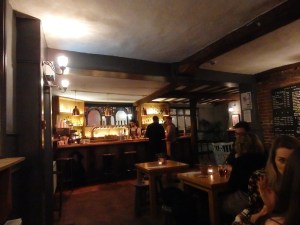 Spread Eagle, a Grade 2 listed building that dates back to the 17th century, where I drink Grain Brewery Best Bitter (£3.50 a pint). The leather aprons of the bar staff remind me of Fred Gee, the pot-man at the Rovers Return in Coronation Street, but I don’t suppose he’s still in it, particularly since Fred Feast, the actor who played him died in 1999. Roly and I continue not to talk about football, not from any previous agreement, but just because there doesn’t seem anything to say. From the Spread Eagle it is a bit more of a walk along Orwell Place and Tacket Street, up Brook Street and Buttermarket, over Giles Circus and Cornhill, along Westgate Street to St Jude’s Tavern in St Matthew’s Street. They may not all be looking at their best, but Ipswich’s medieval or even Saxon pattern of streets remains and is brim-full of fine buildings; if only the locals appreciated it.

 The visitor looks somewhat bemused and blurts some exasperated expletives in the direction of one of his fellow supporters; his thick Midland’s accent rendering them incomprehensible and unpleasantly nasal. I pass the grinning statue of Bobby Robson; his best playing days were arguably with the ‘Baggies’ of West Bromwich, but thankfully he never picked up the accent.
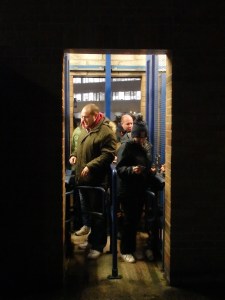 unequal lengths.; with a self-satisfied air of streetwise, intellectual superiority I join one of shorter ones and am inside the ground whilst others still queue. On nights like this it’s fun to laugh and sneer at those people who aren’t regular supporters and are only here because the tickets are cheap. I head for the betting shop bit beneath the stand where the handy shelf gives me somewhere to write the greeting on Elwood’s birthday card. I stop to talk to a steward I know called Dave, but at the very moment I arrive at his side so does another acquaintance of his who begins a personal monologue. I wait for the other man to pause so that I might speak to Dave, but the other man breathes through his ears and doesn’t draw breath for a second; so I screw my eyes up at Dave and nod sympathetically; I imagine my face might look a bit like the one Gary Lineker pulled in the 1990 World Cup semi-final after Paul Gascoigne was booked and became tearful. But tonight I’m not indicating that Gazza is upset, I’m signalling to Dave that I’m going to bugger off, and that’s what I do.
 misses a game and son Elwood are already here and I settle down a couple of seats along before giving Elwood his birthday card and a few ITFC ‘goodies’. Phil tells me that earlier in the club shop Elwood had handed in an ITFC badge that he found on the floor to the staff serving behind the counter. One of the things I have given Elwood is such a badge; it seems like Elwood has been rewarded for his honesty and whilst we all know that’s not true, in an ideal world it would be.


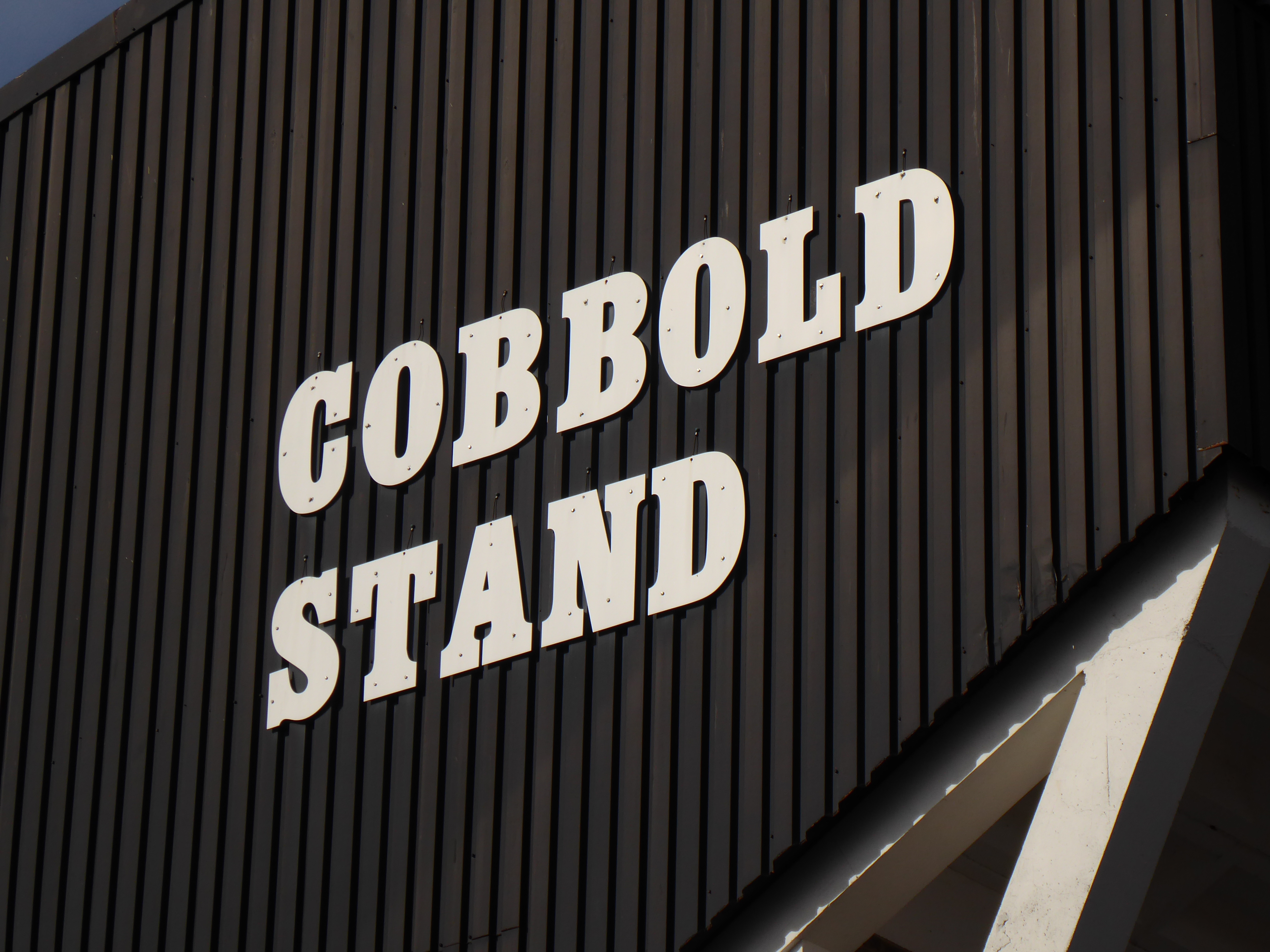
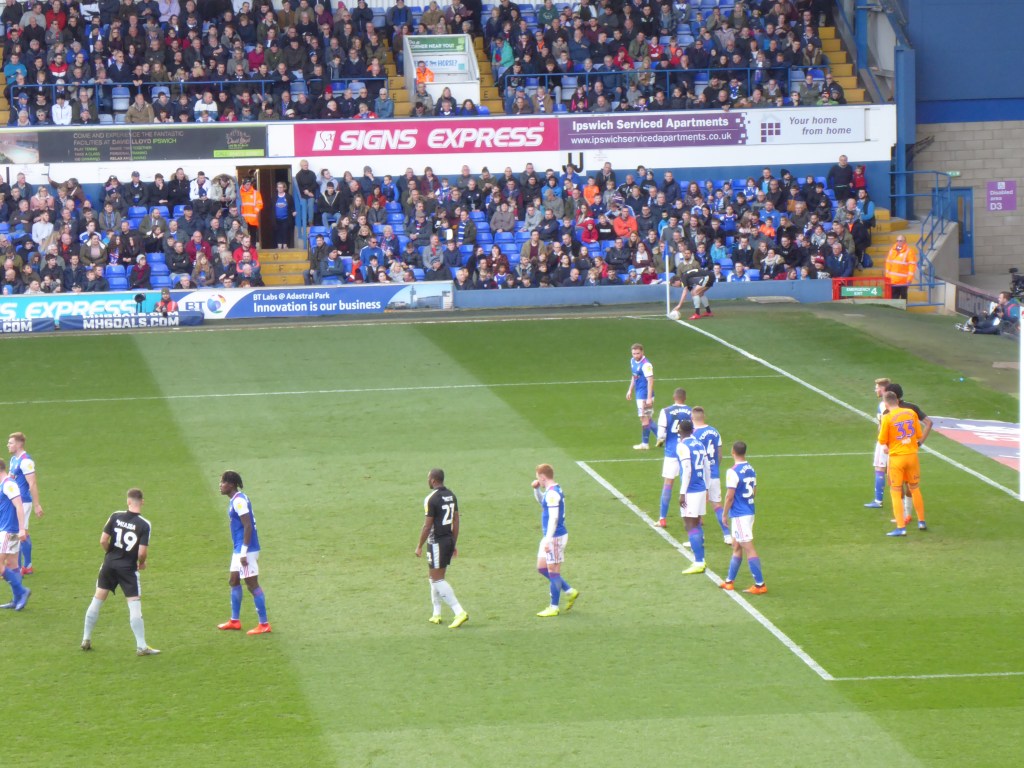
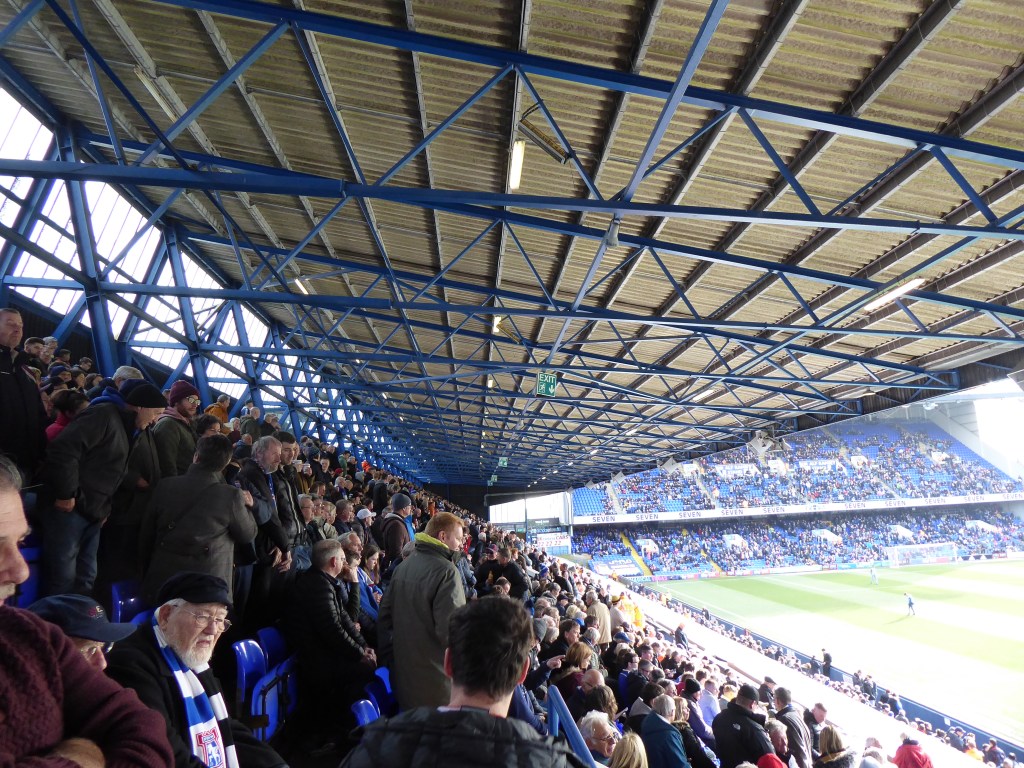
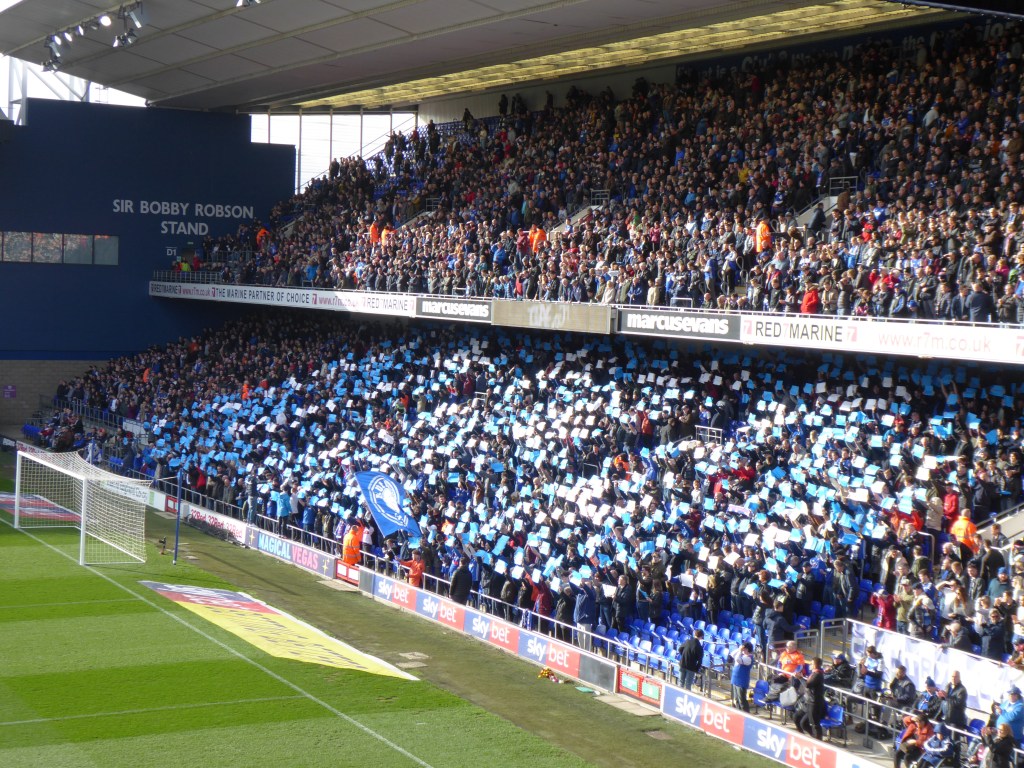
 odd West Bromwich Albion supporters cooped up in the corner of the Cobbold Stand. In the corner, in the bottom of the North Stand blue and white flags are being waved and drums drummed and voices voiced; for a little while anyway. But West Bromwich Albion are better at football than Town and as they start to dominate, some of the enthusiasm ebbs away, which is the opposite of what should happen of
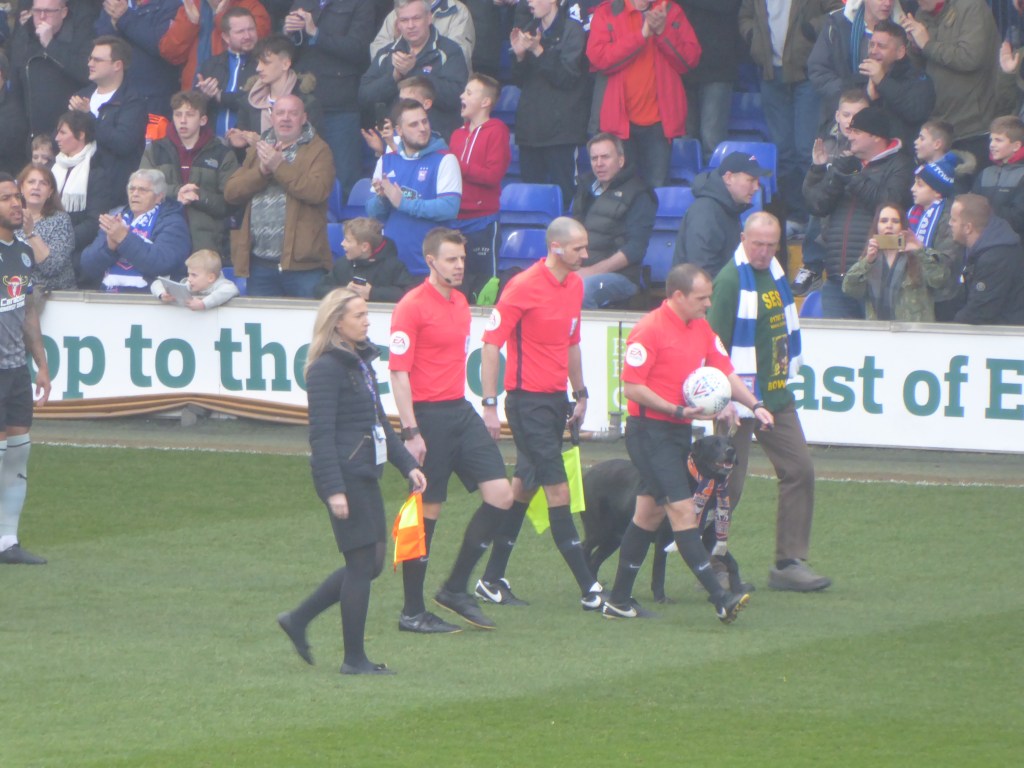
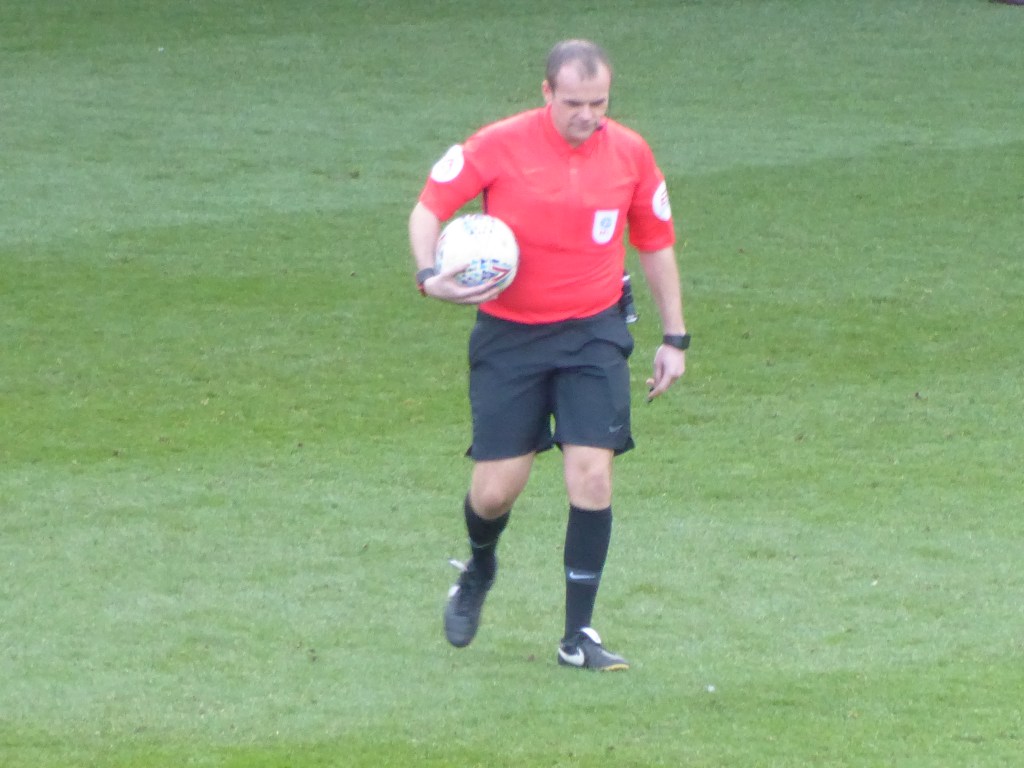
 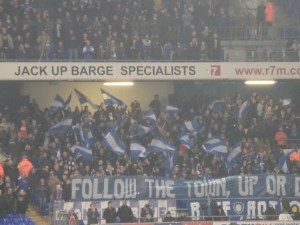 course because it obvious that a struggling team needs most support. But then logic is not always a strong point in ‘Leave’ voting Ipswich. The West Bromwich fans soon sense our weakness and after first chanting something stupid about being a “…shit Norwich City”, which is a bit rich from people supporting a team wearing yellow and green, they go for the jugular with the reliable old “ Your support, your support, your support is fucking shit”. Cut to the quick I try some chants of my own but the cowering reticence of the Suffolk public means I’m beaten before I begin, even with my cardboard clapper, which is a little too lightweight and disintegrates as I bash it relentlessly on the back of the seat in front of me. Only ten minutes have gone and Town’s Matthew Pennington is booked by referee Mr Keith Stroud who is possibly the
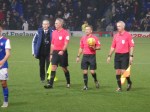 smallest referee I have ever seen; he doesn’t even rival Paul Hurst in stature.
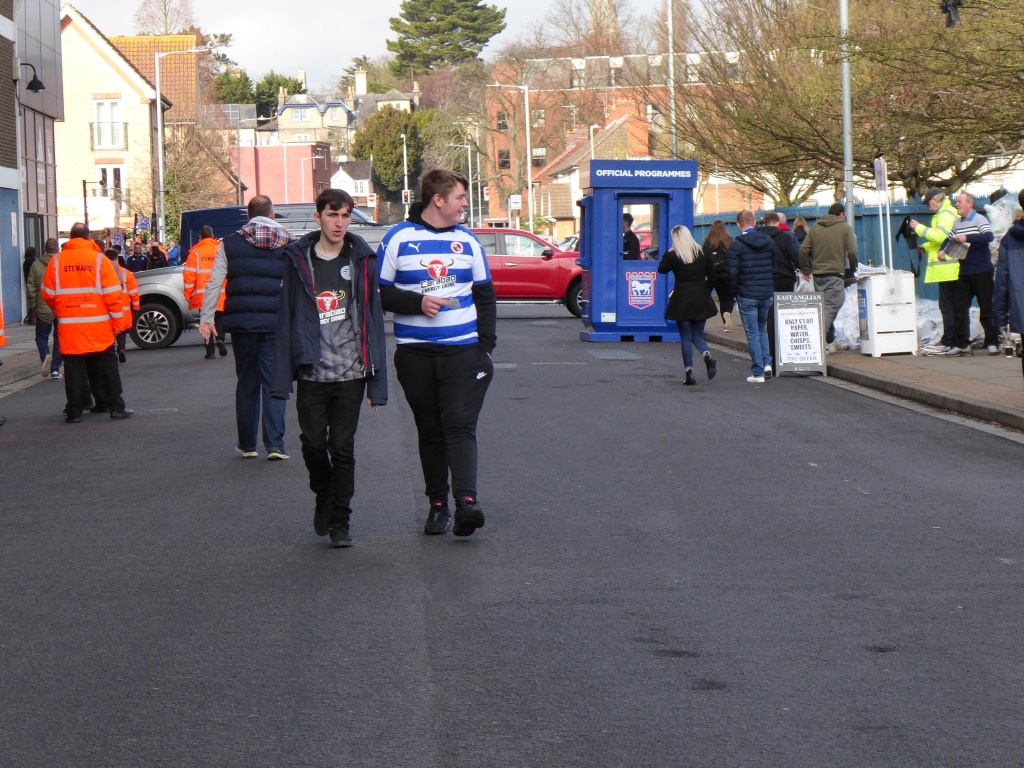
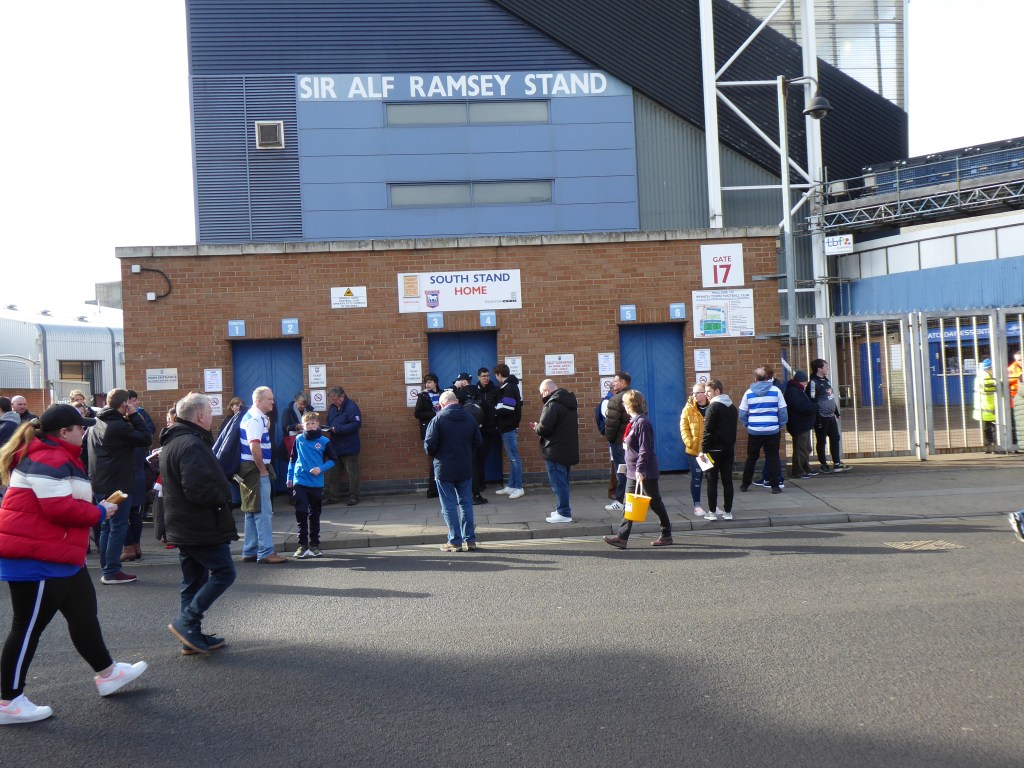
 so. There is no one much about. I cross the small, weak bridge over the disused railway on Princes Street, a metaphor for Paul Hurst’s reign as manager. It’s half past one, but Portman Road is quiet. Men in day-glo jackets fail to stop a small Vauxhall with a barricade of wheelie bins. As usual a cluster of over-zealous individuals wait outside the Sir Alf Ramsey stand for the turnstiles to open, a habit that by the look of them they
 began forty five years ago or more before seats, when claiming your spot on the terrace was a necessary ‘thing’. A man heads towards the door of the ticketing information office, “Don’t waste your money” someone shouts out to him. Polythene bags full of crisps, sweets and the local paper lay on the street awaiting purchase for a pound. In the club shop there is a stock of ITFC
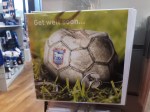 branded ‘With Sympathy’ and ‘Get Well Soon’ cards; somewhat ironic given the club’s currently moribund situation at the foot of the league table, but otherwise rather tasteless.As ever I seek pre-match solace at St Jude’s Tavern, which is fuller than usual and I detect that blokes with Lancashire accents are responsible. As I recall from the corresponding fixture last year, Preston North End supporters would seem to have the greatest appreciation of real ale amongst Town’s Championship rivals, and I salute them for that. At the bar the moustachioed barman serves me a pint of the Match Day Special (£2.50) which today is Mr Bee’s Pollen Power. I sit at the only available table, in the corner by the door, and await the arrival of Mick. I am approached by a man with a Lancashire accent who recognises me from last year when we chatted in this very bar. I am unsure whether to be flattered or worried that someone has recognised me from a single meeting a year ago. The man who I learn is called George seems very happy to renew our acquaintance and I share his enthusiasm for this entente-cordiale between fans of ‘rival’ provincial clubs at different ends of the country. Ipswich and Preston are not so different; two clubs stumbling along in the Second Division but both with the illustrious histories to forever raise them above the likes of Norwich City and Blackpool.
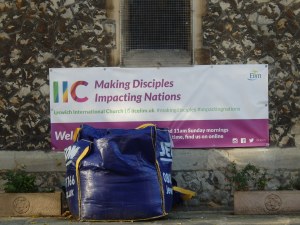 public art at La Défense. We each drink another pint of the match day special before we part and I head down to Portman Road at about a quarter to three. A sign outside the church around the corner refers to disciples and it seems appropriate as the crowd congregates for the match. The quiet of an hour and a half ago is gone and I detect the smell of tomato sauce wafting its way towards me from the burger vans in the car park. The floodlights are already illuminated although in Portman Road the afternoon still seems bright, but inside the stadium the East of England Co-op stand, which oddly is on the west side of the ground casts a cold, damp, dark shadow over the pitch. I buy a programme (£3.00) out of a desire to remember the occasion with a souvenir, but can’t help immediately regretting the expenditure.
 nasty red trim aiming at the goal closest to me Pat, Phil and Elwood. Preston North End, nickname the ‘Lilywhites’ or ‘Proud Preston’ are wearing all yellow and play in the direction of Henley where my grandfather was born; he survived the First World War with damaged lungs from gas, and shrapnel scars on his shoulder and the back of his head.


 by the late arriving Maxwell. Mr Woolmer ignores the “Off! Off! Off! requests from the crowd, Maxwell is booked along with protesting Prestonian Daniel Johnson, Freddie Sears scores from the resultant penalty and Portman Road is awash with joy. The Town team are warmly applauded from the field as Mr Woolmer gets a second thing right, successfully interpreting the information on his watch and blowing for half-time.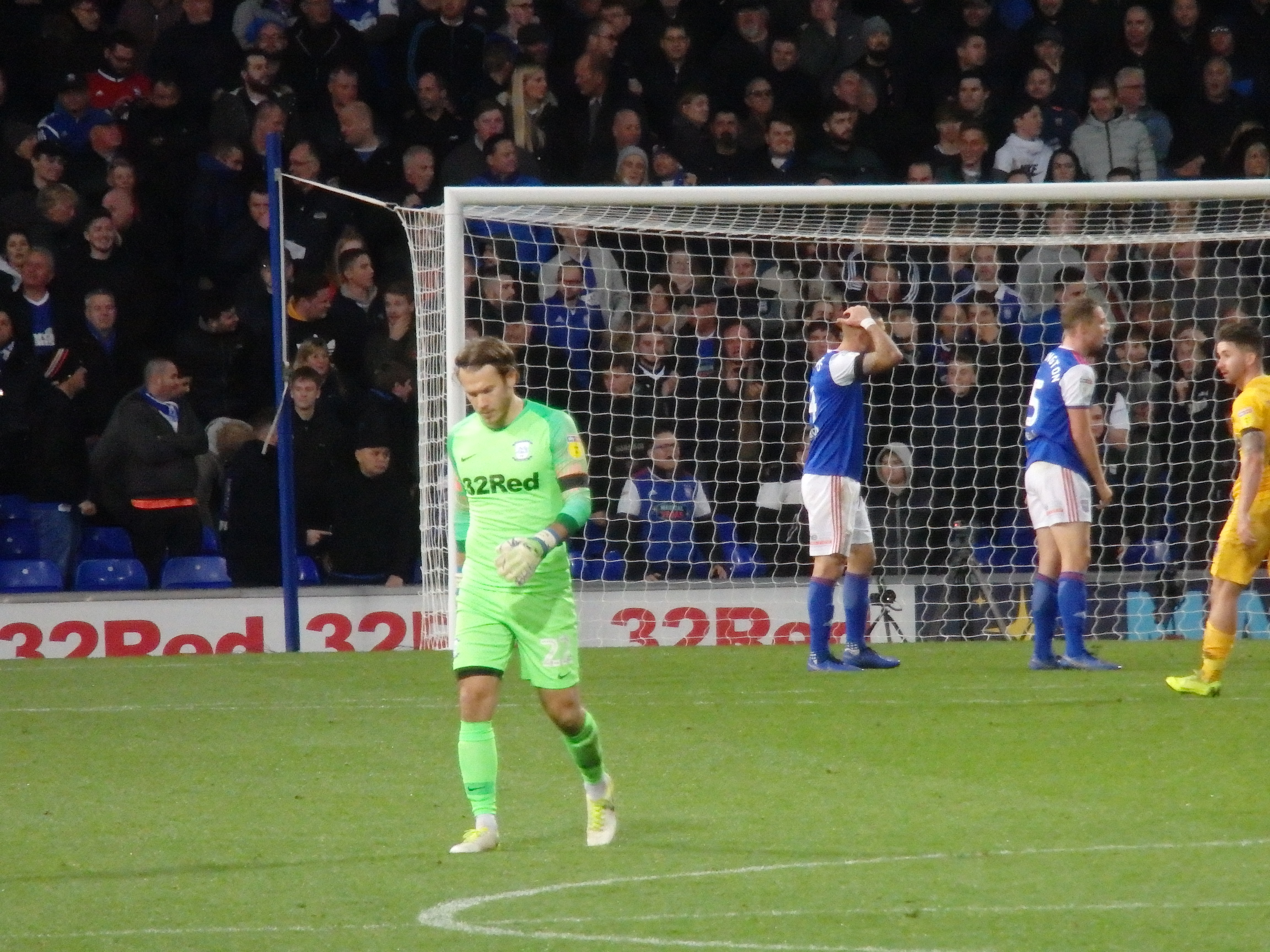
 trippingovertheball