Looking back, as I often seem to do nowadays, I find that the first time I saw Ipswich Town play Bristol City was nearly forty-nine years ago. Back then, both clubs were in what has since become the Evil Premier League but this has no bearing whatsoever on the fixture that is taking place tonight at Portman Road. The past is a foreign country, which makes us all immigrants.
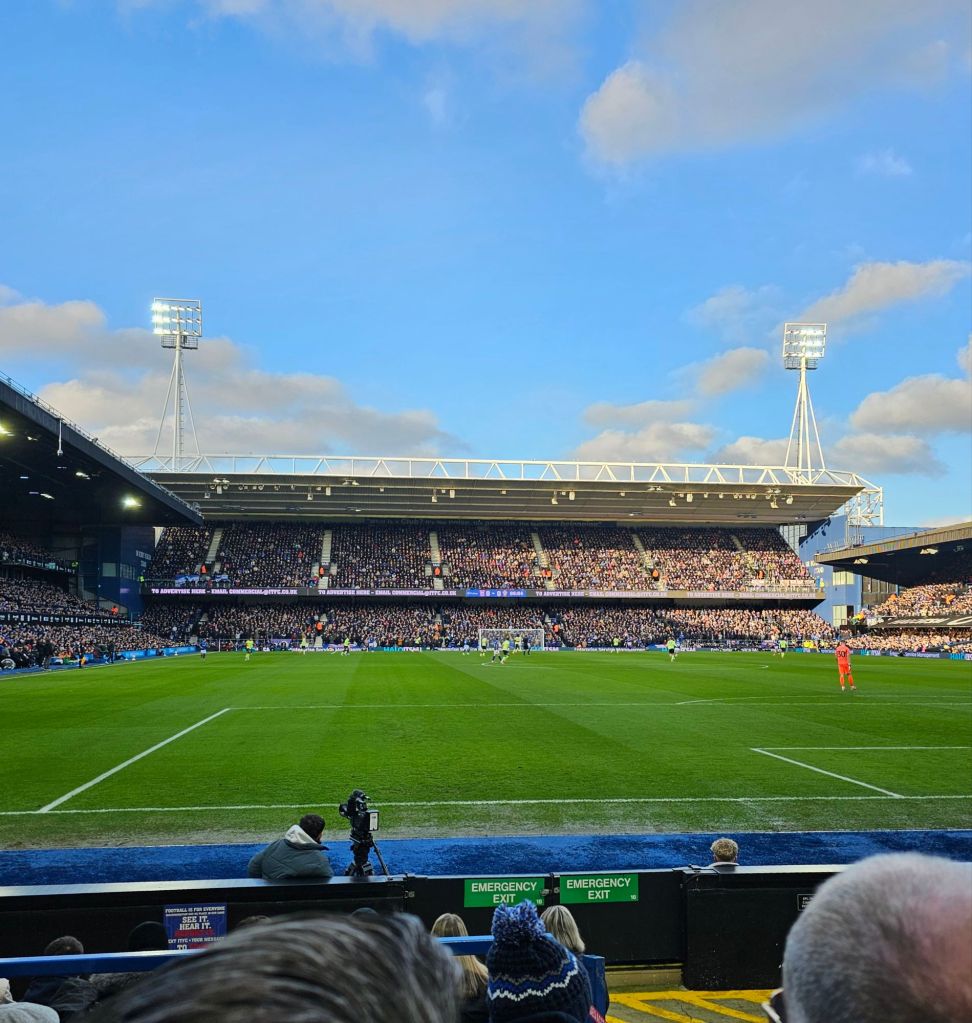
It’s been a dull day decorated with scudding clouds courtesy of a brisk but strangely cold southerly breeze. But then, it is January. After a day’s work at home, I head for the railway station. The train is on time and Gary joins me on it at the first station stop. It’s dark outside so we don’t see any polar bears as the train reaches Wherstead and I’m not about to suggest the bears begin to wear dayglo gilets. Leaving Ipswich railway station, the Portman Road football ground shines like a glorious blue and white beacon or even a jewel on Ipswich’s evening skyline. Gary, a man not known for his interest in graphic design remarks upon the clear, classic font of the letters that spell out the words ‘Ipswich Town Football Club’ on the back of the Sir Alf Ramsey stand.
By way of a change this evening, I decide we should not walk up Portman Road, across the corner of Portman Road car park, along Great Gipping Street, up Civic Drive, across the car park where the Civic Centre used to be, up Lady Lane, over the crossing where St Matthews Street meets Crown Street, up St George’s Street, along Upper High Street and into High Street to reach the Arb. Instead, we just walk up Princes Street and Museum Street and into High Street. Gary thinks the other way is quicker but he’s an Ipswich supporter who is awkwardly unfamiliar with Ipswich’s historic town centre and doesn’t realise how many more listed buildings we have passed tonight.
I’m first to burst through the door when we reach the Arb (not listed), and I get to the bar first to invest in a pint of Estrella Galicia for Gary and a pint of Mauldon’s Suffolk Pride (£10 something for the two with Camra discount) for myself. Gary heads for the cool of the beer garden whilst I linger a little longer to select a snack to help sustain me through the evening, choosing a felafel Scotch egg (£8) before joining him in the shelter (not listed) backing onto High Street, which is otherwise empty, for the time being anyway.
Our conversation meanders from Trump to religion to ‘famous’ Bristol City players (Billy Wedlock and Gerry Gow,) to how far south and east we’ve travelled, to tonight’s team and how unexpectedly cold it is this evening. Gary buys another pint of Estrella Galicia for himself and one of Suffolk Pride for me. I buy another half of Suffolk Pride and when there is no one else in the beer garden we up and leave; it’s a bit before twenty-five past seven.
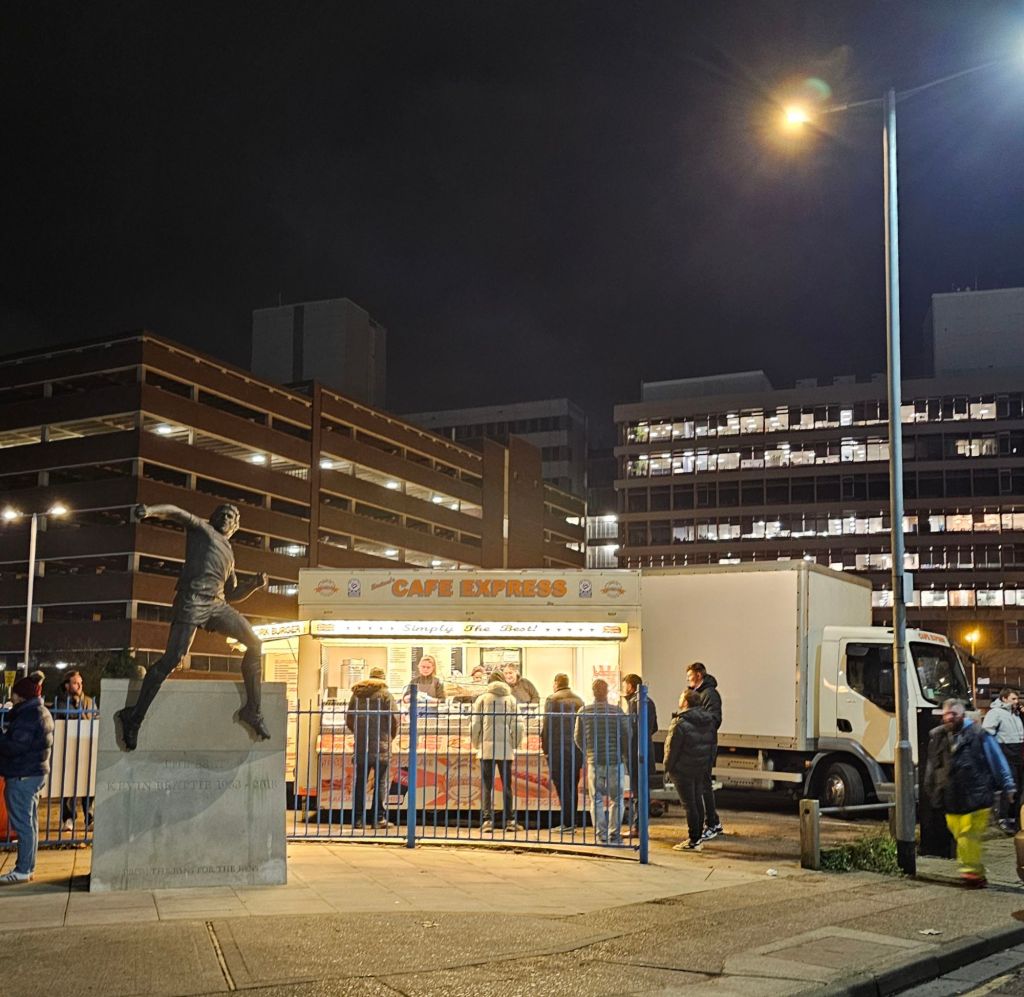
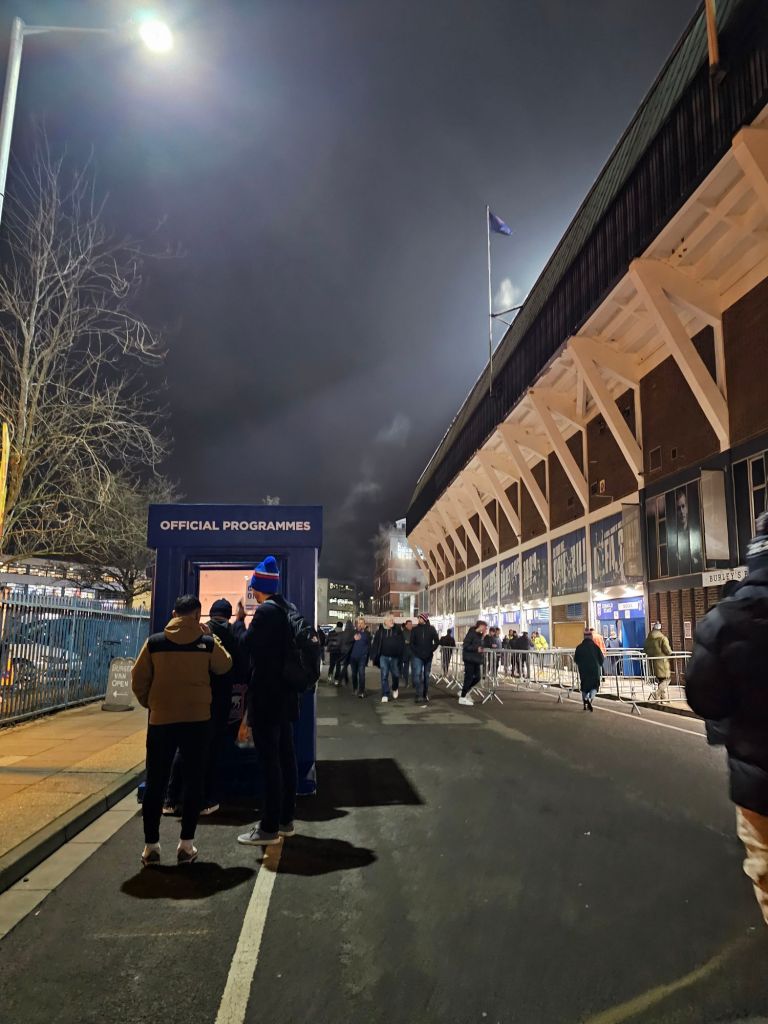
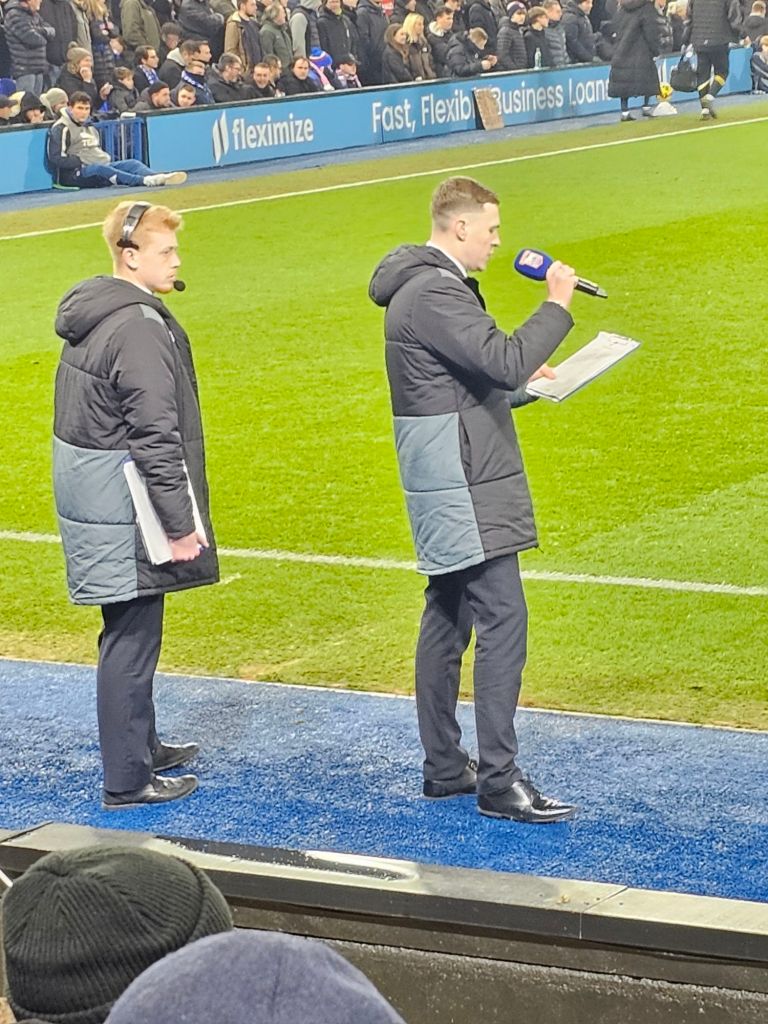
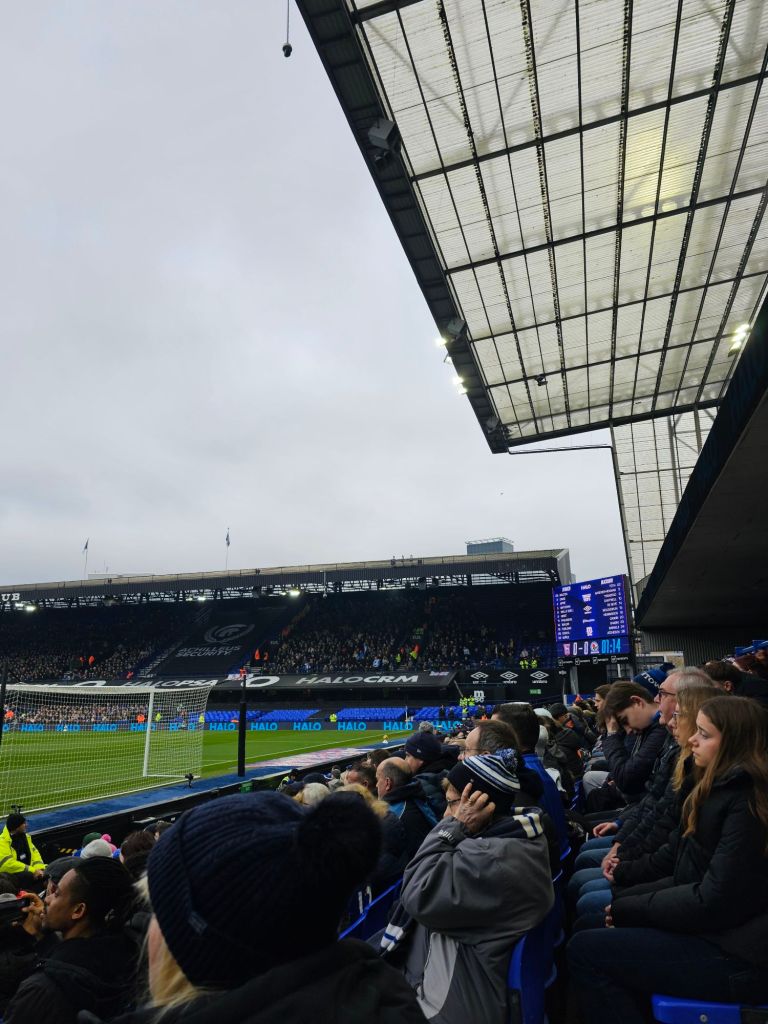
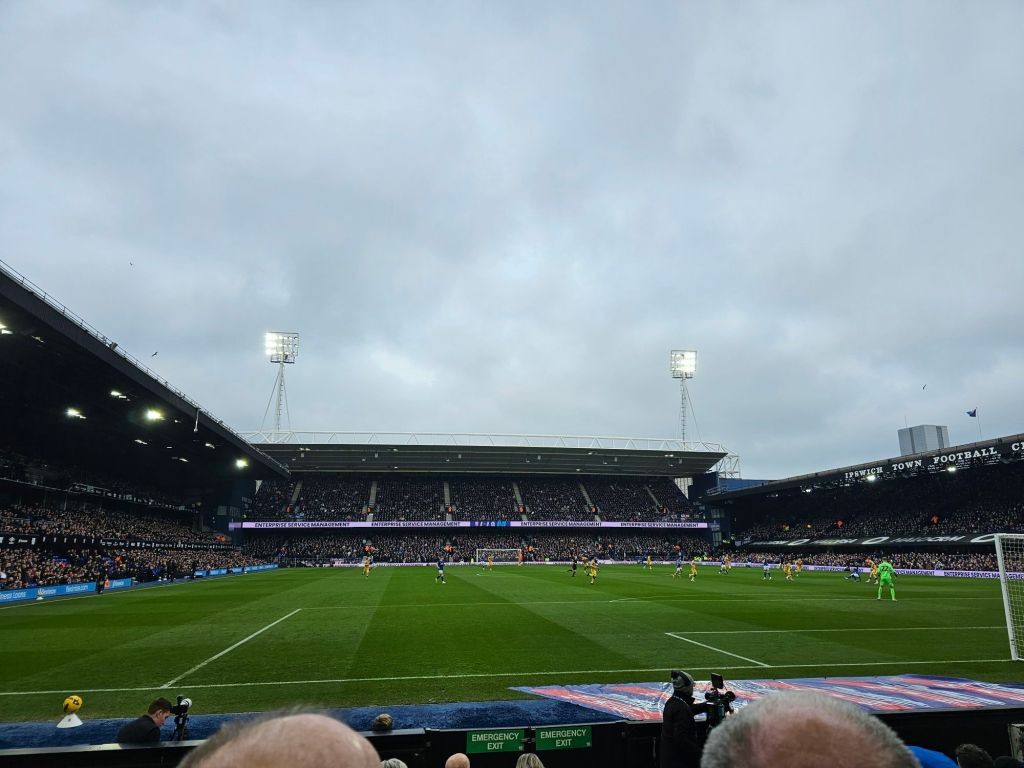
At the back of the Sir Alf Ramsey stand tonight, there are queues to be scanned for weaponry and scrap metal, it’s hard to know why, other than lots of people arriving at once or more people than usual carrying weapons and scrap metal. But I’m soon on my way through the Football League Champions Memorial Turnstile, number 62, and after releasing spent Suffolk Pride I’m joining ever-present Phil who never misses a game and Pat from Clacton on the lower tier of the stand. There’s no Elwood tonight, nor man from Stowmarket (Paul), although his grandson is here with his girlfriend (Paul’s grandson’s girlfriend that is, not Paul’s), nor Fiona, who is feeling unwell. In Fiona’s place however is Angie, who usually occupies the seat in front of Pat from Clacton. I shout out the players’ names as best I can when the excitable young stadium announcer reads them aloud, but he’s not in time with the scoreboard. In the questionnaire I receive from the club by e-mail after the match I will suggest he goes on a fact finding mission to Lens, Lille or Paris to see how it’s done.
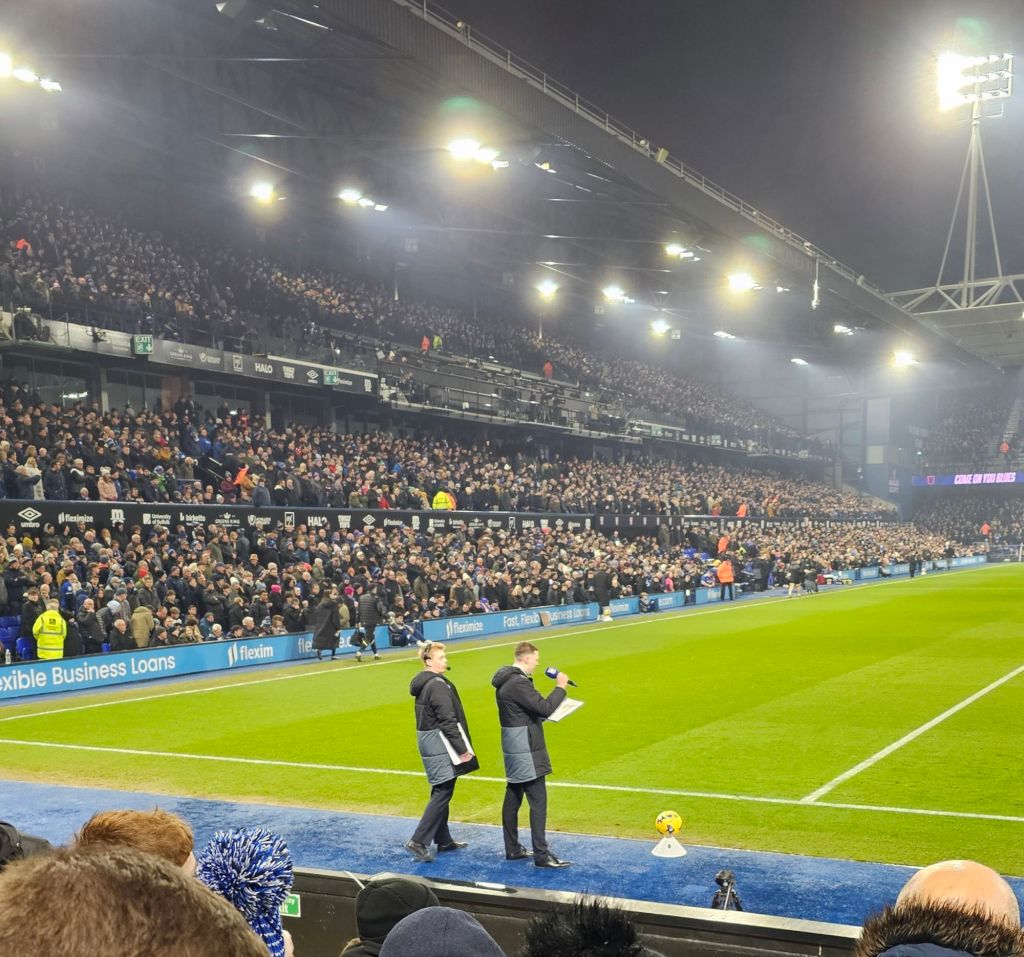
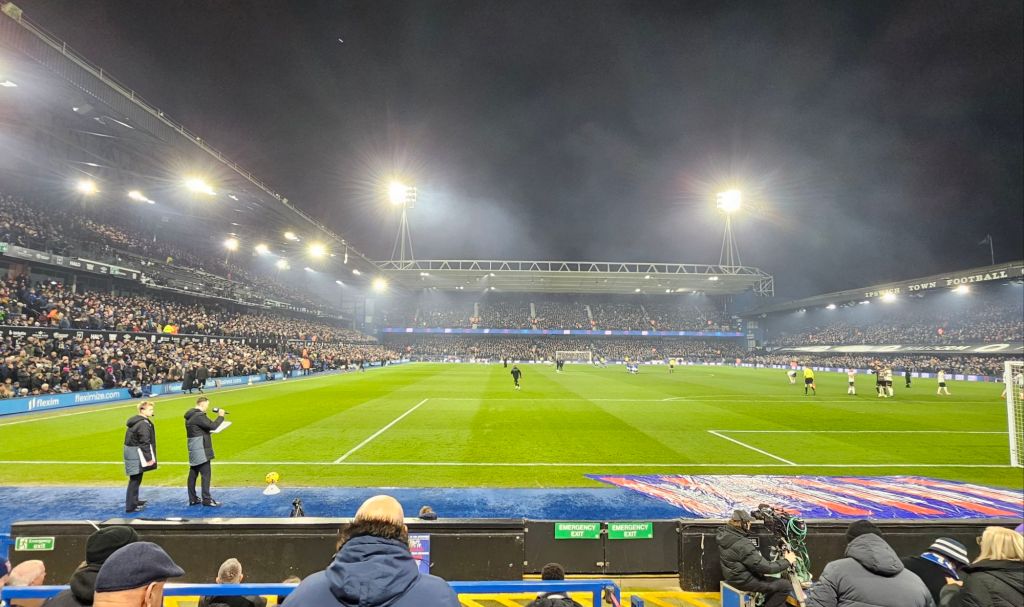
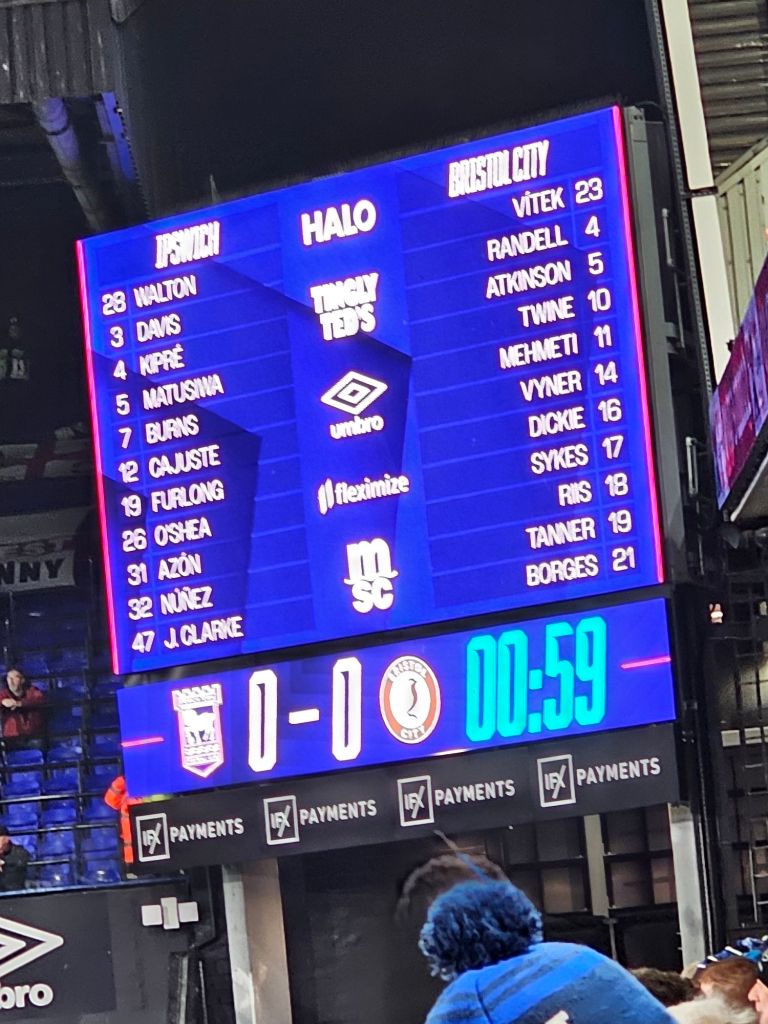
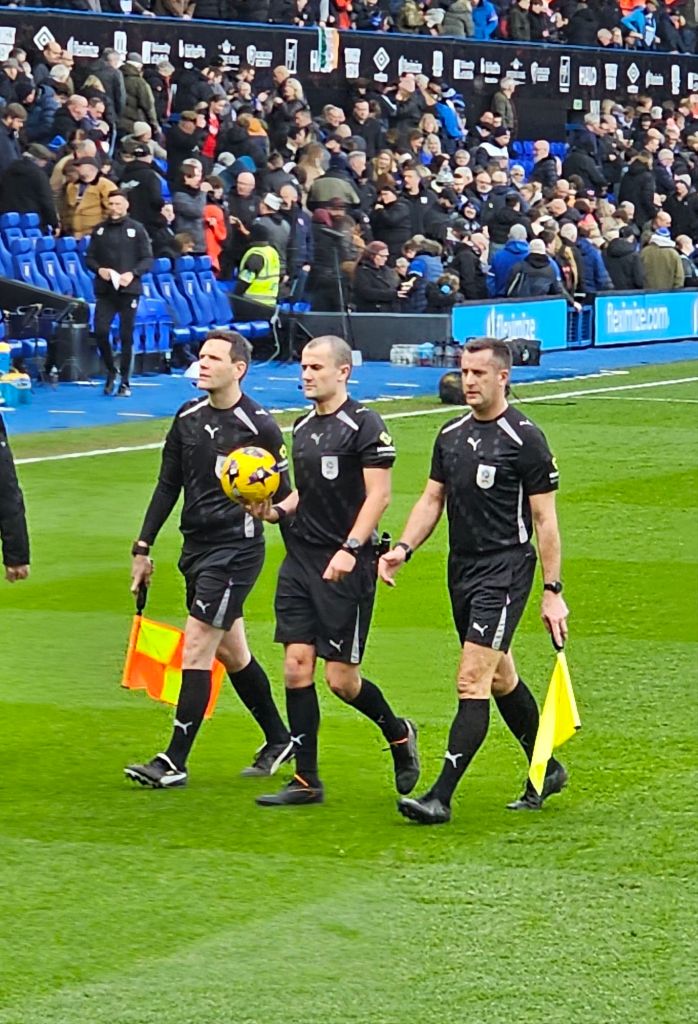
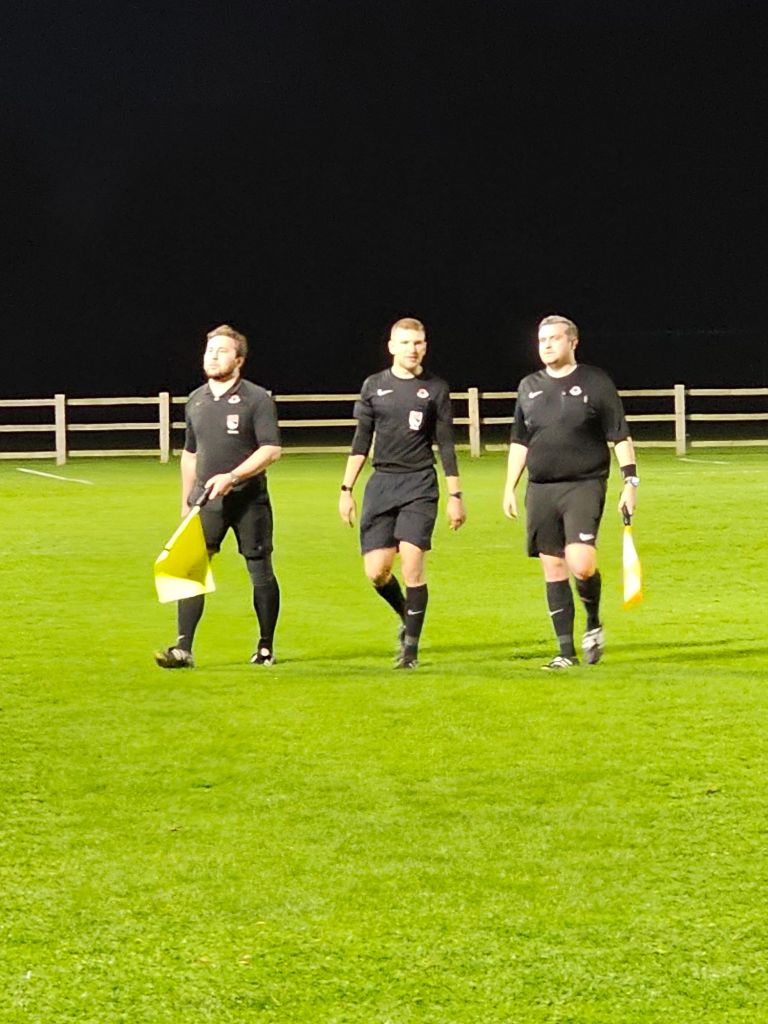
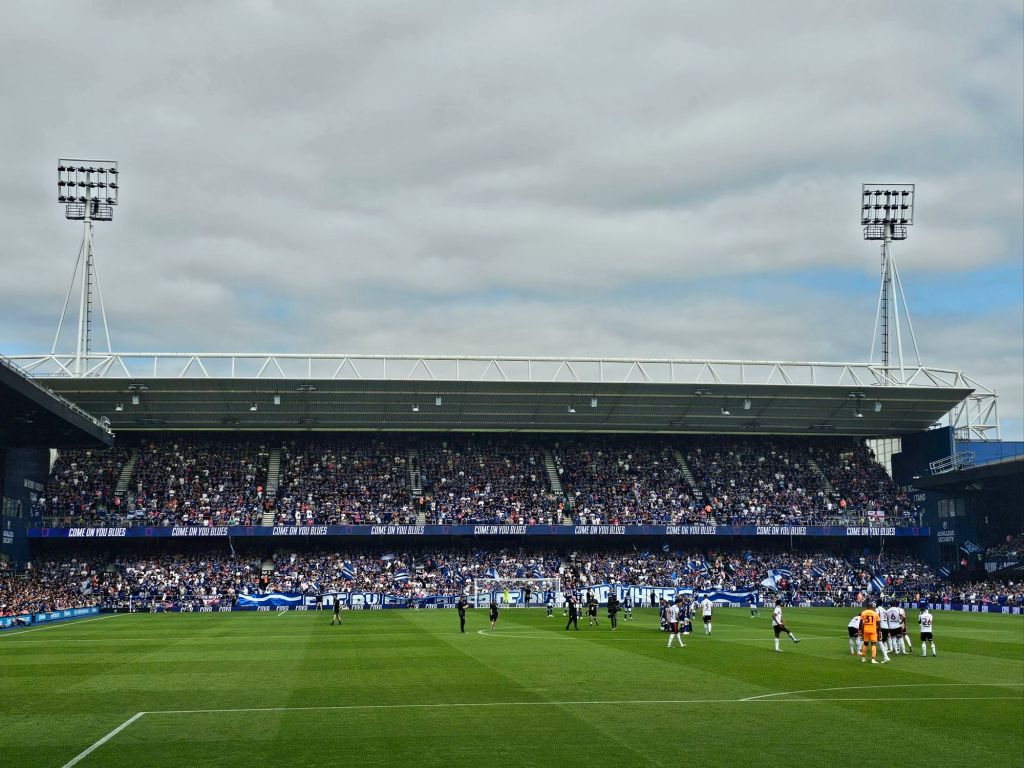
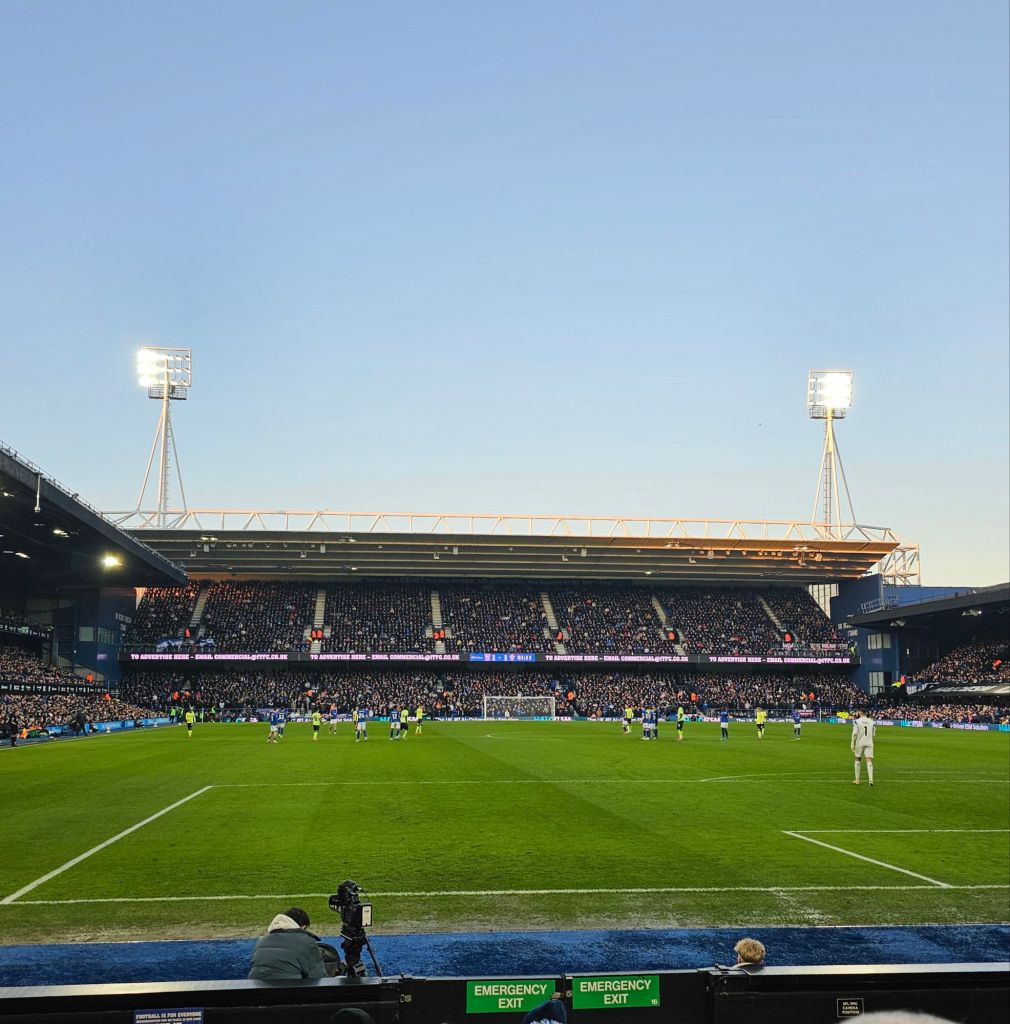
When the game begins it is Ipswich that get first go with the ball, which they send mostly in the direction of me and my fellow ultras. Naturally, Town are in blue shirts and white shorts but strangely, Bristol City, or ‘The Robins’ as they are known, presumably because of their signature red shirts, are wearing what must be their little-known winter plumage of white shirts and black shorts, like a poor man’s Germany or Port Vale. Town are soon on the attack and win their first corner after barely three minutes. Angie remarks on the height of referee’s assistant, who although bearded like a garden gnome is much taller than the usual. “Come On You Blues” five, or possibly six of us bawl and we do it again and then again as Town take two more corner kicks until Bristol goalkeeper Vitek punches the ball high into the air before catching it on its descent to spoil our fun.
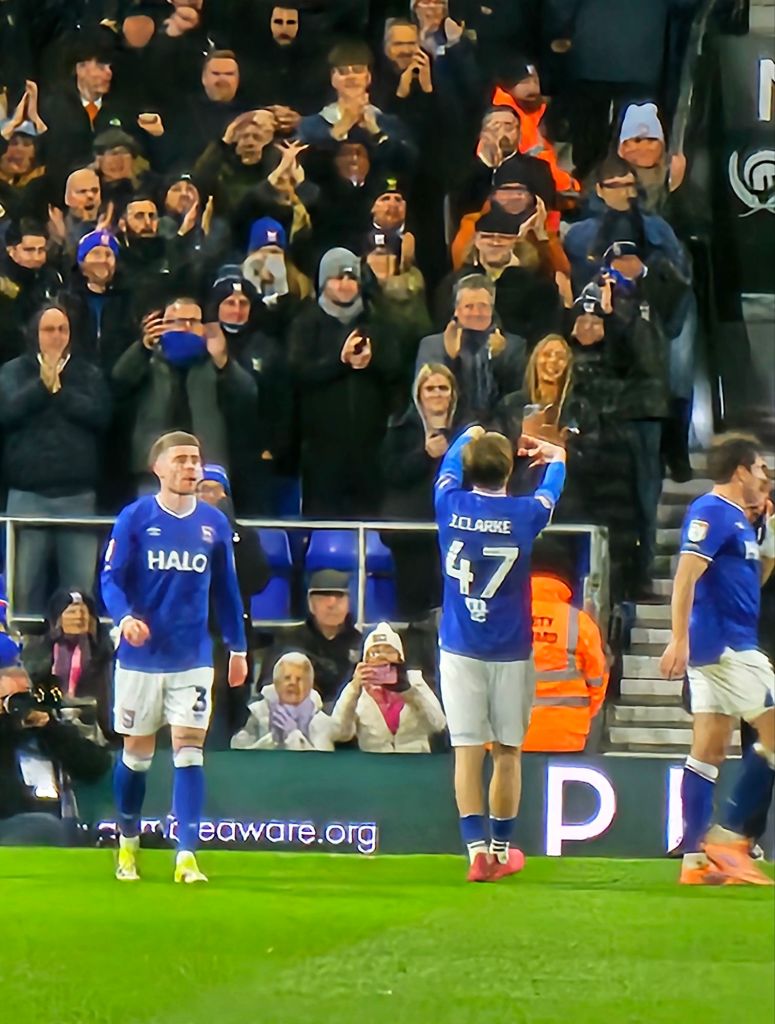
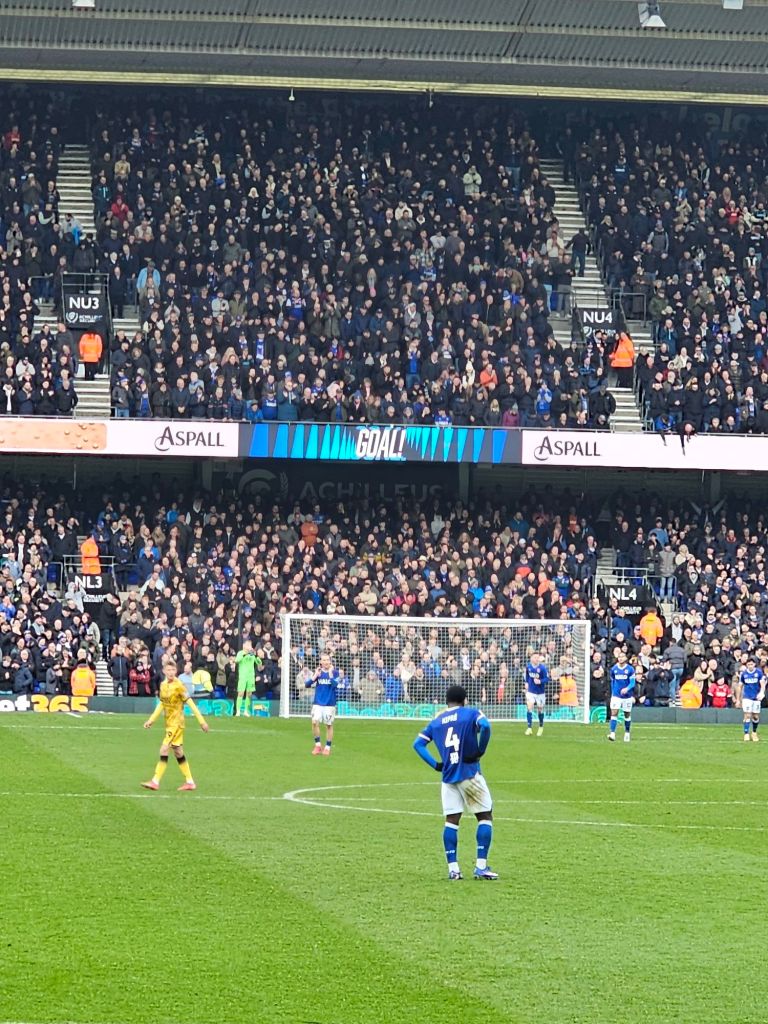
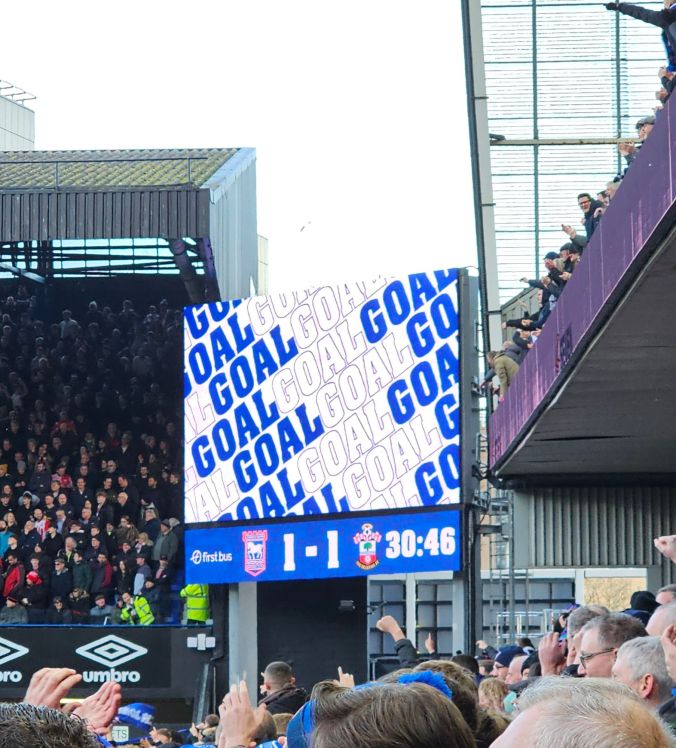
It is the ninth minute. Jens Cajuste pirouettes to leave some hired imitation Bristolian in his wake and passes to Jack Clarke. All floppy hair and loping gait, Clarke drops a shoulder or two, eases the ball on with a stroke of the outside of a boot, and then side foots it inside the far post past a clutch of legs from about twelve metres out. Town lead 1-0. It’s yet another early goal from the left and Jack Clarke and Jaden Philogene who isn’t playing tonight seem to have become one.
“One-nil and you still don’t sing” chant the Bristolians up in the Cobbold Stand, mysteriously goading the pensioners and conservative people in late middle age who populate the Sir Alf Ramsey Stand. Fifteen minutes have melted into history and Town continue to do what is sometimes described as ‘taking the game to the opposition’. “Go on Wes, do ‘im” says Angie as Wes Burns receives the ball on the touchline and runs at the Bristol full-back.
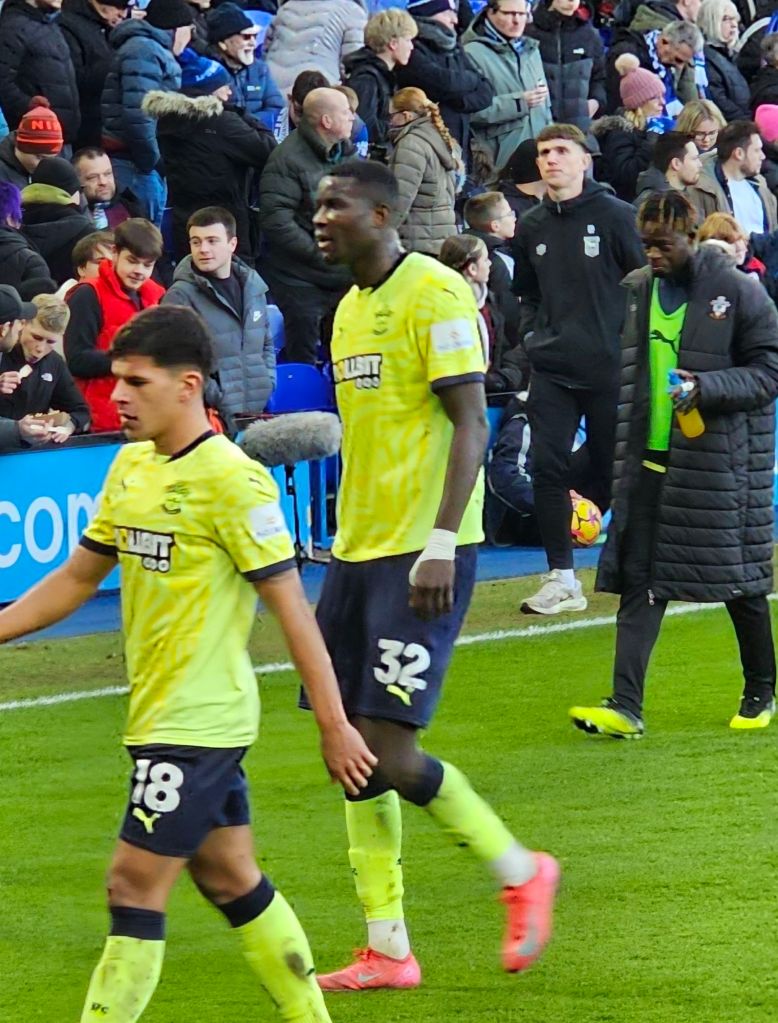
But five minutes later Bristol almost score, as ‘playing out from the back’ fails to live up to expectations and Bristol get gifted a free shot on goal that Christian Walton saves rather well, giving Bristol a corner. Tension is relieved however by the sight of former ‘Blue’ Sam Morsy stepping out from what once was a dugout but now looks like a section from a short but wide open-top team bus. “He’s Egyptian, but he comes from Wolver’ampton” sing the Sir Bobby Robson standers to the tune of “She’s electric” by Oasis, although I might have misheard. After Wes Burns shoots to win Town another corner that comes to nothing Sam Morsy then replaces a bloke called Adam Randell and everyone applauds arguably Town’s best captain since Matt Holland.
The first third of the match begins to slip out of sight, except as recorded highlights, and Ivan Azon wins another corner and then shoots narrowly and quite spectacularly over the Bristol crossbar from about 20 metres away. “Ole, Ole Ole Ole, Azon, Azon” sing the Sir Bobby Robson standers as they tuck into their tapas and click their castanets. Seemingly aiming to please the home crowd further, Sam Morsy shoots wide and everyone cheers ironically, and then with no hint of irony at all the few hundred visiting supporters and possibly the fifteen-hundred or so empty plastic seats allocated to Bristol City but left unsold sing “Your support is fucking shit” to the tune of Cwm Rhondda.
Nine minutes until half-time and Town notch yet another corner to a tiny chorus of “Come On You Blues” before Bristol City hint at having a pact with the devil as Cajuste’s shot is blocked and Azon’s sudden follow-up attempt is deflected by unseen forces over the bar, although it is goalkeeper Radek Vitek who gets the thanks from his team mates. With five minutes until half-time the home crowd celebrate again as referee Mr Whitestone selects Bristol’s Neto Borge to be the recipient of his first yellow card, after Borge shoves Dara O’Shea headlong into the West Stand advert hoardings.
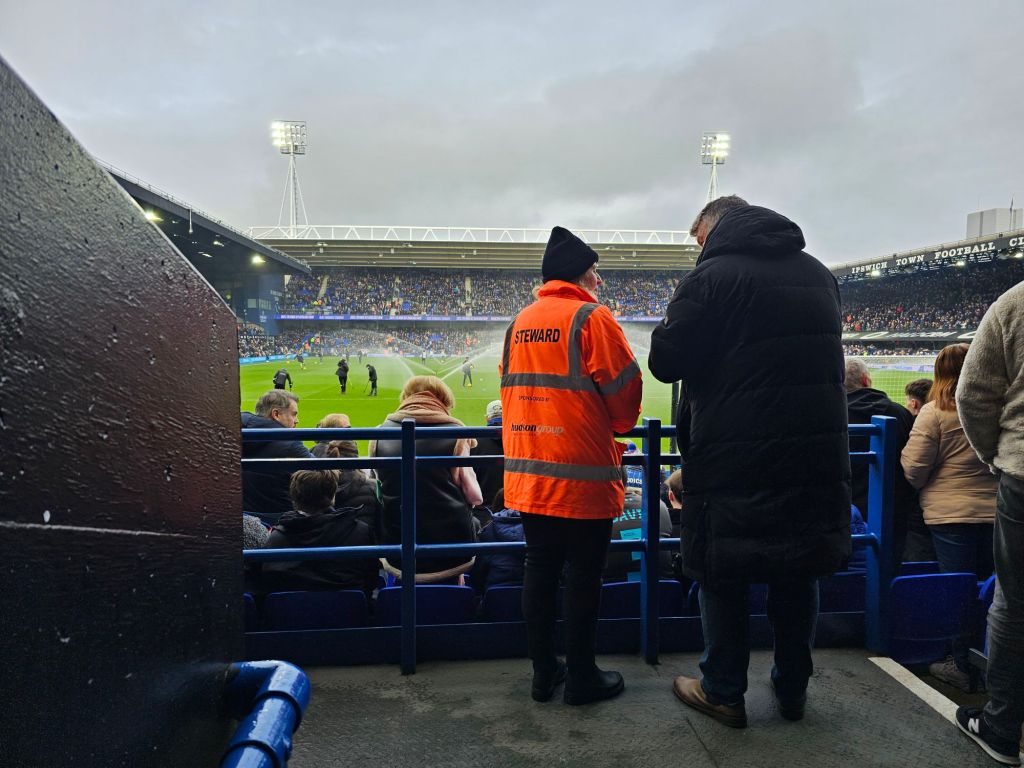
The half comes to a close with three minutes of added-on time, another necessary save from Christian Walton and yet another hollow chorus of “Come On You Blues” from me and the other five ultras as Town’s corner count exceeds its ultra count. Applause greets the half-time whistle, and I take a short trip to the front of the stand to speak with Harrison and his dad Michael, and briefly with Dave the steward before I head indoors to release more spent Suffolk Pride, returning in time to see the football resume at twelve minutes to nine.
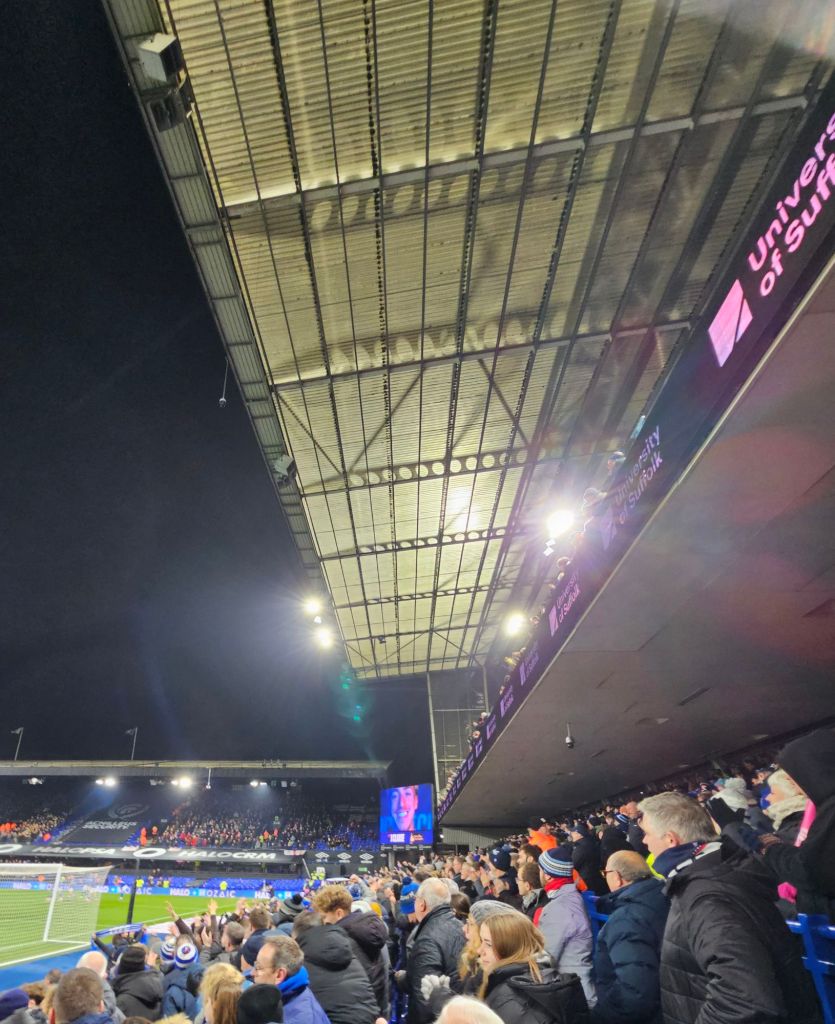
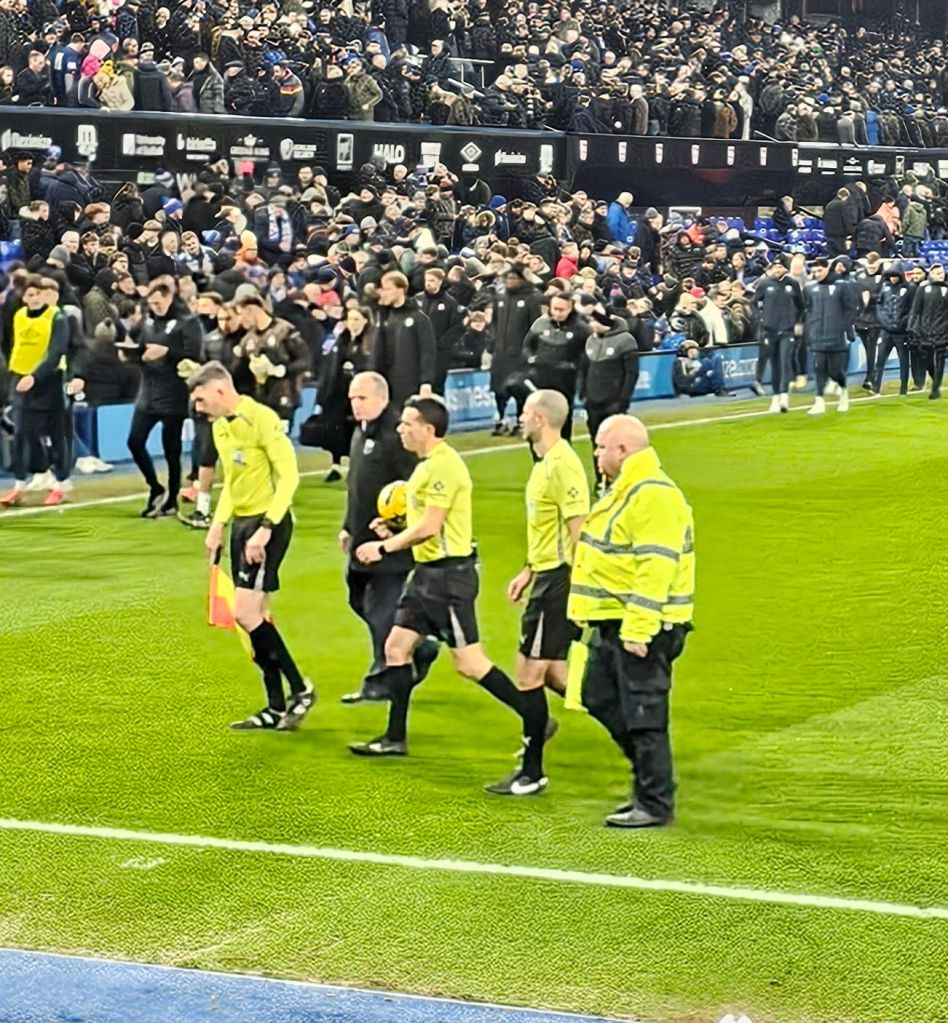
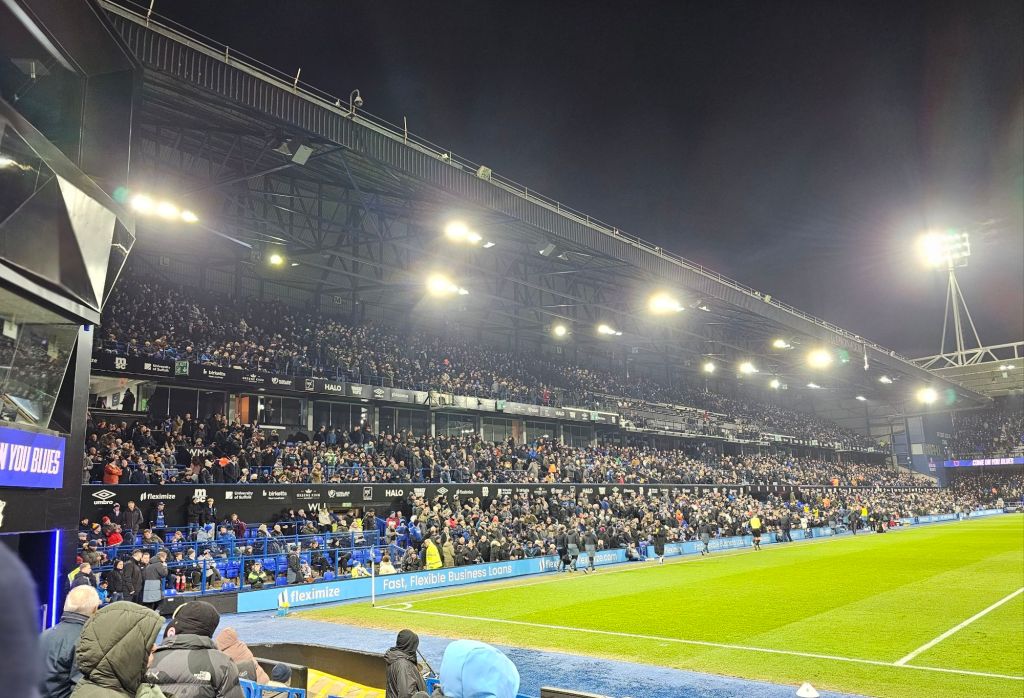
Unexpectedly, it is Bristol City who win the first corner within a minute of the re-start, whilst Pat from Clacton shares the news that Angie’s bobble hat was new from the club shop tonight; nine pounds in the ‘under a tenner’ sale. Angie wears the woollen hat well, but I don’t think such a large bobble would suit me at all. I might write to the club to suggest the shop stocks blue berets and ITFC pin badges to be sold in tandem with prescription sunglasses for that authentic Ultra look.
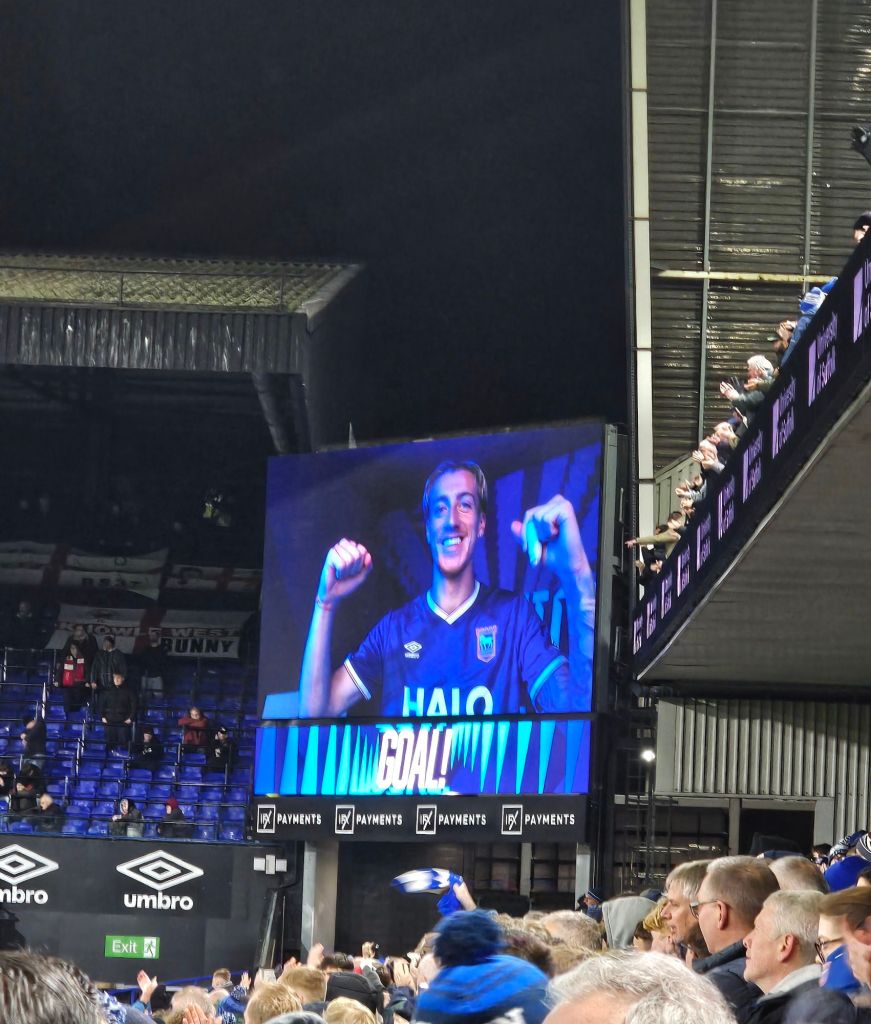
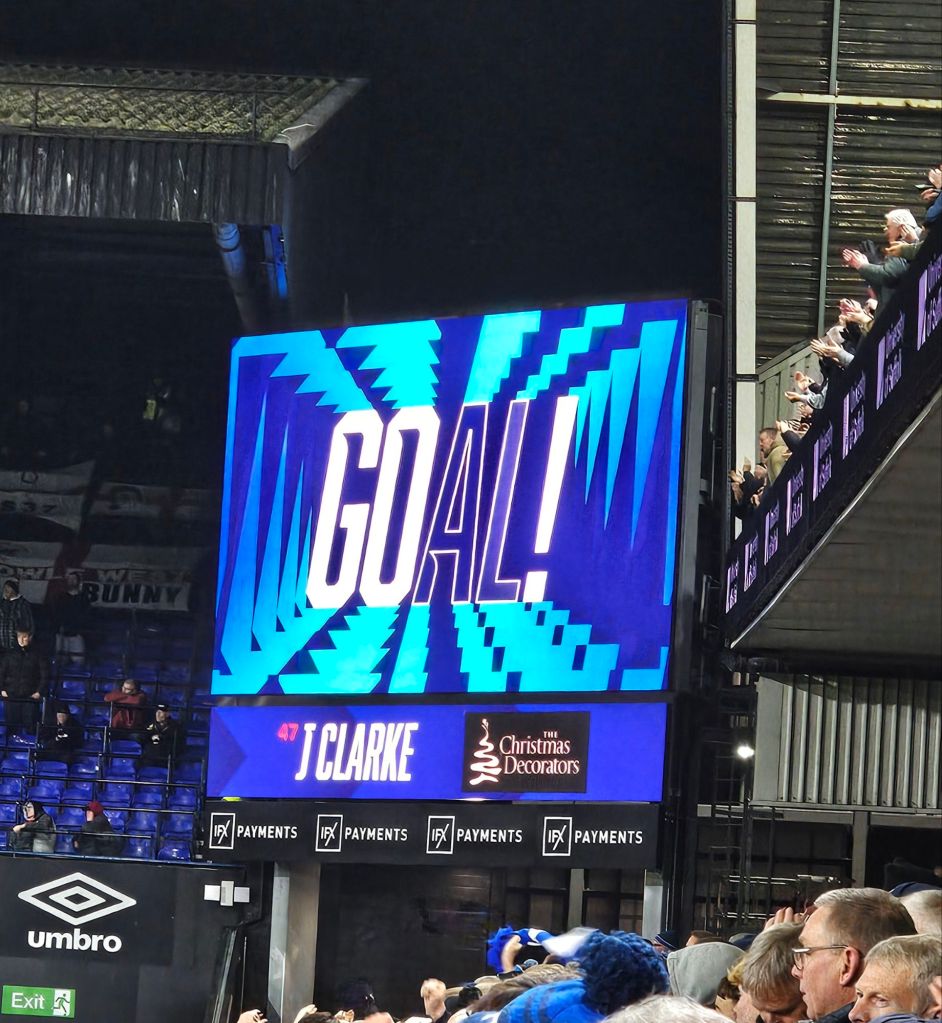
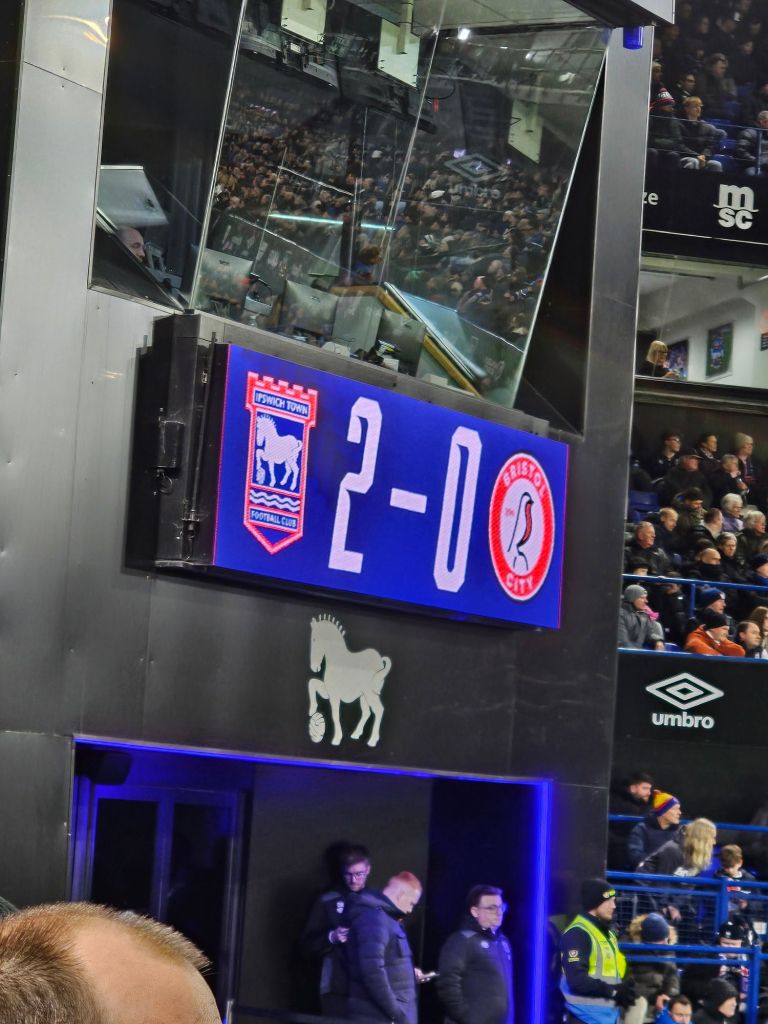
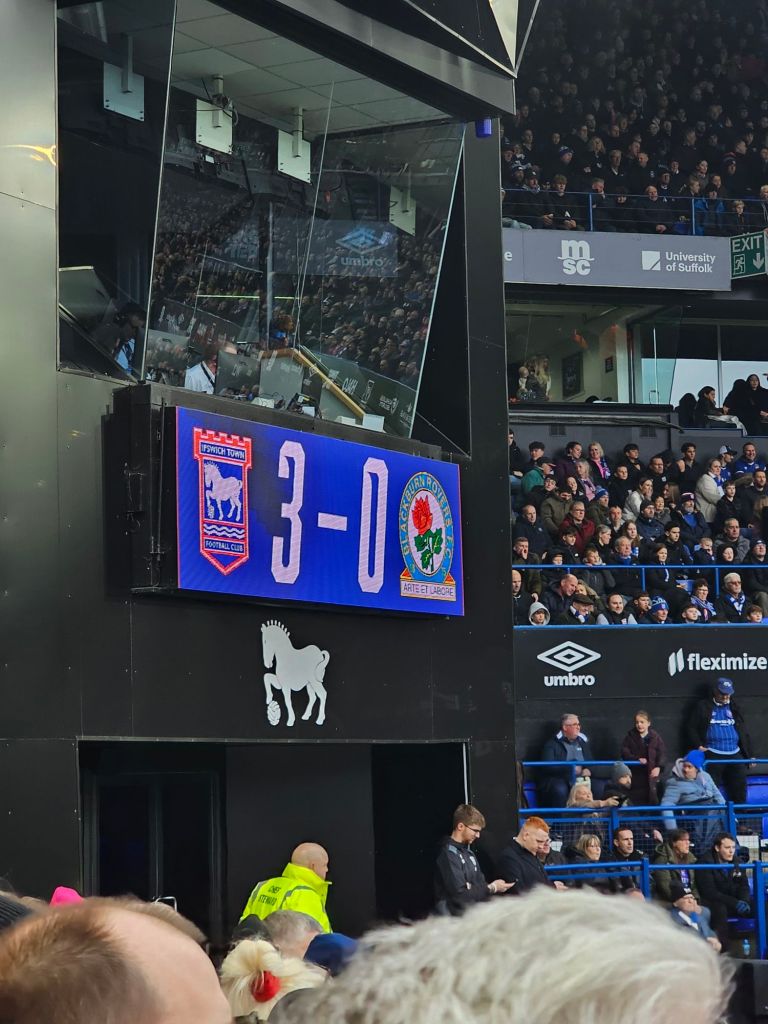
Seven minutes into the latest half and Walton makes another save, this time from Emil Riis. It’s an incident that prompts Town fans to plead “Come On Ipswich, Come On Ipswich” a minute later. Clearly struck by the crowd’s imploring cries Town up their game and Azon chases down the right before squaring the ball to Jack Clarke who sweeps the ball very precisely but stylishly inside the far post as only a man wearing a hair band can. Two-nil to Ipswich. “We’re on our way to the Premier League” chant the Sir Bobby Robson standers suddenly filled with a hitherto missing confidence, although they soon reveal that they’re a little unsure how promotion actually works chanting “How do we get there? I don’t know”. Moments later however they seem more certain as they launch into “Ee-I, Ee-I, Ee-I, Oh, Up the Football League We Go”, again probably for the first time this season.
Mass substitutions soon follow for Bristol City as their fabulously Germanic sounding manager Gerhard Struber trusts in ringing the changes and bringing on players called Pring and Earthy. Although often messy, with possession changing hands a bit too frequently, the game provides plenty for the crowd to enjoy and no more so than when, possibly just for old times’ sake, Sam Morsy gets shown Mr Whitehouse’s yellow card. But Morsy is in good company in this Bristol City team, which almost queues up to be cautioned with a series of assaults on Jack Clarke, Dara O’Shea and Ivan Azon or anyone who runs past with or stands between them and the ball.
Not to be outdone by the former insurance salesman from Austria, Keiran Mckenna makes the customary multiple substitutions too, giving opportunities for the home crowd to give dedicated applause for the excellent efforts of Azon, Burns, Cajuste, Clarke, and Nunez, who have all shown skill and endeavour in the face of a team that with the possible exception of Sam Morsy due to his religious beliefs, probably trains on rough cider.
With the second goal the game had become a matter of will we or won’t we score a third goal. “I don’t need to get Monkey out do I” says Pat from Clacton, referring to the lucky charm who apparently used to cause instant changes of fortune for struggling Town teams upon leaving her handbag but has since lost his touch a bit. Angie is reduced to giggling about the surname of Bristol’s Rob Dickie, whilst I enquire of her whether she thinks he’s from Billericay. I hope she remembers Ian Dury.
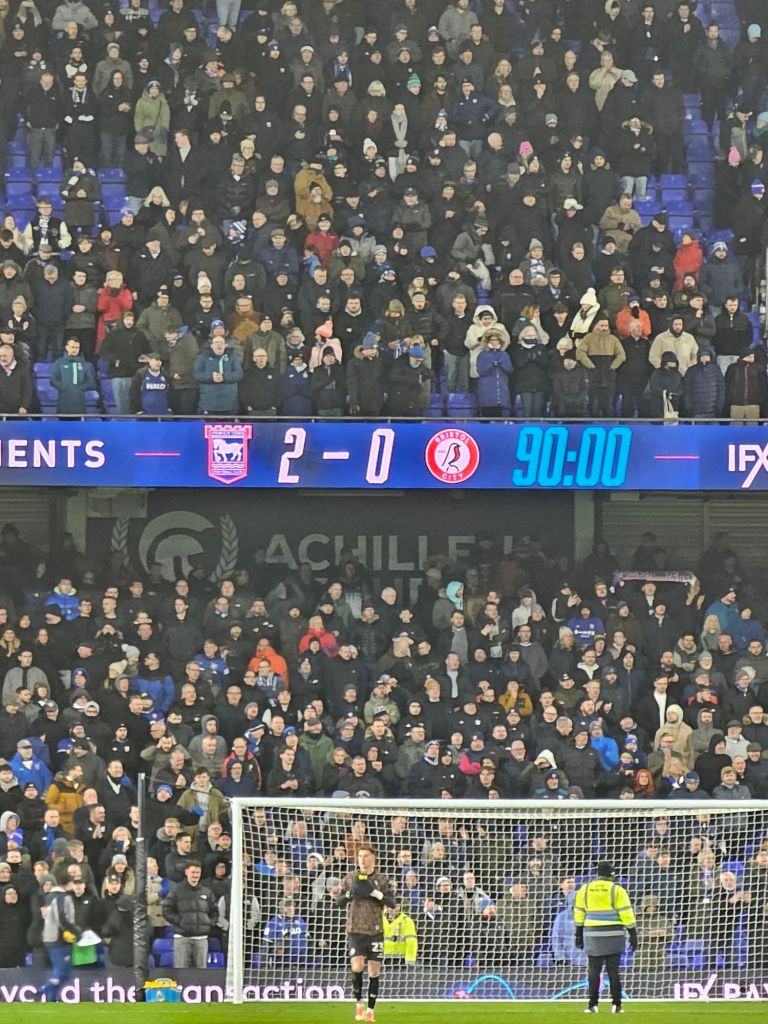
It’s been a relatively comfortable game for the Town with the feeling that if we wanted or needed to, we could always try a little harder and score some more goals. Six minutes of added on time is therefore a little unwanted for both teams probably, but we survive it. With the final whistle we can clear off home safe in the knowledge that a third consecutive home victory over teams beginning with letter ‘B’, after just one win and two draws in consecutive games against teams beginning with the letter ‘W’ back in September and October is a slightly strange measure of how much the team has improved. It’s just a pity that if things keep on like this, we might end up in the bloody Premier League again
















 trippingovertheball