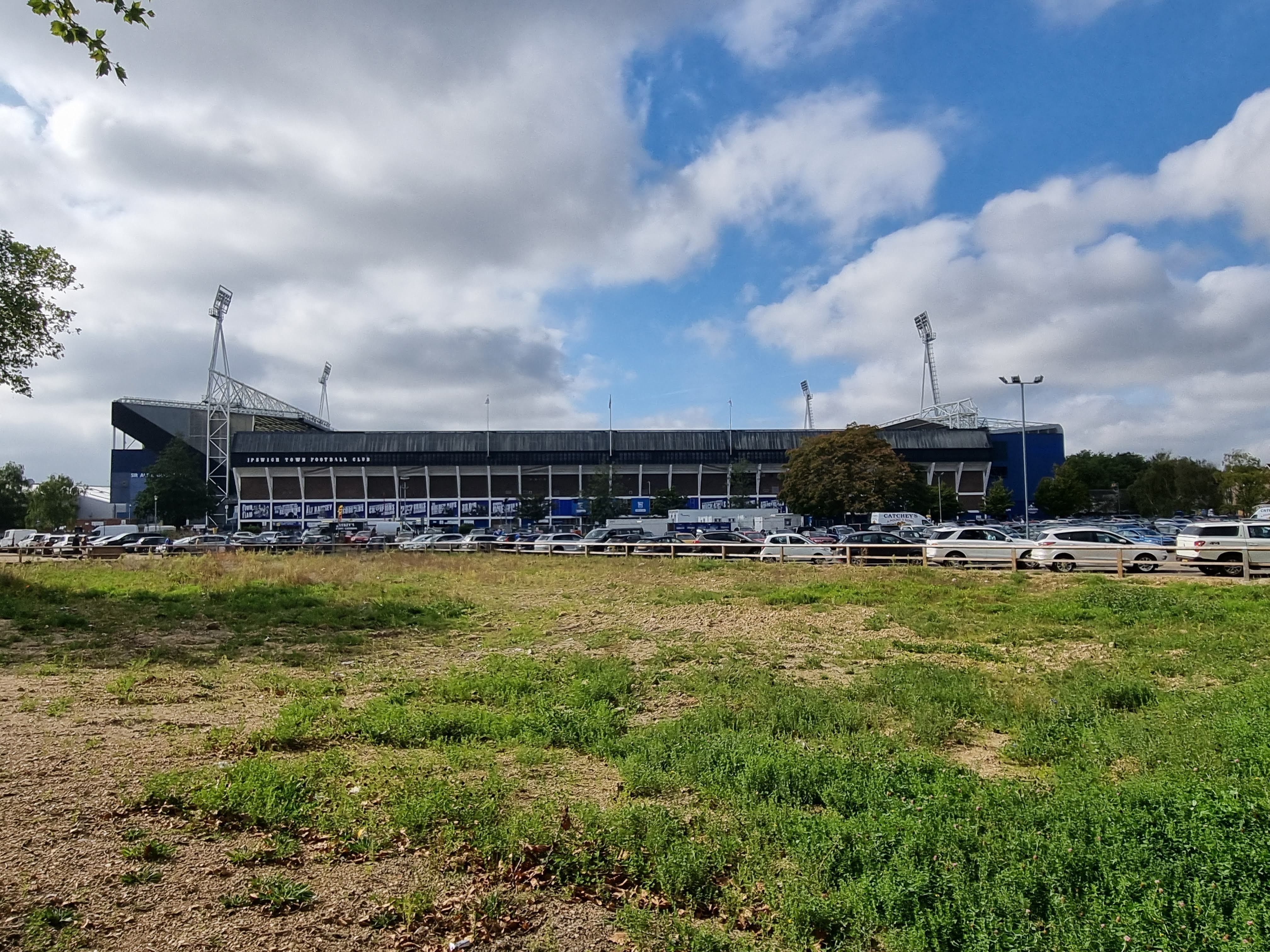
Ipswich Town 6 Doncaster Rovers 0

Who doesn’t love a match under floodlights?  Not just the floodlights of a mere afternoon match once the clocks have ‘gone back’, but the floodlights of a fully-fledged evening fixture, one that doesn’t begin until it’s dark and when the walk to the match is like being drawn towards a glowing beacon; it’s even better on a rainy night, and tonight is such a night.

Having arrived in town early for work related reasons, I get to park up my trusty Citroen C3 on Anglesea Road and amble down to the Arboretum (now known as the Arbor House) where I sit in the garden to eat a Scotch egg (£4.00) and down a pint of Woodforde’s Kett’s Rebellion (£3.80).  The only other table in the garden that is occupied plays host to three twenty-something blokes, one of whom intermittently calls out “Blue army” as if he’s suffering from some sort of oddly Ipswich-based variant of Tourette’s syndrome. After half an hour Mick arrives, announcing his arrival in French; I treat him to a pint of Kett’s Rebellion, because it’s a beer the taste of which is worth sharing.  Mick requests some dry roast nuts (£1) too,  which don’t come in a packet as we had both expected, but in a cup,  “Ooh, you do them like that” I say to the young woman serving behind the bar, trying not to sound fazed.   Back outside it starts to rain, and we move to a table with an awning whilst Mick and I curse the planet destroying evil of outdoor heaters.  Mick and I talk of making speeches at weddings, of who Kett was, of Angela Merkel and of local government before 1974.  Twenty or so minutes before kick-off we head for Portman Road, Mick walking his black bicycle beside him.

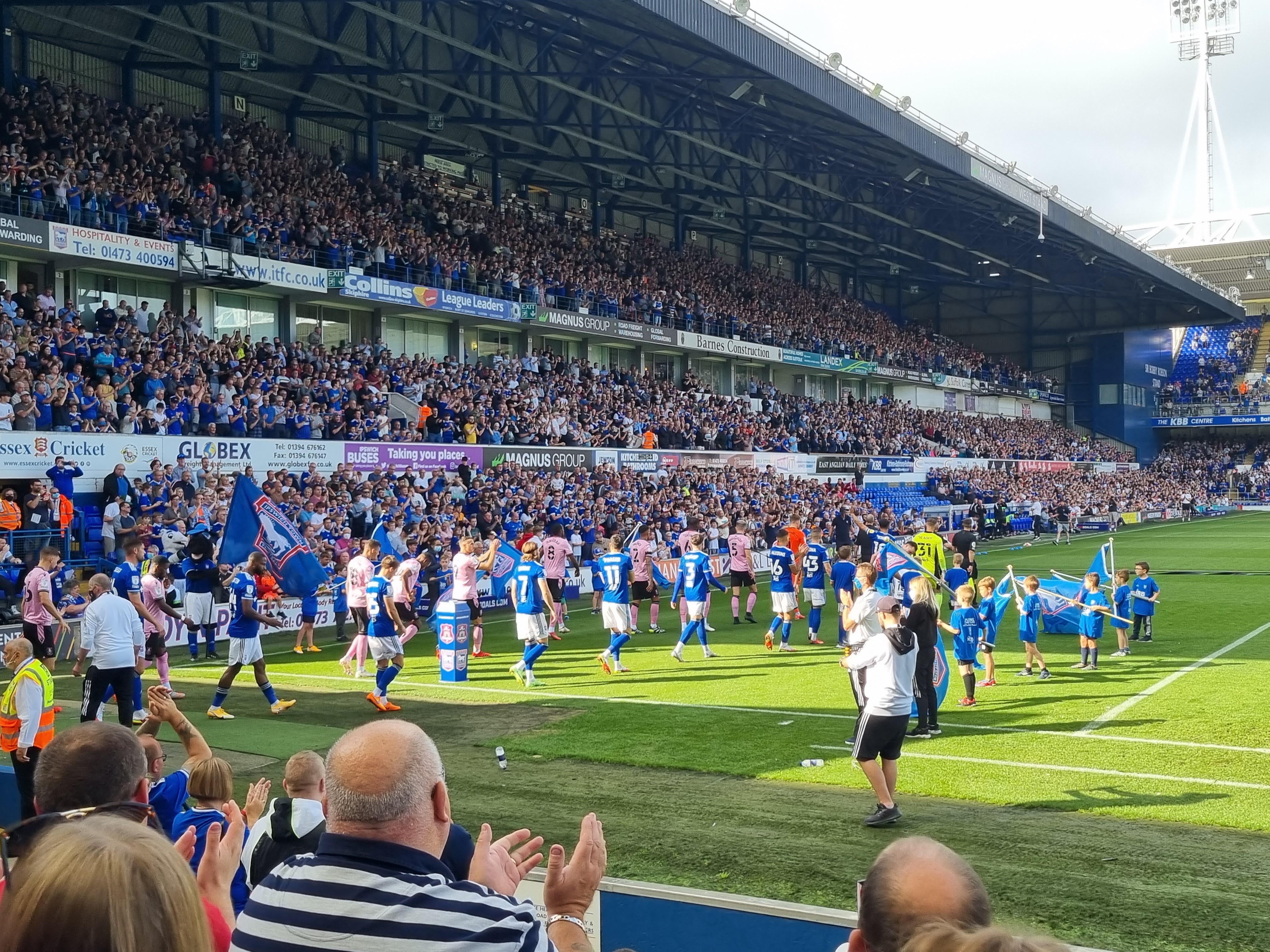
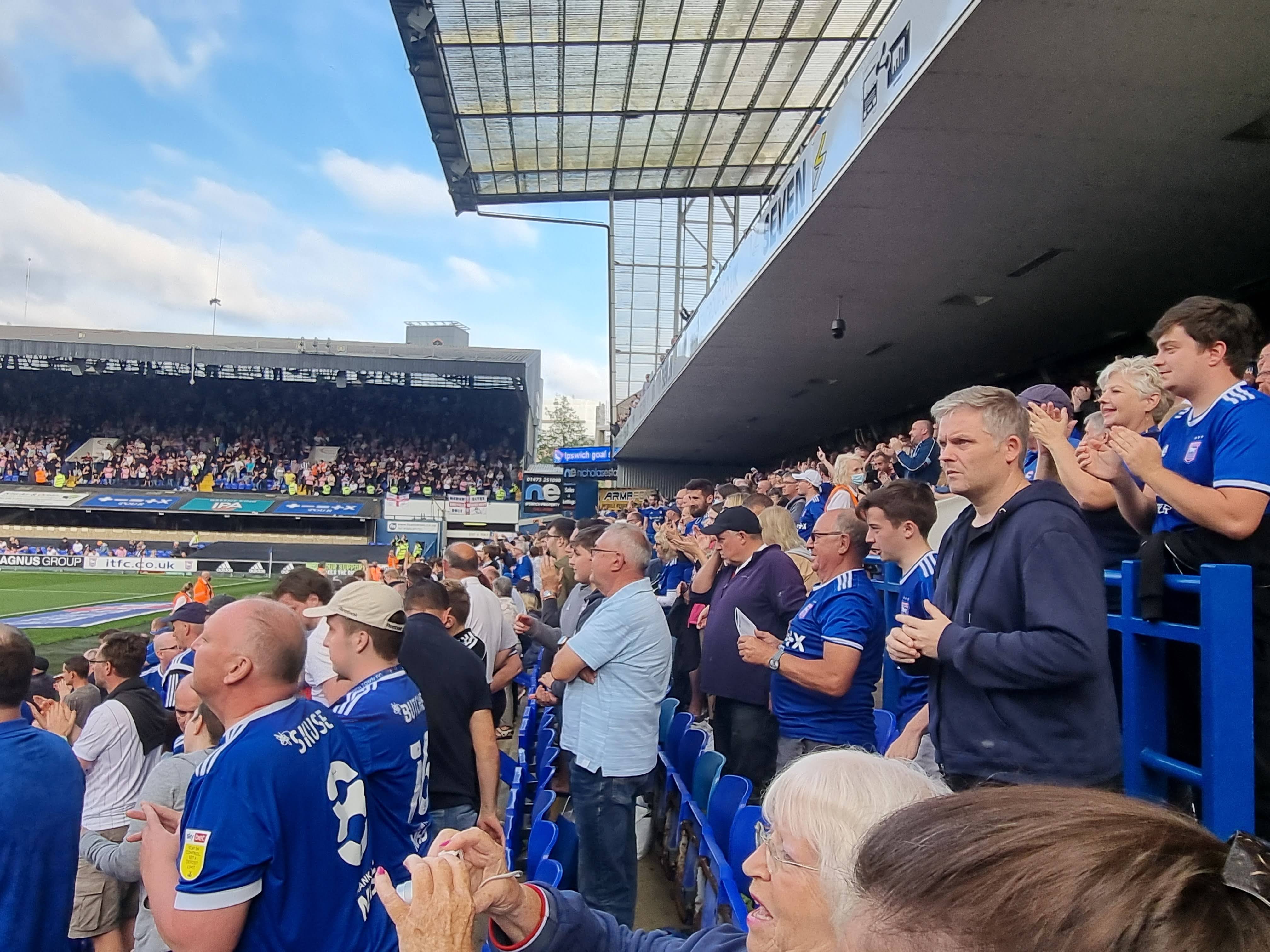
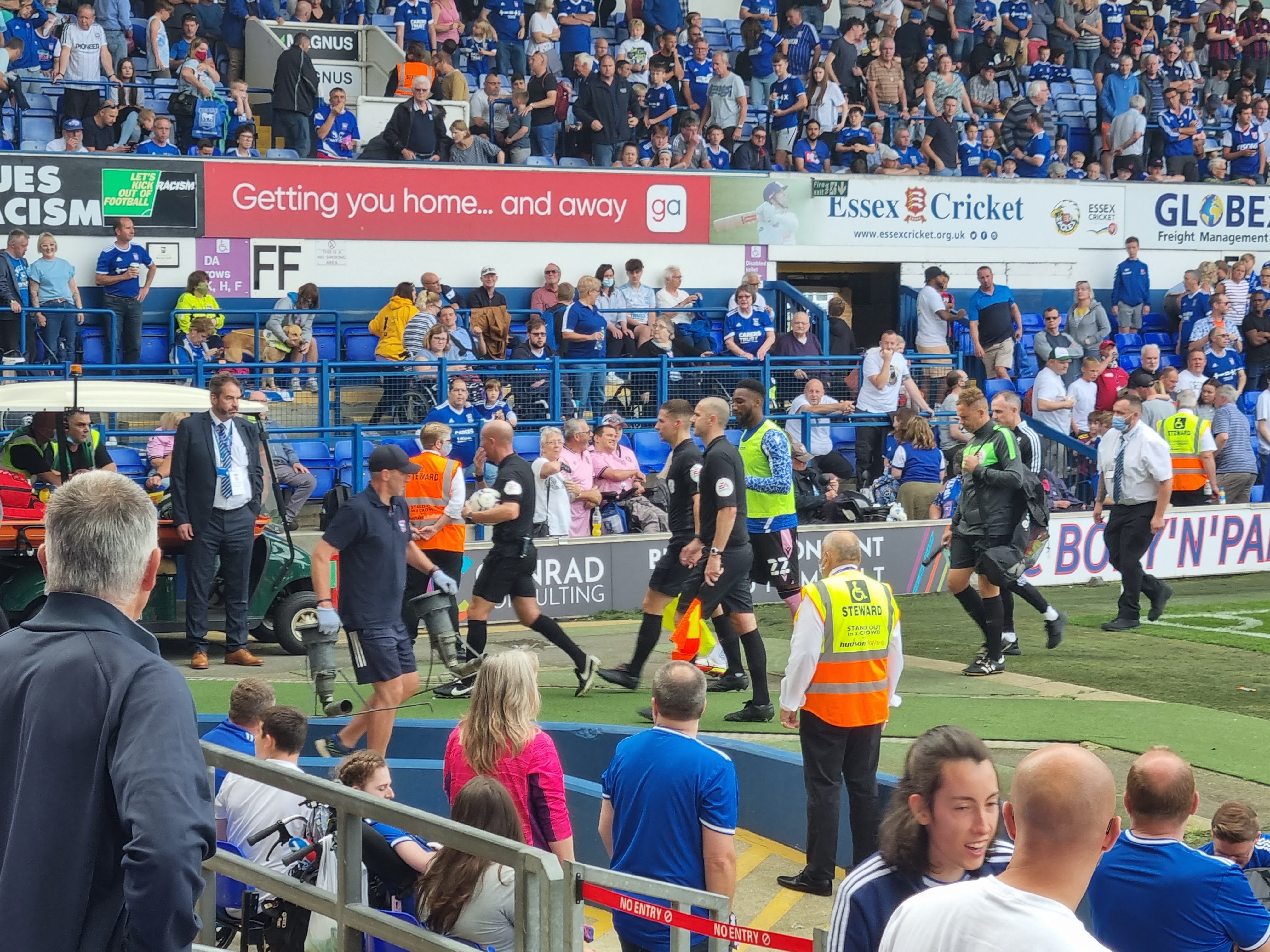
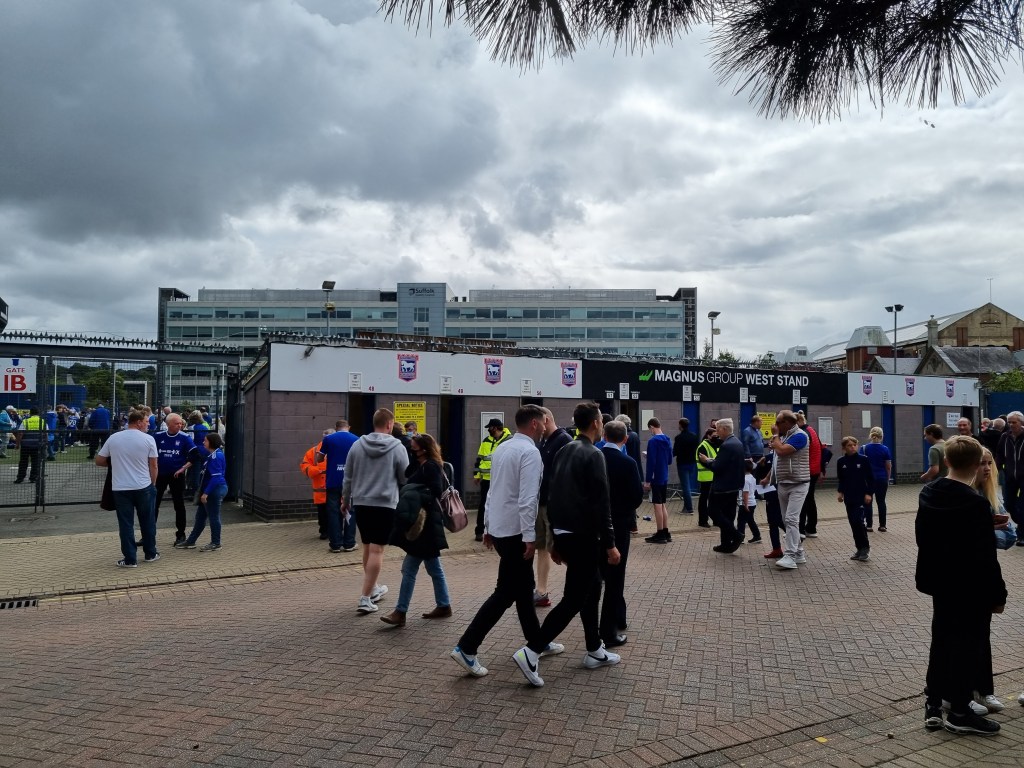
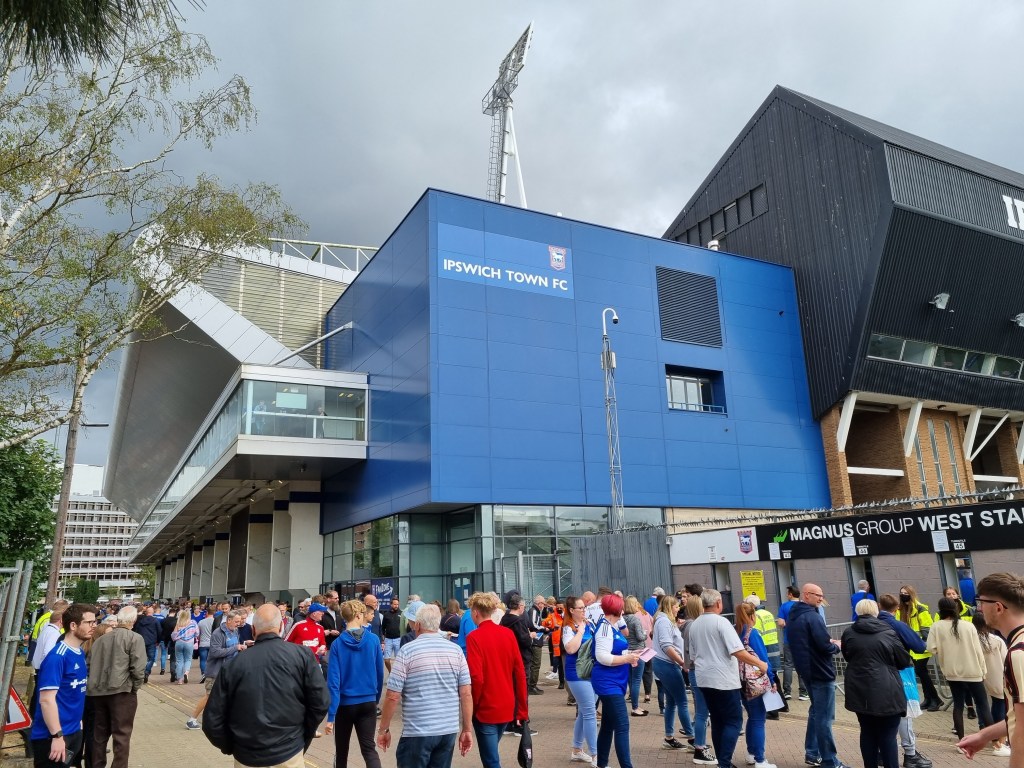
The rain is merely an occasional drizzle and having left Mick to lock up his bike somewhere in Sir Alf Ramsey Way, I am invited to prove that I wasn’t frightened of a ‘sharp scratch’, unlike these scaredy vaccine deniers, who clearly are, and having snapped up a programme (£3.50), I proceed through turnstile number fifty-nine into the hallowed halls of the Sir Alf Ramsey Stand and the gents toilet nearest the players’ tunnel.  Relieved, I join the assembling throng as the two teams enter the field of play. Ever-present Phil who never misses a game is here (of course), and so are Ray’s son and his grandson Harrison, but Ray and Pat from Clacton are absent; it makes me wonder if the Clacton branch of the supporters club aren’t able to get a coach ‘up’ for midweek games, perhaps because the Tendring peninsula is under curfew once the sun goes down.  I will later learn however that the Clacton branch run a coach to all home games, but tonight Pat is unwell. Get well soon Pat from Clacton. Fiona arrives shortly after kick-off; the train was late.
It’s Doncaster Rovers in their red socks, red shorts and red shirts with thin white hoops who get first go with the ball, and although we don’t know it yet, it will prove to be one of their best moments of the game.   Cameron Burgess is an early casualty of hairless referee Carl Brook’s yellow card as he tries to interrupt Doncaster goalkeeper Pontus Dahlberg as he takes a drop kick.  Dahlberg is an unfortunately angular looking man who disproves the theory that Scandinavians are all tall, blonde and good looking, although admittedly he does score very highly on the first two criteria.  Twelve minutes pass and a poor cross field pass from some or other adopted Doncastrian is intercepted by Wes Burns, who charges forward to the by-line and turns in a low cross which the oddly named Macauley Bonne has only to direct into the net.  It’s a good start. Town lead, and Mr Bonne celebrates like a Chantry boy who scores for the Town should.

“Hark now hear the Ipswich sing” chant the ‘Boney M’ supporters’ group from the lower tier of the Sir Bobby Robson stand as they gear-up for Christmas.   “Shall we sing, shall we sing, shall we sing a song for you?” chant the Doncaster Rovers supporters up in the Cobbold Stand as Portman Road once again goes quiet after the goal; presumably someone tells them “No thank you” because that’s the last we hear from them.

With Town a goal up, the excitement subsides, and I ponder what “Built Environment Recruitment” is as referred to on the advertising board for Conrad Consulting.   I like to think that I could maybe phone Conrad up and ask him to send round a couple of terraced houses, an office block and a beach café to drive some petrol tankers.  The game is a bit scrappy, mainly down to Doncaster’s lack of precision, but Sam Morsy is looking good for Town in front of the defence and intermittently Town break down the flanks to put in testing crosses.

A half an hour passes, and Town earn a corner.  There is a lot going on in the penalty area but the kick sails across nearly everyone to a point beyond the far post, where Lee Evans is all alone waiting to stroke the ball into the net. Referee Mr Brook stares hard at the scrum of players in the front of the six-yard box, in the manner of a bald Paddington Bear, but can evidently not discern that any offence has been committed and the goal stands. Two-nil; Fiona confirms that we’ve been here before (versus Wimbledon) and not won. 

Celebrations completed, the game re-starts and Doncaster’s Joe Dodoo becomes the second name to enter to enter the notebook of Mr Brook, possibly because Mr Brook thinks it’s too good a name not get in his collection, but also because he chops down Matt Penney.   Town are now clearly the better team and playing some fine one and two-touch, passing football. Sam Morsy has a powerful shot from 20 metres that goes not too far over Pontus Dahlberg’s cross bar; it’s not the sort of thing we’ve seen for a while.
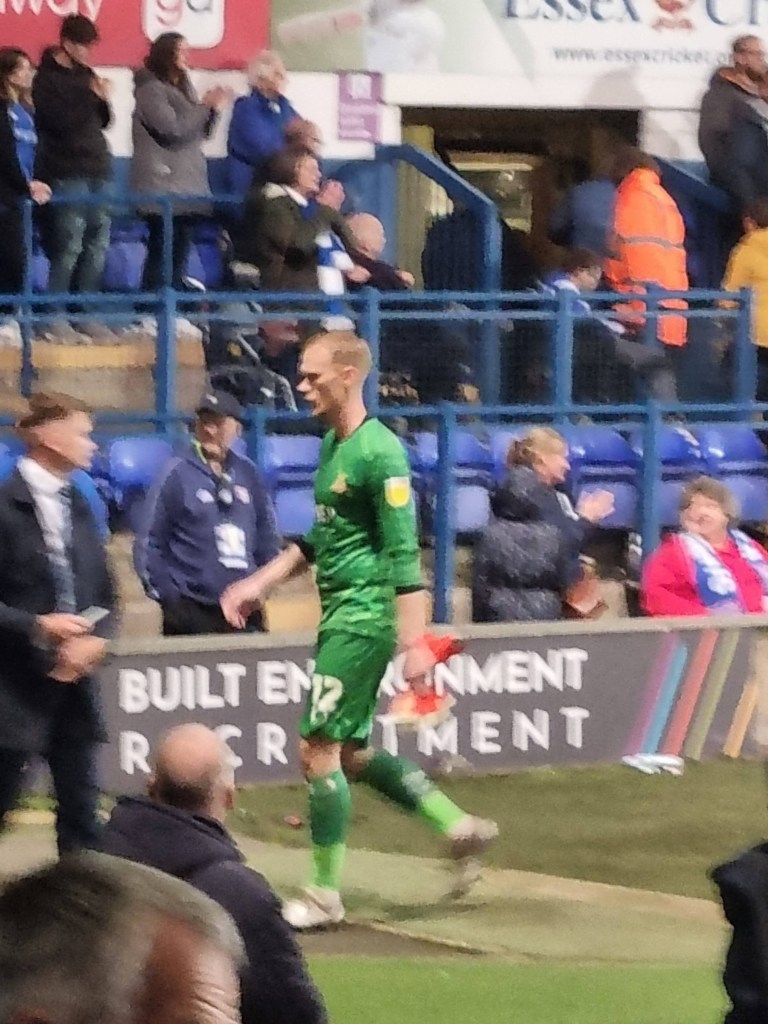
Half-time arrives to appreciative applause and with no Ray to chat to I eat a Nature Valley peanut and chocolate protein bar in silence, although I later speak with ever-present Phil who never misses a game.  Phil tells me that there was no Matchday Special in St Jude’s Tavern this evening and I feel his disappointment.  At the corner of the pitch meanwhile, stadium announcer and former Radio Suffolk presenter Stephen Foster, who was at school with my friend Pete, conducts a Radio Suffolk style interview with former Town hero Jonathan Walters, who is the recipient of warm applause.

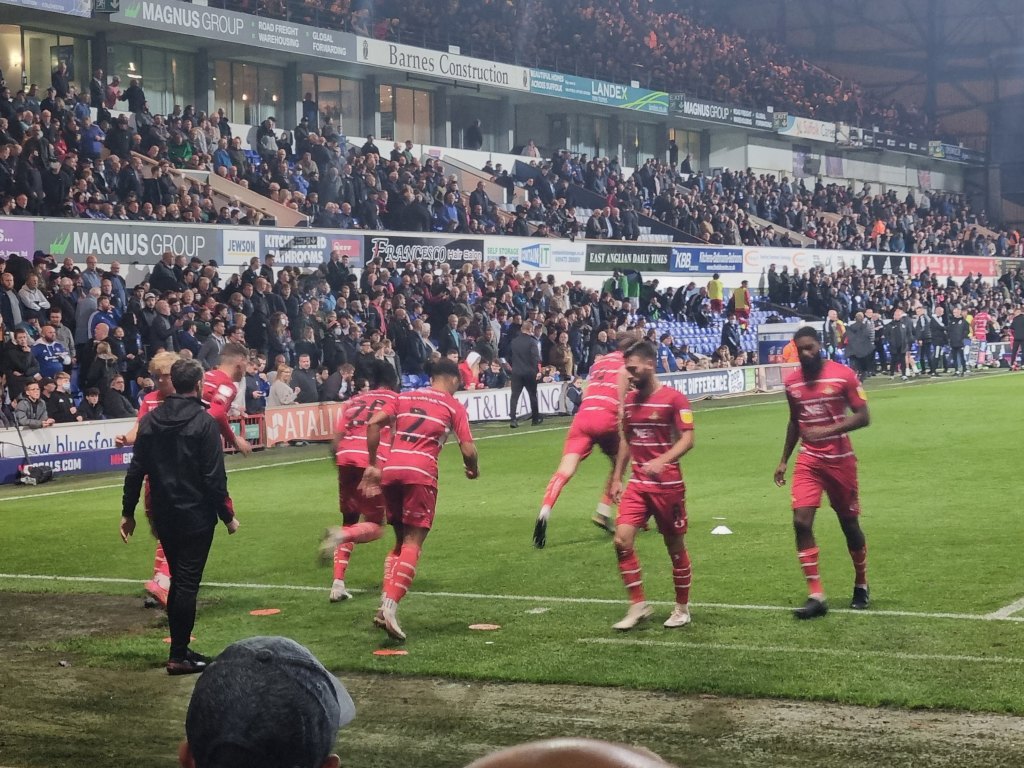
When it begins, the new half brings substitutions for Doncaster as Joseph Owulu and Rodrigo Vilca replace Jordi Hiwula and Danny Gardner. This evening’s attendance is announced as 18,111, of whom 165 are from Doncaster, or are at least sat in the upper tier of the Cobbold Stand pretending to be so.  As Stephen Foster reads out the numbers many in the crowd applaud, seemingly congratulating themselves for having bothered to turn up, odd. It strikes me that Doncaster’s blonde-haired number fourteen Matthew Smith, looks a bit like 1980’s Town midfielder Trevor Putney; I suspect however that he doesn’t really and it’s just his hair, either way he’s changed since he played Dr Who.

“Who the fucking hell are you? sing the more impolite occupants of the Sir Bobby Robson stand to a Doncaster player whose identity I can’t work out either, and then in a moment of uncharacteristic attacking intent, Doncaster’s Tiago Cukur has a shot on goal which Town ‘keeper Vaclav Hladky doesn’t so much save, as just stand on tiptoes to catch.  It’s the last action Vaclav will see for a while as Town suddenly go into goal scoring overdrive. Breaking down the left, Bersant Celina, with open grassland in front of him, gets to a point where he needs to cross, so he checks and loops the ball over into the penalty area where as if by magic Lee Evans appears to head home unchallenged inside the far post. It’s a goal of beautiful simplicity.  Two minutes later and another cross from Bersant Celina on the left is controlled on his chest by the oddly named Macauley Bonne, who then proceeds to volley the ball just inside Dahlberg’s right-hand post; it’s the best goal of the night, or is it?.  Just another two minutes pass, barely time for the Sir Bobby Robson stand to finish a chorus of  “And it’s  I-pswi-ch Town, Ipswich To-wn FC, they’re by far the greatest team, the world has ever seen” followed by “E-i-e-i-e-i-o, Up the football we go” when Wes Burns lays the ball on for Lee Evans to lash high in to the top right hand corner of Dahlberg’s net.  Cracking goal, possibly even more spectacular than the last one.  From 2-0 to 5-0 in not much more than five minutes.  Just four minutes later and the Sir Bobby Robson Stand are singing “Six-nil to the Tractor Boys” and sounding like the Pet Shop Boys, as George Edmundson diverts the flight of a free-kick from Lee Evans in the best possible way.   Ever-present Phil who never misses a game, turns to me and Fiona to tell us that the last time Town scored six was away also against Doncaster Rovers (February 2011); I’ve no idea if he’s right but if anyone should know it should be ever-present Phil who never misses a game.

Ten minutes of normal time remain, and without wanting to seem greedy I’m hoping for a seventh goal, after all, I haven’t seen Town win 7-0 since 1974.  It was Mick Mills who scored Town’s seventh goal that Saturday night forty-seven and a half years ago, and tonight substitute Rekeem Harper tries to emulate him with two minutes left, but his shot travels in a frustratingly straight line and hits a post rather than swerving outrageously around the goalkeeper like Mick’s shot did.  I have no idea how many minutes of added time are added on, but when you’re winning six-nil such details no longer matter; the minutes come and go however without further shots eluding Pontus Dahlberg.  The final whistle produces the sort of love-in not seen at Portman Road since, well I don’t honestly know when.  Relief, elation and an element of disbelief swirl about as I applaud the team from the pitch.  Paul Cook makes a laudably quick exit down the players’ tunnel to allow his team to take the plaudits and hopefully so that he can put the kettle on and may be break open the Custard Creams.

As I hurry up Portman Road and back to my trusty Citroen C3, excited chatter and snippets of throaty chants fill the night air. “I’d have been livid if I hadn’t come tonight” I hear a man say to a friend as they exit the Cobbold Stand, suggesting perhaps that he nearly stayed at home.  “Were we really good or were they just bad?” asks a passing woman from within the crowd; unfortunately, she and whoever she asked the question of are out of earshot before she gets an answer.  If she had asked me, and why wouldn’t she, I think I would have said “A bit of both”.

Driving home I hope that tonight has been a turning point; the night when our new squad of players finally endeared and proved itself to Town supporters; whether it is or not, I shall remember it. It’s been a while since we scored six, or conceded nil at Portman Road though best of all it happened beneath the floodlights and in the rain.

Ipswich Town 1 Sheffield Wednesday 1

Ipswich Town first played Sheffield Wednesday back in August of 1958 in a second division game at Portman Road; trolleybuses were still running in Ipswich and Sheffield still had trams the first time round.  Town of course won (2-0), as we often did before the turn of the century.   By the time I started watching Town the twentieth century had the best part of thirty years still to run, but Sheffield Wednesday were down in the third division and Town were just getting established in what has now unfortunately become the Premier League, and hence the two clubs never met, not even in the Cup.  The first time I saw Wednesday was therefore not against Ipswich at all but at Layer Road, Colchester, in September of 1979, neither team managed to score.  When I eventually did see Town play Wednesday it was at Hillsborough in September of 1984, halfway through the miner’s strike. After the 2-2 draw I was amongst Town fans who were whisked back to Sheffield Midland station at high speed in a double-decker bus escorted by police motorcycles. As we sped through the streets of Sheffield that Saturday evening, we felt unsure if we would end up at the train station or hurtling through a jeering picket line to do a strike-breaking shift at a local colliery. 

Today is a somewhat grey September Saturday morning and it feels nothing at all like thirty-seven years ago, the class struggle seems to have been lost and now both Town and Wednesday languish in the third division playing second fiddle to their loathsome local rivals. I don’t know if it has anything to do with a loss of revolutionary zeal, but my enthusiasm for today’s fixture is oddly muted, particularly given Town’s first win of the season last weekend, and as if to confirm my feelings of ennui this morning I chose to put on a pair of socks that depict Edvard Munch’s ‘The Scream’. Nevertheless, there is never any doubt that I won’t drive to Ipswich, park up my trusty Citroen C3 on Chantry, wander down through Gippeswyk Park and search out a pre-match beer. Later as I walk up Princes Street, what I assume is a police drone hovers above and I am struck by the new views of Portman Road that have been opened up following demolition of the former Mann Egerton garage from where in 1978 my father bought the brown Triumph Dolomite in which I wooed my first girlfriend.  Having witnessed a man shouting and swearing at his friend or partner trying unsuccessfully to back a mini into a parking space, I end up at the Arbor House (properly known as the Arboretum) where I sit alone in the garden and drink a pint of Woodforde’s Kett’s Rebellion (£3.80). 

At about twenty-five minutes to three I head for Portman Road and join the crocodile of supporters descending St George’s Street from the Greyhound.  Making my way along Sir Alf Ramsey Way and Constantine Road I show my Covid credentials and then enter the Sir Alf Ramsey stand through turnstile number sixty, offering a cheery ‘Hello’ and ‘Thank you’ to the turnstile operator as I enter the ground.  The programme seller in the driveway to the main reception has sold out so I make my way to the little shop at the far end of the stand where I buy a programme (£3.50). “Enjoy the match” says the young man behind the counter as he hands over the glossy booklet and my change from a five-pound note.  “Or bon match as they say in France”, I reply pointing to the “Allez les bleus” slogan on the front of my T-shirt as I turn away and walk into one of the metal barriers that have been set out in front of the shop, presumably to marshal the invisible throng of people over eager to buy programmes and other assorted toot.

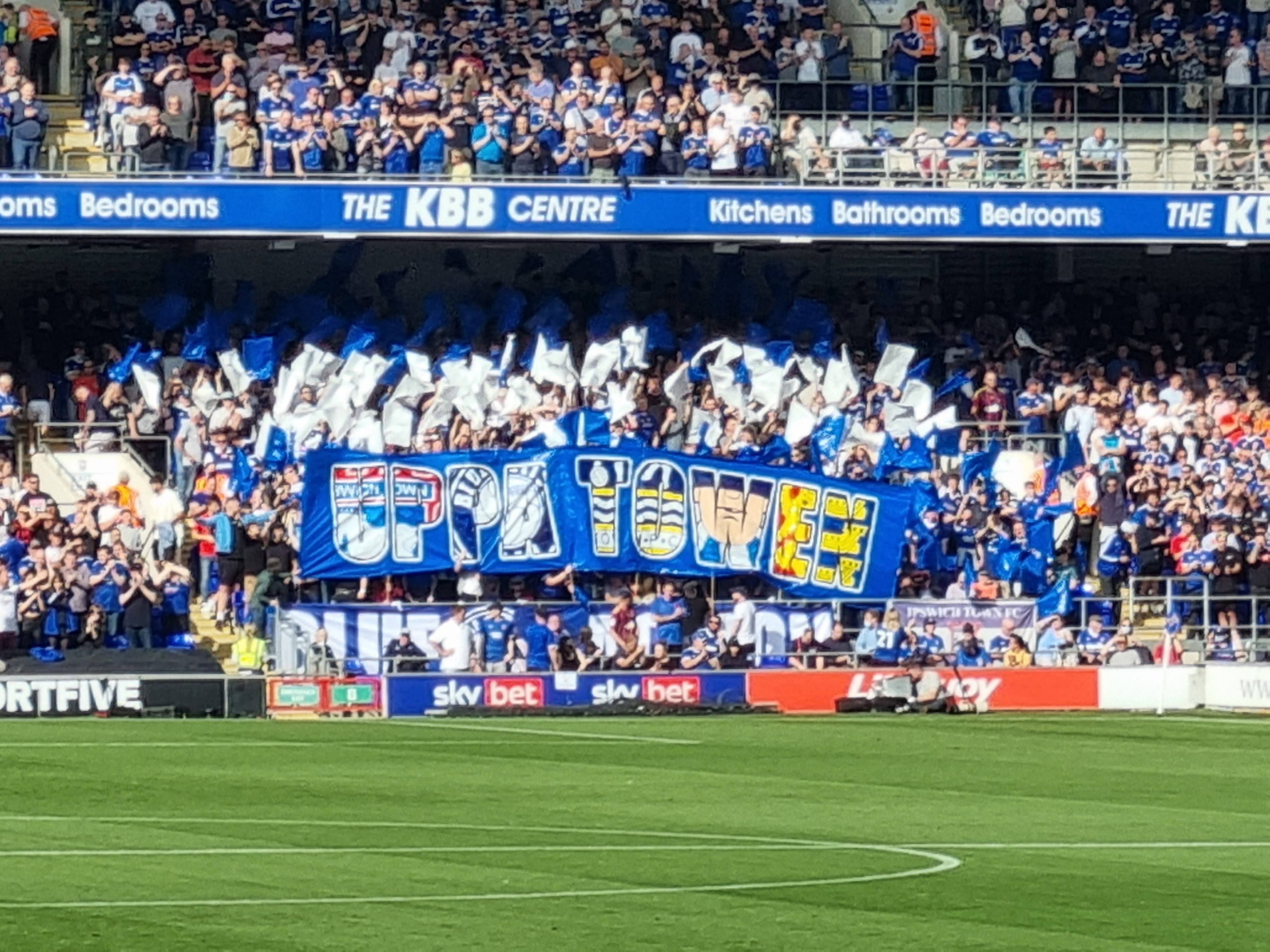
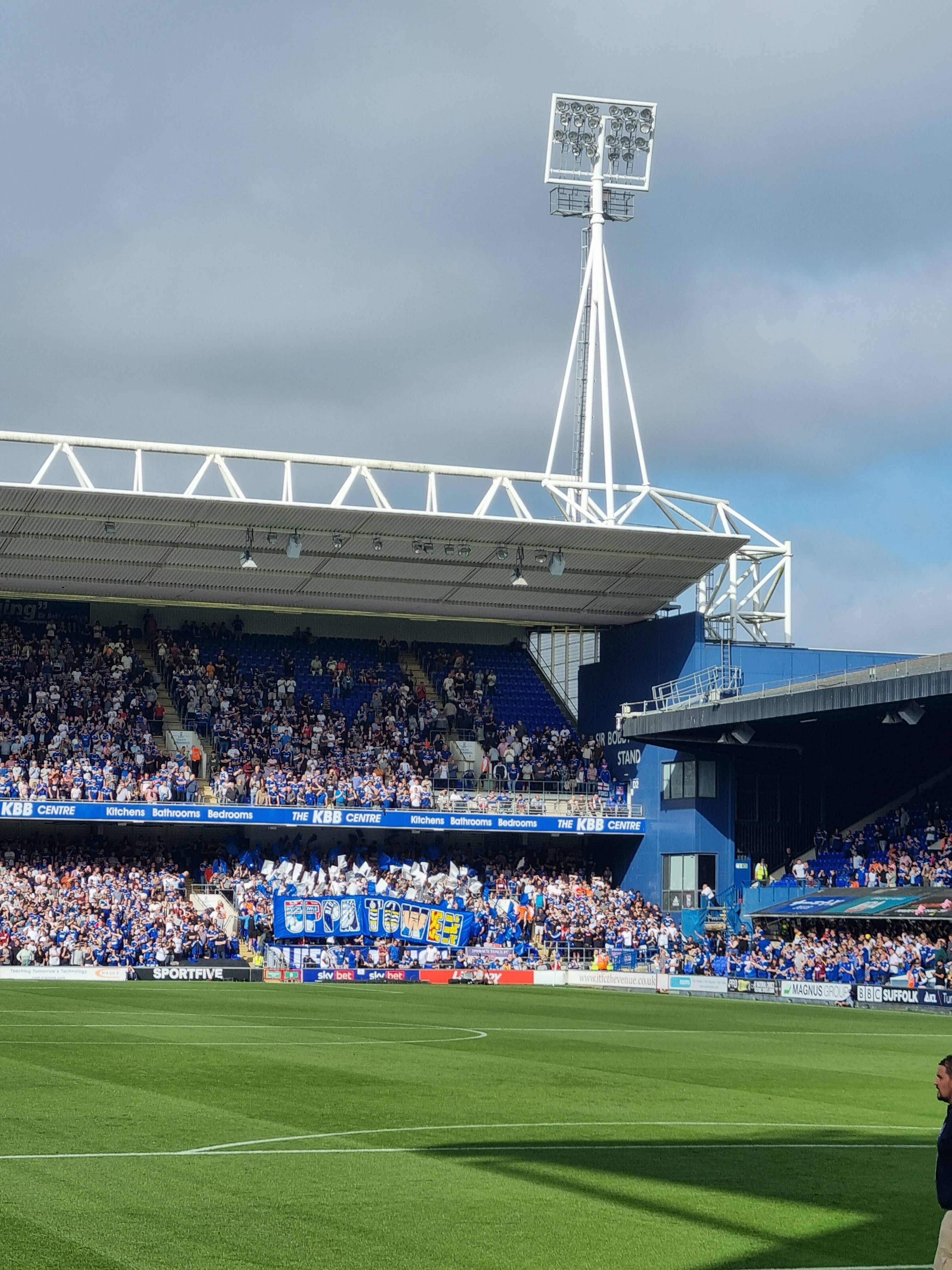
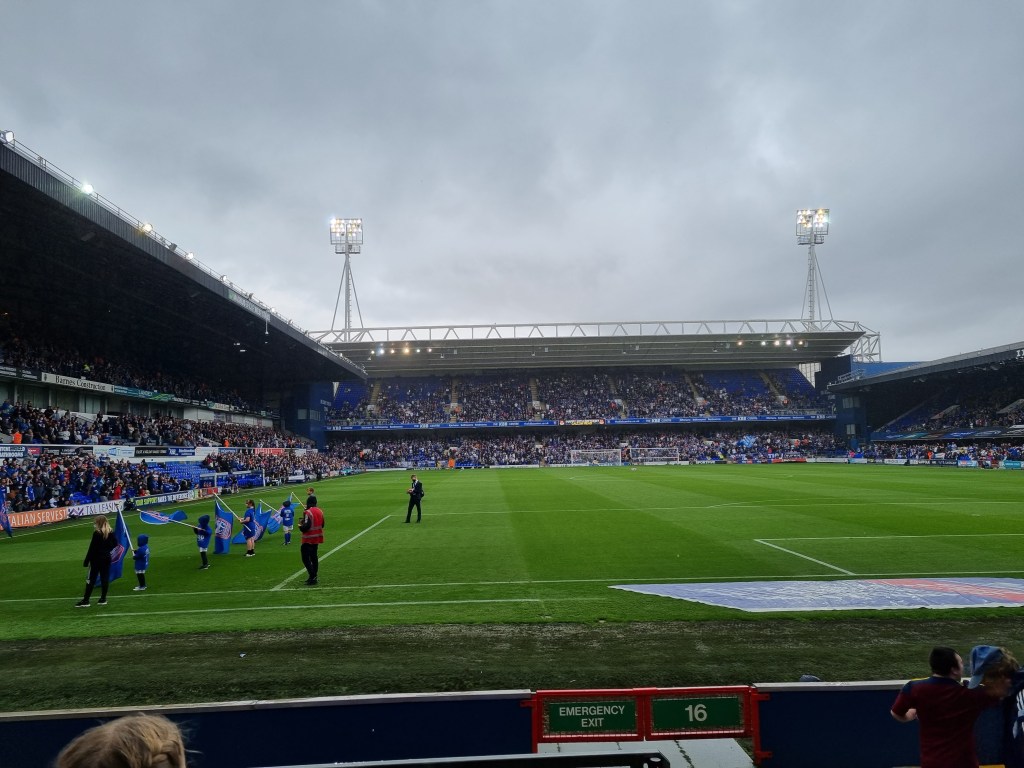
On the lower tier of the stand Fiona, ever-present Phil who never misses a game, Ray, his son and his grandson Harrison are already in their seats. Pat from Clacton arrives soon after I sit down and as the teams run out, the little band called Blue Action who now occupy Section 6 of the Sir Bobby Robson stand and wave blue and white flags, and brandish a colourful banner that reads “Uppa Towen”.  Compared to the tifos seen in the stands of Marseille or Lens, Blue Action’s effort is rather pathetic, but in the context of soporific Suffolk it’s a bloody marvel and I like it very much.  At a minute past three the game begins with Scott Fraser making first contact with the ball as Town aim to put it in the big white goal just in front of me to my right.  Within 30 seconds Sheffield Wednesday win a corner with their supporters still singing along to ‘Hey Jude’, a song which is played over the PA system with the intention of rousing the home fans, not the away ones; but it’s good to be optimistic.  Three minutes later and Town should be ahead as a simple through ball from Cameron Burgess puts the oddly named Macauley Bonne through on goal, only for Bonne to take too much time and eventually place the ball weakly against the chest of Sheffield Wednesday goalkeeper Bailey Peacock-Farrell, a man who looks like a giant orange-flavour Lyons Maid Mivvi, sounds like a firm of accountants and can stop most shots by merely stringing his name out across the goalmouth.

Behind me two blokes debate which of Town’s two defensive midfielders is Idris El-Mizouni and which is Tommy Carroll. The louder, more assertive bloke concludes that Idris is number 25, which he is not, because that’s Tommy Carroll.  I briefly toy with the idea of turning around to point out his error, but happily his more cautious accomplice discovers the truth a short while later to save me the trouble.   Meanwhile, up in the Cobbold Stand the Sheffielders sing “Shall we sing a, Shall we sing a, Shall we sing a song for you” to the tune of Cwm Rhondda.  Nobody responds, presumably because most people are thinking to themselves “Well, they’re already singing a song, what are they on about?”.  For my part, I’m impressed by their politeness and given a choice would ask for something by Heaven 17, Pulp or the Arctic Monkeys.

Fifteen minutes have elapsed since the game started and so far not very much of note has happened. Then, Wes Burns slams the ball into the net after either the oddly named Macauley Bonne or Scott Fraser flicks the ball on to him, but Burns is, unbeknown to me and those around me, offside; we therefore stand up as one and cheer wildly only to sit down again a moment later feeling cheated and very slightly embarrassed.  To their eternal credit the Wednesdayites do not chant “You thought you had scored, you were wrong, you were wrong”, which is nice of them.

The game is close and compelling although not of particularly good quality; Sheffield are quicker to the ball and dominate possession, but fortunately their tiny ten, the wonderfully named Barry Bannan tends to overhit most of his crosses and long passes.  For Town meanwhile, the oddly named Macauley Bonne looks somewhat lonely up front on his own and I surmise that he wears the number eighteen shirt because he’s doing the work of two number nines.

“It’s gonna come innit?” announces the bloke behind me optimistically as Town waste an opportunity with Idris El-Mizouni passing to Wes Burns when he could have had a shot and Wes Burns overhitting the ensuing cross.  Then, slightly unexpectedly, we witness a Sheffield Wednesday goal instead; Dennis Adeniran becoming the first man called Dennis, with two ‘n’s like the fire engines and dust carts, to score at Portman Road in living memory, although Denis (only one ‘n’) Maffey did score for Town back in September 1947 in a 4-0 win over Southend.

The Sheffield supporters away to my right are predictably pleased and sing an incomprehensible song to the tune of the ‘Yankee Doodle’ nursery rhyme; their euphoria and short vowels rendering their words indecipherable, but for the final one which is ‘Wednesday’.   I have to admit to feeling somewhat depressed that Town have gone behind again at home and can barely remember when I last saw them comfortably win a game by three or four goals to nil, like we used to do.   There must be young supporters who are barely aware that such things ever happened or are even possible.  Pat from Clacton echoes my disappointment. “It’s a shame, isn’t it?” she says.

As if the frustration of being a goal down wasn’t enough, the referee Mr Andy Davies, whose head is conspicuously hairless, then proceeds to deny the oddly named Macauley Bonne a free-kick when his feet miraculously disappear from beneath him as he attempts to side step a Wednesday defender on the edge of the penalty box.   “You don’t know what you’re doing, you don’t know what you’re doing” chant the Sir Bobby Robson stand employing a childish simplicity reminiscent of the school playground.  Further decisions from the increasingly inept Mr Davies go against Town and as he speaks to and perhaps compares haircuts with a clearly perplexed Paul Cook, the crowd ask “Who’s the wanker in the black?” suggesting both that they haven’t read the back pages of their programmes carefully enough and that they care not about the possibility of either of the linesmen thinking “Ooh, I hope they don’t mean me?”.

The half-time break arrives and Town still trail, I console myself with a Nature Valley peanut and chocolate protein bar and a chat with Ray, who bemoans the performance of Mr Andy Davies and more controversially of Bersant Celina, who doesn’t look as fit or sharp as he might.  Not far from where Ray and I are standing former Town and Sheffield Wednesday player Shefki Kuqi appears, looking trim and very smart in a grey suit good enough for a job interview or court appearance, and takes the well-deserved applause of the whole ground.

At four minutes past four the football resumes and Town enjoy more possession, although a lot of it involves passing the ball across the field waiting for the right opening to appear.  It’s not long before Mr Davies is showing off his poor refereeing skills once again as Wednesday’s Liam Palmer is tripped on the edge of the Town penalty box.  Appearing uncertain whether the foul happened inside or outside the box, Mr Davies doesn’t give a foul at all, making it the Wednesdayites’ turn to tell him he doesn’t know what he’s doing, provoking ironic jeers from the Town supporters to which the Wednesday fans respond with a chant of “We forgot, we forgot, we forgot that you were here”. It’s easily done.

In the sixty-seventh minute Wednesday’s tiny ten, Barry Bannen, leaves the pitch as slowly as his little legs will carry him to be replaced by Callum Paterson.  Barry’s departure leaves Wednesday’s Sam Hutchinson as the only player on the pitch with particularly naff looking bleached blonde hair.  The oddly named Macauley Bonne shoots straight at Bailey Peacock-Farrell for a second time this afternoon, and then for a while substitutions seem to become the purpose of the game, as Wednesday swap seven for seventeen and Town swap Celina and Burns for Harper and Chaplin, before the oddly named Macauley Bonne has another opportunity, which this time is deflected away for a corner, and then Cameron Burgess heads wide of the goal.  For the first time this afternoon the Sheffield Wednesday support has fallen silent, although not as silent as most of the Ipswich crowd is the rest of the time .

Twelve minutes remain and as Sheffield make a rare foray forward, Idris El-Mizouni manages to fell two of them at once with a Keystone Cops style assault, which unfairly results in his being shown the yellow card by the hopeless Mr Davies, who plainly doesn’t appreciate good slapstick comedy when he sees it.  Not long afterwards Idris is replaced by Joe Piggott, but he leaves the field to appreciative and well-deserved applause having played a skilful, controlled game to be expected of a player who grew up in France.  He will be the new Zizou yet.

With the game entering its final throes, one of the seats in the row in front of me and to my left becomes occupied by what I can only describe as a gobby oik, who complains that Town are knocking the ball around like they’re winning.  He seems to know the bloke behind me and after flicking ‘v’ signs at the Sheffield supporters he turns to him seeking his approval; I’m not sure he gets it.  He doesn’t like that no one sings in the Sir Alf Ramsey stand and I share his despair, but otherwise he seems a right berk and I hope he abides by his promise that he’ll watch the next game from the Sir Bobby Robson Stand.

Not much more than five minutes of normal time remain and Cheyenne Dunkley, who is even more oddly and improbably named than the oddly named Macauley Bonne, replaces Said Berahino for Wednesday.  Two minutes of normal time remain and Ipswich press for an equaliser. “Come on Ipswich, Come on Ipswich” chant an almost respectable number of the home crowd, but slightly shyly.  Ninety minutes are up and from my seat it looks like Bailey Peacock- Farrell is about to make a drop kick, but suddenly the oddly named Macauley Bonne has the ball and the Wednesday defence is in disarray, Bonne passes back across the face of goal to  Scott Fraser and Fraser sends it onto Conor Chaplin at the far post and he smashes the ball into the gaping Wednesday net! We’ve equalised! Well, I wasn’t expecting that.

Most of time added on for assorted stoppages remains and Town have the opportunity to score the winner as Rekeem Harper surges unpredictably into the penalty box,  but shoots weakly at the orange Mivvi .  The remaining time ebbs away and the game ends with no further goals, although Scott Fraser makes a final flourish in Mr Davies notebook with a cynical trip.  As the players leave the pitch a good number of people stay back to applaud their efforts.  I am pleased that we haven’t lost, because I thought we were going to, but overall, I am still a little disappointed that we haven’t played better.  As I drive home listening to Radio Suffolk, mainly for the laughs, it’s a view that I learn the legendary Mick Mills also holds, although many listeners seem to disagree.  It is very unusual for me to be disappointed with a Town performance when other Town supporters aren’t.

The first home victory of the season still remains annoyingly elusive, but heck, we’re playing bottom of the table Doncaster Rovers next, so how difficult can it be, so I’ll stay positive and try not to wear the Edvard Munch socks again.

Ipswich Town 2 AFC Wimbledon 2

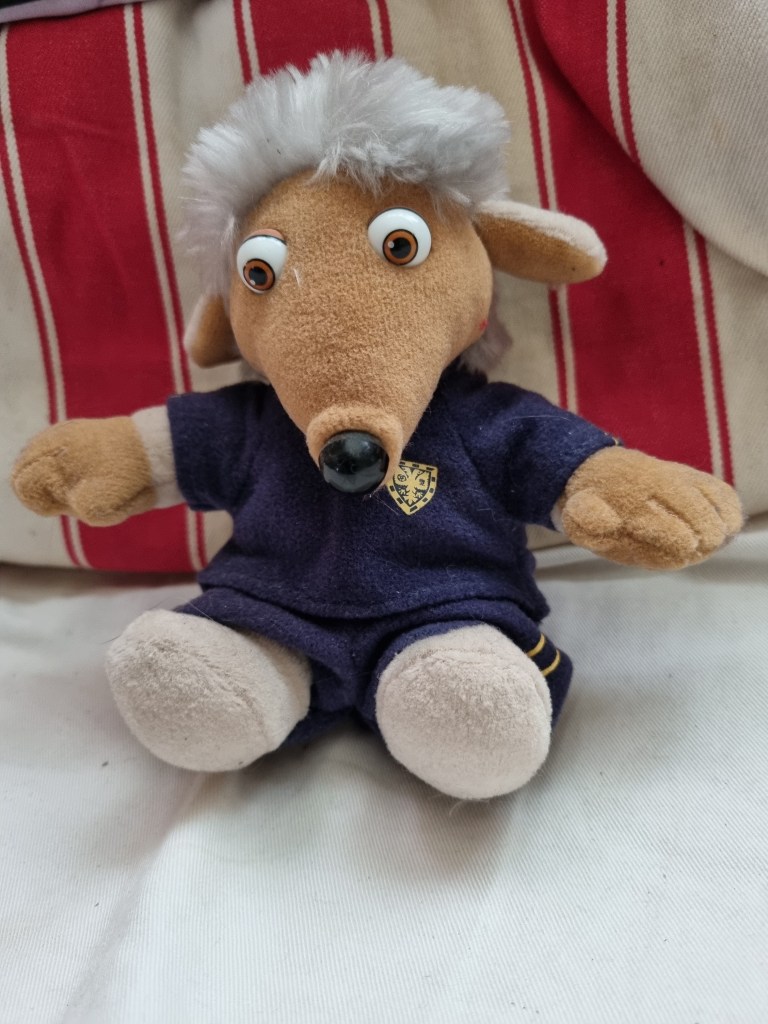
Back in 2004 as Ipswich Town were yet again failing to win yet another play-off tie (we have won just two out of nine ties), AFC Wimbledon were winning the Combined Counties Premier Division title.  Since then, Wimbledon have continued to collect promotions and Ipswich Town haven’t, and so today we find ourselves playing the 2004 Combined Counties Premier Division Champions for a third consecutive season.  Town and the original Wimbledon, the one that famously beat Liverpool in the FA Cup final, had of course met in both the Premier League and the Championship and my wife Paulene is the proud owner of a cuddly Womble in Wimbledon kit that dated from when the original club was being eaten alive; apparently when she bought it, it was the last one in the shop.

Shamefully, playing fast and loose with the future of our planet, I have again driven to the match today, still fearful of using public transport as Covid cases spiral upwards in number and the government gambles the lives of the clinically vulnerable so that money can change hands, as it does most of the time to be fair, but usually more obliquely. Parking my trusty Citroen C3 up on Chantry I stroll down through Gippeswyk Park beneath a sky of picturesquely heaped up clouds, the afternoon is warm but dull, as English summers often are.

Rocking up in Sir Alf Ramsey Way (formerly Portman Walk) at about twenty past two, I join a short queue for the Fanzone just as the steward checking tickets and Covid credential announces that the bar in the Fanzone is now closed.  Brimming with disappointment and thwarted thirst I leave the queue and hang about aimlessly for a few minutes watching the crowds and counting the number of people wearing face masks, I see four.  It really is as if most people are convinced the pandemic is over.  Quickly bored with my own company I trudge off between the supporters’ coaches artfully arranged outside the old Corporation tram depot and head for the Constantine Road gate to the ground, where I join a very short queue to show off my Covid credentials.  “Thank you Martin” says the female steward as I flash my NHS vaccination card; it seems a bit familiar of her and I wonder if we know each other; she’s one of the few people wearing a mask so I can’t properly see her face. 

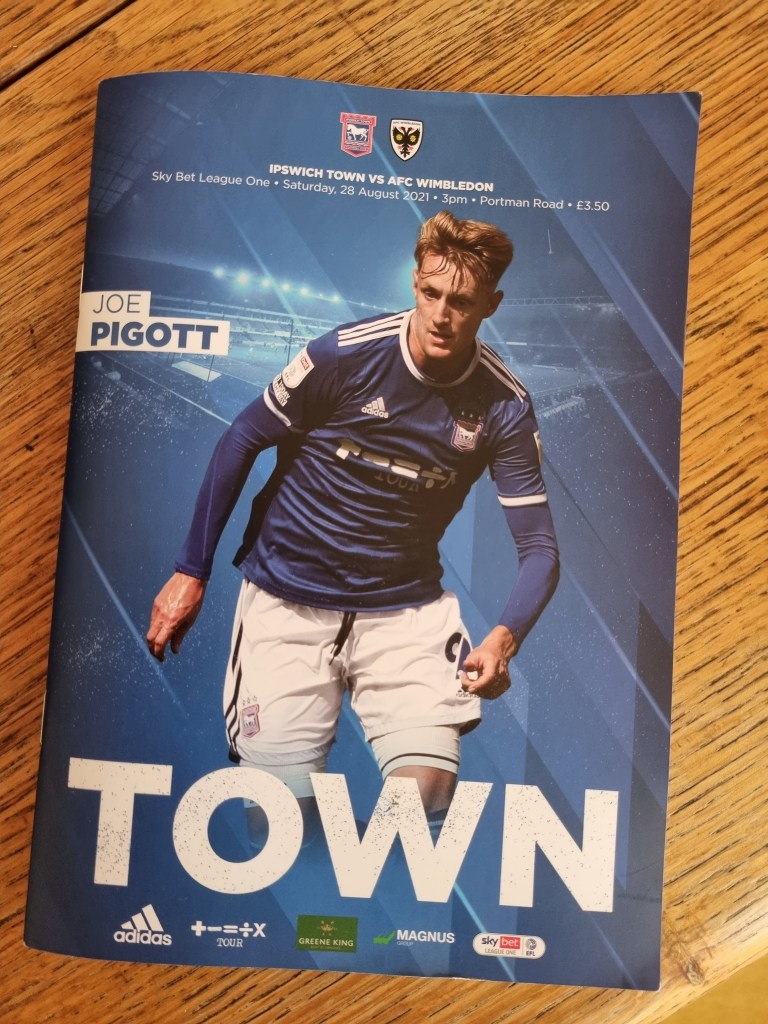
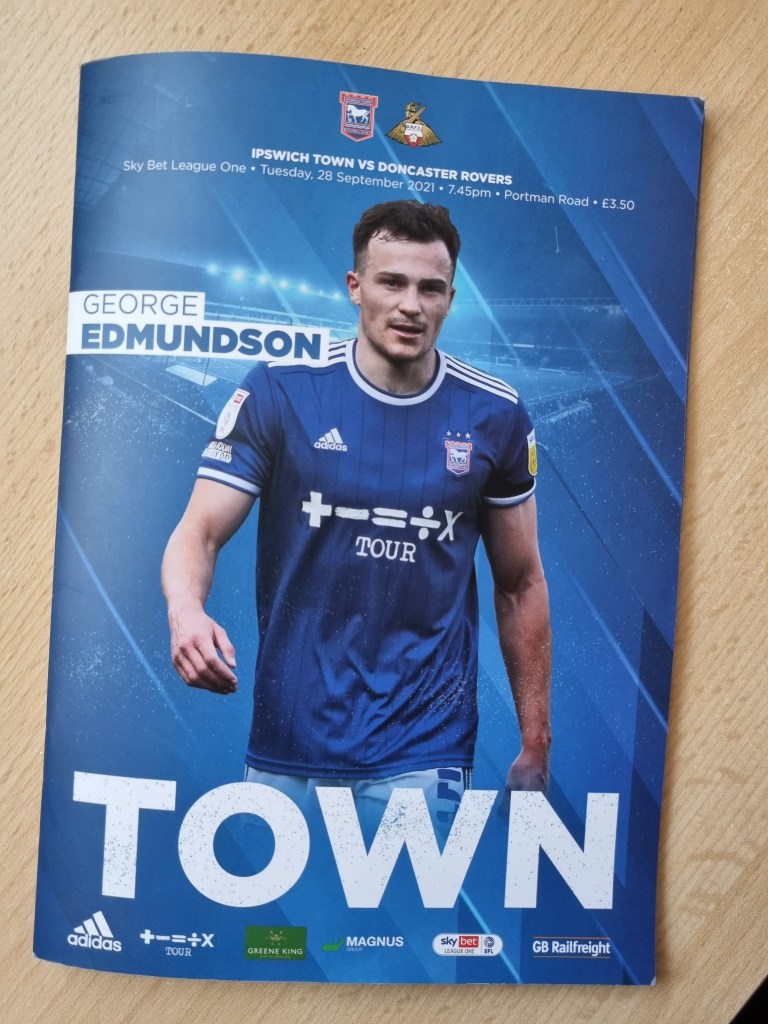
On the walk from the gate to the turnstile I purchase a programme (£3.50) and join a queue for turnstile fifty-nine because of the four turnstiles on this corner of the ground (numbers 59 to 62) it’s the only one that’s open. My favourite turnstile is number 62 because when using it I feel I am paying homage to Town’s Football League winning team of 1962.  Behind me in the queue a bunch of blokes chatter like excited youths, making weak jokes and commenting on there being only one turnstile open. “Cutting costs” suggests one.  “A bit naughty if it’s nearly kick-off” says another, weirdly imagining a scenario in which he hasn’t arrived twenty minutes before the game is due to start.  Another reads out loud the sign explaining what items are prohibited from the ground. “No tools” he chuckles, prompting his accomplices to each name a tool they would have liked to bring with them starting with a blow torch.

In the stand, ever-present Phil who never misses a game is already here with his son Elwood, but Pat from Clacton is on holiday in Ireland and Fiona, Ray and his son and his grandson Harrison are yet to arrive.  I speak with Phil who, in the course of our conversation explains that the bar in the Fanzone closes early because people hadn’t been drinking up in time to comply with the licence.  It starts to rain.

It’s still raining when the teams come on to the pitch and after a very brief ‘taking the knee’ which is so brief it looks a bit like a curtsy, the game begins beneath a battleship grey sky. Wimbledon get first go with the ball, lumping it towards the Sir Bobby Robson stand.  For the third consecutive home league match Town’s opponents are wearing a kit of all-red; I think back to when most club’s away kit was yellow shirts and blue shorts,  except of course for Oxford United and Mansfield Town, but we never played them in the 1970’s.

Continuing the 1970’s theme the lower tier of the Sir Bobby Robson are quickly into a rendition of Boney M’s 1978 Christmas number one ‘Mary’s Boy Child’, but with lyrics altered to celebrate Ipswich singing, Norwich running away, and eternal fighting because of Boxing Day rather than the birth of the Messiah.  Just four minutes pass and Town’s Scott Fraser has the first shot on goal.  After seven minutes the weather seems to be brightening up a bit and the Wimbledon fans chant “The animals went in two by two”, which seems a bit odd given that it looks like it is about to stop raining and any plans to build an ark will have been put on hold, particularly since no one is allowed to bring tools into the ground.

With about a quarter of an hour played Wimbledon’s Alexander Woodyard is the first player to get sight of referee Mr Rock’s yellow card after he fouls Joe Piggott.  “Your support is fucking shit” chant the Wimbledon supporters somewhat coarsely and unimaginatively and then Town’s Rekeem Harper takes a shot from 18 metres or so which is easily gathered by Wimbledon goalkeeper Nik Tzanev.  The clouds are parting to reveal blue sky and as if attempting to create some sort of allegory, Town breach the Wimbledon defence and make several forays down the right flank, with Kane Vincent-Young and Wes Burns getting in a number of crosses, although none of them is met by a Town player and when one is the shot is weak.  The first half is almost half over, and Town win the game’s first corner.  “Come on you Blues” I chant, to the apparent bafflement of those around me.

Town are playing some exciting football but have little presence in the penalty area.  “Chase it, put him under pressure” shouts a voice a few rows behind me as Joe Piggott pursues a punt up field.  Another corner comes to nothing after thirty-seven minutes and the linesman with the red and yellow quartered flag minces back to the half-way line as Tzanev takes the goal kick.  As the half draws to a close a man with a loud, penetrating, and annoying voice is sharing a conversation with all those around him, although I doubt any of us want him to.  We learn that he was ‘the editor’, of what we don’t know or care, but he was “furious with himself”.  I’m not too pleased with him either, he needs to find his volume control, or just shut up.  Happily, only a minute of added time is to be played so respite soon arrives.  It’s been a pretty good half, although I can’t help feeling that although Town look good enough to be winning, somehow we haven’t really created good enough chances; perhaps it’s because we still have not ‘gelled’ yet.

Half-time involves consumption of a Nature Valley peanut and chocolate protein bar and then a cupcake, which is one of a whole tray-full that Ray shares with those around him to mark the occasion of his retirement, something that is also recorded on page 55 of today’s programme.   The happy events of real-life retreat again into the shadows as the second half begins at two minutes past four and like last week there is a mysterious hush around the ground in the opening minutes, almost as if people are disappointed that the players have returned.  Within seven minutes however, Wimbledon’s William Nightingale fails to live up to the high ideals of his namesake Florence and comes closer to wounding Wes Burns rather than offering succour and from the resultant penalty kick, Joe Piggott gives Town the lead, placing his penalty in the right-hand corner of the goal as Tzanev stupidly dives to the left.  The Sir Bobby Robson stand reprises “Mary’s Boy Child” in a state of heightened ecstasy whilst the Wimbledon supporters chant “Sing when you’re winning, you only sing when you’re winning” to the tune of Guantanamera, thereby introducing a welcome Cuban folk vibe to the afternoon, something which is often conspicuously absent from Portman Road.  William Nightingale’s name is recorded in Mr Rock’s notebook to punish him further for being so unlike Florence.

With Town ahead Portman Road rocks to Boney M and thoughts of victory, and within two minutes Wes Burns doubles Town’s lead collecting a crucial pass from Kane Vincent-Young and smacking a fine shot across Tzanev into the far top left-hand corner of the goal.  Town will surely win now after four fruitless matches; on the basis of what has happened in the previous fifty-four minutes our lead is unassailable.  Four minutes later Wimbledon win a free kick, the ball skids off the top of Luke Woolfenden’s head and is set up ideally at the far post for Wimbledon’s Ben Heneghan, whose name makes me think of Feyenoord’s Wim Van Hanegem, to head down past Vaclav Hladky and make the score 2-1.  It must be Wimbledon’s first goal attempt on target.  “Bloody hell”, I think to myself.

“I don’t rate him” says a voice sitting behind me blaming Hladky for the goal “No, I don’t” says a neighbouring, voice “I don’t see how there’s any difference between him and Holy”.  It’s a point which I will hear no lesser expert than Mick Mills echo over the airwaves of Radio Suffolk as I drive home from the match in an hour’s time.  The discussion behind me continues as Hladky launches the ball up field; “He just boots the fuckin’ ball, he don’t look for no one do ‘e?

Dissatisfaction with the goalkeeper is however balanced by satisfaction with Wes Burns, “He’s superb, he is, he’s a helluva player” and it’s true, he is playing very well today and is linking up to goal scoring effect with Kane Vincent-Young down the right.   Within ten minutes Wimbledon have made their permitted three substitutions bringing on the more exotically and lengthily named Nesta Guinness-Walker and Dapo Awokoya-Mebude for plain old Luke McCormick and Aaron Pressley and swapping the fifty percent exotic Cheye Alexander for equally exotic Jack Rudoni, both of whom sound like they may possess an Equity card.

Seventy-four minutes of the game have got up and gone and Hladky has to save a shot from Ollie Palmer giving Wimbledon a corner.  Four minutes later and a hobbling Wes Burns is replaced by Janoi Donacien and less understandably Kane Vincent-Young is replaced by Sone Aluko.   The excellent Hayden Coulson also appears to be injured and is replaced by Matthew Penney.  Vaclav Hladky is booked for time-wasting, although it looked as if he merely didn’t understand Mr Rock’s wafting hand gestures about where a free kick should be taken from.  “I can’t help falling in love with you” sing the Wimbledon supporters enigmatically.  What is it with football supporters and naff “adult orientated” popular music?

“The momentum has gone” says one of the voices behind me and then repeats the phrase, perhaps for added emphasis, but possibly because it’s true.  Wimbledon now press as they have never done before in the game, it’s as if the two teams have swapped shirts.  The Wimbledon players seem to want to score a goal whilst the Ipswich players just want to get indoors and have a shower before driving home in their sickeningly ostentatious cars.  Time added on arrives and there are six minutes of it, Fiona and I roll our eyes.   Five minutes into the additional six minutes and what we have come to think of as the inevitable happens; a Wimbledon corner is headed goalwards by Ben Heneghan, Hladky saves but doesn’t catch the ball and Jack Rudoni boots the ball over the goal line, unable to miss, even if by some freakish desire to see Ipswich win, he had wanted to.

The final whistle follows soon afterwards and predictably a number of attention seekers in the crowd of 19,051 and people who were perhaps spoiled as children boo because their team hasn’t won.  Maybe someone will buy them an ice cream on the way home to appease their bawling and moaning.  I stay to applaud the Town players from the field and see them hang their heads in disappointment.  I’m disappointed, we’re all disappointed, but football is that sort of a game and when I get home I shall flush that cuddly Womble down the toilet.

Ipswich Town 2 Morecambe 2

 A year ago, the 2020/21 football season began for me in my back bedroom as Town met Bristol Rovers in the League Cup via the airwaves of Radio Suffolk and the descriptive powers of Brenner Woolley and his esteemed sidekick and expert summariser Mick Mills.  But fate, as fickle as it is, has taken an apparent turn for the better and today as the 2021/22 season begins I am returning to Portman Road along with 21,000 or so other souls who have so far survived the pandemic.  With luck I shall never have to endure another ninety-minutes of radio commentary ever again.
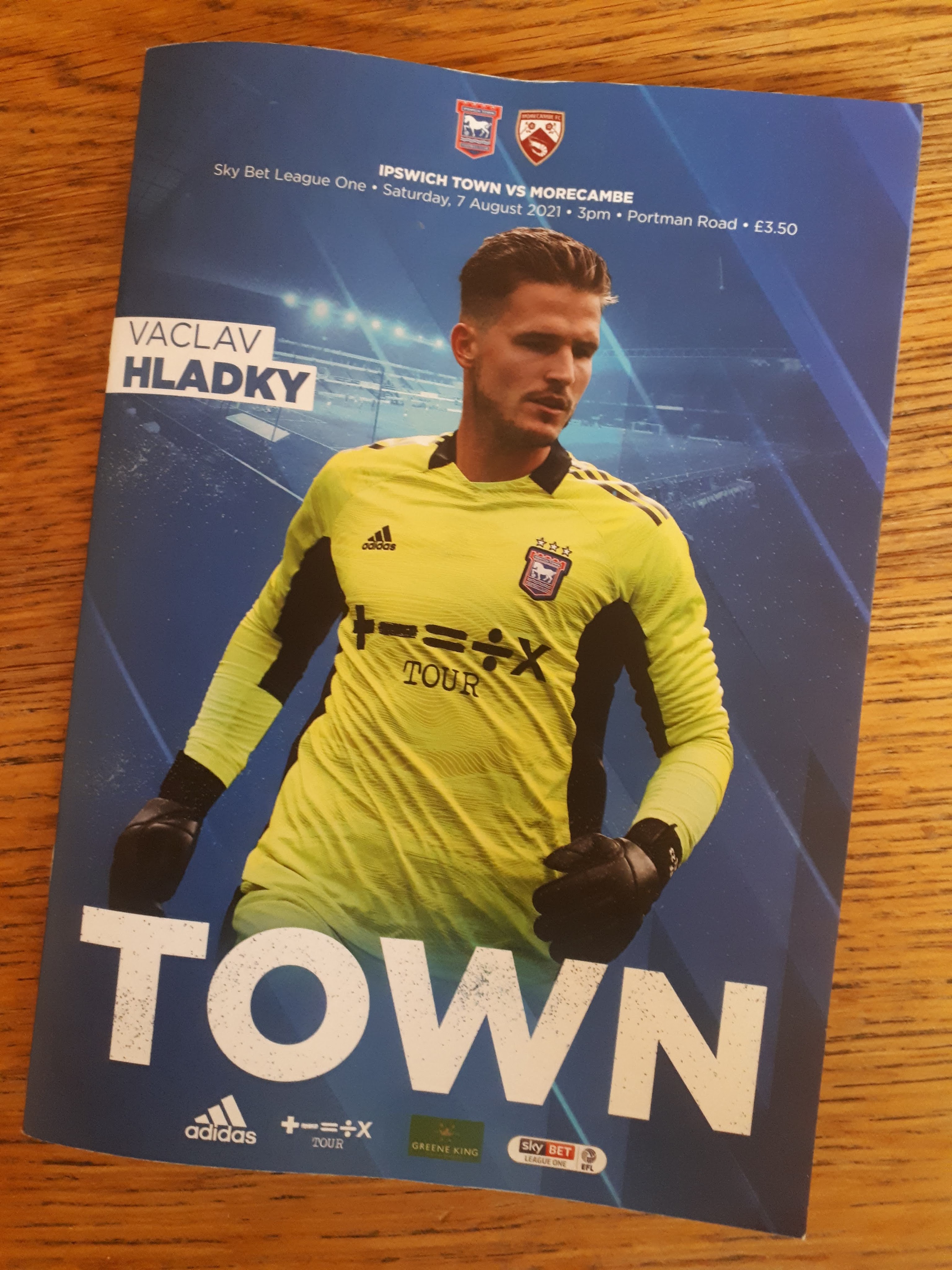
As a naturally lazy person, going out again on a Saturday afternoon is something of an effort, but as ever I surprise myself with what I can achieve if I put my mind to it.  At two o’clock I rock up in my trusty Citroen C3 on Chantry estate where I park before taking a brisk walk through Gippeswyk Park, beneath the London  to Stowmarket main rail line, through what was once the site of Reavell’s factory and over the Sir Bobby Robson bridge to Constantine Road where I meet my friend Mick, who has made it easy for me to find him amongst the crowds by  telling me through the medium of the mobile phone that he would be standing next to a pink ice-cream van. Mick, an ethical man, is true to his word; someone less like Boris Johnson I have yet to meet. Mick and I haven’t seen each other in eighteen months but our conversation is oddly brief. Neither of us seems overly keen on entering the fanzone for a beer or to experience whatever other joys it has to offer, and what with the queues to get in we decide within ten minutes to leave further socialising for another day and go our separate ways.  I head off to purchase a programme (£3.50) from the nearest convenient kiosk before weaving my way between the buses and coaches of Beeston’s and Whincop as they disgorge rustic supporters from Hadleigh and Peasenhall.  A programme is an essential purchase today in order to have any clue  about the identity of the team.  Having safely weaved my way I join a queue to have Covid credentials checked before entering the ground in Constantine Road. In the queue behind me a “well-spoken” young man seems oblivious to the pandemic and is turned away, having no proof of vaccination or negative lateral flow test.  Did he really think he would be able to just turn up and get in? Apparently, he did.  I enter the Sir Alf Ramsey stand through turnstile number 60 and cheerily thank the operator for letting me in.  For the gatekeepers to a world of dreams and possibilities turnstile operators are much underrated and somewhat taken for granted; their replacement with automatic scanning equipment that beeps in lieu of hoping I enjoy the match is a sad loss.
Out on the lower tier of the Sir Alf Ramsey stand I re-acquaint myself with Pat from Clacton, ever-present Phil who never misses a game (except when games are played behind closed doors), Phil’s son Elwood and Ray.  There is change however, and next to Pat from Clacton is sat Fiona, and the old dears who used to sit behind me but then sat in front of me are conspicuously absent; I do hope they’re okay.  It is good to be back nevertheless, even if hardly anyone except the stewards is wearing a facemask.

From the players’ tunnel a white t-shirted and trackie-bottomed Paul Cook appears to take the crowd’s applause, he’s not a sophisticated looking man sartorially, as I guess his scouse accent foretells. The teams follow soon afterwards and before the game begins a picture of the recently deceased Paul Mariner appears on the scoreboard and we are told that there will be a minute’s applause in his memory, but before the announcer can finish his sentence or the referee can blow his whistle the applause begins; it’s a case of premature appreciation.

Applause over, the Beatles’ Hey Jude strikes up like a metaphorical post-coital cigarette; no one joins in and today’s visitors Morecambe kick-off their first ever game in the third division with a hoof up-field. For those who combine a love of decimal anniversaries and symmetry it is vaguely appropriate that Morecambe are playing Town, who sixty years ago this month began their first ever season in what I believe people now call the Premier League; Town were at Bolton, they drew 0-0.  This season is also the sixtieth anniversary of Morecambe winning the Lancashire Combination league for the second time.

Not much happens to begin with. Morecambe are the first to win a corner. I enjoy the sight of a Town player with a headband, Wes Burns; historically many of the greatest footballers have had plenty of hair, Netzer, Best, Kempes, Pirlo are good examples.  Less enjoyable is Morecambe’s kit, a boring all red creation with white bits at the sides of the shirts and a diagonal white band which would have been okay if it didn’t fade out like a peculiar chalky skid mark.   My attention is also claimed by the Morecambe goalkeeper, Letheren, which is a suitably violent sounding surname for a man with the build of a night club bouncer.

Oddly, given the absence of anyone Spanish in either team or anyone even dressed as a matador, the North Stand break into a chorus of Ole, Ole, Ole.  Perhaps I’m wrong however, and they are singing Allez. Allez, Allez to Frenchman Toumani Diagouraga who played for Town under Mick McCarthy but today is appearing for Morecambe: I guess I’ll never know.  At ten past three Town are awarded a free-kick when Scott Fraser is knocked over; it’s the ninth minute of the game and some supporters attempt a half-arsed attempt at another minute’s applause for Paul Mariner, it’s an effort doomed to failure so soon after that first over eager applause. The free-kick flashes past Letheren’s right hand goal post to gasps of smothered hope from those around me.

At fourteen minutes past three Kane Vincent-Young is victim of the game’s most blatant and spectacular foul as he pushes the ball past Liam Gibson and the antediluvian looking full-back takes him down at waist height.  Referee Mr Craig Hicks, who will later go all out to set himself up as an early contender for the worst referee of the season barely speaks to him.  “It’s going to take quite a few games to gel” I hear Pat say to Fiona as the free-kick comes to nought.  The concept of ‘gelling’ is being discussed everywhere in Ipswich right now, my only hope that when it happens it does so in the ‘coming together’ sense of the word rather than any sort of unpleasant stiffening or solidifying.

Joe Piggott stoops to head a glancing header onto the roof of the net and I wonder if he is known by his team-mates as Piggy.  “Stand up if you hate the scum” chant the North Stand for no apparent reason, particularly given that they are all standing up already. Then Morecambe score through Cole Stockton but courtesy of the Ipswich defence suffering collective amnesia with regard to why they are all wearing football kit and boots.  “I’m Morecambe ‘til I die” chant the 356 Lancastrians in the corner of the Cobbold Stand perhaps putting into song what they imagine the budding comic partner of Ernie Wise , John Bartholomew said when he changed his name to Eric.

Despite being behind, I’m not worried, but I quite can’t decide if it’s because I think our new team will ultimately overcome or if I no longer care.  Toto Nsiala goes off injured to be replaced by Janoi Donacien and I’m struck by how unnaturally neat the hair of the linesman with the red and yellow flag is; and how he somehow reminds me of Neymar, as if Neymar had a really dull older cousin or uncle.  I am shaken from my reverie by a shout of “Do ‘im, ee’s shit” from somewhere behind as Kane Vincent-Young again comes faces to face with Liam Gibson.  The first half drags on past a quarter to four. “Come on Ipswich, come on Ipswich” chant what sounds like a most of the crowd, but soon both Town and Morecambe go off because it’s half time, and we still trail.

Half-time passes in a blur of conversation and a Nature Valley peanut and chocolate protein bar, just like it always did. The game resumes at the ridiculously late time of nine minutes past four.  Piggy soon has a shot saved and then Morecambe’s Anthony O’Connor is the first player to be booked as he sends Chaplin’s hat and cane flying.  It starts to rain and I catch the lovely scent of damp air on a summer’s afternoon as the North Stand shout “Wanker, wanker, wanker” at the ever more inept Mr Hicks.  Town’s left back Matthew Penney is felled by an outstretched leg but no free-kick is given provoking chants of “You don’t know what you’re doing”, which I decide is also probably true of whoever cut Luke Woolfenden’s hair.

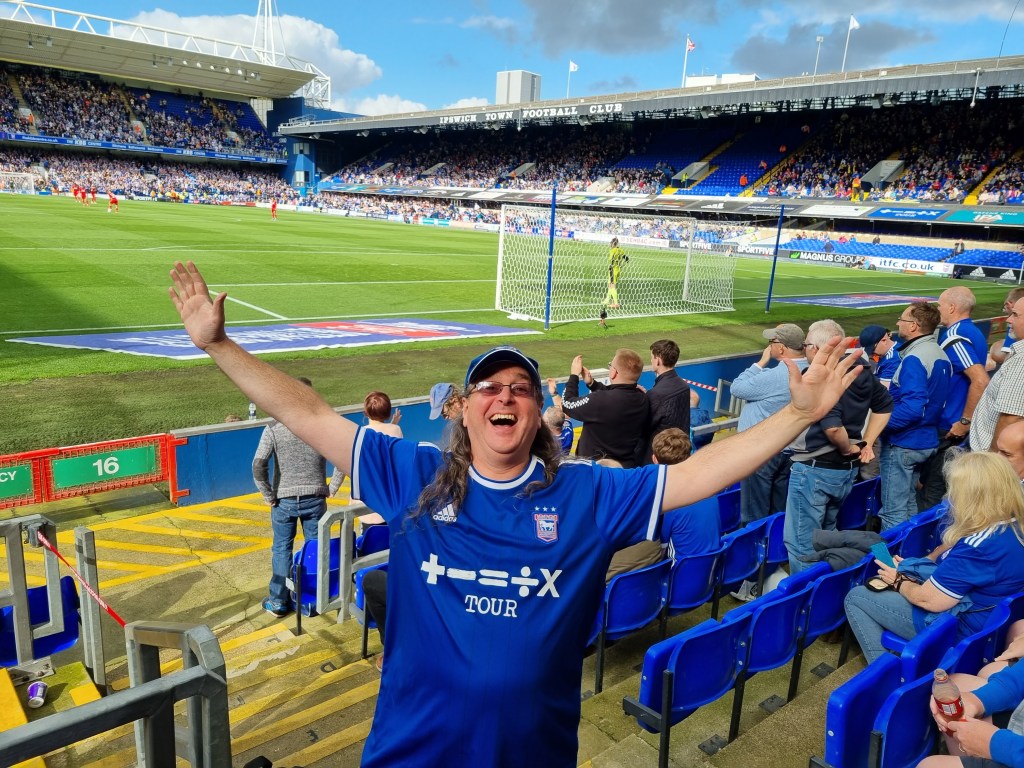
An hour has passed and then we score, Scott Fraser leathering the ball past Letheren after a one-two with Chaplin.  We’ll win now won’t we?  We’ve been looking by far the better team, and Morecambe have hardly been in our half.  Parity lasts eleven minutes and then Luke Woolfenden, possibly momentarily paralysed by a flashback to a recent experience in a barber’s shop gives the ball away to Cole Stockton who merely has to run unopposed at the goal, drop a shoulder or two to fox Town’s latest east European goalkeeper, Vaclav Hladky, and roll the ball into the goal net. Bugger.

Pat from Clacton was right, it will take time to gel.  But then we don’t panic, we just carry on as we were, showing faith in ourselves and putting in plenty of effort despite the best efforts of Mr Hicks, who proceeds in the space of six minutes to book Lee Evans, Matthew Penney and then James Norwood who replaces Piggy.  The oddly named Macauley Bonne also enters the field in place of Conor “Charlie” Chaplin.  But time has drifted by and we are already into the four minutes of added-on time. I admit I have given up hope and have accepted defeat; good luck to plucky little Morecambe I’m thinking in as patronising a manner as I can muster. But then James Norwood heads the ball on, the oddly named Macauley Bonne collects its and sends a fine right-footed shot beneath the sprawling Kyle Letheren and into the goal. We are probably not going to lose after all I think, and I’m right, we don’t.

It’s been a funny afternoon but an entertaining one nevertheless, an afternoon of Lee Evans, C Chaplin, Morecambe and wise words from Pat from Clacton about taking time to gel. 

Ipswich Town 5 ABBA 5

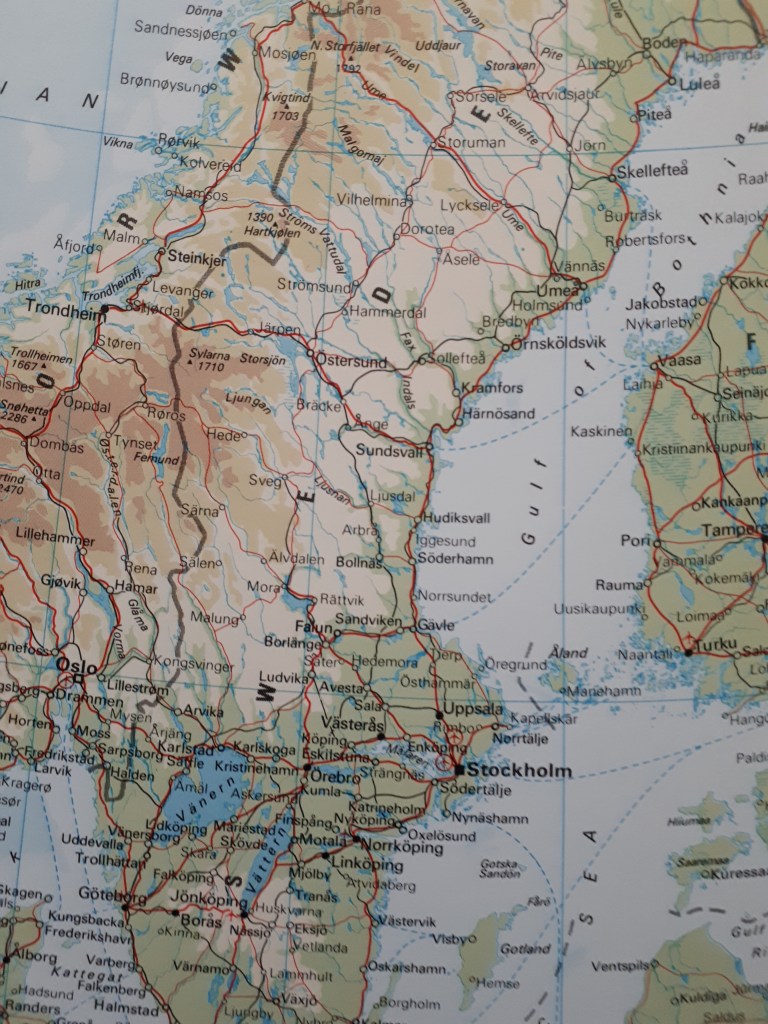
The football season is over save for the silly play-offs, and now it’s the height of Spring,  and with little else to occupy him a young man’s fancy lightly turns to thoughts of the Eurovision Song Contest;  or maybe not.  But last week’s transmission of the bizarre, annual , musical  television ritual extravaganza was inevitably accompanied by the airing of a clip show on BBC4 of past performances by the competition’s only notable success, Abba.  I have never bought, stolen, borrowed or owned an Abba record, tape, download or CD, but I will admit to being unable to suppress a smile when I hear one played.    Equally, I couldn’t resist watching that clip show and felt rewarded when it brought back memories of a road trip I made in the summer of 1995, which took me and my then girlfriend via Parkeston Quay, DFDS Seaways ferry, Gothenburg, Stockholm, Uppsala and Sundsvall to Pitea in northern Sweden, where we stayed with my girlfriend’s pen friend and her husband.  It was a very long drive for which the soundtrack for several stages of the journey came courtesy of a CD of Abba Gold belonging to my girlfriend.

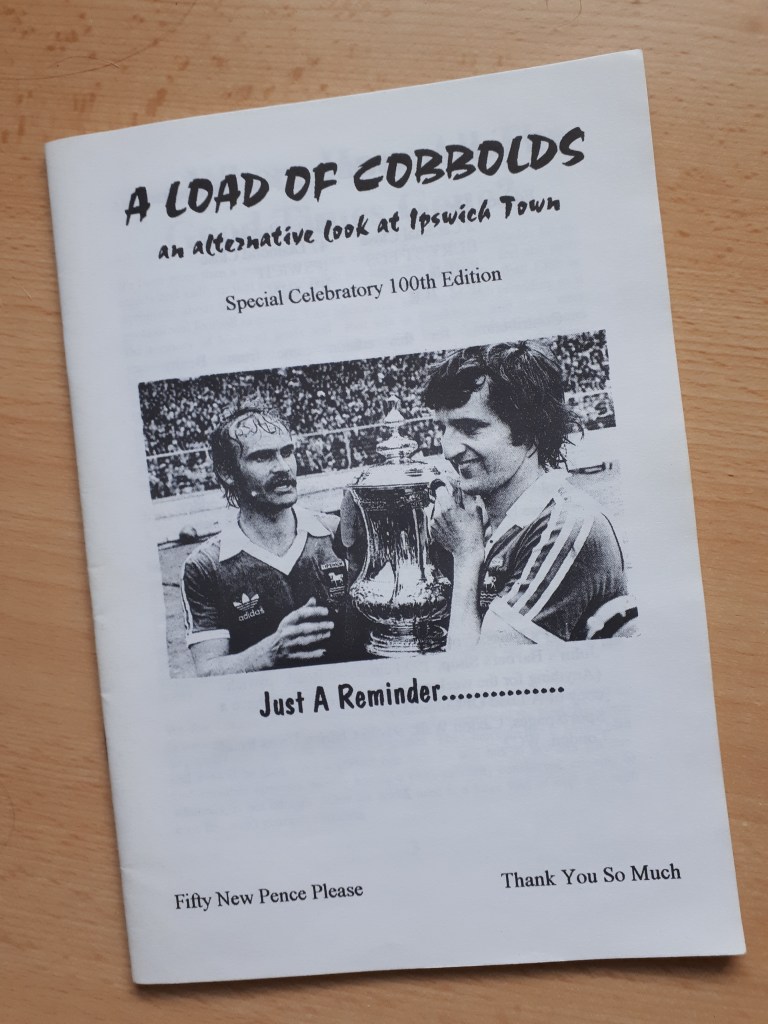
The experience of listening to Abba on that road trip has stayed with me and it led to an article in the erstwhile Ipswich Town fanzine A Load of Cobbolds.  Now, in the spirit of nostalgia inspired by the fortieth anniversary of Ipswich Town’s UEFA Cup win and  in the absence of anything better to do I have reproduced that article below, updating it to modern times where necessary:

When you’re an eleven or twelve year-old football and pop music loom large as pre-pubescent priorities.   I bought my first record (Happy Christmas (War Is Over) by John Lennon & Yoko Ono) in 1971,  the same year that I started watching Ipswich Town, and I  soon began to feel that footie and pop music were somehow inextricably linked. The late Sixties and early Seventies was a time when it was easy to confuse footballers with pop stars and my two worlds satisfyingly collided.  The fashion for any bloke who aspired to being hip and trendy was an enormous thatch of hair coupled with equally vast sideburns.  Squeezed into a pair of bollock-hugging, crushed-velvet flairs and sporting a deafeningly loud shirt,  Ian Collard or Rod Belfitt might have been members of The Hollies, or Kevin Beattie a member of Nazareth.

The similarities in the appearance of pop stars and footballers subsided a bit as the Seventies wore on and sadly, sartorially Punk Rock never seemed to catch on with any footballers at all.  There were however still some startling lookalikes within the ranks of the PFA, I thought.  It could have just been my addled perception, but I always felt that Arsenal’s Frank Stapleton and Shakin’ Stevens were the same bloke.  Moving on into the 1980’s the separation at birth of Oldham Athletic’s Andy Ritchie and Jimmy Somerville was ‘well documented’ at the time, but less well-known is the fact that Roy Keane and Sinead O’Connor were also twins.

More amazing than these superficial similarities, which admittedly are largely the invention of my fevered imagination, is the very precise correlation between the success of one particular football club during the 1970’s and early 1980’s and a particular pop group.  Both were at their peak between 1973 and 1982. The football club of course was Ipswich Town and the pop group was Abba.

If you take time to trawl through the collected works of the famous Swedish songsters, as Dave Allard might have called them, you will not only enjoy a richly rewarding aural experience, but you will soon reach the conclusion that the fact that Town and Abba were both at the peak of their powers over precisely the same period of time is no coincidence.   Listen carefully to the lyrics and you will be able to trace the history of the Town’s success through that glorious era.  You will find that listening to Abba Gold (Greatest Hits) is as close to a religious experience as you can hope to get;  something akin to an Ipswich Town Dreamtime, harking back to an epoch when Portman Road was inhabited by ancestral figures of heroic proportions who possessed supernatural powers.   In the film Muriel’s Wedding the eponymous Muriel says that Abba’s songs are better than real life.  Now, as we sit in the murky depths of the third division and look back at Town’s glorious past you too will believe this is true.

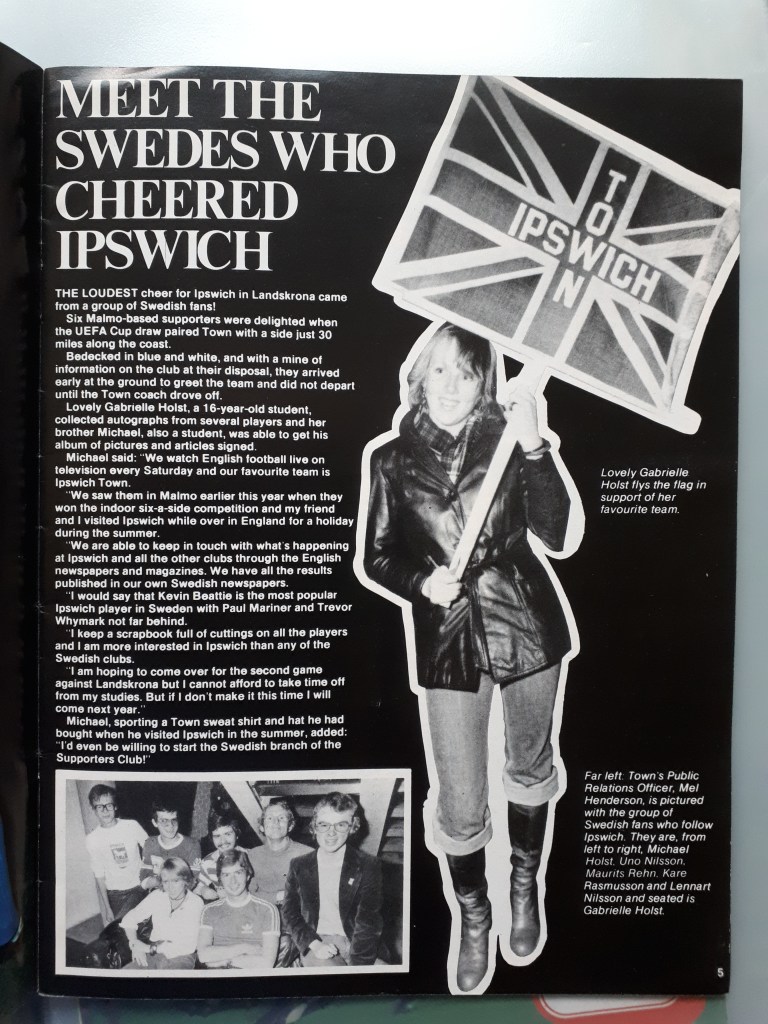
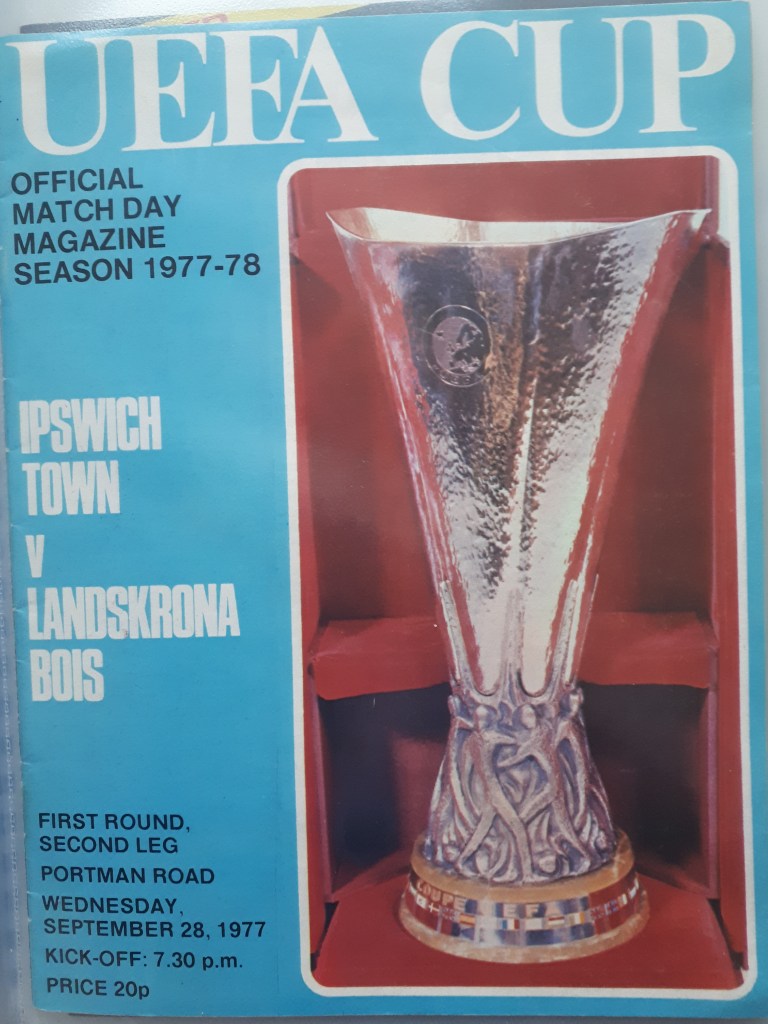
As you might expect from Europe’s foremost supergroup many of the songs make reference to Town’s European campaigns of that era in the UEFA and European Cup Winners’ cups.  It is likely that it was through Town’s exploits on the continent that the talented Swedes first became Town supporters, although we were actually only drawn against Swedish opposition  once when in 1977 we met Landskrona Bois and most inconveniently The Stranglers played the Ipswich Gaumont on the very same night as the home leg.  Naturally, I missed The Stranglers concert and sadly never got a second opportunity to see them.    There is clearly a reference to Town’s UEFA Cup triumph over Lazio in the title of the number one hit ‘Mamma Mia!’, a song which also contains a lyric that suggests one of Abba had perhaps had a brief flirtation with a Town player or supporter and may explain the uncanny connection between Abba and the mighty Blues;

“Yes, I’ve been broken hearted, Blue since the day we parted.”

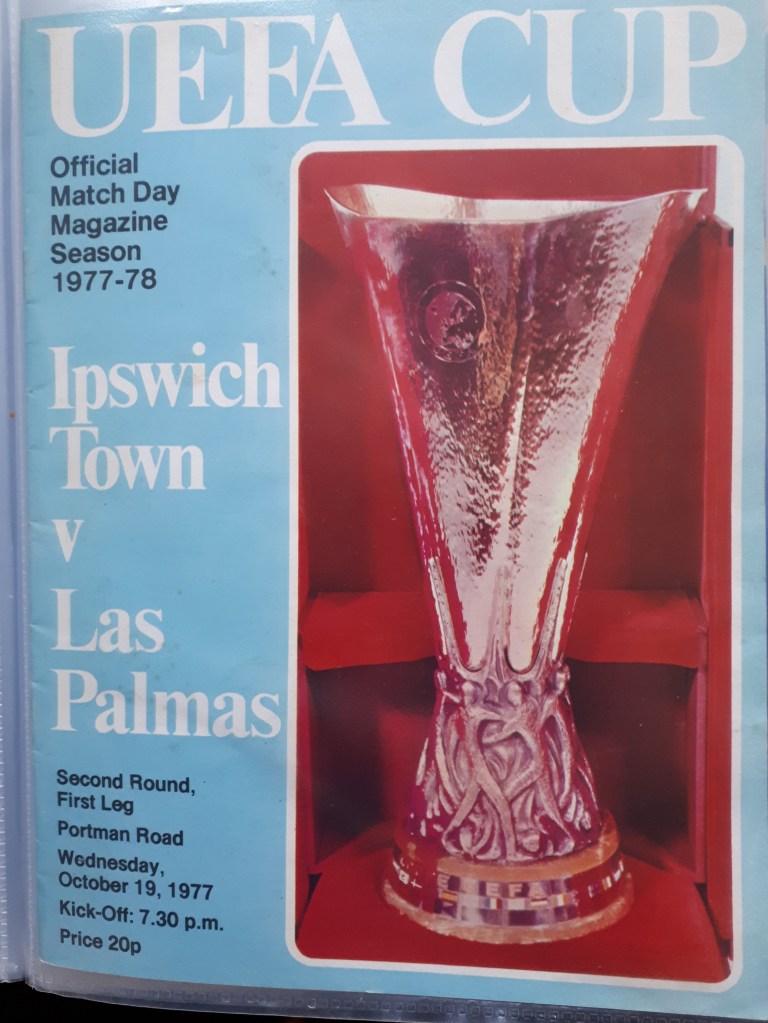
The moving ballad ‘Fernando’ is sung to an imaginary Spanish fan and recalls those sultry September and cooler autumn evenings when we entertained Iberian opposition from Real Madrid, Las Palmas and Barcelona.

“There was something in the air that night, the stars were bright, Fernando….

Though we never thought that we could lose, there’s no regrets. If I had to do the same again I would, my friend Fernando”

That last line referred to the fact that Town were twice drawn to play Barcelona, whilst the line  before that refers to our having lost both ties despite being confident after winning the first leg.  Another song, ‘Super Trouper’, whilst still referencing games played under floodlight, perhaps because of the lack of daylight hours in Sweden during the English football season, refers to an individual player and employs little-known Swedish rhyming slang in a thinly disguised paean to goalkeeper Paul Cooper.

“Super Trouper lights are gonna find me shining like the sun, Smiling having fun feeling like a number one”

In the 1978 Abba hit “Take a chance on me”   the subtle Swedish Blues fans reveal the little known story of how Frans Thijssen successfully pleaded with Bobby Robson to let him join his compatriot Arnold Muhren at Portman Road and to try his luck in English football. 

Honey I’m still free, take a chance on me. If you need me let me know and I’ll be around. Gonna do my very best and it ain’t no lie, if you put me to the test, if you let me try”.

Although those days were such wonderful times for Town, not every song described a happy or uplifting event.  There were sad days too at Portman Road back in the Seventies and hard decisions had to be made for the good of the team.  The 1977 ‘Number One’ hit ‘Knowing Me, Knowing You’ was about the departure of former Portman Road favourite David Johnson, the one-time ‘King of Portman Road’, who left Town to join rivals Liverpool.  In the song, the reflective Scouser looks back on the good times he has had at Portman Road since his move to Town from Everton four years earlier.

  “Memories, good days, bad days, they’ll be with me, always”

David appreciates however that his recent form has not been good and in the circumstances a move is the best thing for everyone.

  “Knowing me, knowing you, there is nothing we can do, we just have to face it this time we’re through; Breaking up is never easy I know but I had to go, Knowing me, knowing you it’s the best I could do”.

Back in the Seventies, money wasn’t the driving force in football that it is today.  Nevertheless, the spending power of clubs such as Manchester United, who were able to make expensive signings virtually every season despite being rubbish, rankled with Bobby Robson and he longed to be able to make big signings for Town.  Abba’s “Money, Money, Money” was a song about his frustration. 

“In my dreams I have a plan, if I got me a wealthy man…  “

”All the things I could do if I had a little money…”

“Money, money, money, always sunny in a rich man’s world”

Both ‘Knowing Me, Knowing You’ and ‘Money, Money, Money’ showed something of the downside of those glory years and as we look back on those days from the fag-end of the first quarter of the miserable twenty-first century a melancholy aura pervades our memories, in part because ultimately Town failed to win the League Championship that we deserved, but perhaps also because even at the time we knew it all had to end one day, and when Bobby Robson left to manage England in 1982 we secretly knew it had.  Abba knew it too and two of their hits put these feelings in to sharp perspective.  The haunting melody of ‘Winner takes it all’ explores the pain that looking back on the good times would bring; it begins:

 “I don’t want to talk about things we’ve gone through, though it’s hurting me now it’s history”

Abba’s last big hit ‘Thank you for the music’ is sung from the perspective of our legendary club captain Mick Mills who reminisces, having regretfully left Town for Southampton, about the joy and beauty of those days between 1973 and 1982.  If you’ve listened to the slightly dull monotone of Mick’s summaries as he sits alongside commentator Brenner Woolley on BBC Radio Suffolk, you will appreciate the opening lines to this song; 

“I’m nothing special in fact I’m a bit of a bore, If I tell a joke, you’ve probably heard it before…”

But Mick’s talent was as full-back and captain of the greatest Ipswich Town side ever and this was the ‘music’ referred to in the title of this most moving of Abba songs.  This was a song from the heart of ‘Mr Ipswich Town’, Mick Mills, and it is truly uncanny how Mick with his blond locks and luxurious facial hair even looks like a bit like a composite of Bjorn Ulvaeus and Benny Anderson the song’s composers.  This song is the ultimate celebration of those ten seasons at the top in which Mick thanks fate for the glorious hand he was dealt.

“I’ve been so lucky, I am the girl with golden hair

I want to sing it out to everybody

What a joy, what a life, what a chance

So I say Thank You for the music

The songs I’m singing

Thank you for the joy they’re bringing…”

The songs of Abba define and encapsulate a golden period in the story of the twentieth century and the time before Thatcherism and neo-liberalism destroyed your innocence.  Abba’s songs, their success and the glory of Ipswich Town, the nicest professional football club the world had ever known did not happen together by coincidence.  The proof is in the lyrics of the songs, and shows that cosmic forces were at work.  Those of us who lived through the 1970’s were truly blessed to have experienced the music of Abba as it happened, but we are doubly blessed to have been Ipswich Town supporters too.

Thank you for the music Bobby Robson and Mick and all the lads who played for us between 1973 and 1982 , and thank you for the music Agnetha Faltskog, Benny Anderson, Bjorn Ulvaeus and Anni-Frid Lyngstad.