Stanway Rovers 0 Maldon & Tiptree 0

It’s the third day of August and the domestic football season is yawning and stretching after a  long sleep throughout June and July.  However, in the same way that an early morning shower, or a nice cup of tea, will bring enjoyment and refreshment at the start of another day, so the FA Cup also invigorates and refreshes and quickly brings a sense of purpose, and today is the start of this season’s FA Cup (although some games were played last night).  The ‘proper’ rounds of the FA Cup of course do not begin until the league clubs enter in November, and non-league football clubs have to qualify to get into the ‘proper’ FA Cup and so obsessed with hierarchy is the Football Association that before the first qualifying round there is a preliminary round, and before that is the extra preliminary round, and that’s what’s happening today.  It’s as if the FA is saying to the smallest clubs, at the lowest levels of the league pyramid “You are nothing and you have no money, so whilst we’ll let you play in the FA Cup, it won’t be the ‘proper’ FA Cup”   Worse still, some clubs, those below Step Nine, aren’t even allowed to enter the extra-preliminary round. 

I have toyed with the idea of attending any number of possible FA Cup fixtures today with Long Melford, Cornard United, FC Clacton, Basildon United, Little Oakley, Stowmarket Town, Heybridge Swifts, Ipswich Wanderers and even Harleston Town all having home ties that I could surely get to.  But as a lazy person who economises on effort wherever possible, I eventually choose the fixture that is closest to my house and therefore easiest to get to.   I briefly consider catching the bus, but the service is only hourly and whilst I would arrive in plenty of time for kick-off, I can’t be certain that I would make it back to the bus stop in time after the final whistle.  So it is that I set off forty minutes after the bus, just before half-past two, in my planet saving Citroen eC4 to travel the 5.76 kilometres to New Farm Road and ‘The Hawthorns’ where at three-o’clock Stanway Rovers of the Essex Senior league will be playing Maldon & Tiptree of the Pitching-In Isthmian League North.

It’s been a sultry morning under cloudy skies, but now the sun is shining as I edge through the car park and am directed by a man in a dayglo tabard into what is possibly the last available parking space.  The car park is like Brighton beach without the nudists, and pebbles crunch under foot as having left my car I head for the club house and the bar, where I am delighted to see real ale for sale.  With kick-off only twenty minutes away I buy just a half a pint of Colchester Brewery “Romans go home”, which of course they did at the beginning of the 5th century.   At £2.30 it seems rather expensive but the beer is tasty and I quaff it quickly before I trudge back across the beach between the cars to the turnstile, where a queue has formed, largely due to the time taken for someone up ahead to pay by debit card, although cash is also accepted.  To heighten and prolong my sense of eager anticipation and impatience to see the game, and that of the people behind me, I too pay by card (£8.00).

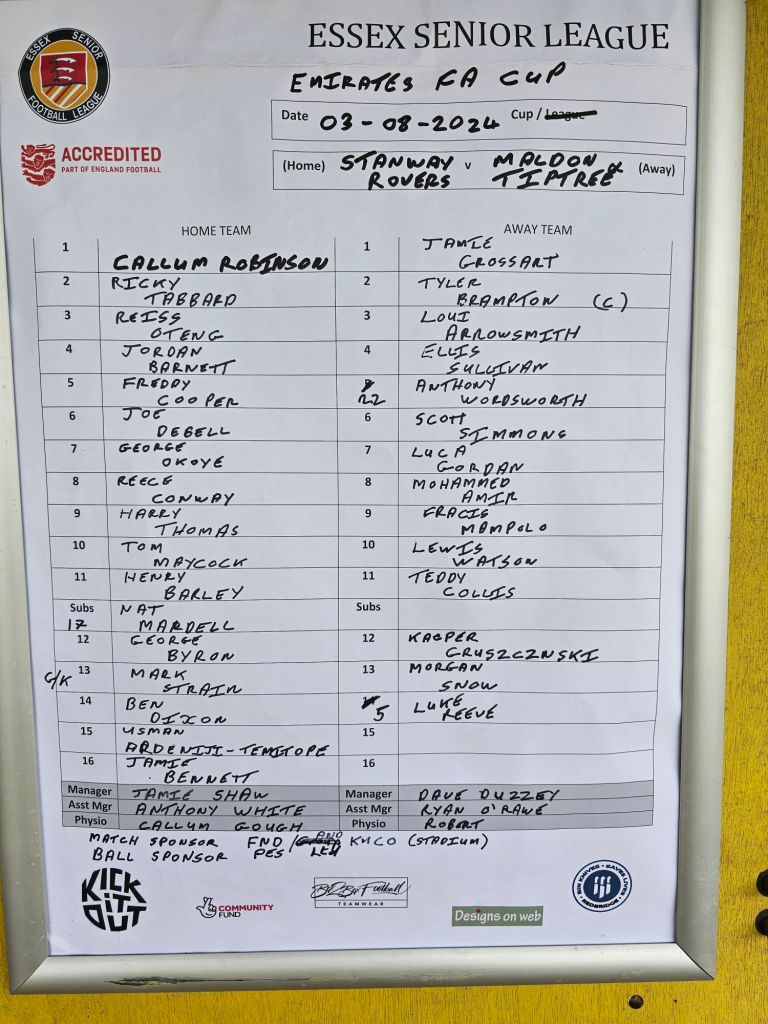
Stepping inside the ‘stadium’ I exercise a visual stock take and don’t think the place has changed much since I was last here, which was on a cold day in December 2013 to see Stanway Rovers lose improbably by a single goal to mighty Wivenhoe Town.  There may now be a few more bus shelter style stands and a couple less portacabins but that’s about it.  What does differ from eleven years ago is that there are no programmes on sale today but a faded, laminated A4 poster displays a QR code for digital programmes, although these turn out to be last season’s, not today’s game.  I ask a man in a dayglo gilet if there is a programme today; he doesn’t know, although trying to help he asks another man in a dayglo gilet who doesn’t know either but responds in a manner which suggests it’s nothing to do with him and he prefers not to answer questions about anything.

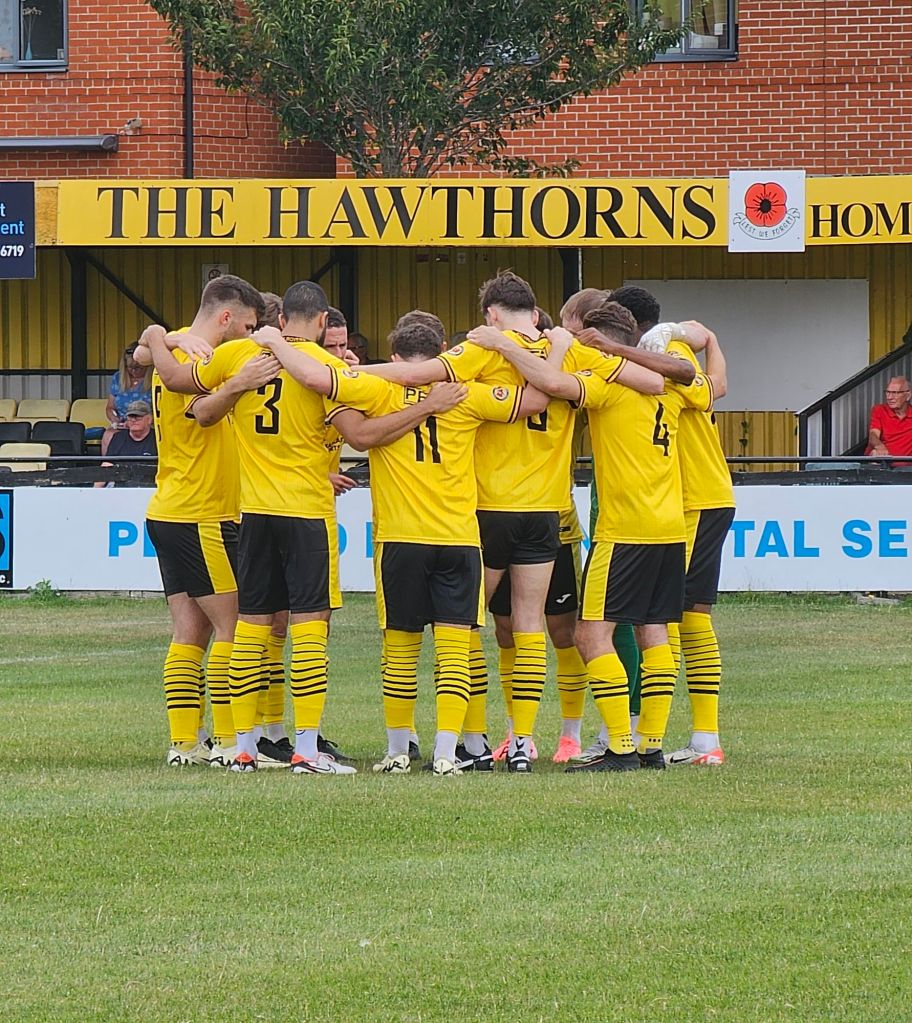
Time passes as Nineties dance music plays over the public address system, which turns out to be two large roof mounted speakers, one on its side, that look like they’ve been liberated from an ageing hi-fi system.  The music stops abruptly as the two teams appear from the corner near the turnstile to process onto the pitch and go through all the usual handshaking before forming separate huddles and then lining up to await the ‘parp’ of the referee’s whistle. The Stanway number eleven has one leg of his shorts rolled up over his thigh as if to ‘show a bit of leg’. Slightly late, at two minutes past three, the match begins with Maldon & Tiptree getting first go with the ball, which they boot towards the car park end.  The visiting team are wearing a frighteningly dull kit of pale grey shirts and slightly darker grey shorts; it makes them looked like all life and natural colour has been drained out of them as if by some previously unknown Essex coast vampire.  Maldon’s home kit is one of red and blue stripes like Barcelona of the Spanish La Liga or Stade Malherbe Caen of French Ligue 2 and it’s a mystery why they’re not wearing it as it would not clash with Stanway’s yellow shirts and black shorts. Perhaps the home kit is in the wash, or maybe they are wearing it and that vampire is real.
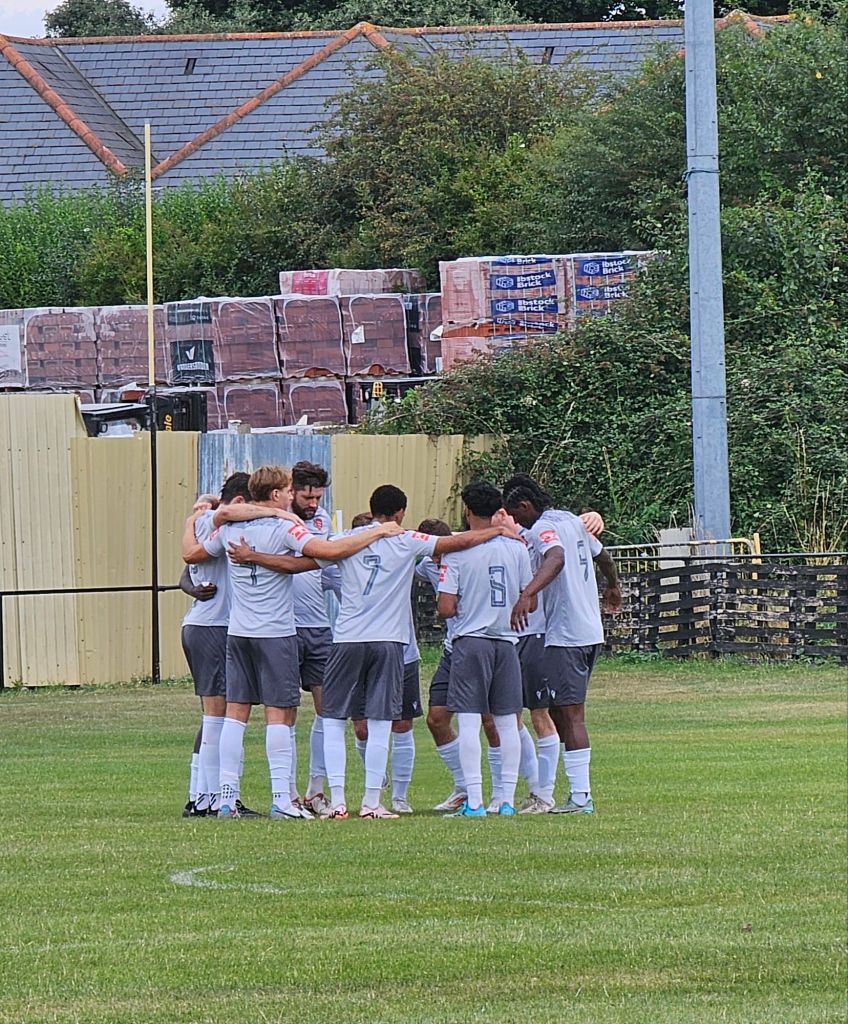
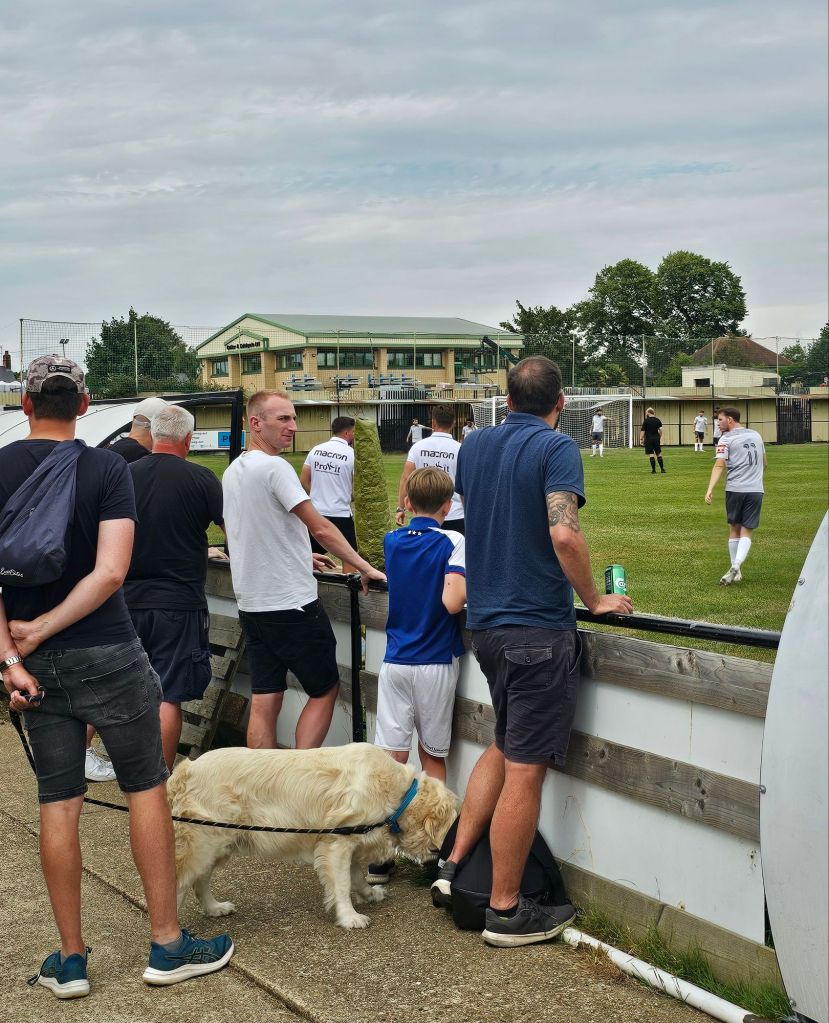
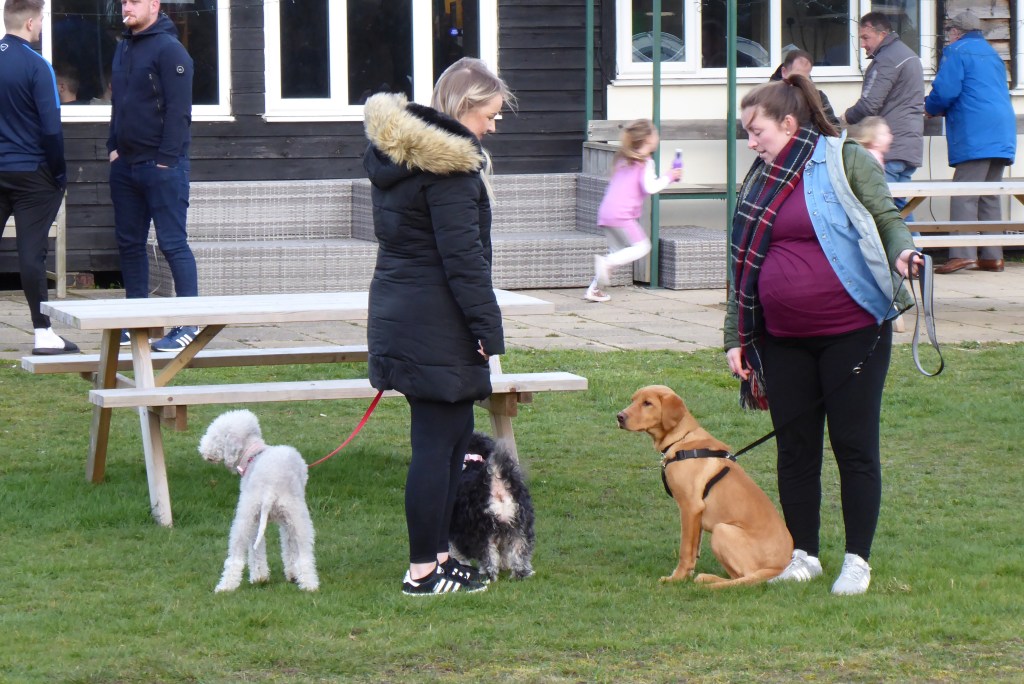
The opening stages of the game seem tense and cautious.  “Mick, right shoulder” shouts the home goalkeeper. “’old ‘im” bawls someone else “Get over!”.  It’s a relief when the ball leaves the pitch and hits a man with a jade-coloured jumper draped over his shoulders.  I walk down the ground behind the dugouts past a man with a golden retriever dog.  I overhear a snatch of conversation “Tooting Broadway Witherspoons (sic) is right across the road” explains someone. I stand between the dugouts “Joe, Joe, can we?” implores one of the Stanway coaches curiously as he stands momentarily with hands on hips in his black nylon tracksuit. “Come On Ref!”

At twelve minutes past three the Stanway number four heads wide of the Maldon goal.  The opinion in the Stanway dugout is that he “needed” to score that.  As if to almost  prove them right Maldon are almost immediately on the attack and win two corners in quick succession.  A Maldon player dribbles the ball cleverly between two opponents.  “Nice feet” says a man near me, who is possibly a chiropodist.   Stanway almost score almost again as a back-header skims off a crown and is tipped away acrobatically by the Maldon goalkeeper.

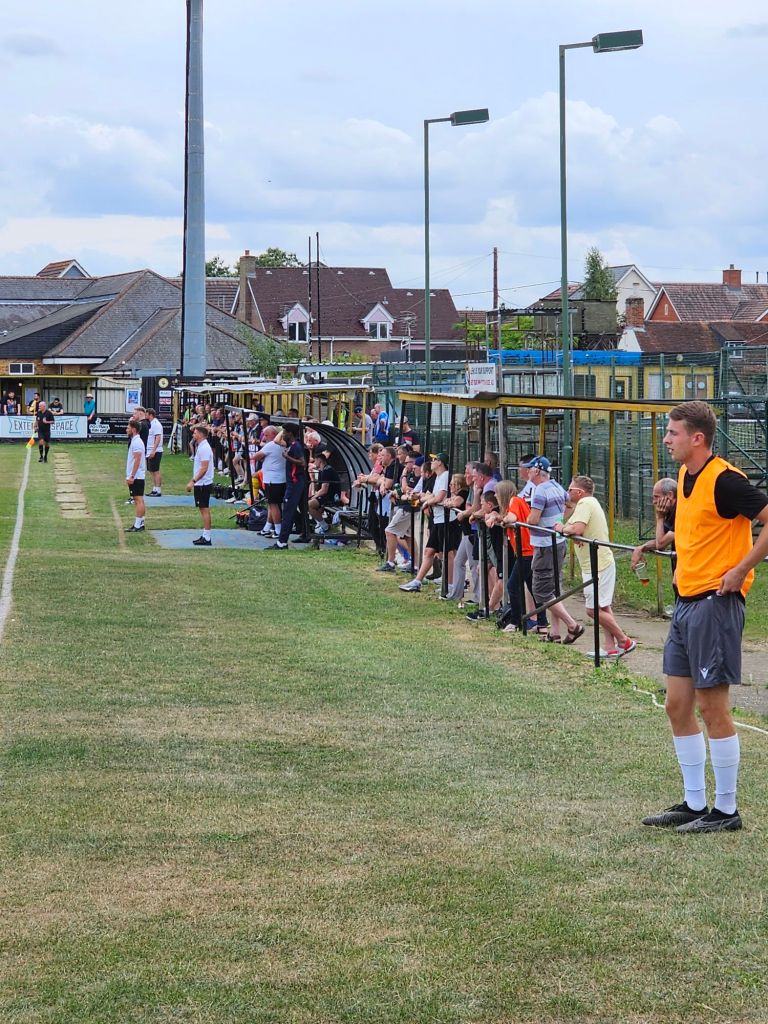
Keen to experience the game from all around the Hawthorns I move to the corner of the ground where the slope on the site affords me an unexpectedly elevated view across the gently, but nevertheless worryingly rolling, undulating pitch.  Above me a blackberry bush hangs down over the fence and I spend the remainder of the half feasting on plump, ripe blackberries which are being warmed by the mid-afternoon sun.   By half-time I have eaten more blackberries than I have ever eaten before whilst watching a football match.  It’s now twenty-five past three and the somewhat lumbering, balding and clearly bearded referee calls for a drinks break.  The Stanway substitutes trot about in front of me, stretching and discussing football boots; apparently, one of them owns a pair “…like the Trent Alexander Arnold ones”.

When the match resumes Maldon pass the ball amongst their centre backs, in the style of England, until number six carefully side foots the ball into touch.   It’s three thirty-eight, and a Maldon free-kick thumps the head of the Stanway number eight, who was in a defensive wall but now lies prone on the grass; the game is stopped while he receives treatment and then leaves the pitch.  In due course he returns, but oddly now has his shorts rolled up over his thighs like the number eleven.

The match is not of the highest quality and the ball regularly sails aimlessly through the upper atmosphere and on one occasion into a neighbouring garden.  At eleven minutes to four however Maldon’s number nine shoots and only a low diving save from the Stanway goalkeeper prevents a goal. From the resultant corner however, the ball is fired out into the car park and hopefully avoids my Citroen; the high fence behind the goal doesn’t seem to be quite high enough.  The half ends with me reflecting on the names on the advertisement boards and questioning whether  Planned Environmental Services have a rival company called Un-planned Environmental Services.  Finally, I find myself disappointed that neither club seems to have neither a band of noisy teenage Ultras or one of ageing but witty malcontents.

With half time I head to the tea bar where I invest in a pound’s worth of tea and two pounds’ worth of sausage roll, which comes with a free paper napkin.   I don’t think the sausage roll is as good as the ones at Coggeshall Town, although it is cheaper, but it is definitely better than the ones from Greggs. Having eaten my sausage roll I move to the two-step terrace cum bus shelter  behind the goal at the car park end and strangely overhear more people talking about Tooting Broadway. I finish my tea and the teams amble out only to line up and then have to wait for the referee and his two linesmen, one of whom has a beard, whilst the other is older and has a bit of a pot belly.

It is eight minutes past four as the football resumes and unexpectedly a small man in a polo shirt with a tie draped around his shoulders begins to bawl Yellow Army, Yellow Army, Yellow Army several times.  I see from my phone that the current temperature is twenty-four degrees and then the man in the dayglo gilet who I asked about the programme appears and tells me that there is currently an ‘error’ with the programme.  I wonder if the error is that no one produced one as Maldon win successive corners and I get the impression that they are the slightly more dominant team.

Continuing my odyssey I walk a little further round the ground and on to the fourth side where there is a small pre-fabricated stand containing the only seats in the stadium.  I am suddenly struck with the thought that Stanway Rovers seem to have an uncharacteristically small number of players with visible tattoos before I spot what looks like my friend Gary in the seats.  Approaching the stand, I confirm that the reason the person I see looks like Gary is because it is Gary, and I decide to sit down in the seat in front of him just as Maldon’s number four is booked by the referee for a misdemeanour I didn’t see fully because I was concentrating on identifying Gary. 

As Stanway make their first substitution, Gary tells me how his mother has been ill and in hospital. It’s now twenty-three minutes to five and the game remains tense, cautious and lacking in goalmouth action with both teams either defending well or just lacking the ability to score a goal, I’m not sure which. At seventeen minutes to five some football suddenly breaks out as Maldon’s number nine dribbles down the right flank leaving three Stanway players in his wake before putting in a low cross.  The cross unfortunately runs behind the Maldon player’s team-mates, but their number seven manages to get to the ball and turn, but then sends his shot over the goal, the fence and into the premises of Collier and Catchpole, the independent local builders’ merchants.

The clock is running down, it’s nine minutes to five and my thoughts are turning to what I might have for tea as a Stanway shot rolls rapidly towards goal and this time it is necessary for the Maldon goalkeeper to make a save.  Gary and I chat as we watch and I learn from him that the concessionary admission price at Stanway applies to over sixties, not over sixty-fives, so I’ve spent three pounds more to get in than I needed to.  It’s two minutes to five as another football sails out of the ground and into one of the neighbouring properties, but a minute later the game is over; the final score nil-nil.

The game over and with no conclusion except that there will be replay at Maldon, Gary and I quickly vacate our seats, leaving together as he heads for the toilet, and I make for my Citroen.  Briefly deconstructing the game in the style of football pundits, I think the match was a bit of a non-event, but Gary thinks the second half was better than the first. 

With no conclusive result, no programme and having paid three quid more to get in than I needed to, it hasn’t been the best afternoon, but then again the sun has shone, I had a decent half of beer, a decent cup of tea, an ok sausage roll and most memorably of all more blackberries than I’ve ever eaten before at a football match.  It must be the magic of the Cup.  

Bristol Rovers 0 Ipswich Town 2

The infection rate for Covid-19 is on the rise again and I am staying home, even though it’s Saturday and the prospect of either AFC Sudbury v Coggeshall Town in the Isthmian League or Ipswich Wanderers v Brantham Athletic in the qualifying round of the FA Vase is deeply enticing.  But my wife Paulene is in the extremely vulnerable category due to chronic asthma and given many people’s apparent inability to comprehend social distancing or the wearing of a mask I’m not taking any chances.  

After six months I have got used to this and my reality now is that football is a game witnessed on the television or followed on the radio, which sadly means non-league games are just results and all the footballers I get to watch are overpaid professionals.  But I can still follow the mighty Ipswich Town home and away, and because I would resent being charged ten quid for watching an hour and a half’s telly, I shall be listening to today’s match on the wireless, as I like to call it.

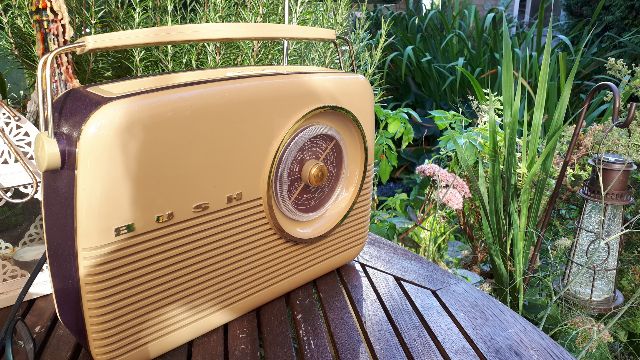
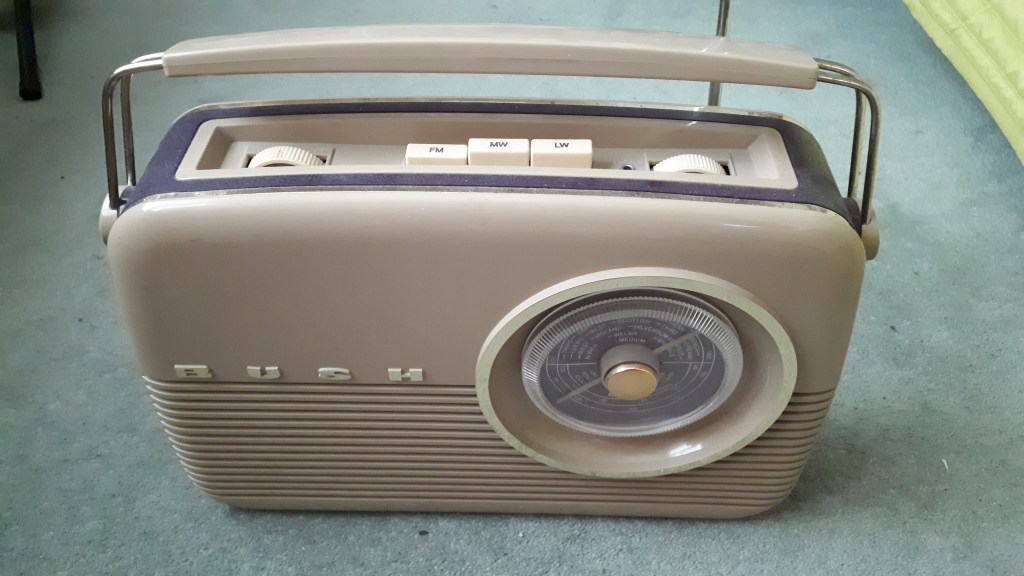
Today, the ritual of the pre-match pint is partly a reward for a morning of productive pottering in the garden, although it’s actually a pre-match 440 millilitres in the form of a can of Adnams Ghostship (four for £5.25 from Waitrose). It’s such a beautiful afternoon that I decide to take advantage of the weather and listen to the game outside whilst bathed in soft September sunlight. Tuning into Radio Suffolk doesn’t prove as easy as I had expected and by the time I have made fine adjustments to the dial and the physical position of the radio itself in order to shut out brash, ill-mannered Radio Essex and its impending commentary on Colchester United v Bolton Wanderers, the game is about to begin.  I feel like I am twelve years old again, trying to find Radio Caroline and Radio North Sea International on my tiny Vesta V70 transistor radio (about £2 from Woolworth’s) in the early 1970’s.

As ever, Radio Suffolk’s Brenner Woolley is the man (it’s never been a woman) to relay his commentary to an eager county of football fans.  But by way of a change Brenner is assisted today, not by the regular, dependable, steady Mick Mills, but by one of Town’s few 21st century heroes, Marcus Stewart, a man almost as famous for his goals as his gloves, a replica pair of which I am proud to still own, despite their being pretty much unwearable.  I first take notice of the commentary as an early Gwion Edwards header is easily saved by Bristol Rovers’ Finnish ‘keeper Anssi Jaakola. “What about that chance Marcus?” asks Brenner; he receives no response, it’s as if Marcus just isn’t listening or has drifted off into a world of his own; perhaps he’s bored already.  “He should have done better shouldn’t he, Marcus?” adds Brenner sounding a tiny bit anxious.  Fortunately for Brenner, Marcus returns from wherever he’s been and gives some answer or other; I have drifted off a bit myself now and am listening to the chimes of a passing ice cream van, “Boys and girls come out to play” is the jangly, distorted tune that the loudspeakers are blaring out.  I love ice cream van chimes, they make me think of Ray Bradbury’s novel “Something wicked this way comes”.

In the absence of any decent football to commentate on, Brenner tells us that the Town have had to change for the match today in the supporters’ club bar, which is something that would have been far too risky to have allowed back in the seventies or eighties if the reputations of some former players are to be believed.  Brenner continues by commenting on Paul Lambert having adopted what he calls a “Tony Pulis look”, by which he means his blue baseball cap, not a sour facial expression, although he can do that as well.

Some football happens and Brenner describes the player with the ball as “running into traffic”, which sounds a little bizarre and suggests Bristol Rovers need a new stadium more than most.  It’s now just after half past three and there is a drinks break which sounds as exciting as the game.  With everyone refreshed nothing seems to improve however, but Marcus raises his game making reference to “big Devon White”, the towering centre forward who scored twice for Bristol Rovers in a 3-3 draw with Town back in August 1991.  On his debut, Marcus scored the other goal for Rovers in that match, but seems reassuringly modest about his career, allowing the modern players credit and telling us how difficult many skills are to perfect, and it sounds like the two teams are demonstrating the proof of that today.

Half-time looms and Marcus tells us that “Both teams are not fluid”.  “They’re not, are they” says Brenner as if he really means “No, they’re crap aren’t they”.

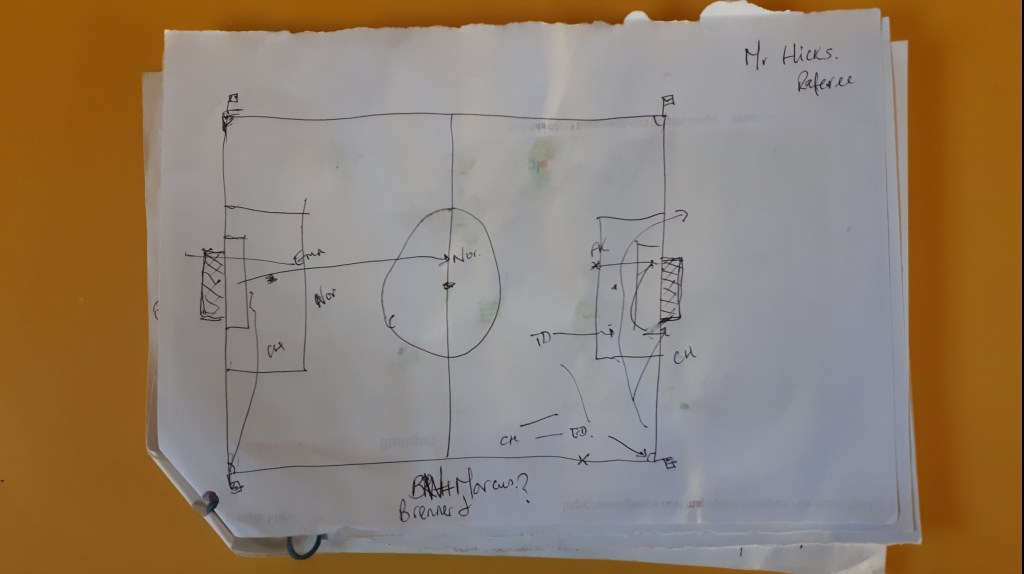
I use the half-time break to talk to my wife Paulene who is watching the Tour de France on the telly in the kitchen, it beats flitting down the steps to the gents underneath the Sir Alf Ramsey stand and staring up at the half-time scores on the screens in the under croft of the stand.  The respite from the game is all too brief and I’m soon sat at the garden table once again and Brenner reveals that Thomas Holy is “off to our right”.  In the first half I had drawn a little sketch plan of the pitch which I tried to use to keep track of where the ball was, but my plan was scuppered because I realised I didn’t know towards which end Town were kicking.  Interestingly, (perhaps) the very first BBC radio commentary for a match (Arsenal v Sheffield United in Division One on 22nd January 1927) used a system whereby the pitch was divided up into eight squares and the commentator Henry Blythe Thornhill Wakelam described the game whilst a co-commentator said which square the ball was in; a diagram showing the football pitch divided up into squares was printed in that week’s Radio Times.  I think Mick Mills has the perfect delivery for telling us what square the ball is in.

It’s five minutes past four and Brenner carefully describes the two teams’ kits as the second half gets underway; it’s a job well done and all Ipswich Town nerds will quickly realise that the red and blue ‘third kit’ has now been used three seasons running.  Nine minutes later and Brenner is perhaps more excited than he should be as he reveals that Norwood should have scored, although it would have been disallowed.  Marcus by contrast remains calm, I can only think he spotted the offside flag before Brenner.

Town seem to be on top now and at four- twenty two Brenner’s voice suddenly becomes louder and his words get closer together. “Edwards with a great chance!” he says, followed by silence.  I guess that he didn’t score.  Freddie Sears is replaced by Jack Lankester and a procession of Town players’ names follows over the airwaves as they take it in turns to get caught offside.

Time has moved on to half-past four and Brenner’s voice rises again in pitch and in volume. Nolan has a shot we are told and for a moment I think it’s a goal, it sounded like it must be, but no, it’s a corner.  A minute later and “Edwards goes round the goalkeeper!”, again I think we’ve scored, but no, it’s blocked on the line and Paulene sits down next to me to eat some crisps and Parma ham because she hasn’t eaten any lunch. 

Time is moving on apace; this is a good half for Town and Brenner’s voice is up and down in tempo and volume as he tries to convey what would be the waves of excitement if there was a crowd watching this game. It’s nearly twenty to five and Gwion Edwards shoots for goal again and then a minute later there’s a cross from Jack Lankester; a moment’s doubt from Brenner “It might be an own goal?” and indeed it transpires that Rovers’ German centre-half Max Ehmer has scored in his own team’s net, which is nice.   Marcus Stewart immediately starts a philosophical argument in my mind as he relates that the goal had been coming for the past twenty minutes.  I muse that had he been watching the game or listening on the wireless like me, the sixteenth century French theologian John Calvin might well have argued that it had been coming since the dawn of time, with all our fates being pre-ordained by God.  It’s not something Marcus picks up on and Brenner merely adds that after some earlier ‘last ditch defending’ from Bristol Rovers, this time it’s a goal.

There’s an interlude of sorts as Marcus Stewart expounds a theory that Jack Lankester should be awarded the goal if his cross was heading into the goal before Ehmer headed it; it’s not a wholly unreasonable proposition except that no one suggested Lankester’s cross was going towards the goal and the whole incident implies that once again Marcus may not have been paying full attention.  It’s a quarter to five and thirty years ago the game would have been over by now, but today there’s still time for the boy Dozzell to elicit the words “Lovely ball”  from the mouth of Brenner, and for Town substitute Ollie Hawkins to miss the goal, before quite suddenly I hear “ Here come Town;  Nolan, shoots, and finds the corner of the net”.  It sounds like it’s 2-0 to Town.  Brenner sounds less excited than he did when all those shots went wide earlier in the game, but eventually confirms that Town have “…strung together back to back victories”.

The referee Mr Hicks who thankfully has barely featured in Brenner and Marcus’s commentary calls time and the game is over.  I quickly turn off the radio to avoid being subjected to the stupidity of the post-match phone-in.  I have enjoyed my afternoon in my back garden in the sunshine and feel a curious ‘simpatico’ with my dead father, who would listen to cricket test matches on the radio on similar sunny afternoons.  Thinking back over the past hour and fifty minutes or so of radio commentary I have been consumed by the thoughts and descriptions from Brenner Woolley and Marcus Stewart, my one reservation being the illogical and groundless worry that every time Brenner Woolley said the name Marcus he was addressing Marcus Evans.

Ipswich Town 3 Bristol Rovers 0

It’s the first Saturday in September and the weather has broken, although to be truthful it’s been looking a bit cracked for a while now.  Autumn approaches.  It rained overnight and whilst there are glimpses of sunshine it is straining to penetrate through the clouds and worst of all it feels cold.   But on the bright side, today sees the start of the football season and mighty Ipswich Town, the vessel in which the hopes and dreams of a good many of the people of Suffolk are invested will be playing Bristol Rovers in what I refer to as the League Cup, but the football club, media and those who don’t know any better call the Carabao Cup.  I didn’t used to know what Carabao was, I erroneously thought it was a wrongly spelt American name for a reindeer, but because of the League Cup, and thanks to Wikipedia,  I now know that it is a domestic water buffalo from the Philippines and also a drink; not a proper drink mind, like Adnams Broadside, tea, Noilly Prat, milk, red wine, Fuller’s 1845, espresso coffee, Crémant, pineapple juice, Champagne, lime cordial, Belgian Trappist beer , hot chocolate or malt whisky but something called an ‘energy drink’.   The sponsorship of football competitions is a curious thing and only adds to the feelings I have that I live as an outsider on the fringes of society, with the Milk Marketing Board being the only sponsor whose product I can honestly admit to ever having set out to purchase.

Kick-off is at three o’clock, but of course due to the Covid-19 pandemic it is not safe for a large crowd to gather and therefore no one is going to Portman Road today. Sadly, I shall be denied the joys of travelling on the trains of Greater Anglia, the pre-match pints, the quickening anticipation-filled walk down Portman Road and the click of the turnstile.  Today I will not hear the moans of the home supporters nor the witless abuse of the away supporters; I will not receive the suspicious glances of luminous stewards nor feel the soft artificial fur of Bluey and Crazee as they brush past me with their out-sized heads and weird hoof-hands; I will not become engrossed in conversation nor share see-sawing emotions with Mick, ever-present Phil who never misses a game, the old dears, Ray and his grandson Harrison, or Pat from Clacton with her bag of sweets and lucky charm, the masturbating monkey.

Not thinking of what I am missing, I enjoy a light lunch of home-made spicy carrot soup with my wife Paulene whilst resisting the temptation of a beer, despite a choice of Adnams Ghostship, Adnams Ease Up IPA, Fuller’s Bengal Lancer, Chimay, Chimay Brun, Orval, Westmalle and Faro Foudroyante from my ‘beer cupboard’.  We watch the Tour de France on the television, losing ourselves in the French countryside as an escape from the memory of lockdown. We talk and reminisce about holidays and trips to France.  It’s a quarter past three.  Flippin’ eck! The game has started and I hadn’t realised, this is what life is like without the discipline of the railway timetable to get me to the match.   I leave Paulene somewhere in the Haute Garonne and find my radio, which is already tuned to BBC Radio Suffolk, because I like a laugh.  I decided long ago that watching Town on the ifollow is not worth £10, particularly when I’ve already spent over £300 on a season ticket, so I settle down in an Ikea Poang chair in the back bedroom with Brenner Woolley and Mick Mills. Elvis Costello was right ” Radio is a sound salvation”.

Very quickly I learn that Aaron Drinan is pronounced Dry-nen and doesn’t rhyme with ‘linen’ as I previously thought it did, which I think is a useful start and then Mick Mills tells me that a half-chance for Bristol Rovers is the first time they have threatened Town’s goal so at least I can now be confident that we’re not losing.   Brenner and Mick witter on and Brenner tells me that Tomas Holy “puts his foot through the ball”; I wait for the referee to stop the game to extricate Holy’s foot, but rather confusingly the commentary carries on with Brenner describing the ball as being passed “along the deck “and I now wonder if the game has been moved from Portman Road to an oil tanker; it’s common after all for the size of such ships to be measured in terms of football pitches.   I’m still not sure of the up to date score but Brenner is hoping for a result in normal time, which implies the scores are still level and that he’s got better things to do after five o’clock than commentate on this.  The absence of any crowd noise then strikes me for the first time and I am conscious of the shouts of the players echoing through the stands left cavernous and empty.  Fittingly in all this blankness, Brenner at last reprises the score, it’s still nil-nil; I haven’t missed anything then. Phew.

Mick Mills is not a man to ever sound at all excited, but he feels moved to say that our left hand side has ‘come to life’ and produced two or three ‘moments’.  That’s what the game is all about I think to myself and am heartened to hear Mick provide balance by wishing that the right hand side of the team could do the same.  Brenner takes back control of the commentary and I learn that today Paul Lambert is wearing a big over coat, which is most unusual; I don’t think I’ve ever seen him not in a black v-neck sweater; perhaps the added security of his five year contract has led him to invest in a more extensive wardrobe, but I do worry that it’s a bit early in the year for an overcoat and surely this can only provoke more abuse from his critics on social media. 

As I drift off into reverie about what is an appropriate coat for a football manager on a cool early September Saturday, Brenner announces that “Sears was not going to miss” and Town are 1-0 up.  It’s twenty-eight minutes past three, I clench my left fist and softly whisper a sibilant ‘Yes’ to myself. “It was easy to get the ball down the corridor to Sears” says Mick Mills and once again I’m a bit lost trying to imagine where I’d seen any corridors at Portman Road, except beneath the stands, and worrying that if the ball was in a corridor surely it should have been a throw-in.  I thank our lucky stars that our level of football is not subject to VAR.

With Town a goal up the game soon sounds like it has become a tad dull, or it could just be the commentary.  Mick Mills increasingly seems like a comfortably retired man in his seventies, but the I remember that he is.  Brenner meanwhile goes off piste and begins to talk about Town’s next game at home to the Arsenal Under-23 team in the now despicably compromised, credibility-lacking EFL Trophy, expressing his interest in seeing “…how good the latest crop of kids at the Emirates are”.  If he’s so interested in bleedin’ Arsenal perhaps he should clear off to BBC London.   Hopefully as annoyed as I am by Brenner’s concern about a club that isn’t Ipswich Town, Mick tries to break the mould by injecting a hint of excitement into the commentary and announces “That was a super pass from Dozzell” but he spoils it rather by pausing and then adding   “so that was good”, as if his use of the adjective “super” was in retrospect going a bit far.

I look at my watch and find that it’s approaching half time and I think I discern from the commentary that Town have a corner.  They do, and now it’s 2-0 courtesy of what Mick Mills dubs a ‘fabulous goal’ from Luke Chambers. “Luke Chambers is pretty deadly in the opposition box” says Mick leaving me to fill in the blanks that he can, on occasions, be quite deadly in his own box too.  Half-time arrives and unlike at Portman Road I don’t make an undignified dash to the khasi but stay in my seat. This is no doubt in part due to not having a bladder full of the remnants of two or more pints of beer and partly because at Portman Road I am not pleasantly paralysed through sitting on a comfortable chair.  For remaining seated I am rewarded by hearing Mick Mills refer to Aaron Drinan as Aaron Dry-nan although he instantly corrects himself to make Aaron’s surname rhyme with linen a la Brenner Woolley.  Mick goes on to tempt fate horribly by saying that he “…cannot see Bristol Rovers coming back in to this”.  I admire Mick’s forthrightness, but recent experience nevertheless leads me to offer a small prayer for him, and his opinion, despite my probable atheism.  I take a brief trip downstairs to France to bring the gospel to my Christian wife that Town are winning 2-0.  She asks if I am sure I have tuned into the right radio station.

The second half begins at the ridiculously late time of 4:06pm, and it’s not long before Mick Mills is telling me that the game has become a “…little but drab, a little bit boring”; if anyone should know about that it’s monotone Mick.  Personally, I am finding the experience of sitting in my back bedroom listening to the wireless quite exciting and probably more interesting than if I had had to fork out a tenner or so for a match ticket plus as much again for the train fare, beer and perhaps a pie, all requirements if I was to attend in person.  I am further enthralled when Brenner advises me as the ball is booted off the pitch that “…the ball is dipped in some sort of sterilizing solution when it goes in the seats over there”.  I can’t help wondering why this is necessary; who normally sits in that part of the ground? What sort of unpleasant residue have they left? Why hasn’t that corner of the ground be cleaned since last March?

Moving on, Mick Mills is providing the most enjoyable moments of the commentary and, as he did in the first half, he gives praise but then tempers it.  “That was a wonderful corner by Judge” he says before qualifying his statement by explaining “It was…………good”, once again suggesting that given time to think about it perhaps his initial assessment was a little too enthusiastic.   It’s either that or he just doesn’t know that many adjectives.  But there is no doubt that lurking beneath Mick’s inherent reticence and quietude there is a passion and he soon lets it out with the statement “There’s a lot of football in the team”.  As for Brenner he can’t help but betray a certain cynicism, no doubt borne of over fifteen years commentating on the mighty Blues; “Good play from the Blues” says Brenner, before adding with perfect timing “At the moment”.

The second half is clearly not totally thrilling, but the impression received is thankfully that Town are playing within themselves and have the measure of these “Pirates”.  The game plays on and I am guilty of paying more attention to Twitter than to Brenner and Mick as I seek to discover how the likes of Whitton United, Long Melford, Ipswich Wanderers, Stowmarket Town and Framlingham Town are getting on.  I admit I haven’t really been paying close attention to the commentary but am nevertheless surprised at four thirty-three to hear Brenner say that Town are now 3-0 up, and although I will admit to reading Twitter I wonder how I could have missed hearing the goal go in. I am left to suppose Mick’s less than excited general delivery and Brenner’s overriding interest in the Arsenal’s “kids” could explain why neither commentator had succeeded in grabbing my attention.   Fortunately, Twitter can also tell me that it was Freddie Sears who scored the third goal, in the 68th minute as well as actually showing me the first two goals and then the third as well.

Time moves on inexorably and it’s now four forty-nine, and Brenner confirms that it’s been “all over really” since Freddie Sears scored Town’s third goal, as he stifles a yawn.  Fittingly the commentary peters out a little with periods of silence punctuated with commentator clichés letting the eager listeners know that Bristol Rovers don’t have “enough left in the tank” to change the result and that Town have been “good value” for their lead.  “Three-nil, Ipswich Town” says Brenner, saving up his allocation of useful verbs and adjectives for another day, perhaps when Arsenal’s “kids” might be playing.  “Town, winding the clock down” says Mick.  “According to my watch we’re just about there” are Brenner’s final words, as if prompting the referee to blow his whistle, which miraculously he then does.

Pleased that Town have won and pleased that I can leave Brenner and Mick alone together and return downstairs to my wife, I turn off my radio.  I haven’t really had a clue what’s been going on all afternoon but I do know that Town have won a cup tie, scoring three times in the process and not conceding, even if I only noticed two of the goals and it feels as if it all happened in a far off universe, but being divorced from the proceedings the result is all that matters.  Back to reality, if not normality; a glass of beer and fish and chips for tea.  As Ray Davies of the Kinks told us in Autumn Almanac, “I like my football on a Saturday”.

“Radio, it’s a sound salvation”

Kirkley & Pakefield 0 Wroxham 0


tramway hotel

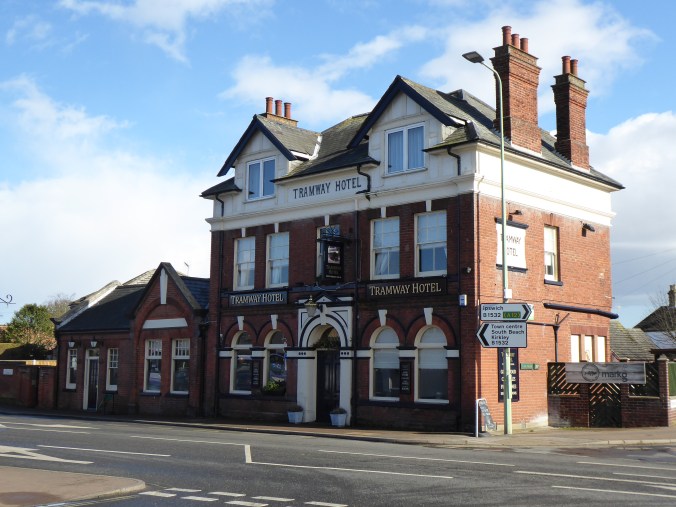
Once upon a time Kirkley and Pakefield were Suffolk villages, but they are now suburbs of Lowestoft on the south side of Lake Lothing.  Up until 1931 Lowestoft Corporation ran trams down to Pakefield terminating at the appropriately named Tramway Hotel; it’s a pity they don’t still run today and if only Lowestoft was in Belgium or France or Germany they probably would.   That aside, it’s a lovely rural train ride from Ipswich to Lowestoft and then a walk of over 3 kilometres or a ten minute trip on the X2 bus and then another five minute walk to get to Walmer Road, home of Kirkley and Pakefield Football Club.  But that all takes the best part of two hours and today I’m in a hurry to get home afterwards so I am making the 60 kilometre journey up the A12 by car.  Despite the small pleasure of opening up the throttle on my trusty Citroen C3 along the dual carriageway past Wickham Market, driving is nowhere near as much fun as sitting on the train, for a start everyone else on the road either drives too fast or too slow.   Also, unless I opt to eschew normal road safety and not look where I am going there’s much less to see from a car on the A12 too, perhaps with the exception of a brief vista of beautiful Blythburgh church across the marshes.

A quick glimpse of Woodbridge Town’s floodlights and road signs pointing the way to Framlingham and Leiston are tantalising reminders of senior football in east Suffolk as I plough on up towards Lowestoft listening to BBC Radio Suffolk’s ‘Life’s a Pitch’ on the Citroen’s radio. With its mix of decades old pop music and football talk with Terry Butcher and an otherwise anonymous pre-pubescent youth known only as ‘Tractor Boy’, whose presence is never really explained,  ‘Life’s a Pitch’ is a gently weird preamble for an afternoon of football.  Speaking directly from West Bromwich where Ipswich play today, former fanzine editor Phil Hamm mixes his metaphors delightfully as he speculates on whether Ipswich’s cruel defeat to Reading last week will have “knocked the stuffing out of their sails”.

It’s a very windy early Spring day and a heavy but short shower of rain sweeps across the road as I head out of Wrentham resulting in my arrival on the edge of Lowestoft being announced with a rainbow.   Passing Pontin’s Pakefield holiday camp I leave the modern A12 at the Pakefield roundabout and head down the old one, past the splendid Tramway Hotel and then take a left turn into Walmer Road and suburbia before making a final left turn towards the Recreation Ground.

It’s about twenty past two and the main car park is full so I splash my way into the pitted, puddled field that is the overflow car park at the north end of the ground and reverse up against the hedge in a spot where I won’t risk drowning as I step out of the car.

There’s no queue to get in the ground and at  the blue kiosk that looks like it might once have served a municipal car park in the days before ‘pay and display’, I say to the grey-haired man inside “One please, and do you do a programme?” .  Apparently the programmes are in the clubhouse.  I hand over a ten pound note; entry is £6 for adults and £4 for concessions.   I take my change unthinkingly and I now realise that the man on the gate must have thought I looked like a pensioner; my Ipswich Town season ticket is taking its toll.

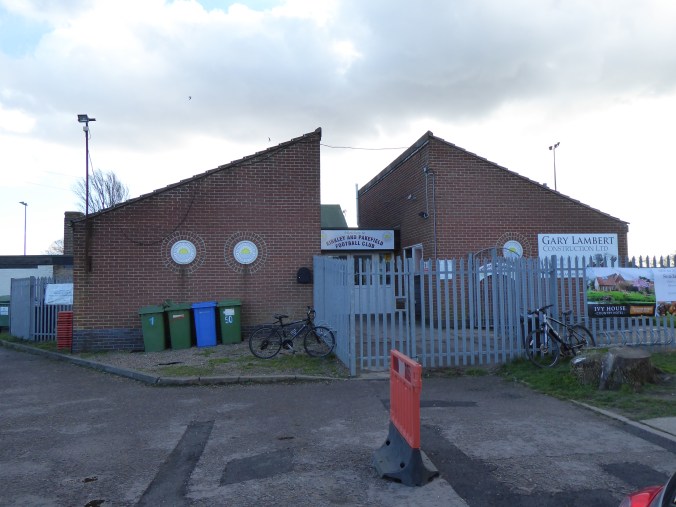
I head for the clubhouse;⁹ with its deep, green felt roof topped off by a cupola it resembles a village cricket pavilion; it’s probably the most characterful club house in the Eastern Counties League. 

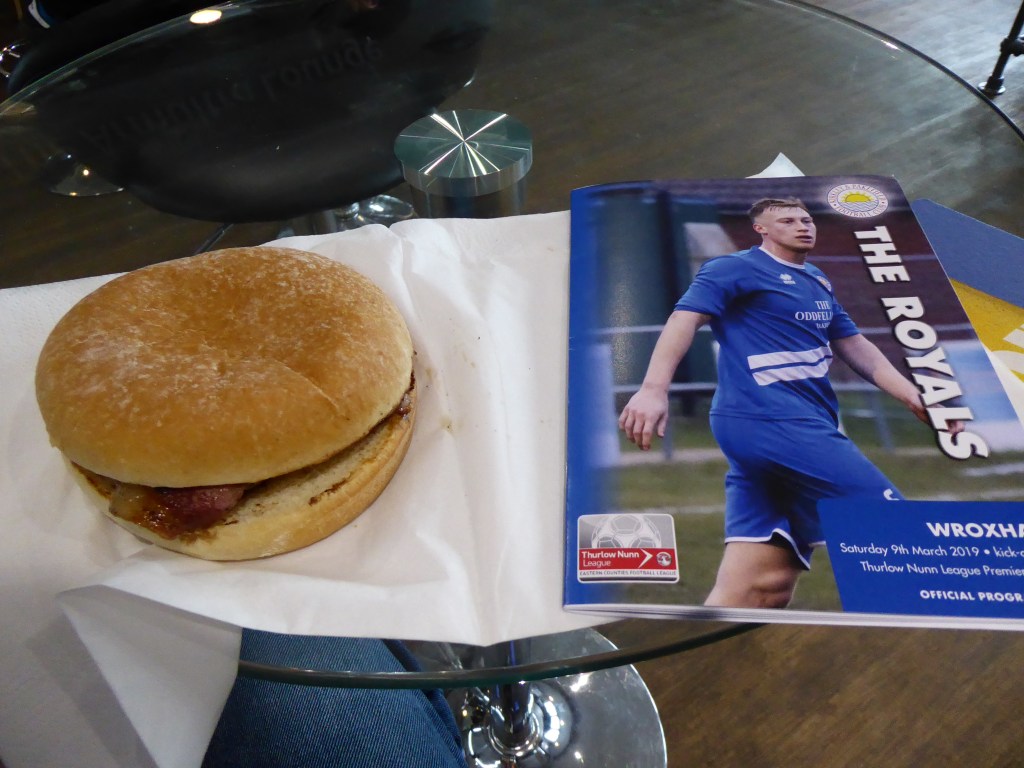
The inside bears little relation to the outside however and the ‘Armultra Lounge’ is decked out in a trendy grey colour scheme with matching leather sofas and oak-look laminate flooring.  I see a club official with some programmes and ask him if I can buy one (£1), he begins to direct me to someone else but then very kindly just says “Here, you can have this one on me”; what a lovely bloke.  Touched with the knowledge that people being kind and generous to other people is what life’s all about I celebrate with a bacon roll (£2.30) from the food hatch in the corner of the room.  It’s a very good bacon roll too; at first I am fooled by the roll having been toasted, into thinking it’s the bacon that is crispy, but actually it is anyway. I sit at a glass table on what looks like a tractor seat on a stick and eat the bacon roll and read the programme; I resist having a beer however because sadly the hand pumps on the bar are naked and the afternoon is windy enough without the terrible burps that a chilled glass of Greene King’s East Coast IPA nitrokeg would induce.  The programme tells me that Wroxham’s Sonny Cary is a “…gifted young football”.   I search for other amusing mis-prints but can’t find any.

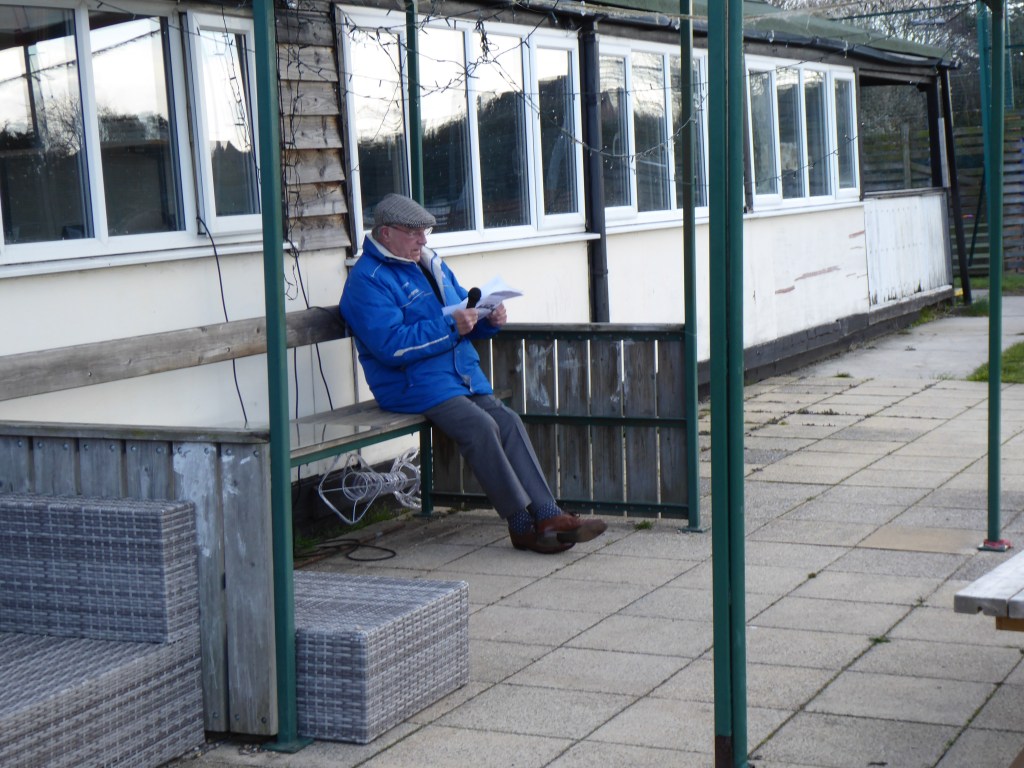
As 3pm approaches I venture outside but not before pausing by the door where a man is donning his coat, scarf and hat; he tells me that the main stand on the other side of the ground is the best place to watch from, because it’s out of the wind.  I thank him for this insight and tell him I suspect that is where I will end up then.  Outside, a man well into his sixties is sat on a bench with a microphone in hand announcing the teams; in the strong, gusty wind he struggles to hold onto the sheet of paper from which he is reading and the rattle of the paper in the wind competes with his voice over the PA system.  

I am already on the far side of the ground as the teams come on to the pitch behind the referee Mr Luigi Lungarella who has an impressive shock of swept back dark hair.  Handshakes follow before the Kirkley & Pakefield huddle in a moment of team togetherness and the Wroxham players stand waiting as if to say “ Oh come on. Can’t we get on with this”.  Huddling over, Wroxham, known as the Yachtsmen,  get first go with the ball kicking it in the direction of  Lowestoft town centre and the fish dock; they wear a dull change kit of white shirts with bluey-grey shorts and socks.  Kirkley and Pakefield, known for some reason as The Royals, play towards Pontin’s and far off Southwold and wear the same kit as Brantham Athletic; all blue with two diagonal white stripes across their stomachs, as if the shirts had been left lying on the pitch when it was marked out.

Wroxham settle quickly and pin The Royals back in their half, their “gifted young football”, the red-headed and slightly spindly number ten Sonny Carey has their first shot on goal, but it’s comfortably wide.   Despite most of the game taking place in the Kirkley & Pakefield half Wroxham don’t come close to scoring and in a somewhat solid way the teams are evenly matched,  which is to be expected as they are fifth and sixth in the Eastern Counties Premier League table, both  with forty-nine points but with Wroxham having a better goal difference.  The game is characterised by effort, but more so by lots of shouting; it reminds me of a windy day in a school playground.   “Squeeze, squeeze” shouts the Wroxham ‘keeper George MacRae, perhaps feeling a little left out.  “Higher, higher.  Switch” he adds, trying to get involved.  Wroxham appear to have won the first corner, only to be denied by a raised flag denoting offside.   “ We in’t had a shot on gool  yit” says an old boy, one of a half a dozen stood against the rail along from the stand.  He asks the time, it’s about twenty past three. Attention seems to be wandering.  “I see Bodyshop is closing” says someone else, although it probably won’t affect his shopping habits too much.  “There’s not a lot happening here” says the old boy “Though there’s a lot of ‘em in that fuckin’ dugout”.

At last Wroxham win a corner, but they take it short and I feel a bit let down. All that waiting for a corner and then it might as well have been a throw-in.  Everyone hates short corners, don’t they?   Kirkley & Pakefield’s number five Jack Herbert is spoken to by Mr Lungarella and Wroxham keep pressing. “He in’t got a left foot” someone says of Wroxham’s Cruise Nyadzayo as he keeps trying to cut inside on the left wing.  A few minutes later Nyadzayo switches to the right.  As Wroxham threaten the penalty area the ball is booted clear; “Don’t panic Mr Mainwaring” calls a voice from the stand. “What’s your name, Pike?” says another, hopelessly and irrelevantly misquoting the famous lines completely out of all context.  People laugh nevertheless.

As the game edges closer towards half-time, Kirkley and Pakefield begin to frequent the Wroxham end of the pitch a bit more.  “We got a corner, bloody hellfire, but it took us half an hour to get et” is the assessment of one local. But all of a sudden real excitement breaks out as a header is cleared off the Wroxham goal line and then a shot from Jordan Haverson is kept out of the goal with a spectacular flying save from George MacRae, before play quickly moves to the other end and Cruise Nyadzayo dribbles through before having his shot saved at close range by Adam Rix, Kirkley & Pakefield pony-tailed goalkeeper

I move along the rail and stand near a couple of Wroxham supporters “ I think it could take me a couple of years to get the kitchen sorted” says the younger of the two as Kirkley & Pakefield prepare to take  a free-kick in a dangerous looking position, before winning a second corner.  It’s the final notable action and comment of the half and I return to the club house for a pounds’ worth of tea and to catch up on the half-time scores. Ipswich are losing but the tea’s just fine.

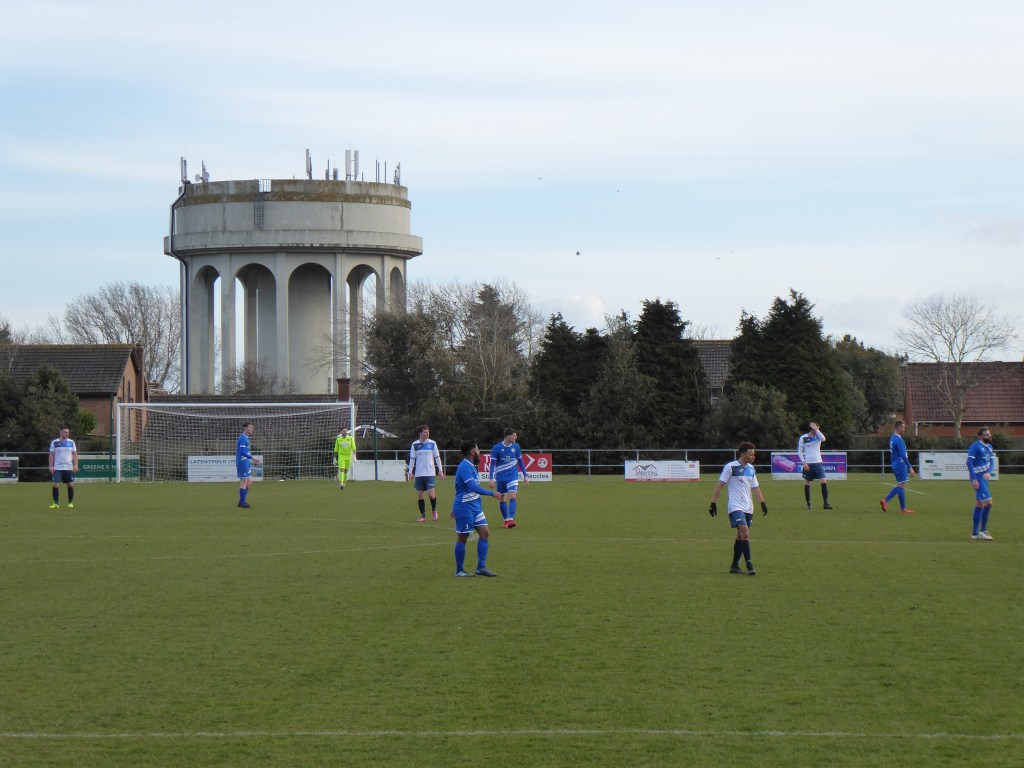
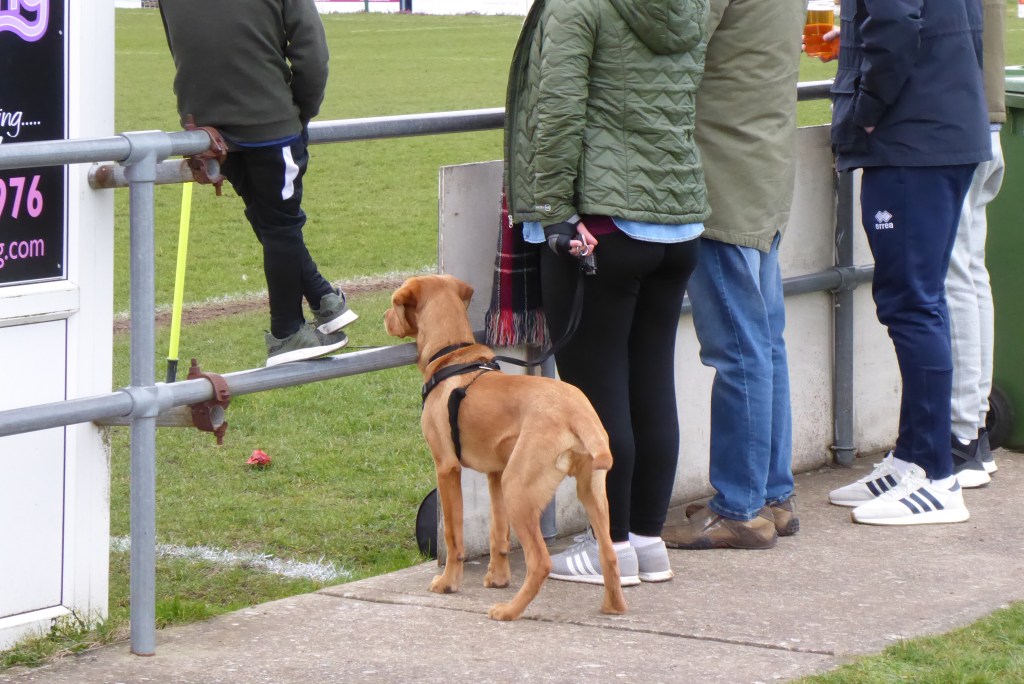
At two minutes past four Mr Lungarella blows his whistle for the start of the second half and Wroxham’s George MaCrae shouts “Squeeze” before the last note from the referee’s whistle is scattered by the wind.  Grey clouds are heaped up behind the main stand hiding a pale, milky sun.  Rooks are nesting high in the trees beyond the club house and a golden Labrador puppy is showing a keen interest in the game as he stands on his hind legs to watch over the rail.  I think to myself what a fine back drop to the game  the water tower at the  southern end of the ground makes.

The second half is played out more evenly across both halves of the pitch rather than predominantly in one half but neither goalkeeper has to stretch himself too much with virtually every shot being blocked or speeding past  the far post, as several low crosses do also.  The ‘star’ of the second half however is the referee Mr Lungarella who succeeds in making himself  equally disliked by both teams with a catalogue of unpopular decisions and a handful of bookings for Kirkley & Pakefield players.  “It was a corner ref. Ref! Ref! That was a corner” shouts one man from within the Russell Brown Community Stand behind the goal at the Lowestoft end of the ground after a goal kick is awarded. It’s almost as if he expects the referee to say “Oh, was it? Sorry. Okay then”.   It was a corner.  At the other end of the ground a Wroxham supporter is just as perplexed. “Fuckin’ guesswork” he says of Mr Lungarella’s decisions, before asking the linesman “Have a word with him will ya?”   The linesman replies, asking if he’d like him to speak about anything in particular.

– “About the rule book”

-“Well there isn’t one is there?” says the linesman mysteriously.

Mr Lungarella saves the best  until last and his piece de resistance comes with only a few minutes remaining.  As Kirkley & Pakefield’s Miguel Lopez stoops to head the ball, Wroxham’s Harley Black attempts to kick it with the inevitable and unfortunate consequences.  As the Kirkley & Pakefield ‘keeper discusses with a Wroxham fan behind the goal it was not intentional or malicious, just an accident. But not for the first time this afternoon Mr Lungarella’s interpretation of events differs to that of most people watching and Harley Black is sent off. Happily Miguel Lopez is not hurt and after a bit of TLC from the physio he carries on to see-out the end of the game, which soon arrives.

Despite some doubts surrounding some of the referee’s decisions the game ends amicably and Mr Lungarella leaves the field unmolested with his two assistants.  Equally, despite there having been no goals, it has been a very entertaining match.  Kirkley & Pakefield Football Club exists in the shadow of Lowestoft Town, perhaps more so than Ipswich Wanderers and Whitton United exist in the shadow of Ipswich Town, because both Lowestoft clubs are non-league, but it’s a fine, friendly little club nonetheless.  I have had a grand afternoon out at Britain’s second most easterly senior football club and one day, when I am in less of a hurry, I will use the train and the bus to get here; whilst also hoping they bring back the tram.

Ipswich Wanderers 0 Coggeshall Town 3

The historic and much under-valued port and town of Ipswich has two senior clubs within the pyramid of non-league football, albeit clubs close to or at the base of that pyramid. Whitton United has been knocking around since the 1920’s and possibly before, but Ipswich Wanderers are up-starts by comparison, having begun in 1980 as a boys’ team and joined the Eastern Counties League in 1987 they only became Ipswich Wanderers in 1988. The Wanderers are now struggling uncomfortably close to the foot of the Thurlow Nunn Eastern Counties League Premier Division, they are second from bottom and probably heading for relegation, whilst their opponents today from North Essex are second from top and keen to move up the pyramid from Step 5 to Step 4.

The Wanderers’ home on Humber Doucy Lane is on the north eastern edge of the town in a semi-rural setting which is actually within the village of Rushmere St Andrew. The environmentally responsible can access the ground by bus; not some country service that runs the third Tuesday of every month, but by Ipswich Buses route No 6 running every 20 minutes from Tower Ramparts bus station and passing near enough to leave just a five minute walk to the ground. But today I, along with my wife have been to visit my mum, so somewhat shamefully we have travelled by car.

It is a beautifully sunny, clear, winter’s day, some might think it spring-like, but it’s still a


bit too damp and chilly for that. We draw up into the large car park at ‘the Doucy’, parking on the grass behind the blue metal fence and the row of low metal-roofed stands. It’s ten to three and most people who are going to be here are here. An impressive row of portakabins line the route to the entrance, Ipswich Wanderers may be struggling on the pitch but they have portakabins to spare. The entrance, although it is a


couple of metres wide has a turnstile set on one side. I pay our entrance money (£6 each) to the cheery, welcoming gateman who records our presence with another couple of strikes from his biro on a piece of paper marked with ‘five bar gates’. We step past the turnstile, which I turn manually, just for fun so that it clicks twice; the gateman gets the joke, such as it is. I am disappointed to hear however that the programmes have sold out (normally £1.50).
Inside the ground the teams come onto the pitch to the strains of Dion’s “The Wanderer” but minus the words, meanwhile I fetch a couple of teas (£1 each) and start to see people I know; there’s Ipswich Town fan John, whose sister is serving in the tea hut, his friend


Michael, Jimmy from Coggeshall who introduces me to his friend Shane, Keith and Jim who live down the road from me, Geoff the Coggeshall Town turnstile operator with his slicked back hair and pint in hand, and quietly spoken Paul who runs the Coggeshall Town website and films the match. Feeling thoroughly at home, I stand my tea on the perimeter wall and Coggeshall Town kick the game off in their black and red striped shirts and black shorts travelling towards the battered, cream coloured, metal fence and equally battered looking and hacked about row of conifers at the Rushmere Road end of the ground. Ipswich Wanderers are in all blue and the scene is a colourful one with the clear sky, backdrop of conifers and the chill in the air lending it a Nordic feel, as if we might all have come to see Osterlenn FF versus Solvesborgs.

Coggeshall are soon dominating play and most of the game is being played out in the Wanderers’ half of the pitch. There are a couple of close calls for the Wanderers and it’s barely 3:15 when a free-kick on the right is brought down by Coggeshall number 7 Tom Monk, who then turns and half volleys into the corner of the net to give the ‘Seedgrowers’ of Coggeshall the lead. The good following of fans from Coggeshall cheer and the Wanderers fans look on stoically having seen it all before. I stand with Paul who is filming the match from between two of the three wonderful ‘home-made’ looking stands on the Humber Doucy Lane side of the ground. In front of us the Wanderers’ kit man bobs up and down making sure there is always another ball available every time one is booted out into the car park, which happens quite often. He curses Paul’s camera


This slideshow requires JavaScript.

and doesn’t seem happy in his work as he mutters profanities at the players of both teams when they don’t get the ball back into play as quickly as he’d like; he’s doing a worthwhile job though. I take a wander to view the game from behind the Coggeshall goal and then return to find my wife talking to Keith and Jim; they used to divide their football habit between Colchester United and Wivenhoe Town, but Coggeshall is much closer and have now taken Wivenhoe’s place as their second team. Keith is an upright, tall man whilst Dave is quite small; they make me think of Yogi and Boo Boo. Although I don’t think they’d nick anyone’s picnic or packed lunch, I think Keith would suit a hat.

Coggeshall still dominate but are struggling to turn possession into clear cut chances let alone goals. The Wanderers are in combative mood and always able to get a head or a foot in the way when it counts and when that fails their goal keeper Jack Spurling is always in just the right place to collect the ball. It takes until twenty to four for Wanderers to have a shot on goal as their lanky number 9 Ashley Rankin chases a punt forward and despite an over heavy first touch strikes a first time shot from a narrow angle, which the Coggeshall ‘keeper James Bransgrove parries before smothering. There’s still time for another Coggeshall attack, which Ipswich clear but not without a bit of a panic. It’s been a typically noisy game but now for the first time we get some really loud swearing; “Play the fucking ball deep” somebody shouts, forgetting to ‘Keep it down for the kids’.

Half-time arrives amongst lengthening shadows and it’s been a reasonably entertaining half. Coggeshall are clearly the better side going forward but Ipswich Wanderers have competed and defended well enough to thoroughly frustrate them and the result is still


in the balance. We saunter towards the club house and the tea hut where I join a queue, which moves very slowly. As I reach the head of the queue there seems to be some sort of hiatus in the kitchen; one of my teas is placed before me but then there’s a delay and the kitchen staff gather round the large urn of hot water; one of the ‘tea-ladies’ turns towards me “I am sorry” she says sincerely “The lid of the tea pot has fallen in the urn”. The tallest person in the kitchen carefully fishes out said teapot lid, happily avoids serious scalding and I get the second tea just as the teams are coming out for the second half. Phew.

The long shadows have made the stand side of the ground even chillier than before so we crave what little warmth there is from the winter sun and stand behind the goal that Coggeshall are now attacking. Within minutes of the re-start Coggeshall score a second goal. A ball forward sees Tom Monk bearing down on Wanderer’s number five who struggles and slips and Monk is through on goal. From the corner of the box he wellies the ball solidly against the inside of the far post and a satisfying metallic crack rings out as the ball ricochets across into the far corner of the net; on the goal line Jack Spurling reacts quickly enough to turn and see his undoing. I feel blessed, I had a great view of the goal, but also if the ball hadn’t hit the post it would have hit me, and I would surely have dropped my tea.

The second half follows the pattern of the first with Coggeshall providing all the best bits, but Jack Spurling is providing his own one man show with call after catch after save after dive; a giant of a man having a giant of a match. The stand behind the goal is another beautiful self-build, with corrugated sheeting over a frame of scaffolding poles and a floor of paving slabs; it strongly reminds me of the metal bus shelters that used to stand on the Cornhill in front of Ipswich’s marvellous town hall, which incidentally has its 150th anniversary this year. Behind the dugout a tall green metal pole that looks like it might once have held up trolley bus wires adds to a likeable look of municipal knock-offs.

Architecturally the ‘Doucy is a treasure and today it is illuminated to advantage by the low winter sun. The crooked roof on the terrace is as quaint as any crooked half-timber Tudor house in Coggeshall, whilst the wooden tip-up seats (possibly from the director’s box at Portman Road?) are also something to admire. Strangely, overall it reminds me inexplicably of the stadium of an amateur club from Balaruc les Bains near Montpellier in southern France (see previous blog post in September 2017). In a way this is appropriate because supposedly the name Humber Doucy is derived from the French ‘ombres douces’ meaning soft shadows, which is how Napoleonic prisoners of war referred to the lane as they sought shade, having been working out in the open fields. I like to think they had a kick about too with berets and strings of onions for goalposts.

This slideshow requires JavaScript.

The sunny side of the ground is more popular this half and the size of the crowd is doubled by the soft shadows on the metal fence behind.

In the ‘Cornhill bus shelter’ a bunch of lads sing occasional songs, ironically aping those sometimes heard at Portman Road.    Twice Coggeshall ‘score’ only to see the flag of linesman Mr Elwalawang delete the achievement and the lads amuse themselves with a rendition of “You thought you had scored, you were wrong, you were wrong”. They progress later onto “You are my Wanderers, my only Wanderers you make me happy when skies are grey”. A gang of older men with silver hair stand in a group close to the corner; laughing and being blokes they are the singing lads fifty years on. A couple of them hadn’t noticed the score is now 2-0. A man who recognises me from pre-match drinking at St Jude’s Tavern says hello.

The shadows of trees forty metres behind the ground now stretch right across the pitch and I move to stand with Paul who has placed his camera in the corner of the ground by the club house; he has very kindly managed to get a programme for me through his contacts with the Coggeshall club officials. Mild-mannered Paul is secretly seething however, because the kit man caused him to miss the second Coggeshall goal, but a third goal, probably the best of the match hopefully applies balm to soothe his troubled brow. Coggeshall’s substitute Aaron Cosgrave repeats a trick of running along the edge of the box, taunting the Wanderers defence with his close control before eventually the ball runs to number nine Ross Wall who sends it firmly and neatly into the corner of the net from 20 metres or so.

There are only a couple of minutes to play now and Paul is wishing them away because on his own admission he is a bit under dressed today and is therefore freezing cold. The final whistle from referee Mr Carter is consequently a welcome sound. It’s been an enjoyable afternoon of decent football played competitively and sportingly in a quirky stadium of soft shadows and scaffolding poles. Ipswich’s Jack Spurling has been a colossus and a lesser goalkeeper might have let in six or seven. Coggeshall win, but Wanderers have the best player on the field .

This slideshow requires JavaScript.