Halesworth Town 3 Haverhill Rovers 1

Between March 2017 and April 2019, I watched matches at each one of Suffolk’s then twenty-four senior football clubs and recounted my experiences in this here blog.  Since then, Debenham Leisure Centre and Whitton United have sadly dropped out of senior football but this season the Eastern Counties League First Division North has welcomed two more Suffolk clubs into the fold in the shape of Kings Park Rangers, who are from Great Cornard but seemingly too shy to admit it, and Halesworth Town, who are proudly, clearly from Halesworth. 

Today, with Ipswich Town playing far too far away in deepest Wales to trouble me to even think of getting a ticket, even if I had enough ‘points,’ I am travelling up to Halesworth in part one of my plan to restore my record of having seen all of Suffolk’s senior teams on their home turf.  Fortuitously, today’s fixture is also an all-Suffolk cup-tie against Haverhill Rovers of the Eastern Counties Premier League, and the first time Halesworth Town have ever reached the second round of the FA Vase.   To add to the adventure even more, despite the additional twenty minutes each way that it will take me, I am responsibly reducing congestion on the roads by eschewing making the 88-kilometre journey from my home by planet saving Citroen e-C4 in favour of taking the train (£18.10 return with senior railcard). It also means I can get plastered if I choose to.

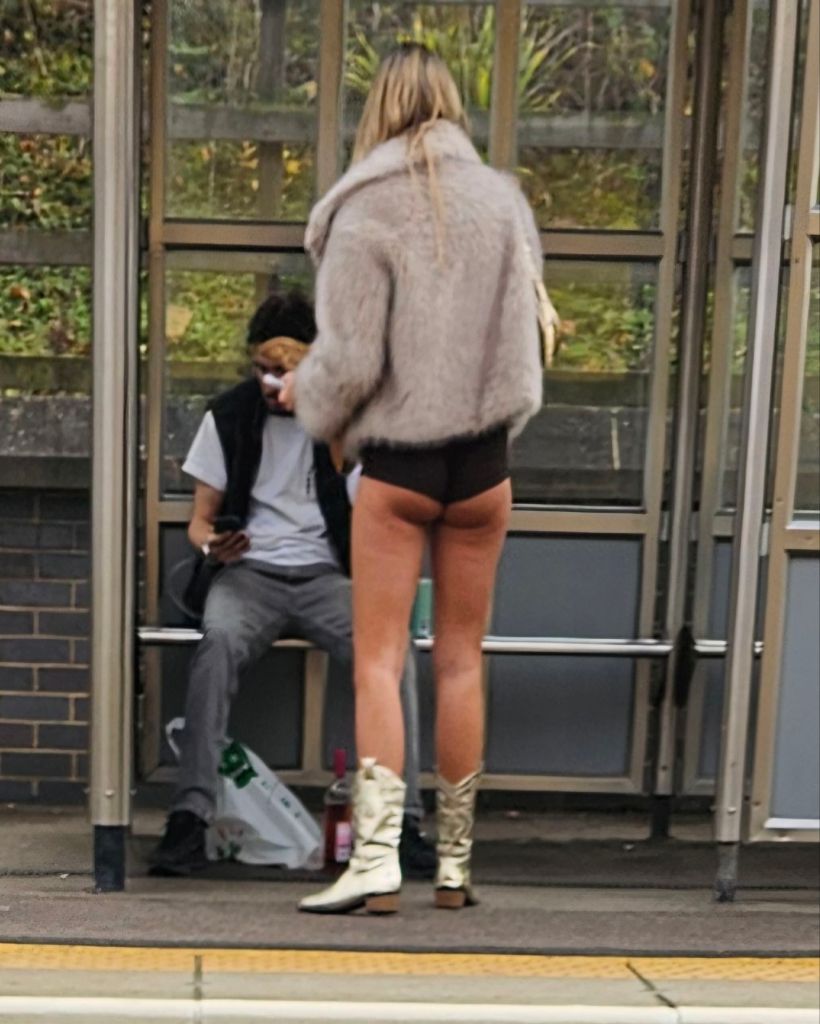
It’s an intermittently cloudy but mild November day as I set off for Halesworth, but I am nevertheless surprised as I wait for the train that one of my fellow travellers appears to have forgotten to put on any trousers or a skirt.  Once on the train, the infinite variety of human life continues to reveal itself as a small man of pensionable age repeats the names of the station stops as they are heard over the public address system; every now and then he delves headfirst into a large carrier bag as if checking on the wellbeing of a small animal or perhaps a baby.  When the woman sitting opposite me goes to the buffet car, she asks me to mind her belongings. I of course agree but tell her she needs to be back before we get to Ipswich.   When she returns, I tell her I had to fight off a couple of people who looked interested in her jacket but otherwise everything has been fine.  Fortunately, she laughs, but the man of east Asian origin next to me looks at me askance and when she begins to struggle to open a bottle of drink, he very quickly offers to help so that she doesn’t have to deal with the looney opposite her again.  The woman soon begins to chew on a large sandwich and a younger man on the other side of the aisle between the seats does the same thing, but takes much bigger bites, happily from a different sandwich, although with every bite he looks like he might lose a finger.

I change trains at Ipswich, boarding the 13:16 to Lowestoft, which departs a good twelve seconds early.  I like the East Suffolk line, to me it feels like a one-hundred- and seventy-year-old umbilical cord connecting the outside world to rural Suffolk with its rustic sounding stations such as Campsea Ashe and Darsham and their Victorian architecture.  Between the stations are Suffolk landscapes of river and marsh, Oak and Broom, sheep and pigs, outwash sands and boulder clay and gaunt, grey, flint church towers.  As the guard checks passengers’ tickets, he helpfully advises those alighting at Halesworth not to use the doors in the front carriage, because the Halesworth station platform is not that long.  There seem to be quite a few of us alighting at Halesworth.

The train arrives on time in Halesworth, where the sun shines from a pale blue autumn sky. A helpful sign points and tells pedestrians that it’s a seven-minute walk to the town centre and a minute’s walk to local bus stops on Norwich Road. Sadly however, no sign points helpfully towards Halesworth Town football ground, although having previously consulted the interweb I happen to know it is very close indeed, perhaps no more than a hefty goal-kick away.   I walk up an alley between the railway lines and Halesworth Police station, a huge four-storey block of a building, which although it probably dates from the1960’s makes me think of a Norman castle keep, built to keep the locals in check.  At the top of the alley, I turn right over a bridge above the railway and then right again down another alley the other side of the tracks, and down to the Ipswich bound railway platform. From here it is no more than 150 metres up Dairy Hill to the football ground, making it a toss-up between Halesworth and Newmarket as to which senior Suffolk football ground is most easily accessible by rail, my money’s on Halesworth.

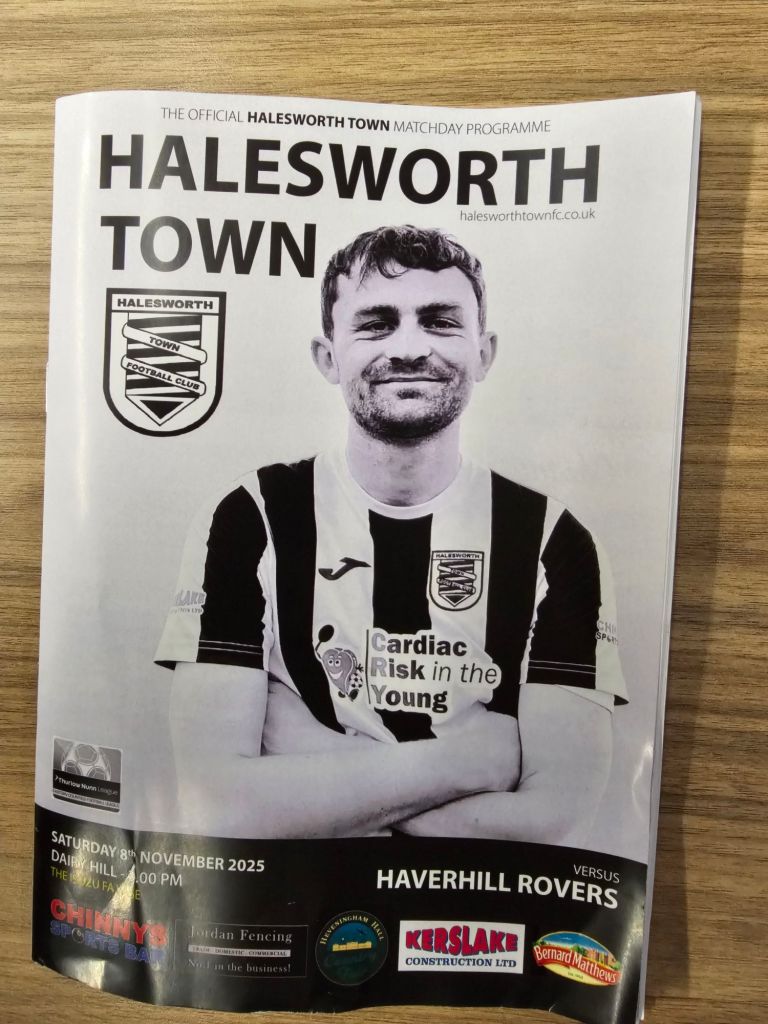
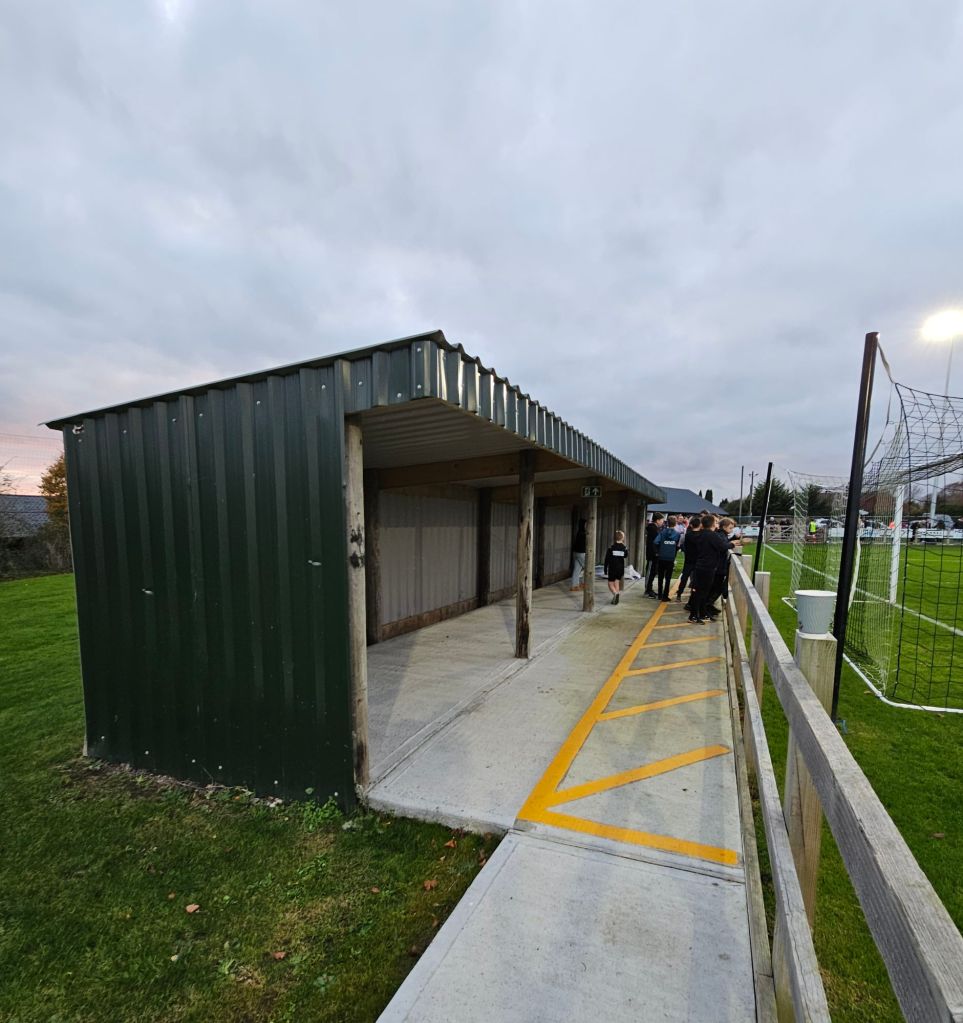
Despite its attractive name, Dairy Hill is just an uninspiring street of modest modern houses; from the top I make my way across the stony club car park and along the back of the club house to the ground entrance.  For a mere seven pounds I gain a programme (£1.00) and entry to the match as an over sixty-five, all that is missing is the click of a turnstile.  The ground itself is underwhelming, but it does boast a decent looking pitch with a smart timber fence all around and a small stand at the end nearest the clubhouse, which according to ground grading rules needs to be big enough to accommodate fifty spectators, although I’m not sure if FA rules say how large or small the spectators need to be.  The height of Halesworth’s stand suggests they should not be significantly taller than about 1.8 metres unless wearing crash helmets.

I head for the club house where the bar offers the usual array of fizzy lagers and cider and a pump which intriguingly bears the name ‘Wainwright’ written in biro on a plain white sticky label.  The barman generously allows me a sampler of the ‘Wainwright’ and seeing as there’s nothing-else I might like I order a pint (£4.60) before heading outside again to visit the food trailer, where a tall man with tattooed arms, who looks like men in food trailers often do serves me chilli, chips and cheese for a modest six pounds, less than half what I paid for much the same thing in an Ipswich pub earlier this week. 

I return to the club house to eat my chips and drink my beer, not being someone who likes to eat or drink standing up.  The club house looks like there might be an older timber building, which has had a new roof and supporting structure placed over the top of it, it smells a little like that too, having a faint musty odour which isn’t uncommon in old village halls and clubhouses.  The black and white interior décor and monochrome photos of old teams on the walls remind me a little of the Long Melford club house before it was re-built.

With chips eaten and beer drunk, I wait outside for kick-off, observing the growing crowd and the queue to get in at the gate, before standing closer to where the two teams will line up before the procession on to the pitch to shake hands and then observe the minute’s silence for remembrance day, a silence  which whilst well observed around the pitch plays out to a back ground of chatter from inside the bar and clubhouse, where life continues as usual, oblivious to the  silence outside.

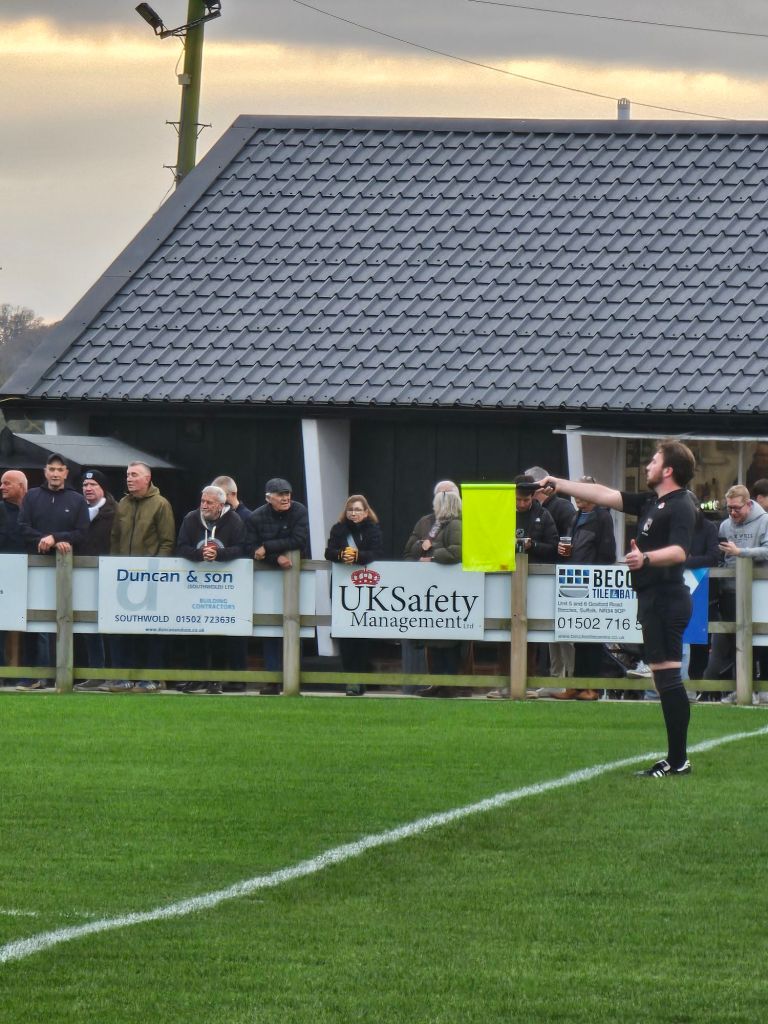
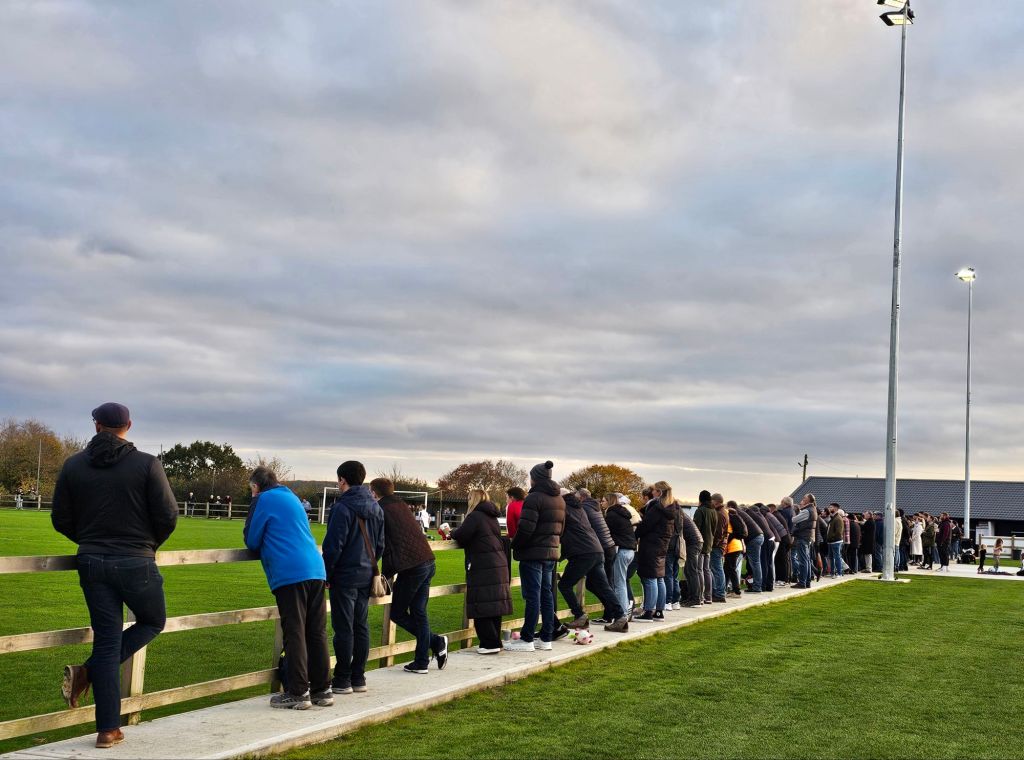
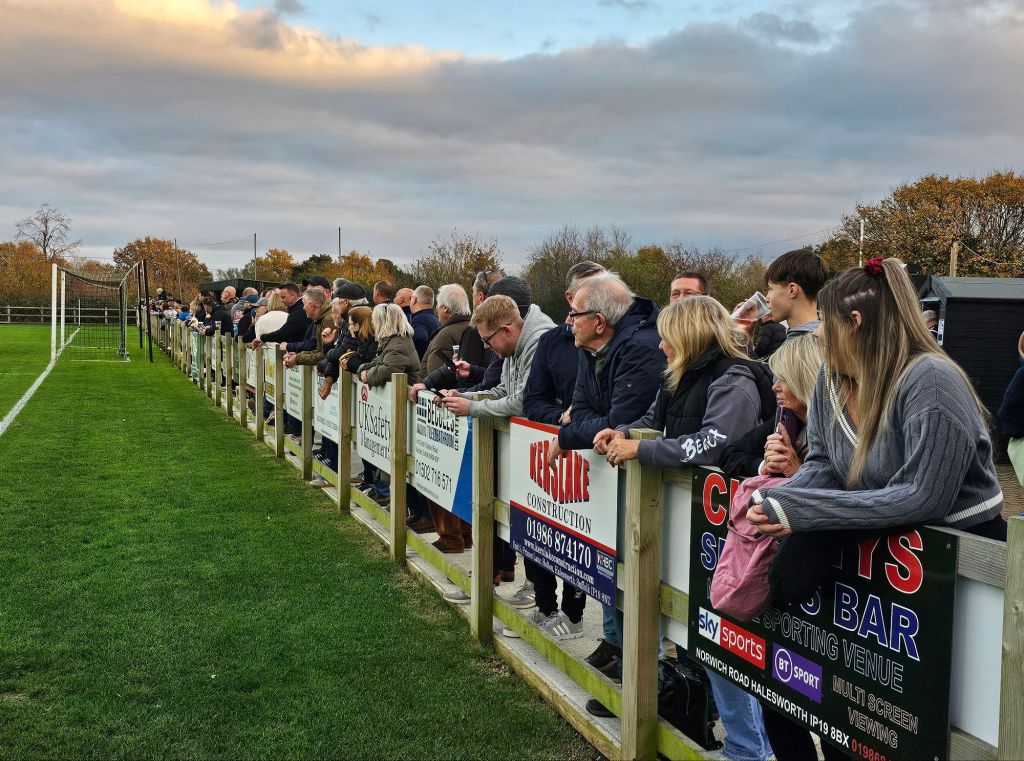
Eventually, it is Haverhill Rovers who begin the game, by getting first go with the ball, which they quickly hoof forward in the general direction of the stand, the railway station and town centre beyond, before it is booted into touch by a Halesworth defender, not unreasonably practicing safety first.  It’s good to see both teams wearing their signature kits, Rovers in a rich shade of all red, whilst Halesworth sport black and white stripes with black shorts. In front of the only stand, a youth bangs the sort of drum I wouldn’t bet against him having been given as a present for his sixth birthday, probably about six years ago.  The bulk of the crowd are lined up behind the post and rail fence along the touchline opposite the dug outs and when Halesworth win the ball they emit an encouraging rustic roar.

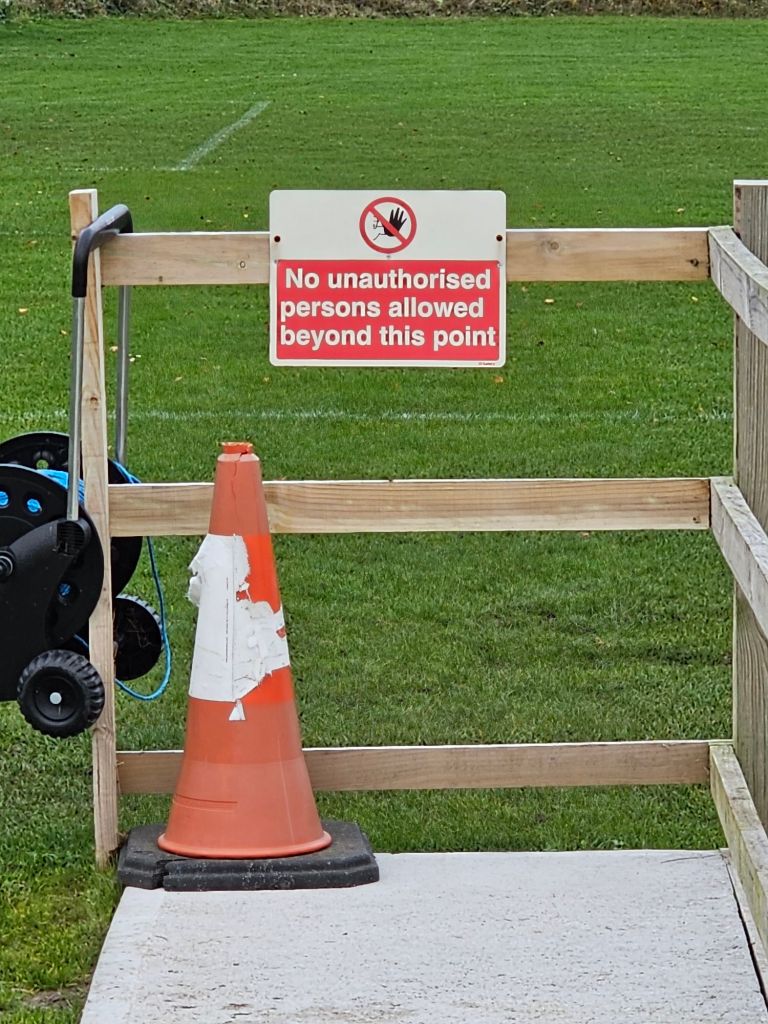
Seven minutes have passed and it’s Rovers who are the team kicking the ball most of the time; their number seven Prince Mutswunguma performs a neat turn and a decent cross which is headed over the Halesworth cross bar.  The pattern of the game is generally one where the long ball is favoured over short passes and two minutes later Mutswunguma blazes the ball high above the Halesworth cross bar.  I stroll along the front of the empty stand between it and the pre-pubescent ultras but remain nervous of hitting my head on the low roof.  I stop close to the corner flag, halted by a sign forbidding further progress and disappointingly preventing me from walking round to watch the game from behind or between the dugouts, where the angst and frequent bad language of the managers and coaches is often as entertaining as the match.   I am nevertheless now in a good position to see Rovers’ desperate claims for a penalty as Mutswunguma tumbles under a challenge from number 6, Ollie Allen and then two more players fall over. “Fucking disgraceful” opines a gruff voice from somewhere, either on the pitch or in the dugouts, but I’m not sure if he means not giving a penalty or having the temerity to appeal for one.

Keen to see the game from as many angles as possible I move again, this time to near the corner flag diagonally opposite the one I have been standing by.  I settle near a man in late middle age who sports a Stranglers t-shirt and beanie hat bearing the name of The Rezillos, the excellent late 1970’s Scottish ‘punk’ band fronted by Faye Fife and Eugene Reynolds.  He is on his mobile phone and seems to be arranging a claim on his motor insurance having hit something when parking his car in the club car park.  In my new position I also benefit from a good view of an increasing number of unsuccessful Halesworth breakaways as the home team gain in confidence from repelling all Rovers’ attempts to score.

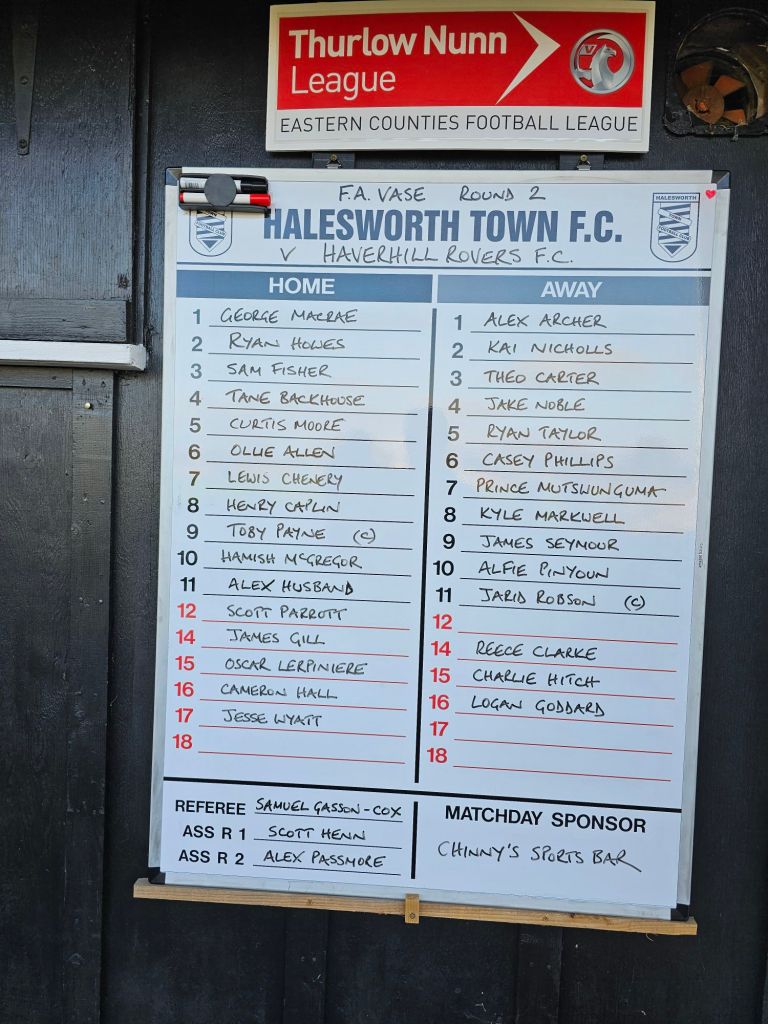
In goal for Halesworth, George Macrae has made a string of fine saves as Rovers win a succession of corners.  Rovers’ best effort is a shot from Kyle Markwell, whose surname gives a clue to the opposition as to how to treat him, that whistles past a post.  A half an hour is lost to history and Halesworth fashion another breakaway as captain Toby Payne receives a diagonal pass out on the left.  “He’s on!  He’s on! Well, he’s not off” shouts a young man to my left with rising excitement as Rovers’ offside trap is sprung. Payne advances into the penalty box, shapes up to shoot but then side foots weakly too close to the goalkeeper Alex Archer, who doesn’t have to stretch far to prevent a goal.  Two minutes later however Halesworth break again down the left and this time the ball is pulled back from the by-line for Lewis Chenery to score easily into the middle of the Rovers’ goal from no more than 8 metres out and it’s 1-0 to Halesworth Town.

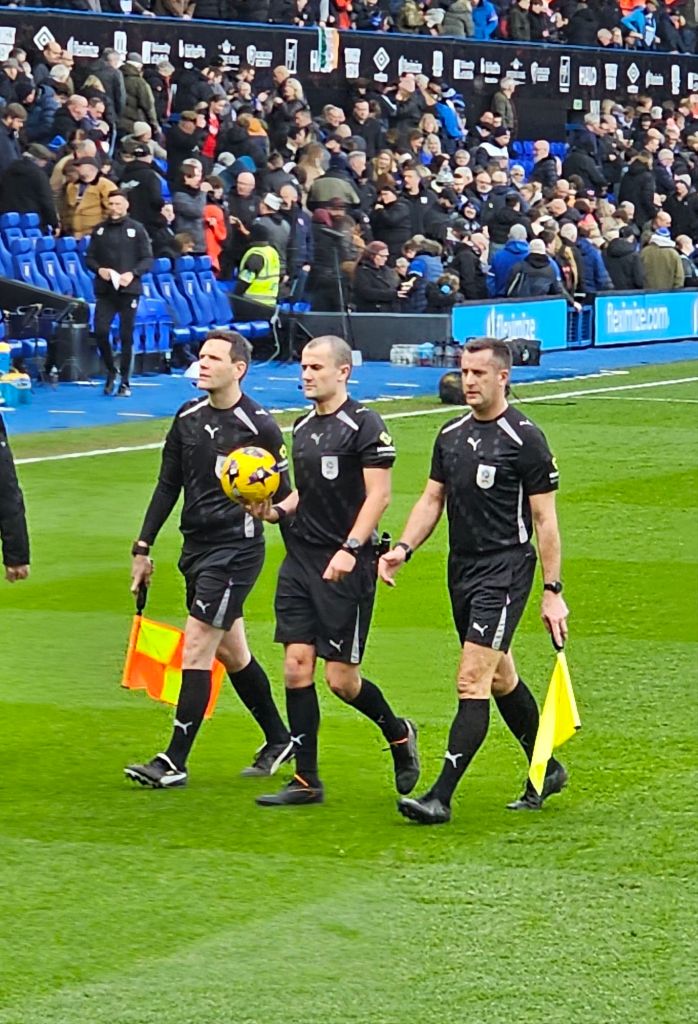
The remaining dozen minutes of the half repeat the established pattern of the previous thirty-three, and another Rovers’ corner is headed wide, which I view from back near the clubhouse as I prepare to be ahead of the queues for the toilet and the tea bar when the referee, the extravagantly monikered Mr Gasson-Cox sounds the half-time whistle.  Having invested in a pound’s worth of tea I take-up a position for the second half just to the right of the stand, but not before I overhear a club official talking to the man on the gate and learn that the attendance today is a stonking two-hundred and fifty-eight.    As the new half begins and the light fades, the lovely smell of the turf rises up from the pitch. A woman standing next to me tells me we will see the goals at this end in the second half and I agree, telling her that with the goal being scored at the other end in the first half, it figures that this is the end where the goals will be scored this half.  We talk a little more and after I reveal I have an Ipswich Town season ticket, she admits to being a Norwich City supporter, but sympathetically I tell her someone has to be.

With the start of the second half at three minutes past four Halesworth seem to have lost a little of the confidence they showed by the end of the first half, perhaps because they realise they have to go through another forty-five minutes similar to the first, and indeed they do. But with twenty minutes gone and no further score it is Rovers who first feel the need to make substitutions.  “Who are ya?” chant the pre-pubescent ultras, as well they might as the new players emerge from the dugout.  Five minutes later and Halesworth’s Tane Backhouse is the first player to see the yellow one of Mr Gasson-Cox’s two cards, although as I become increasingly biased in favour of the home team and their superb goalkeeper, I can’t really figure out why.  Two minutes later and I’m cheering as another characteristic break down the right sees Toby Payne run to the edge of the Rovers penalty area, cut across a little towards the middle and then shoot unerringly inside the far post and Halesworth lead 2-0.  “Oh when the Town go marching in” sing the mini ultras, as do a number of people old enough to know better, but understandably carried away by the moment.

Things get no better for Rovers as after  an innocuous looking foul Mr Gasson-Cox nevertheless seems annoyed with Prince Mutswunguma and standing his ground, summons him over before showing him the yellow card.  “Wemberley, Wemberley” sing the Halesworth fans who should know better but are now too happy to care, but as they do so Rovers, perhaps realising their desperate position with only ten minutes left embark on a final push.   It’s twenty to five as George Macrae makes another fine save, this time diving low to his left. “Two-nil down on your big day out” sing the pre-pubescents, not helping the situation with their cruel taunts and Rovers win another corner.  The corner is cleared but moments later the ball is crossed low from the right and Rovers’ number eleven and captain Jarid Robson half volleys it high into the centre of the goal from a narrow angle and the score is a nerve-wracking 2-1.

It’s now eleven minutes to five, the match is a minute into added on time and Rovers are besieging the Halesworth goal like local Saxons or Danes outside the Norman police station.  A cross comes in from the left, and a Rovers head goes up diverting the ball goalwards but once again George Macrae appears, seemingly from nowhere to save the day again by cleanly catching the ball.  “Six more minutes Haverhill” I hear a voice call, perhaps from the Rovers’ dugout, or perhaps it was Mr Gasson-Cox or someone just mucking about. Six minutes seems an awfully long time given that neither I nor the lady next to me can recall anyone really being injured.  Another Rovers corner goes straight to the arms of Macrae but then Halesworth break away again, bearing down on goal on the right and then switching the ball across the edge of the penalty box before number eleven Alex Husband shoots from a narrow angle and the ball strikes a Rovers defender and arcs up over Archer the goalkeeper and into the goal off the far post.  It’s 3-1 to Halesworth! The game is surely won and the knot of Halesworth players hugging by the corner flag and the under12’s ultras who have run along behind us hoping to celebrate with them clearly think so.
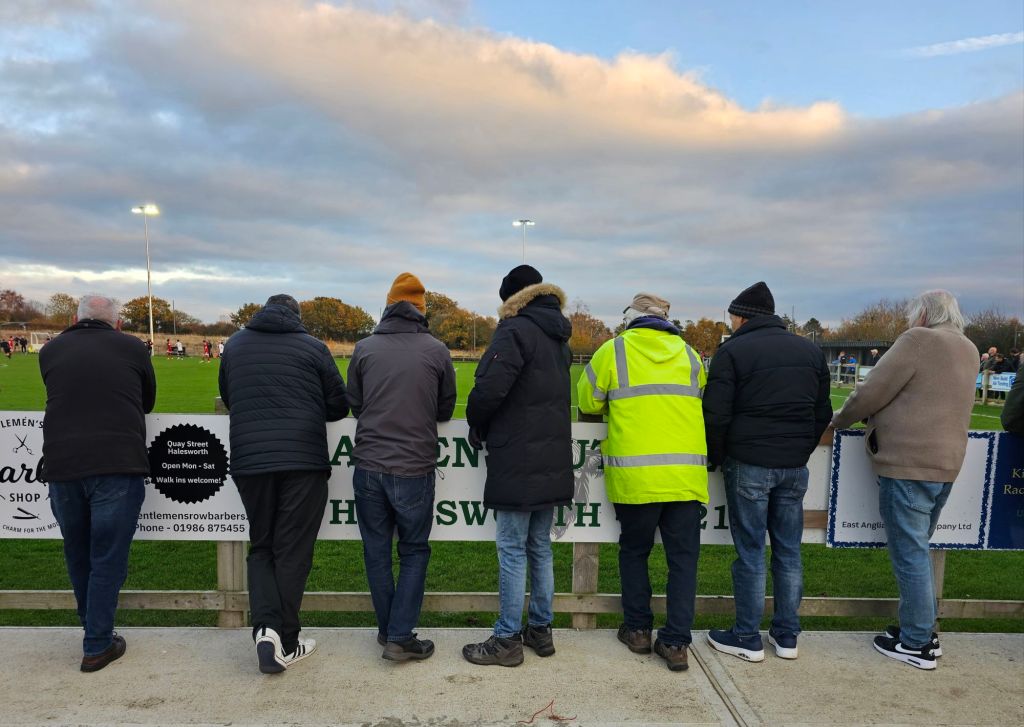
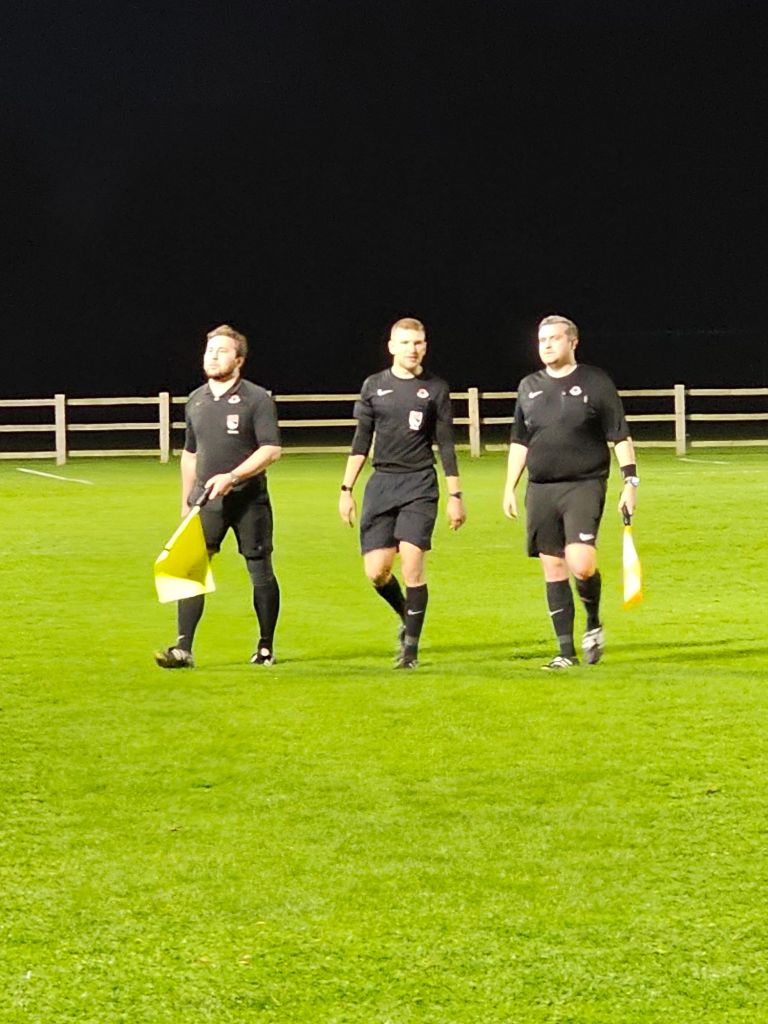
Very soon however, it’s three minutes to five and finally Mr Gasson-Cox parps his whistle for the last time today and Halesworth are into the third round of the FA Vase. Most people wait to cheer and applaud the team as they leave the pitch, but not before they applaud Mr Gasson-Cox the referee and his assistants, which is something you don’t see every day, and then the Haverhill players too.  It’s been a wonderful afternoon, an exciting cup-tie played in front of a large and appreciative crowd, and everyone’s had a lovely time.  As I leave the ground and make my way back across the stony car park and down Dairy Hill to the station I reflect on what a fine little town Halesworth is and how one day I really should return. All hail Halesworth!

Ipswich Town 1 Watford 1

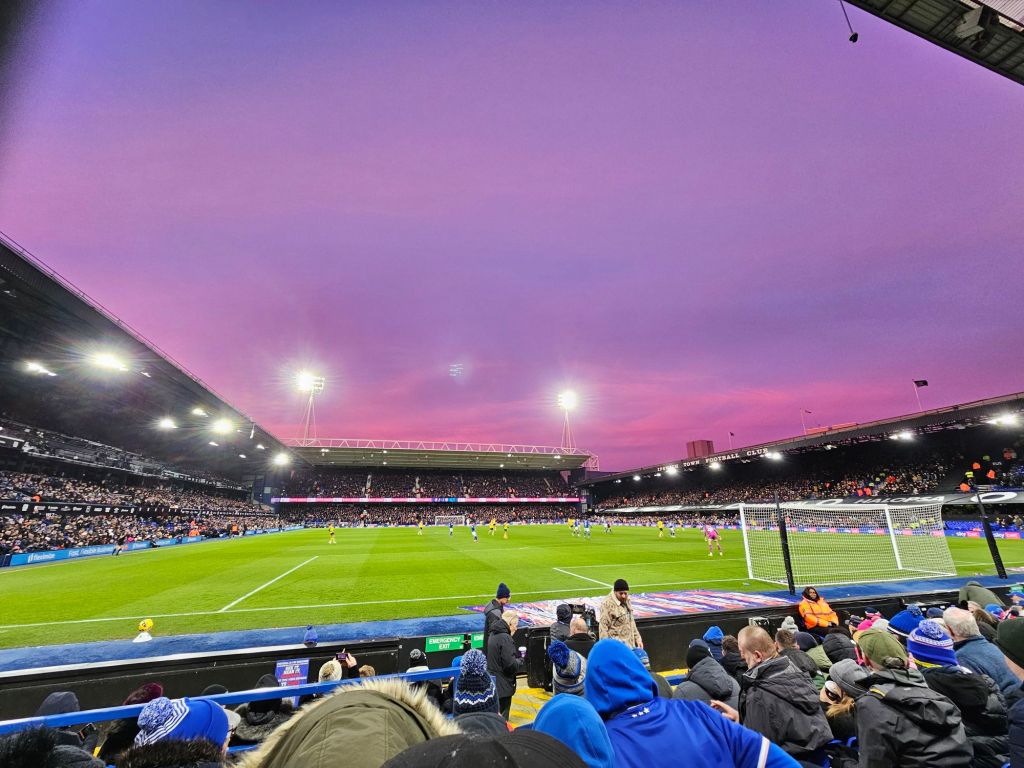
 Leaving off work on a November evening is one of life’s many pleasures, as indeed is leaving off work at any time of day or year but the fading light and swirling russet leaves, like in the opening scene of The Exorcist, somehow add a layer of gloomy beauty that enchants.  Add the prospect of an evening kick-off at Portman Road, and the streets of Ipswich are alive with worried expectation.  Opposite the bus depot I ‘bump into’ Richard, a long-since disillusioned but long-time Town supporter, who now occasionally catches a game when he can but mostly watches local non-league football.  He’s on his way to meet a friend for a pre-match drink but has arrived early, so we have time to stand in the glow of a streetlight and talk of Brightlingsea Regent, Wivenhoe Town, Hackney Wick, SOUL Tower Hamlets and Kings Park Rangers, who sound from Richard’s account of a recent match like hired hitmen.  Richard is concerned that the team that starts tonight’s match will not be the same one that started the match on Saturday.

Leaving Richard to go his own way, I have time to visit the recently installed ‘portal’ on Cornhill, and because I’m not sure what else to do, wave to people in Dublin and New York, some of whom wave back.  Unfortunately, I hadn’t thought ahead and prepared a rude comment about Donald Trump to hold up on a piece of cardboard.  I had wondered what the point of the portal is and still do but think I like it.  It’s good to know I can momentarily make meaningless, mute contact with someone in Lithuania, Poland or Brazil.

At ‘the Arb,’ there are people crowding around the bar umming and ahhing over what they want to eat. Over their heads I order a pint of Mauldon’s Suffolk Pride, and they seem surprised when I am being served, and they are not.  When did people stop understanding the etiquette of pubs and bars?  I add an order of chilli, chips and cheese (£13) and retire to the beer garden with my beer to wait for Gary, Mick and the chilli, chips and cheese.  Gary is first to arrive in his orange puffa jacket and with a pint of Spanish lager.  The chilli, chips and cheese are next, followed by some cutlery, and then Mick who arrives before I finish eating.  Mick has a pint of Suffolk Pride, Gary then has chilli, chips and cheese and Mick has chips and Emmental and he also buys another round of two pints of Suffolk Pride and Spanish lager as we talk of how busy the funeral business is currently, inter-sex sports people, Gary’s favourite places in India, Gary’s quiz team, the sale of Mick’s deceased neighbour’s house, a woman Gary and I knew who reached the final of tv’s Mastermind, whether Quorn comes from Quorn in Leicestershire, re-using Haig Fund poppies, the presence of gender in the Romance languages and  other things that I’ve probably forgotten.  There’s finally still time for me to buy another half of Suffolk Pride for myself and a whisky for Mick, but Gary is too full of chilli, chips, cheese and gassy Spanish lager to consume another drop.

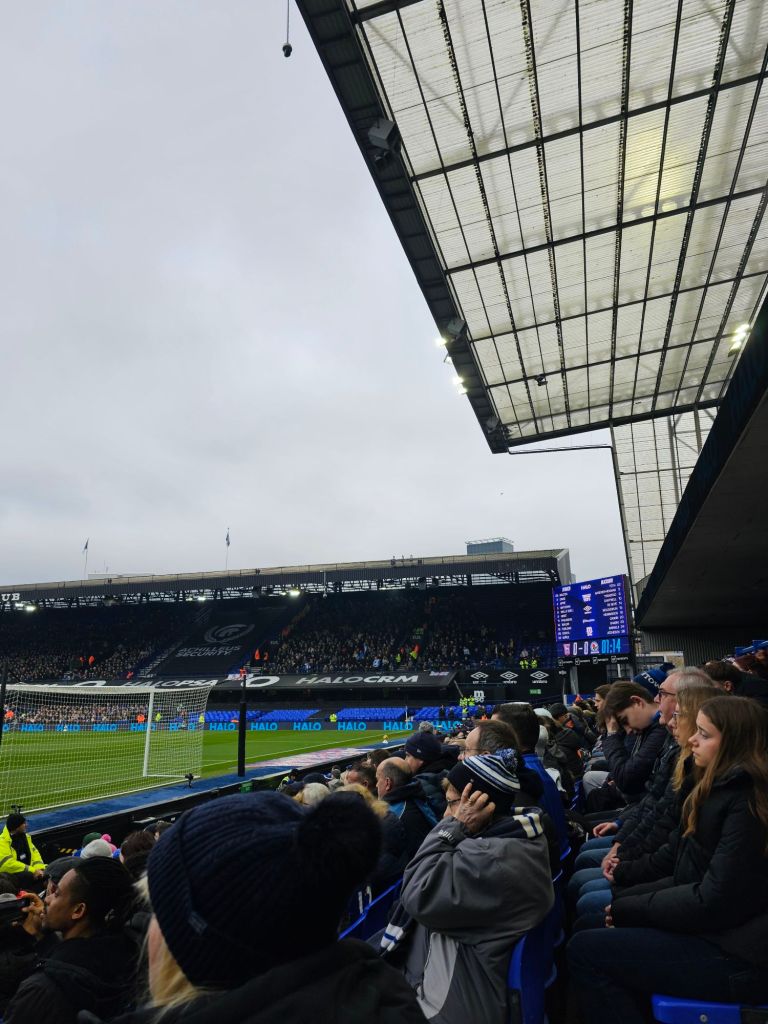
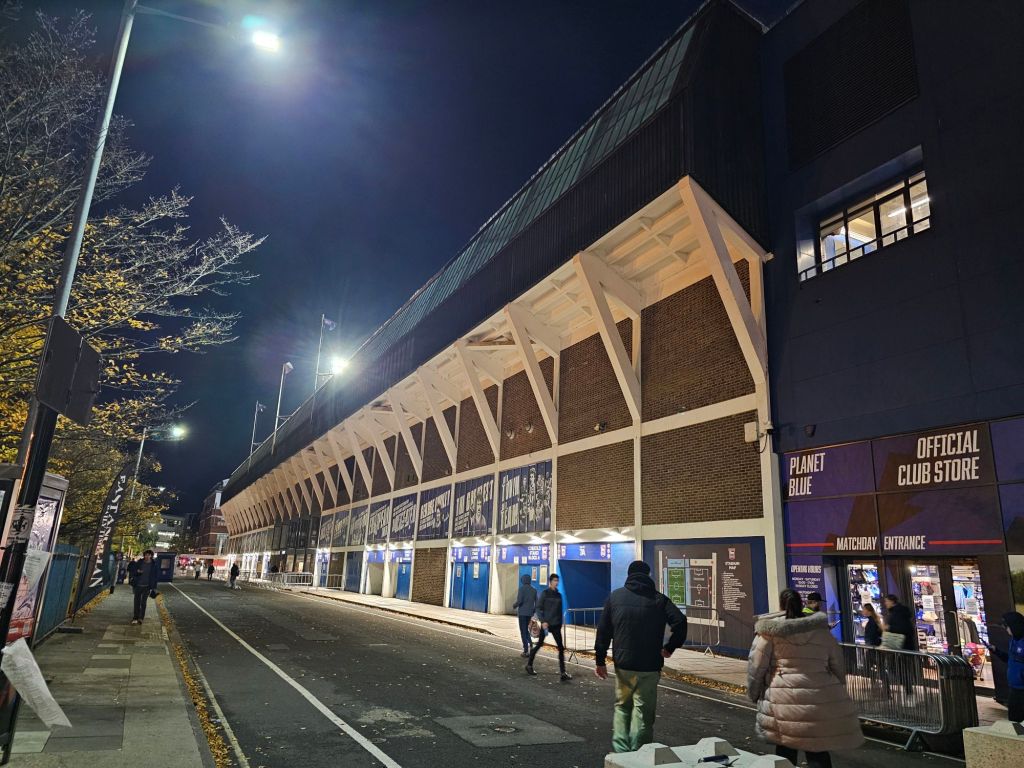
As ever, we are the last to leave for Portman Road; it is twenty-three minutes past seven.  At Portman Road there is no queue into the stand formerly known as Churchman’s and seeing the security staff brandishing their magic wands for detecting weapons, I stick my arms out wide as I approach. The security man smiles broadly, “You’re flying already” he says in a jolly Afro-Caribbean-cum-London accent.  “High as a kite” I tell him, pretending to be, in the words of Marge Simpson ‘whacked out of my gourd’. After venting the spent drug of my choice, Suffolk Pride, I emerge into the stand in time for a minute’s silence for Armistice Day and the last post, something I still find odd in the context of attending a football match. Inevitably, Fiona, the man from Stowmarket (Paul) and ever-present Phil who never misses a game are already here, but Phil’s son Elwood is absent and so is Pat from Clacton, although on the end of the row sits a woman in dark glasses who looks a bit like her.  Of course, in reality, the woman on the end of the row is Pat from Clacton and she’s not in disguise, only shielding her eyes from the glare of the floodlights having recently had cataracts removed.

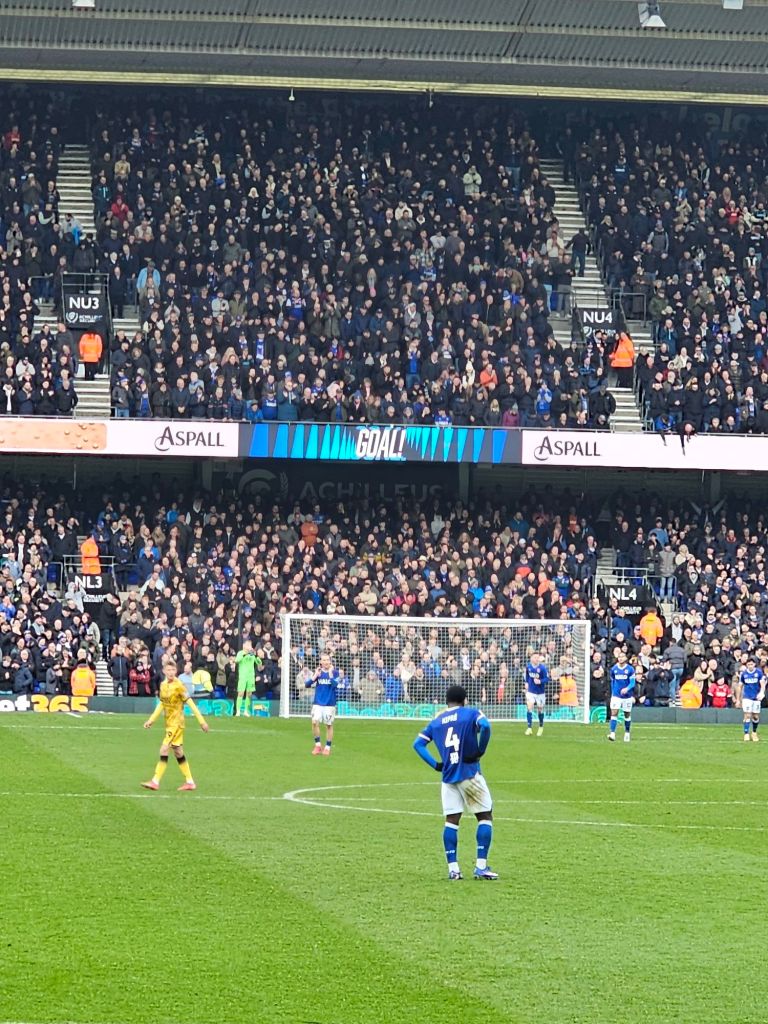
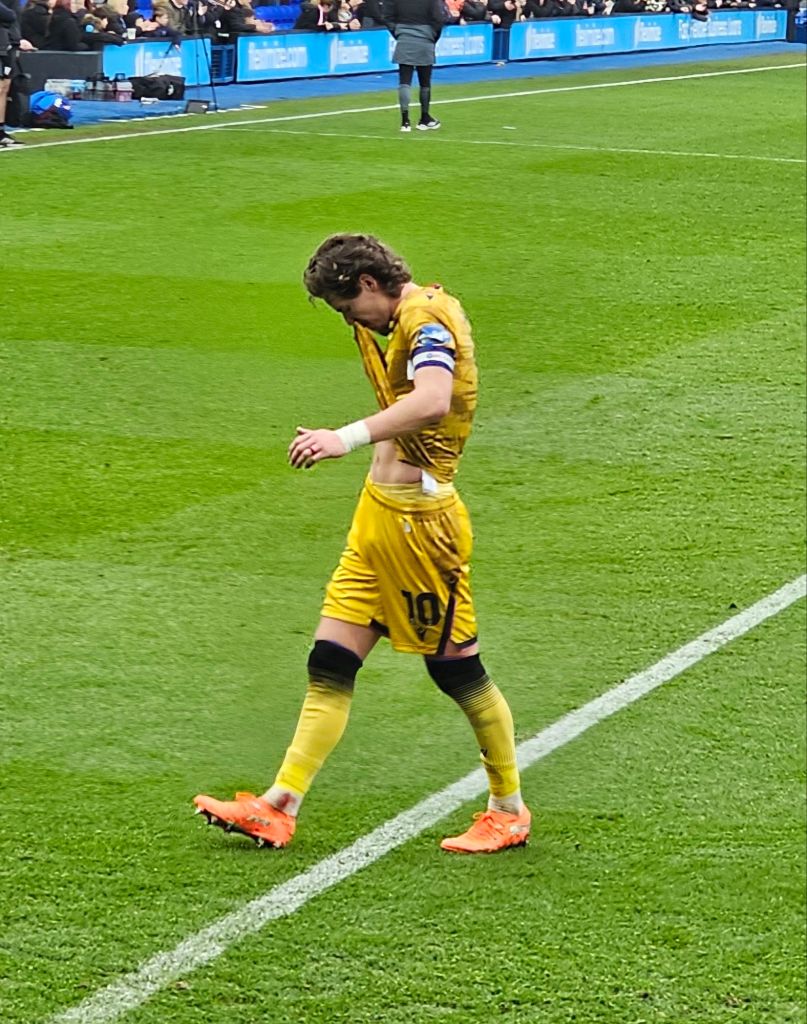
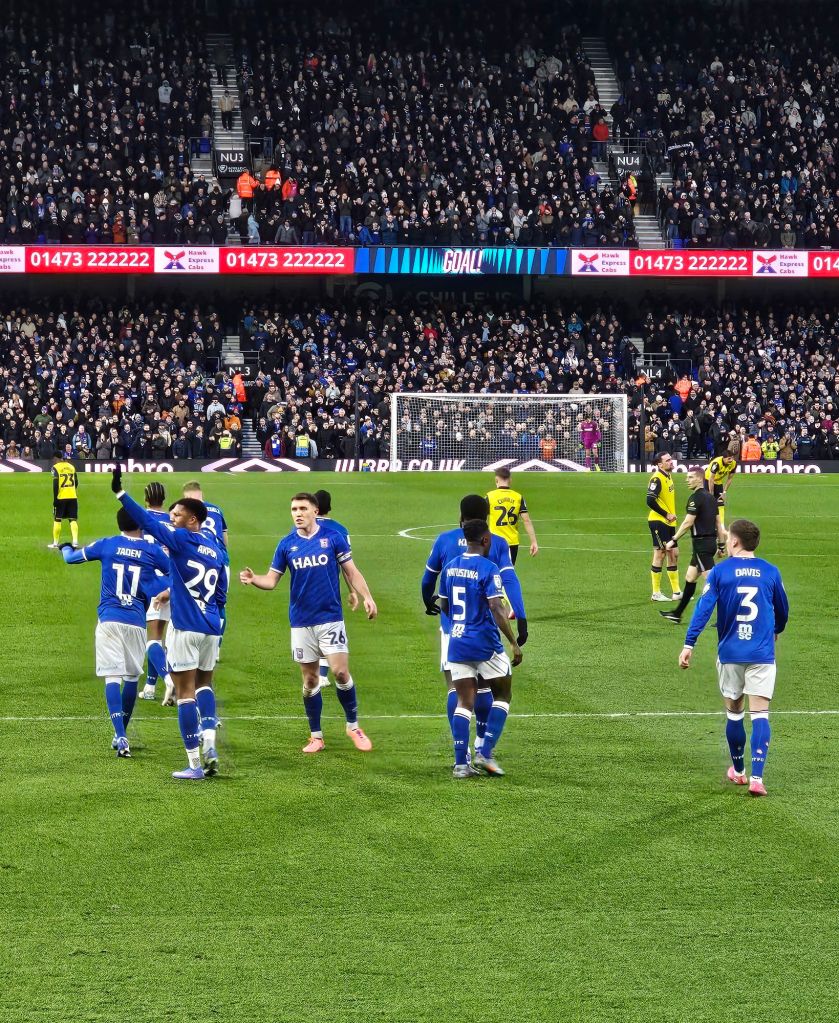
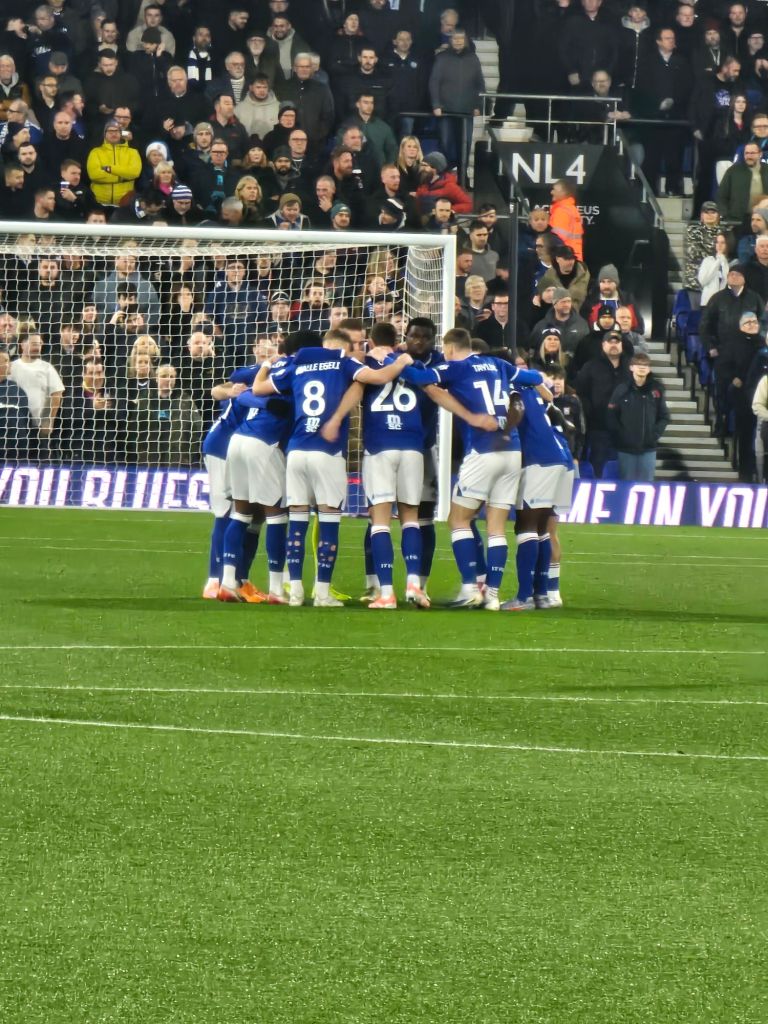
I seem to have missed the announcing of tonight’s team, the ritual of remembrance having taken precedence over the usual pre-match ritual, and with players’ huddles out of the way it’s Ipswich who proceed to get first go with the ball, which they predominantly aim in the direction of the goal in front of me and my fellow ultras.  As usual, Town sport their signature blue and white kit, whilst visiting Watford sport lurid, garish yellow shirts with red stripes and red shorts, colours which remind me of centrifuged blood and the French second division team Le Mans FC.

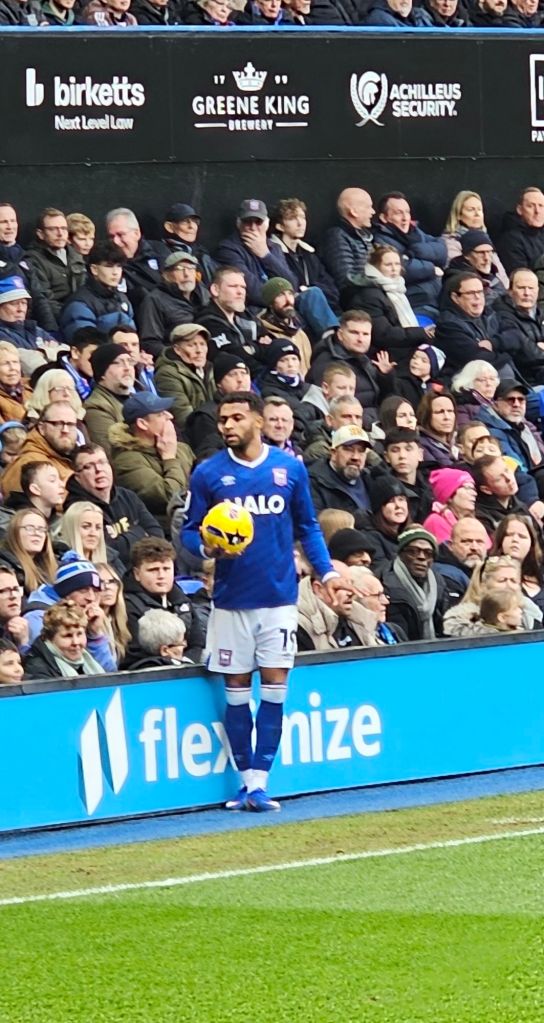
Ipswich quickly win a corner, so quickly in fact that I forget to chant “Come on You Blues” and the attacking opportunity is hopelessly wasted before I even realise.  I’m still getting to grips with the diminutive height of the referee and the poppies on the players’ shirts as Town win a free-kick and Jaden Philogene places the ball very inexpertly and disappointingly over the Watford crossbar.   A short while later Jens Cajuste shimmies wonderfully between a couple of Watford players on the edge of their penalty area, and the home crowd sing supportively for their team. Watford look tidy, but Ipswich are tidier.

Almost inevitably, despite not being as tidy as Ipswich, it is Watford who score.  The sixteenth minute is Town’s undoing along with a general melting away of any defence on the right-hand side of the pitch, resulting in a low cross and a simple close-range goal from the misleadingly named Louza.  “We’re winning away, we’re winning away, how shit must you be?  We’re winning away” chant the Watford supporters to the tune of the Beach Boys’ Sloop John B in what passes for humour amongst most football crowds.  Meanwhile I snigger because Watford’s number six is called Matthew Pollock, I just can’t help myself when people are named after certain fish.

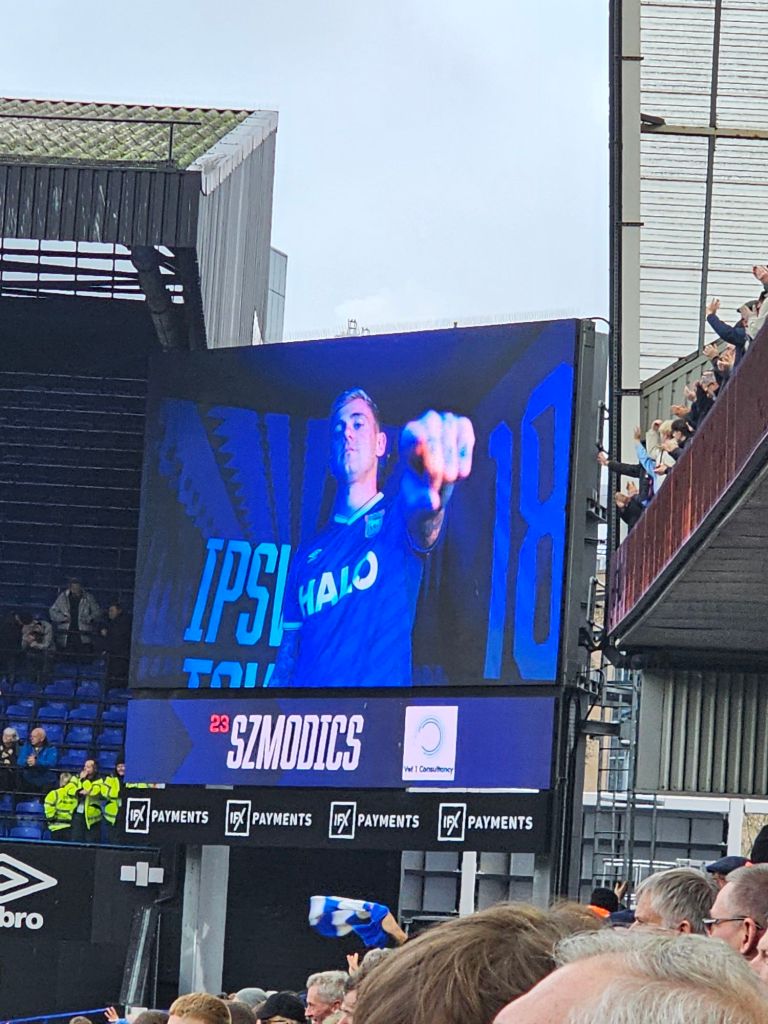
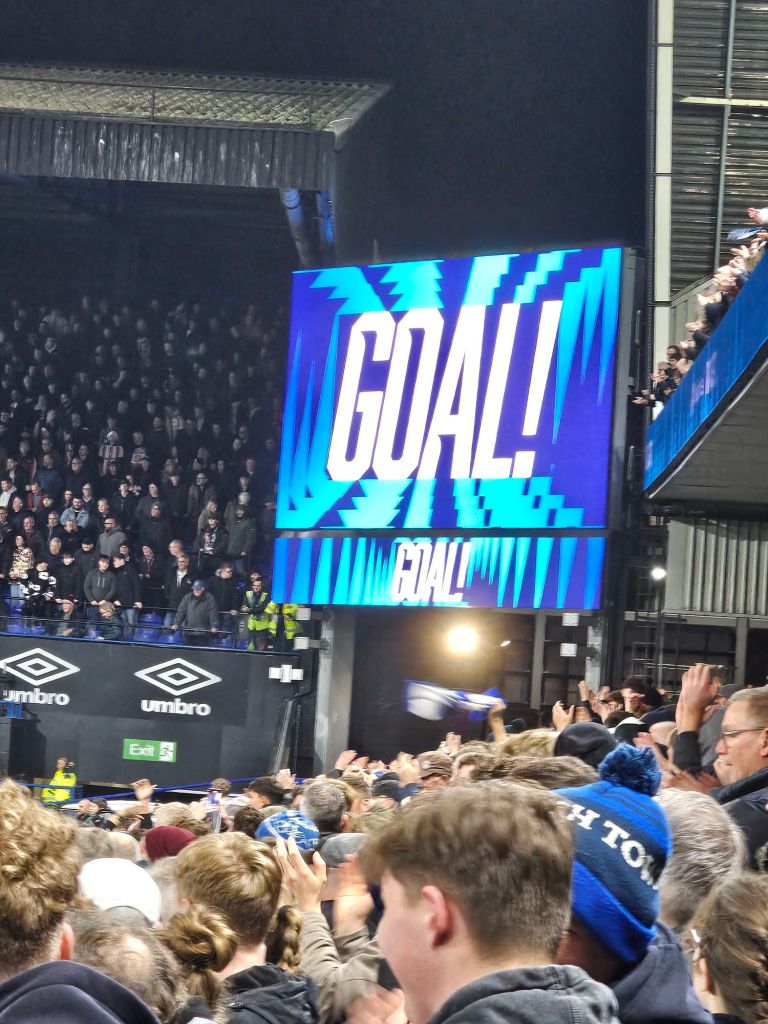
Happily, Watford won’t be winning for long and after George Hirst heads over the crossbar, central defender Cedric Kipre provides a through ball worthy of any midfield maestro and Jaden Philogene scoops and curls the ball over the prone body of Watford’s Norwegian goalkeeper, and the score is one all.  “We’re no longer winning away, we’re no longer winning away, you’re better than we thought you were, we’re no longer winning away” chant the Watford fans, except of course they don’t.  Instead, the excitable young stadium announcer tells us excitedly and loudly that the goalscorer is “Our” Jaden Philogene, and he then proceeds to bawl “Jaden” and wonderfully allows the crowd to chant “Philogene”, which happens three times, as if we were in the Stade Roudourou or somewhere equally French.  Ever-present Phil who never misses a game turns around wide-eyed, with a look of surprised recognition on his face to celebrate the moment with me. “All hail the excitable young stadium announcer” I think to myself.

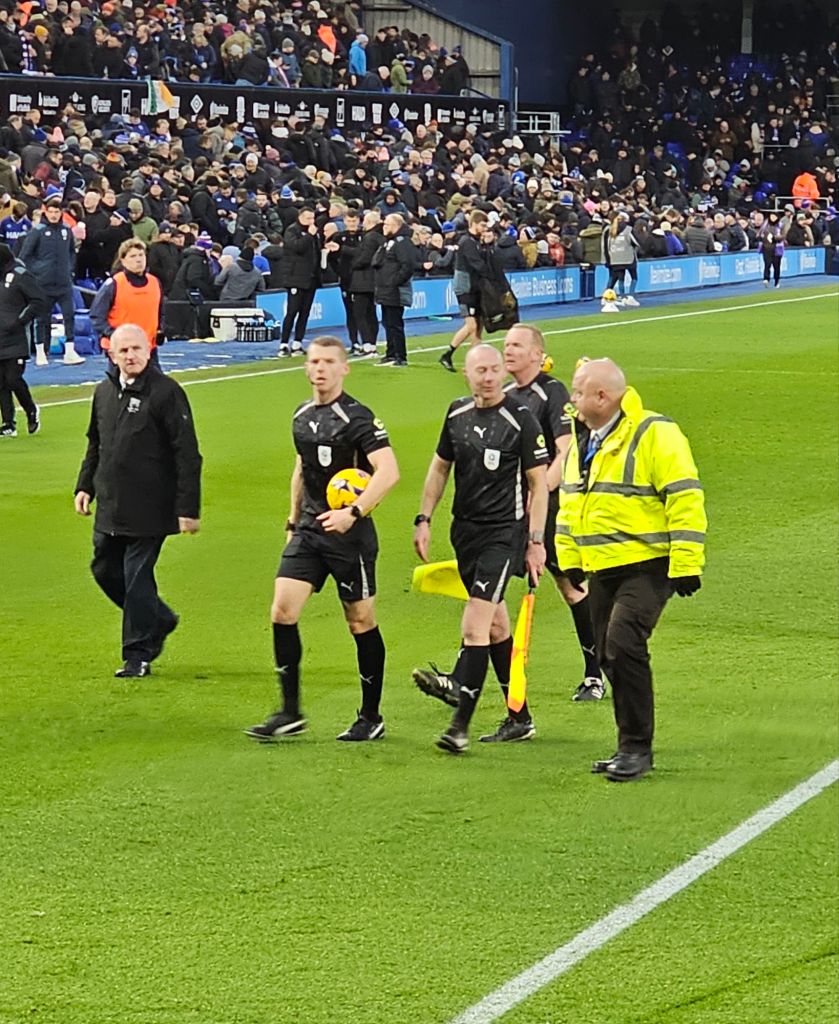
There are still the best part of seventy minutes left to record a famous victory, although the tiny referee seems to want to make things as difficult as he can as he takes his time allowing Chuba Akpom back on the pitch after receiving treatment.   The expected goals don’t happen. Watford win a couple of corners. “Event cleaning” say the electronic advertising boards on the Sir Bobby Robson stand before promoting the name of RJ Dean Plasterers, and probably because this is advertising, I think of Pearl & Dean at the cinema; Baba, baba, baba, baba, bababa. There are three minutes of added on time, which is long enough for Watford’s Kwadwo Baah to claim the first booking of the evening. BahBah, BahBah, BahBah, BahBah, BahBahBah.    The Watford supporters complain, perhaps because given the number of fouls that had previously gone unpunished they thought their team had diplomatic immunity, and the Town supporters claim to have forgotten the Watford supporters were here.  “Plus ca change” I think to myself, briefly returning to the Stade Roudourou.

With the half-time whistle I speak to Ray his son Michael and grandson Harrison at the front of the stand.  Strangely, we don’t mention the match, perhaps because we can’t hear ourselves think, let alone speak above the deafening public address system.

The second half brings a booking for George Hirst after ten minutes after he is fouled and no free-kick is given and so he not unreasonably assumes it’s open season; if it is it ends just before he gets to the other bloke.  “Watford, Watford, Watford, Watford” sing the Watford fans to the tune of “Amazing Grace”, which is itself amazing and also rather funny.  Nearly an hour has gone the way of history, and we get to cheer another booking for Watford’s Mark Bola, who is momentarily as popular as Ebola.  The second half has ebbed and flowed a bit but whilst Watford create no chances whatsoever, they still pass the ball very nicely and I think they look quite good, which might help explain an unusual interlude in which Jaden Philogene and Azor Matusiwa almost come to blows and probably would do if Cajuste doesn’t step into keep them apart.

It’s always time for change with about a half an hour left to play and tonight is no exception as Clarke, Azon and Taylor usurp Jaden Philogene, George Hirst and Jens Cajuste.  Pat from Clacton clearly thinks in the same way as Keiran McKenna, but with no substitutes of her own to bring on she just delves into her handbag to pull out the masturbating monkey charm, who reportedly has changed many a game in the past, although I’ve never witnessed it myself. The monkey passes from Pat to Fiona to me and I ask what I’m supposed to do with him. “Rub his head” says Fiona. Relieved, I hand him back to Fiona who hands him back to Pat who puts him back in her handbag.  Victory is now assured.

Time takes us into the last twenty minutes of ‘normal’ time and Watford make a copycat triple substitution as the bloke beside me complains that “There’s no end product” and then says it again.  Moments later there is an ‘end product’ from Ivan Arzon, but what should be a decisive net-rustling header is one that goes unpleasantly wide.  Akpom and Johnson are replaced by Nunez and Greaves.

Eighty-two minutes have joined the persistence of memory and Arzon misses again, this time shooting over the cross bar, and we are told that there are 27,184 of us here tonight, the lowest attendance for a home fixture in over two and half years; since we played Shrewsbury Town and the Shrews brought just 343 supporters with them.  As time begins to run away from us, Watford win a corner and then Ivan Arzom has a header saved by the Watford goalkeeper. Two minutes remain of the original ninety and it’s Town’s turn to have a corner from which the ball lands at the feet of Nunez, clear at the far post and perhaps six yards from it.  Nunez proceeds to display how he may always be tainted by having played for Norwich City and boots the ball hopelessly high and wide of the gaping target.

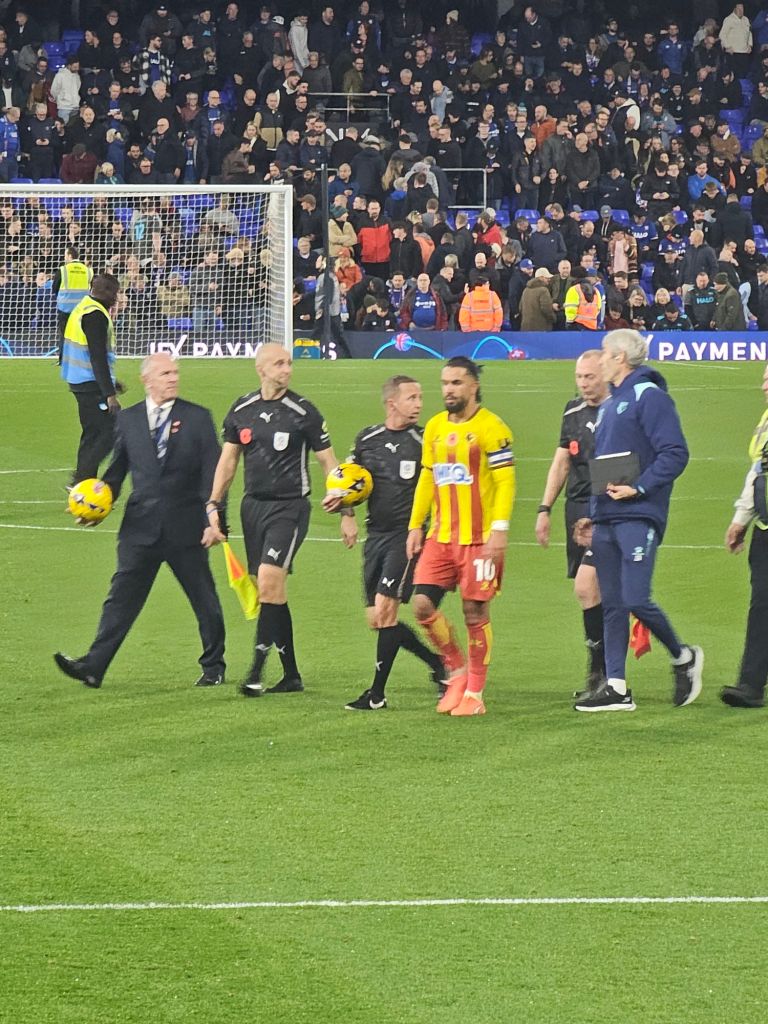
Seven minutes of added on time are added on and whilst it seems like renewed hope, of course it isn’t , and we even have to defend another couple of Watford corner kicks, although I remain confident that there will be no injury time defeat snatched from the jaws of victory, mainly because we’ve never been winning.  With the final whistle I rise from my seat and promptly depart because I have only eight or nine minutes in which to get the ‘early’ train home.   I console myself with the thought that although we should have won, at least we didn’t lose, although at the railway station I will meet Richard again, who will  describe himself as ‘underwhelmed’, but may be he doesn’t enjoy leaving off work on a November evening as much as I do.

Ipswich Town 3 Norwich City 1

One of the many unpleasant things about returning to work having been on holiday is once again being shaken from one’s slumbers at an unearthly hour by an alarm clock.  The first weekend after the return to work is usually a beautiful thing therefore because of the albeit temporary return to what had been the normality when on holiday of not having to get up before you naturally wake up.  Today however, Ipswich Town are playing local rivals, nasty Norwich City and because of human beings’ apparent need to divide ourselves into groups which hate one other, the people charged with maintaining peace and good order have decreed that the match shall begin at 12 o’clock on a Sunday morning.  I had planned to catch the 10:05 train but having received an e-mail from Ipswich Town entreating him to get to the game early, Mick seems anxious that he should.  I therefore set my alarm for 7.30 to give me time to shower, prepare and eat a hearty breakfast, drink coffee with a glass of advocaat and walk to the railway station to catch the 09:30.

It’s a bright sunny morning as I walk to the station and through the leaves of the trees the wind seems to whisper, “Ipswich win, Norwich lose”.   The train is on time, and I sit across the aisle from a man at least in late middle age who wears shorts and a body warmer, as if his legs still want to be on holiday but his torso realises it is autumn.  Another man of a similar age relives his past by wearing a blue Harrington jacket.  The sun is still climbing in the sky and dances between those Ipswich supporting trees as we speed down the line towards Gary, who joins me on my journey along with his recovering achilles tendon.  We chat about the tendon, Ipswich having only played Norwich fourteen times in sixteen years, and Ipswich still having won as many local derbies as Norwich despite Norwich’s eight victories since Ipswich’s last victory in 2009, before looking out for the Wherstead polar bears, of which we see two out of the surviving three.

The streets of Ipswich are heaving with police persons in day-glo gilets, baseball hats and other “street-wear” encouraging Gary and I to reminisce about the days of pointy helmets and long dark coats.  Neither of us stops to buy a programme, deeming £4.00 too much for something glossy but of little real interest, which will sit on a shelf and gather dust until our younger relatives clear our homes when we die and optimistically put them on e-bay.  At the Arb’ I buy Gary a pint of Estrella Gallicia and one of Suffolk Pride for myself (ten pound something with Camra discount). We find Mick in the beer garden basking in the morning sunlight; at first we don’t see him at all and go to sit elsewhere, it’s been a while and it’s as if we’ve forgotten what he looks like, although Gary mistakenly thinks we have seen him once this season, but we haven’t.  Mick jokes, in poor taste, about oncoming senility, but like the baby boomers we are we laugh anyway.

We talk of Ipswich’s first book festival, Brittany, bagpipes, neolithic standing stones, Sligo and Galway, tacky souvenirs and the Catholic church,  electric vehicle charging points and the sale of Mick’s deceased neighbour’s house.  Mick buys us more pints of beer and before long we’re the only people left in the beer garden, everyone else having heeded their e-mails like the obedient, malleable citizens that they are, not like us independent thinking baby-boomers with our pensions and Palestinian flags.   We nevertheless leave the pub perhaps ten minutes earlier than we might normally, but then, Gary’s achilles tendon is still slowing him down. In Sir Alf Ramsey Way the turnstiles are queue-less, although the same is not true of the back of Sir Alf Ramsey’s stand where entry is slowed by scanning for weapons, frisking for stale dumplings and dead budgies with which people might taunt the visiting fans, and an old boy in front of me who is trying to use his season ticket card like a chip and pin and is ignoring the QR code.

After venting spent Suffolk Pride it’s soon a joy to be re-united with Pat from Clacton, Fiona, the man from Stowmarket (Paul), ever-present Phil who never misses a game, and his young son Elwood who are all inevitably awaiting kick-off.  From the Sir Bobby Robson stand a blue and white banner hangs, which slightly cryptically asks “who’s that team we all adore?”.  Given the Gothic typeface I’m thinking someone Germanic, Schalke perhaps or Karlsruher? Hansa Rostock?  But it’s a question that doesn’t really need asking.  On the pitch, the excitable young stadium announcer is contorting his lanky frame as he bellows into his microphone and announces the team.  Sadly, he is becoming as hopeless as his predecessor Murphy and he fails miserably to co-ordinate his announcing of the player’s names with them appearing on the big screen in the corner.  He is possibly just too excited.   I simply ignore him therefore and bawl the players’ names as they appear on the screen, as if I were at the Stade Marie-Marvigt in Le Mans or Stade Ocean in Le Havre.

Eventually, the noise through the PA system subsides and the game begins as the wind howls around us and small pieces of torn up paper flutter about.  It’s Norwich who get first go with the ball and they boot it more or less in the direction of where they come from whilst wearing their traditionally unpleasant signature kit of yellow and green, like a poor man’s Runcorn or Hitchin Town.  Ipswich meanwhile are of course resplendent in blue and white.  If the bloke beside me is to be believed, early Town play is a bit sloppy. “Come on Town for fuck’s sake” he shouts as a pass or two go astray.  Typically, Norwich commit the first foul as if to keep alive the memory of Duncan Forbes.  “All aspects of plastering and drylining” announce the electric advertisement screens brightly between the two tiers of the Sir Bobby Robson stand.   A Town free-kick is wasted. “Fucking numpty” says the bloke behind me as the linesman gives a throw to Norwich.

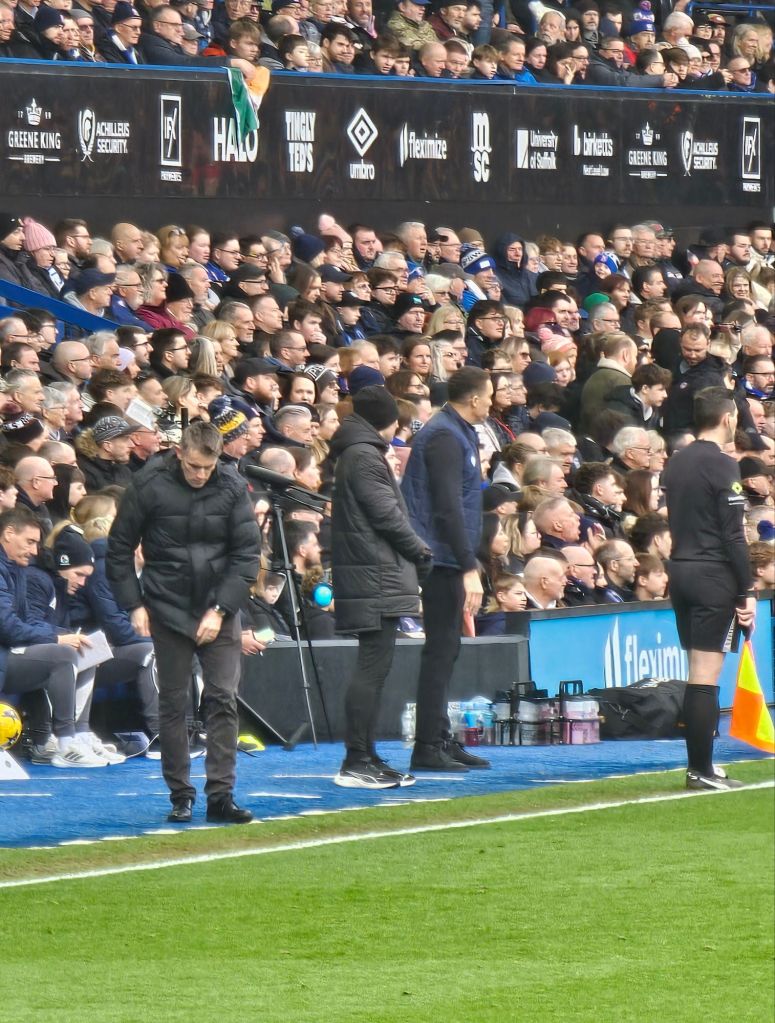
Ten minutes pass and Norwich are probably having more possession of the ball than Ipswich.  The Norwich supporters sing “Your support is fucking shit”.  Ipswich win a corner and along with Pat from Clacton and ever-present Phil I shout “Come On You Blues” a good three or four times as we support our team without using swear words.  On the touchline meanwhile, Keiran McKenna looks a little drab in his grey trousers and black polo neck top, and I think to myself that it surely wouldn’t break our American backers if they let him have a blue and white scarf out of the club shop to brighten him up a bit.  Back in the Cobbold Stand the Norwich supporters think they’re being clever as they sing to the home supporters “Sit down if you love Norwich”, somehow not noticing that they themselves are all standing up.  Sixteen minutes pass and Town win another corner and it’s time to chant “Come On You Blues” again, and again and probably once more for luck, but the score remains goalless, although I do notice that Norwich have a player called Topic and I am reminded of the nougat, caramel and chocolate based confection that reportedly had a hazelnut in every bite but which according to Wikipedia ceased production in 2021 having been introduced in 1962, the year Ipswich were English Champions.

The 19th minute witnesses Norwich’s number twenty-nine kick Town’s Furlong up in the air but escape punishment from the referee who seems to have the authority to absolve Norwich players of sin rather than book them.  The advertisement for Aspall cider that says “Made in Suffolk since 1728, now available in a can” runs across the Sir Bobby Robson stand and I can’t decide whether or not  this is meant to be ironically amusing. My reverie should be shattered as everyone in the ground except for Fiona and myself stands up to celebrate Jaden Philogene smashing the ball into the Norwich net.  But it seems we were alone in hearing the referee’s whistle signalling that a Norwich player had fallen over in the build-up.  Then Norwich win a couple of corners before there’s a cross from the right and a George Hirst header, albeit straight at the Norwich goalkeeper, which stands out as the first incident easily recognisable as attacking football.

The game is now a third of its way into history and Town win another corner.  Along with my fellow ultras I chant “Come on You Blues” again and this time the ball drops down, avoids a couple of boots before being launched comprehensively into the roof of the Norwich goal net by Ivorian Cedric Kipre for whom, seeing as he is on loan from Reims, this must be Champagne football.

Confusingly, the Ipswich supporters begin to sing “You’re not singing anymore” as the Norwich supporters sing “Sing when you’re winning, you only sing when you’re winning”. But the musical interlude lasts only a couple of minutes as Norwich win a corner and the Town players ignore the Norwich number twenty-nine to whom the ball drops at the edge of the penalty area; he shoots, and the ball is by some fluke deflected past Palmer and into the Town goal for an unexpected equaliser and hopefully the last bit of good luck Norwich City will ever get.

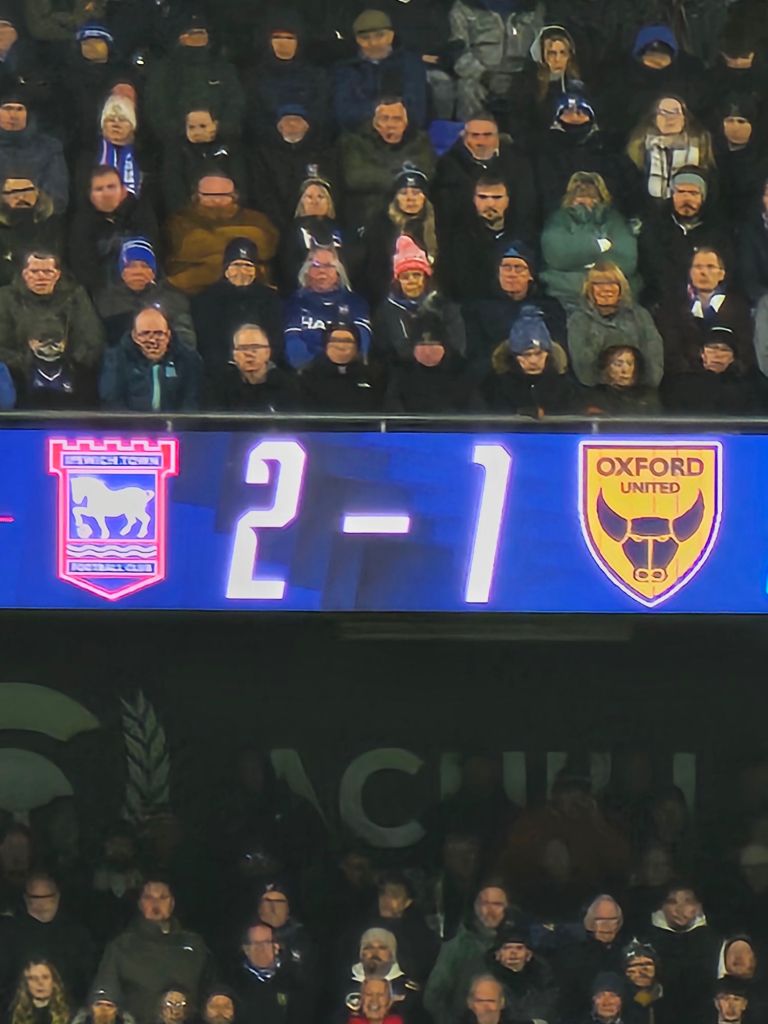
For a minute or two Norwich look puffed-up and pleased with themselves and their number six, who laughingly is called Darling, fouls Leif Davis and referee Mr Thomas Kirk picks him as the first player of the afternoon to see his yellow card. “Name?” says Mr Kirk. “Darling” says Darling. “You can’t get round me like that” says Mr Kirk, blushing slightly. “No, my name is Darling” says Darling. “Well, I’m going to have to book you Darling” replies Mr Kirk, then adding “I hope you don’t mind me calling you Darling, Darling.” 

As the last five minutes of the first half run on, Town win another couple of corners and yet again in vain, we chant “Come on you Blues”. Meanwhile the bloke beside me is analysing the game with the man from Stowmarket (Paul). The last minute of the half is here, and the Norwich number seven fails to control the ball. Jaden Philogene runs on to the loose ball as it rebounds away from the Norwich bloke’s rubber foot, Philogene spins on the ball to leave rubber toes staggering and about to fall over, Philogene takes a stride or two towards goal and then unleashes a left foot shot. Grazing the underside of the crossbar the ball then strikes the Norwich goal net and Town are winning. My jaw drops. English reserve evaporates as Fiona and I hug, and I open my eyes wide just merrily thinking “Wow”.

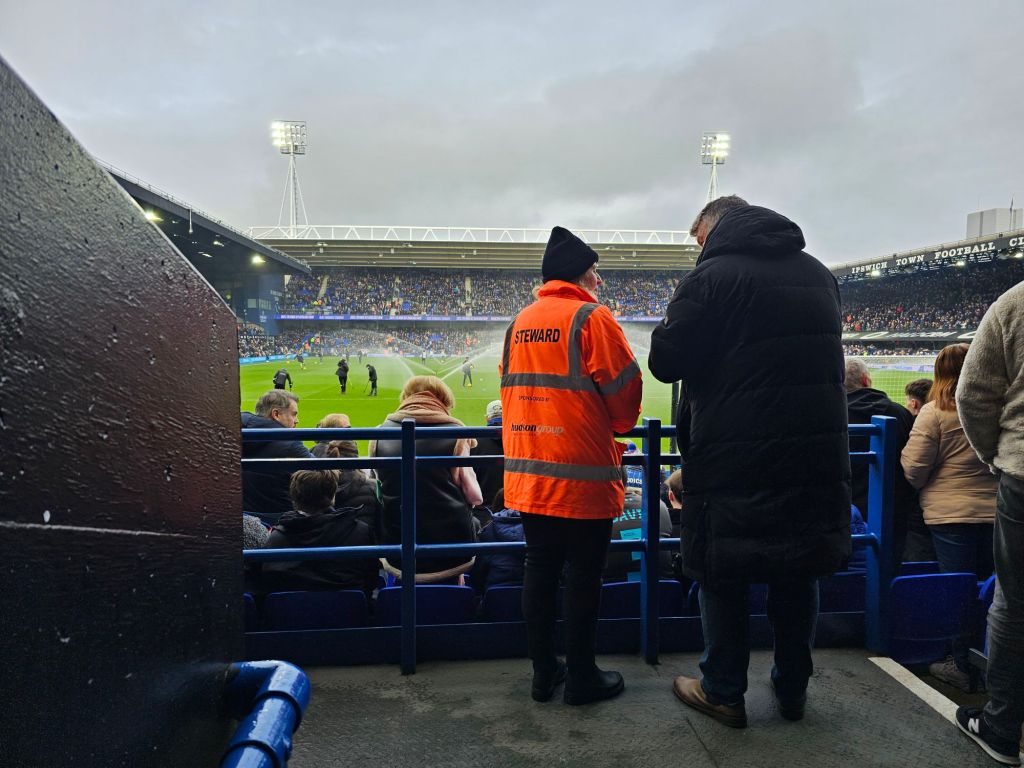
Naturally, half-time is a time of happiness, a time to reflect on a job half done. I head to the front of the stand to go and speak with Ray, but my way is blocked by a steward, who won’t let me through to the front of the stand. I ask why not. “Instructions” says the steward. “What is the reason for the instructions?” I ask. “Instructions” says the steward suggesting some sort of peculiar chain of command in which no one ever explains the reasons for anything. Fortunately, Ray walks over to me and we talk the usual nonsense, but I can only wave to Ray’s grandson Harrison and tell him to be careful, he is in a restricted zone.

Hostilities resume at five minutes past one and initially Norwich look keen to level the scores, but somehow without actually scoring, or even having a shot. Town’s Sindre Egele fouls some bloke in a yellow shirt “Great tackle” says the bloke behind me appreciatively “Shudda been a bit higher”. Town win the ball back from the subsequent free kick but stubbornly insist on ‘playing out from the back’ at all times and consequently concede a corner.

Substitutions are made by Norwich because the players they have had on the field up to now have clearly not been much good. Above, the sky is turning increasingly grey and with an hour gone the floodlights suddenly burst into life as if someone had unwittingly leant on the switch. “Stand up if you ‘ate the scum” chant the home supporters now able to see the yellow and green shirts again and also Marcelino Nunez warming up on the touchline, before launching into what is to become the theme tune of the afternoon, “He’s in your head, He’s In your head ,  Nunez, Nunez, Nunez” to the tune of ‘Zombie’ by The Cranberries.   Feeding off the growing sense of joie de vivre amongst the Ipswich fans Sindra Egele goes past a Norwich player by flicking the ball up over the hapless defender’s head, thereby making a monkey out of a canary.

Twenty minutes of normal time remain and perhaps needing to get his breath back, referee Mr Kirk awards Norwich four corners in quick succession, whilst the Norwich number twenty-three, a belligerent fellow with a shrew-like face, gives up on football and just tries to push and shove and generally wrestle with anyone in a blue shirt. Mr Kirk shows him the yellow card for his trouble.  With the succession of corners over, Keiran Mckenna, still looking ready for a funeral in grey and black, makes three substitutions bringing on Nunez, Ivan Azon and Jack Clarke.  Within three minutes, possibly two, Nunez chips the ball up for Azon to run on to and strike a low shot against the far post and with grace and style Jack Clarke majestically sweeps in the rebound to put Town 3-1 up.

The final twelve minutes of normal time bring two more Town corners after a free kick by Nunez, which 28,000 people fail to will into the Norwich net, and Pat from Clacton tells me she’s off to Great Yarmouth to play whist next week, in a hotel where the manager is a Norwich fan. Today’s attendance is announced by the excitable young stadium announcer as being 29,809 and five minutes of added on time is called, a bit like drinking up time.  Town fans meanwhile are drunk on Philogene and Nunez whilst Norwich are getting chucked out with the empties and throwing up on the pavement outside.  With the final whistle, everyone in blue and white is delirious; I resolve to drink champagne and dance all night and try not to forget to set my alarm clock.

Le Mans FC 0 Rodez Aveyron Foot 1

If travelling from where the channel tunnel burrows its way out from beneath the water into France across to Carnac in Britanny, there are several towns where it is convenient to make an overnight stop and, if you’re that way inclined (and I am), take in a football match.  Having previously enjoyed stops in Rouen, Caen and Rennes, this year it is the turn of Le Mans, whose team are hosting Rodez AF in Ligue 2, the French version of England’s Championship but with smaller budgets and better architecture.  According to the ‘Football’ Le guide ultime magazine, Le Mans have the joint smallest budget in Ligue 2 this season (5.0m euros), whilst Rodez have the next smallest (7.0m euros).

Our hotel is in a leafy suburb of tower blocks just 200 metres from the Ile de Sport tram stop from where it is a 35-minute journey (e1.50 or e2.90 for a return) changing from tram Line 2 to tram Line 1 at St Martin, to the Stade Marie-Marvingt.  This afternoon there is a large, six-wheeled luxury coach in the car park of the hotel and from a short and stilted conversation with the driver I learn that he is driving the Rodez team from the hotel to the stadium.  I photograph the coach with the Rodez club badge displayed in the front window as the driver stands back proudly but out of shot.  I am tempted to ask for a lift to the stadium but don’t want to miss out on the tram ride to the match, something which makes me pretend I’m Albert Camus.  In the hotel lobby, bored looking blokes in grey matching tracksuits hang about mournfully. I wish a couple of them ‘bon match’ and tell them my team is Ipswich Town, it doesn’t appear to relieve their boredom, but pleasingly they have heard of Ipswich Town.  

The match is due to kick off at eight o’clock, but keen to immerse ourselves in the pre-match atmosphere my wife Paulene and I head for the tram stop around six, before the team bus has left the hotel.  We just miss one tram as I fumble with my bank card at the ticket machine, but another soon arrives, and we are lucky enough to get a seat each.   It’s a mild but cloudy evening as we pass through tram stops with names such as Durand-Vaillant, Goya and Gionnieres and on through the uninteresting outskirts arriving eventually at the terminus close to the stadium, the tram depot and the world-famous racing car circuit.

It’s only a short walk from the tram terminus to the stadium, but we accidentally make it longer by walking in the wrong direction, inexplicably failing to follow our fellow would-be spectators as we alight from the tram. Oddly, despite the size of the Stade Marie-Marvingt (it has a capacity in excess of 25,000), it is not visible above the trees.  Adjacent to the stadium is a large surface car park, which, showing an impressively sensible double use of the land is roofed by banks of solar panels.  A wall surrounds the stadium with blocks of automatic turnstiles at points along it.  The approach to the turnstiles features a series of information boards about Marie-Marvingt after whom the stadium is named.  Marie was a remarkable woman who not only spied and flew planes for the French Army during World War One but was an accomplished mountaineer.  Once inside we are frisked and wished ‘bon match’ by smiling security staff before a very helpful man directs us to the gate nearest our seats, and the club boutique, a lock-up hatch, where in the absence of a petit-fanion or fridge magnet I will later buy a key ring to add obsessively to my collection of French football club souvenirs.

Having located our seats (25 euros each), I decide to explore and discover I can make a complete circuit of the stadium.   It’s something of a lazy cliché to describe a modern stadium like the Stade Marie-Marvingt as a ‘soulless bowl’ and on the outside at least it is nothing like the metal-clad B&Q lookalikes found in England as its metal stairs and landings are exposed and sit beneath an elliptical, overhanging roof supported by what look like miniature versions of the Skylon from the Festival of Britain.  Having enjoyed the architecture, I buy a beer (7 euros plus 2 euros for an optional re-usable cup featuring club colours and crest) and a bottle of water for Paulene (2 euros) from a buvette where the attractive young woman who serves me has a heavily tattooed decolletage, which I don’t like to look at too closely given its location.

After returning to my seat, Paulene and I pass the time until kick-off laughing at the referee and his assistants as they warm up and rolling our eyes because of the drippy europop being played over the public address system.  Eventually, a sort of crescendo is reached, and the floodlights begin to flash on and off like some I’ve seen at non-league grounds, although at them it wasn’t intentional. This is the signal for the teams to process onto the pitch amidst the usual display of flags and banners before the team line-ups are read out and I join in with the home supporters in shouting out the Le Mans players’ surnames, my favourites amongst which are Rossignol and Vercruysse.

When the kick-off, or coupe d’envoi, finally happens it is Le Mans who get first go with the ball playing it back before punting it forward in the direction of the city centre and the medieval cathedral of Saint Julian with its fabulous stained glass; Rodez are playing towards the tram terminus.  Le Mans wear red and yellow striped shirts with red shorts although from behind they are all in red; Rodez meanwhile sport an all-white creation with black trim, which looks the same from any angle. From the start, and indeed since before it, the Le Mans fans behind the goal which Rodez are ‘attacking’ have been in fine voice with continuous chants of “Allez Le Mans” and “Aux Armes”.  I text my friend Mick back in blighty and send him a photo of the Le Mans fans.  He texts back to say they look like hedonists.

On the pitch, my attention is soon taken by the Le Mans numbers five and twenty-one, Harld Voyer and Theo Eyoum, who have their hair tied back in raffish fashion, whilst I also recognise the Rodez number twenty-seven from the hotel lobby. Early exchanges are cagey with Le Mans enjoying a little more possession but looking unsure what to do with it.  At the edge of the pitch behind the Rodez goal I am disappointed by the poor grammar of a Le Mans fan group, or possibly just an individual fan, whose banner reads Fanatic’s. Fanatic’s what? I wonder.  Another more literate fan group, perhaps from the top stream at the local lycee, are called ‘Worshippers’, whilst another banner reads ‘IDS Present’ and I begin to wonder why  former Tory party leader Ian Duncan Smith would be here. After fifteen minutes Le Mans win a corner. A minute later the first decent chance of the game appears but number twenty-five for Rodez, Nolan Galves boots it high over the cross bar.

Time proceeds to the twentieth minute and coincidentally perhaps the Le Mans number twenty William Harhouz is booked for making the Rodez number five Clement Jolibois roll around on the floor unnecessarily, but seven minutes later a rare display of skill in the form of a neat turn and cross by Le Mans’ eighteen, Lucas Buades ends with number twenty-five, Dame Gueye producing a spectacular overhead kick, which is so  spectacular it clears the cross bar.  More drama ensues after some odd refereeing from Monsieur Aurelien Petit who plays-on whilst Le Mans have the ball, only to then stop play and give a free-kick to Rodez, whose number twenty-eight Mathis Saka is subsequently carried off on a stretcher.

The match rolls on towards half-time, rarely threatening to produce a goal but instead producing the yellow card from the pocket of Monsieur Petit another five times whilst an aeroplane buzzes overhead invisibly through the deepening gloom of dusk. Five minutes of additional time are played during which the last two yellow cards of the half are shown, one for a player of each team, and then it is mi-temps.

The football resumes at five minutes past nine with a boot into touch but things soon improve with a spectacular save from the Rodez goalkeeper Quentin Braat after a free-kick to Le Mans and a close range shot, which would surely have beaten Braat had it not been so weak.  At the back for Rodez it seems that number four Mathis Magnin is charged with spraying deep penetrating passes, some of which penetrate too far and result in goal kicks and throw-ins. He nevertheless wears a head band to signal his creativity. 

With the sun now having disappeared below the horizon it’s feeling colder, and the breeze previously only felt outside the stadium is finding its way inside; I zip up my jacket.  Back on the pitch, the Rodez number five Clement Jolibois appears to be channelling the spirit of Terry Butcher as he strides about with a bandage around the top of his head, although there is no visible trace of gore.  There doesn’t seem much prospect of a goal either, but then with a fraction more than thirty minutes of normal time remaining Rodez’s number fifteen, Jean Lambert Evans produces a cross from the left which allows number eleven Tairyk Arconte, who is stood all alone at the near post to head in the limpest looking goal I’ve seen in some time. Happily, for the fifteen away supporters I have counted, who have apparently made the 6 hour 20 minute, 657 kilometre journey up from Rodez, the goal is scored at their end of the ground.

The Le Mans coach Patrick Videira, who is unlikely to be confused with former Arsenal captain Patrick Vieira responds to the goal with a mass substitution, bringing on club captain Edwin Quarshie and the popular Erwan Colas as well as Baptiste Guillaume.  The change almost works as Le Mans quickly win a corner, but Guillaume volleys over the cross bar from about 10 metres out.  Two more substitutes appear just a few minutes later in the shape of Brice Oggad and Isaac Cossier and Rodez have some catching up to do in terms of player replacement, which begins as soon as the seventy-first minute and will be completed a mere nine minutes later.

With seventeen minutes of normal time remaining the opportunity to more or less guarantee victory presents itself to Rodez but although stood with the whole goal before him, recent substitute Ibrahima Balde cannot beat Nicolas Kocik in the Le Mans goal and merely wins a corner, not the match.  Meanwhile, I am becoming tetchy due to the pungent smell of the body spray or aftershave of the man sat in front of me.  I wonder to myself if his toiletries are becoming more active as the tension of the game mounts.

  Le Mans twice come close to equalising in the increasingly frantic final fifteen minutes with Quarshie shooting too high and then having another shot expertly tipped over the cross bar.  Brice Oggad also has a shot following a corner in what will prove to be the last decent opportunity for anyone to score, but he ‘shanks it’ high and wide.  The four minutes of added on time seem pretty solid when held up on the electronic display by the fourth official, but like grains of sand they slip through Le Mans’ fingers and the game ends.

On the walk back to the tram terminus Paulene and I agree that overall Rodez were the better team even if Le Mans had most of the possession.  We also agree that whilst it’s not been a particularly good match, it’s been an enjoyable one and I am therefore able to report that the best thing about the evening has not been the tram ride, although that was pretty good too.

Ipswich Town 0 Brentford 1

It seems to have been a week of looking back on momentous events, with the 80th anniversary of the liberation of Europe, my own twenty-fifth wedding anniversary, and also the forty-seventh anniversary of Ipswich Town winning the FA Cup.  Today however, I am returning to the present and am preparing to see Ipswich play Brentford, a club which back in 1978 had just won promotion from the fourth division, which perhaps helps explain why I always think of them as a ’lower division’ team, like Colchester United or Newport County.

For the first time this year It is warm enough not to need a coat, and I walk to the railway station beneath a clear blue sky.  It’s a pleasant walk, disturbed only by the loud, wailing sirens of four ambulances and a police car, which careen past me slaloming between lanes of traffic.  The train seems on time, but I don’t really know if it is, only that it smells unpleasantly of the on-board toilet.  The carriage is mostly empty and surprisingly seems devoid of Brentford fans.  Gary joins me at the first station stop and we talk of nothing much in particular, although the polar bears of Wherstead inspire a brief conversation about whatever happened to the soft drink known as ‘Cresta’, a beverage which was possibly at the height of its popularity in1978.   The fur of one of the polar bears looks very clean today and we speculate briefly about polar bears and shampoo.

In Ipswich, we head for ‘the Arb’ as quickly as Gary’s dawdling gait will allow, pausing only to buy a programme each (£3.50) at one of the booths that look as though they might also sell ice creams. As ever, I am disappointed that they don’t and that the programme seller doesn’t wish me ‘bon match’.   Today’s front cover design, which is not the front cover of the programme thanks to the evil capitalists of the Umbro sportswear company, is an ITFC version of Peter Blake’s sleeve design for The Beatles’ Sgt Pepper album.  You can’t beat a bit of Pop Art, and for a moment I find myself daydreaming of seeing Ray Crawford, Ted Phillips or Sir Alf Ramsey as they might have been portrayed by Andy Warhol, Pauline Boty or Roy Lichtenstein.

At ‘the Arb’, there is literally a queue at the bar, which I think I succeed in jumping because in my world people don’t queue at pub bars because the bar staff always know who’s next.  Happily, it’s not long before Gary and I are soon in the beer garden clutching pints of Lager 43 and Mauldon’s Suffolk Pride (£9 something for the two with Camra discount) and looking for a place to sit. Mick appears from the back gate and while he is getting himself a pint of Suffolk Pride, Gary and I share a table with a man and a woman and two small dogs who are on a pub crawl of Ipswich’s dog friendly pubs; they’ve already been to the Woolpack and the Greyhound and have five more pubs to visit, when the dogs will qualify for ‘free’ bandanas.   I take their photo for them to record the event for their Facebook friends, and reminisce about visiting numerous Tolly Cobbold pubs in the early 1980’s in order to acquire a ‘free’ T-shirt advertising Tolly ‘Original’.

After Gary has bought a further round of drinks and Mick has promised that it will definitely be his round next time, we eventually find ourselves with empty glasses and nothing else to do but head downhill to Portman Road and the afternoon of delights that awaits us.  I bid Gary and Mick farewell somewhere near the statue of Sir Alf Ramsey, which isn’t in the Pop Art style, and this is probably a good thing.  The queues at the turnstiles to the Sir Alf Ramsey stand are short, but it still takes longer than expected to gain entry because of zealous use of scanners by the security staff, although I get the impression that they are losing heart because no one seems to be trying to smuggle in firearms or explosives; it can’t be good for their morale never discovering anything.

By the time I am reacquainting myself with Pat from Clacton, Fiona, the man from Stowmarket (Paul), ever-present Phil who never misses a game, and his son Elwood, the teams are on the pitch, balls of flame have burst into the sky, and a pall of smoke is drifting across the pitch as if all the explosives the security staff had hoped to find, but hadn’t,  had been let off at once.  The excitable young stadium announcer, whose grey suit looks as if he’s only just got it back from Sketchley’s reads out the teams and I bawl the Town players’ surnames as if I was in the tribunes of the Stade du Moustoir, Lorient or Stade Gabriel-Montpied, Clermont Ferrand.

Ipswich, sporting their usual blue shirts and white shorts get first go with the ball and are mostly trying to kick it towards the goal just in front of me and my fellow ultras.  Meanwhile, Brentford sport their traditional red and white striped shirts and black shorts, although closer inspection reveals that the black of the shorts bleeds into the red of the stripes and there are black bits underneath the armpits of the shirts too, as if the players were all using an experimental pitch or creosote-based under arm deodorant.

The game has only just begun, but already I’m thinking that Conor Chaplin is looking different today.  At first I think it must be his haircut, but then decide he has a beard, although such thoughts are suddenly swept away as Omari Hutchinson crosses and Liam Delap heads towards the goal, but Mark Flekken the Brentford goalkeeper, who is Dutch but has a French tri-colour against his name on the back of the programme makes a neat but not overly difficult save.  ‘Edison House Group’ reads the electronic billboard at the far end of the ground, and although I try not to, I hear ‘Love grows where my Rosemary goes’ playing in my head.

Ten minutes pass and Brentford begin to hog the ball, and then they win the game’s first corner.  “Football in a library” sing the Brentford fans perhaps expecting us to cheer their corner, and Pat asks who the well-known Brentford players are so she can photograph them.  But Fiona and I don’t really think any of them are well-known, although Fiona has heard of Mark Flekken.  I tell Pat I expect they’re well-known in Brentford.  With fifteen minutes up, the referee Mr Barrott, whose surname pleasingly rhymes with carrot decides it’s time Brentford scored from a corner and keeps giving them corners until they do.  Part way through the catalogue of corners the match is paused for VAR to check for a possible penalty due to over-enthusiastic grappling. “Place your bets” I tell Fiona and Pat from Clacton, but surprisingly no penalty is awarded, although Jack Taylor and Christian Norgaard are both booked.    From the next corner however, Brentford score as Kevin Schade, who in his spare time also plays for  Germany, rises unopposed at the near post and heads just inside the far post.

Ten minutes elapse after we rapidly come to terms with the likelihood of another home defeat, and Town then win a corner of their own.  “Come On You Blues” I bellow, hopefully, but the ball doesn’t even get past the first Brentford defender, who is stood at the near post. “Gotta beat the first man” says the bloke behind me censoriously.  The familiar sound of ironic cheers follows two minutes later as Omari Hutchinson wins a rare free kick for Town,  but two minutes later Brentford have the ball back and Alex Palmer is making a decent save to prevent a goal.

The final seven minutes of the half witness corners to both sides, more chants of “football in a library” from the Brentford supporters, Jack Taylor shooting wide of the goal and Pat from Clacton complains about the bloke behind her constantly talking (and swearing), most weeks as Pat tells us, there’s a “…nice, quiet older man sitting there”. 

After two minutes of added on time, half-time arrives as expected and the disappointments of the first half are forgotten as I go to the front of the stand to talk to Ray and his grandson Harrison, applaud the promotion winning women’s team, see Harrison’s 21st birthday announced on the big screen  and finally  enjoy a Polish Przy Piatczku chocolate wafer bar courtesy of  the World Foods aisle in Sainsbury’s.  Unfortunately, the chocolate on one side of the wafer has melted in the warmth of the afternoon, and through being in my pocket , so after I’ve eaten it I have to ask Fiona if I’ve got any chocolate around my mouth; I haven’t and I think she’s pleased she’s not going to have to dab anything off with a hanky as if she were my mum.  

The second half brings the usual misleading, renewed hope, and after ten minutes Jack Clarke, or “Jack Claaarke” as the excitable young announcer calls him replaces Conor Chaplin.  Pat from Clacton shifts her attention away from the constant talking of the bloke behind her to the Brentford manager Thomas Frank, who apparently is “always chewing” and with his mouth open too, yuck.   More substitutions follow just five minutes later as Jens Cajuste and George Hirst replace Jack Taylor and Liam Delap.   Alarmingly, George Hirst has dyed his hair blond and now looks like a cross between a Midwich cuckoo and Sick Boy in the film of Trainspotting.

The game is a little more than two-thirds over and I’m beginning to feel a bit annoyed like Pat from Clacton, but my irritation isn’t down to talking and chewing, but down to the Brentford players who, when not charging at the Town players ( I think it’s called ‘pressing’), seem a whingy, whiny lot who are constantly running to the referee, ‘pressing’ him to give them free-kicks.  I begin to wonder if Brentford aren’t called The Bees because they’re always buzzing around the referee, although having grown up in the country I’d be tempted to liken them more to flies around a cow’s arse.   

Another Brentford corner brings another VAR check for a possible penalty, which is again turned down, this time with the explanation that there had been ‘mutual holding’,  which in the privacy of one’s own home sounds quite appealing and probably explains why no one was booked this time. Less appealing is a somewhat reckless overhead kick by Yoane Wissa which makes contact not with the ball, but with Jacob Greaves’ face, although fortunately he is not hurt and manfully he carries on despite the taste of dubbing.

The closing fifteen minutes of the match play out in a way that cruelly allows Town fans to retain hope of an equaliser,  which of course never comes.  Sam Morsy shoots over, George Hirst bursts through and shoots powerfully wide, Omari Hutchinson shoots beyond a far post too and Town win more corners.   Today’s attendance is announced by the now unctuous sounding but still excitable young stadium announcer as 29,511, of whom 2,953 are here for ‘the Brentford’ and indeed “You’re only here for the Brentford” is what they touchingly sing to one other.  Five minutes of added on time produce another shot on goal for Town which I think is saved, but before it was it had me off my seat almost thinking it was a goal.

The final whistle is greeted with applause for the Town players today and the realisation that with a bit more luck we might have got a draw and we would have deserved it, and so perhaps, like the season as a whole, it hasn’t been a complete waste of time.