
It’s been a while since I’ve been to watch the Town at Portman Road, having forgone the last six matches thanks to the pandemic. But it’s been a lot longer since I last saw Cheltenham Town play (7th September 2002 at Layer Road, Colchester to be precise), and it’s a lot longer still since Cheltenham Town played at Portman Road (19th March 1938 in the Southern League). Add to the weight of history the fact that because I am not in my nineties, I have never seen Ipswich Town play Cheltenham Town at Portman Road, and you have the recipe for an evening of excitement to rival that of the last match I saw live, Town versus Barrow in the FA Cup, a truly awful goalless draw as I recall. On days like this I don’t miss the Championship one little bit. What’s being in the third division for if it’s not for playing the likes of Cheltenham Town? Live for the moment and breathe as deep as you dare.
Rocking up on Anglesea Road at twenty-seven minutes to seven, I park my trusty Citroen C3 on a single yellow line and head for what I call the Arboretum pub, but the current occupiers label the Arbor House. Eight minutes later I have hurried as quickly as I could through the bar, pausing only to mumble a request for a pint of Lacon’s ‘Jack Valentine’ (£3.80) through my face mask, and now I sit in the peace, solitude and creeping cold of the softly lit beer garden. Amusing myself with the wonders accessible on my mobile phone I sip my beer and get into the funky groove of the righteous soul music climbing out of the plastic speaker in the corner of the garden shelter in which I’m sat. If I didn’t know I was in Ipswich I’d think I was in 1970’s Harlem as the sounds of Sir Joe Quatermain and Free Soul ((I got) so much trouble in my mind (1973)); Smokey Robinson (Baby that’s backatcha (1975)) and the Bobby “Blue” Band (Ain’t no love in the heart of the city (1974)) move my feet and my boogie body. Beginning to feel like I’ve stepped back in time and looking forward to seeing the likes of Ian Collard, David Johnson and Colin Harper at Portman Road tonight I suddenly return to the now with the realisation that for £3.80 I could probably have bought everyone in the pub a drink or may be two in 1973, although I would have been a tad underage to have done so.
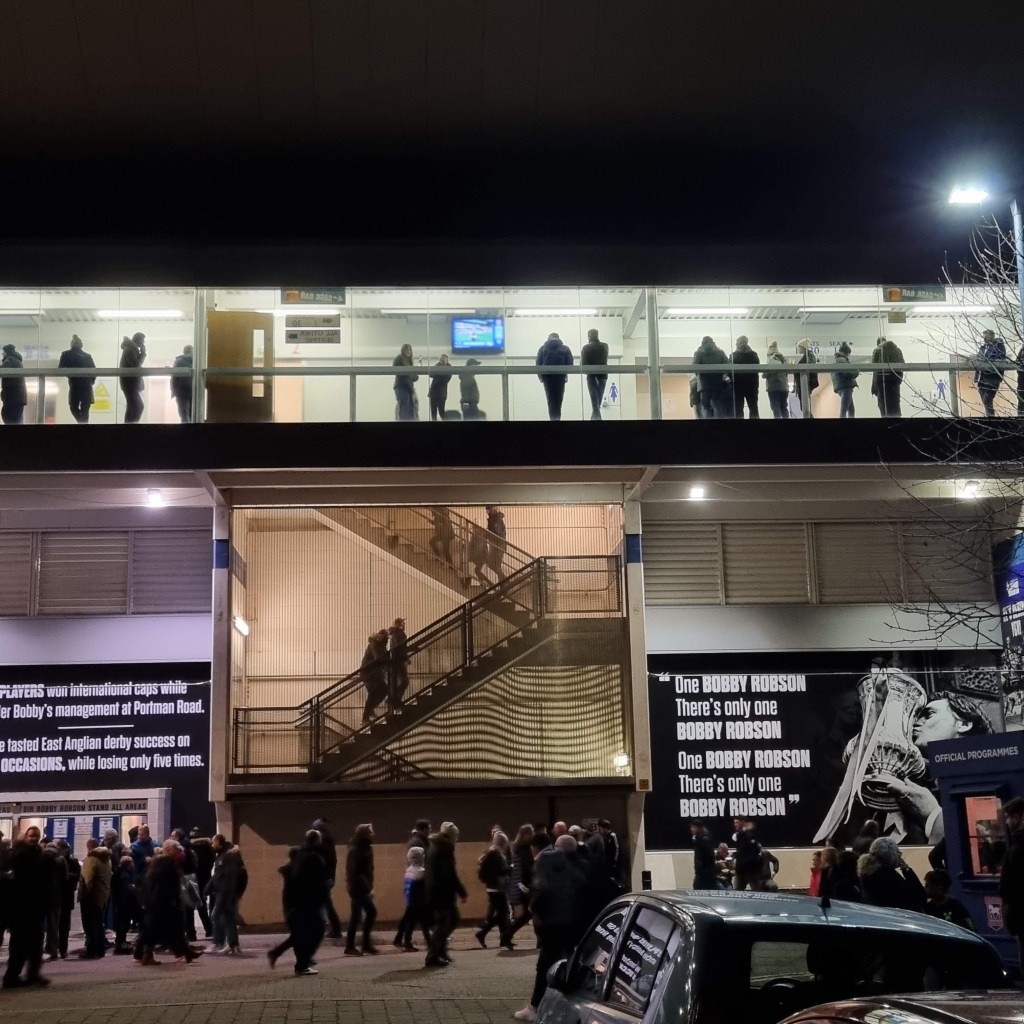
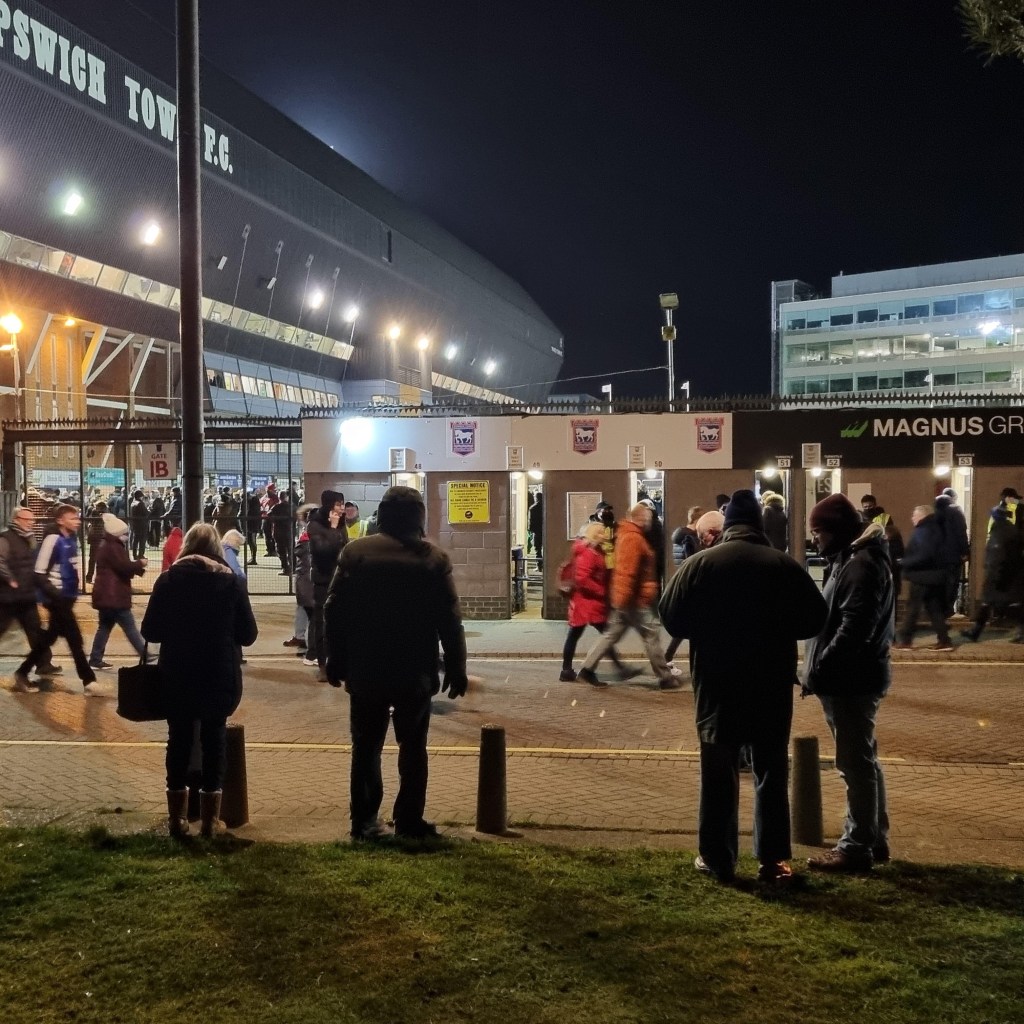
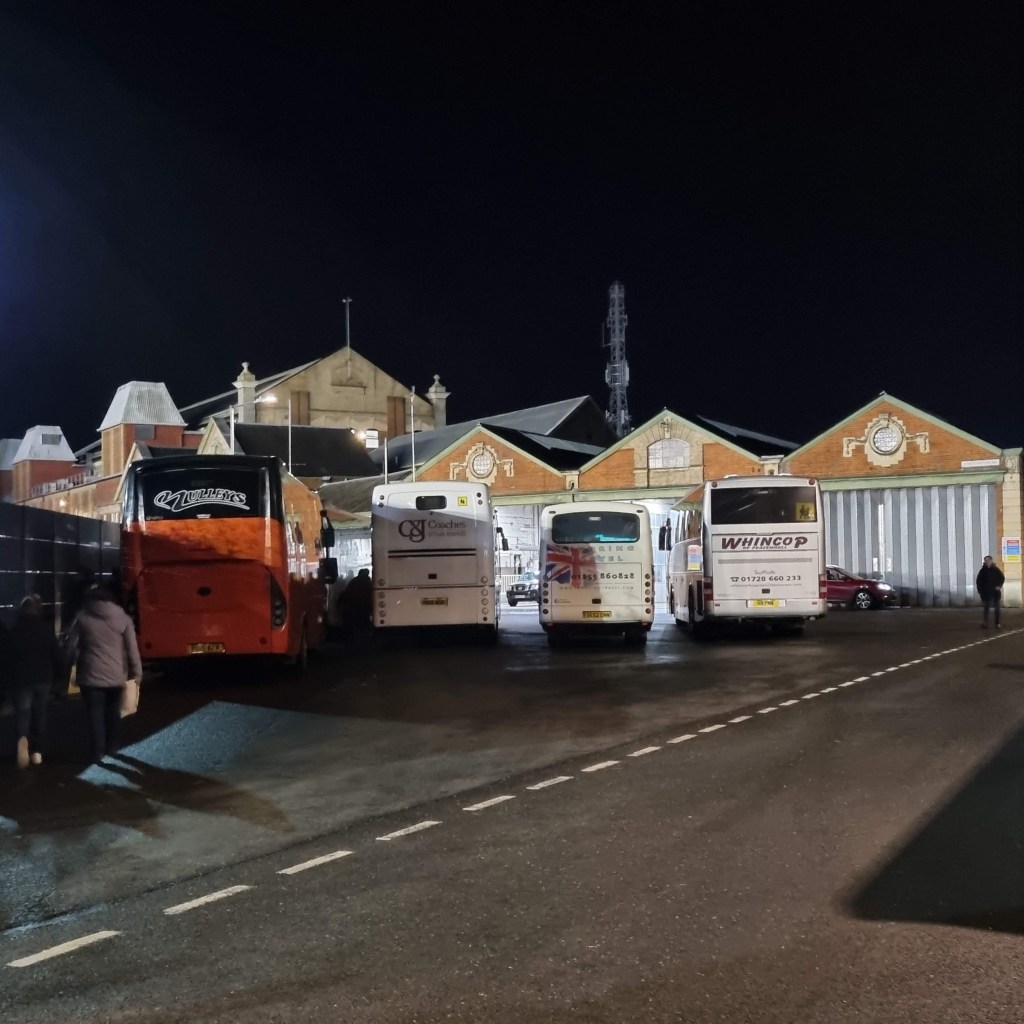
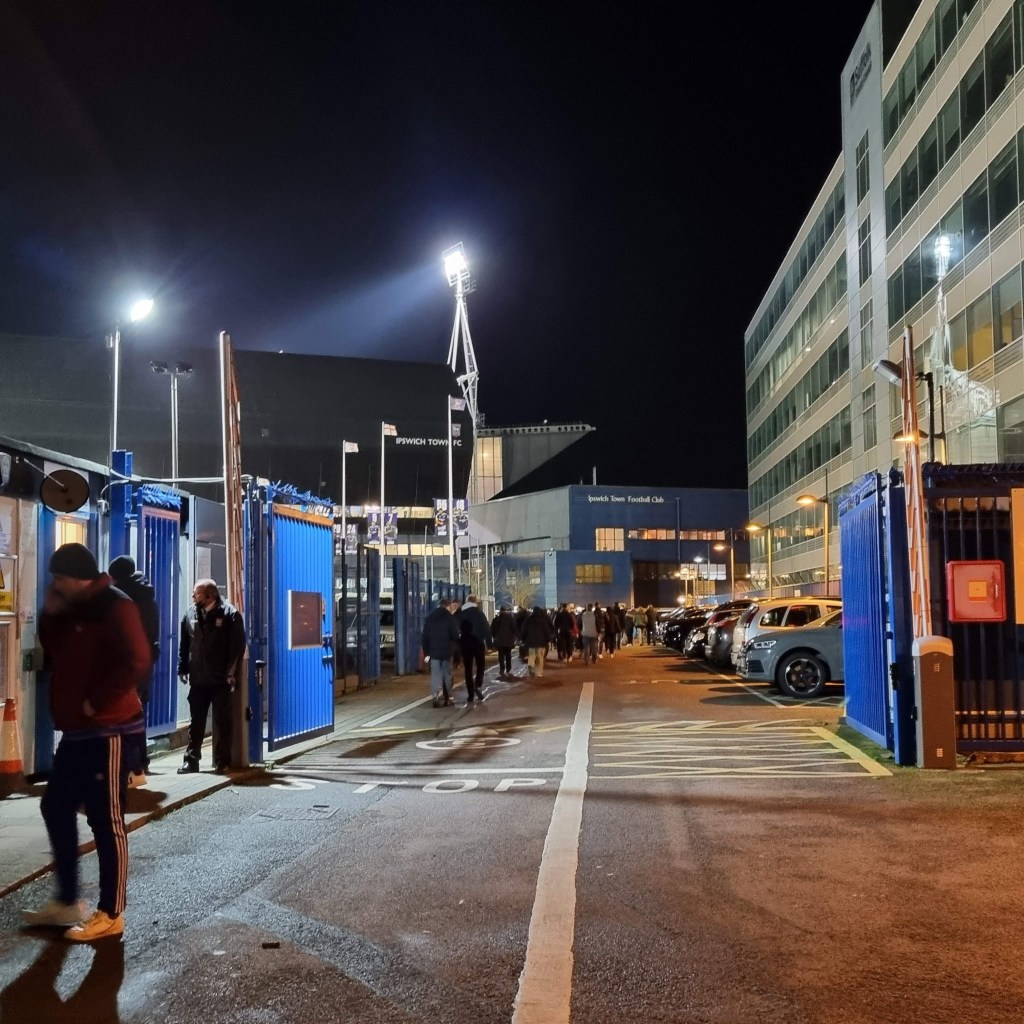
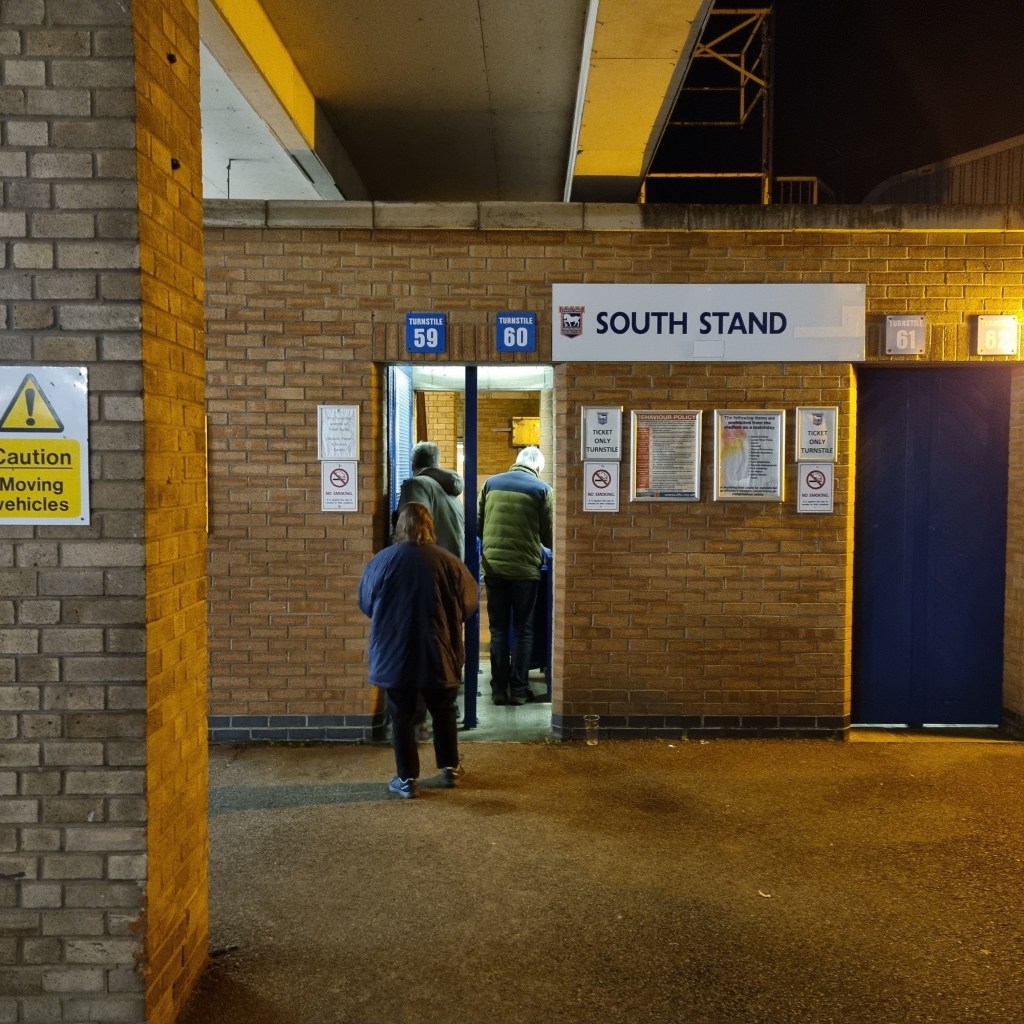
Leaving my reverie in the pub garden I head for Portman Road, my heart leaping a little as I catch a first glimpse of the glare of the floodlights in the night sky. I approach the ground along Alderman Road to manufacture that ‘going to the match’ down terraced streets feel. In the back of the Sir Bobby Robson (North) stand supporters already in the ground appears as silhouettes on the stairs and through the plate glass windows of the concourse. Having purchased nothing with coins of the realm for over a month I recklessly buy both a programme (£3.50) and a Turnstile Blue fanzine (£1). I walk between the rows of fumy supporters’ buses lined up opposite the old tram depot and approach the Sir Alf Ramsey stand from the Constantine Road gate, eventually returning to Portman Road through turnstile number 60. I’m back.


In the stand I reacquaint myself with Pat from Clacton and ever-present Phil who never missed a game until he caught Covid; they’ve missed me, or at least that’s what they tell me; they’re nice like that. With seconds to go before kick-off Fiona arrives too and I say hello to the man who sits to my right, who I always imagine is older than me, but possibly isn’t. The game begins; Town getting first go with the ball, but I am quickly struck by how disappointed I am by Cheltenham’s kit. In my mind’s eye, a phrase that reminds me of my favourite Small Faces song, I see Cheltenham Town in red and white stripes, but tonight they sport a sort of knock-off Arsenal shirt with pinstripes and a Raglan sleeve. The Raglan sleeve incidentally is the least desirable of all the sleeves for use on a football shirt.
Aside from the shirts, the football is fast and frantic, with Wes Burns uncontrollably shooting over the cross bar from close range after five minutes, and Bersant Celina making a weaving run before dipping the ball over the cross bar not five minutes later as Town confidently dominate their sartorial inferiors. The ostentatiously bald-headed referee, Mr Andy Davies, unexpectedly makes me think of the similarly hairless, on-loan St Etienne goalkeeper Paul Bernadoni, before a man behind me with a slightly Northern or Midlands accent annoys with a laugh that sounds like Disney’s Goofy. “Unlucky, unlucky, unlucky; keep going, keep going, keep going” says an oddly repetitive woman from behind as another Town attack comes to nought and the Sir Bobby Robson Stand show signs of life, breaking into Boney M’s “Mary’s Boy Child”, to sing as ever of ceaseless fighting despite Norwich having run away, and all apparently and mysteriously because of Boxing Day. High up in the Cobbold Stand the Cheltenham followers reveal a lack of originality matched only by their lack of memory as they chant “We forgot, we forgot we forgot that you were here” to the tune of Cwm Rhondda. With my attention back on the pitch, I can’t help but guffaw as Cheltenham’s Reece Hutchinson hurls himself headlong to the ground in a wonderfully unconvincing attempt to cheat his way to a free-kick. What was I thinking, staying away to avoid Covid when I could have been a part of this rich tapestry?
Ipswich’s dominance is total and is such that two of our three defenders, Janoi Donacien and Luke Woolfenden are seen exchanging forward passes within twenty-five metres of the Cheltenham goal. Then a deep, angled Tommy Carroll cross is met with a diving header from Conor Chaplin, only for Cheltenham goalkeeper Owen Evans to palm the ball away in front of Bersant Celina, who is taken too much by surprise to attempt to kick the ball back at the goal. I’m just thinking how we haven’t been able to exploit Kayden Jackson’s ability to run very fast, when he suddenly breaks down the left, but when he comes to cross the ball he seems to have become over excited and at the far post the ball skids off the forehead of Conor Chaplin at such speed that it must have caused a friction burn. It somehow feels as if everyone is just a bit too eager, but out of the blue at the North Stand end Christian Walton fails to clear the ball successfully and his scuffed effort falls to a Cheltenham’s theatrically named Elliott Bonds, but fortunately Bonds’ left footed shot sails hopelessly high above the goal.
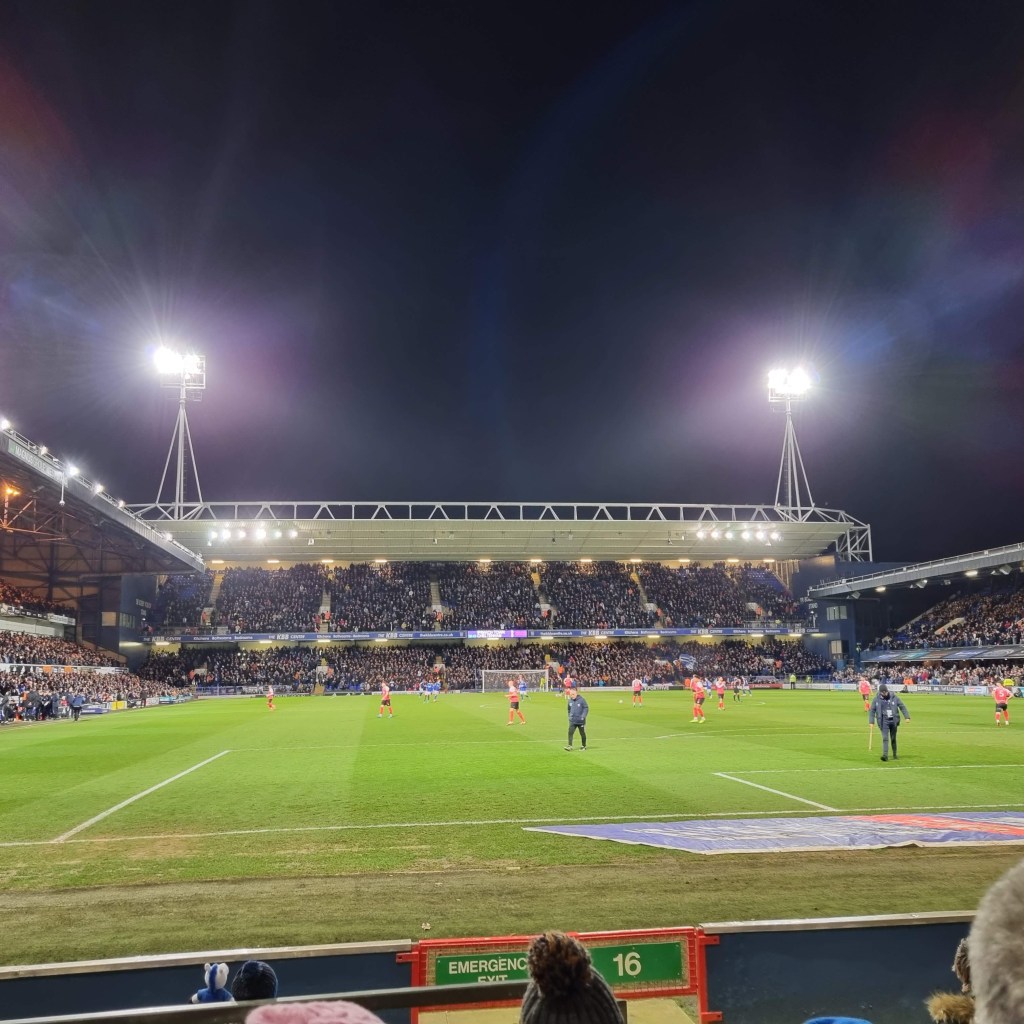
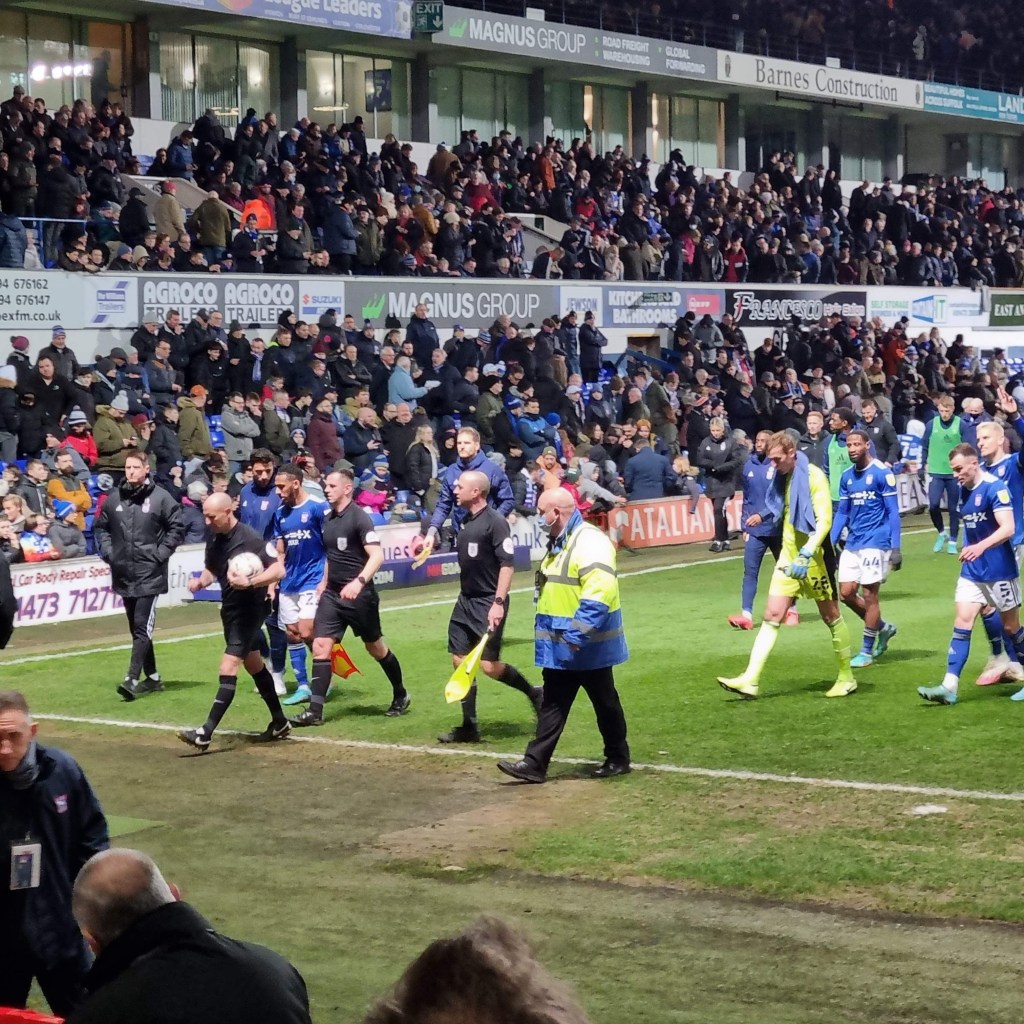
Town’s onslaught resumes and Cheltenham show the first sign of resorting to non-footballing tactics to relieve the pressure. “Oh, get up you wanker” says a polite sounding woman behind me as a red-shirted defender lays prostrate on the turf following a gentle collision with another bloke in a football shirt. “Shall we sing, shall we sing, shall we sing a song for you?” chant the Cheltonians predictably in a quiet moment, and equally predictably no one responds. Kayden Jackson delivers a slightly limp shot into the arms of Owen Evans and with the first half half-over, Town win their first corner, from which Tommy Carroll shoots impressively wide to the extent that the ball arcs away from the goal and stays on the pitch; Bersant Celina spots the unlikely trajectory and crosses the ball back into the ‘mixer’ but there’s no happy end to the incident.
The second half of the first half plays out in a succession of Town corners and missed goal attempts. Much of the first half football has been as exciting as it’s ever been at Portman Road in the past twenty years, but the plain truth is there has been no one to put the ball in the net. As the half draws to a close Wes Burns turns to lash the ball back into the area in front of the goal from the by-line, but the ball strikes Hutchinson’s outstretched arm or possibly arms; VAR would doubtless have recorded the crime but instead Town are awarded another corner from which Luke Woolfenden deftly diverts a graceful header very precisely over the cross bar.
With the half-time whistle the Cheltenham players jog hastily and as one from the pitch, as if someone had just said “last one back in the changing room’s a sissy”. By contrast Town’s players seem either less enthused, or just less sensitive to childish name calling. It seems more likely they are lost in thought, grappling to understand how they are not two or three goals up. Forgetting about football for a bit I pop down to the front of the stand to talk to Ray, his grandson Harrison and Harrison’s dad. Behind us stadium announcer and former BBC Radio Suffolk presenter Stephen Foster hands over his microphone to comedian and TV personality Omid Djalili, but sadly his words are completely scrambled by the hopeless public address system. Meanwhile Harrison’s dad offers me what the Tim Horton’s website enticingly describes as a ‘mini donut style cake ball’. I am warned that it will probably taste of maple syrup; but contrarily it tastes of cinnamon. Whilst not ungrateful, and happy to ingest either cinnamon or maple syrup flavoured foodstuffs I am happy not to be offered another.
Cheltenham Town kick-off the second half by lumping the ball down field in the traditional manner. Town soon get back to winning corners, but with much less frequency than before and somehow the speed and excitement of the first half has departed, leaving in its place mis-directed passes and an unsporting belief amongst the Cheltenham team that they could break away and score a goal of their own. I remain full of hope, but either Town have lost their mojo or Cheltenham have worked us out. The game descends into more of a battle with half an hour to go as Cheltenham’s Charlie Colcutt becomes the first player to enter Mr Davies’ address book for a heinous foul on Wes Burns and then the substitutions begin with Kane Vincent-Young replacing Dominic Thompson and the oddly named Macauley Bonne appearing in lieu of Kayden Jackson. Cheltenham stopper Lewis Freestone is next to have his name etched in copper plate in baldy-Davies’s book as ten minutes later the Cheltenham number six ruthlessly chops down Conor Chaplin.
One bright spot in the second half is the announcement of the night’s attendance of 21,318, of whom 251 are supporting Cheltenham. Pat from Clacton announces to Fiona and I that the winner of the Clacton supporters’ coach guess the crowd competition is the squirrel that steals the food from the bird table in her garden. I explain to Fiona that squirrels are very clever animals, but I didn’t know they enjoyed coach travel.
Following speed, excitement and accurate passing, enjoyment now leaves the game as Callum Wright of Cheltenham hangs about too long in a prone position on the turf and draws the vitriol of the Sir Bobby Robson stand for his trouble. “Wanker, Wanker!” roar the lower tier to Wright’s bemusement as he is soon substituted with Aaron Ramsey. “How could they tell?” he must be wondering to himself as he looks for hairs on the palms of his hands. Time is running out and in desperation a chant of “Come On You Blues!” is sent out into the ever more chilly night air. But the chant is only repeated twice more, almost as if everybody feels a bit self-conscious about shouting for any longer than that.
The final ten minutes are miserable as Cheltenham players spend an unusual amount of time apparently suffering from cramp, something that I thought only happened in extra time in Wembley Cup finals. Sadly, the ever-unresourceful Town fans can only think of chanting “Boring Boring, Cheltenham” rather than urging on their own team to victory by turning Portman Road into a frightening cauldron of noise. Cheltenham do waste time, but what professional football team doesn’t when they are close to claiming a hoped for but not necessarily expected away point?
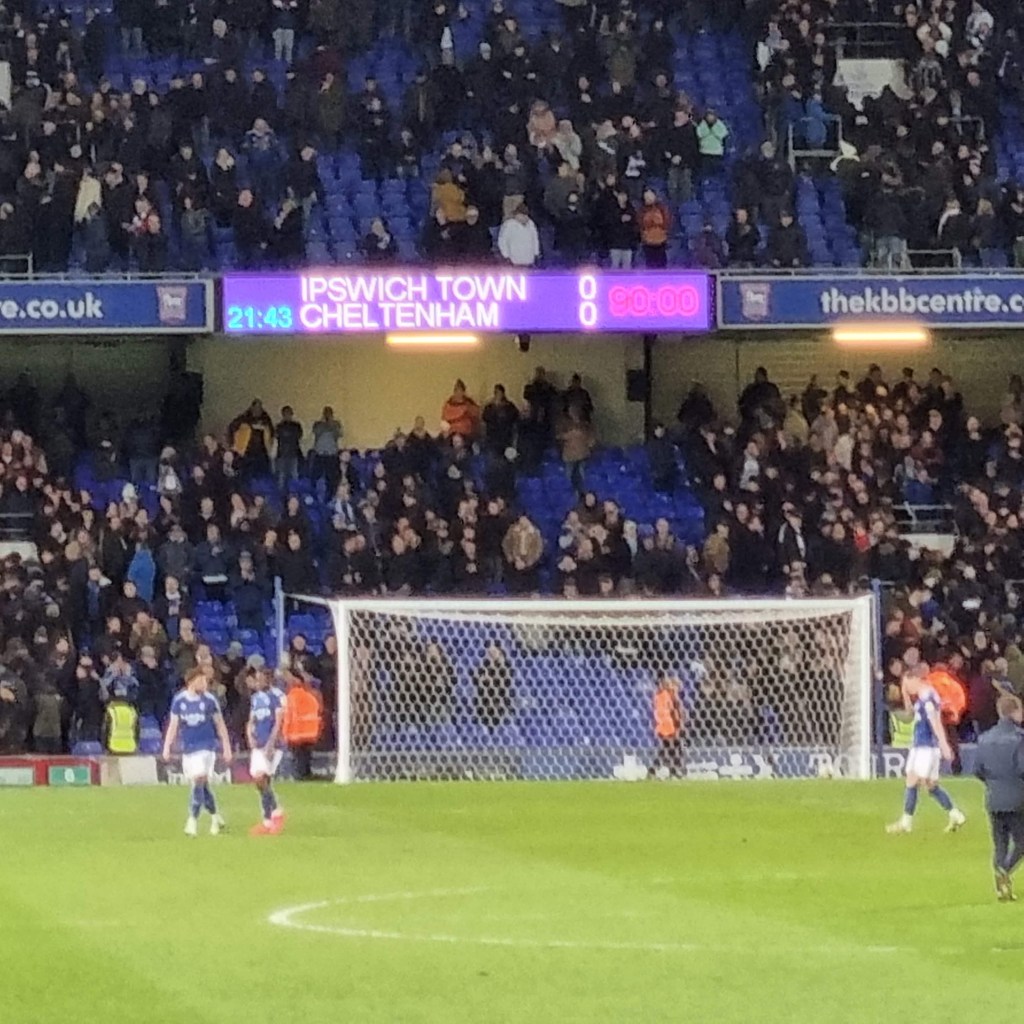
“Come on Ipswich, score in the final second” I say to creation as the sixth minute of added on time ebbs away. But the final whistle blows, and it feels a bit like we’ve lost. That’s the trouble with expectation, especially when you’ve not had any for a while. Not to worry, I think I’ll still be back again next time.




 trippingovertheball