Pegasus, Wikipedia tells us was a Greek mythological winged stallion, the offspring of Poseidon and Medusa who sprang from the Medusa’s blood when in an everyday incident for the characters of Greek mythology she had her head chopped off by Perseus. After time spent carrying lightning bolts for Zeus, being ridden about by Bellophron and then as a constellation of stars, having been killed by Zeus who presumably then had to carry his own lightning bolts, between 1948 and 1963 Pegasus more prosaically became the name of an amateur football team made up of Oxford and Cambridge graduates obviously keen to mix football with their classical education. Even more prosaically, the name of Pegasus then became that of a youth and then Sunday football team in Colchester and most recently that club has aspired to men’s senior football and for reasons unknown has attached the name Pegasus to Stanway, a suburb of Colchester that some of its residents still think is a village and which already had one senior football team in the shape of Stanway Rovers.
Today, Stanway Pegasus who are now in the snappily titled Thurlow Nunn Eastern Counties League South play Haringey Borough of the only slightly less snappily titled Spartan South Midlands Football League in the first qualifying round of the FA Vase, a competition which, to my shame, I have not witnessed a game in for over ten years. It is for this reason, and it being the closest game to where I live, that today I choose to ignore the ’Town’ -centric draw of Braintree Town v Yeovil Town in the National League and the charming alliteration of Chelmsford v Chippenham in the National League South, and make my way to ‘The Crops’ in West Street Coggeshall home of Coggeshall Town but where Stanway Pegasus currently play their home games too.
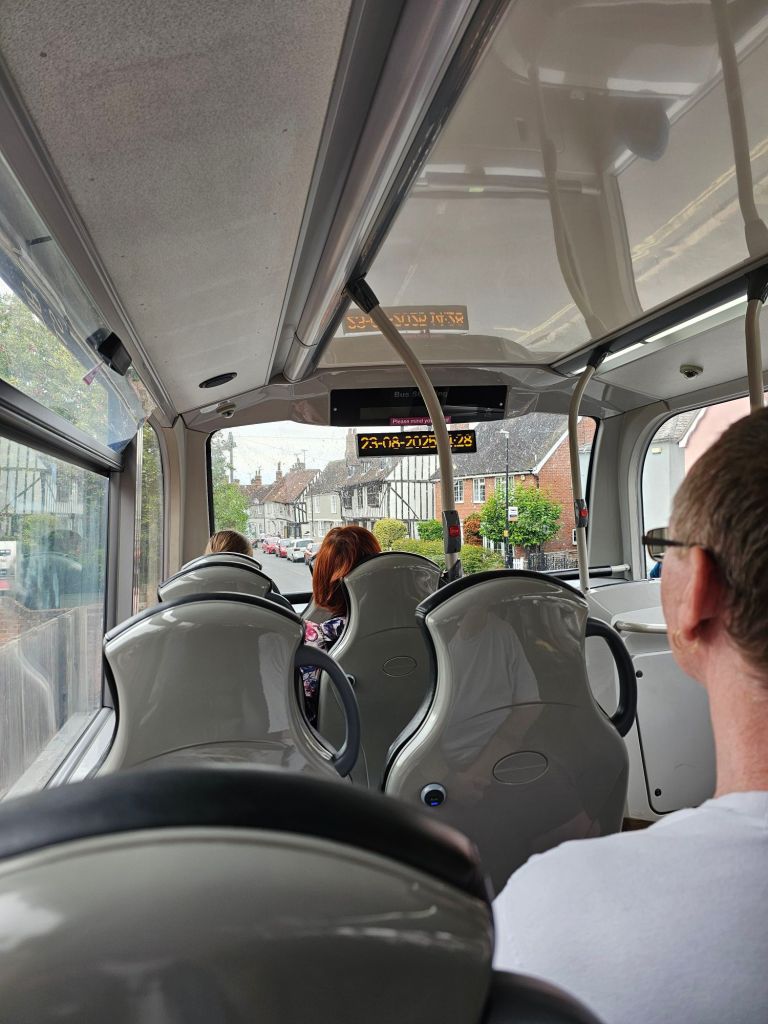
After a morning breathing in noxious fumes from the white gloss paint I am applying to the banisters, skirting boards and miscellaneous surrounding woodwork of a domestic staircase, standing at a bus stop on the A120 under a grey late August sky feels like suddenly being on holiday. The X20 bus to Stansted Airport via Coggeshall, Braintree and Great Dunmow turns up more or less on time and I cheerily tender the correct fare (£3) in coins to the driver, who wears a peaked cap in the style of the late Sir Francis Chichester. The driver, who does not speak looks at me inscrutably from beneath the peak of his hat as if weighing up this passenger’s likely back story. I look back at him in the same way, imagining I too am wearing a hat, before climbing the stairs to the top deck where I sit behind a man sporting short hair and an earring. Behind us, a girl evidently lacking all sense of self-awareness talks loudly on her mobile phone, broadcasting the other half of the conversation on speaker phone. Leaving the A120, the bus (fleet number 34423) wends its way through Coggeshall’s narrow medieval streets before I alight at the stop called ‘Nursery’ just a couple of hundred yards away from ‘The Crops’.
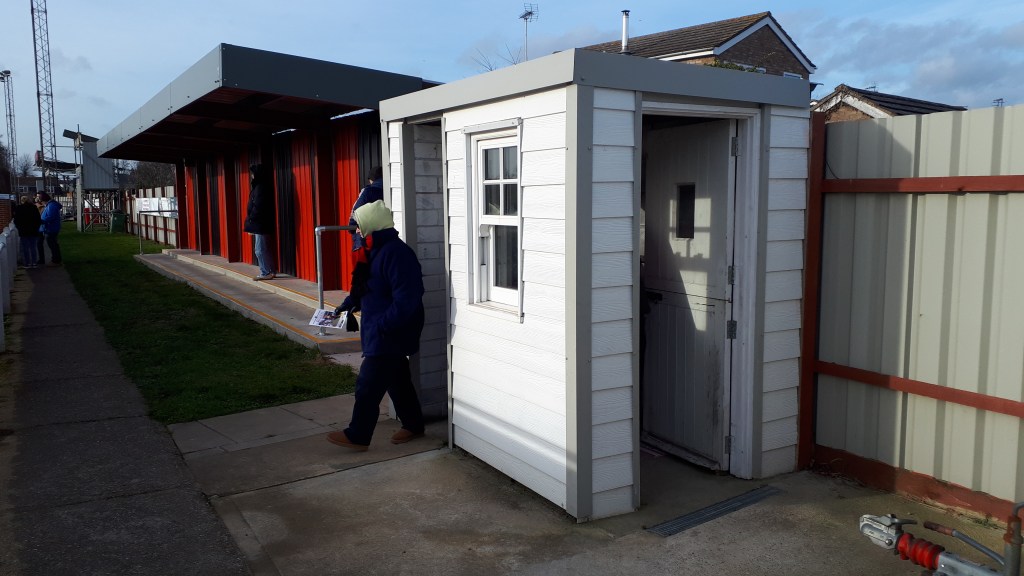
Arriving at the turnstile I’m not surprised to find there is no queue but am delighted to see a small pile of glossy programmes, which I had not expected. I ask if I should pay by cash or card. “Cash if you’ve got it, please” says the turnstile operator “I’ve started to run out”. This is the first time I have paid on the turnstile at a match since I turned sixty-five, and paying in cash adds something to this auspicious occasion as I tender a five pound note for my concessionary entry fee and a two pound coin for the programme.


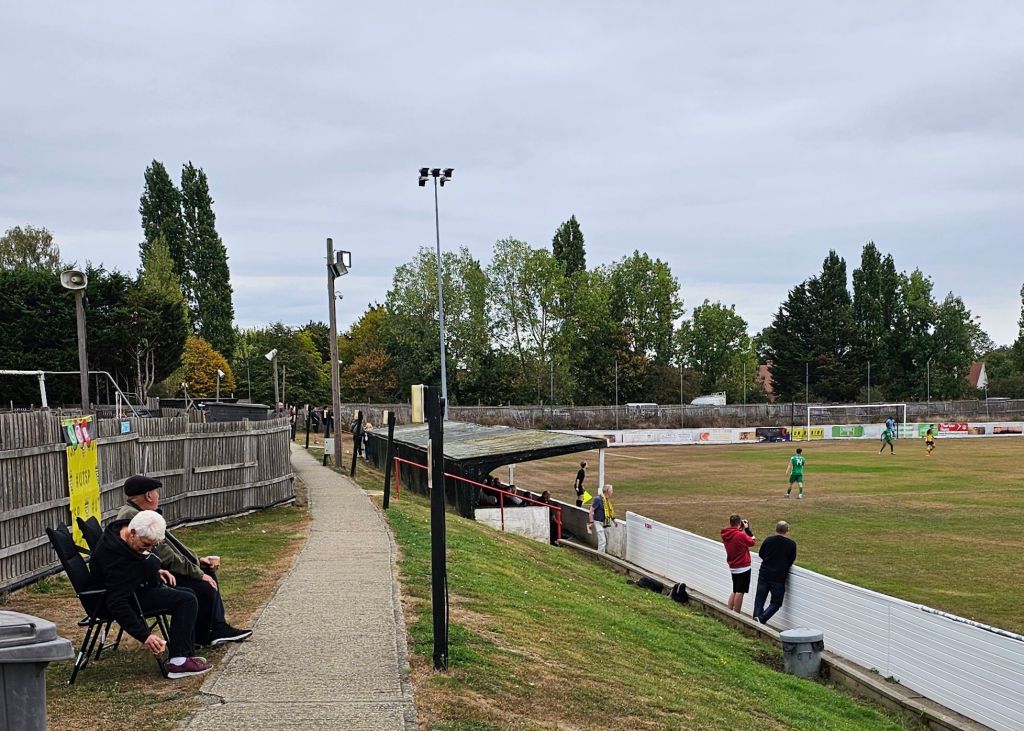
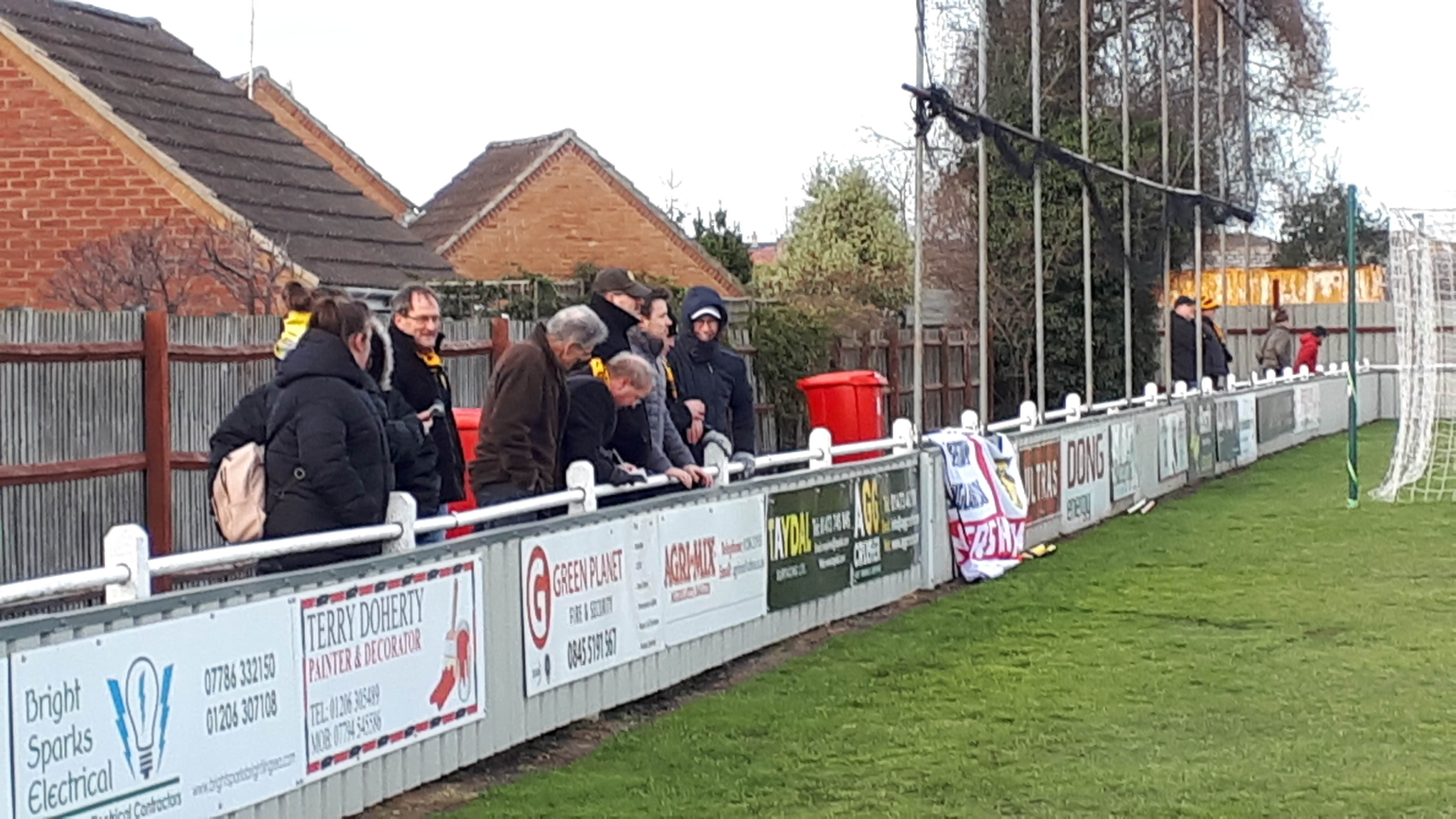
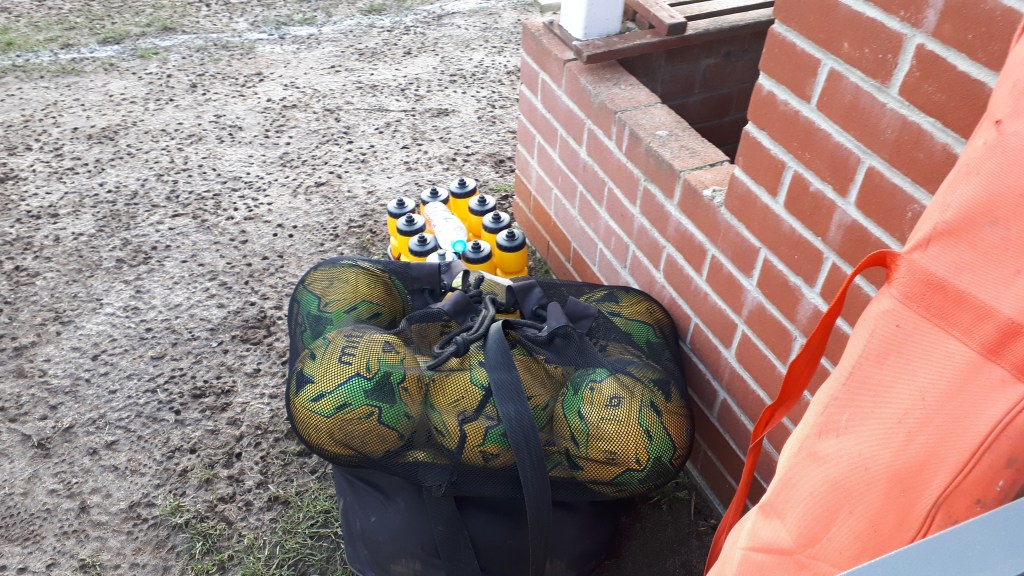
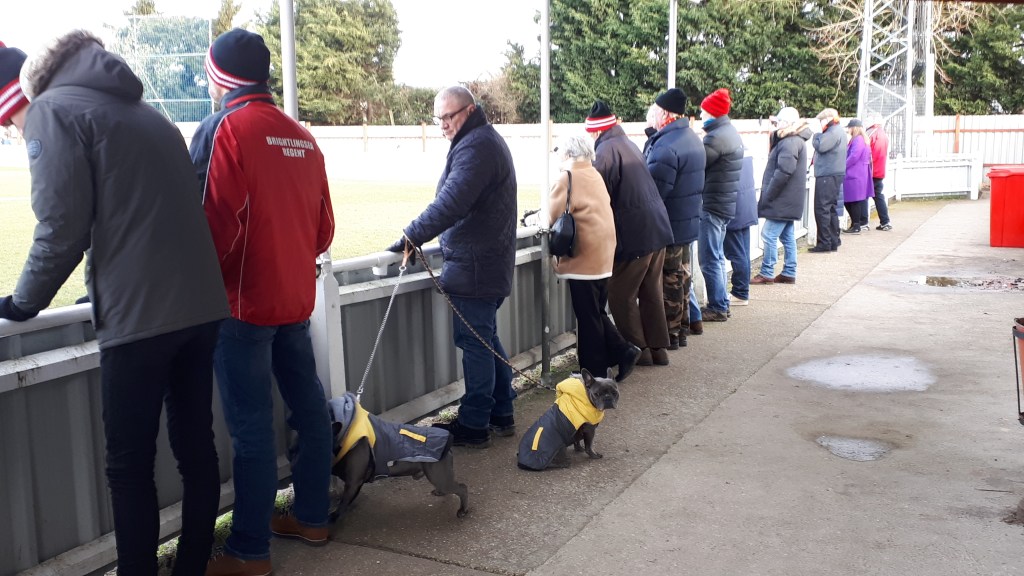
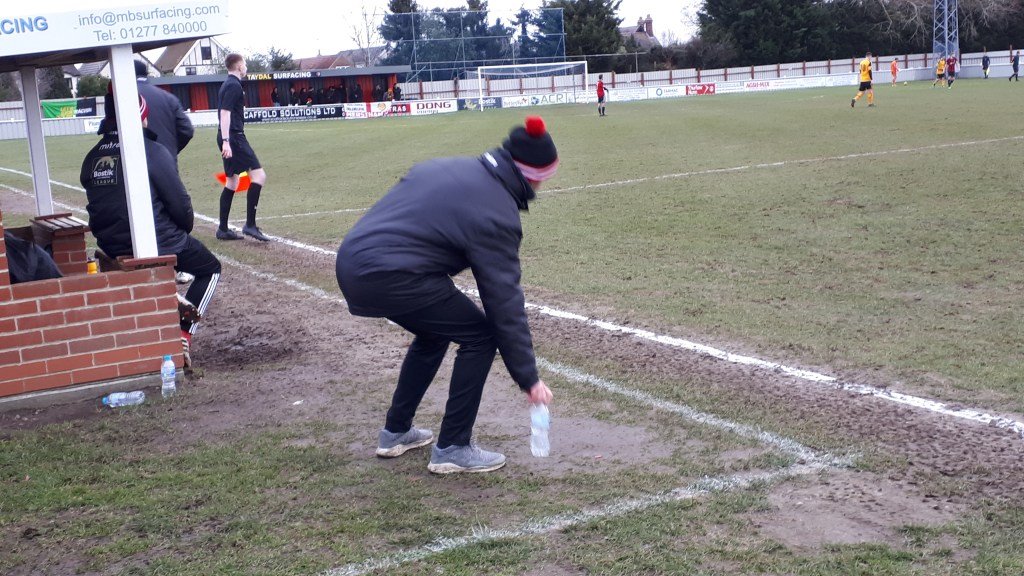
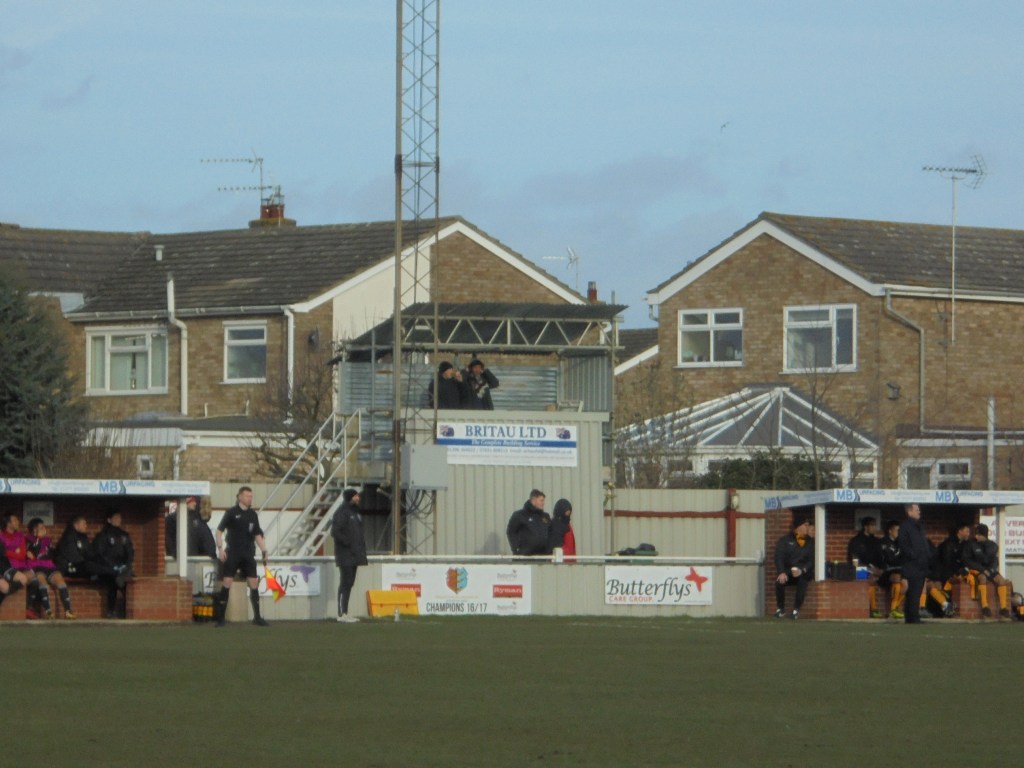
Once through the turnstile I head for the bar at the far end of the ground; it is virtually empty, and not liking the look of the fizzy draught beer on offer I warily request a bottle of Adnams Southwold Bitter (£6) from the fridge. Much to my surprise the beer is merely cool not chilled and therefore very drinkable. I step outside to await kick-off amongst a good following of Haringey supporters identifiable from their club colours but also as the only people obviously in the throes of enjoying a day out. Two of them wear pork pie hats and I wonder if they play the saxophone. Except for an old couple sat in foldable chairs the home supporters are rather anonymous. In the corner of the pitch by what passes as the players’ tunnel but looks a bit like a stockade stands a plinth on top of which sits the match ball. The Haringey fans eye the plinth both jealously and with a degree of amusement discussing what design of plinth they might have if they were to have one of their own, they seem keen on something more sculptural.
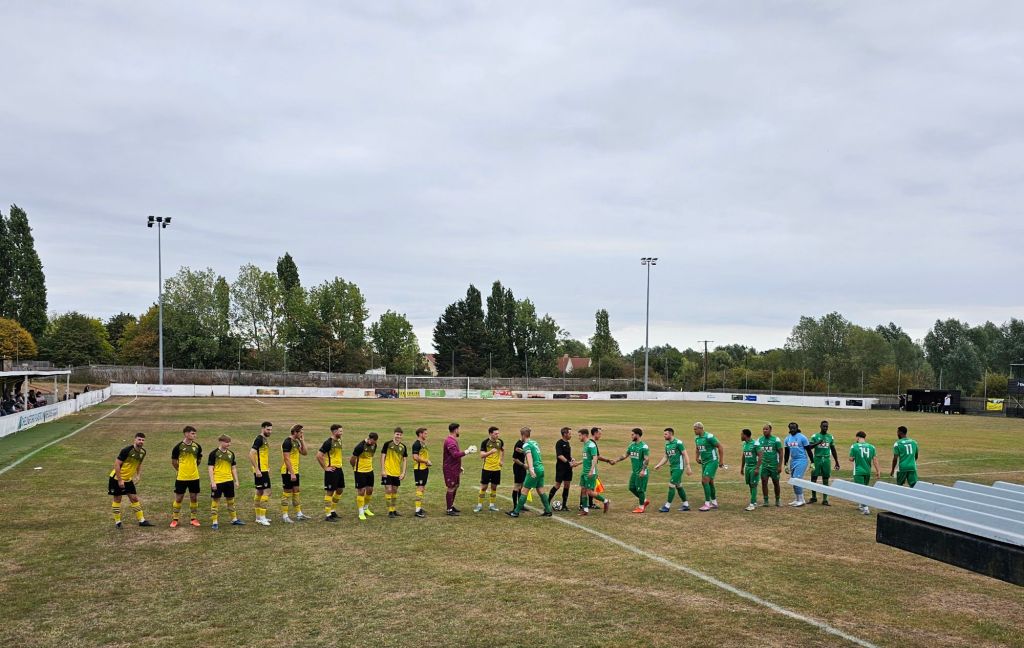
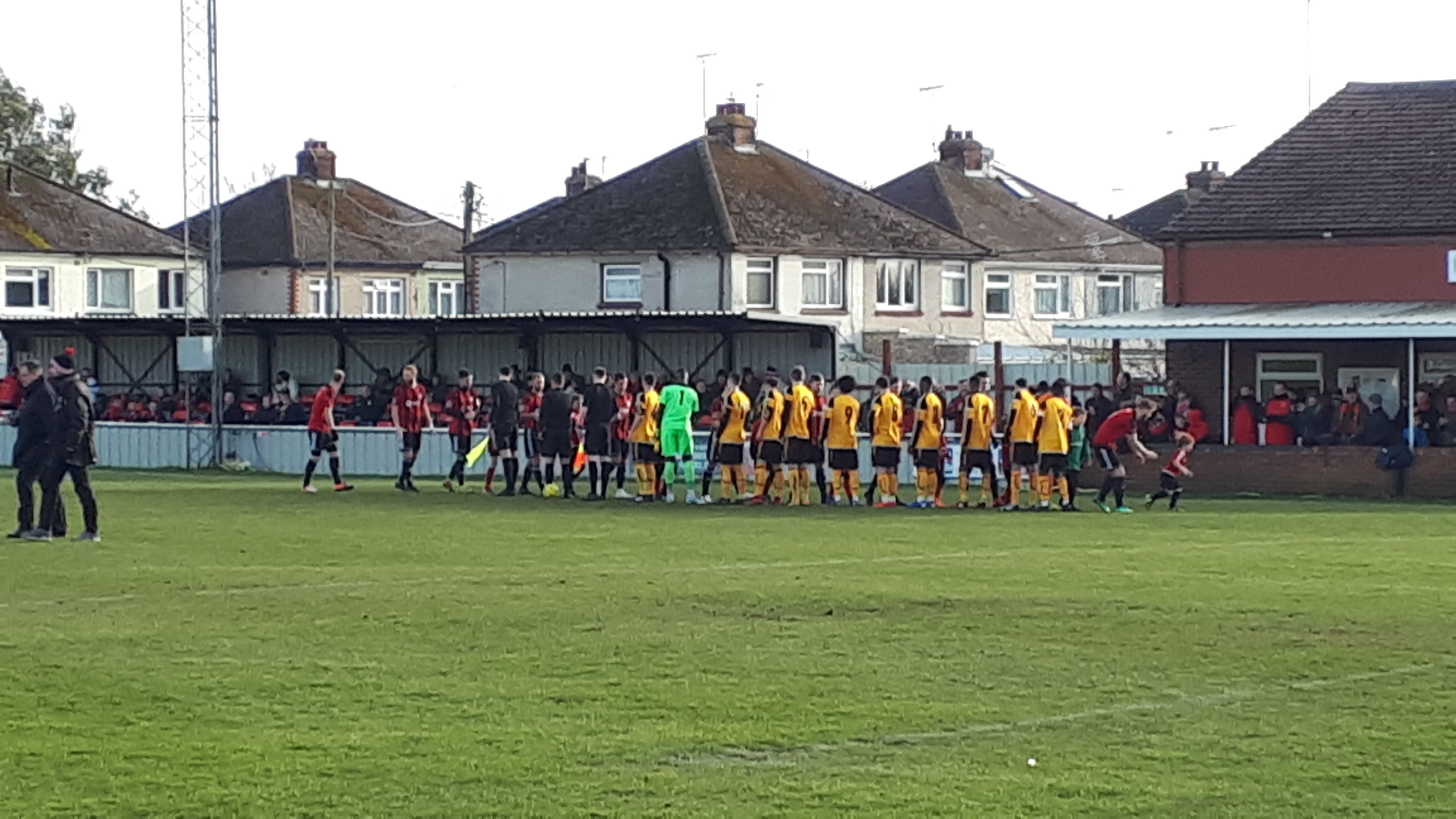
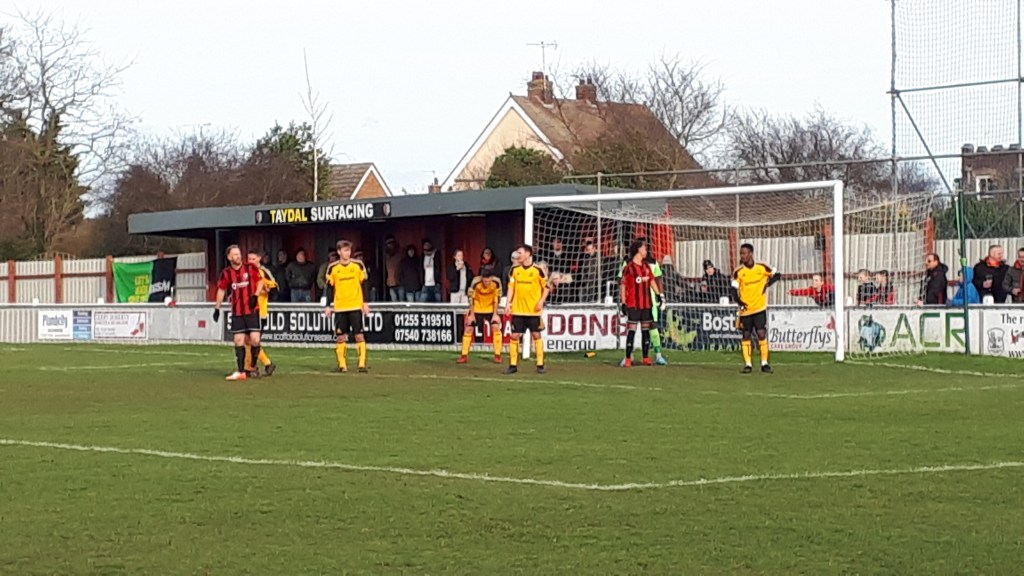
“Sing if you’re Haringey, Sing if your happy that way” chant the Haringey fans imaginatively to the tune of the Tom Robinson Band’s 1978 hit “Glad to be gay” as the team emerge from the stockade and the plinth fulfils its job of relieving the referee of having to remember to bring the ball with him from the dressing room. The match kicks off at five minutes to three with Stanway Pegasus getting first go with the ball and sending it in the direction of the bus stop from whence I arrived and Coggeshall beyond. “You on a promise Ref?” bawls a Haringey supporter “It’s only five to three”. “That’s close to being abusive, that is” says another Haringeyite. “No it’s not, it’s just a question” continues the first supporter. “A very personal one” is the response. “Alright, do you have something nice waiting for you when you get home, Ref?” Comes the re-phrased enquiry.
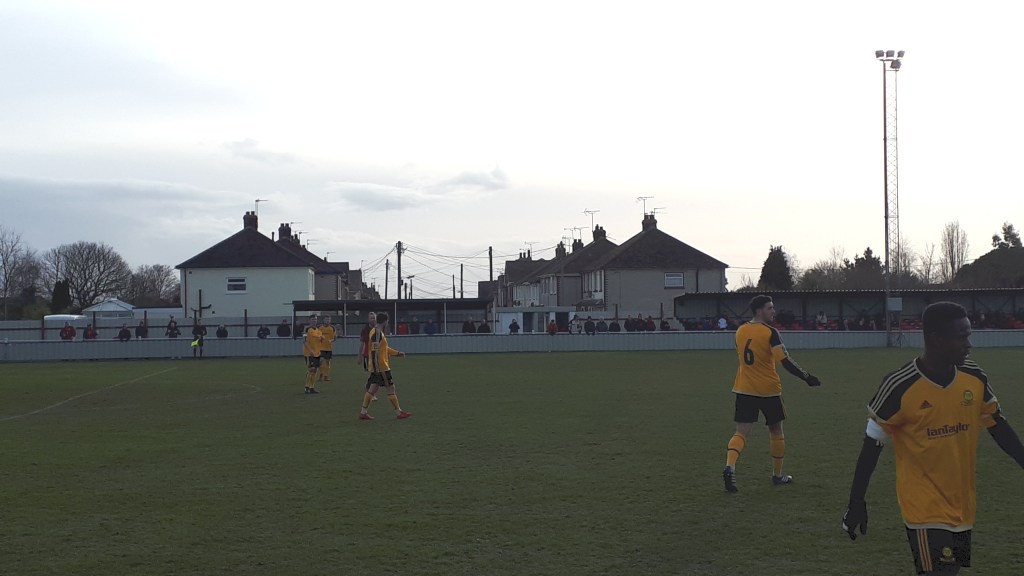
Pegasus are wearing a kit of yellow shirts with black trim and black shorts, which weirdly are also the colours of Stanway Rovers. Haringey meanwhile sport a change kit of all over green as their supporters expand on their theme of chants based on ‘new wave’ hits of the late 1970’s and sing the praises of their team’s Matty Young to the tune of “To much too young” by The Specials and then sample the oeuvre of Sham69 with chants of “Come On, Come On, Come on Haringey Come On, We’re going down the pub”.
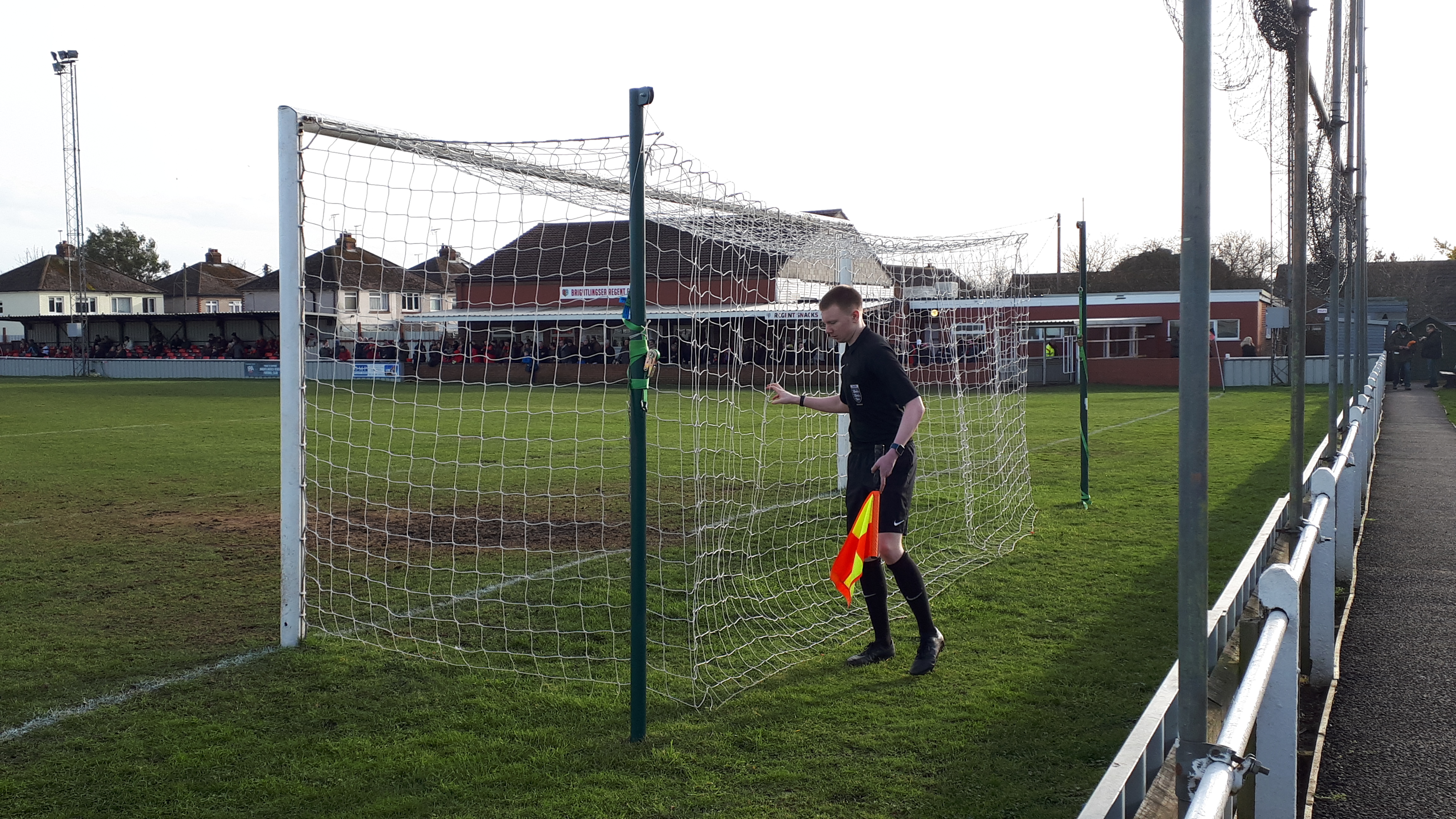
Back on the pitch, one of the linesmen is attracting a lot of attention to himself both with his offside decisions and his insistence on explaining them to the players. As if that isn’t enough, he is very bouncy on his feet and, because he sports a poorly shaped goatee beard and has grey highlights in his swept back hair I am reminded of the match between Arsenal and Liverpool in September1972 when one of the linesmen was injured and Jimmy Hill emerged from the stands to run the line.
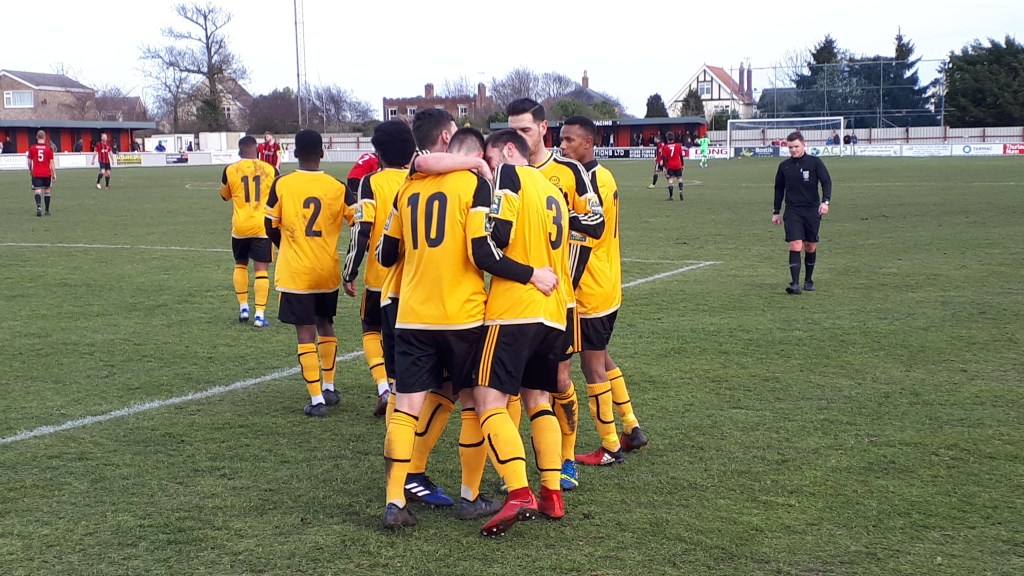
At three minutes past three Haringey Borough take the lead with a neat shot into the corner of the goal from somewhere near the edge of the penalty area. The goal scorer, I think, is the aforementioned Matty Young who evidently continues to strive to allow people to look back and say he did a lot in his youth. “We’re the Borough, The Mighty Borough, We always sing away, We sing away, we sing away, we sing away, we sing away” chant the Haringey fans in response to the goal, channelling Tight Fit’s cheesy cover version of “The Lion Sleeps Tonight” from 1982.
The Jimmy Hill lookalike linesman continues to grab attention as he rules a Haringey player onside and then proceeds to explain that the Pegasus number five had played him onside. “Don’t tell them lino, they can learn for themselves” shouts an exasperated Haringey fan. The Haringey support delve into their ‘new wave’ singles collection once more, impressively getting “We’re Haringey, We’re Haringey” into The Jam’s “Going Underground”.
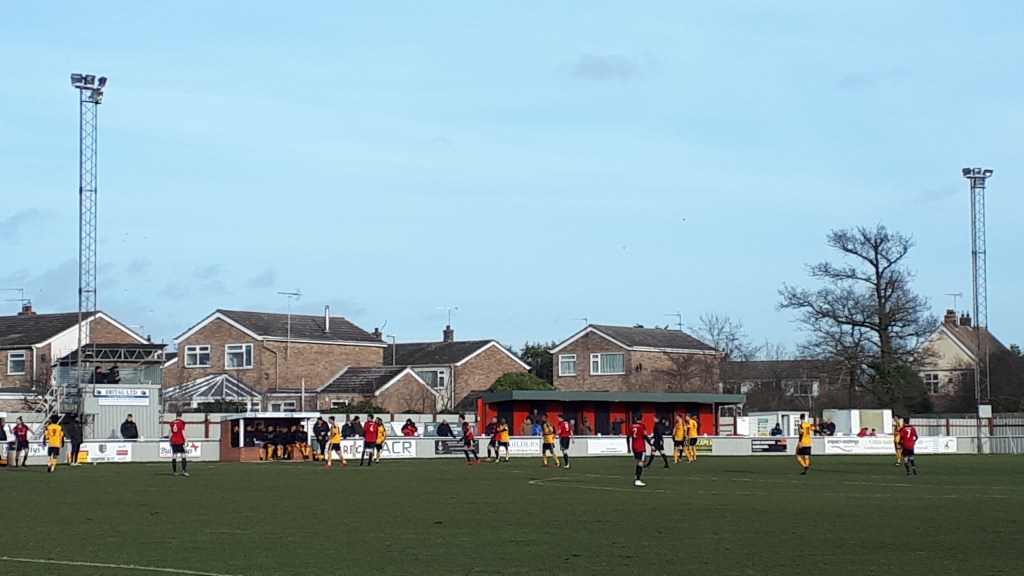
Haringey are clearly the stronger team, as their higher league status implied before kick-off and the majority of play is at the club house end of the ground, although in a rare breakaway the Pegasus number four , Harry Morton is free in the centre of penalty area, has the ball pulled back to him perfectly, but then contrives to hit a truly, spectacularly terrible shot as high and as wide as anyone not under the influence of mind expanding drugs could imagine; in some circles it might be called ‘a worldy’. Morton might be excused however for blaming the pitch, very little of which is any shade of green except in a few ‘fairy circles’, and when more than a handful of players are in the penalty area a cloud of dust is kicked up which lingers momentarily over the pitch like a swarm of tiny insects.
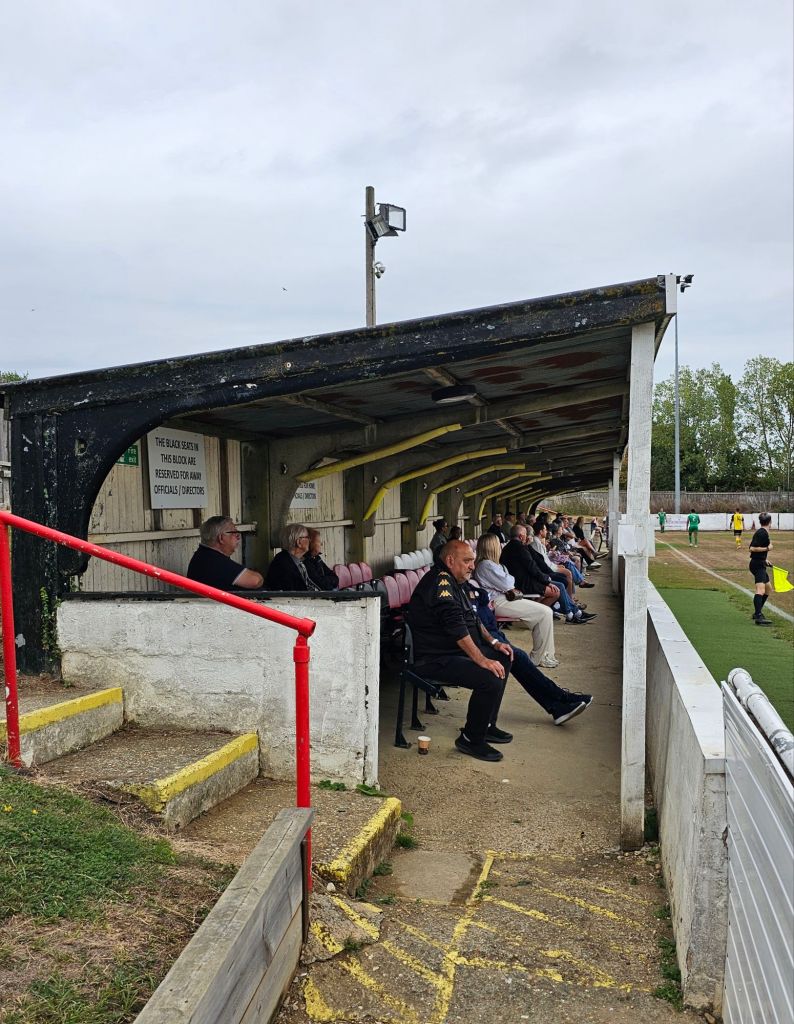
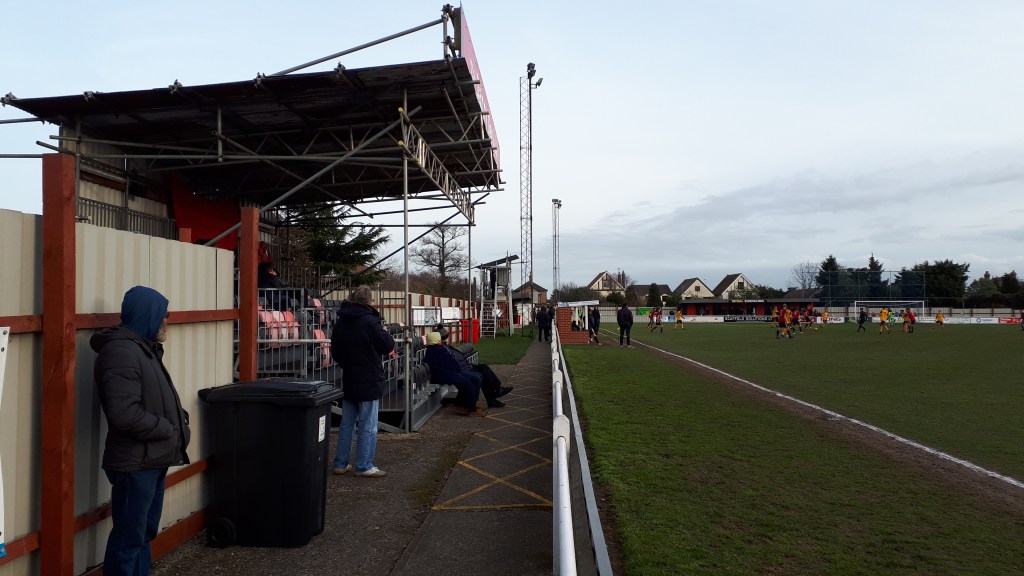
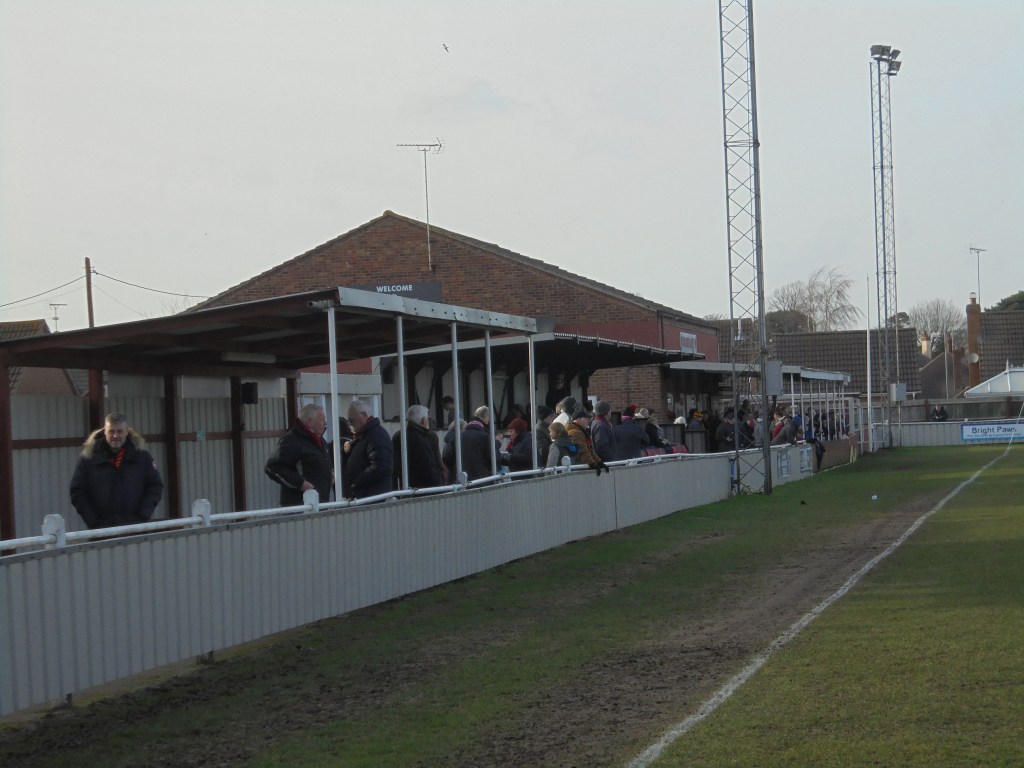
I am stood to one side of the suitably bucolic looking main stand and every now and then I receive a whiff of pungent and rather cloying body spray or scent. At first, I think it must be from the occupants of the stand, but to be honest they don’t look the sort to be familiar with anything more than an occasional dab of Old Spice or bit of talc. I eventually realise, when he bouncily stops near me to signal another offside, that the culprit is Jimmy Hill, the unique styling of whose hair is challenged, but not matched only by the Pegasus number sixteen, Tom Lewis who has a neat blond bob.


The game is being played in a good spirit with unusually little, if any audible swearing from the players, or the management on the benches. Pegasus’s number nine Callum Griffith is booked however, just as the first third of the game rolls into the second third when twice in quick succession he fails to give space for a free-kick to be taken. As thoughts of half-time refreshment begin to form Pegasus win a couple of corners and then almost unexpectedly there is a second goal as a poorly cleared low cross reaches Haringey’s number fourteen who firmly and concisely despatches it into the opposite bottom corner to the first goal, and Haringey lead 2-0.
Due to judicious manoeuvring in the approach to half-time, I am first in the queue at the refreshment hatch where I invest in £1.50’s worth of tea in large paper cup. I read the half-time ‘results’ as I wait for my tea to cool and then for the teams to re-emerge. My mood is barely affected by the news that Ipswich are losing at Preston; it’s not a place we often do well at; “a difficult place to go” is probably the accepted wisdom, despite the M6. At four minutes to four the football resumes and I move to the other end of the main stand expecting most of the action to again take place in the half of the pitch that Haringey are attacking.
The first half was adequately entertaining if not exactly a pulsating cup-tie. Sadly, the second half does not live up to what we didn’t know at the time was the comparatively high standard of its predecessor. The Haringey supporters nevertheless continue to enjoy themselves as they repeatedly dip into the back catalogues of Sham69, The Jam and with somewhat less ‘street credibility’, but plenty of irony, Tight Fit. My highlight of the half is when I realise that Derek Asamoah is playing as number forty-four for Haringey. He is a player who I probably last saw playing on the telly for Ghana in the African Cup of Nations. I should have really worked out he was playing when the Haringey fans chanted his name in the first half, but I was probably too busy wondering which Buzzcocks, The Clash or The Damned single it was they were singing to.
With the final whistle there is justified applause for everyone’s efforts and I leave The Crops to the sound of the Haringey fans singing “Bus stop in Tottenham, we’re just a bus stop in Tottenham” because wonderfully, as anyone who has travelled the W3 through north London will know, they really are and as far as I’m concerned that’s just as interesting as Greek mythology.










 trippingovertheball