Woke up, fell out of bed. It was damp and dreary outside when I drew back the bedroom curtains. Feeling inspired, I thought I’d check to see when I had last seen Ipswich Town play Blackburn Rovers, and I was surprised to learn that it was in August of 2018; it was the first game at Portman Road under the pitiful and thankfully brief leadership of the diminutive Paul Hurst. In case you’re wondering, I missed Blackburn’s last visit to Ipswich in September 2023 because I was in Brest, where I witnessed Stade Brestois beat Olympique Lyonnais one-nil to go top of Ligue1.
Times change, but Ipswich Town are playing Blackburn Rovers again today (Brest are away to Lyon tomorrow) and today’s match kicks-off at the silly time of 12:30pm, when civilised people should be eating lunch, in the pub, or still in bed. I catch the train to Ipswich, looking up I notice it isn’t late, and I have a carriage to myself until Gary joins me at the first station stop in his brightly coloured anorak. The train speeds on through a damp and dismal winter wonderland of bare trees and decaying vegetation, brightened only by the sighting of two very off-white polar bears that live by a lake in Wherstead. Arriving in Ipswich, pale sunshine is straining its way through the cloud because the sun always shines in Ipswich or tries to. As we cross Princes Street bridge there are just two people sat in the beer garden of the Station Hotel and they look very young; they’re probably drinking Vimto.
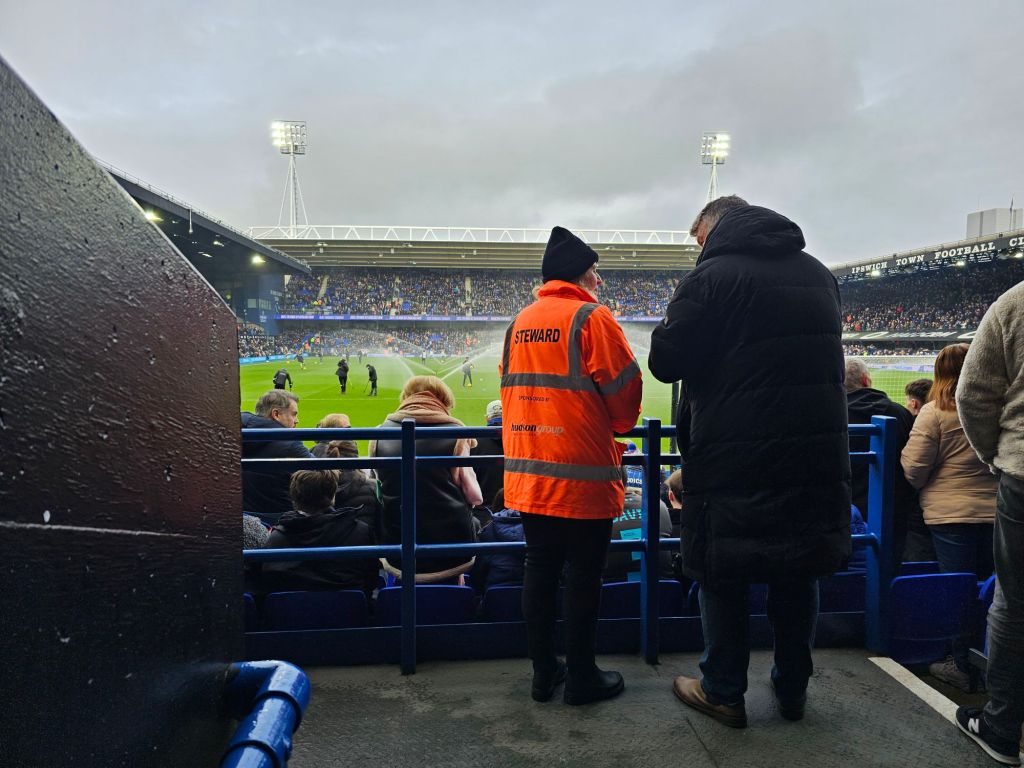
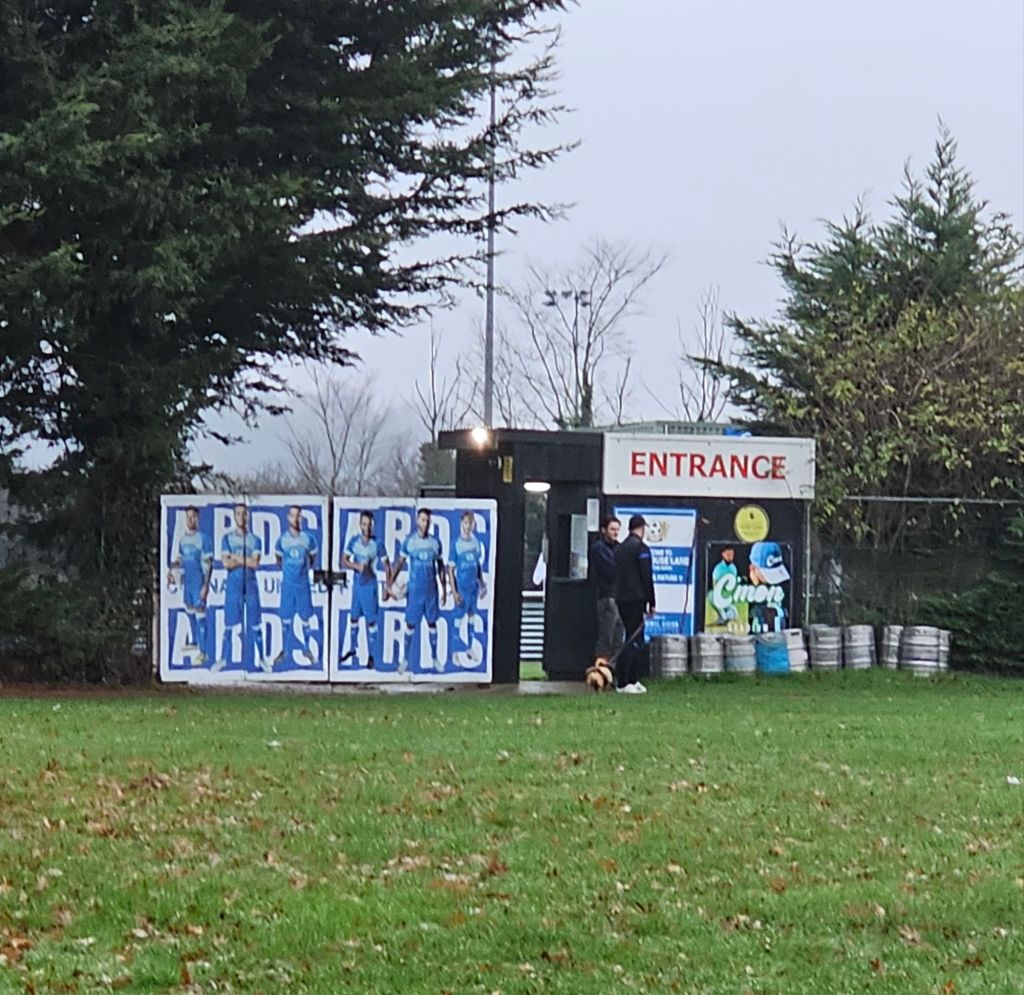
In Portman Road, a crowd of people loiter, waiting for the turnstiles to open. Gary and I speculate as to the attractions that Portman Road holds ninety minutes before kick-off but can’t think of any. I am first through the door at the Arb and with no other punters at the bar I am soon paying for a pint of Estrella Galicia for Gary and a pint each of Mauldon’s Suffolk Pride for Mick and myself (£14.90 with Camra discount). We repair to the beer garden to sit in the shelter that backs on to High Street, joining a solitary man with glasses and tied back hair at the end table having first asked if we may; we may. Mick is late, but it’s not long before he arrives. We talk of the African Cup of Nations, how Mick will miss Tuesday’s match because he must go to Scotland for a funeral, of the Tory councillor from Lymington in Hampshire sent to prison for twenty weeks for stalking former Tory MP Penny Mordaunt, and jury service. Gary buys more drinks and we leave for Portman Road at about ten past twelve once we’re happy that we are the last to leave.
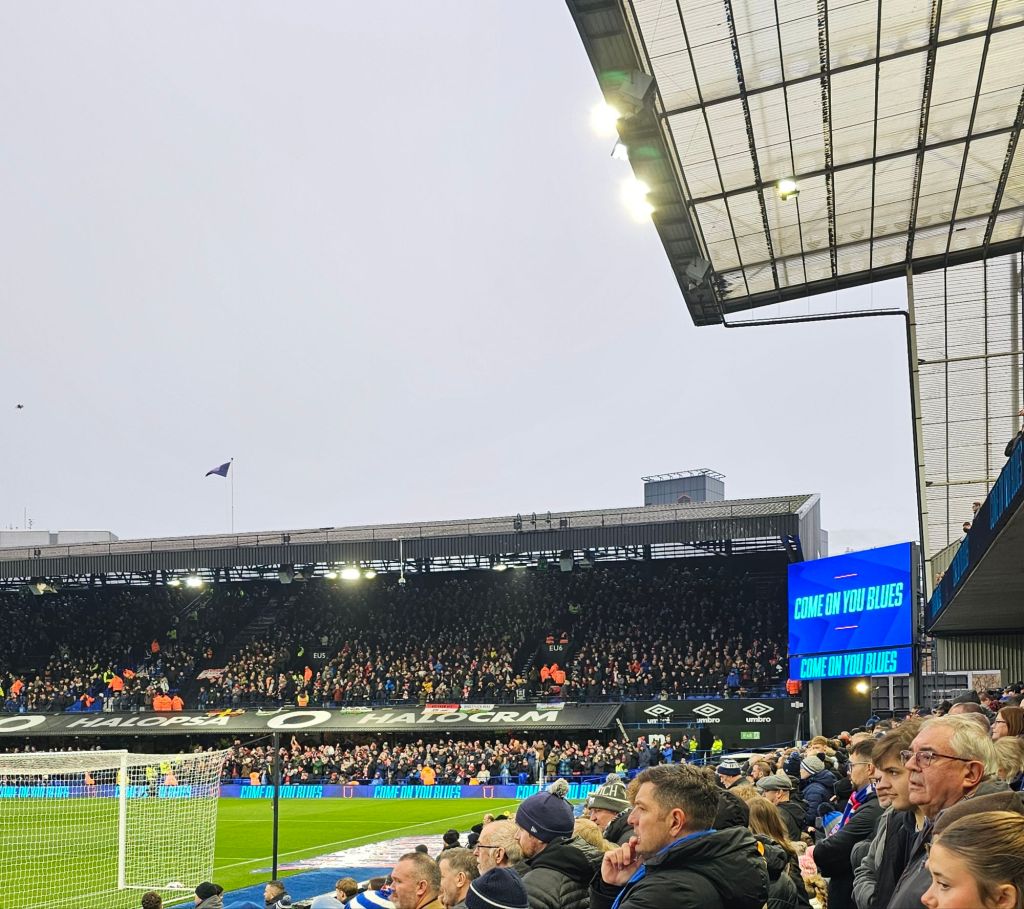
We part ways near Sir Alf Ramsey’s statue; Mick and Gary heading for the west stand whilst I make for turnstile sixty-two and the cheap seats of the Sir Alf Ramsey stand, where a smiling man first scans me for concealed weapons and scrap metal. From outside, I have already heard the excitable young stadium announcer reading out the names of the teams and I didn’t join in. After disposing of spent Suffolk Pride in the proper manner, I make for the stand, pausing only to allow the minute’s applause for all deceased Ipswich Town fans to end. I’m not a fan of the mawkish, public sentimentality of the ‘Memorial Day’. Grief is private, life is for the living and we’re all going to die.
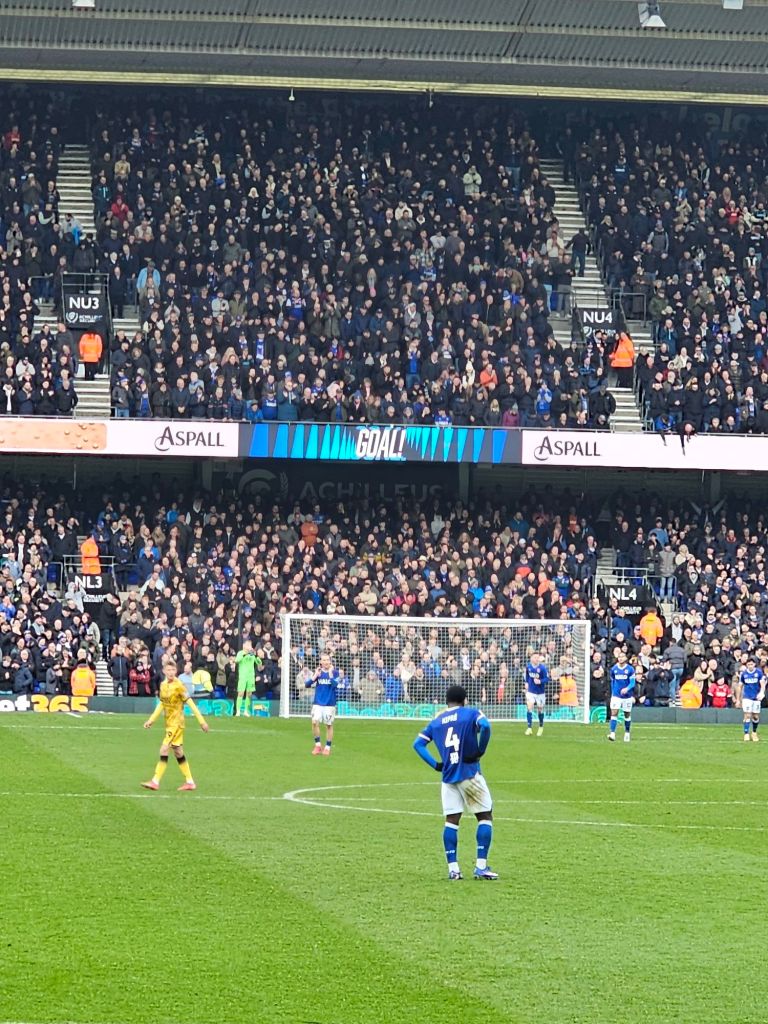
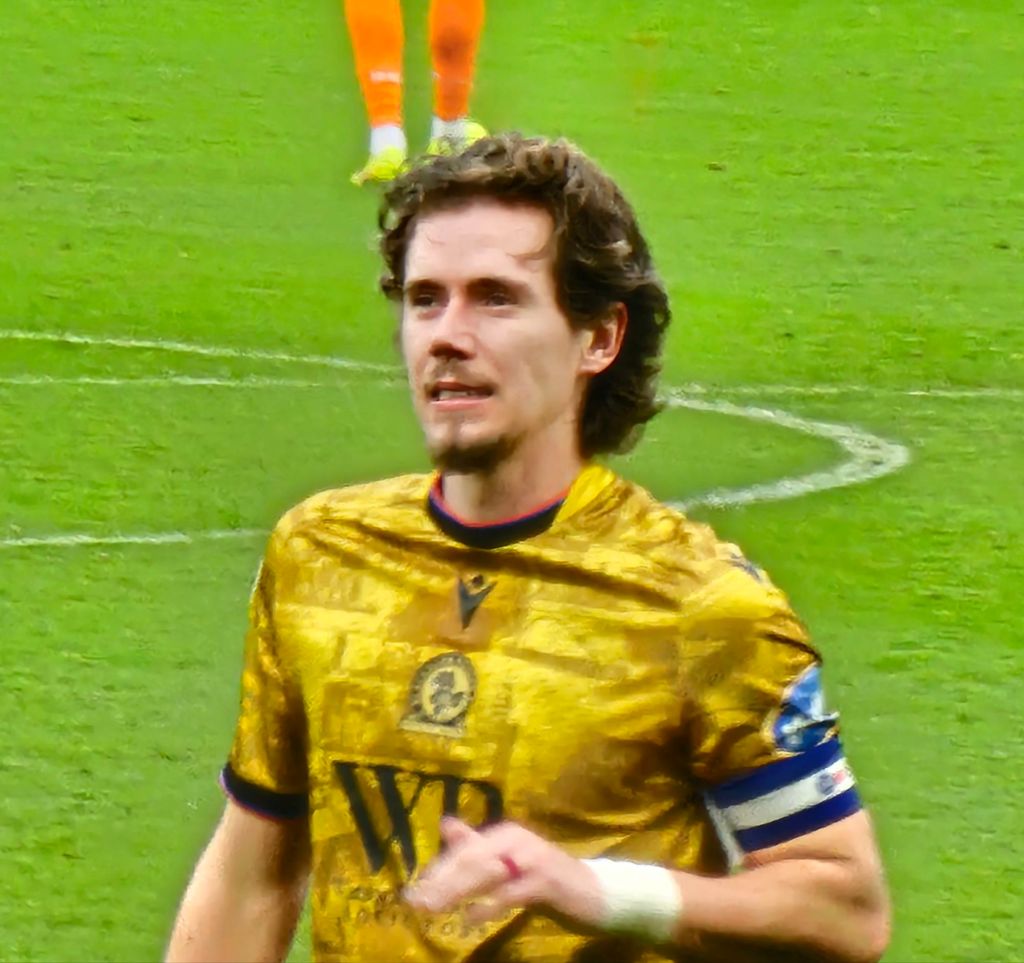
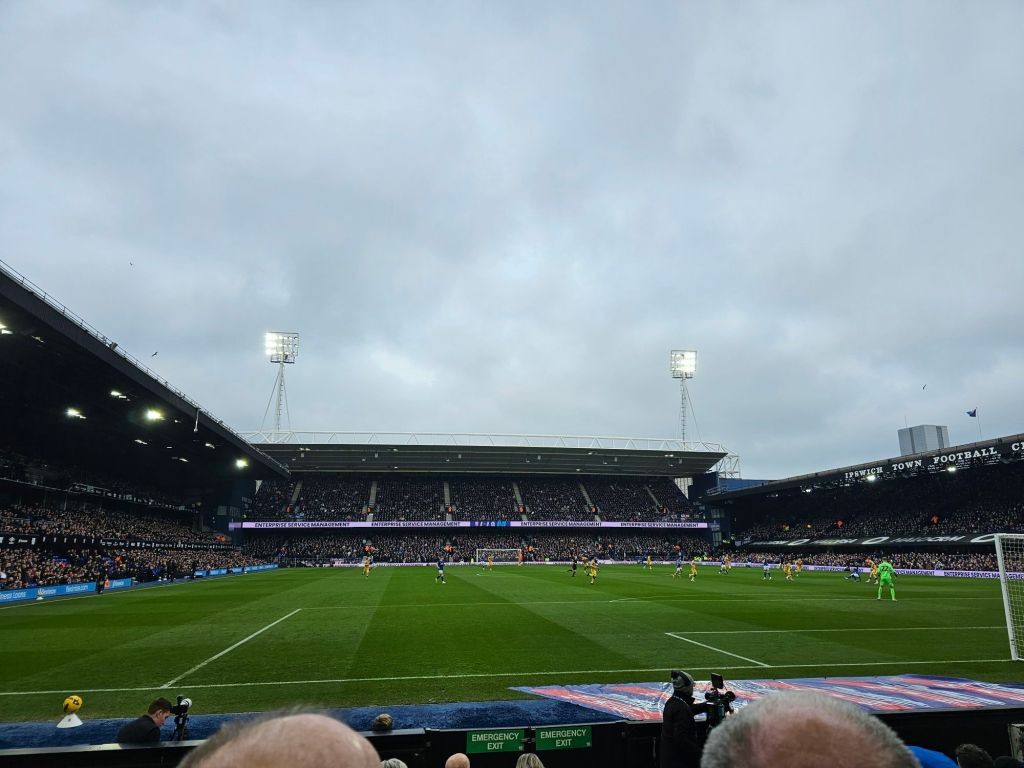
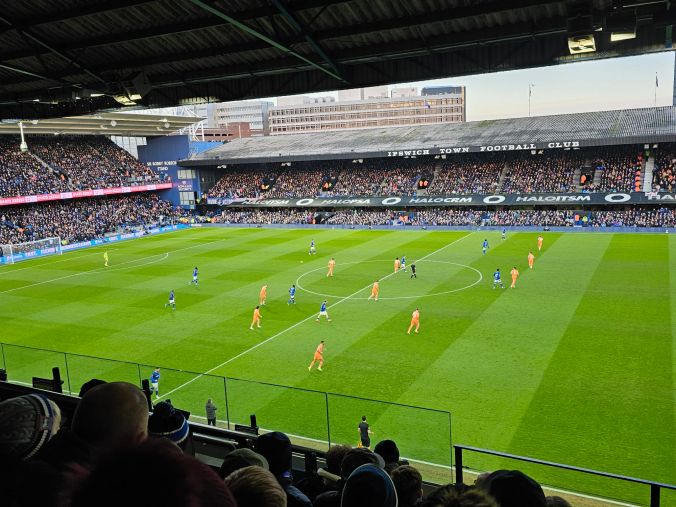
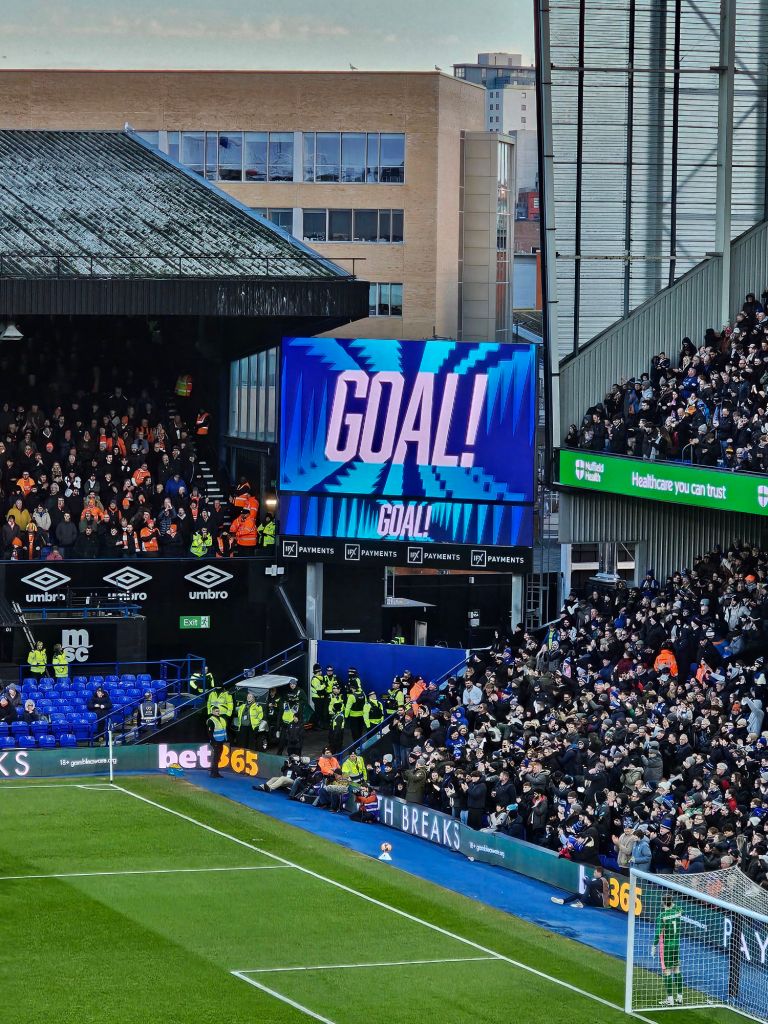
Kick-off is moments away as I shuffle past Pat from Clacton and Fiona to my seat a row or two behind ever-present Phil who never misses a game and his son Elwood, and two along from the man from Stowmarket (Paul), who today is making his return to Portman Road after missing several matches. When the game begins, it’s Blackburn who get first go with the ball, which they launch in the general direction of the Vets for Pets premises on Handford Road and the Co-op next door. Blackburn are wearing an unpleasant looking yellow kit, which from where I am sitting looks as if it is covered in brown smudges, ‘skid marks’ perhaps. According to the Lancashire Telegraph however, the shirt is gold in colour and is a ‘love letter to Blackburn’ featuring several of the town’s landmarks throughout the design. I squint and think I might just be able to make out the four thousand holes, give or take three thousand nine hundred and ninety-nine. Aside from the shirts, the first two minutes of the game are ‘all Blackburn’ and in the third minute their number 20, Erain Cashin scores a spectacular goal, albeit in his own net. Nunez and Philogene exchange passes before Nunez delivers a low, hard cross, which Cashin belts into the top corner of the goal from a seated position, thereby promoting himself as the possible answer to Town’s perceived need for a ‘top striker’. Town lead one-nil.
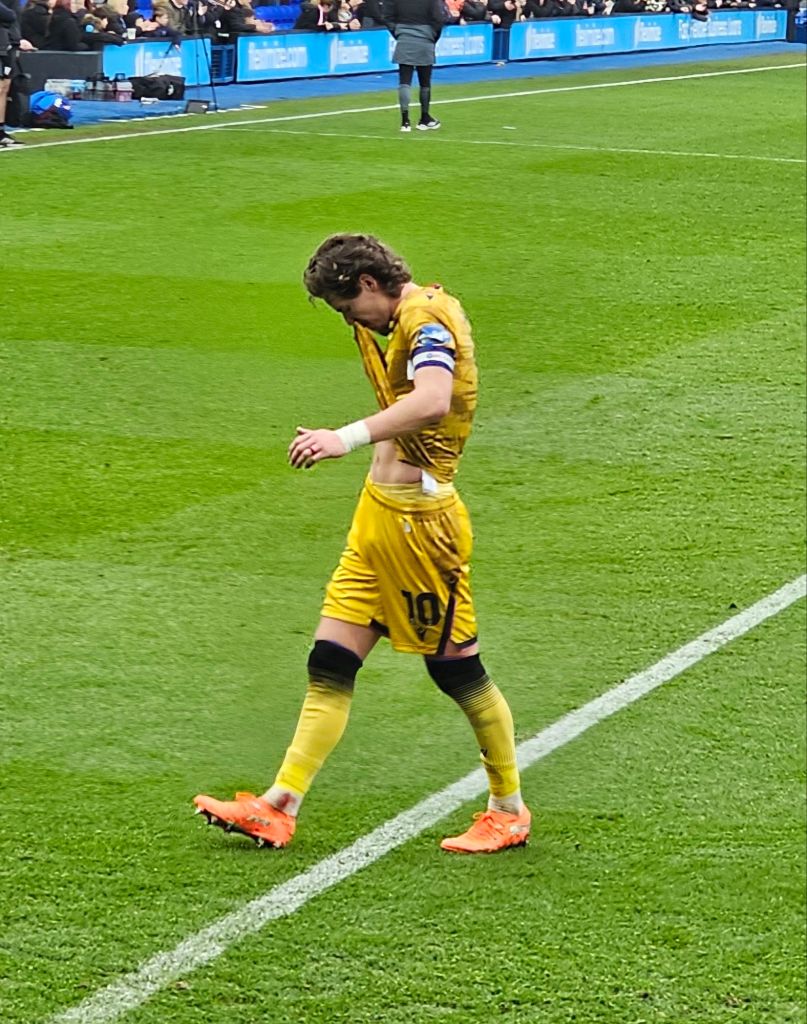
The goal results in Ipswich gaining the confidence for Eggy to have a volley tipped over the crossbar by Blackburn goalkeeper and ancient Egyptian deity Toth. The Blackburn number 10 is jeered by home supporters. “That’s Cantwell” says the fella in front of me. “Whoever he is” I respond, genuinely not knowing who he is although I’d seen his face before. “He used to play for Norwich” says the fella. “Like Nunez” says Fiona. Ipswich have a corner “Come on You Blues” chant at least five of us. A far post header sends the ball into the six-yard box, Toth smothers the ball but then doesn’t and Jack Taylor belts it into the roof of the goal net from less than a metre out. It’s a goal ugly enough to have travelled through time from the days of Mick McCarthy. Town lead 2-0, although I had expected the goal to be disallowed, but that was before I remembered we’re not in the Premier League anymore.
“All games should start like this” I think to myself and then tell Fiona. Seventeen minutes have left us, Town still lead two-nil, Blackburn win a corner. Eight further minutes pass into history and Blackburn’s Atcheson claims the day’s first booking after fouling Jaden Philogene. I had been wondering how many goals we might score but things have quietened down. A long throw from Darnell Furling momentarily excites. “A helluva throw” says the bloke beside me, “Like a bullet”, and it was. Then Blackburn win another corner. “Wanker, wanker, wanker” chant the Sir Bobby Robson standers, and “He’s only a poor little budgie” to the tune of ’The Sparrow’, a Christmas 1979 hit for The Ramblers, a choir from the Abbey Hey Junior School, Manchester, and along with Brian and Michael and St Winifred’s School Choir, a rarely celebrated part of the ‘Madchester scene’. I assume the target for the abuse is Cantwell, a man who sports a mullet, which makes him resemble a cross between Jerry Seinfeld and Mickey from the Job Centre in the BBC tv series ‘The League of Gentlemen’.
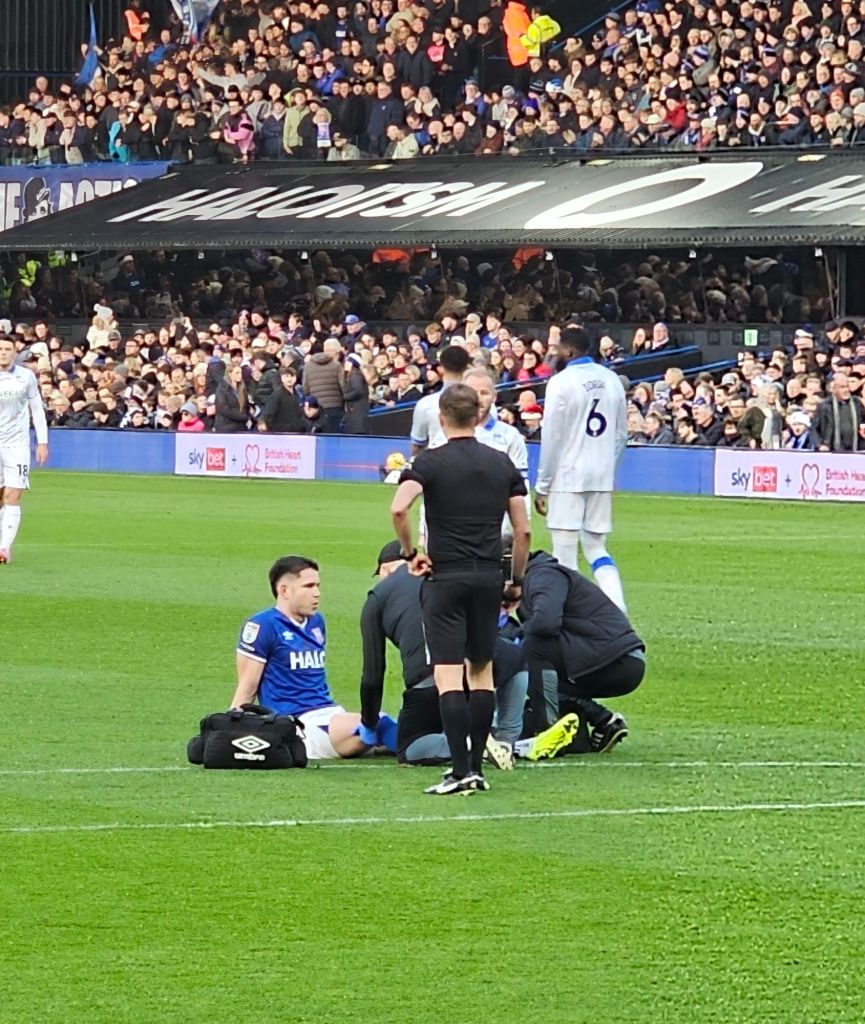
There are twelve minutes remaining until half-time and as we wait for Leif Davis to take a corner having chanted “Come on You Blues” a few times for luck, Fiona comments on the grubby appearance of Blackburn’s yellow shirts that look like they’re covered in brown marks of unknown provenance. An injured Jaden Philogene is replaced by Jack Clarke, Blackburn win another corner and two minutes of added on time are stolen from our futures before half-time arrives.
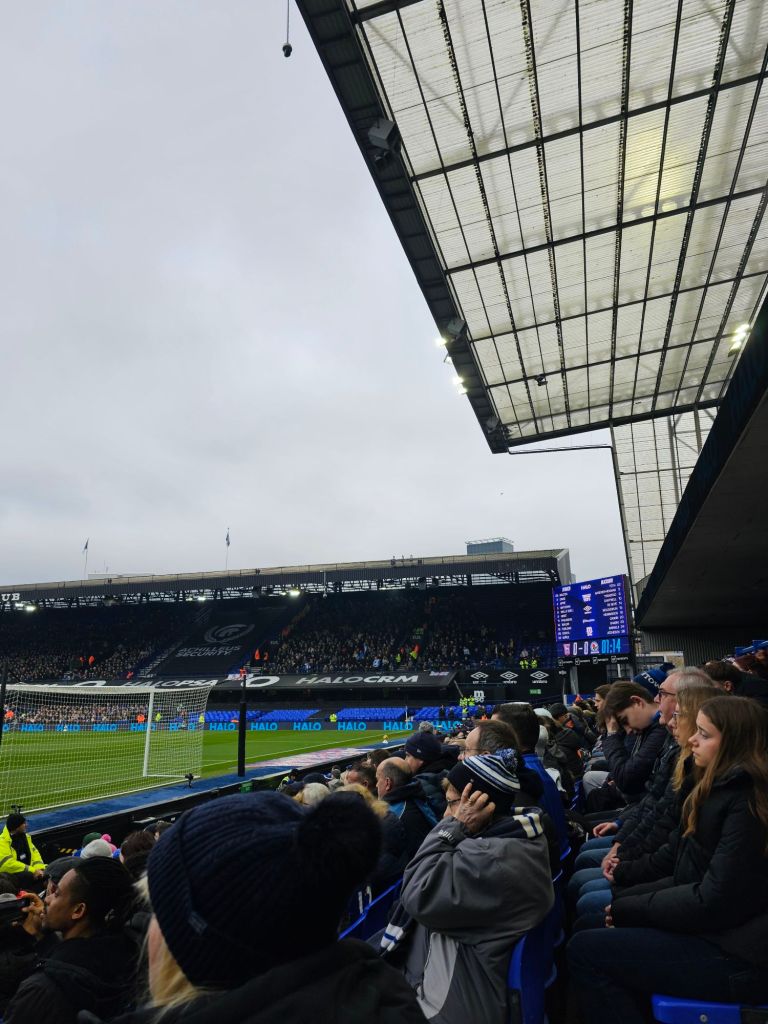
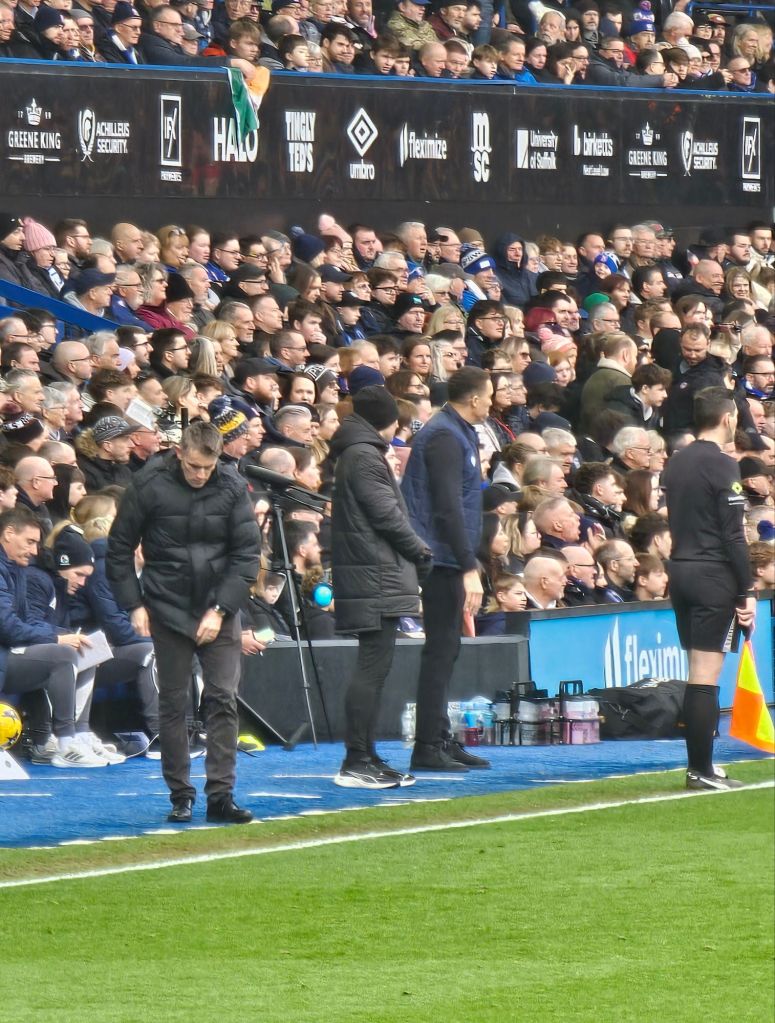
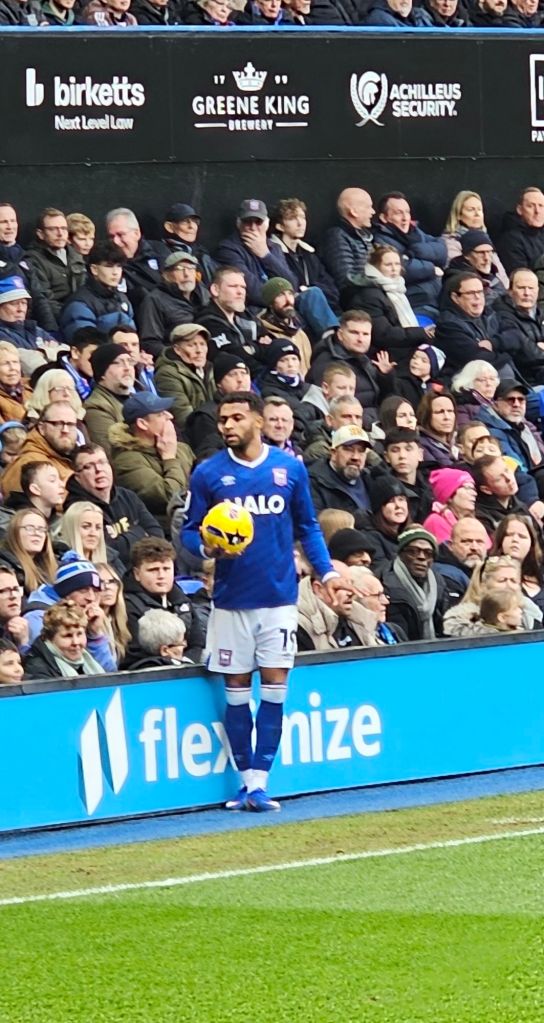
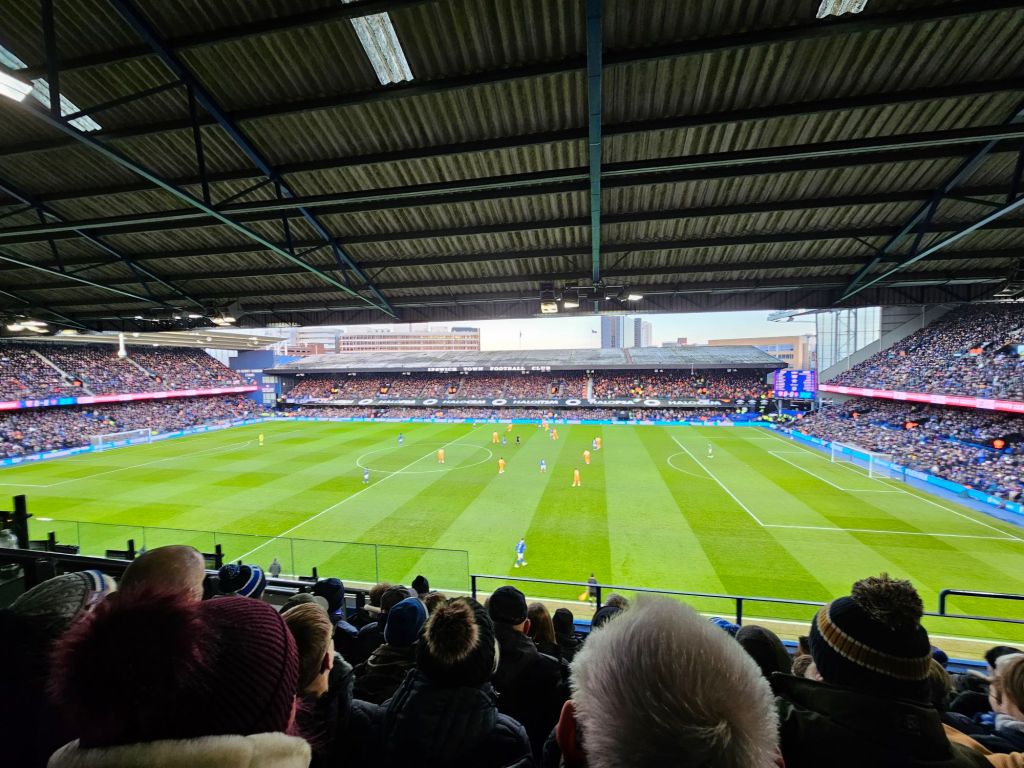
During half time, I talk to the man from Stowmarket (Paul), who has been in hospital. He tells me all about it and I can only marvel again at the NHS and the beautiful idea of distributing resources amongst the population for the common good and according to people’s needs. I vent more spent Suffolk Pride and at twenty-six minutes to two the football resumes beneath a hint of winter sunshine. Five minutes in and Ipswich have a corner. The crowd is mostly quiet today because Blackburn have had a lot of the ball, albeit without doing much with it. But Ipswich are dominating now and the Sir Bobby Robson standers sing “When the Town go marching in” at a depressingly funereal pace appropriate for ‘Memorial Day’. Five minutes later however they feeling are more up-beat as they chant ‘Blue and White Army’ and it works as Town win another corner.
But Ipswich’s domination is fleeting as a Blackburn shot is blocked and another goes tamely wide. When Blackburn win another corner, I see just how bad Cantwell’s mullet is and so advise him to “get your ‘air cut, Cantwell” as any responsible citizen would. “Come On Ipswich, Come On Ipswich” pleads the home crowd and as if in response Eggy and Hirst are replaced by Ivan Azom and Wes Burns who draws a cheer for just trotting onto the pitch. “I don’t need to get Monkey out, do I?” asks Pat from Clacton, and Fiona and I agree we don’t need any lucky charms yet, because we’re still two-nil up.
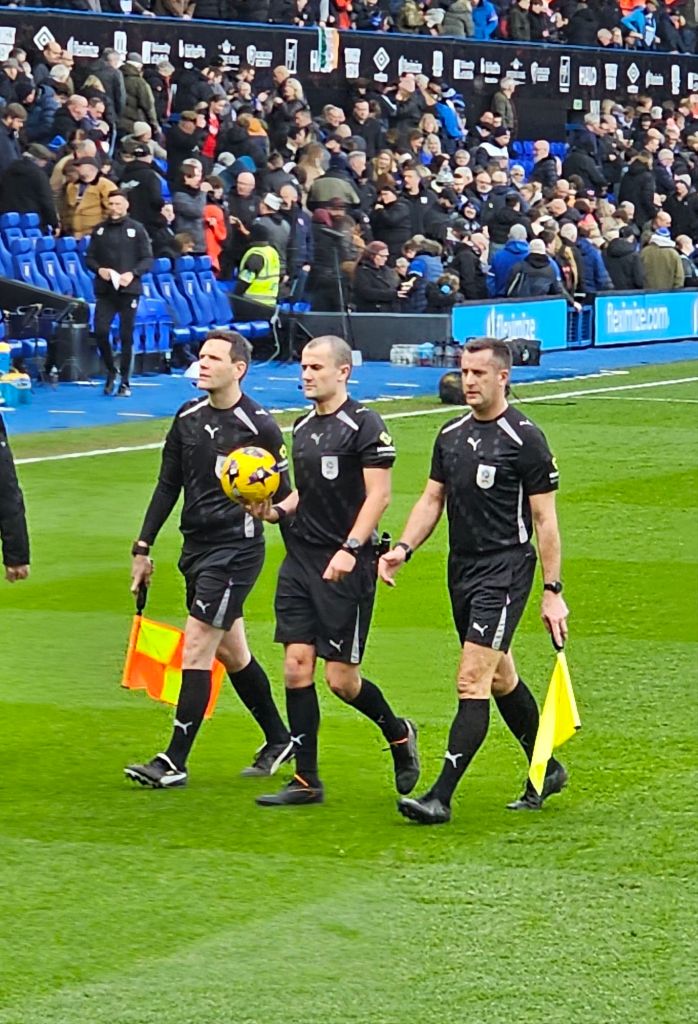
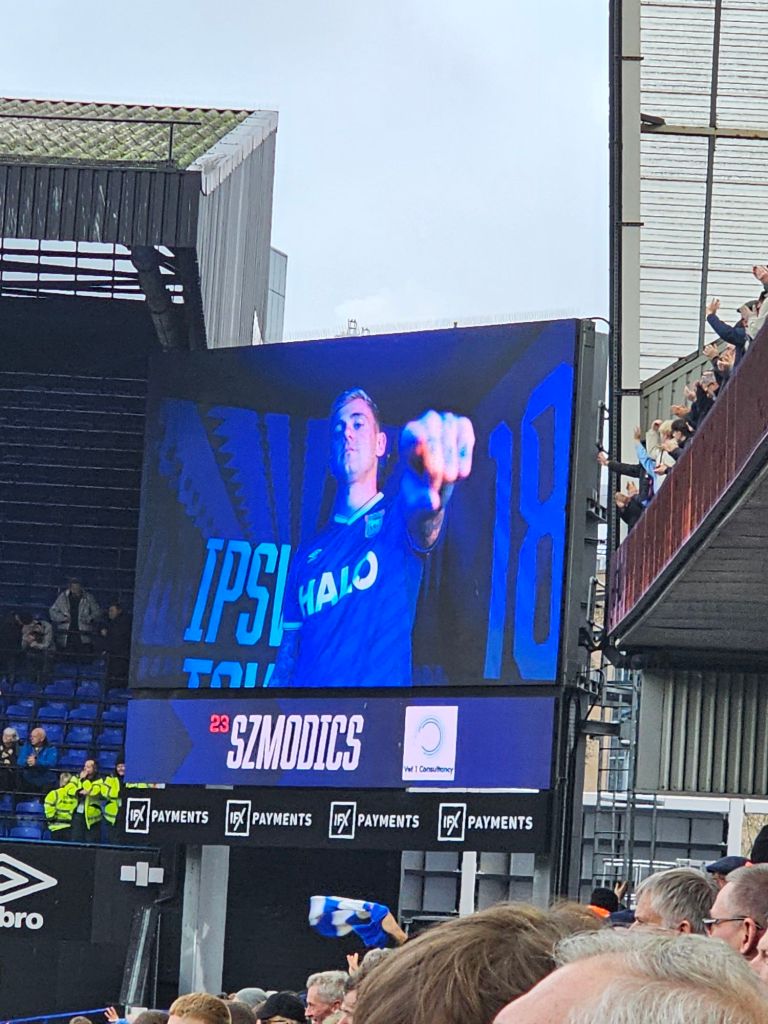
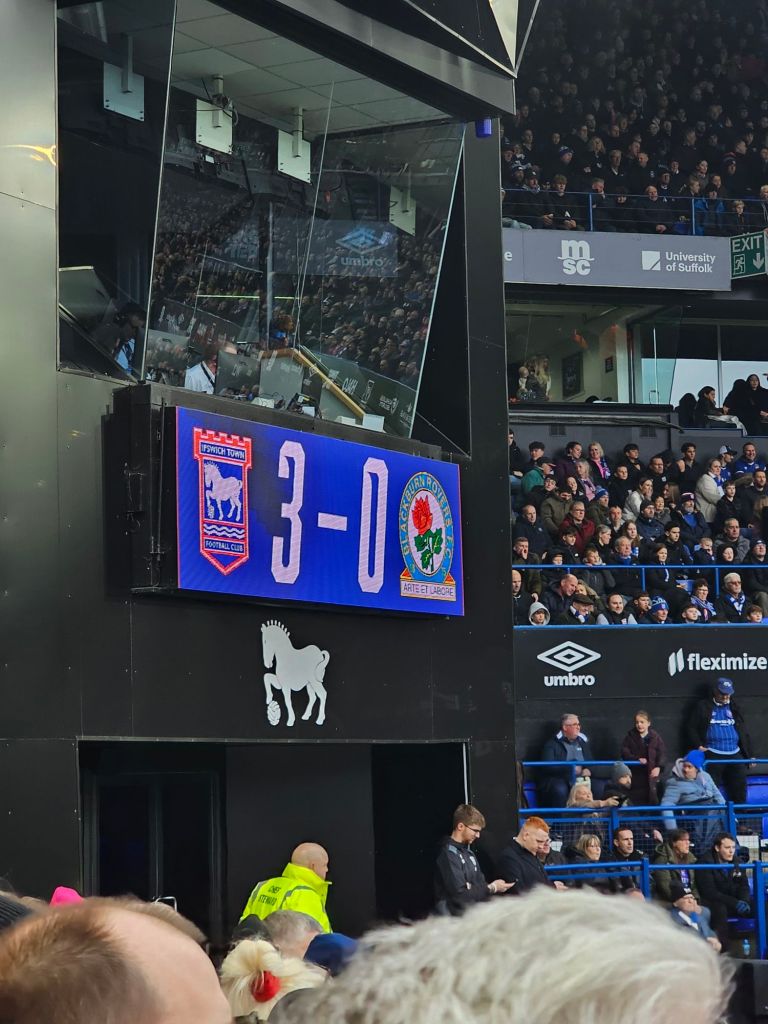
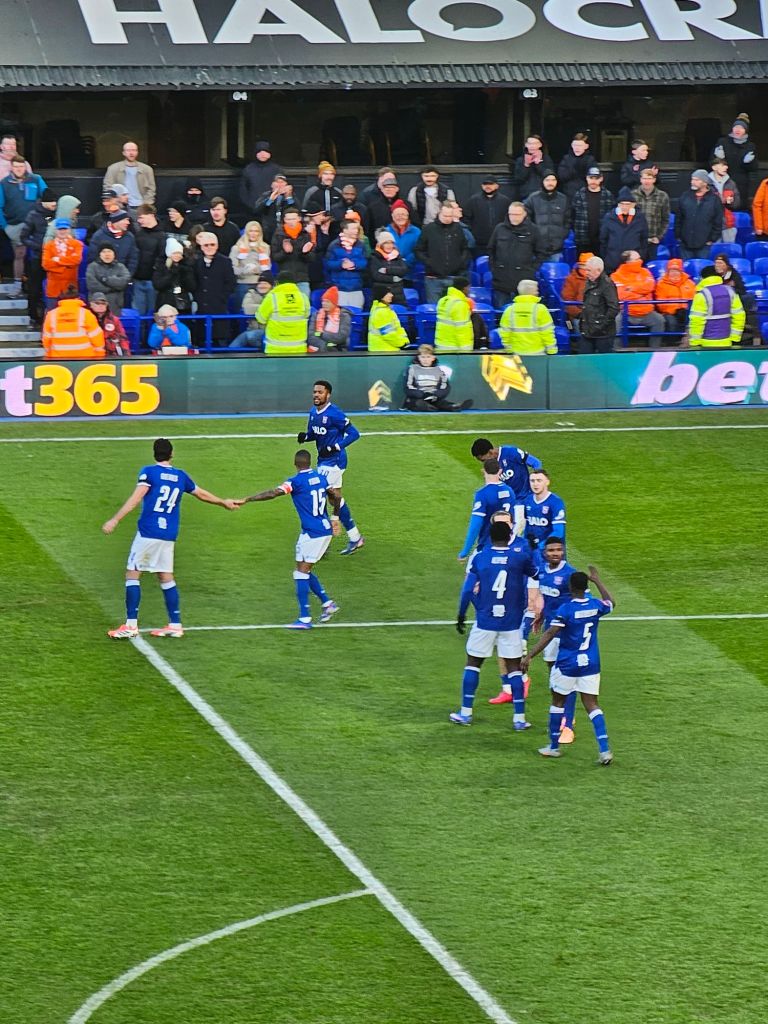
In the final twenty minutes of normal time three more Blackburn players, Trondstad, Cantwell and Cashin are booked by referee Mr Kitchen, all for fouls on Jack Clarke who has become Blackburn’s target man since Philogene had to go off. Mr Kitchen meanwhile sports an impossibly neat but receding hairline as if like a 1960’s Action Man his hair has been painted on to his scalp. More substitutions are made, Pat from Clacton tells me about the pantomime she saw, the dame was called Belle Ringer, and for a short while my mind wanders off, I’m not sure where but I’m back in time for the eighty-eighth minute when Jens Cajuste surges forward, slips a through ball to Wes Burns and his square pass is swept into the Blackburn goal by Sammy Szmodics. Town lead three-nil and five minutes of added on time make no difference, although it sounds like Cedric Kipre has been chosen as man of the match by something called Holiday Testing Concrete Limited; I expect it’s something to do with Brutalist architecture.
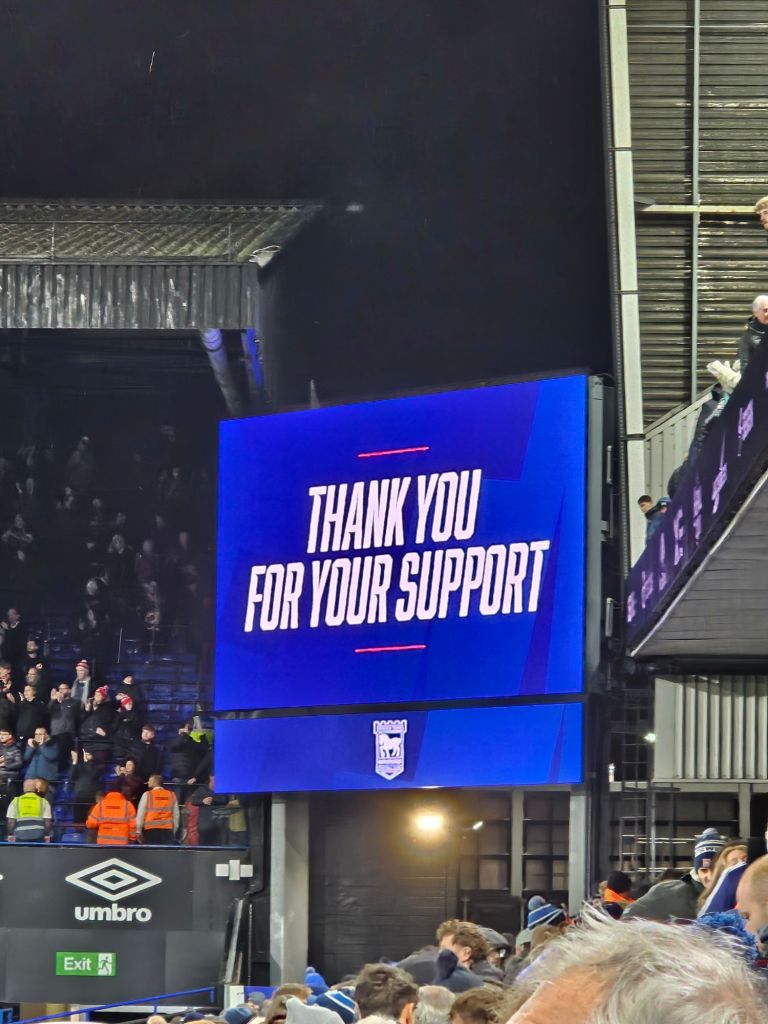
The final whistle sounds and people stay and leave in equal measure to cheer the victors or catch buses and trains or queue in car parks. or just walk home. It’s been a slightly odd game, good in parts, very good in flashes. Ipswich have been too good for Blackburn whose greatest contribution to the spectacle has been providing a pantomime villain in Cantwell. Most significantly however, for the first time this season the visiting supporters have failed to sing “Football in a library, do-do-do”. Having had to get up in the middle of the night to travel over 400 kilometres for a 12:30 kick-off I don’t suppose they could be bothered.














 trippingovertheball