As far as I can recall, the last time Ipswich Town played French opposition was forty-three years ago when ‘Les Verts’ of St Etienne visited Portman Road in the second leg of a Uefa Cup quarter final tie. For me, as someone who feels certain the world would be a better place if only Napoleon had won the battle of Waterloo, this is nothing short of a personal tragedy, but one I’ve tried to make up for by watching French football whenever possible. I can now boast (and I do) having been to every stadium in Ligue 1 except Stade Meinau in Strasbourg and Stade Raymond Kopa in Angers, having seen more than half of the teams in Ligue 2 and scores of those in Ligue National and the regional leagues below, and I’ve been to the final of the Coupe de France at the Stade de France. When I heard therefore that Ipswich would be playing Olimpique Gymnast Club Nice (known as Le Gym or Les Aiglons – The Eaglets) in a pre-season friendly I was as happy as a Frenchman with a fresh baguette and a 2 litre bottle of Pastis. But, as someone who thinks access to pre-season friendlies should ideally be free, I also immediately regretted having already forked out a stonking twenty quid for a ticket for the pre-season friendly versus German second division club Fortuna Dusseldorf, and with good cause as it turned out, because that match was a stinker.
After ten days or more of mounting anticipation, today is the day of the match. Resisting all temptations to have croissants and champagne for breakfast, it’s not long before I’m on the train to Ipswich with my wife Paulene and friend Gary looking out for polar bears as we descend past Wherstead, the A1214 and into town; we see three, two of whom are stretched out on the ground like a big game hunter’s fireside rug. Arriving at Ipswich station there are the inevitable queues at the gates as two trains disgorge in quick succession and people struggle with QR codes on phones before eventually, a wise ticket collector simply opens the ‘sluice’ gates to prevent the human tide backing up into Greggs, a brand which I imagine any French person on the station concourse would instinctively keep a safe distance from.
Gary and I cross the road to the Station Hotel whilst Paulene makes straight for Portman Road because she wants to watch the players of OGC Nice warm up before the game; she has a particular interest in the forty-year old Brazilian colossus Dante, former Olympique Marseille players Morgan Sanson and Jonathan Clauss and the attractively monikered Gaetan Laborde. Unfortunately for Paulene, Nigerian forward Terem Moffi isn’t in the squad today because of a cruciate ligament injury. Meanwhile, back in the Station Hotel, Gary buys me a pint of Abbot Ale and some heavily advertised lager or other for himself. As we sit down, Mick arrives , and once he has a pint of Abbot Ale too, we talk of the Olympic games, the complicated cycling events such as the Madison and Omnium, how Gary might buy programmes for the home matches this season and the local Nicois or Nicard language or dialext of Nice as we struggle to hear ourselves talk above the noisy family who are enjoying a pre-match drink on the other side of the room. They annoy me a bit, but Mick thinks it’s good to see families out enjoying time together. Mick is very resaonable man. Mick also has plans to be in Nice (Nissa in Nicois) for a jazz festival a fortnight today and I quickly interrogate the interweb to discover that OGC Nice will be at home to Toulouse that weekend too. I advise him that the Ligne 3 tram will take him to the magnificent Stade de Nice or Allianz Riviera as it is also known.
Resisting temptation for a second time today, I don’t have another pint of Abbot Ale; the first one wasn’t that great, and it also seems that today in the Station Hotel is a dress rehearsal for hosting the supporters of Liverpool next week because we are having to drink from plastic glasses. Liverpudlians are also only allowed to use scissors if supervised by a responsible adult. Mick and I briefly discuss oxymorons before heading off for Portman Road; Gary has left already because he is making a visit to the club shop to collect one of the bright pink third choice shirts which went on sale recently and when worn will cause many a Town supporter to look like a raspberry blancmange. Weirdly, the club has allowed Ed Sheeran to advertise one of his many bland tunes on the shirt by scrawling an impression of Framlingham Castle across the front. It would make sense on a Framlingham Town shirt, but with its high-Victorian Town Hall, Italianate Customs House, brutalist St Francis Tower, Orwell bridge, Meccano-like dockside cranes and a Corn Exchange which wouldn’t look out of place in any French city, Ipswich has more than enough interesting architecture to conjure up a skyline of its own for a Town shirt.
Mick and I don’t quite get as far as Portman Road itself because we end up approaching the Sir Alf Ramsey Stand across the site of the former Staples store in Ruseell Road and I remark that the wide tarmac approach to the stand would be a tree-lined avenue in France; both Mick and I buy programmes (£2.50) from the ice cream booth which is situated where the first London Plane would be.
Once onto the lower tier of the Sir Alf Ramsey Stand it seems odd not to be greeted by Pat from Clacton, Fiona, the man from Stowmarket and most strangely of all ever-present Phil who never misses a game, and his son Elwood. I’m not sure if ever-present Phil counts pre-season friendlies in his long back catalogue of games he has not missed, but if he’s not here today I for one think he risks losing his epithet, and no one wants to see that. I am however re-united with Paulene and together we ‘go down the front’ to talk with Ray and his grandson Harrison. Paulene asks Ray about his solar panels, and he tells us that they are very successful although British Gas don’t seem to be paying him the money for the electricity his system puts into the grid. We tell him to dump British Gas and sign up with Octopus.
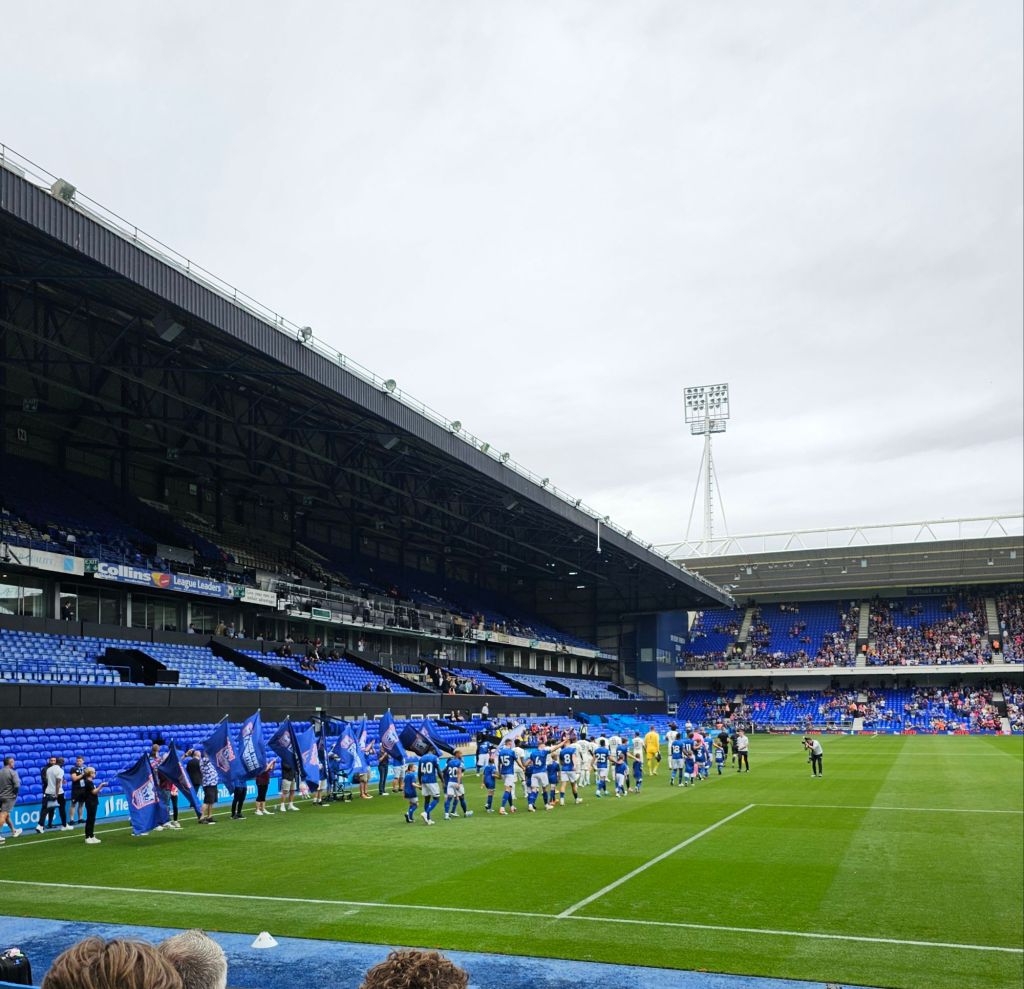
Back in our seats, the Town line-up is announced, I think, but I’m not sure because the public address system is completely unintelligible, which is shame on today of all days when I imagine everyone will want to pretend to be French and call out the surnames of the players after the announcer reads out their first names. The stadium announcer seems not to read out the names of the Nice team at all, perhaps for fear of embarrassing himself with poor pronunciation, not that it would matter when no one can understand a word he says anyway. Eventually, the teams appear and I recall how for home games in Nice, the pre-match ritual includes ‘Mefi’ the eagle flying around the stadium; perhaps Town should have a Suffolk Punch rolling the pitch. When the game begins it is Town that get first go with the ball and aim it mostly in the direction of the goal almost in front of me, Paulene, Mick and Gary in the Sir Alf Ramsey stand. Town wear their signature blue and white kit today, whilst Nice wear an unnecessary away kit of all-white, which is huge shame because their red and black home shirts and black shorts are a visual treat.
After almost eighteen minutes I glance up at the scoreboard and say “Is that all? It feels like we’ve been here far longer.” The game has so far displayed a dullness to rival the thoughts of Michael Owen or that of the Dusseldorf game. But after an impromptu drinks break, when a Nice player receives treatment for acute boredom, the game miraculously perks up and both teams venture forward by means of neat passing and winning corners. “Allez les Bleus, Allez les Bleus” I chant at an appropriate moment, and Paulene tells me later that people gave me funny looks as a result. Liam Delap runs through on goal for Town and has a shot saved by the Nice goalkeeper and everyone starts to think that may be the new season might be ok after all, except for Paulene who supports Portsmouth and so doesn’t really care. Then, with half-time approaching like a motorway service station on a not overly long journey but one where it’s probably as well to stop, it looks like George Edmundson and Axel Tuanzebe both make a bit of a lunge on Evan Guessand, a player with whom incidentally, Debbie Harry, Alan Sunderland and I share a birthday, albeit not in the same year. Presumably unaware of Guessand’s star sign, not that it makes any difference, referee Mr James Bell awards Nice a penalty. Mohamed-Ali Cho takes the penalty kick for Nice, but unusually the laws of physics are defied in Town’s favour for once and the ball strikes the inside of Muric’s right-hand post and deflects out of rather than into the Town goal. It’s a lucky escape for Town and after only literally seconds of added-on time Mr Bell says it’s time for a cuppa and the opportunity to reflect.
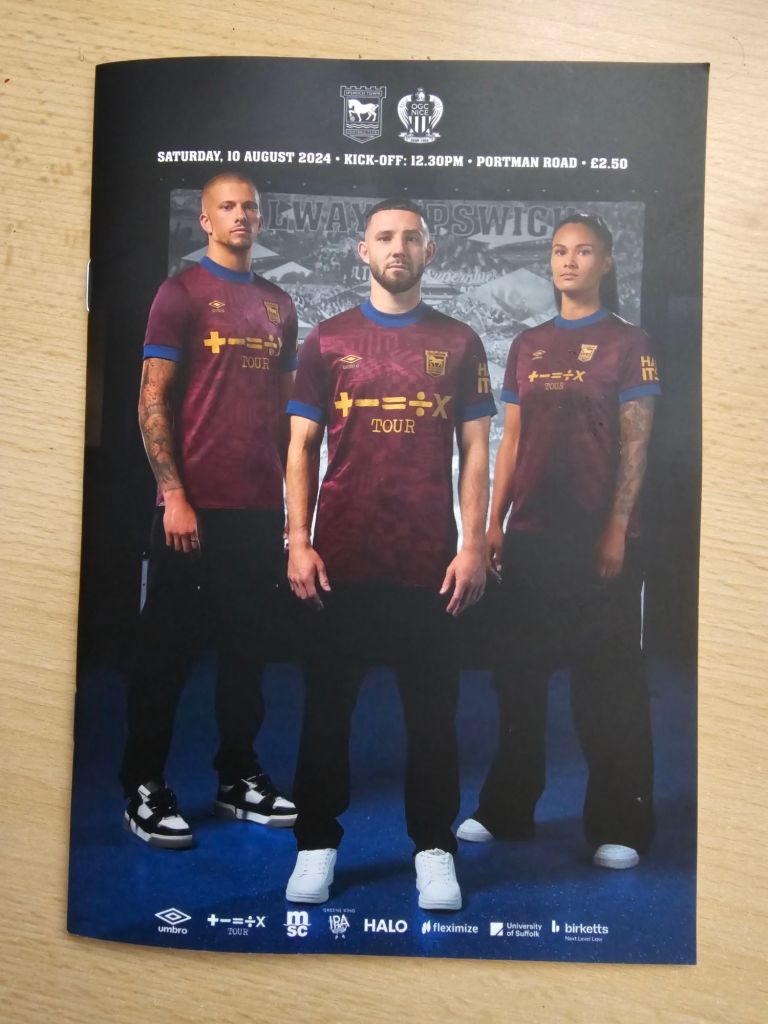
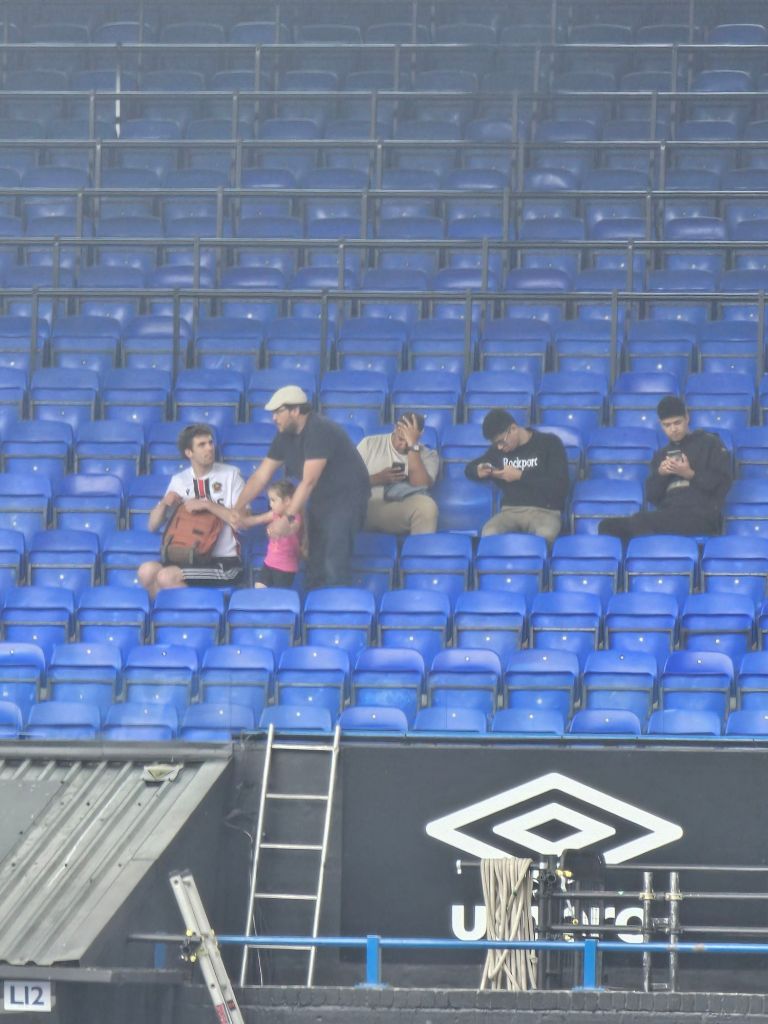
Half-time permits a thorough read of the match programme, because we don’t get much for £2.50, and for some unfathomable reason the text incorrectly, but consistently, refers to OGC Nice as OGM Nice. I wonder what the half a dozen Nice supporters up in the Cobbold stand think of this poor journalism, particularly given that they are used to match programmes being free.
Beneath oppressive grey skies the second half begins and carries on where the first half left off. Both teams pass the ball tidily, but Nice possibly have a bit more flair, and in keeping with both teams’ respective country’s geographies, Nice’s passing is more expansive whilst Town’s is tighter; l’hexagone against Little England. Napoleon would have understood.
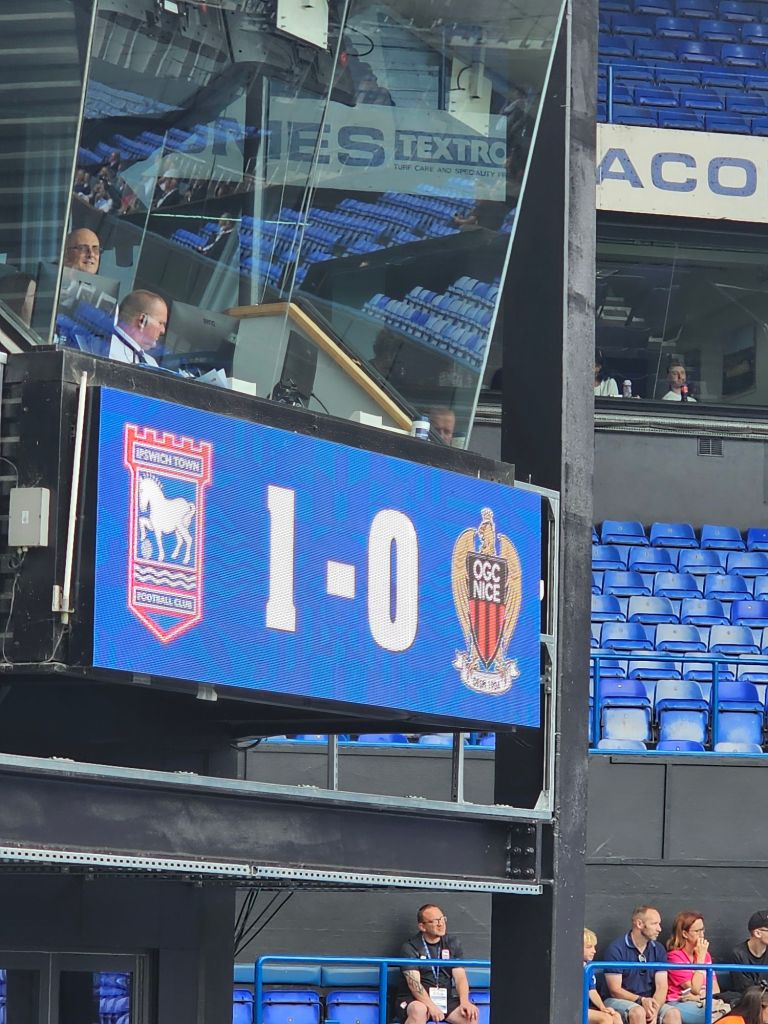
Early second half action sees George Edmundson clear a shot from Jonathan Clauss off the Town goal line, but then the thirteenth minute of the half proves unlucky for Nice as a goalmouth melee is abruptly ended by Axel Tuanzebe lashing the by now disorientated ball into the net from inside the six-yard box. Town lead, but less pleasantly four minutes later Omari Hutchinson suffers the ignominy of being booked for a foul in a friendly match, although to his credit he does look sorry. A minute later and mass substitutions are made, and the hopeless PA system sounds off to full effect, like a malfunctioning foghorn. The Town players who are replaced gather in the corner by the Cobbold and Sir Alf stands presumably to warm down, causing us to speculate on whether the gym is full of building materials or whether this is just a PR exercise and the players are merely getting close to their public. I suggest that they are going to form a cheerleading troop, but no one is overly surprised although they may be disappointed when events prove me wrong.
The highlight of the final seventeen minutes is a low shot from substitute Freddie Ladapo which strikes the inside of the far post and predictably deflects out of the goal, not into it, and Marcus Harness is arguably a little too careful with his follow up shot, which consequently is booted clear by a retreating defender. When the time comes, the final whistle is blown promptly by Mr Bell (Monsieur Cloche in French) with no un-necessary added-on time, and we all agree that it has been an enjoyable game full of free-flowing football. Paulene and I bid farewell to Gary and Mick at the railway station as Gary catches an earlier train and Mick collects his bicycle. We look forward to seeing the Polar bears again on our journey home and I reflect on how if only Town were in Ligue 1 we might be playing Olympique Marseille next week, not Liverpool.






 trippingovertheball