I just can’t help it but this morning I feel bright and optimistic. It’s the dawn of a new year, I had a good night’s sleep, a pale winter sun is shining, and I still haven’t forgotten Ipswich Town’s fabulous two-nil win at top-of-the-table, previously unbeaten at home Coventry City last Monday evening. So cheerful am I that I can’t help feeling that everyone else must feel the same too. Indeed, supporting my theory, yesterday in a work e-mail from my boss, he couldn’t resist telling me that he too was still “buzzing” from Monday’s win. To add to the mix, today Town are playing Oxford United, who are just part of the sludge at the bottom of what I call the second division.
I’m not sure that I am buzzing or have ever buzzed, but I think I can at least lay claim to a pleasant hum as I make for the railway station, where the train arrives on time and I sit next to a man who will remain almost bent double over his mobile phone all the way to Ipswich. Gary joins me at the first station stop and after the usual polite enquiries about our respective Christmases, he is eager to tell me about how Celtic lost the 1926 Scottish FA Cup final two-nil to St Mirren wearing white shirts. Being at best still Medieval in outlook, Celtic blamed the shirts for their defeat and quickly off-loaded them onto Barhill Football Club in Ayrshire, who had conveniently just written to both Celtic and Rangers asking if they had any old kit they didn’t want. The punchline to Gary’s tale of silly Scottish superstition resulting in generosity is a photo on Gary’s phone of four Barhill footballers, one of whom is Gary’s grandfather, each wearing one of the said shirts. The story is the highlight of today’s journey because we fail to spot a single polar bear as the train eases down the gentle incline through Wherstead into Ipswich.
In historic, interesting Ipswich the sun still shines as we make our way down Princes Street and Portman Road and then uphill towards ‘the Arb’ on High Street. Pints of Lager 43 and Mauldon’s Suffolk Pride (Eight pounds something for the two with Camra discount) are soon sitting before us in the beer garden, where we talk of Gary having only watched Tanzania in the African Cup of Nations on the telly, whilst I have watched at least some of almost every game. Our conversation progresses onto the defining characteristics and dates of Generations X, Y, Z, the “Great Generation” and the “Silent Generation”, the merits of Dad’s Army, Porridge, the Detectorists and Morecambe and Wise, and the novel ‘The Ragged Trousered Philanthropist’ by Robert Tressell, which we decide is as relevant today as it was when it was first published in 1914. By the time Gary fetches two more pints our fellow drinkers in the beer garden are fewer in number than they were, and eventually at twenty to three we retain our record of being last to leave.
Gary and I part ways somewhere near the statue of Sir Alf Ramsey, bidding each other adieu until next Saturday’s eagerly awaited FA Cup tie versus Blackpool. As has become normal, there are no queues outside the Sir Alf Ramsey Stand, only men in black of mostly south Asian heritage each brandishing some sort of hand-held detection equipment. For a moment as I pass through the famed turnstile sixty-two, I speculate whether a sitcom set outside a football ground and amounting to Citizen Kahn meets The Detectorists could be funny. Having never watched Citizen Kahn I decide I ‘m not going to know.
After venting spent Suffolk Pride I emerge into the lower tier of the Sir Alf Ramsey stand just as the excitable young stadium announcer is reading out the Ipswich Town team and failing to co-ordinate his reading with the players’ names appearing on the score board. I bellow out the players’ surnames, nevertheless, sounding like the echo to a public address system more than I do the crowd at Stade de l’Aube in Troyes or Stade de Furiani in Bastia. Before the na-na-nas of The Beatles’ Hey Jude can ring in the new year I wish a happy new one to Pat from Clacton and Fiona and nod to ever-present Phil who never misses a game and who is accompanied by his son Elwood, although the man from Stowmarket (Paul) is once again absent.
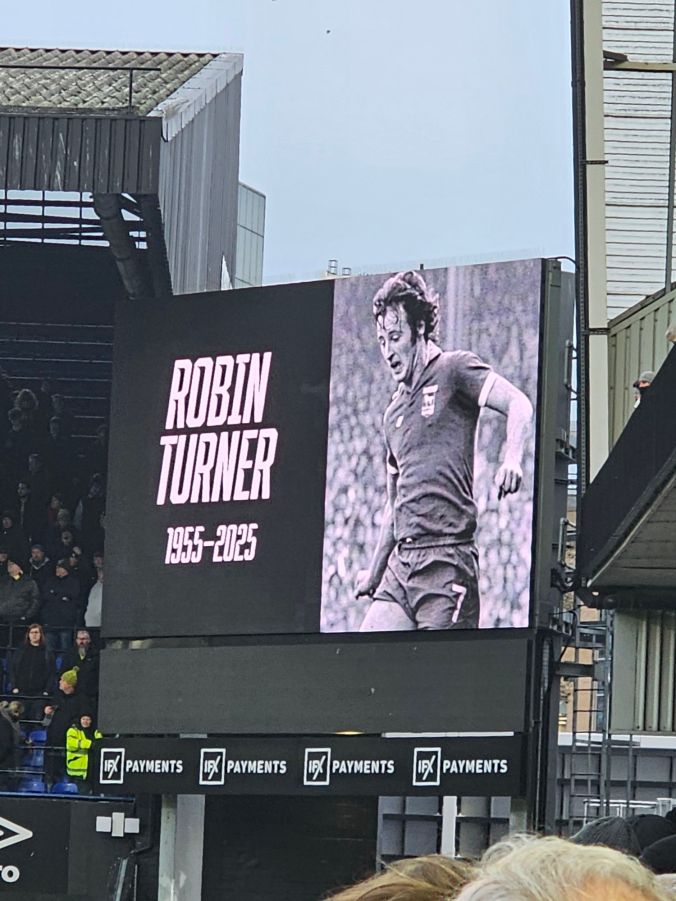
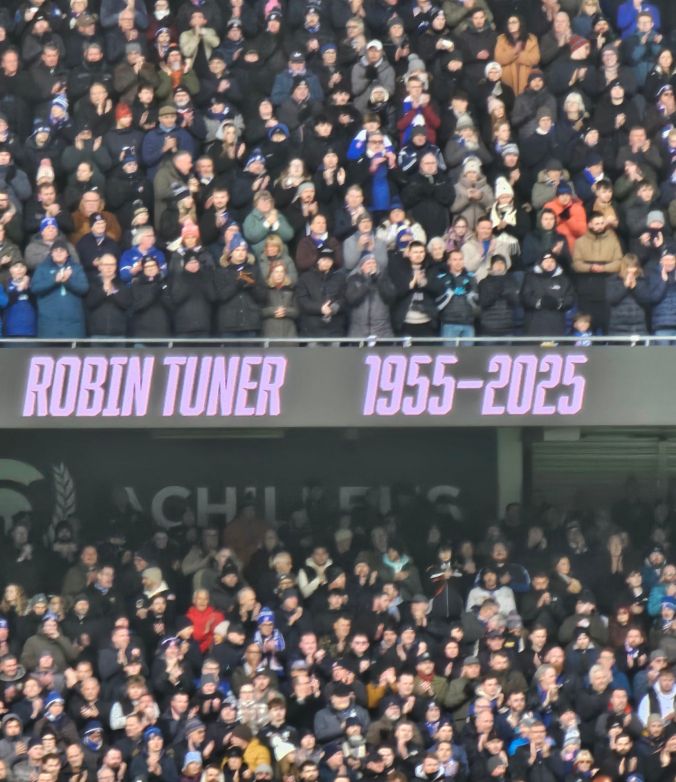
The final prelude to the match beginning is a minute’s applause for recently deceased former Town player Robin Turner, who in ten years started only twenty-nine games with thirty-three as substitute, but nevertheless famously kept Town on course for the 1978 FA Cup with two goals away to Bristol Rovers. The respect shown for Robin is only very slightly diminished by the scoreboard at the Sir Bobby Robson Stand end of the ground showing his name as ‘Robin Tuner 1955-2025’, but it sounds worse than it looks as if aurally he might have been related to that Lesley Dolphin on Radio Suffolk.
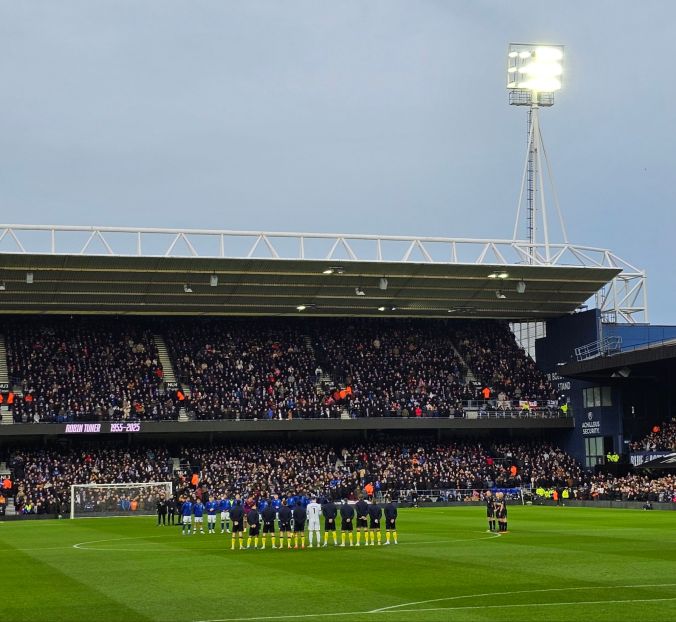
When the game eventually begins it is today’s opponents Oxford United who get first go with the ball, which after a couple of short passes they boot in the general direction of Cumberland Towers and the YMCA. Town soon have possession however, which they rarely lose, but they seldom make much of it either, although it feels like it will just be a matter of time before they do. Oxford lack bold intentions and it smacks of gloating by Oxford tourist guides grown big-headed on fancy college architecture when their supporters’ chant that Ipswich is a “shit ‘ole”, when plainly it’s not. But weak revenge is wrought on the hopefully thinned skinned academic visitors with the words ‘Cambridge Windows’ scrolling across the front of the Sir Bobby Robson Stand in brightly illuminated letters. “Is this a library?” chant the Oxonians ironically in response, as if they don’t know what a library is and before anyone can chant “Oh fuck off you privileged twats” to the tune of something by Gaz Coombes of Supergrass, they launch into “Football in a library , do-do-do” just like every other bunch of away supporters that ever visits Portman Road.
“Columbus Mechanical” announces the Sir Bobby Robson stand illuminations, and then “We are Columbus”. I ask, but Fiona has no more idea of who Columbus might be than I do before she has a conversation with Pat from Clacton about this year’s pantomimes. The sky has turned from blue to pale grey, Eggy loops a shot lazily over the Oxford crossbar. Only twelve minutes have dissolved into the past and Town win a corner. “Come On You Blues” I bellow, and perhaps as many as half a dozen people join in or at least turn round to stare at the idiot making all the noise. The early pussyfooting has gone; the corner came to nought but five minutes on and Town now attack with pace and clever passes. Oxford intercept the ball, they think it’s all over, but Chuba Akpom wrestles the ball back, Jaden Philogene advances feints, turns, twists feints again and shoots, and Town lead 1-0. Wow. I can feel myself smiling so much it makes me smile some more.
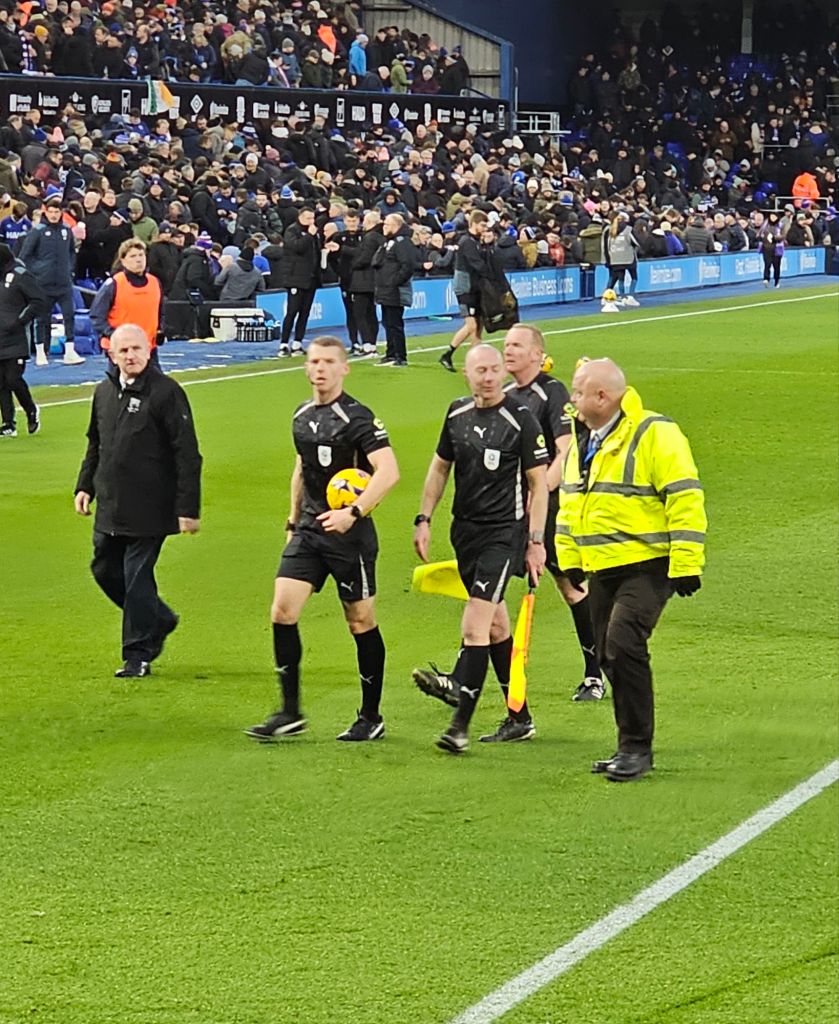
So how many more can we score? Eggy crosses to the far post, Davis heads the ball back and Philogene swipes the ball narrowly over the angle of post and bar from 12 metres or so. As a brief side-show Oxford’s Siriki Dembele, who has replaced the poorly spelt and now injured Tyler Goodrham, looks to shadow box Town’s Darnell Furlong and is booked for his trouble by referee Mr Finnie, another one of those small, very neat men who seem attracted to officiating.
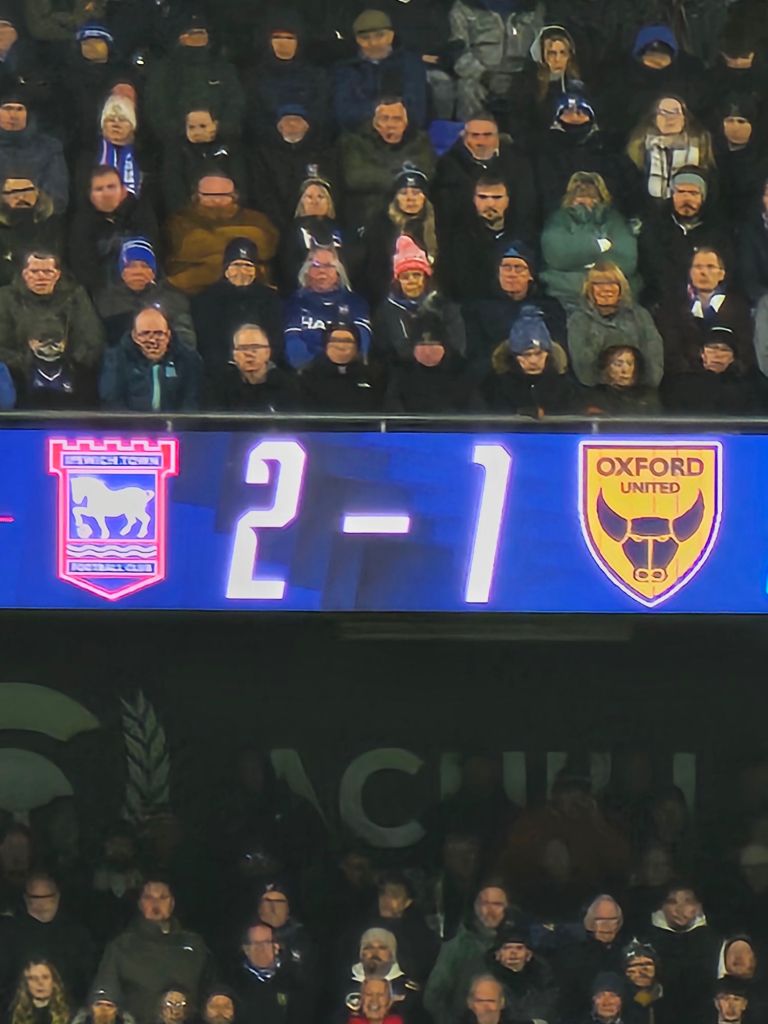
A half an hour has disappeared into the past and strangely Oxford have a corner. “Yellows, Yellows, Yellows” chant the Oxonians up in the corner of the Cobbold Stand, and some big bloke wearing a yellow shirt heads high over the Town goal. Then Oxford equalise. A poorly protected left flank, an unhindered run to the penalty area, an exchange of passes and someone with the unlikely surname of Lankshear scores. We have ten minutes to live until half-time. In the fifth of those minutes Furlong surges into the Oxford penalty area, squares from the by-line and Chuba Akpom diverts the ball into the Oxford net, well wide of goalkeeper Jamie Cumming. Town lead 2-1 and the world’s natural order is restored.
Forty-two minutes lost to the past and Nunez shoots, Town have another corner. “Come On You Blues” I bawl, but the Oxford goalkeeper gathers. “Down with the Norwich, You’re going down with the Norwich” sing the Sir Bobby Robson standers to the tune of ‘Guantanamerra’, although stupidly keen to imagine university-based puns I like to think they are singing “sent down with the Norwich, you’re being sent down with the Norwich”. “Two-one and you still don’t sing” is the Oxonians momentarily inaccurate but understandable response, followed up with an ironic “Your support is fucking shit” from a group of fans who would need to have bought two seats each to fill their allotted space in the Cobbold Stand. Jaden Philogene shoots wide and three minutes are stolen from the future never to be returned, and are added to the first half.
With the half-time hiatus I vent more spent Suffolk Pride and then head for Ray, his son Michael and grandson Harrison at the front of the stand, stopping briefly to speak with Dave the steward on the way. I tell Harrison to check out a music artiste called Spencer Cullum, whilst Ray tells me he won’t be at the next match because he is off on a cruise in the Caribbean; I hope it’s not on a Venezuelan fishing boat.
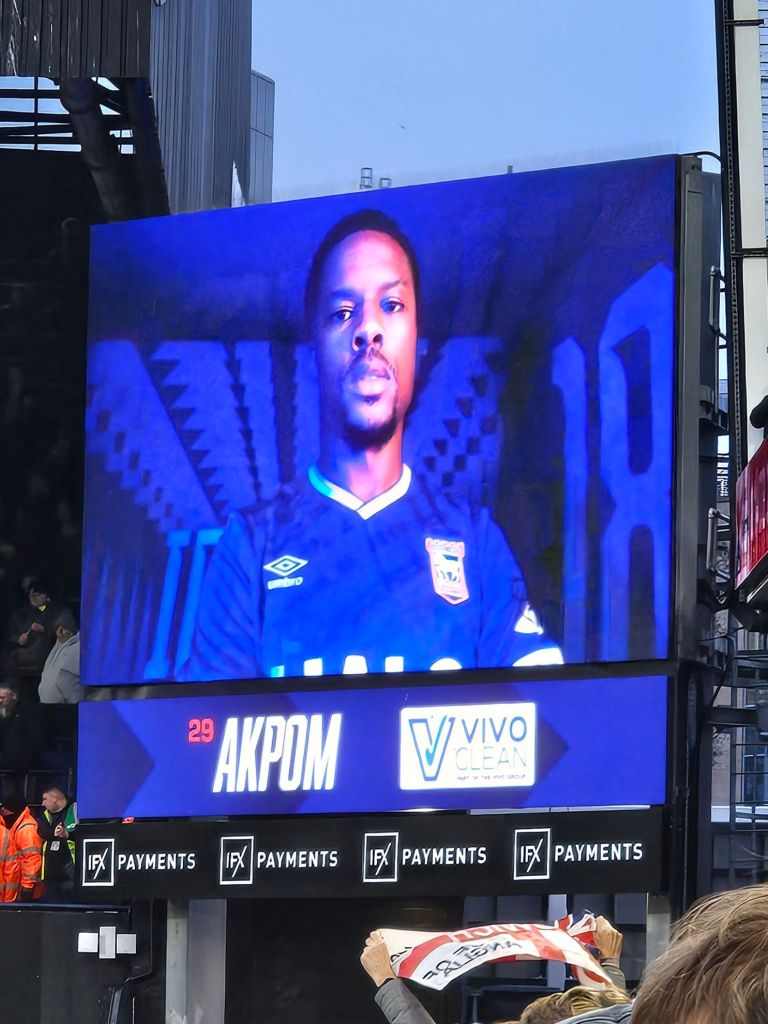
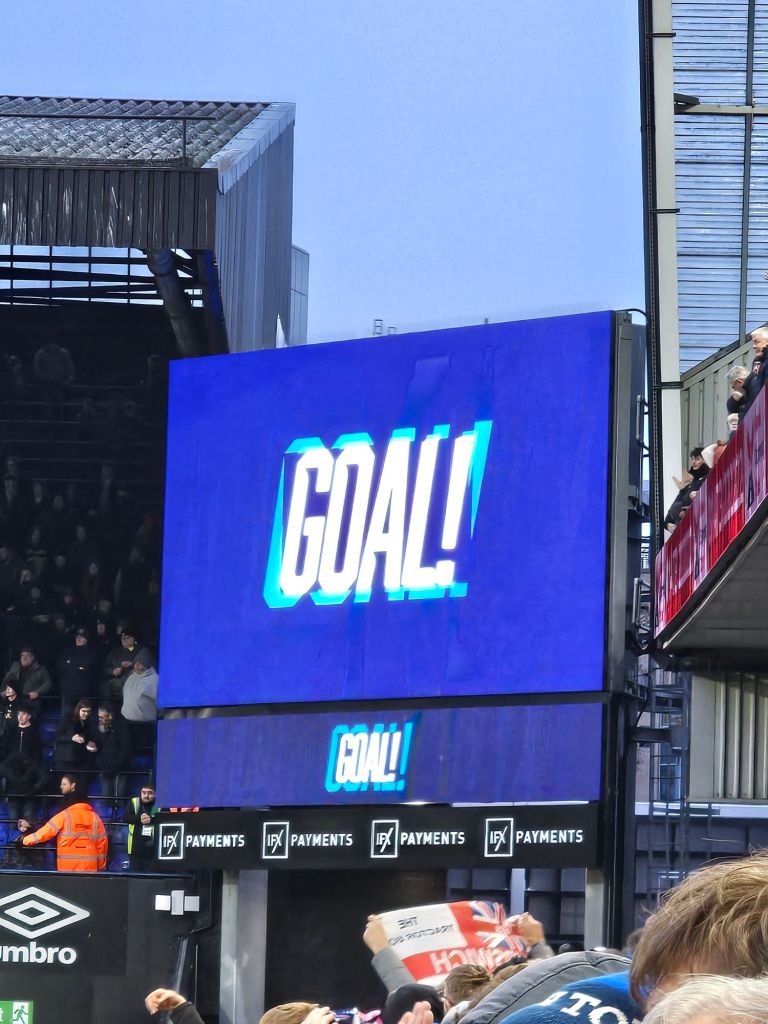
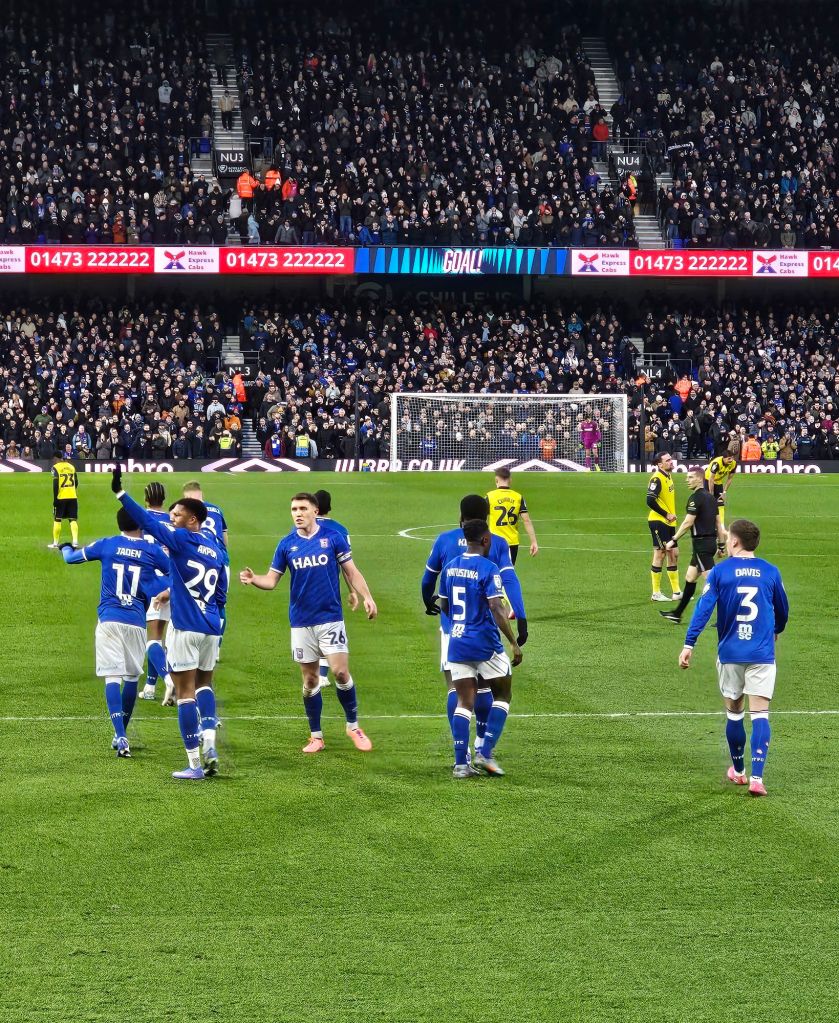
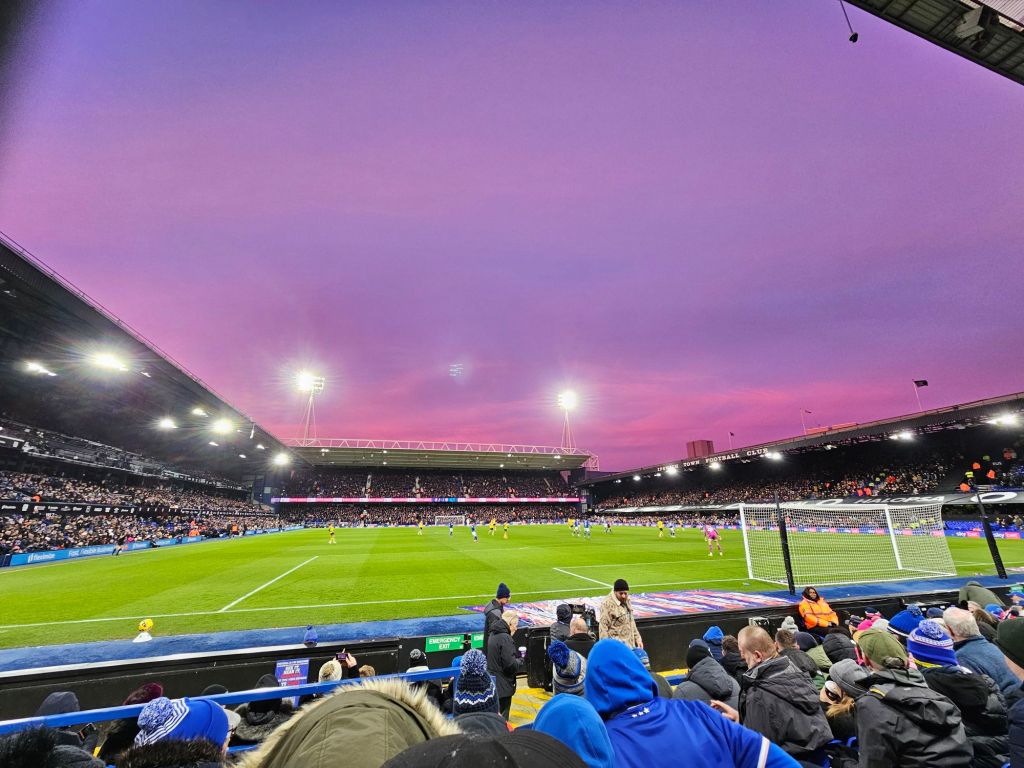
The football resumes at five past four as Portman Road is briefly enveloped in a radiant, pink sky like the backwash to an unexpected mid-afternoon aurora borealis. Two more Town corners ensue and along with Oxford’s Brown, Chuba Akpom’s name is entered, no doubt very neatly into Mr Finnie’s notebook when his ire is stoked by the rough conduct of the Oxford defender. “Hot Sausage Company” read the Sir Bobby Robson stand illuminations. As the violence continues, Helik scythes down Akpom and the home crowd jeer, singing “Who the fuckin’ ‘ell are you” to the tune of “Cwm Rhondda”, boastful of their ignorance of the Polish international defender. Mr Finnie again licks the end of his pencil and re-opens his notebook. “We forgot that you were here” sing the Oxonians, again ironically because judging by the empty seats in the away enclosure many of them genuinely aren’t here, although at £38 a ticket I can’t say I blame them. Whatever happened to ‘twenty’s plenty’?
Almost two-thirds of our afternoon’s ‘football experience’ has been experienced. Leif Davis crosses low, Nunez shoots, Cumming saves and Town have another corner. Fiona and Pat from Clacton discuss Pat’s handbag. Pat says she won’t get the masturbating monkey lucky charm out today, it’s too cold; anyway, we’re still winning. A Town free-kick is awarded; Nunez curls the ball over the defensive wall towards the top corner of the goal, but Cumming claws the ball away spectacularly.
It’s time for substitutions and Eggy and Nunez leave, making way for Wes Burns and Jack Clarke. “Burns, Burns will tear you apart, again” predict the Sir Bobby Robson standers with help from Joy Division. There is another Town corner and we are thanked for our incredible support by the excitable young stadium announcer, who tells us that we number 28,199. Will Vaulks completes the neat list of Oxford names in Mr Finnie’s notebook, yet more substitutions are made and yet another Town corner and even an Oxford corner come and go. At last, another additional three minutes are drawn from the infinite bank of time and then Town are up to second place in the league table because Middlesbrough have lost; vanquished Oxford face the ignominy of being one place below Norwich City who have beaten some Park Rangers belonging to the Queen.
The new year has begun, Ipswich Town have played and I’m still feeling optimistic. As Pat from Clacton told me earlier, it’s the Chinese year of the horse, which it was in 1978 when Town won the FA Cup and in 1990, 2002 and 2014 when they didn’t.


 one, from Carcassonne; both shots are from angles, across the face of goal. Uchaud have an uncharacteristically solid, English looking centre half at number four, whilst as well as having a Julien Palmieri lookalike at number eleven, their number six bears a disturbing resemblance to former French international and alleged sex-tape starlet Matthieu Valbuena.
 attached with velcro; his shirt, shorts and socks all look brand new as if this is their first outing; he’s like an outsized boy on his first day at school. Carcassonne look the slightly more accomplished team and have more forays forward, but Uchaud are well organised and in Palmieri (who the rest of the team call Kevin), Valbuena and their captain they have three players who stand out for their skill and good positional sense; their goalkeeper contributes too with his constant calls of “parlez vous” (talk) and “garde” (keep it) as well as the odd catch from a cross. Carcassonne finish the half with a flourish winning the game’s first corner and then seeing their number three place a free-kick carefully over the angle of post and crossbar, before their dreadlocked number eleven runs in behind the Uchaud defence only to hit a low shot beyond the far post.

 trippingovertheball