Ipswich Town 5 ABBA 5

The football season is over save for the silly play-offs, and now it’s the height of Spring,  and with little else to occupy him a young man’s fancy lightly turns to thoughts of the Eurovision Song Contest;  or maybe not.  But last week’s transmission of the bizarre, annual , musical  television ritual extravaganza was inevitably accompanied by the airing of a clip show on BBC4 of past performances by the competition’s only notable success, Abba.  I have never bought, stolen, borrowed or owned an Abba record, tape, download or CD, but I will admit to being unable to suppress a smile when I hear one played.    Equally, I couldn’t resist watching that clip show and felt rewarded when it brought back memories of a road trip I made in the summer of 1995, which took me and my then girlfriend via Parkeston Quay, DFDS Seaways ferry, Gothenburg, Stockholm, Uppsala and Sundsvall to Pitea in northern Sweden, where we stayed with my girlfriend’s pen friend and her husband.  It was a very long drive for which the soundtrack for several stages of the journey came courtesy of a CD of Abba Gold belonging to my girlfriend.
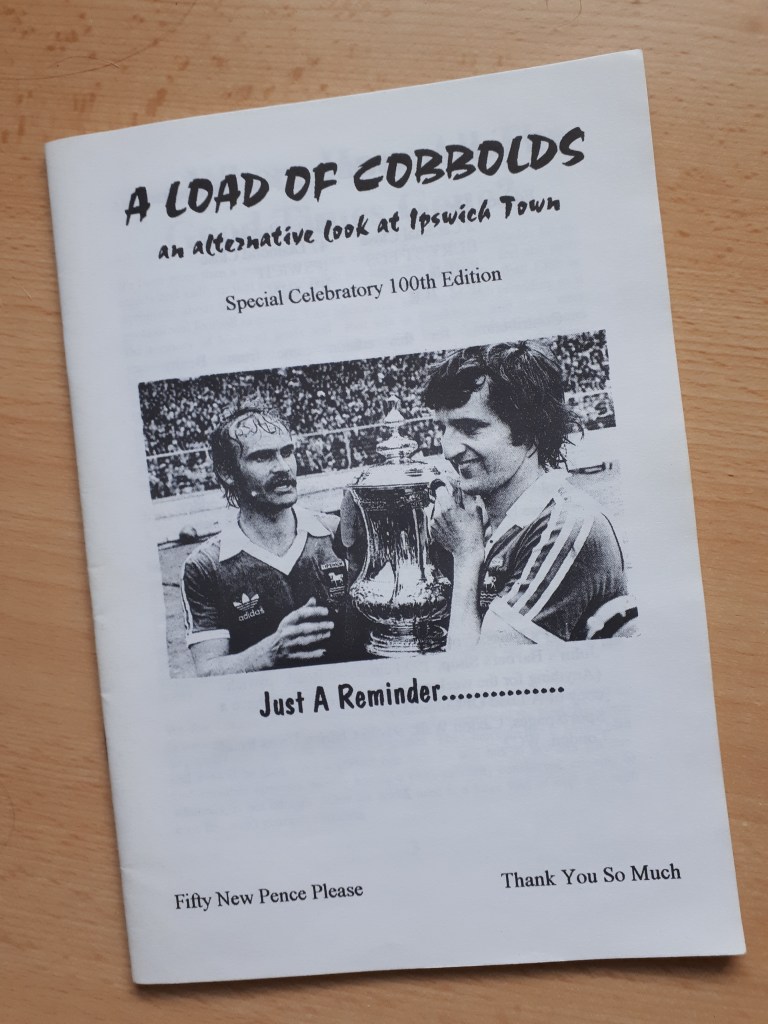
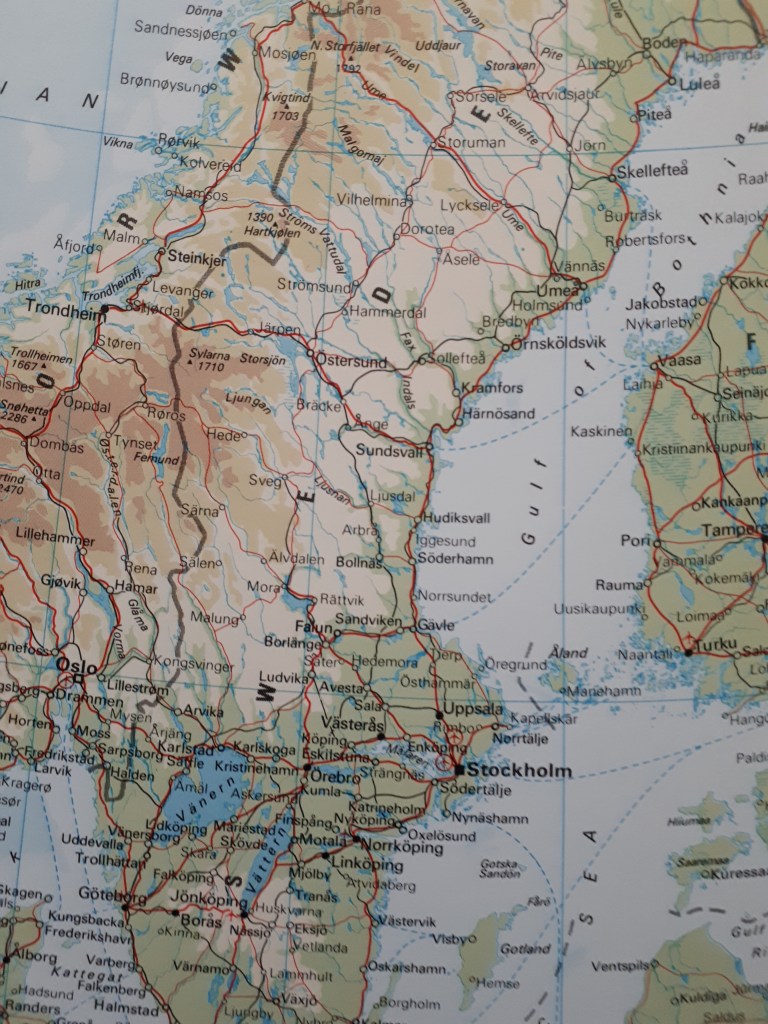
The experience of listening to Abba on that road trip has stayed with me and it led to an article in the erstwhile Ipswich Town fanzine A Load of Cobbolds.  Now, in the spirit of nostalgia inspired by the fortieth anniversary of Ipswich Town’s UEFA Cup win and  in the absence of anything better to do I have reproduced that article below, updating it to modern times where necessary:

When you’re an eleven or twelve year-old football and pop music loom large as pre-pubescent priorities.   I bought my first record (Happy Christmas (War Is Over) by John Lennon & Yoko Ono) in 1971,  the same year that I started watching Ipswich Town, and I  soon began to feel that footie and pop music were somehow inextricably linked. The late Sixties and early Seventies was a time when it was easy to confuse footballers with pop stars and my two worlds satisfyingly collided.  The fashion for any bloke who aspired to being hip and trendy was an enormous thatch of hair coupled with equally vast sideburns.  Squeezed into a pair of bollock-hugging, crushed-velvet flairs and sporting a deafeningly loud shirt,  Ian Collard or Rod Belfitt might have been members of The Hollies, or Kevin Beattie a member of Nazareth.

The similarities in the appearance of pop stars and footballers subsided a bit as the Seventies wore on and sadly, sartorially Punk Rock never seemed to catch on with any footballers at all.  There were however still some startling lookalikes within the ranks of the PFA, I thought.  It could have just been my addled perception, but I always felt that Arsenal’s Frank Stapleton and Shakin’ Stevens were the same bloke.  Moving on into the 1980’s the separation at birth of Oldham Athletic’s Andy Ritchie and Jimmy Somerville was ‘well documented’ at the time, but less well-known is the fact that Roy Keane and Sinead O’Connor were also twins.

More amazing than these superficial similarities, which admittedly are largely the invention of my fevered imagination, is the very precise correlation between the success of one particular football club during the 1970’s and early 1980’s and a particular pop group.  Both were at their peak between 1973 and 1982. The football club of course was Ipswich Town and the pop group was Abba.

If you take time to trawl through the collected works of the famous Swedish songsters, as Dave Allard might have called them, you will not only enjoy a richly rewarding aural experience, but you will soon reach the conclusion that the fact that Town and Abba were both at the peak of their powers over precisely the same period of time is no coincidence.   Listen carefully to the lyrics and you will be able to trace the history of the Town’s success through that glorious era.  You will find that listening to Abba Gold (Greatest Hits) is as close to a religious experience as you can hope to get;  something akin to an Ipswich Town Dreamtime, harking back to an epoch when Portman Road was inhabited by ancestral figures of heroic proportions who possessed supernatural powers.   In the film Muriel’s Wedding the eponymous Muriel says that Abba’s songs are better than real life.  Now, as we sit in the murky depths of the third division and look back at Town’s glorious past you too will believe this is true.

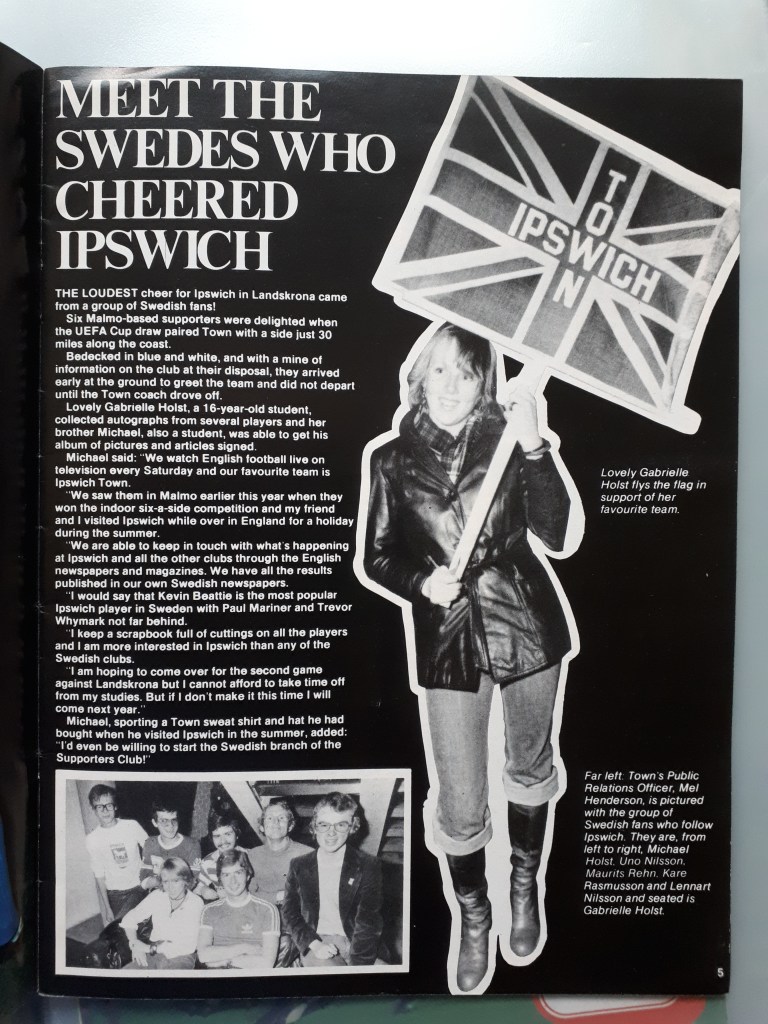
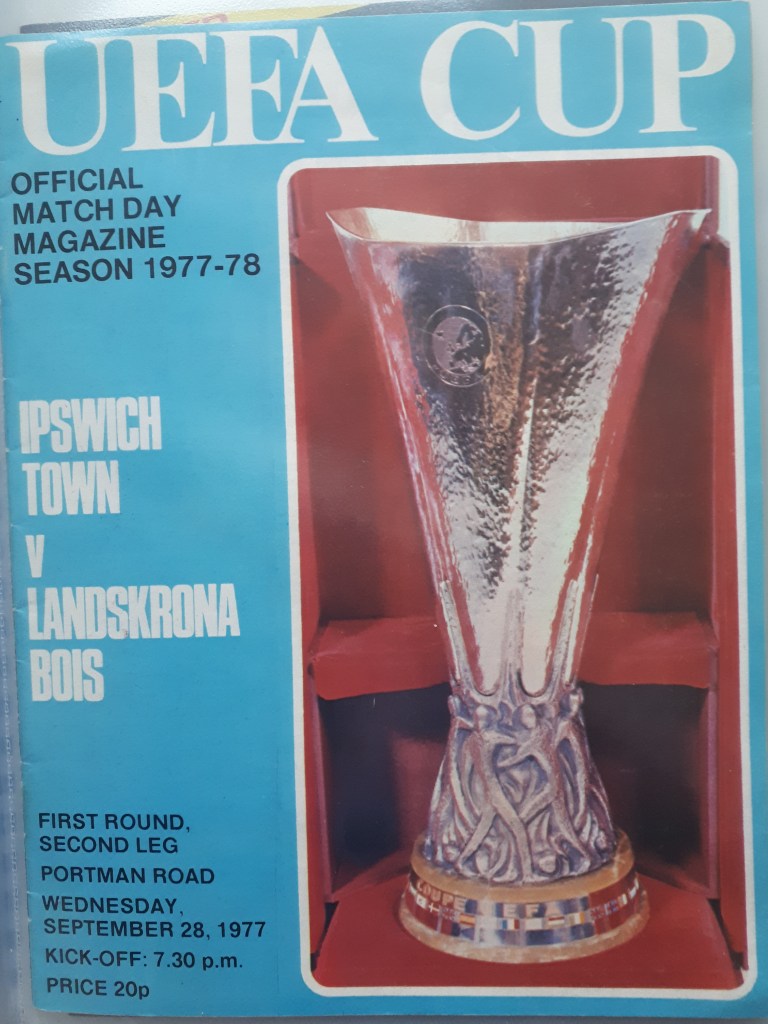
As you might expect from Europe’s foremost supergroup many of the songs make reference to Town’s European campaigns of that era in the UEFA and European Cup Winners’ cups.  It is likely that it was through Town’s exploits on the continent that the talented Swedes first became Town supporters, although we were actually only drawn against Swedish opposition  once when in 1977 we met Landskrona Bois and most inconveniently The Stranglers played the Ipswich Gaumont on the very same night as the home leg.  Naturally, I missed The Stranglers concert and sadly never got a second opportunity to see them.    There is clearly a reference to Town’s UEFA Cup triumph over Lazio in the title of the number one hit ‘Mamma Mia!’, a song which also contains a lyric that suggests one of Abba had perhaps had a brief flirtation with a Town player or supporter and may explain the uncanny connection between Abba and the mighty Blues;

“Yes, I’ve been broken hearted, Blue since the day we parted.”

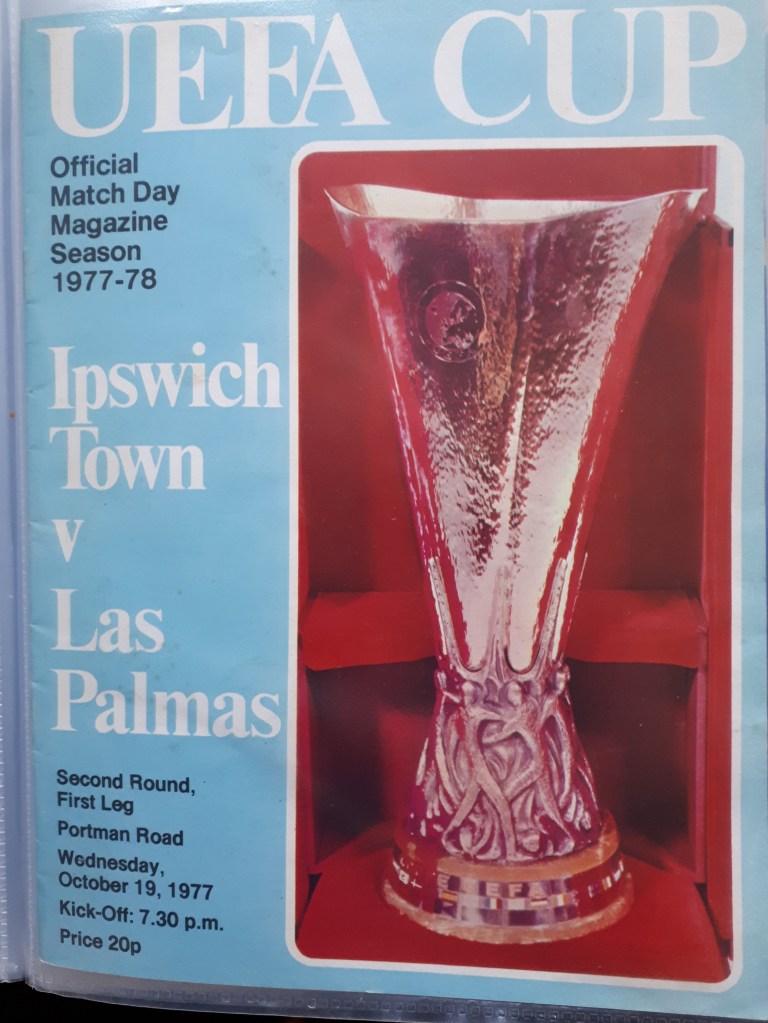
The moving ballad ‘Fernando’ is sung to an imaginary Spanish fan and recalls those sultry September and cooler autumn evenings when we entertained Iberian opposition from Real Madrid, Las Palmas and Barcelona.

“There was something in the air that night, the stars were bright, Fernando….

Though we never thought that we could lose, there’s no regrets. If I had to do the same again I would, my friend Fernando”

That last line referred to the fact that Town were twice drawn to play Barcelona, whilst the line  before that refers to our having lost both ties despite being confident after winning the first leg.  Another song, ‘Super Trouper’, whilst still referencing games played under floodlight, perhaps because of the lack of daylight hours in Sweden during the English football season, refers to an individual player and employs little-known Swedish rhyming slang in a thinly disguised paean to goalkeeper Paul Cooper.

“Super Trouper lights are gonna find me shining like the sun, Smiling having fun feeling like a number one”

In the 1978 Abba hit “Take a chance on me”   the subtle Swedish Blues fans reveal the little known story of how Frans Thijssen successfully pleaded with Bobby Robson to let him join his compatriot Arnold Muhren at Portman Road and to try his luck in English football. 

“Honey I’m still free, take a chance on me. If you need me let me know and I’ll be around. Gonna do my very best and it ain’t no lie, if you put me to the test, if you let me try”.

Although those days were such wonderful times for Town, not every song described a happy or uplifting event.  There were sad days too at Portman Road back in the Seventies and hard decisions had to be made for the good of the team.  The 1977 ‘Number One’ hit ‘Knowing Me, Knowing You’ was about the departure of former Portman Road favourite David Johnson, the one-time ‘King of Portman Road’, who left Town to join rivals Liverpool.  In the song, the reflective Scouser looks back on the good times he has had at Portman Road since his move to Town from Everton four years earlier.

  “Memories, good days, bad days, they’ll be with me, always”. 

David appreciates however that his recent form has not been good and in the circumstances a move is the best thing for everyone.

  “Knowing me, knowing you, there is nothing we can do, we just have to face it this time we’re through; Breaking up is never easy I know but I had to go, Knowing me, knowing you it’s the best I could do”.

Back in the Seventies, money wasn’t the driving force in football that it is today.  Nevertheless, the spending power of clubs such as Manchester United, who were able to make expensive signings virtually every season despite being rubbish, rankled with Bobby Robson and he longed to be able to make big signings for Town.  Abba’s “Money, Money, Money” was a song about his frustration. 

“In my dreams I have a plan, if I got me a wealthy man…  “

”All the things I could do if I had a little money…”

“Money, money, money, always sunny in a rich man’s world”

Both ‘Knowing Me, Knowing You’ and ‘Money, Money, Money’ showed something of the downside of those glory years and as we look back on those days from the fag-end of the first quarter of the miserable twenty-first century a melancholy aura pervades our memories, in part because ultimately Town failed to win the League Championship that we deserved, but perhaps also because even at the time we knew it all had to end one day, and when Bobby Robson left to manage England in 1982 we secretly knew it had.  Abba knew it too and two of their hits put these feelings in to sharp perspective.  The haunting melody of ‘Winner takes it all’ explores the pain that looking back on the good times would bring; it begins:

 “I don’t want to talk about things we’ve gone through, though it’s hurting me now it’s history”

Abba’s last big hit ‘Thank you for the music’ is sung from the perspective of our legendary club captain Mick Mills who reminisces, having regretfully left Town for Southampton, about the joy and beauty of those days between 1973 and 1982.  If you’ve listened to the slightly dull monotone of Mick’s summaries as he sits alongside commentator Brenner Woolley on BBC Radio Suffolk, you will appreciate the opening lines to this song; 

“I’m nothing special in fact I’m a bit of a bore, If I tell a joke, you’ve probably heard it before…”

But Mick’s talent was as full-back and captain of the greatest Ipswich Town side ever and this was the ‘music’ referred to in the title of this most moving of Abba songs.  This was a song from the heart of ‘Mr Ipswich Town’, Mick Mills, and it is truly uncanny how Mick with his blond locks and luxurious facial hair even looks like a bit like a composite of Bjorn Ulvaeus and Benny Anderson the song’s composers.  This song is the ultimate celebration of those ten seasons at the top in which Mick thanks fate for the glorious hand he was dealt.

“I’ve been so lucky, I am the girl with golden hair

I want to sing it out to everybody

What a joy, what a life, what a chance

So I say Thank You for the music

The songs I’m singing

Thank you for the joy they’re bringing…”

The songs of Abba define and encapsulate a golden period in the story of the twentieth century and the time before Thatcherism and neo-liberalism destroyed your innocence.  Abba’s songs, their success and the glory of Ipswich Town, the nicest professional football club the world had ever known did not happen together by coincidence.  The proof is in the lyrics of the songs, and shows that cosmic forces were at work.  Those of us who lived through the 1970’s were truly blessed to have experienced the music of Abba as it happened, but we are doubly blessed to have been Ipswich Town supporters too.

Thank you for the music Bobby Robson and Mick and all the lads who played for us between 1973 and 1982 , and thank you for the music Agnetha Faltskog, Benny Anderson, Bjorn Ulvaeus and Anni-Frid Lyngstad.

Blackpool 1 Ipswich Town 4

For someone who had already given up travelling home and away every week to watch my team, one of the good things about the current pandemic and so-called ‘elite’ football being played behind closed-doors is that when your team plays away from home, you simply cannot go, so there is no internal debate to be had about whether or not you should travel.  Equally, there is no longer that same feeling of regret or self-doubt come Saturday afternoon that you are possibly missing out on something when the decision has irrevocably been made not to go away.  Today however, is not such a day, there is no chance that I would have travelled to Blackpool because it’s a long way away and it’s a dump. I have been to Blackpool twice before, once in 1989 with a girlfriend, whilst somewhat bizarrely holidaying on the Wirral and staying in a hotel that looked like the Munster’s house.  That day the sun shone and we took the tram along the front, no football was involved.  Then, eighteen and half years later in January 2008 I was one of a car load of four Town fans who, along with several others witnessed a one all draw at Bloomfield Road.  That game has faded from memory, but the one thing I do recall is a massive, somewhat dilapidated public lavatory near the sea front; this is not a metaphor for Blackpool itself, although it could well be because I found it to be a seedy, ugly town, but the public toilet was actually quite impressive.  To be fair to Blackpool it does have a decent wrought-iron lattice tower (158 metres tall), but once you’ve been to Paris (the Eiffel Tower is 300metres tall), it is easily confused with numerous phone masts.

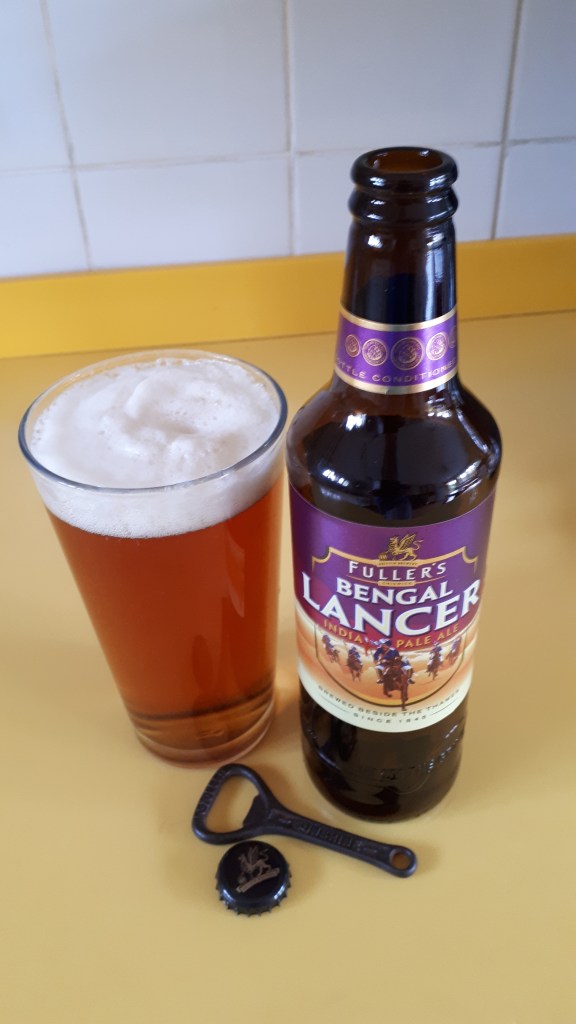
 In my experience the best thing about Blackpool is the football team’s tangerine shirt, something that first came to my notice in 1971 in the form of ten painted, moulded, plastic footballers on circular bases which I saw when I attended a Subbuteo club at school.  The thought of Blackpool’s tangerine shirts still thrills me a little today as over lunch I look forward to Ipswich Town’s encounter with the collection of living, breathing footballers who currently wear them for work. It’s a cold day of showers and occasional sunshine which I have so far spent indoors, save for a brief excursion to my garage to check its leaking roof and the positioning of five plastic buckets.   My wife Paulene and I eat our lunch of heated-up homemade curry, left over from last night’s dinner, and I enjoy a pre-match ‘pint’ (500 ml) of Fuller’s Bengal Lancer (£13.95 for a case of eight bottles direct from Fuller’s brewery with free postage on orders over £50), which coincidentally, given its name, goes down very well with curry.  

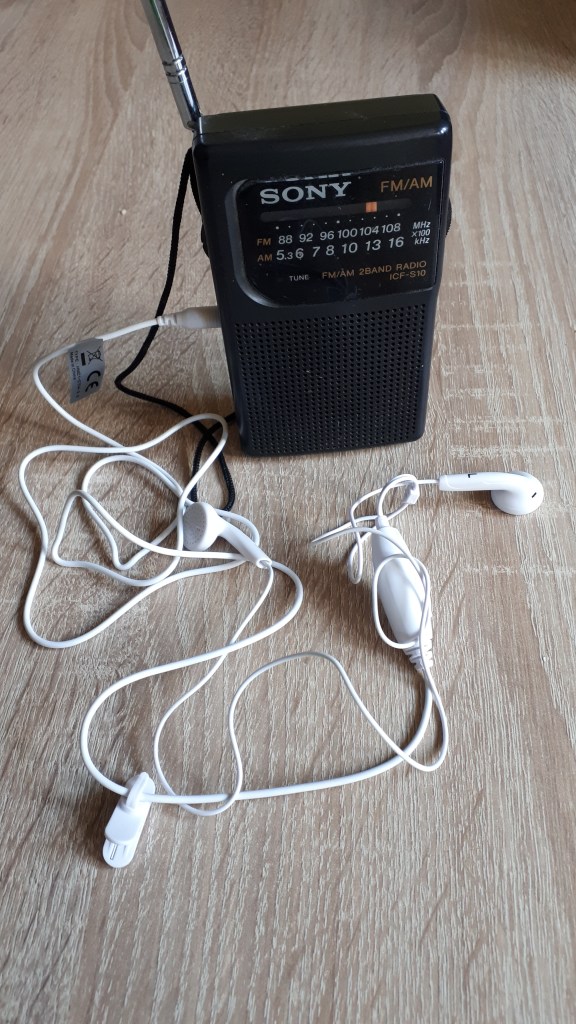
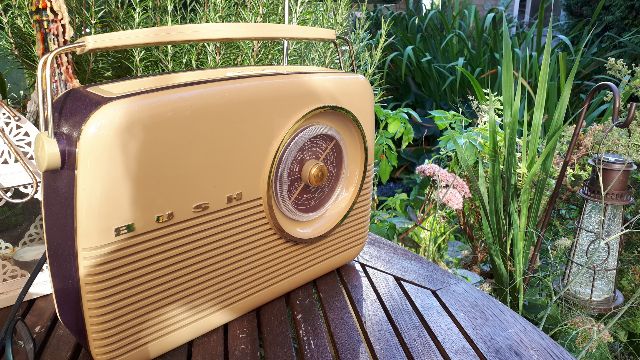
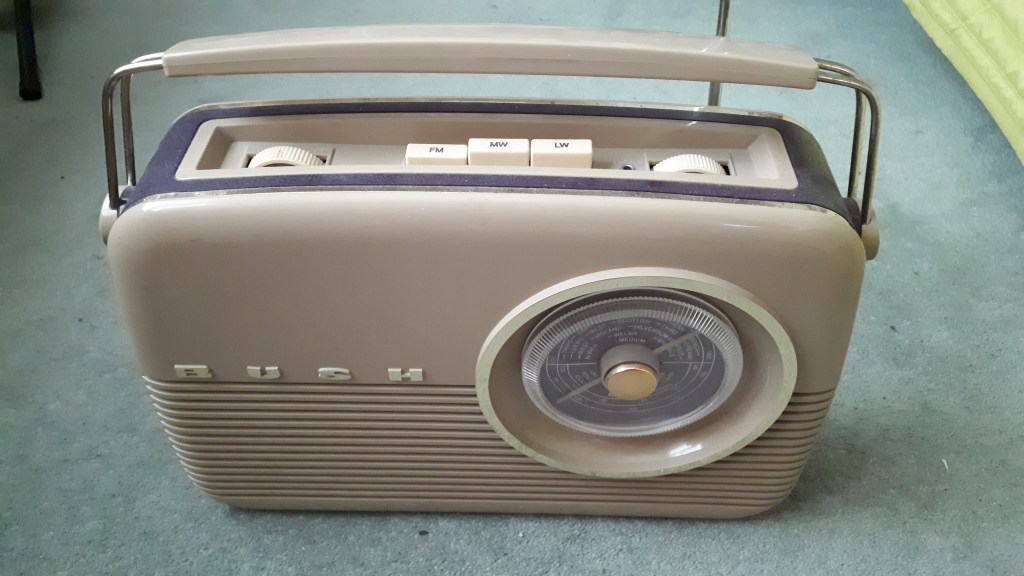
It feels grey and a little chilly in the spare bedroom today and pining for human contact I choose to listen to the match on the wireless in the living room, where I will be in the company of Paulene.  With Paulene watching the Giro d’Italia cycle race on the telly I have to find an earphone because she is strangely uninterested in hearing the fortunes of the Super Blues.  It’s easier to use an earphone with a smaller more portable radio and I therefore eschew the Bush TR82 today in favour of the Sony ICF-S10 portable radio.  After an initial unfortunate brush with Radio Essex, I delicately adjust the dial just in time to catch the hand-over from the Radio Suffolk studio in St Matthews Street, Ipswich to Brenner Woolley at Bloomfield Road, Blackpool.  Today Brenner is in the company of former Ipswich Town starlet Neil Rimmer who, whilst not exactly a Town legend or candidate for our Hall of Fame scored three times in twenty-two appearances for Town between 1985 and 1988 before he went onto play ten times as many matches for Wigan Athletic.  According to Wikipedia Neil is currently manager of Ashton Town.  Neil has a warm, almost mellifluous voice, perfect for radio, even if his mild scouse accent occasionally makes me think of Keith Chegwin, but that could just be me desperately trying to find humour in every situation.

Brenner helpfully tells me that Town are all in blue today and I strike up a colourful mental picture of our blue, Blackpool’s tangerine and the green of the pitch against banks of empty orange seats under a no doubt grey sky.  Brenner begins his commentary, relaying that it is former Town employee Grant Ward who “gets the ball rolling” before he treats us to some decent footballese, describing Blackpool as getting to the edge of the Town area “early doors”.  “Impressive stuff from the Radio Suffolk man.” he might say if he was commentating on his own commentary.  According to Brenner it’s a sunny afternoon in Blackpool, so I adjust the colour and brightness in my mental picture; and it’s very blowy, either that or one of Brenner or Neil is about to tap the microphone and launch into a kind of Norman Collier impression – “testing – testing, 1-2-3”.  Brenner will later say that he expects we can hear the wind around the microphone; he’s not wrong.

Unlike Mantovani or most of the musical content on Radio Suffolk, the early minutes of the game are not easy listening.  “Town have yet to have the ball on the ground in the Blackpool half” says Brenner. ”We’ve got to be precise with our passing” adds Neil offering a solution to the problem and simultaneously endearing himself to Town fans with his use of the first person plural.   “I think it’s all about results” says Neil explaining to Brenner what will make Town fans happy or annoyed, although Mick McCarthy might have cause to disagree, but thankfully he’s not with Neil and Brenner this afternoon.

Twelve minutes pass. “Maxwell puts his right foot right through it” says Brenner using an expression he tends to use once in every match to describe a goal kick.  Brenner carries on with a bit of filler as the action subsides, “Nsiala back in his native north-west” he says, displaying a woeful knowledge of the geography of both England and the Democratic Republic of Congo; Toto was born in Kinshasa which is in the West, not the northwest of the DRC.   Although Kinshasa was in Zaire when Toto was born, it has never physically moved and it seems unlikely that it’s ever been in Lancashire. 

Barely have I recovered from the thought of LS Lowry’s paintings of the cotton mills of Kinshasa and its Hot Pot and Barm Cake restaurants, than “Chambers shoots – fabulous goal!” are the welcome words arriving in my earpiece through the ether.  Town are a goal up courtesy of a shot that “…just about took the net away”.  Paulene missed my celebration of the goal because she has nipped to the toilet, but I tell her about it when she gets back; she feigns interest perhaps because her own team Portsmouth are also winning.

The first half is half over and Brenner tells us that it’s so far so good. Ninety seconds later “Nsiala goes Route One for Ipswich” and Brenner revives memories of BBC tv’s fabulous Quiz Ball, a programme which was last aired in 1972.  I think to myself how I’d like to see Quiz Ball revived; Richard Osman could host it in place of David Vine, they practically wear the same glasses.   It sounds as if the goal has settled Town, although occasionally they continue to give the ball away in midfield; more than once Huws is the culprit but the defence recover well.  “Gabriel back to Marvin Ekpiteta” says Brenner using the best two surnames in the Blackpool team, adding that Ekpiteta has “…come up through the pyramid”, which makes him sound like he could have been an extra in The Mummy.   A move breaks down and “Again Town starting from square one” says Brenner omitting to tell us that he’s now using the system created for the very first BBC radio commentary for a match (Arsenal v Sheffield Wednesday in Division One on 22nd January 1927) whereby the pitch was divided up into eight squares and the commentator Henry Blythe Thornhill Wakelam described the game whilst a co-commentator said which square the ball was in; a diagram showing the football pitch divided up into squares was printed in that week’s Radio Times.

At about 3.35 Gwion Edwards runs into the Blackpool penalty area “He shoots – he scores” says Brenner and Town lead 2-0.  “Again, I think it’s deserved” says Neil displaying a level of enthusiasm and positivity towards Town not often heard. “Yeah clinical from Ipswich Town” replies Brenner putting the emphasis on the word ‘Clinical’ in a way that makes him sound either sarcastic or surprised.

Three minutes later Hawkins “scoops” a chance over the cross bar but Brenner kindly adds that it was “…not quite put on a plate for him”.  Neil’s audible smiles are having an effect on  Brenner who reminds listeners that Neil Rimmer is with him today and goes on to refer to Neil as “…so far a lucky charm”, which sadly implies that the 2-0 score line is nothing to do with Town playing well, but all down to Neil, and that that luck may change.  Other forces are at work it seems and as a Blackpool attack is broken up with a headed clearance from Town’s goalkeeper, Brenner announces “Holy’s forehead takes charge”.  Equally weirdly Brenner praises the teamwork of Town saying that when Miles Kenlock has been under pressure at left-back “… a Huws, an Edwards or a Wilson has helped out.” raising questions about just how many players with these surnames we have at the club and why they are all playing at the same time.

Half-time is almost here but there is enough time for Teddy Bishop to win the ball and then “…he shoots – and oh, great goal!”.  “Get this for a scoreline” say Brenner; Town lead 3-0 and it’s time for a cup of tea, although not before Brenner asks Neil for his assessment of the half and Neil says “I was very impressed” before adding “Goals change games” because clichés and football are impossible to separate.

Unplugging myself from the radio I head for the kitchen but forego a half-time snack today because I had a slice of homemade carrot cake after lunch and still feel quite full.  Making a case for a return to the yellow and blue away kit of the late 1960’s and early 1970’s I take my tea in a yellow and blue Ipswich Town mug, which also features the old club crest and refers to the Premier League, dating it to the 1992 to 1995 period.

The second-half coverage opens with Neil again endearing himself to Town fans by telling us that “Teams like this shouldn’t cause us any problems”.  Brenner and Neil reminisce about Neil’s playing days at Ipswich and we learn that the highlight of his time with Town was his two-goals against Manchester City.  Brenner feels the need to explain to ‘younger listeners’ that  back then Town would often beat Manchester City, but omits to tell them that everyone did.

Blackpool win a corner. “They need a goal soon if they are going to get anything out of this game” say Brenner, unnecessarily seeing the game from the opposition’s point of view.  The 57th minute arrives and Kayden Jackson replaces Oliver Hawkins.  An hour has been played.  “Surely a chance, and it is” and Blackpool score through Gary Madine. That’s “really disappointing” says Neil perfectly catching the zeitgeist back in Suffolk.  “Have Town been guilty of sitting back?” probes Brenner turning the knife. “Yeah” says Neil, really disappointed.

There are twenty-five minutes left. “Anything could happen” Brenner tells us almost as if expecting Blackpool to score again.  It seems as if a substitution is about to be made and we learn that on-loan Keanan Bennetts is possibly coming on, “Paul Lambert certainly has his arm around somebody on the far side” adds Brenner injecting a hint of scandal into proceedings. Bennetts replaces Teddy Bishop, but as good as it is for Bennetts to get a ‘run out’ for the first team , I am slightly disappointed that Paul Lambert is not combining his Saturday afternoon job with some sort of romantic tryst.

“Surely not a penalty there” says Brenner suddenly. “Well played referee” he continues having evidently realised that he needs to want Town to win.  In the same vein Brenner begins to speak more quickly and with an air of excited anticipation “Bennetts cuts inside, shoots” then “Wide” in a flattened, deeper tone.  Brenner and Neil are conveying the feeling that Town are responding to Blackpool having scored, Paul Lambert is clapping his hands on the far side, presumably as an act of encouragement for his team and not because he’s cold. Brenner has not said what Paul is wearing today so we are not to know if he might be cold or not.

There are ten minutes left.  Brenner brings good news. “Edwards in behind Gabriel, is he going to make it four? He does”.  The game is won for Ipswich, but perversely Brenner’s thoughts are with the opposition and he finds it necessary to share his supposition that Blackpool manager Neil Critchley will “…be happy with the attitude”.  I’m not sure anyone back in Suffolk cares.

It’s ten to five and I realise I never drank my half-time tea.  I down the still lukewarm beverage and by the time I’ve done that referee Chris Sarginson, whose name I don’t recall Brenner having mentioned, has blown his whistle for the last time this afternoon.   The players, we are told, begin to “pat hands” and in my mind’s eye I see Bob Hope and Bing Crosby in tangerine shirts doing their “patty cake” routine in the “Road to” movies. Road to Blackpool would be a worthy addition to the series. After almost two hours of Radio Suffolk I can’t bear to listen to whatever follows the commentary and for me the broadcast ends with Brenner telling us that Neil will be “hanging around to take your calls”; my mind’s eye flits from musical comedy to a vision of Neil, hands in pockets loitering outside a dimly lit seafront phone box.

Four-one wins away from home are not common occurrences for any team, in the 1980-81 season when we were the best team on the planet we scored four goals away from home twice, at Coventry City and at St Etienne, so today’s result is one to treasure. Results like this however do make me want to travel away again and they highlight the sadness of football that we can’t be a part of.   But I refuse to let it bother me and I am now already looking forward to next Saturday and the reunion of Brenner with Mick Mills after what seems like a geological age without a home game. Inspired by the mention of St Etienne and Blackpool Tower I shall be wearing my Allez les Bleus t-shirt.

Bristol Rovers 0 Ipswich Town 2

The infection rate for Covid-19 is on the rise again and I am staying home, even though it’s Saturday and the prospect of either AFC Sudbury v Coggeshall Town in the Isthmian League or Ipswich Wanderers v Brantham Athletic in the qualifying round of the FA Vase is deeply enticing.  But my wife Paulene is in the extremely vulnerable category due to chronic asthma and given many people’s apparent inability to comprehend social distancing or the wearing of a mask I’m not taking any chances.  

After six months I have got used to this and my reality now is that football is a game witnessed on the television or followed on the radio, which sadly means non-league games are just results and all the footballers I get to watch are overpaid professionals.  But I can still follow the mighty Ipswich Town home and away, and because I would resent being charged ten quid for watching an hour and a half’s telly, I shall be listening to today’s match on the wireless, as I like to call it.

Today, the ritual of the pre-match pint is partly a reward for a morning of productive pottering in the garden, although it’s actually a pre-match 440 millilitres in the form of a can of Adnams Ghostship (four for £5.25 from Waitrose). It’s such a beautiful afternoon that I decide to take advantage of the weather and listen to the game outside whilst bathed in soft September sunlight. Tuning into Radio Suffolk doesn’t prove as easy as I had expected and by the time I have made fine adjustments to the dial and the physical position of the radio itself in order to shut out brash, ill-mannered Radio Essex and its impending commentary on Colchester United v Bolton Wanderers, the game is about to begin.  I feel like I am twelve years old again, trying to find Radio Caroline and Radio North Sea International on my tiny Vesta V70 transistor radio (about £2 from Woolworth’s) in the early 1970’s.

As ever, Radio Suffolk’s Brenner Woolley is the man (it’s never been a woman) to relay his commentary to an eager county of football fans.  But by way of a change Brenner is assisted today, not by the regular, dependable, steady Mick Mills, but by one of Town’s few 21st century heroes, Marcus Stewart, a man almost as famous for his goals as his gloves, a replica pair of which I am proud to still own, despite their being pretty much unwearable.  I first take notice of the commentary as an early Gwion Edwards header is easily saved by Bristol Rovers’ Finnish ‘keeper Anssi Jaakola. “What about that chance Marcus?” asks Brenner; he receives no response, it’s as if Marcus just isn’t listening or has drifted off into a world of his own; perhaps he’s bored already.  “He should have done better shouldn’t he, Marcus?” adds Brenner sounding a tiny bit anxious.  Fortunately for Brenner, Marcus returns from wherever he’s been and gives some answer or other; I have drifted off a bit myself now and am listening to the chimes of a passing ice cream van, “Boys and girls come out to play” is the jangly, distorted tune that the loudspeakers are blaring out.  I love ice cream van chimes, they make me think of Ray Bradbury’s novel “Something wicked this way comes”.

In the absence of any decent football to commentate on, Brenner tells us that the Town have had to change for the match today in the supporters’ club bar, which is something that would have been far too risky to have allowed back in the seventies or eighties if the reputations of some former players are to be believed.  Brenner continues by commenting on Paul Lambert having adopted what he calls a “Tony Pulis look”, by which he means his blue baseball cap, not a sour facial expression, although he can do that as well.

Some football happens and Brenner describes the player with the ball as “running into traffic”, which sounds a little bizarre and suggests Bristol Rovers need a new stadium more than most.  It’s now just after half past three and there is a drinks break which sounds as exciting as the game.  With everyone refreshed nothing seems to improve however, but Marcus raises his game making reference to “big Devon White”, the towering centre forward who scored twice for Bristol Rovers in a 3-3 draw with Town back in August 1991.  On his debut, Marcus scored the other goal for Rovers in that match, but seems reassuringly modest about his career, allowing the modern players credit and telling us how difficult many skills are to perfect, and it sounds like the two teams are demonstrating the proof of that today.

Half-time looms and Marcus tells us that “Both teams are not fluid”.  “They’re not, are they” says Brenner as if he really means “No, they’re crap aren’t they”.

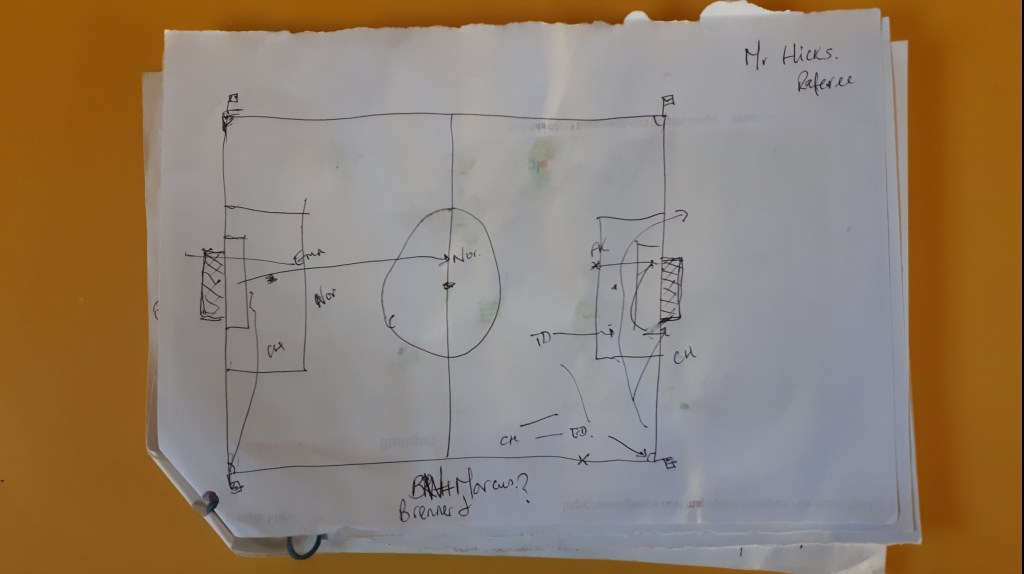
I use the half-time break to talk to my wife Paulene who is watching the Tour de France on the telly in the kitchen, it beats flitting down the steps to the gents underneath the Sir Alf Ramsey stand and staring up at the half-time scores on the screens in the under croft of the stand.  The respite from the game is all too brief and I’m soon sat at the garden table once again and Brenner reveals that Thomas Holy is “off to our right”.  In the first half I had drawn a little sketch plan of the pitch which I tried to use to keep track of where the ball was, but my plan was scuppered because I realised I didn’t know towards which end Town were kicking.  Interestingly, (perhaps) the very first BBC radio commentary for a match (Arsenal v Sheffield United in Division One on 22nd January 1927) used a system whereby the pitch was divided up into eight squares and the commentator Henry Blythe Thornhill Wakelam described the game whilst a co-commentator said which square the ball was in; a diagram showing the football pitch divided up into squares was printed in that week’s Radio Times.  I think Mick Mills has the perfect delivery for telling us what square the ball is in.

It’s five minutes past four and Brenner carefully describes the two teams’ kits as the second half gets underway; it’s a job well done and all Ipswich Town nerds will quickly realise that the red and blue ‘third kit’ has now been used three seasons running.  Nine minutes later and Brenner is perhaps more excited than he should be as he reveals that Norwood should have scored, although it would have been disallowed.  Marcus by contrast remains calm, I can only think he spotted the offside flag before Brenner.

Town seem to be on top now and at four- twenty two Brenner’s voice suddenly becomes louder and his words get closer together. “Edwards with a great chance!” he says, followed by silence.  I guess that he didn’t score.  Freddie Sears is replaced by Jack Lankester and a procession of Town players’ names follows over the airwaves as they take it in turns to get caught offside.

Time has moved on to half-past four and Brenner’s voice rises again in pitch and in volume. Nolan has a shot we are told and for a moment I think it’s a goal, it sounded like it must be, but no, it’s a corner.  A minute later and “Edwards goes round the goalkeeper!”, again I think we’ve scored, but no, it’s blocked on the line and Paulene sits down next to me to eat some crisps and Parma ham because she hasn’t eaten any lunch. 

Time is moving on apace; this is a good half for Town and Brenner’s voice is up and down in tempo and volume as he tries to convey what would be the waves of excitement if there was a crowd watching this game. It’s nearly twenty to five and Gwion Edwards shoots for goal again and then a minute later there’s a cross from Jack Lankester; a moment’s doubt from Brenner “It might be an own goal?” and indeed it transpires that Rovers’ German centre-half Max Ehmer has scored in his own team’s net, which is nice.   Marcus Stewart immediately starts a philosophical argument in my mind as he relates that the goal had been coming for the past twenty minutes.  I muse that had he been watching the game or listening on the wireless like me, the sixteenth century French theologian John Calvin might well have argued that it had been coming since the dawn of time, with all our fates being pre-ordained by God.  It’s not something Marcus picks up on and Brenner merely adds that after some earlier ‘last ditch defending’ from Bristol Rovers, this time it’s a goal.

There’s an interlude of sorts as Marcus Stewart expounds a theory that Jack Lankester should be awarded the goal if his cross was heading into the goal before Ehmer headed it; it’s not a wholly unreasonable proposition except that no one suggested Lankester’s cross was going towards the goal and the whole incident implies that once again Marcus may not have been paying full attention.  It’s a quarter to five and thirty years ago the game would have been over by now, but today there’s still time for the boy Dozzell to elicit the words “Lovely ball”  from the mouth of Brenner, and for Town substitute Ollie Hawkins to miss the goal, before quite suddenly I hear “ Here come Town;  Nolan, shoots, and finds the corner of the net”.  It sounds like it’s 2-0 to Town.  Brenner sounds less excited than he did when all those shots went wide earlier in the game, but eventually confirms that Town have “…strung together back to back victories”.

The referee Mr Hicks who thankfully has barely featured in Brenner and Marcus’s commentary calls time and the game is over.  I quickly turn off the radio to avoid being subjected to the stupidity of the post-match phone-in.  I have enjoyed my afternoon in my back garden in the sunshine and feel a curious ‘simpatico’ with my dead father, who would listen to cricket test matches on the radio on similar sunny afternoons.  Thinking back over the past hour and fifty minutes or so of radio commentary I have been consumed by the thoughts and descriptions from Brenner Woolley and Marcus Stewart, my one reservation being the illogical and groundless worry that every time Brenner Woolley said the name Marcus he was addressing Marcus Evans.

Ipswich Town 3 Bristol Rovers 0

It’s the first Saturday in September and the weather has broken, although to be truthful it’s been looking a bit cracked for a while now.  Autumn approaches.  It rained overnight and whilst there are glimpses of sunshine it is straining to penetrate through the clouds and worst of all it feels cold.   But on the bright side, today sees the start of the football season and mighty Ipswich Town, the vessel in which the hopes and dreams of a good many of the people of Suffolk are invested will be playing Bristol Rovers in what I refer to as the League Cup, but the football club, media and those who don’t know any better call the Carabao Cup.  I didn’t used to know what Carabao was, I erroneously thought it was a wrongly spelt American name for a reindeer, but because of the League Cup, and thanks to Wikipedia,  I now know that it is a domestic water buffalo from the Philippines and also a drink; not a proper drink mind, like Adnams Broadside, tea, Noilly Prat, milk, red wine, Fuller’s 1845, espresso coffee, Crémant, pineapple juice, Champagne, lime cordial, Belgian Trappist beer , hot chocolate or malt whisky but something called an ‘energy drink’.   The sponsorship of football competitions is a curious thing and only adds to the feelings I have that I live as an outsider on the fringes of society, with the Milk Marketing Board being the only sponsor whose product I can honestly admit to ever having set out to purchase.

Kick-off is at three o’clock, but of course due to the Covid-19 pandemic it is not safe for a large crowd to gather and therefore no one is going to Portman Road today. Sadly, I shall be denied the joys of travelling on the trains of Greater Anglia, the pre-match pints, the quickening anticipation-filled walk down Portman Road and the click of the turnstile.  Today I will not hear the moans of the home supporters nor the witless abuse of the away supporters; I will not receive the suspicious glances of luminous stewards nor feel the soft artificial fur of Bluey and Crazee as they brush past me with their out-sized heads and weird hoof-hands; I will not become engrossed in conversation nor share see-sawing emotions with Mick, ever-present Phil who never misses a game, the old dears, Ray and his grandson Harrison, or Pat from Clacton with her bag of sweets and lucky charm, the masturbating monkey.

Not thinking of what I am missing, I enjoy a light lunch of home-made spicy carrot soup with my wife Paulene whilst resisting the temptation of a beer, despite a choice of Adnams Ghostship, Adnams Ease Up IPA, Fuller’s Bengal Lancer, Chimay, Chimay Brun, Orval, Westmalle and Faro Foudroyante from my ‘beer cupboard’.  We watch the Tour de France on the television, losing ourselves in the French countryside as an escape from the memory of lockdown. We talk and reminisce about holidays and trips to France.  It’s a quarter past three.  Flippin’ eck! The game has started and I hadn’t realised, this is what life is like without the discipline of the railway timetable to get me to the match.   I leave Paulene somewhere in the Haute Garonne and find my radio, which is already tuned to BBC Radio Suffolk, because I like a laugh.  I decided long ago that watching Town on the ifollow is not worth £10, particularly when I’ve already spent over £300 on a season ticket, so I settle down in an Ikea Poang chair in the back bedroom with Brenner Woolley and Mick Mills. Elvis Costello was right ” Radio is a sound salvation”.

Very quickly I learn that Aaron Drinan is pronounced Dry-nen and doesn’t rhyme with ‘linen’ as I previously thought it did, which I think is a useful start and then Mick Mills tells me that a half-chance for Bristol Rovers is the first time they have threatened Town’s goal so at least I can now be confident that we’re not losing.   Brenner and Mick witter on and Brenner tells me that Tomas Holy “puts his foot through the ball”; I wait for the referee to stop the game to extricate Holy’s foot, but rather confusingly the commentary carries on with Brenner describing the ball as being passed “along the deck “and I now wonder if the game has been moved from Portman Road to an oil tanker; it’s common after all for the size of such ships to be measured in terms of football pitches.   I’m still not sure of the up to date score but Brenner is hoping for a result in normal time, which implies the scores are still level and that he’s got better things to do after five o’clock than commentate on this.  The absence of any crowd noise then strikes me for the first time and I am conscious of the shouts of the players echoing through the stands left cavernous and empty.  Fittingly in all this blankness, Brenner at last reprises the score, it’s still nil-nil; I haven’t missed anything then. Phew.

Mick Mills is not a man to ever sound at all excited, but he feels moved to say that our left hand side has ‘come to life’ and produced two or three ‘moments’.  That’s what the game is all about I think to myself and am heartened to hear Mick provide balance by wishing that the right hand side of the team could do the same.  Brenner takes back control of the commentary and I learn that today Paul Lambert is wearing a big over coat, which is most unusual; I don’t think I’ve ever seen him not in a black v-neck sweater; perhaps the added security of his five year contract has led him to invest in a more extensive wardrobe, but I do worry that it’s a bit early in the year for an overcoat and surely this can only provoke more abuse from his critics on social media. 

As I drift off into reverie about what is an appropriate coat for a football manager on a cool early September Saturday, Brenner announces that “Sears was not going to miss” and Town are 1-0 up.  It’s twenty-eight minutes past three, I clench my left fist and softly whisper a sibilant ‘Yes’ to myself. “It was easy to get the ball down the corridor to Sears” says Mick Mills and once again I’m a bit lost trying to imagine where I’d seen any corridors at Portman Road, except beneath the stands, and worrying that if the ball was in a corridor surely it should have been a throw-in.  I thank our lucky stars that our level of football is not subject to VAR.

With Town a goal up the game soon sounds like it has become a tad dull, or it could just be the commentary.  Mick Mills increasingly seems like a comfortably retired man in his seventies, but the I remember that he is.  Brenner meanwhile goes off piste and begins to talk about Town’s next game at home to the Arsenal Under-23 team in the now despicably compromised, credibility-lacking EFL Trophy, expressing his interest in seeing “…how good the latest crop of kids at the Emirates are”.  If he’s so interested in bleedin’ Arsenal perhaps he should clear off to BBC London.   Hopefully as annoyed as I am by Brenner’s concern about a club that isn’t Ipswich Town, Mick tries to break the mould by injecting a hint of excitement into the commentary and announces “That was a super pass from Dozzell” but he spoils it rather by pausing and then adding   “so that was good”, as if his use of the adjective “super” was in retrospect going a bit far.

I look at my watch and find that it’s approaching half time and I think I discern from the commentary that Town have a corner.  They do, and now it’s 2-0 courtesy of what Mick Mills dubs a ‘fabulous goal’ from Luke Chambers. “Luke Chambers is pretty deadly in the opposition box” says Mick leaving me to fill in the blanks that he can, on occasions, be quite deadly in his own box too.  Half-time arrives and unlike at Portman Road I don’t make an undignified dash to the khasi but stay in my seat. This is no doubt in part due to not having a bladder full of the remnants of two or more pints of beer and partly because at Portman Road I am not pleasantly paralysed through sitting on a comfortable chair.  For remaining seated I am rewarded by hearing Mick Mills refer to Aaron Drinan as Aaron Dry-nan although he instantly corrects himself to make Aaron’s surname rhyme with linen a la Brenner Woolley.  Mick goes on to tempt fate horribly by saying that he “…cannot see Bristol Rovers coming back in to this”.  I admire Mick’s forthrightness, but recent experience nevertheless leads me to offer a small prayer for him, and his opinion, despite my probable atheism.  I take a brief trip downstairs to France to bring the gospel to my Christian wife that Town are winning 2-0.  She asks if I am sure I have tuned into the right radio station.

The second half begins at the ridiculously late time of 4:06pm, and it’s not long before Mick Mills is telling me that the game has become a “…little but drab, a little bit boring”; if anyone should know about that it’s monotone Mick.  Personally, I am finding the experience of sitting in my back bedroom listening to the wireless quite exciting and probably more interesting than if I had had to fork out a tenner or so for a match ticket plus as much again for the train fare, beer and perhaps a pie, all requirements if I was to attend in person.  I am further enthralled when Brenner advises me as the ball is booted off the pitch that “…the ball is dipped in some sort of sterilizing solution when it goes in the seats over there”.  I can’t help wondering why this is necessary; who normally sits in that part of the ground? What sort of unpleasant residue have they left? Why hasn’t that corner of the ground be cleaned since last March?

Moving on, Mick Mills is providing the most enjoyable moments of the commentary and, as he did in the first half, he gives praise but then tempers it.  “That was a wonderful corner by Judge” he says before qualifying his statement by explaining “It was…………good”, once again suggesting that given time to think about it perhaps his initial assessment was a little too enthusiastic.   It’s either that or he just doesn’t know that many adjectives.  But there is no doubt that lurking beneath Mick’s inherent reticence and quietude there is a passion and he soon lets it out with the statement “There’s a lot of football in the team”.  As for Brenner he can’t help but betray a certain cynicism, no doubt borne of over fifteen years commentating on the mighty Blues; “Good play from the Blues” says Brenner, before adding with perfect timing “At the moment”.

The second half is clearly not totally thrilling, but the impression received is thankfully that Town are playing within themselves and have the measure of these “Pirates”.  The game plays on and I am guilty of paying more attention to Twitter than to Brenner and Mick as I seek to discover how the likes of Whitton United, Long Melford, Ipswich Wanderers, Stowmarket Town and Framlingham Town are getting on.  I admit I haven’t really been paying close attention to the commentary but am nevertheless surprised at four thirty-three to hear Brenner say that Town are now 3-0 up, and although I will admit to reading Twitter I wonder how I could have missed hearing the goal go in. I am left to suppose Mick’s less than excited general delivery and Brenner’s overriding interest in the Arsenal’s “kids” could explain why neither commentator had succeeded in grabbing my attention.   Fortunately, Twitter can also tell me that it was Freddie Sears who scored the third goal, in the 68th minute as well as actually showing me the first two goals and then the third as well.

Time moves on inexorably and it’s now four forty-nine, and Brenner confirms that it’s been “all over really” since Freddie Sears scored Town’s third goal, as he stifles a yawn.  Fittingly the commentary peters out a little with periods of silence punctuated with commentator clichés letting the eager listeners know that Bristol Rovers don’t have “enough left in the tank” to change the result and that Town have been “good value” for their lead.  “Three-nil, Ipswich Town” says Brenner, saving up his allocation of useful verbs and adjectives for another day, perhaps when Arsenal’s “kids” might be playing.  “Town, winding the clock down” says Mick.  “According to my watch we’re just about there” are Brenner’s final words, as if prompting the referee to blow his whistle, which miraculously he then does.

Pleased that Town have won and pleased that I can leave Brenner and Mick alone together and return downstairs to my wife, I turn off my radio.  I haven’t really had a clue what’s been going on all afternoon but I do know that Town have won a cup tie, scoring three times in the process and not conceding, even if I only noticed two of the goals and it feels as if it all happened in a far off universe, but being divorced from the proceedings the result is all that matters.  Back to reality, if not normality; a glass of beer and fish and chips for tea.  As Ray Davies of the Kinks told us in Autumn Almanac, “I like my football on a Saturday”.

“Radio, it’s a sound salvation”

Ipswich Town 0 Fleetwood Town 1

In spite of my enigmatic mix of eternal optimism and a passion for existential misery, and never having seen Fleetwood Town before, I am not overly looking forward to tonight.  It’s a bit cold and damp and there is a sad inevitability that a good number of the Portman Road crowd will be quick to moan now that Ipswich Town have embarked on a solid run of defeats made more impressive by how easily the winning goals could have been prevented.  It is without any sense of excitement or anticipation therefore that I leave work and step out into the late afternoon and its quickening rain drops.

In an effort to make a clean break from the past weeks and stop myself looking like a slimmer but greying version of Brian Wilson circa 1965, I am going to get my haircut.  As usual I take my custom to Francesco’s of St Matthew’s St, an establishment which was formerly by appointment to Sir Bobby Robson. The pleasant woman who cuts my hair tells me of a current Town player who always wore his Town tracksuit top when he came to get his haircut, but is seemingly no longer so keen to be recognised and now turns up in ‘mufti’, not that she uses that expression.  Lighter of wallet (£15.50) and head, but enlivened by a very welcome complimentary espresso coffee, I leave Francesco’s and step into a Beatles song as I start to roam, and then I’m in town.  The damp streets of down town Ipswich are largely deserted, there’s nothing doing, everything is closing, it’s like a ruin.  I’m killing time until, by way of another change to the usual pre-match ritual, I will meet Mick at the Arbor House, where we will both drink a pint of Young’s London Special (£3.80), Mick will eat Chicken Risotto whilst I eat a Scotch Egg, Halloumi Chips and Sweet Potato Fries (£10), and we will conclude our meal with a pint of Lacon’s Encore (£3.60) for me and a half of Shipyard American Pale Ale (£2.50) for Mick.

At about 7:15 Mick and I leave the convivial surroundings of the Arbor House and head down the hill towards Portman Road, where I stop off at one of the blue booths to buy a programme (£3.50).  I’m not sure if I get disorientated by the thought of paying £3.50 for a programme, or whether it’s just the dim, evening light but it takes me two goes to work out which window I need to go to, but at least it makes the programme seller laugh, and I laugh too ,just to make sure that he’s laughing with me and not at me.

Wishing the operator of turnstile number four a cheery thanks for letting me into the ground I make for the facilities with Mick before we take up our positions in the cheap seats between the goal and the players’ tunnel.  In front of us a crew of sailors in their ‘number ones’ hang about waiting to form an unexpected and unexplained guard of honour as the two teams enter the field.  If we were playing Portsmouth it might make some sense but Fleetwood’s seafarers are more likely to wear sou’westers, waders and thick jumpers smelling of fish than naval uniforms.

Tonight’s crowd is a bit sparse compared to recent weeks; ever-present Phil who never misses a game is here, obviously, and so is Pat from Clacton, but the old dears who used to sit behind me but now sit in front of me are absent , as is the bloke with the brylcreemed hair.   Ray walks past with a pie, and when I ask what sort of pie it is he points to what  appears to be a  letter ‘C’ written on top in pastry; my guess and Ray’s is ‘C’ for chicken or perhaps, as tonight’s game is against Fleetwood, Cod,  but Pat from Clacton says she thought the ‘C’ was for something else; she doesn’t say what.  Ray looks aghast and tells me he’s glad he doesn’t have to sit next to her, I know what he means.

The match begins, Ipswich in classic blue and white trying to get the ball inside the white, wooden frame just in front of us to our right.  It is Fleetwood Town who get first go with the ball however, although visually they are disappointing wearing an insipid all pale yellow kit rather than their first kit which is red with white sleeves ,like Arsenal’s. Ipswich’s sartorial superiority sadly doesn’t seem to count for much however, and they struggle to do the things that usually help us to distinguish football from other sports such as Eton Fives, Discus and Dominoes.  The likes of Luke ‘Garbo’ Garbutt, Andre Dozzell and Janoi Donacien all try to cross the ball to a centre forward who I can only guess we haven’t actually signed yet, but Fleetwood’s gigantic number six Harry Souttar simply bats everything away with his head or an extended leg; if Harry Souttar was a fish he’d be a whale shark, which in case you didn’t know is the world’s largest cartilaginous fish.

There is some excitement after a quarter of an hour when Fleetwood have to make an early substitution with Ched Evans, whose name makes me think of Shed Seven, replacing Callum Connolly.  Meanwhile Mick is staring into the Cobbold stand trying to count the Fleetwood supporters, but the back of the stand is too shadowy to make it possible to tell the difference between people and seats and people who look like seats. We console ourselves with the knowledge that the attendance, including the size of the ‘Cod Army’, as Fleetwood supporters are known, will be announced later.   Soon the Sir Bobby Robson stand are chanting “ Evans, Evans, you’re a cunt” but Pat from Clacton and I can’t decide if they are singing to Ched or Marcus; we eventually settle on it being a catch all for anyone called Evans, tough as this is on choirmaster Evan Evans (known as Evans the Song) in ‘Ivor The Engine’.

Twenty eight minutes pass and Fleetwood win a corner.  It’s about now that I notice that the Fleetwood Town players bear the message ‘BES Utilities’ on the fronts of their shirts and I allow myself to ignore the difference in spelling and wonder if the former ‘Happy Monday’ has diversified into gas, water and sewerage.  Neither team has really had a shot on goal worthy of the name and whilst Ipswich are playing pretty atrociously, Fleetwood are doing their bit too  to ensure that value for money is kept to a minimum; credit where credit is due.  Whereas in many football matches what is usually described as ‘the deadlock’ is ‘broken’ by a flamboyant, audacious, cheeky, or simply consummate piece of skill ,  Ipswich have now almost perfected the complete opposite.  With forty minutes gone Ched Evans plays a one-two with someone or other not far from the half way line, which allows the spritely 31 year old to trundle past Luke Chambers, take the ball a bit too wide for a shot and then surprise us all by kicking the ball against and over the out-stretched leg of Tomas Holy and into the Ipswich goal.  As Town fans shake their heads the ecstatic Cod Army joyously leap about like salmon in the Cobbold Stand.  “You’re not famous anymore” they chant, as if that goal was responsible, whilst also challenging the song’s validity by the very fact that they’re singing it.  All fame is everlasting – discuss.

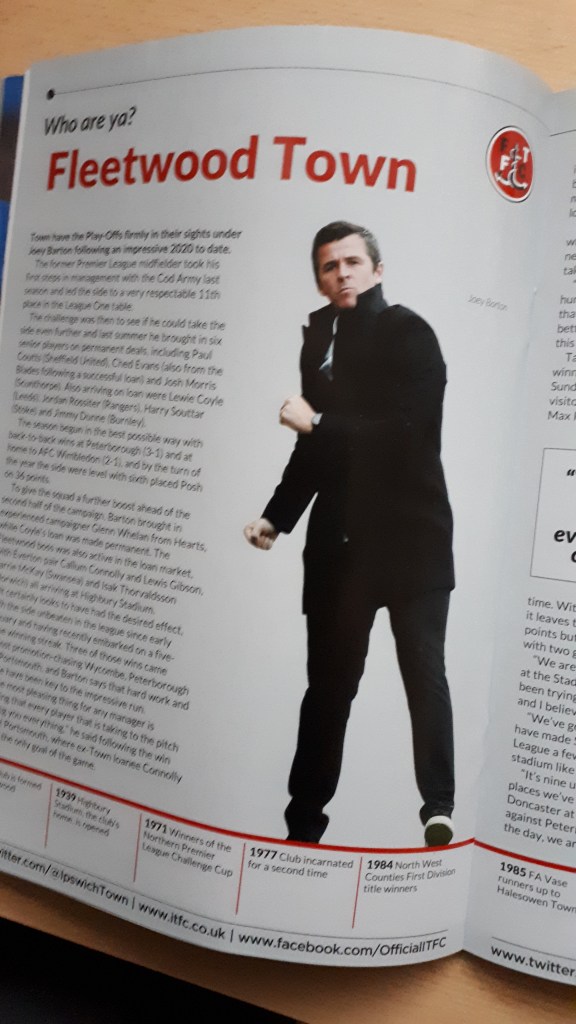
As often happens, half time soon follows an opponent’s goal to allow us to reflect, seethe or just spend a penny depending on our individual needs.  I begin my well-earned break with a look at the programme, which leads me to regret the absence from the Fleetwood team tonight of Harrison Biggins and Barry Baggley, although Billy Crellin is on the bench and though I don’t know it yet, we are destined to see him and hear his name.  I also enjoy two photos of Fleetwood manager Joey Barton, one in which he looks as if he may have just lobbed a brick at someone and another in which his chin juts out menacingly from beneath a baseball cap as he gives the evil eye to a person or persons safely out of shot. 

Having spoken again with Ray as we passed one another heading from and to the toilet, the digital clock display on the Sir Bobby Robson stand strikes 2049 and the second half begins.  Town’s losing position gives rise to the usual unwelcome commentary and advice from assorted coaches in the stands;“Look at all that fuckin’space”, “ We’ve got no one at the back”, “Second ball!”.  When Janoi Donacien misses the ball a legion of half-wits jeer because I assume they all have World Cup winning medals or at least play for Brazil and are perfect in every way and always have been.  Pat from Clacton is rightfully annoyed, “You shouldn’t boo your own players” she tells me and I agree and tell her that’s what the opposition are for.

Town are better this half, although they still can’t get past Harry Souttar and when they do Ched Evans clears off the line, or goalkeeper Alex Cairns makes a fine save; I try to think of another player whose surname is the same as the name of an Australian city, but I can’t; Derek Darwin sounds plausible but is pure fiction.  The crowd is announced as 15,678 of whom 88 are from Fleetwood and many of the home crowd turn and applaud them for their effort including me, Mick looks on slightly bemused. He has a point, such applause is a bit patronising; plucky little Fleetwood etcetera, but it might just be people trying to be nice in a world tainted by Donald Trump and Priti Patel .

Nearly half an hour remains and a chorus of “Come of You Blues” rings around the ground and then dwindles away.  “Yellows, Yellows” shout the Fleetwood eighty-eight and I am impressed by their volume, which I can only attribute to a diet of Fisherman’s Friend lozenges for coughs and sore throats, which are manufactured by Lofthouse of Fleetwood and taste disgusting.  My father was seemingly addicted to the things, although regrettably they couldn’t stop him spending the last ten years of his life mostly hitched up to an oxygen machine.

As the game descends into its final twenty minutes, Pat from Clacton shows me her purse full of ‘lucky’ charms, which she has collected from around the world, but it seems none of them works anymore although apparently some of them used to. She’s particularly fond of one from Vietnam , which is in the form of a masturbating monkey.  Pat seemed surprised she hadn’t shown me him before, but I tell her I think I would have remembered.

I am more or less resigned to another defeat now and Pat from Clacton is too, but unlike on a Saturday she doesn’t even have a jacket potato to look forward to when she gets home, but, she tells me, she will have a Nespresso latte.  The unhappiness of sections of the crowd is growing, chants of “We want Evans Out” can be heard and this time I think it is Marcus they mean and not Ched or ‘Evans the Song’. In the corner of the Sir Bobby Robson Stand five banners appear all bearing a word beginning with the letter U and then N.  At first I wonder if Antonio Guterres is in the house but the banners read “Unambitious”, “Underfunded”, “Underpants”, “Underachieving” and “Unacceptable” although the middle one is a bit twisted so I might have got that wrong. 

Somewhat inevitably, Ipswich do not score an equaliser and the game ends amongst much rancour and general displeasure.  The atmosphere will later be described rather predictably as ‘toxic’, a word which used to be reserved for clouds of gas, but is now applied almost exclusively to the air we breathe at Portman Road.   Mick and I stay to applaud the teams off, because, although I can’t speak for Mick , I didn’t not enjoy the game any more than I usually do when we lose, and I also have some time to kill before the next train home.